
Bankruptcy after 60 years: Why the German robotics pioneer ek robotics stumbled
Xpert Pre-Release

Language selection 📢
Published on: April 4, 2026 / Updated on: April 4, 2026 – Author: Konrad Wolfenstein
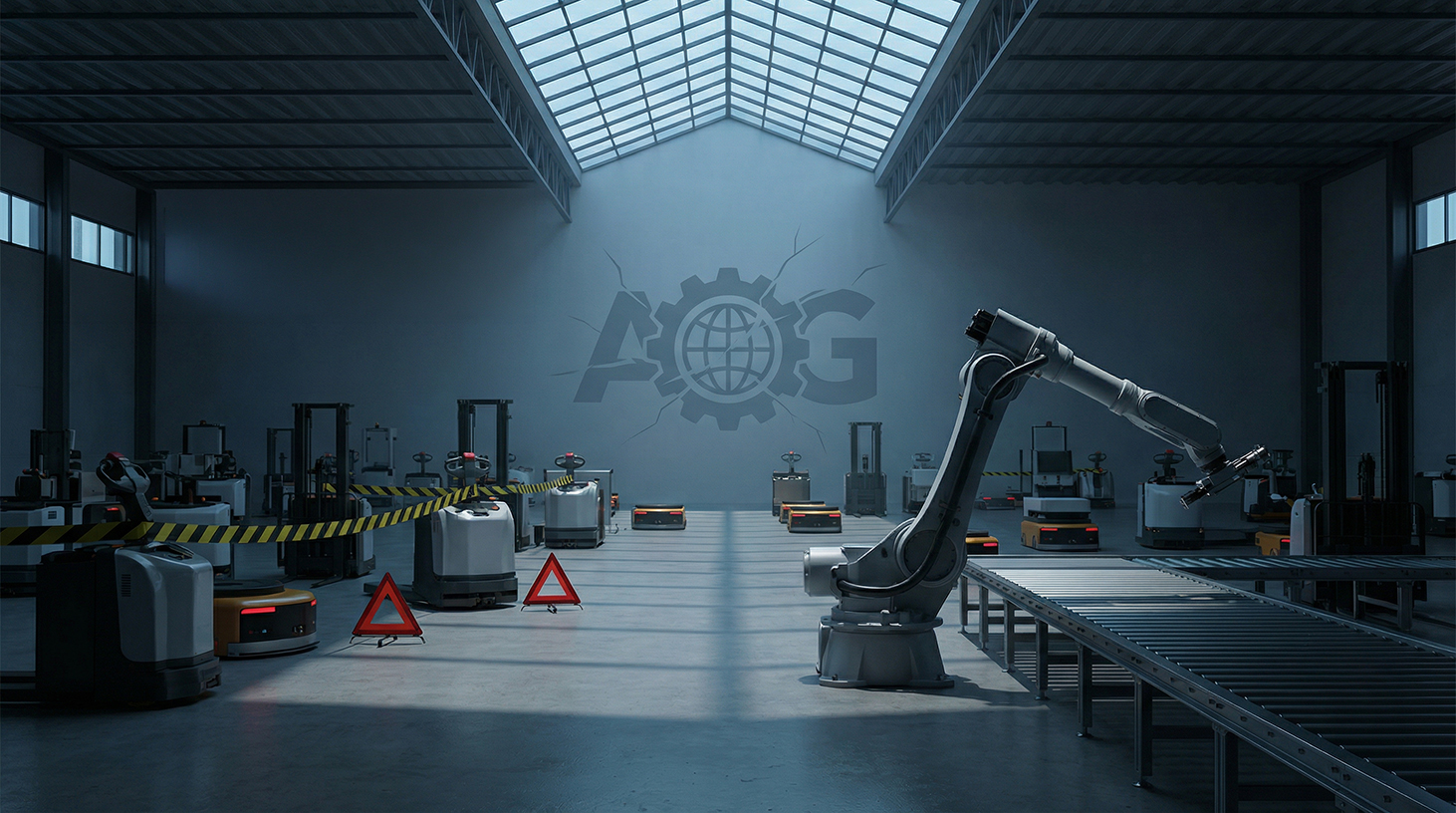
Bankruptcy after 60 years: Why the German robotics pioneer ek robotics stumbled – Image: Xpert.Digital
Toxic contracts and China's price pressure: The real reasons for the bankruptcy of the high-tech giant
When 12,000 robots aren't enough: Automation as a promise for the future – and why the market remains unmoved
It's a wake-up call for the entire German mechanical and plant engineering sector: When a high-tech pioneer with over 60 years of experience, 12,000 systems installed worldwide, and a seemingly secure position in the automation industry slides into insolvency, simple explanations fall short. The case of ek robotics GmbH is far more than a mere management crisis – it's a magnifying glass that mercilessly exposes the profound structural problems within German industry.
Between toxic legacy contracts in the project business, the automotive industry's massive reluctance to invest, and historically unprecedented price pressure from state-subsidized competition from China, even established market leaders are coming under immense pressure. But the story of ek robotics is not simply a tale of doom. Through its rapid and strategically astute acquisition by the Swabian AI startup NEURA Robotics, the case simultaneously reveals a way out of the predicament: Only those who combine classic mechanical engineering expertise with artificial intelligence, cognitive robotics, and new, scalable business models will survive the current wave of major bankruptcies. This is an in-depth analysis of the end of an era – and the painful but necessary leap into a new dimension of automation.
EK Robotics GmbH: When even pioneers stumble
When a company like ek robotics GmbH, which for more than six decades was considered one of the pioneers of driverless transport systems in Germany, has to file for insolvency proceedings under self-administration at the Hamburg District Court, this cannot be attributed solely to entrepreneurial failure. Rather, the ek robotics case is a symptom of profound structural upheavals that are currently shaking the entire German automation and intralogistics industry. It is representative of a multitude of medium-sized companies that are threatened with collapse amidst economic downturns, geopolitical shifts, international price pressure, and the pitfalls of traditional project-based business.
From Hamburg to the world: Six decades of transport robotics
The history of ek robotics GmbH dates back to 1963, when the company presented one of the first driverless transport vehicles in Germany. Operating under the name E&K Automation at that time, the company grew into an owner-managed family business with its headquarters in Hamburg and a second German branch in Reutlingen. International locations in Milan, Prague, and Buckingham were also established. Over the decades, ek robotics installed more than 12,000 vehicles in over 1,500 installations worldwide and most recently employed over 300 people.
The company's core business lies in the development, manufacturing, and system-integrated delivery of autonomous transport solutions for production and warehouse logistics. Industries such as automotive, aerospace, pharmaceuticals, food and beverage, and mechanical engineering are among its broad customer base. The product portfolio includes customized automated guided vehicles (AGVs) in various configurations, complemented by software solutions for controlling and monitoring entire fleets. These AGV control systems are a key technological component of modern intralogistics.
With the rebranding of E&K Automation to ek robotics in 2021, the company signaled its ambition to position itself as a high-tech company for transport robotics and to help shape the transformation towards fully autonomous, AI-supported systems. This strategic move came at a time when the market for automated guided vehicles (AGVs) appeared to be on a growth trajectory worldwide – and when demand had risen in the short term due to pandemic-related automation needs.
The insolvency procedure: process, actors and legal framework
At the end of July 2025, ek robotics GmbH filed an application with the Hamburg District Court for the opening of preliminary insolvency proceedings under self-administration pursuant to Sections 270 et seq. of the German Insolvency Code (InsO). The court ordered preliminary self-administration – an instrument that allows the debtor company to retain control of its management and continue its business operations independently, instead of relinquishing the power of disposal to an external insolvency administrator.
The experienced restructuring specialist, attorney Jochen Sedlitz of the Stuttgart law firm GRUB BRUGGER, assumed operational management of the proceedings as general representative. The insolvency court appointed attorney Stefan Denkhaus of the Hamburg commercial law firm BRL (BOEGE ROHDE LUEBBEHUESEN) as provisional administrator, whose task is to oversee the self-administration and safeguard the interests of the creditors. The out-of-court preparation of the proceedings had previously been undertaken by a team led by restructuring attorney Dr. Frank Schäffler.
Self-administration offers decisive advantages over standard insolvency proceedings: Management can actively contribute its industry expertise and customer relationships to the restructuring process. Furthermore, the procedure grants access to insolvency law instruments such as insolvency benefits, which secure employee salaries for up to three months, as well as the opportunity to terminate disadvantageous contracts within short timeframes. The ek robotics Group's foreign subsidiaries in Italy, the Czech Republic, and the UK were explicitly excluded from the proceedings, thus ensuring the operational continuity of the international business.
The causes: More than a poor economy
The reasons for ek robotics' financial difficulties are multifaceted and cannot be reduced to a single trigger. In its official communications, the company cited three key factors: a challenging market environment with pronounced reluctance to invest, economic uncertainties, and global market disruptions. Added to this was the burden of individual legacy projects where the resulting additional costs could not be adequately offset and discussions with the affected customers had failed to produce a viable economic solution.
This self-diagnosis is honest, but incomplete due to its brevity. The project business in plant engineering – which also includes intralogistics automation – is structurally prone to cost overruns. Complex customer installations with individual requirements, long implementation times, and technical uncertainties regularly lead to calculated risks that can accumulate over months or years. When market prices then come under pressure and customers simultaneously show less willingness to negotiate, a toxic combination of shrinking margins and entrenched legacy issues arises.
To make matters worse, competitive pressure in the European AGV market has increased considerably in recent years. In particular, Chinese suppliers of autonomous mobile robots are increasingly penetrating the European market. Chinese companies often offer aggressively priced solutions that appear attractive to price-sensitive customers, even though the quality and after-sales service of Western suppliers are still considered superior. This pressure forces established German manufacturers into a dilemma: price reductions jeopardize margins, while insisting on premium prices risks losing orders to cheaper competitors.
An industry under pressure: Figures from the intralogistics market
The context of ek robotics' insolvency cannot be understood without a sober assessment of the overall market. After years of robust growth, the German materials handling and intralogistics industry experienced a significant decline in 2025: Production volume fell by 7 percent to €25.8 billion. This continued a slowdown that had already become apparent in 2024, when a 9 percent drop in orders was recorded compared to the previous year. The VDMA Materials Handling and Intralogistics Association forecasts, at best, stagnation for the current year, 2026, and anticipates a significant recovery no earlier than 2027.
The global AGV market itself, however, is in a fundamentally different situation. Worldwide, the market for automated guided vehicles is estimated at around US$2.75 billion in 2025, with a projected average annual growth rate of 10.6 percent until 2034 – reaching a final value of US$6.76 billion. The Asia-Pacific region holds the largest single share, accounting for 35.5 percent of the global market. This divergence between the global growth promise and the decline in the German market illustrates the fundamental problem for many European automation companies: the market is growing, but not necessarily where they conduct their core business.
The total export volume of the German intralogistics sector fell by 5 percent to €19.8 billion in 2024. All major markets were affected: Exports to the USA declined by 9 percent, and to France by 10 percent. Only the Netherlands saw a slight increase of 6 percent. These widespread declines demonstrate that this is not a phenomenon specific to a single market, but rather a global cooling of investment in industrial automation.
The situation is exacerbated by the weakness of key German industries, particularly the automotive sector. Automotive manufacturers and suppliers are traditionally the most important customers for automation solutions. However, the shift to electromobility has diverted investment budgets and led to a significant short-term reluctance to invest in new production automation. The decline in the automotive segment has thus triggered a chain reaction extending from automotive suppliers to AGV manufacturers.
The wave continues: Insolvencies in Germany in 2025
The insolvency of ek robotics is not an isolated case. Germany has been experiencing a structural wave of insolvencies for several years, which intensified further in 2025. Following a 22 percent increase in 2024, a further 10 percent increase in insolvency proceedings was projected for 2025 – a level that in some areas reached its highest since 2015. The trend in large-scale insolvencies is particularly alarming: 471 companies with annual revenues exceeding €10 million had to file for insolvency in 2025, an increase of 25 percent compared to the previous year.
Since the pandemic-related dip in 2021, when only 163 major insolvencies were recorded, these cases have almost tripled. Metal goods manufacturers (65 cases), automotive suppliers (59), and electrical engineering companies (53) are particularly affected. The mechanical engineering sector, which also includes parts of the automation sector, saw a one-third increase in insolvencies to 32 cases in 2024, and further increases of around 20 percent were forecast for 2025. Restructuring experts no longer speak of a cyclical downturn, but rather of a structural collapse for certain segments of German SMEs.
The reasons are well-known, but their combined effect is particularly destructive: stagnant economic growth, high financing costs, rising operating expenses, geopolitical uncertainties caused by the Trump administration, the ongoing war in Ukraine, and intensified competition from China. Added to this is years of underinvestment in many German companies, which has prevented modernization and gradually eroded their competitiveness. The rescue rate from insolvency is also declining structurally: while previously around two-thirds of all insolvent companies could be saved, this rate is now only one-third across all sectors.
🎯🎯🎯 Data-driven B2B industry hub as a quasi-in-house solution

The quasi-in-house solution: How Xpert.Digital closes operational gaps in B2B marketing and sales – Smart Content-Driven Business - Image: Xpert.Digital
Xpert.Digital is a data-driven B2B industry hub led by Konrad Wolfenstein . The company acts as an external, quasi-in-house solution for industrial partners, closing operational gaps in marketing, content, and sales – without requiring additional resources on the client side.
More information here:
Project business as a risk: Why plant manufacturers need to rethink their business model
The instrument of self-administration: restructuring tool or time-saving device?
The self-administered insolvency procedure chosen by ek robotics warrants separate consideration, as it differs significantly from traditional insolvency proceedings and is subject to different assessments. Legally enshrined in Sections 270 et seq. of the German Insolvency Code (InsO), self-administration allows the company to retain its powers of management and disposal. An external insolvency administrator is not appointed; instead, a trustee oversees the proceedings remotely.
The advantages of this approach are obvious: The company maintains its external image as a capable and operational entity, protects customer relationships, and retains the opportunity to tailor restructuring measures to its specific situation. Insolvency benefits from the Federal Employment Agency secure wages for three months, significantly expanding the company's financial flexibility. Unfavorable contracts can be terminated within short timeframes. Compared to standard insolvency proceedings, interventions in the company structure are less extensive, and employee identification with the restructuring process is generally higher.
The risks, however, should not be underestimated. The management that led the company into crisis is also responsible for the restructuring – which can naturally create skepticism among creditors. The court can terminate the self-administration at any time if creditors' interests are jeopardized or the debtor fails to meet their obligations. For success, professional preparation with a viable restructuring plan, close communication with creditors, and expert advice are essential.
Rapid rescue: NEURA Robotics as a strategic investor
The initiated investor process reached its goal remarkably quickly: Just over two months after the application was filed, in October 2025, the Metzingen-based high-tech company NEURA Robotics took over the business operations of ek robotics GmbH, thereby securing more than 300 jobs. The speed of this solution is exceptional for insolvency proceedings and speaks to the continued high attractiveness of ek robotics as a technology company.
NEURA Robotics was founded in 2019 by David Reger in Metzingen near Stuttgart, with the explicit goal of ushering in the age of cognitive robots. The company claims to be the only one worldwide to develop and manufacture all components for intelligent cognitive robots in-house, including the underlying AI systems. Its product portfolio includes collaborative robot arms, humanoid robotic platforms, and mobile platforms designed to enable seamless human-machine interaction.
The strategic logic behind the acquisition is clear: NEURA Robotics brings expertise in cognitive AI and humanoid robotics, while ek robotics boasts 60 years of experience in intralogistics automation, an established international network, and over 1,500 systems installed worldwide. Together, they offer a product range that extends from intelligent mobile platforms to fully autonomous, AI-driven intralogistics solutions. NEURA Robotics CEO David Reger described the acquisition as a breakthrough into a new dimension of mobile robotics – not just an acquisition, but a technological synergy.
At the same time, the acquisition highlights the consolidation phase the robotics market is currently in. Technologically well-positioned but financially weakened companies are being absorbed by competitors with stronger capital bases or a clearer strategic focus. This is not a purely German phenomenon, but it is particularly evident in the German Mittelstand (SMEs), where many highly specialized companies exist that, while technological leaders, can be commercially fragile.
Project business as the Achilles' heel of the automation industry
A structural problem that is particularly evident in the case of ek robotics is the vulnerability of project-based business in complex plant engineering. Unlike a mass-produced product, each AGV system is largely individually configured, planned, implemented, and commissioned. This individuality is a competitive advantage over standardized solutions, but at the same time presents a constant challenge in terms of cost calculation.
Projects often last 12 to 36 months from order placement to final acceptance. During this time, raw material prices can fluctuate, subcontractor costs can increase, technical requirements can expand, or customers can demand changes to the scope of work. If contract clauses do not provide sufficient protection for these scenarios—or if, in a buyer's market with fiercely competitive projects, adequate risk premiums could not be enforced—additional costs arise that are no longer covered by the project revenues. ek robotics described precisely this pattern—a cluster of legacy projects with insufficiently compensated additional costs—as a key trigger of the crisis.
This problem is widespread in the industry. Plant engineering companies are generally under pressure to be aggressively priced when acquiring orders, only realizing the true costs during project execution. Especially in an environment of declining order volumes and increasing competition, the temptation grows to accept projects at prices that leave little room for error in calculations. The economic consequences then become apparent with a delay of months or years, often making insolvency decisions seem complex and surprising – even though the problems have been building up for a long time.
European competition under Chinese pressure: Structural change in the AGV market
The insolvency of ek robotics cannot be fully understood without considering the geopolitical and competitive shifts in the global AGV and AMR market. Autonomous mobile robots (AMRs) and automated guided vehicles (AGVs) are no longer a technology field exclusively dominated by German and European suppliers. Chinese manufacturers have gained significant market share in recent years and are increasingly penetrating the European market as well.
The strategic advantages of Chinese suppliers are structural in nature: lower manufacturing costs due to state-subsidized production capacities, massive investments in research and development, a strong domestic demand base as a testing ground, and economies of scale that are unavailable to German SMEs in this form. The Asia-Pacific region already dominates the global market for AGVs with a 35.5 percent market share. What has already become painfully apparent in the automotive industry is now being repeated in the automation sector.
For established German AGV providers, this raises a fundamental question: How can they maintain their competitive advantage through quality, system expertise, after-sales service, and industry knowledge in a price environment where Chinese providers are aggressively targeting market share? The answer likely lies in the combination of technological differentiation—for example, through AI integration, data analytics, and cognitive computing—and close customer relationships built on decades of industry experience. This is precisely where the core of the synergy between ek robotics and NEURA Robotics lies.
Market structure and outlook: What consolidation means
Consolidation in the German and European automation market is in full swing. Stronger companies are acquiring weaker competitors, technological expertise is being pooled, and the market is structuring itself between future-proof platform providers and specialized niche players. The VDMA (German Engineering Federation) anticipates stagnation for 2026 but forecasts a potential recovery from 2027 onwards – driven by long-term, robust growth drivers: automation, robotics, digitalization, and AI-based logistics processes.
The structural need for intralogistics automation is undeniably high. Skilled labor shortages, rising labor costs, increasing demands for delivery speed and precision, and the ongoing e-commerce boom are driving long-term demand. The question is not whether the market will grow, but who will benefit from this growth. The answer will increasingly depend on technological differentiation, scalability, and financial strength – factors that are putting pressure on small and medium-sized European suppliers.
For the remaining independent German AGV companies, this results in a clear strategic imperative: The transformation towards platform and service models, away from purely project-based, one-off business, is no longer an option, but a matter of survival. Recurring service revenues, data monetization, Software-as-a-Service elements, and cloud-based fleet management offer business models with more stable cash flows and better predictability. Companies that have completed or can complete this transformation are structurally more resilient than those that continue to depend solely on new business.
The brand's legacy and the new era under NEURA Robotics
With the acquisition by NEURA Robotics, the immediate continued existence of ek robotics is secured – and this is by no means a given for the industry, the employees, and the customers. Of the original 300 or so employees, over 300 jobs were saved, and the foreign subsidiaries remained unaffected by the insolvency proceedings. Customer and supplier relationships were maintained throughout the entire process, and services remained available.
Ek robotics, now a company of the NEURA Robotics Group, is entering a new phase: As part of an innovative platform provider for cognitive robotics, the company can benefit from technological synergies that would not have been available to it as an independent, medium-sized enterprise. The combination of over 60 years of intralogistics expertise and the AI capabilities of NEURA Robotics holds the potential for a new level of autonomous logistics robotics that goes far beyond previous AGV solutions.
The insolvency of ek robotics is therefore ultimately not a story of failure, but a story of change – painful, but ultimately constructive. It shows that technologically valuable companies that have run into financial difficulties can be rescued and restructured under the right conditions. The self-administration process fulfilled its purpose: it preserved time and the ability to act until a viable investor was found.
Systemic Lessons: What the ek robotics case reveals
The ek robotics case highlights a number of structural problems that extend far beyond the individual company. Firstly, it demonstrates that technological expertise alone does not protect against economic failure. Over 60 years of experience, 12,000 installed vehicles, and a global presence did not save ek robotics from the combination of a market downturn, legacy projects, and deteriorating competitive conditions. Expertise and cash flow are not the same thing.
Secondly, this case illustrates the systemic vulnerability of project-based business models in volatile markets. The classic project consortium, consisting of a customized system solution, long lead time, and highly customer-specific pricing, is costly to manage from a business perspective and extremely sensitive to external shocks. A more diversified revenue structure with service-related, recurring income would have significantly increased resilience.
Thirdly, the outcome points to the increasing importance of corporate ecosystems and platform strategies in the automation market. Medium-sized, independent companies, even if technologically excellent, reach their limits when it comes to raising capital for research, international scaling, and building service infrastructures. Integration into larger corporate groups with complementary strengths can overcome these limitations – as the acquisition by NEURA Robotics exemplifies.
Fourth, this case underscores the growing need for early restructuring measures. Many of the observed corporate insolvencies in Germany could have been avoided with timely action. The insolvency law framework, from out-of-court restructuring to the restructuring framework (StaRUG) and self-administration, offers a wide range of options – but only if these are used early on, before the financial situation forces a quick solution and options are no longer available.
The ek robotics case, despite all the pain, is a relatively fortunate example. Other companies in similar situations will be less lucky – or less strategically attractive to potential investors. For the German automation industry as a whole, this presents the major challenge of creating structures that combine technological progress with commercial stability and systematically reduce dependence on individual project cycles.
Your global marketing and business development partner
☑️ Our business language is English or German
☑️ NEW: Correspondence in your native language!

Konrad Wolfenstein
I and my team are happy to be available to you as your personal advisor.
You can contact me by filling out the contact form here or simply call me at +49 7348 4088 965. My email address is : [email protected]
I'm looking forward to our joint project.









