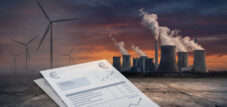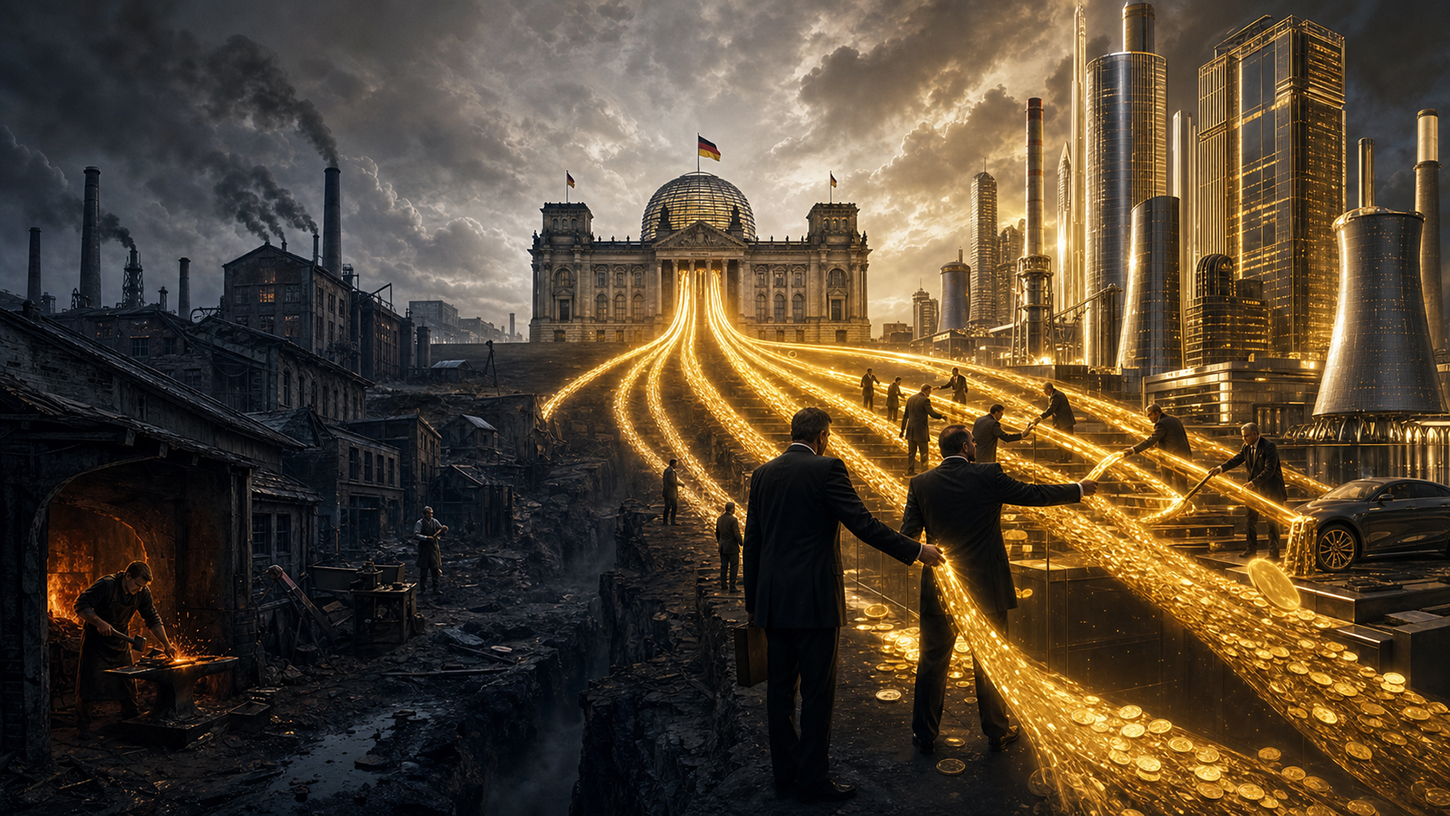
The billion-dollar secret: How DAX corporations are subsidized at the expense of medium-sized businesses – Image: Xpert.Digital
The subsidy paradox: Why every reform fails in Germany and the big players always win
A state on the brink of lobbyists: The unvarnished truth about Germany's subsidy system
Expensive power plant strategy: Is the German government planning the next 400-billion-euro money pit?
Germany prides itself on its social market economy, but a closer look at the state's financial flows reveals a fundamentally different picture. Behind the scenes of the federal budget, a gigantic redistribution apparatus has become established, its complexity virtually impossible to comprehend. For 2025 and 2026 alone, around 78 billion euros each year are earmarked for subsidies and tax breaks. But the true scale is far greater: If one adds up the historical costs of coal, nuclear power, and decades of structural aid, hundreds of billions of euros in taxpayer money disappear into sectors that are hindering rather than promoting change.
It's a system with clear winners and losers. While DAX-listed corporations, energy-intensive industries, and well-connected lobby groups rake in tailor-made exemptions and billions in aid, the traditional middle class – from small craft businesses to bakeries – bears the brunt of rising levies and grid fees. At the same time, the myth of "expensive renewable energies" persists, while the astronomical historical subsidies for fossil fuels and nuclear power are systematically ignored.
This article takes an unvarnished look at over seven decades of German subsidy history. It exposes the most significant subsidy programs since 1949, reveals the dangerous imbalance in current energy policy (keyword: power plant strategy), and explains why well-intentioned reforms like the Koch-Steinbrück paper reliably fail. It addresses the central question of distributive justice: Whom does the state truly serve when profits are privatized and costs are socialized?
Related to this:


Public funds in a conflict of interest: Subsidies, tax breaks and the question of distributive justice in Germany
Who really pays? How billions in tax revenue are redistributed – and who gets nothing
Subsidies and tax breaks are often seen in political debate as a necessary evil or as a targeted tool for steering economic processes. In practice, they are both – and often more. They are the result of decades of political negotiation processes in which organized interests, lobby groups, regional dependencies, and economic crises have been intertwined. The result is a subsidy system whose complexity is almost impossible to grasp, yet whose effects remain quite precisely measurable: those with the right connections benefit disproportionately. Those without them pay the price.
In 2024, the German federal government officially spent €65.8 billion on financial aid and tax breaks. Around €78 billion each is budgeted for 2025 and 2026. The Kiel Institute for the World Economy puts the volume of federal financial aid in 2024 alone at a total of €127.3 billion – a financial aid rate of 3.0 percent of gross domestic product. Including all tax breaks provided by local authorities, total subsidies amount to €74.8 billion. The total volume increased from €45 billion in 2023 to €77.8 billion in 2026, representing a rise of almost €33 billion.
These figures illustrate that the German state is no longer a neutral arbiter of the market, but an active participant that massively intervenes in economic decisions through subsidies, tax breaks, and special regulations. The crucial question is not whether state support is fundamentally legitimate—it is in many cases—but rather who benefits from it, who pays for it, and whether the distribution serves the common good or primarily organized special interests.
Related to this:


The historical roots: Subsidy policy since the founding of the Federal Republic
From reconstruction to structural preservation
The history of German subsidy policy does not begin with the economic miracle, but with its preconditions. After 1949, the young Federal Republic faced the task of rebuilding a completely devastated economy while simultaneously integrating millions of refugees and displaced persons. In this context, state intervention and support were not the exception, but a necessity. Ludwig Erhard, the architect of the German economic miracle and later Chancellor, generally rejected state intervention in the market, but recognized the need for temporary support measures. As early as 1949, housing construction was given tax breaks through increased depreciation allowances. Reconstruction quickly transformed this temporary exception into a permanent culture of subsidies.
The mining of hard coal was particularly formative for the first decades of the Federal Republic of Germany. With industrialization and reconstruction, coal was the lifeblood of the economy. However, from the late 1950s onward, when cheap imported oil and later even cheaper imported coal made domestic production increasingly unprofitable, the state began subsidizing the difference between German production costs and world market prices. The founding of Ruhrkohle AG in 1968 as a state-initiated rescue company for the struggling mining industry marked the beginning of one of the largest subsidy programs in German history. In total, between 200 and 300 billion euros in state funds flowed into hard coal mining until its demise – a sum that hardly any other sector of the economy has ever received. In 2008 alone, subsidies per remaining job in the hard coal industry amounted to more than 233,000 euros.
The early institutionalization of this subsidy policy occurred with the Stability and Growth Act of 1967, which obligated the Federal Government to regularly report on financial aid and tax breaks. Since then, the Federal Government's Subsidies Report has been published every two years – a document that serves both to legitimize the existing system and to critically review it. In the early reports, mining, social housing, and agriculture were the dominant recipients of subsidies.
Expansion and change in legitimacy
With the end of the economic miracle and the onset of a period of structural change, the nature of subsidy policy also shifted. Financial aid now served less to build up businesses than to maintain existing ones – with all the associated inefficiencies. In the 1970s and 1980s, many subsidy programs became politically self-perpetuating mechanisms: once introduced, they were virtually impossible to abolish, as recipients, unions, and regional politicians joined forces to defend their continuation.
A prime example is the homeownership allowance, which, until its abolition at the beginning of 2006, represented the largest single subsidy in the federal budget. It burdened the treasury with around six billion euros annually and, in its design, primarily benefited higher earners who would have taken the step into homeownership anyway – a classic case of windfall gains. Nevertheless, the CDU/CSU clung to it for years until the budget crisis of 2005 broke the political resistance.
The diesel tax break, in effect since 2003, taxes diesel fuel at 47.04 cents per liter, while gasoline is taxed at 65.45 cents. This reduced tax revenue has become one of the longest-lasting and most politically difficult-to-challenge subsidies, as the commercial vehicle and logistics industries, as well as many commuters, depend on it. A similar situation exists with the commuter allowance, whose tax impact disproportionately benefits higher income brackets.
The pattern is recurring: What is intended as a temporary measure becomes an institutionalized, permanent subsidy. What is touted as general support has its strongest effect on those who already have the most resources to exert political pressure.
Industries that are constantly receiving subsidies: Who has received the most since 1949?
Energy, agriculture and transport as historically large recipients
One of the most striking features of the German subsidy system is the remarkable continuity of its main recipients. Across all government coalitions, economic cycles, and political paradigm shifts, it is consistently the same sectors that receive the lion's share of state funding: the energy sector in its fossil fuel and nuclear forms, agriculture, and the transportation sector. A comparative analysis of these subsidy flows since the founding of the Federal Republic reveals a system that tends to hinder rather than promote structural change.
One of the most revealing studies on this topic was presented by the Forum for Ecological and Social Market Economy (FÖS): Between 1970 and 2016, government subsidies for hard coal totaled €337 billion (real), for nuclear power €237 billion, and for lignite around €100 billion. Renewable energies received €146 billion during the same period. In total, fossil and nuclear energy sources were subsidized with approximately €674 billion – four and a half times the amount for renewable energies. This ratio is of fundamental importance for the current energy policy debate: When people talk about expensive "subsidies for renewable energies," they almost invariably do so without the historical context that these technologies were supported with a fraction of the funds that flowed into fossil and nuclear energy sources over decades.
Nuclear energy: 304 billion euros in state subsidies – and the government saw hardly anything
State subsidies for nuclear energy in Germany are a particularly instructive example of the discrepancy between political rhetoric and financial reality. Nuclear subsidies are virtually absent from the federal government's official subsidy reports: the government put its own expenditures up to 2010 at only around €200 million – almost exclusively compensation payments for agriculture following the Chernobyl reactor accident in 1986. Independent studies, however, arrive at a fundamentally different conclusion. The Forum for Ecological and Social Market Economy (FÖS) estimated the actual subsidies alone from 1950 to 2008 at at least €204 billion. Added to this are already known future costs of at least €100 billion until the complete phase-out of nuclear power – bringing the total to over €304 billion. In 2019 prices, this corresponds to an amount of 287 billion euros, according to an updated FÖS study, which means about 37 euros per year and person in Germany.
This sum is comprised of very different items: direct federal funding for nuclear research, operating costs for the Asse II and Morsleben nuclear waste repositories, decommissioning costs for the East German reactors, tax breaks on energy taxes, favorable regulations regarding disposal provisions, and additional revenue for operators through emissions trading. All these items are missing from the federal government's subsidy report because its narrow definition of subsidies systematically excludes "budget-independent regulations" and indirect tax breaks. Furthermore, if the same liability rules applied to nuclear power plants as to all other sectors of the economy, nuclear power would be up to €2.70 per kWh more expensive – and thus neither affordable nor competitive. This implicit state liability for nuclear damage is the most invisible of all subsidies.
Hard coal: The most expensive subsidy project in German history
Even more extensive than nuclear subsidies is the support for German hard coal, which, according to the coal subsidy report commissioned by Greenpeace, amounted to a nominal €199.1 billion or €288.6 billion in 2008 prices between 1950 and 2008. This includes €187 billion in financial aid, €101 billion in tax breaks, and €42 billion in subsidies from government regulations independent of the budget. Billions more were added after 2008: subsidies for phasing out hard coal mining by 2018 amounted to approximately €22.4 billion in financial aid alone. Economic historian Franz-Josef Brüggemeier estimates the total sum to be between €200 and €300 billion. As recently as 2014, hard coal subsidies amounted to €4.7 billion per year – equivalent to more than €9,000 of taxpayers' money per minute. In 2008, subsidies per job in the hard coal industry reached the symbolic sum of more than 233,000 euros – more than seventeen times the average German wage at that time.
Lignite: Smaller in volume, big on the environmental impact
Lignite is a special case in the German subsidy system. Since lignite in Germany can only be mined in open-cast mines and is not subject to import competition, subsidies here flow less as compensation for market failures and more as political protection for structurally weak regions. The Forum Ökologisch-Soziale Marktwirtschaft (FÖS) estimates that state subsidies for lignite amounted to around €67 billion in real terms up to 2008. Added to this is the indirect subsidization resulting from the lack of adequate taxation of external costs, i.e., the environmental and health damage caused by coal dust, greenhouse gases, and landscape degradation. With the 2020 Coal Phase-Out Act, the operators RWE and LEAG received €4.35 billion in compensation for early shutdowns – a payment considered an anomaly internationally: the state compensates companies for ending a climate-damaging activity for which they had received state backing and financial support for decades.
Agriculture: Sustainable survival through national and European instruments
Agriculture occupies a special position in the German subsidy system because its support has been increasingly shifted to the European level since the beginning of the European Economic Community (EEC). In 2023, the EU's Common Agricultural Policy (CAP) provided €38.16 billion in direct payments from the European Agricultural Guarantee Fund alone, with a further €12.95 billion allocated for rural development. Germany receives the third-largest share of all EU member states at 11.2 percent – equivalent to €6 to €7 billion annually from the EU agricultural budget alone. This is supplemented by national funds from the joint federal and state program "Improvement of Agricultural Structures and Coastal Protection" as well as numerous special tax regulations for agriculture. Historically, since 1957 agriculture has received subsidies totaling hundreds of billions of euros – with the paradoxical result that structural change in agriculture nevertheless progressed relentlessly: The number of agricultural holdings fell from over 1.6 million in the 1960s to around 250,000 today.
The transport sector: 22.9 billion in tax breaks in 2010 alone
The transport sector is one of the largest, yet least publicly discussed, recipients of subsidies in Germany. In 2010, sector-specific tax breaks for transport alone amounted to €22.9 billion – more than two-thirds of all sector-specific tax breaks totaling €30 billion in the same year. According to the latest subsidy report from the Kiel Institute for the World Economy, the transport sector is the second-largest recipient of government funding, receiving €38 billion (29.8 percent of all federal financial aid). The largest individual items in the transport sector are the diesel tax break, resulting in annual tax revenue losses of around €11.5 billion, the commuter allowance, the tax break for kerosene, and subsidies for local public transport. The German Federal Environment Agency estimates environmentally harmful subsidies in the transport sector alone at over €30 billion annually, rising from €28.6 billion to €30.8 billion between 2012 and 2018.
Our EU and German expertise in business development, sales and marketing

Our EU and German expertise in business development, sales and marketing - Image: Xpert.Digital
Industry focus areas: B2B, digitalization (from AI to XR), mechanical engineering, logistics, renewable energies and industry
More information here:
A thematic hub offering insights and expertise:
- Knowledge platform covering global and regional economies, innovation and industry-specific trends
- A collection of analyses, insights, and background information from our key areas of focus
- A place for expertise and information on current developments in business and technology
- A hub for companies seeking information on markets, digitalization, and industry innovations
Who really benefits: Germany's invisible subsidies
Comparative industry analysis: The hierarchy of subsidy recipients
A consolidated analysis of total subsidies since 1949 by industry shows the following approximate hierarchy, although the figures should be understood as orders of magnitude due to different delimitation methods and sources:
| Industry | Total funding (estimated, actual) | Key instruments |
|---|---|---|
| hard coal | approx. €288–337 billion (1950–2018) | Financial aid, coal levy, purchase guarantees |
| nuclear energy | approx. €204–304 billion (1950–2030+) | Research funding, tax breaks, liability exemption |
| agriculture | several hundred billion euros (1957–present) | CAP direct payments, national aid, special tax rules |
| Traffic | Over €30 billion per year on an ongoing basis | Diesel tax break, kerosene tax exemption, commuting allowance, local public transport |
| Lignite | approx. €67–100 billion (by 2020+) | Regional structural aid, coal phase-out compensation, lack of CO₂ pricing |
| housing | several hundred billion euros (1949–present) | Home ownership allowance, increased depreciation, social housing |
| Renewable energy | approx. €146 billion (1970–2016) + approx. €200 billion EEG surcharge (2000–2021) + ongoing approx. €18–21 billion/year | EEG surcharge, feed-in tariffs, federal budget (from 2022 onwards) |
| automotive industry | several tens of billions of euros (currently increasing) | Electric car subsidies, R&D funding, short-time work allowance, Corona aid |
A look at the historical data exposes the widespread narrative of "expensive renewables" as a distortion. If we first consider an identical comparison period (1970 to 2016), a massive imbalance becomes apparent: Fossil fuels and nuclear power were subsidized with a total of €674 billion during this time. Renewable energies received only €146 billion in the same period. The state has thus subsidized conventional energy sources almost five times as much as clean energy.
However, the fiscal reality also includes the fact that this period excludes the peak of EEG costs from 2017 onwards. If one considers the entire EEG subsidy period from its introduction in 2000 until the expiration of the payments around 2041, a more complete picture emerges: The costs for expanding renewable energy will total approximately 350 to 400 billion euros. In the long term, this puts them at a similar financial level to the historical individual subsidies for hard coal (288 to 337 billion euros) or nuclear power (204 to 304 billion euros).
The crucial difference between these sums, however, lies not in their amount, but in their economic impact. The hundreds of billions spent on hard coal and nuclear power flowed primarily as maintenance subsidies for technologies whose infrastructure is now outdated, decommissioned, or burdened with immense long-term liabilities (such as final storage). In contrast, the EEG funds acted as global seed funding: they brought a formerly expensive niche technology to market maturity, drastically reduced production costs, and established a sustainable, climate-neutral power plant fleet. The costs associated with the EEG are largely a thing of the past, as new wind and solar power plants are now the most competitive sources of electricity anyway.
That the public debate primarily focuses on criticizing the costs of renewable energy is no coincidence, but rather the result of different financing methods. While the EEG surcharge was transparently and noticeably shown on every household's electricity bill for over two decades, the far greater sums spent on coal and nuclear power flowed well hidden: through tax breaks, general budget items, and unpriced environmental risks. This asymmetrical transparency continues to shape the political discourse and systematically obscures the true historical costs of the fossil fuel economy.
Shipbuilding and aerospace complement this industry analysis as further historical major recipients of state aid. Although their absolute volume is smaller than that of the energy sector, they illustrate the same recurring pattern: industries with strong unions, high regional concentration, and politically well-connected management secure disproportionate state subsidies, even when economic logic contradicts this. Despite decades of subsidies, German shipbuilding lost out on international competition, and despite massive state support, the nuclear industry never produced economically competitive electricity without state guarantees.
The overarching conclusion from this industry overview is sobering: throughout its history, Germany has invested enormous sums in sectors that delayed or prevented structural change instead of shaping it. At the same time, the technologies that could secure the economic future today were promoted later and with less funding. The historical pattern of subsidies is not the story of a successful industrial policy, but rather the story of insuring the status quo against the challenges of change – paid for by those who have benefited the least.
The top ten in German subsidy history: The largest funding programs from 1949 to the present day
If one were to compile a historical ranking of the most significant German subsidies and tax breaks since the founding of the Federal Republic – measured by their cumulative total volume over decades – the result would be a picture that dispels common prejudices:
1. The hard coal subsidy (approx. 288–337 billion euros)
The single largest subsidy in the history of the Federal Republic of Germany is undoubtedly hard coal. For over six decades, state funds flowed into its extraction. Even after the economic viability of domestic mining had clearly disappeared in the 1970s, politicians clung to its subsidies – out of consideration for voter groups in the Ruhr region and the Saarland, as well as for powerful industrial corporations like RWE and Thyssenkrupp, which, as shareholders of Ruhrkohle AG, profited from the flow of subsidies.
2. Nuclear energy (approx. 204–304 billion euros)
In second place is an item often missing from official budgets: nuclear power. From the 1950s to the present day, government funding for research, tax breaks, and above all, the assumption of long-term liabilities (final disposal, such as at Asse) as well as government liability exemptions in the event of accidents have totaled over 200 billion euros. This represented a massive government risk assumption in favor of a small number of energy companies.
3. Promotion of renewable energies (approx. 350–400 billion euros projection)
Only in third place – and on par with the historical fossil fuel-based power plants – is the financing of the energy transition (Renewable Energy Sources Act, EEG). Considering the entire life cycle of the subsidies from 2000 until the contracts expire around 2041, the costs amount to an estimated 350 to 400 billion euros. The historical difference compared to the first and second most expensive sectors: This was not a maintenance subsidy for outdated structures, but rather a global start-up financing that brought clean technologies (wind/solar) to their current market maturity and price competitiveness.
4. Housing construction subsidies (hundreds of billions cumulatively)
Taking all measures into account, the promotion of real estate was the quintessential subsidy complex for decades. The homeownership allowance alone cost up to six billion euros annually between 1996 and 2005. Together with the increased depreciation allowances under Section 7b of the German Income Tax Act (since 1949) and the historical investments in social housing, gigantic sums flowed into wealth accumulation and the rental market over the decades.
5. Agricultural subsidies (hundreds of billions cumulatively)
Since the founding of the Federal Republic of Germany, agriculture has received massive support. Through various instruments – historical market regulations, EU direct payments, the national joint task of "agricultural structure" and special tax regulations such as the agricultural diesel tax – the agricultural sector has remained one of the most heavily and permanently subsidized economic sectors in the country.
6. Fossil fuel transport subsidies (over €30 billion annually)
The German Federal Environment Agency estimates that Germany currently spends over €65 billion annually on environmentally harmful subsidies. The largest single category is transportation: tax breaks for aviation fuel (kerosene) and the diesel tax break (approximately €11.5 billion per year) have accumulated over the decades to astronomical historical sums. This makes Germany the EU leader in tax breaks for fossil fuel-based mobility.
7. Preferential treatment of business assets in inheritance tax
With tax losses exceeding €5 billion annually, the inheritance tax exemption for business assets represents one of the largest tax subsidies of our time. Historically, this amounts to a gigantic sum of money lost to the state. The regulation, originally intended to ensure the survival of small family businesses, often benefits large corporations and the very wealthy in practice.
8. Lignite subsidies and coal phase-out (approx. 67–100 billion euros)
Besides historical structural aid and the long absence of CO₂ pricing, the coal phase-out illustrates a paradoxical subsidy mechanism of recent times: The 2020 law subsidized the lignite companies RWE and LEAG alone with €4.35 billion as compensation for early shutdowns. The state is paying billions here so that companies cease a climate-damaging activity for which they had already enjoyed state support for decades.
9. Exceptions for energy-intensive industries
Exemptions from electricity tax, reduced grid fees, and compensation for the European emissions trading scheme provide billions of euros in relief to large industries annually. Over the decades, a complex system has developed here, intended to ensure competitive prices in Germany's industrial sector, but in practice, for a long time primarily rewarded the consumption of electricity from (historically fossil-fueled) large power plants.
10. Commuting allowance and company car privilege
Commuter subsidies result in annual tax losses in the high single-digit billions. Historically, this effect has accumulated massively and disproportionately benefits higher income groups, as the tax benefit increases with the individual's marginal tax rate. Furthermore, the simultaneous existence of commuter allowances, subsidized company cars, and the Deutschlandticket (Germany-wide public transport ticket) leads to an expensive and contradictory double subsidization of transportation.
The privilege of large corporations: When taxpayers' money flows to profiteers
DAX companies as the main beneficiaries
The subsidization of large corporations is not a new phenomenon, but it has reached a new level in recent years. An analysis by the Flossbach von Storch Research Institute shows that in 2023, the 40 DAX companies received at least €10.7 billion in government subsidies – almost twice as much as the previous year's €6 billion. From 2016 to 2023, a total of around €35 billion flowed to Germany's largest listed companies. This occurred during a period in which these same corporations generated combined net profits of €117 billion.
Among the largest recipients, E.ON and Volkswagen stand out. E.ON has received more than €9.3 billion since 2016, primarily through caps on electricity and gas prices. VW followed with €6.4 billion, which was used for tax breaks and subsidies in drive and digital technology. BMW received €2.3 billion, partly for the construction of new plants. Study author Philipp Immenkötter of the Flossbach von Storch Research Institute explicitly pointed out that these figures are conservative estimates, as companies have considerable leeway in how they present subsidies in their financial reports.
The pattern of this subsidy allocation needs to be critically examined. The instrument of EEG exemptions for industry, in particular, reveals structural imbalances: Under the EEG's Special Equalization Scheme (BesAR), energy-intensive companies only have to pay ten or one percent of the EEG surcharge, respectively. In 2013, a total of approximately 160 terawatt-hours of electricity consumption was largely or completely exempt from the EEG surcharge. The Öko-Institut calculated that this preferential treatment results in the surcharge amount for non-beneficiary consumers being about 20 percent higher than it would be without the industry exemptions – a direct redistribution of wealth from small and medium-sized enterprises, tradespeople, and private households to large corporations.
Structural favoritism as a systemic flaw
The crucial question is not whether individual subsidies are justified, but whether the overall system is structurally fair. The answer is sobering. Those with strong lobbying structures, those large enough to boast politically significant employment figures, those well-connected in industry associations and political networks – these companies systematically have better access to government funding than a medium-sized business, a bakery, or a small craft enterprise.
The potential consequences of this subsidy policy are resource waste, distortion of competition, and a dependence of the economy on public funds. When profitable corporations systematically receive government support, capital allocation decisions become distorted: companies invest in areas that are subsidized by the government, not in those that would generate the greatest social benefit. Economic independence erodes, and structures emerge that would not be viable without government backing.
Particularly problematic is the creation of de facto "zombie companies": corporations that are kept alive through repeated subsidies, even though their business models are outdated or no longer competitive. This is not a theoretical scenario, but a historically well-documented pattern that can be observed from the coal industry to the automotive industry and parts of the financial sector.
The energy policy contradiction: Who pays for the energy transition?
Unequal distribution of burdens as a structural problem
In German energy policy, the burdens of the transition are dramatically unevenly distributed. While large corporations benefit from exemptions, billions in subsidies, and direct supply contracts, traditional small and medium-sized enterprises (SMEs) – from craft businesses to regional bakeries – foot the bill through drastically rising levies and grid fees. This structural problem is not new, but it has intensified in recent years.
Network charge levies for businesses rose from 1.574 cents/kWh in 2024 to 2.651 cents/kWh in 2025 and further to 2.946 cents/kWh in 2026 – an increase of eleven percent from 2025 to 2026 alone. The CHP levy and the offshore grid levy are particularly significant contributors to this burden. While these levies are charged in full to non-privileged companies, large, energy-intensive companies can limit their burden to 15 or 25 percent under the special equalization scheme – a discrepancy that structurally disadvantages smaller companies.
The simultaneous criticism of the Renewable Energy Sources Act (EEG) and the expansion of subsidies reveals a fundamental contradiction in German energy policy. On the one hand, subsidies for renewable energies have been criticized for years on the grounds of market distortion and are being gradually reformed. On the other hand, the current federal government is planning a massive, levy-financed expansion of central gas-fired power plants, which reverses this principle.
The gas-fired power plant strategy: An expensive decision
The German government's power plant strategy is at the heart of the current energy policy debate. The new government has laid out an ambitious course in its coalition agreement: instead of the originally planned 12.5 GW, up to 20 GW of gas-fired power plant capacity is now to be built by 2030. The tenders are to be technology-neutral, market-based, and prioritized at existing power plant sites. As early as 2026, twelve gigawatts of new dispatchable capacity are to be put out to tender, ten gigawatts of which are subject to a long-term criterion that is de facto tailored to gas-fired power plants.
The financing of this strategy is the real point of contention. European regulations stipulate that capacity mechanisms such as the power plant strategy must be financed through a levy paid by electricity customers. State Secretary Frank Wetzel confirmed that the levy is to be introduced in 2027 "with the Capacity Market Act" and collected from 2031 onwards. The amount of this levy has not yet been estimated – which means considerable planning uncertainty for companies that have to make long-term investment decisions.
A projection by the German Association of New Energy Industries (bne) from October 2025 clearly illustrates the scale of the problem: A centralized capacity market would generate levy costs of between 340 and 435 billion euros over two decades – a sum roughly equivalent to the entire federal budget. This calculation is based on the ministerial estimate of a levy of approximately 2 cents per kilowatt-hour. bne Managing Director Robert Busch succinctly summarized the core criticism: While proponents argued with innocuous cent figures, the projection reveals the true economic dimension.
A legal opinion commissioned by the German Chamber of Industry and Commerce (DIHK) also concludes that the planned state subsidies for gas-fired power plants are not compliant with EU law. A state-organized capacity market inevitably leads to higher electricity prices due to the capacity levy, and a focus on gas unnecessarily increases electricity and gas prices for the entire industry. Experts from Epico and Aurora Energy Research had already described the model as untested and risky in 2024, while established European models offer greater planning certainty.
This poses a direct burden for small and medium-sized enterprises. The power plant strategy creates new dependencies on gas – an energy source whose price sensitivity has been painfully evident since Russia's war of aggression against Ukraine – while decentralized, market-based alternatives such as storage technologies and demand-side flexibility are structurally disadvantaged.
🎯🎯🎯 Data-driven B2B industry hub as a quasi-in-house solution


The quasi-in-house solution: How Xpert.Digital closes operational gaps in B2B marketing and sales – Smart Content-Driven Business - Image: Xpert.Digital
Xpert.Digital is a data-driven B2B industry hub led by Konrad Wolfenstein . The company acts as an external, quasi-in-house solution for industrial partners, closing operational gaps in marketing, content, and sales – without requiring additional resources on the client side.
More information here:
How Germany is sinking into a subsidy dilemma – lessons from Koch-Steinbrück
The Koch-Steinbrück Paradox and its Successors
The failed subsidy reduction of 2003
The most ambitious reform project in German subsidy history failed before it had even properly begun. In October 2003, the state premiers Roland Koch (Hesse, CDU) and Peer Steinbrück (North Rhine-Westphalia, SPD) presented their joint consensus paper, claiming to be "the largest subsidy reduction program in German history." The 115-page package was intended to provide the federal government, states, and municipalities with a cumulative relief of €15.8 billion over the first three years, with a permanent effect of €10.5 billion annually starting in 2006.
The actual impact was far more modest. Even as the document was being presented, evidence of its substantive weaknesses began to emerge. Reports indicated that the two authors had worked with outdated data from the year 2000; some of the proposed subsidies no longer existed, and in other cases, the process of phasing them out had already begun. Furthermore, the document included investments in federal property that had been incorrectly classified as subsidies and proposals to eliminate payments that were contractually guaranteed for years. Even within the Christian Democratic Union (CDU) party, the assessment was that the concept was "unworkable in its details.".
The result was telling: While financial aid decreased by 19.4 percent between 2003 and 2006, primarily due to further reductions in subsidies for hard coal mining and cuts in agricultural and housing support, the politically implemented tax breaks remained modest – biodiesel received a new tax break of €1.5 billion per year in 2004. The persistent failure of this reform approach has sent a clear message: The political system is structurally incapable of reducing subsidies once granted, against the resistance of those who receive them.
Related to this:
Roland Koch, Katherina Reiche and the selective market economy
Former Hessian Minister-President Roland Koch, in a commentary for the Ludwig Erhard Foundation, praised Federal Economics Minister Katherina Reiche for freeing renewable energies from the "subsidy paradise" and introducing them into the proper market. "Only what is needed should be paid for," Koch wrote, calling for a return to a market economy.
This position deserves closer examination – because it only appears consistent at first glance. As Minister-President, Koch was one of the architects of the Koch-Steinbrück paper and has since been considered a champion of the market and competition. Consequently, he demands market conformity for renewable energies. What he fails to mention, however, is that fossil fuels in Germany continue to be subsidized with tens of billions of euros annually. According to the Federal Environment Agency, these environmentally harmful subsidies recently amounted to over 65 billion euros per year. The G7 countries pledged in 2016 to phase out fossil fuel subsidies by 2025 – Germany, instead, increased them by 49 percent.
The physicist and transformation expert Mario Buchinger succinctly captured this contradiction: Renewables are being asked to do what is consistently ignored in the case of fossil fuels and nuclear power – namely, market conformity. This is not merely polemical exaggeration, but a sober description of the energy policy reality: The currently heavily promoted power plant strategy, with its focus on new gas-fired power plants and a levy-financed capacity mechanism, contradicts the principle of the free energy market to a far greater extent than the Renewable Energy Sources Act (EEG), which it is intended to replace. Anyone who demands market freedom for wind turbines while simultaneously defending state investment guarantees for gas-fired power plants is practicing selective market economics – a form of economic hypocrisy that would truly astonish Ludwig Erhard.
Distributive justice: Who wins, who loses?
The traditional middle class as structural losers
The current system of government funding systematically disadvantages those who form the backbone of the German economy: small and medium-sized enterprises (SMEs). The reasons are structural. Large corporations have dedicated departments for acquiring funding, networks in Berlin and Brussels, and the capacity to navigate complex application processes. A master baker or a metalworking company typically lacks these resources.
The electricity levy structure illustrates this problem particularly clearly. Energy-intensive large companies pay only 15 to 25 percent of the regular rate for many levies, or are exempt altogether. Small and medium-sized enterprises (SMEs), on the other hand, bear the full levy. With the current surcharge for special grid usage, manufacturing companies with a high electricity cost share pay only 0.025 cents/kWh, while the regular rate for other companies is 1.559 cents/kWh – a factor of more than 60. This difference initially appears to be a justified exception for particularly burdened companies, but in practice, it accumulates into a systematic preferential treatment of large companies over SMEs.
The planned capacity levy for gas-fired power plants threatens to exacerbate this inequality. Here, too, it can be assumed that energy-intensive large companies will receive exemptions, while small and medium-sized enterprises (SMEs) will bear the full burden. The total cost, potentially between 340 and 435 billion euros over two decades, will ultimately have to be financed by non-privileged electricity customers – including craft businesses, regional bakeries, restaurants, and retailers, in other words, all those companies already under pressure from high energy costs.
Distortion of competition as a market reality
The described system leads to a tangible distortion of competition. If a large, energy-intensive corporation benefits from numerous exemptions, it has a structural advantage over smaller competitors—not because it produces more efficiently or is more innovative, but because it has better access to government subsidies. This form of competitive distortion is particularly harmful because it is not motivated by merit, but by political capital.
This creates a systemic dilemma: Subsidy policies are intended to secure economic competitiveness and preserve jobs, but at the same time, they lead to a concentration of competitive advantages in large corporations, weakening the position of small and medium-sized enterprises (SMEs) within the overall economic structure. When subsidies cause corporations to invest in business areas whose long-term profitability is uncertain, misallocations of capital occur, which are detrimental to the economy as a whole.
International context and European dimension
The global subsidy race
German subsidy policy does not operate in a vacuum. The introduction of the Inflation Reduction Act (IRA) in the US in 2022 triggered a global subsidy race in which Europe is now increasingly participating. The IRA provides up to $369 billion for the promotion of climate technologies and has prompted many German companies to shift or increase investments in the US. Europe – and Germany in particular – faces the question of how to respond to this competition.
The temptation to counteract this with large-scale subsidies is politically understandable. Economically, however, it is problematic. EU state aid control, one of the most important instruments for preventing distortions of competition in the European single market, is under increasing pressure to allow for national interventions. This presents a specific problem for Germany: As an export-oriented economy with close economic ties within Europe, Germany ultimately pays twice in the subsidy race within the single market – once as a provider of subsidies and once as a recipient of the associated competitive disadvantages through foreign counter-subsidies.
The EU legal issues surrounding the power plant strategy
The situation is particularly critical due to the legal questions surrounding Germany's power plant strategy under European law. The European Commission must approve state aid for new gas-fired power plants, as it is examining their classification under state aid rules. A study commissioned by the Association of German Chambers of Industry and Commerce (DIHK) concluded that the planned state subsidies for gas-fired power plants are not compliant with EU law. This carries the risk of a protracted dispute with Brussels, which could lead to delays or even a complete overhaul of the strategy. Uncertainty about the legal framework deters private investors and ultimately increases public costs – a vicious cycle typical of poorly designed subsidy programs.
Related to this:
System critique and reform perspectives
The structural obstacle to reform
Why are reforms to the subsidy system so difficult? The answer lies in the political economy of subsidies: The beneficiaries of a subsidy are concentrated and well-organized; their gains are large and visible. The payers, on the other hand, are the entire population, whose individual burden appears small, even if it is enormous in total. This asymmetrical incentive structure ensures that subsidy recipients actively fight against cuts, while the payers barely perceive these diffuse costs.
The failure of the Koch-Steinbrück paper exemplifies this dilemma. The pattern is also evident in energy policy: while abolishing the EEG surcharge as a direct charge on electricity bills was politically easy to communicate, introducing a new capacity surcharge for gas-fired power plants is technically complex and difficult to justify in its long-term implications. This encourages opaque decisions whose full costs only become apparent when they are practically irreversible politically.
Ways out of the subsidy trap
A sustainable reform of the German subsidy system would require several elements. First, consistent time limits for all new subsidies with binding exit clauses and regular impact evaluations. Second, increased transparency through detailed and publicly accessible reports on subsidy recipients, not just on subsidy programs. Third, a systematic preference for market-based instruments such as CO₂ pricing over direct subsidies, as the former are more efficient and offer less scope for political influence.
In the area of energy policy, the bne (German Association of Energy Suppliers) has proposed an alternative approach with the hedging obligation: Suppliers would have to hedge their delivery obligations on the futures market or through self-fulfillment, without the need for new levies or subsidies. This market-based approach would guarantee security of supply without a massive redistribution of costs from large corporations to small and medium-sized enterprises (SMEs) – however, it would have a less politically visible impact on the actors who profit from centralized capacity markets.
Reducing subsidies while simultaneously deregulating and cutting red tape in both Germany and the EU would likely be the superior economic policy approach to increasing the pressure to innovate and thereby boosting overall economic productivity. The goal must be to use subsidies as a precise instrument for clearly defined market failures – not as a general industrial policy that primarily benefits those who most loudly demand government support.
The ideological core: market economy or feudal capitalism?
Ludwig Erhard and the limits of ordoliberalism
Ludwig Erhard, the father of the social market economy, understood his economic policy approach as a consistent rejection of both extremes: neither a planned economy nor unbridled market capitalism, but a market framed by competition law and social security, in which price signals should operate without distortion. The current subsidy system contradicts this fundamental principle in essential respects.
When large corporations with profits in the hundreds of billions receive state subsidies, while small businesses have the same state funds extracted from their pockets through levies, a form of feudal capitalism emerges: the privileged profit from the state apparatus, while the underprivileged finance it. Ludwig Erhard would indeed have viewed this development with astonishment – but not with approval. The difference between a social market economy in Erhard's sense and the current system lies not in the size of the state, but in the question of whose interests it primarily serves.
The failure of the political framework
Behind this imbalance lies a fundamental failure of the political framework. In a well-functioning democracy, the allocation of public funds should be transparent, justified, and regularly scrutinized. These qualities are systematically lacking in German subsidy policy. Subsidy reports are published, but rarely serve as a basis for substantive political debate. Exceptions are introduced and become self-perpetuating. Subsidy recipients face minimal political costs, as the diffuse expenses are borne by the general public.
The result is a system that outwardly operates in the name of the common good, but in its actual functioning favors the interests of organized groups over those of the unorganized general public. The current debates surrounding the power plant strategy, the capacity levy, and the EEG exemptions for industry are therefore not new phenomena, but rather a continuation of a long German tradition of selective market economy – only the sums involved now amount to hundreds of billions.
Transparency as a prerequisite for reforms
An honest assessment of German subsidy and tax break policies since 1949 reveals mixed results. On the one hand, government support measures have contributed to economic development in certain historical phases: the social housing construction of the post-war period, the promotion of basic research, and the targeted support of structural regions undergoing transformation. These success stories are part of the truth.
On the other hand, the overall picture reveals a system that tends toward self-perpetuation, structurally favors large corporations over small and medium-sized enterprises, and systematically decouples political rhetoric from economic reality. Those who demand a market economy for renewable energies while simultaneously defending billions in state guarantees for gas-fired power plants are employing political language that denies its own substance. Those who proclaim subsidy reduction as a historic mission while simultaneously driving fossil fuel subsidies to record levels are guilty of institutionalized hypocrisy.
The central lesson from seven decades of German subsidy policy is this: not all government funding is inherently harmful. But no subsidy system in the world can be permanently fair, efficient, and serve the common good if it is operated without consistent transparency, independent impact evaluation, and a genuine political will to reform. Germany has the institutions and the analytical expertise to pursue this path. What is lacking is the political will—and the societal demand for it.