
The GS1 DataMatrix code as the successor to the barcode used worldwide: It offers protection against manipulation and enables traceability

Available in 27 languages 📢
Prefer Xpert.Digital on GoogleⓘPublished on: December 8, 2024 / Updated on: December 10, 2024 – Author: Konrad Wolfenstein

The GS1 DataMatrix code, successor to the globally used barcode: It offers tamper protection and enables traceability – Note: Creative image – Xpert.Digital
🌐 GS1 DataMatrix codes: Create them yourself or outsource?
🔍🔗 With increasing digitalization and globally networked supply chains, companies are increasingly faced with the question of how to optimally label, trace, and protect their products against tampering. A key component of this process is the use of standardized codes such as the GS1 DataMatrix code. This two-dimensional code allows for a wealth of information to be stored in a small space, including article numbers, batch numbers, production data, and expiration dates. The decision of whether to create a GS1 DataMatrix code in-house or outsource its generation to an external service provider is by no means trivial. Numerous factors influence this decision-making process: the technical requirements, the company's resources, existing employee skills, and, last but not least, the intended application of the codes. The following sections examine the essential aspects of this decision in detail, comprehensively presenting the advantages and disadvantages and supplementing them with additional considerations to offer a holistic perspective on this topic.
✨ Strategic goals and deployment options
"The fundamental question is what strategic goals a company pursues with the use of GS1 DataMatrix codes." Some companies simply want to ensure internal traceability to make production and warehousing processes more efficient. Others need codes to comply with regulatory requirements, for example, for pharmaceutical products, medical devices, or in the food industry. Still other companies use codes to provide end customers with more information, such as the origin of the goods or specific quality characteristics. Depending on the objective, the requirements for the codes and their quality can vary considerably.
🛠️ Advantages and challenges of in-house development
Creating GS1 DataMatrix codes in-house offers several advantages. Firstly, it allows companies to keep costs under control, as suitable software tools are often available free of charge or at relatively low license fees. Furthermore, with a little practice, codes can be generated and customized independently. This enables companies to react quickly to short-term changes, such as new batch numbers or modified production data, without having to involve external service providers. Independence from third parties is particularly beneficial when dealing with sensitive data. For example, when encoding information about internal production processes, supplier relationships, or proprietary recipes, it's reassuring to maintain full control over the creation process. Companies are also not bound by fixed delivery times or third-party contractual terms. This provides flexibility and autonomy.
However, generating GS1 DataMatrix codes internally is not without its challenges. First, companies must possess the necessary technical expertise. GS1 DataMatrix codes adhere to defined standards, particularly regarding data structure and the use of Application Identifiers (AIs). Those who lack a firm grasp of these standards risk producing faulty codes. In the worst-case scenario, this can lead to codes not being recognized or being misinterpreted by scanner systems. The consequences: processes stall, batches cannot be correctly traced, and unnecessary costs are incurred. The investment in hardware should also not be underestimated. Specialized printers, scanners, or validation software are often required for the reliable creation, printing, and verification of the codes. Furthermore, without sufficient expertise, even minor coding errors can go unnoticed. This is especially critical when the codes are used in complex supply chains where flawless traceability is legally mandated.
🤝 Advantages and risks of working with service providers
Companies that opt against internal creation can therefore turn to service providers specializing in generating GS1 DataMatrix codes. "Such service providers often offer a comprehensive service package" that includes not only the actual code creation but also integration into existing IT systems, employee training, and long-term support. This professional expertise can be particularly beneficial for companies that lack the necessary internal know-how or are unwilling to develop it. External providers also ensure compliance with all standards and legal requirements. This minimizes potential errors and streamlines processes. Furthermore, service providers often save time, especially when dealing with short-term projects or seasonal peaks. The company doesn't need to allocate its own resources to learn the subject matter but can instead leverage existing expertise.
However, outsourcing to external service providers also has its drawbacks. For one, costs can be significantly higher, especially when customized solutions or long-term service contracts are involved. Furthermore, a certain degree of dependency arises. "Anyone who opts for a service provider must be prepared for the fact that short-term changes cannot always be implemented immediately." The response time depends on the contractual agreements and the partner's available capacity. Moreover, it can be risky to share sensitive data with external providers, even if they adhere to strict data protection guidelines. Internal control over processes and information is, to a certain extent, lost.
🔍 Additional considerations for practical application
In addition to the advantages and disadvantages described, it's worth considering other aspects that frequently arise in practice. Scalability is a key factor. If a company plans to increase its production volume or introduce new product lines in the medium term, its code generation processes must be able to grow accordingly. With an in-house approach, the company should ensure that the software and hardware used are designed for higher production volumes. When using external service providers, it should be verified that they have sufficient capacity to deliver promptly even with increasing demand.
Another important aspect is quality assurance. GS1 DataMatrix codes often have to meet specific quality requirements to ensure they can be read smoothly at various stages of the supply chain. Besides correct encoding, print quality is also crucial. Contamination, inaccurate print resolution, or incorrect placement on the packaging can lead to reading errors. Companies that create their codes internally must therefore establish and regularly conduct their own quality controls. External service providers can use standardized testing procedures and proven workflows to ensure that the codes always comply with the standards. This helps avoid complaints upon receipt of goods by the customer, delivery delays, or even recalls.
🏗️ Integration, data protection and security
The complexity of integrating new systems into internal processes should not be underestimated. If a company develops the code in-house, it retains complete control and can adjust processes in production, warehousing, and logistics as needed. However, this requires corresponding internal resources and coordination between departments. An external service provider can assist by not only developing the code but also supporting process optimization. The risk, however, is that the company relies too heavily on external expertise and fails to develop its own in-house expertise, which can be detrimental if the service provider is later changed or unexpected problems arise.
🎯 Should you create GS1 DataMatrix codes yourself or have them generated by a service provider?
The decision to create GS1 DataMatrix codes in-house or outsource their generation to a service provider depends largely on individual circumstances. It involves a combination of factors such as cost, expertise, flexibility, security requirements, scalability, quality assurance, and the company's strategic direction. Thoroughly examining these issues beforehand, realistically assessing internal competencies, and defining clear requirements will enable a well-informed decision that leads to the optimal long-term use of GS1 DataMatrix codes.
📣 Similar topics
- 🔍 How do GS1 DataMatrix codes work in practice?
- 🏭 GS1 DataMatrix Codes: Supply Chain Optimization
- ⚖️ Build it yourself vs. outsource: What's really worth it?
- 💻 Software & Tools for Internal Code Creation
- 🌐 Why DataMatrix codes are essential for digitalization
- 🤝 Collaboration with service providers: Opportunities and risks
- 🔒 Ensure data privacy when creating product codes
- 📊 Efficient supply chain management through GS1 standards
- 🔧 Ensure quality control during code generation
- 🌱 How can companies sustainably scale their GS1 coding processes?
#️⃣ Hashtags: #ProductLabeling #GS1Standards #SupplyChainManagement #Digitalization #QualityAssurance

Xpert.Plus warehouse optimization - high-bay warehouses such as pallet warehouses consulting and planning
Important information for logistics: Sunrise 2027, the Data Matrix code (2D barcode) or QR code will replace the barcode

In 2027, the data matrix code or QR code will replace the barcode - Image: Xpert.Digital
More about it here:
The introduction of the barcode in 1973 revolutionized global logistics
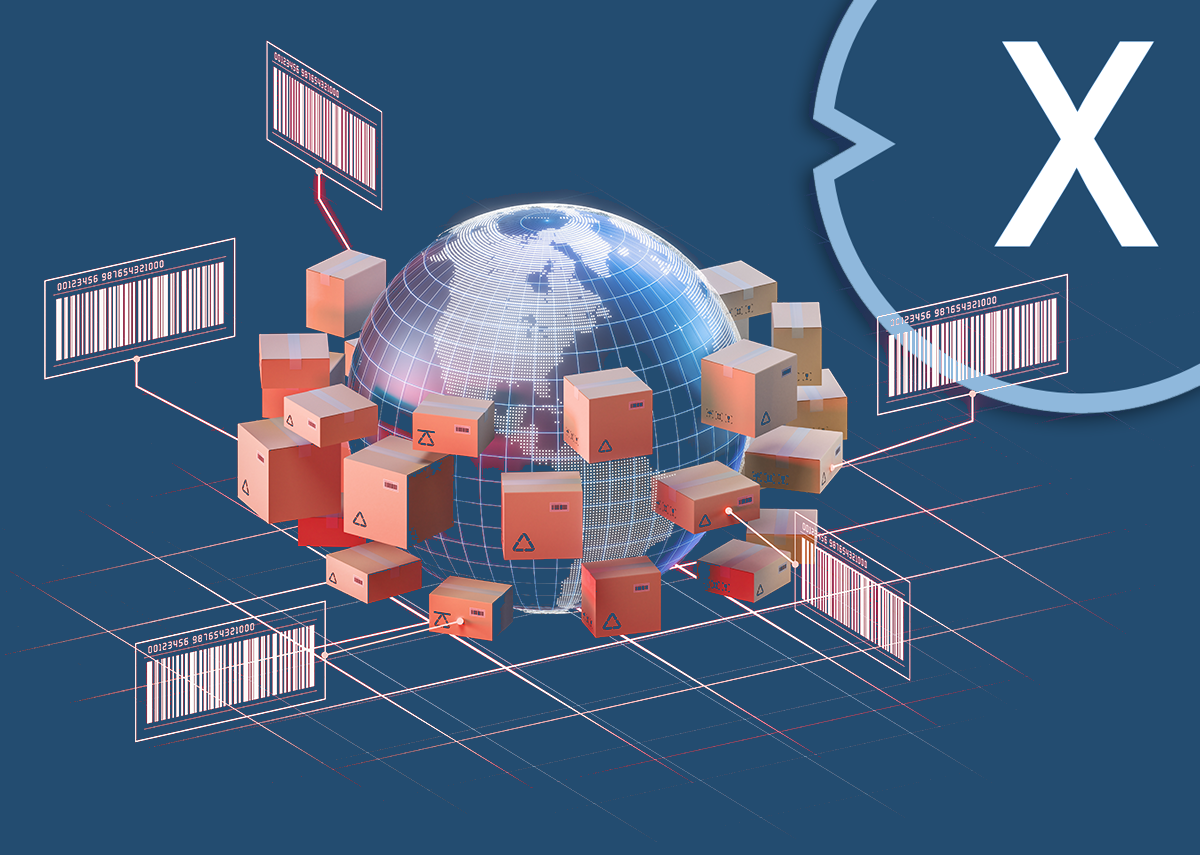
The 1D barcode revolutionized global logistics - Image: Xpert.Digital / Vink Fan|Shutterstock.com
More about it here:
We are there for you - advice - planning - implementation - project management
☑️ SME support in strategy, consulting, planning and implementation
☑️ Creation or realignment of the digital strategy and digitalization
☑️ Expansion and optimization of international sales processes
☑️ Global & Digital B2B trading platforms
☑️ Pioneer Business Development

Konrad Wolfenstein
I would be happy to serve as your personal advisor.
You can contact me by filling out the contact form below or simply call me on +49 7348 4088 965 (Munich) .
I'm looking forward to our joint project.
Write to me

Xpert.Digital - Konrad Wolfenstein
Xpert.Digital is a hub for industry with a focus on digitalization, mechanical engineering, logistics/intralogistics and photovoltaics.
With our 360° business development solution, we support well-known companies from new business to after sales.
Market intelligence, smarketing, marketing automation, content development, PR, mail campaigns, personalized social media and lead nurturing are part of our digital tools.
You can find out more at: www.xpert.digital - www.xpert.solar - www.xpert.plus
Keep in touch










