Diplomatic crisis at the NATO summit in The Hague? Asia's most important partners stay away – Image: Xpert.Digital
NATO summit in The Hague: Asian partners pointedly stay away from the alliance meeting
New geopolitical reality: NATO summit without key partners from the Indo-Pacific region
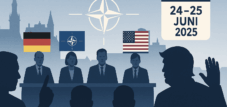
The security landscape of Europe and the Indo-Pacific experienced a significant turning point on June 24 and 25, 2025, when an unprecedented diplomatic situation arose at the NATO summit in The Hague. Contrary to initial plans, the heads of state and government of the three most important NATO partner countries from the Asia-Pacific region stayed away from the high-level meeting. This development sheds light on the current tensions in transatlantic relations and the changed geopolitical dynamics between the US, Europe, and their strategic partners in the Indo-Pacific.
Related to this:

The cancellations and their immediate effects
South Korea: Domestic priorities and geopolitical uncertainties
South Korean President Lee Jae-myung, who only took office in June 2025 following a severe domestic political crisis, decided at the last minute not to attend the NATO summit. His cancellation came after days of speculation and conflicting signals from the presidential office in Seoul. National Security Advisor Wi Sung-lac had initially indicated that he would attend, before the final decision against the trip to The Hague was made.
Lee Jae-myung, who had risen from humble beginnings to become a human rights lawyer and overcome severe personal crises, faced enormous domestic challenges after his election victory. The profound social tensions in South Korea, marked by generational conflicts and the world's lowest birth rate, demanded his immediate attention at home.
Furthermore, the Trump administration's increased import tariffs, particularly on South Korean automobiles, and restrictions on chip exports to China are jeopardizing the economic foundations of this East Asian tiger economy. These factors, combined with the need to respond to North Korea's abandonment of reunification and its strengthened alliance with Russia, made a focus on domestic affairs unavoidable.
Japan: Strategic considerations and disappointed expectations
Japanese Prime Minister Shigeru Ishiba, who has been in office since October 2024 and has extensive experience as a former defense minister, had initially confirmed his participation. Just three days before the summit, the Japanese Foreign Ministry confirmed that Ishiba, together with NATO allies, intended to reaffirm the inextricable link between the security of the Euro-Atlantic and Indo-Pacific regions.
The about-face came, however, when it became clear that the planned NATO meeting with the Indo-Pacific Four nations was unlikely to take place and that a bilateral meeting with US President Donald Trump was also improbable. Ishiba, considered an experienced security policy expert and instrumental in preparing the deployment of Japan's Self-Defense Forces to Iraq, apparently saw no strategic benefit in a lengthy trip without substantial diplomatic results.
The decision is particularly noteworthy given that Japan had regularly participated in NATO summits since 2022, having first been invited after Russia's invasion of Ukraine. Japan and NATO have significantly deepened their partnership since the start of the war in Ukraine and view the security of the Indo-Pacific region as inextricably linked to that of Europe.
Australia: Domestic political agenda takes precedence over international diplomacy
Australian Prime Minister Anthony Albanese also cancelled his participation, sending Defense Minister Richard Marles instead. Albanese, who had only been re-elected to a second term in May 2025 with a historic landslide victory, was focusing on pressing domestic issues.
The Labor politician had received an impressive re-election in the May 2025 general election, bucking a global anti-incumbency wave and winning 17 additional seats. His government now holds 94 seats in the House of Representatives – the highest number ever achieved by any party in the Australian federal legislature. This strong domestic position allowed Albanese to postpone international engagements in favor of fulfilling his campaign promises.
Australia is considered one of the US's most reliable allies in the Indo-Pacific and possesses considerable military capabilities as well as extensive experience in expeditionary operations. The country has traditionally participated heavily in NATO operations in the Middle East and the Indian Ocean and is a NATO Enhanced Opportunities Partner.
The Indo-Pacific Four: A strategic partnership under pressure
Definition and meaning of IP-4
The Indo-Pacific Four consist of South Korea, Japan, New Zealand, and Australia – four countries all bordering the western Pacific Ocean and key NATO partners in the Asia-Pacific region. Japan and South Korea are located in East Asia, while Australia and New Zealand belong to Australasia.
These countries have continuously expanded their bilateral relations with NATO over the past two decades. This cooperation takes place within the framework of the so-called "Individually Tailored Partnership Programme"—a jointly agreed partnership framework that identifies areas of common interest for cooperation.
Development of NATO-Indo-Pacific relations
Cooperation between NATO and its Indo-Pacific partners has developed in various areas, including cyber defense, the Women, Peace and Security agenda, military interoperability, maritime security, and the Science for Peace and Security program. These partnerships played a particularly important role during NATO's engagement in Afghanistan.
Experts from the Royal United Services Institute declared NATO a leading institutional platform for the Indo-Pacific after the summit in Washington. This is due not only to the increasing intensity of cooperation with the IP-4, but also to the fact that it is one of the few formats in which Japan and South Korea come together for security policy cooperation.
From Asia to Europe: How geopolitical tensions threaten our supplies
The geopolitical importance of the Indo-Pacific for the global security architecture can hardly be overestimated. Asia is the world's most dynamic growth region, while at the same time the Indo-Pacific region faces conflict lines of global significance that can directly affect Europe and Germany.
Ninety percent of global trade takes place by sea, a large portion of it via the Indo-Pacific. Any disruption to transport routes in this region would have serious consequences for supply chains to and from Europe, thus jeopardizing the prosperity and supply of goods and services, including those of Germany.
The Indo-Pacific region is home to the nuclear powers India, Pakistan, China, and Russia, as well as North Korea with its nuclear program. Countries in the region, such as the USA, Taiwan, Japan, and China, are heavily increasing their military spending. From 2010 to 2019, military spending in the region rose by 50 percent, and in China's case by as much as 80 percent.
Hub for Security and Defense - Advice and Information

Hub for Security and Defense - Image: Xpert.Digital
The Security and Defence Hub offers expert advice and up-to-date information to effectively support companies and organizations in strengthening their role in European security and defence policy. Working closely with the SME Connect Defence Working Group, it particularly promotes small and medium-sized enterprises (SMEs) that wish to further develop their innovative capacity and competitiveness in the defence sector. As a central point of contact, the Hub thus creates a crucial bridge between SMEs and European defence strategy.
Related to this:
NATO increases defense spending to 5 percent of GDP: Europe's answer to growing threats
Geopolitical tensions and their effects
The role of Donald Trump and American politics
The cancellations by the three most important Indo-Pacific partners are directly related to Donald Trump's return to the White House and his unpredictable foreign policy. Trump had already caused friction at the G7 summit when he left the meeting early, thus canceling a planned meeting with South Korean President Lee Jae-myung.
Christopher Johnstone of the American consulting firm Asia Group, a former Biden staffer, sees the cancellations as a symbolic break. He suspects that all three leaders see little point in a meeting where the US will put even more pressure on its allies to increase their defense spending. Put more bluntly, they are simply fed up with Donald Trump.
The second Trump administration revived the central principle of "America First," leading to the imposition of conditions on all major US foreign policy commitments. The European Parliament expressed concern about the rapid pace at which the US government is dismantling established partnerships.
Security threats and hybrid warfare
The current security situation is dominated by Russia's war of aggression against Ukraine since February 2022. This war, which violates international law, has severely shaken the European security order and has far-reaching consequences for the global security architecture.
Since the beginning of the war, Russia has massively increased its military spending and now produces more weapons and other armaments in three months than all NATO countries do in a year. The German Federal Intelligence Service (BND) believes that Russia will be capable of launching military attacks on NATO territory within the next four to seven years.
At the same time, many NATO members are increasingly targeted by hybrid attacks from Russia, particularly espionage, sabotage, and cyberattacks. These hybrid threats are characterized by the coordinated use of various methods of illegitimate influence without crossing the threshold into formal warfare.
China as a strategic challenge
China poses an increasing threat to the European security architecture. For the past two years, China has consistently stated that it will not supply Russia with lethal weapons, yet European intelligence agencies have obtained evidence that China is supplying lethal drones manufactured in the Xinjiang region and then shipped to Russia.
The risks of a military conflict in the Indo-Pacific are currently greatest in the South China Sea. China's increasingly aggressive behavior in the South China Sea and the Taiwan Strait, as well as concerns about a potential withdrawal of US military support, are challenges that affect Germany and its allies in the Indo-Pacific equally.
NATO's response and strategic realignment
Increase in defense spending
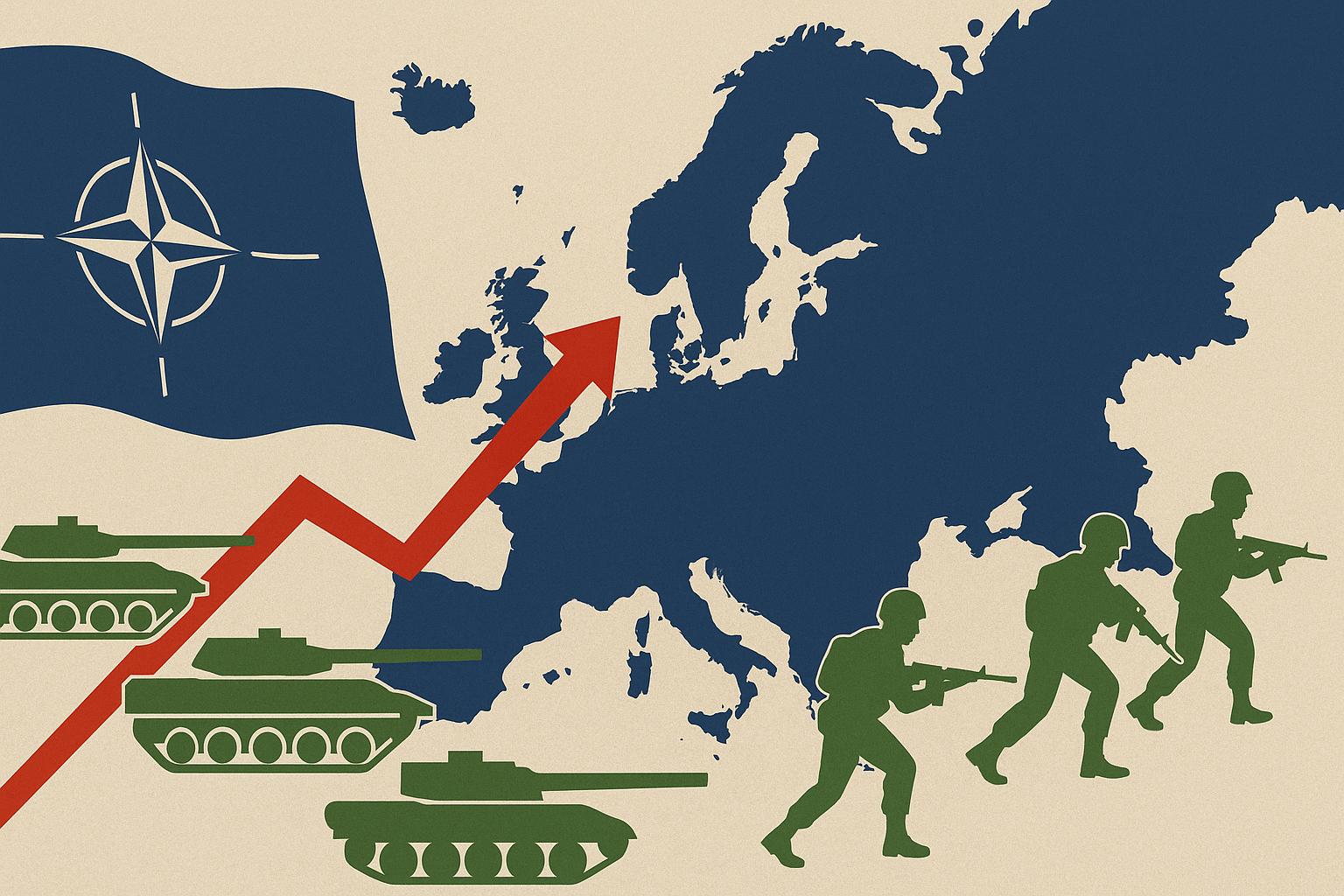
At the NATO summit in The Hague, member states agreed on a drastic increase in their defense budgets to five percent of their respective gross domestic product by 2035. This target stipulates that 3.5 percent of GDP should be used for defense measures in the strict sense, such as armaments or soldiers' salaries. A further 1.5 percent is to be invested in infrastructure such as the expansion of roads and bridges suitable for military use or cyber protection.
This massive arms buildup is not only due to the threat from Russia, but also because of concerns that the US might withdraw from the alliance if European states do not assume more responsibility for conventional deterrence and defense on their continent.
Related to this:

Strengthening the defense industry and technological cooperation
Another key focus of the NATO summit was the expansion of the defense industry and the strengthening of military capabilities. NATO partners must comprehensively strengthen their deterrence and defense capabilities to meet the changing threat landscape.
Japan and NATO have already intensified their cooperation in the defense industry. Japanese Prime Minister Shigeru Ishiba and NATO Secretary General Mark Rutte agreed to collaborate on, among other things, the development of cutting-edge technologies that can be used for both civilian and military purposes.
Maritime safety and sealift capacities
The conflict in Ukraine has demonstrated the importance of land-based logistics, which should remind decision-makers of the importance of sea-based logistics. Without the ability to supply a conflict zone with necessities such as food, ammunition, new weapons, and energy, military forces cannot sustain a conflict for long.
Experts estimate that more than 200 cargo ships—including roll-on/roll-off vessels, ferries, product tankers, and container ships—would be needed to manage and win a confrontation with China in the western Pacific. A European confrontation with Russia would likely entail a similar sealift challenge between North America and Europe.
New Zealand as the sole representative
Of the four Indo-Pacific partners, only New Zealand participated in the NATO summit at the level of heads of government. Prime Minister Christopher Luxon was thus the only one to represent the voice of the IP4 states at the high-level discussions in The Hague.
This situation underscores the diplomatic isolation NATO finds itself in regarding its Indo-Pacific partnerships. New Zealand, the smallest of the four IP-4 countries, could not alone represent the strategic weight that the entire group normally brings to NATO consultations.
Long-term effects on transatlantic relations
European independence versus American leadership
The cancellations by the Indo-Pacific partners raise fundamental questions about the future of the transatlantic security architecture. The EU and NATO are planning a radical reorganization of the European security landscape, with the central question being: How much European autonomy is possible without jeopardizing the vital transatlantic partnership?
France traditionally pushes for greater European autonomy, while Eastern European states favor close ties with the USA. Germany, as so often in recent years, wavers indecisively between these positions and becomes entangled in bureaucratic processes.
Strengthening security cooperation in and with Asia
Asia and the Pacific region are of great strategic importance to the EU, as Europe's security and prosperity are closely intertwined with developments in the region. However, addressing security issues in and with Asia is complex and difficult, as the Asian security landscape is shaped by numerous factors.
These include historical grievances and territorial disputes, ethnic tensions, the interplay between local and external power shifts, and global challenges such as organized crime, terrorism, and the security of sea lanes and the internet.
A turning point in international security policy
The diplomatic crisis at the NATO summit in The Hague marks a significant turning point in international relations. The unprecedented cancellations by NATO's three main Indo-Pacific partners reflect deeper tensions in the global security architecture and raise questions about the future of transatlantic partnerships.
These events illustrate that the world is in a phase of security policy upheaval. While NATO prepares for the greatest challenges since the end of the Cold War, its relationships with strategic partners in the Indo-Pacific must simultaneously be recalibrated.
The absence of South Korea, Japan, and Australia at the NATO summit does not signify the end of security cooperation, but rather necessitates new formats and approaches. NATO and its European member states must recognize that a successful security strategy in the 21st century can only be achieved through genuine partnership on equal terms with the Indo-Pacific democracies.
The challenges are immense: from Russian aggression in Europe and China's growing power projection in the Indo-Pacific to hybrid threats and cybersecurity risks. At the same time, opportunities are emerging for a redesign of the international security architecture to reflect the realities of the increasingly multipolar 21st century.
The events in The Hague will go down in history as a catalyst for necessary reforms in international security policy. It is now up to the political leaders in Washington, Brussels, Tokyo, Seoul, and Canberra to draw the right lessons from this diplomatic crisis and lay the foundations for a more stable and cooperative future.
Consulting - Planning - Implementation

Markus Becker
I would be happy to serve as your personal advisor.
Head of Business Development
Chairman SME Connect Defense Working Group
Consulting - Planning - Implementation
Konrad Wolfenstein
I would be happy to serve as your personal advisor.
You can contact me at wolfenstein∂xpert.digital or
Just call me on +49 7348 4088 965 .
Your dual-use logistics experts
Dual-use logistics experts - Image: Xpert.Digital
The global economy is currently undergoing a fundamental transformation, a watershed moment that is shaking the foundations of global logistics. The era of hyper-globalization, characterized by the relentless pursuit of maximum efficiency and the "just-in-time" principle, is giving way to a new reality. This new reality is marked by profound structural breaks, geopolitical power shifts, and increasing fragmentation of economic policy. The once taken-for-granted predictability of international markets and supply chains is dissolving and being replaced by a period of growing uncertainty.
Related to this: