Corona makes electricity generation cheaper – @shutterstock | creativeneko
Corona makes electricity generation cheaper – Corona preferential electricity generation
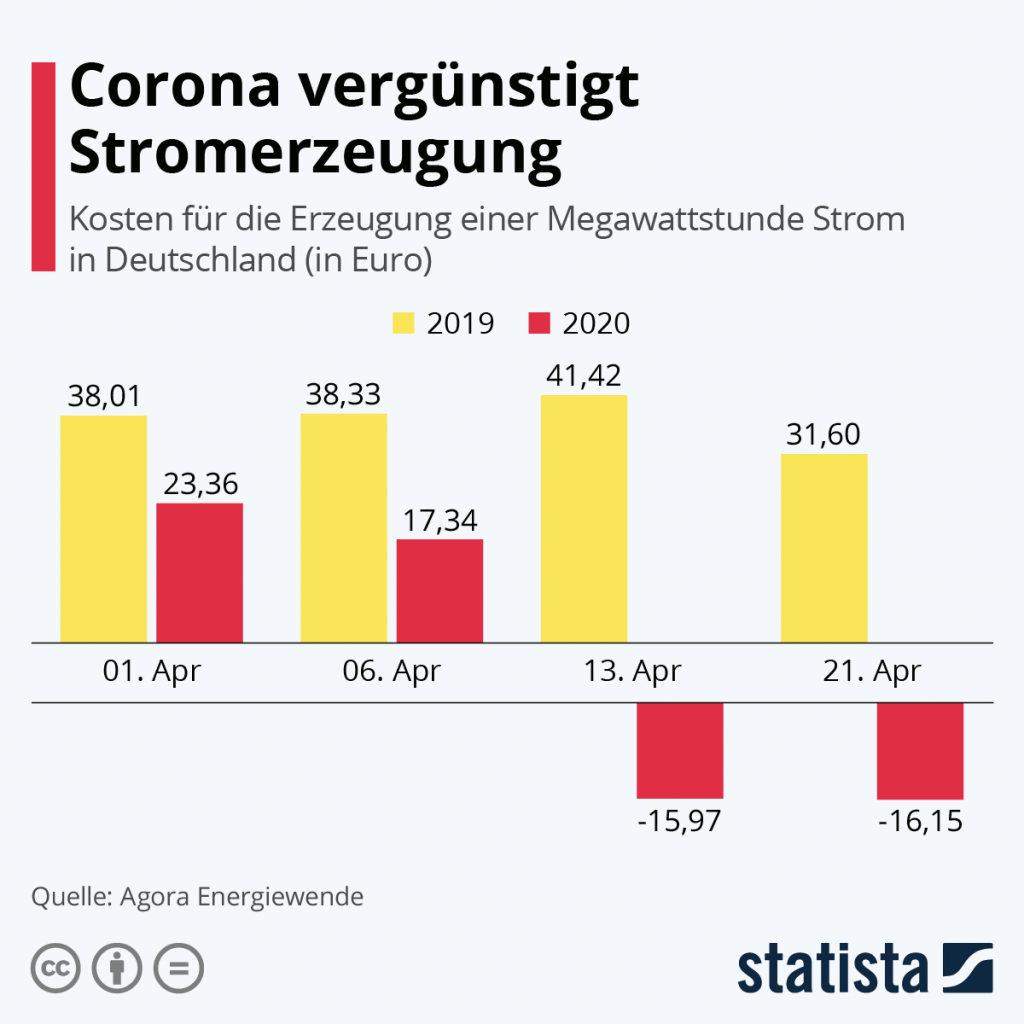
The cost of generating one megawatt-hour of electricity fell to a negative value of approximately €16 in April. This means that Germany was able to cover the majority of its electricity demand using cost-effective resources such as wind and solar power and export the surplus. Clear, smog-free air conditions combined with sunny weather caused electricity generation from photovoltaic systems to surge, as experts from Agora Energiewende noted. The reduced activity of citizens during the lockdown also significantly lowered electricity consumption – an effect usually only observed on sunny weekends and holidays. Negative prices are becoming increasingly common. The more frequently consumption can be met by renewable energy sources, the less focus there is on fossil fuels. These are emerging as the losers in the energy market during the ongoing coronavirus crisis.
The generation of one megawatt hour of electricity fell to a negative value of around EUR 16 in April. This means that with the help of low-cost resources such as wind power and solar energy, Germany was able to cover most of its electricity needs and export the surplus. Clear, smog-free air conditions in combination with clear weather are causing electricity generation by photovoltaic systems to skyrocket, the experts from Agora Energiewende noted. The low level of activity by citizens during the lockdown also significantly reduces electricity consumption. An effect that is otherwise only seen on sunny weekends and holidays. The occurrence of negative prices is becoming increasingly common. The more often consumption can be covered by renewable energy sources, the more fossil fuels are moving out of focus. These are becoming the losers of the energy market during the ongoing corona crisis.

Keep in touch