
Challenges and possible solutions in refrigerated and fresh food logistics in Italy: A comprehensive analysis

Language selection 📢
Published on: December 10, 2024 / update from: December 10, 2024 - Author: Konrad Wolfenstein
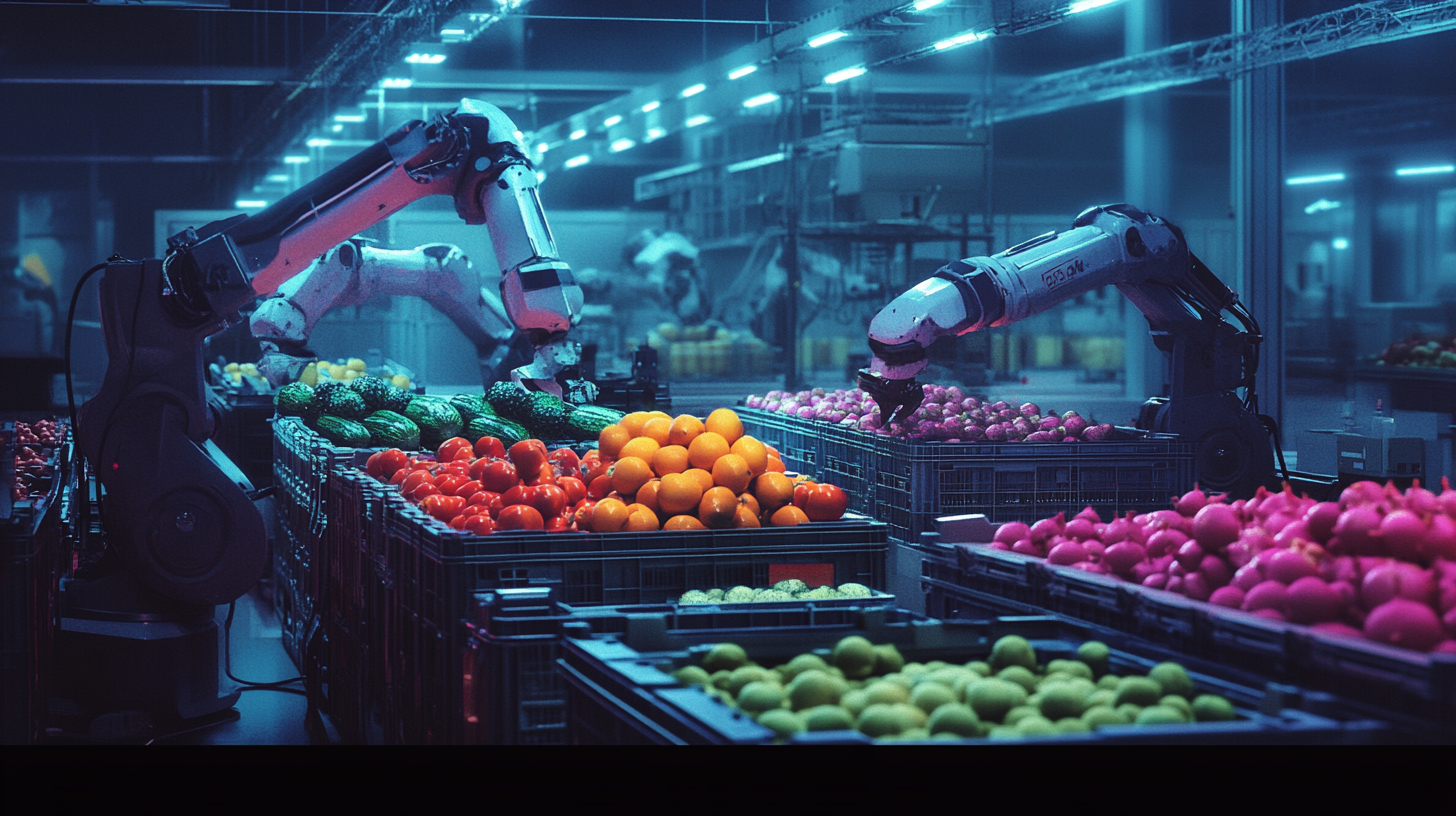
Challenges and possible solutions in refrigerated logistics in Italy – Robotics in refrigerated logistics – Image: Xpert.Digital
❄️ The challenges and opportunities of refrigerated logistics in Italy
🧊 Refrigerated logistics plays a central role in the supply chain of fresh food and temperature-critical products in Italy. However, this sector faces a number of challenges that have a major impact not only on efficiency but also on competitiveness. One of the main causes of these difficulties is the fragmented market structure, which poses significant obstacles, particularly for small and medium-sized enterprises (SMEs).
🌍 The fragmented market structure as a core problem
In Italy, many small and medium-sized companies dominate refrigerated logistics. These SMBs often struggle to find the financial and human resources needed to fully modernize their infrastructure and processes. While some companies are already using cutting-edge technologies such as automated refrigeration systems, precise temperature monitoring and digitalized supply chain controls, others continue to operate with outdated technology. This inequality leads to significant differences in efficiency and quality along the supply chain.
An example of this discrepancy is the unequal distribution of investments in smart cooling technologies. These technologies not only enable more precise control of cold chains, but also reduce energy losses and associated costs. Companies with limited access to capital or technological know-how miss these opportunities, which significantly impairs their long-term competitiveness.
🔧 Modernization as the key to competitiveness
Modernizing refrigerated logistics is essential to increase the efficiency and quality of the Italian market. The focus is not only on introducing new technologies, but also on implementing best practices in supply chain management. Companies can benefit from international role models such as Japan, which is a global leader in intralogistics.
Japanese companies are characterized by their years of experience in dealing with urban challenges and their extensive knowledge of logistics management. This expertise has enabled them to implement innovative solutions such as automated refrigerated transport, energy-efficient refrigeration systems and data-based optimizations in their logistics chains. By cooperating with such global market leaders, Italian companies can benefit from these developments and increase their own competitiveness.
Suitable for:
🤝 Cooperations as a way out of fragmentation
An effective approach to counteract the fragmentation of Italian refrigerated logistics is to promote strategic alliances and collaborations. Through mergers, companies can not only pool their resources, but also gain access to modern know-how and innovative technologies. Partnerships with experts like Xpert.Digital, who specialize in solutions for intralogistics, are particularly promising.
An example of a successful cooperation is the collaboration between Xpert.Digital and a Japanese global market leader in the area of refrigerated logistics, among other things. Such partnerships allow Italian companies to benefit from the economies of scale and technological superiority of their international partners. In addition, they promote the exchange of knowledge and best practices, which can lead to faster adoption of modern technologies.
💡 Innovations and synergies through networks
Another potential of collaborations lies in promoting innovations. By bringing together various actors along the supply chain, synergies can be created that make it possible to realize joint development projects. An example of this is the development of platforms for real-time monitoring of the cold chain. Such systems make it possible to immediately detect and correct temperature deviations before damage occurs to the transported goods.
In addition, networks of companies and research institutions can help find new solutions to key challenges in refrigerated logistics. These include, for example, reducing energy consumption, improving the environmental balance and adapting to changing legal requirements such as stricter environmental regulations.
🚧 Implementation challenges
Despite the promising approaches, implementing such strategies remains a challenge. Small and medium-sized companies often face financial and organizational obstacles that prevent them from participating in larger collaborations or implementing innovative technologies. Government funding programs or tax incentives could help here. These could, for example, support investments in energy-efficient cooling systems and digital monitoring technologies.
Additionally, it is important that companies invest in training their staff. The introduction of new technologies requires skilled workers who are able to handle the complex systems and use them effectively. Here, stronger cooperation between companies and educational institutions could help to develop appropriate training programs.
🌱 The importance of sustainability
Another important aspect that cannot be neglected in the discussion about modernizing refrigerated logistics is sustainability. In view of climate change and rising energy costs, environmental sustainability is becoming a key competitive factor. Companies that invest in sustainable solutions can not only reduce their operating costs, but also gain an advantage in the market.
For example, energy-efficient cooling systems can significantly reduce CO₂ emissions. In addition, companies can help reduce their ecological footprint by using renewable energies, such as solar energy for cold storage. Such measures are not only good for the environment, but also improve a company's image and can increase consumer trust.
📈 To remain competitive in the long term
Refrigerated logistics in Italy faces significant challenges, which are primarily caused by the fragmented market structure and the different levels of development of the companies. In order to remain competitive in the long term, comprehensive modernization is essential. Strategic alliances, the introduction of innovative technologies and the promotion of sustainability are crucial factors.
Through collaborations with international experts such as Xpert.Digital and leading companies from Japan, Italian companies can benefit from proven solutions and increase their own efficiency and quality. At the same time, it is important that government support and training programs help reduce barriers for smaller businesses.
With a clear focus on innovation, collaboration and sustainability, Italian refrigerated logistics has the chance to successfully transform and remain competitive in the long term. Only through a holistic approach can the challenges be overcome and the potential of this important sector of the economy be fully exploited.
📣 Similar topics
- 📦 Increased efficiency in Italian refrigerated logistics
- 🌱 Sustainability as the key to the refrigerated logistics of the future
- 🚛 Strategies for transporting temperature-sensitive goods
- 📉 Reduce operating costs: solutions for Italian logistics companies
- 🧑🔧 Overcome the shortage of skilled workers: New approaches in refrigerated logistics
- 🖥️ Digitalization and technology in the Italian cold chain industry
- 📜 Regulations and standards: challenges for the industry
- 🌍 Supply chain disruptions: Building resilience in times of crisis
- 🏗️ Market fragmentation: Why cooperation is the future of the industry
- 🥶 Innovation as an opportunity: New ways of Italian refrigerated logistics
#️⃣ Hashtags: #Sustainability #Digitalization #Refrigerated Logistics #Competitiveness #Energy Efficiency

Xpert partner in warehouse planning and construction
❄️🤖 Full automation and robotics as an expanded and promising solution with a lot of potential
🔧⚙️ Full automation and the use of robotics are not only technological trends, but also essential drivers for the transformation of economy and industry. They enable companies to make processes more efficient, reduce costs and increase productivity at the same time. The integration of technologies such as Robotic Process Automation (RPA) and collaborative robots (cobots) opens up completely new possibilities in process design. This article highlights the potential, challenges and future prospects of these technologies.
🚀 The role of full automation and robotics
Automation involves the use of technology to replace manual tasks with machines or software. In its highest form, full automation, processes can run without human intervention. Robotics complements this development with physical machines that can perform tasks in the real world. Automation and robotics play a key role, especially in the context of Industry 4.0.
Advantages of full automation
1. Increased efficiency
Automated systems work faster and more precisely than humans. For example, robots in production lines can take on repetitive tasks while delivering consistently high quality.
2. Cost reduction
By using RPA, companies can automate repetitive office tasks such as data entry or document processing, saving man-hours and reducing errors.
3. Flexibility
Modern automation systems are adaptable and can react to changing requirements, e.g. B. through AI-supported optimizations.
4. Sustainability
Automated processes are often more energy efficient than manual processes because they make better use of resources.
📡 Robotics as a key technology
Robots have become indispensable in many industries. They not only take on tasks in production, but also in logistics, medicine or agriculture. Particularly collaborative robots (cobots) that can work directly with people open up new possibilities:
Relief for employees
Cobots take on monotonous or physically demanding tasks so that employees can concentrate on more complex tasks.
Security
Thanks to modern sensor technology, cobots work safely alongside people without the need for protective devices.
Flexibility in production
Cobots enable flexible production islands instead of rigid production lines, which is particularly advantageous for small batch sizes.
🛠️ Application areas of automation and robotics
The possible uses are diverse and range from industry to services:
1. 🏭 Manufacturing industry
The automotive industry is a pioneer in the use of robotics. Robots are used here for welding, assembly or painting work. One example is the use of the Kuka cobot LBR iiwa at Yanfeng Automotive Interiors, where it significantly increased the efficiency of the production line.
2. 🚚 Logistics
Intralogistics systems such as driverless transport systems (AGVs) are revolutionizing warehouses. Fully automated systems can sort, store and transport goods - often without human intervention.
3. 🖥️ Office work
RPA has the potential to automate administrative tasks such as invoice verification or customer inquiries. One example is the insurance industry, where RPA makes the underwriting process more efficient and reduces errors.
4. 🏥 Medicine
Robots assist in operations or take on repetitive tasks such as sorting medications in pharmacies.
5. 🌱 Agriculture
Automated machines plant, irrigate or harvest crops more efficiently than traditional methods.
⚡ Implementation challenges
Despite all the advantages, there are also challenges:
- High initial investment: Implementing fully automated systems requires significant investment in technology and infrastructure.
- Complexity: Integrating new technologies into existing processes can be difficult and requires careful planning.
- Acceptance by employees: Fear of losing a job can cause resistance. Sustainable change management is crucial.
- Technological requirements: The development of energy-efficient yet high-performance systems remains a technical challenge.
🌟 Future prospects
The future of automation lies in even closer integration with artificial intelligence (AI). AI enables systems to learn from data and adapt to changing conditions:
- Self-optimizing systems: Automation systems will increasingly be able to make decisions autonomously – similar to a navigation system that calculates alternative routes.
- Dark Factories: Fully automated factories without human presence could become a reality. These systems work more efficiently and require less energy for lighting or heating.
- Scalability: Modular concepts make it easier to adapt automation solutions to growing requirements.
🔍 Full automation and robotics
Full automation and robotics offer enormous potential for companies in all industries. They not only enable efficiency increases and cost reductions, but also innovative business models and sustainable solutions. However, their successful implementation requires a clear strategy as well as investments in technology and employee training. Looking at the rapid technological development, it becomes clear: the future belongs to those who see automation not just as a tool, but as an integral part of their corporate strategy.
📣 Similar topics
- 📣 The revolution in industry through full automation and robotics
- 🤖 Efficiency and Innovation: How automation is shaping the future
- ⚙️ Industry 4.0: Why automation and robotics are essential
- 💡 New perspectives through cobots and AI-supported systems
- 🚀 Full automation: The coming era of productivity
- 💼 RPA in companies: From the office to the industrial hall
- 🌱 Sustainability through smart automation solutions
- 🛠️ Challenges of Automation: Cost, Acceptance and Technology
- 🏭 Application areas of robotics: From production to agriculture
- 🔮 Full automation and robotics: A look into the future
#️⃣ Hashtags: #Industry4.0 #Robotics #FullyAutomation #ArtificialIntelligence #FutureOfWork

Xpert.Plus warehouse optimization - high-bay warehouses such as pallet warehouses consulting and planning
We are there for you - advice - planning - implementation - project management
☑️ SME support in strategy, consulting, planning and implementation
☑️ Creation or realignment of the digital strategy and digitalization
☑️ Expansion and optimization of international sales processes
☑️ Global & Digital B2B trading platforms
☑️ Pioneer Business Development

Konrad Wolfenstein
I would be happy to serve as your personal advisor.
You can contact me by filling out the contact form below or simply call me on +49 7348 4088 965 (Munich) .
I'm looking forward to our joint project.
Write to me

Xpert.Digital - Konrad Wolfenstein
Xpert.Digital is a hub for industry with a focus on digitalization, mechanical engineering, logistics/intralogistics and photovoltaics.
With our 360° business development solution, we support well-known companies from new business to after sales.
Market intelligence, smarketing, marketing automation, content development, PR, mail campaigns, personalized social media and lead nurturing are part of our digital tools.
You can find out more at: www.xpert.digital - www.xpert.solar - www.xpert.plus
Keep in touch











