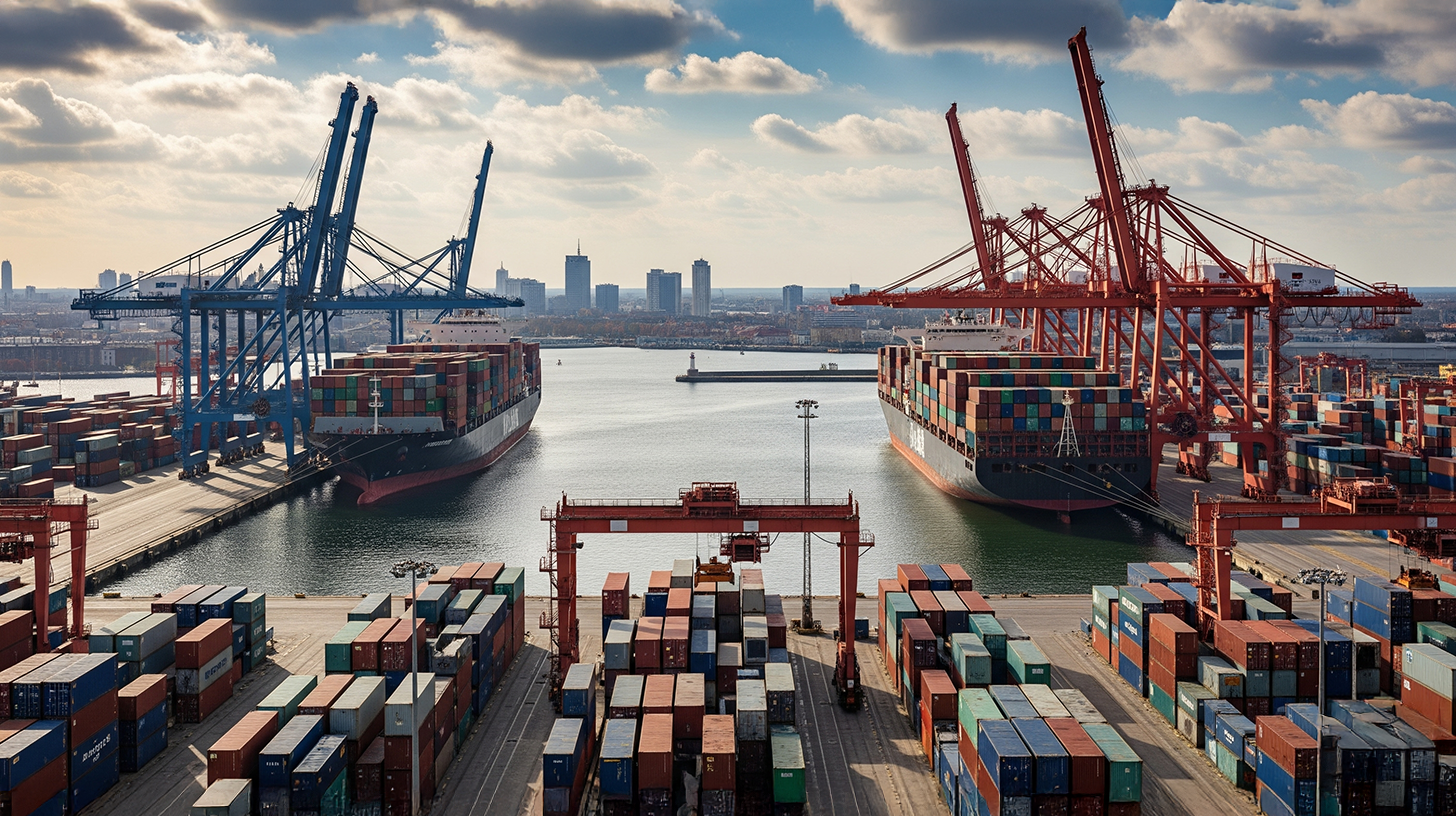
Container port with deep-water container terminals in Swinoujscie (Swinemünde) – Poland's gateway to the world – Creative image: Xpert.Digital
A declaration of war on Hamburg & Co.? Poland is investing billions in a new super-port for the world's largest ships
A once-in-a-century project on the Baltic Sea – bigger, deeper, more modern: A port is being built in Poland that will make even the world's largest ships look tiny
One of Central Europe's most ambitious infrastructure projects is currently under construction on the Polish Baltic coast. In Świnoujście, just a few kilometers from the German Baltic seaside resorts, a modern deep-water container port is taking shape, one that will permanently alter Europe's maritime landscape. The project, scheduled for completion by 2029, marks a turning point in the Polish port industry and underscores the country's growing importance as a logistics hub between East and West.
Swinemünde's strategic location on the Pomeranian Bay, directly at the mouth of the Swine River into the Baltic Sea, makes it an ideal site for a port of international importance. Its proximity to Germany and excellent transport connections to the European hinterland make the project a key logistics investment for all of Central Europe.
Related to this:

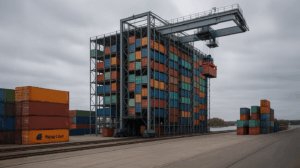
The vision of a modern logistics center
The new container terminal in Swinoujscie is far more than just another port on the Baltic Sea. It is a visionary facility that, upon completion, will be among the most modern and efficient ports in Europe. Plans call for the world's largest container ships to be able to dock here – giants of the seas with lengths of up to 400 meters.
These dimensions are not accidental, but a conscious decision by the Polish government to position itself in the international competition among seaports. While many Baltic Sea ports can only handle smaller ships due to their limited water depth, Świnoujście will be able to accommodate even the latest generation of large container ships.
The new terminal boasts impressive capacity. Two of the world's largest container ships can be loaded and unloaded simultaneously at its two parallel quays. This enables efficient handling and minimizes waiting times for shipping companies. The technical equipment will be state-of-the-art, featuring automated cranes, intelligent logistics systems, and digital port management.
Investments in the billions
The financial dimensions of the project reflect its significance. With an investment volume of €580 million for the container terminal alone and an additional €2.3 billion for maritime infrastructure, it is one of the largest single investments in the history of the Polish maritime industry.
These enormous sums are being invested in various sub-projects. In addition to the terminal itself, modern warehouses, administrative buildings, customs facilities, and a state-of-the-art traffic management system are being built. The creation of the necessary maritime infrastructure, which includes a new shipping channel, is particularly costly.
Financing is provided through a combination of state funds, EU funding programs, and private investment. The Polish government has declared the project a national priority and is providing substantial funds from the state budget. At the same time, funds are flowing from various EU programs, as the port is considered a key component of the trans-European transport network.
The new fairway as a technical masterpiece
A key element of the project is the creation of a new shipping channel that will allow large container ships to safely reach Świnoujście. With a planned length of 65 kilometers and a depth of 17 meters, this channel presents an enormous engineering challenge.
The dredging work for the shipping channel is among the most complex measures of the entire project. Millions of cubic meters of sand and sediment must be removed from the seabed to achieve the necessary water depth. State-of-the-art floating dredgers will be used for this purpose, operating around the clock.
The environmental impacts of these massive interventions in the seabed are being carefully monitored. Extensive environmental impact assessments have been carried out, and measurements are being taken continuously during the construction phase to ensure that the impacts on the marine ecosystem are minimized.
International cooperation in construction
The realization of a project of this magnitude requires international expertise. The Polish government has therefore commissioned a consortium of companies from Qatar and Belgium to build the terminal. This partnership brings not only the necessary technical know-how but also international experience in the construction of major ports.
The Qatari partners contribute their expertise in building modern port facilities on the Persian Gulf, while the Belgian companies contribute their many years of experience in European port construction. This combination promises an optimal blend of innovation and proven methods.
The collaboration extends across all phases of the project, from detailed planning and construction to final commissioning. State-of-the-art project management methods are employed to ensure that the ambitious schedule is met.
Poland's growing importance in container traffic
The decision to build the deep-water container terminal in Świnoujście was not made lightly. In recent years, Poland has experienced remarkable growth in container handling. Transshipment figures in Polish ports have risen steadily, reaching a volume of 3.3 million standard containers last year.
This positive development can be attributed to several factors. Firstly, Poland benefits from its geographical location as a bridge between Western and Eastern Europe. Secondly, the country's strong economic growth has led to increased import and export volumes. Last but not least, improved hinterland connections also play an important role.
The Polish government under Prime Minister Donald Tusk has set ambitious goals. By 2030, container throughput in Polish ports is to increase to up to ten million standard containers. This would triple the current volume and make Poland one of the most important container hubs on the Baltic Sea.
Economic impact on the region
The new container port will have far-reaching economic effects on the entire region. Experts anticipate that several thousand new jobs will be created, both directly and indirectly. In addition to employees at the port itself, numerous new positions will also be created in upstream and downstream sectors.
The local economy will benefit from the increased demand for services. Hotels, restaurants, transport companies, and many other sectors will profit from the increased business volume. At the same time, the improved infrastructure will increase the region's attractiveness for further investment.
For the city of Świnoujście, the project represents a historic opportunity. The city, traditionally shaped by tourism, will develop into a major economic center. However, this will also require adjustments to urban development to harmonize the various uses – tourism, residential, and port operations.
Challenges and resistance
As with any major project, the construction of the container port in Świnoujście faces challenges and opposition. Environmentalists have raised concerns about the impact on the sensitive Baltic Sea ecosystem. The region around Świnoujście is home to various protected species and habitats that could be affected by the port construction.
Some local residents also have reservations about the project. They fear an increase in noise and air pollution, as well as negative impacts on tourism. The proximity to the popular German Baltic Sea resorts on Usedom makes these concerns particularly relevant.
The Polish government and project managers have responded to these concerns. Extensive environmental and noise protection measures have been integrated into the plans. At the same time, intensive dialogue has been conducted with the affected communities and stakeholders to find compromises and increase acceptance of the project.
Your container high-bay warehouse and container terminal experts

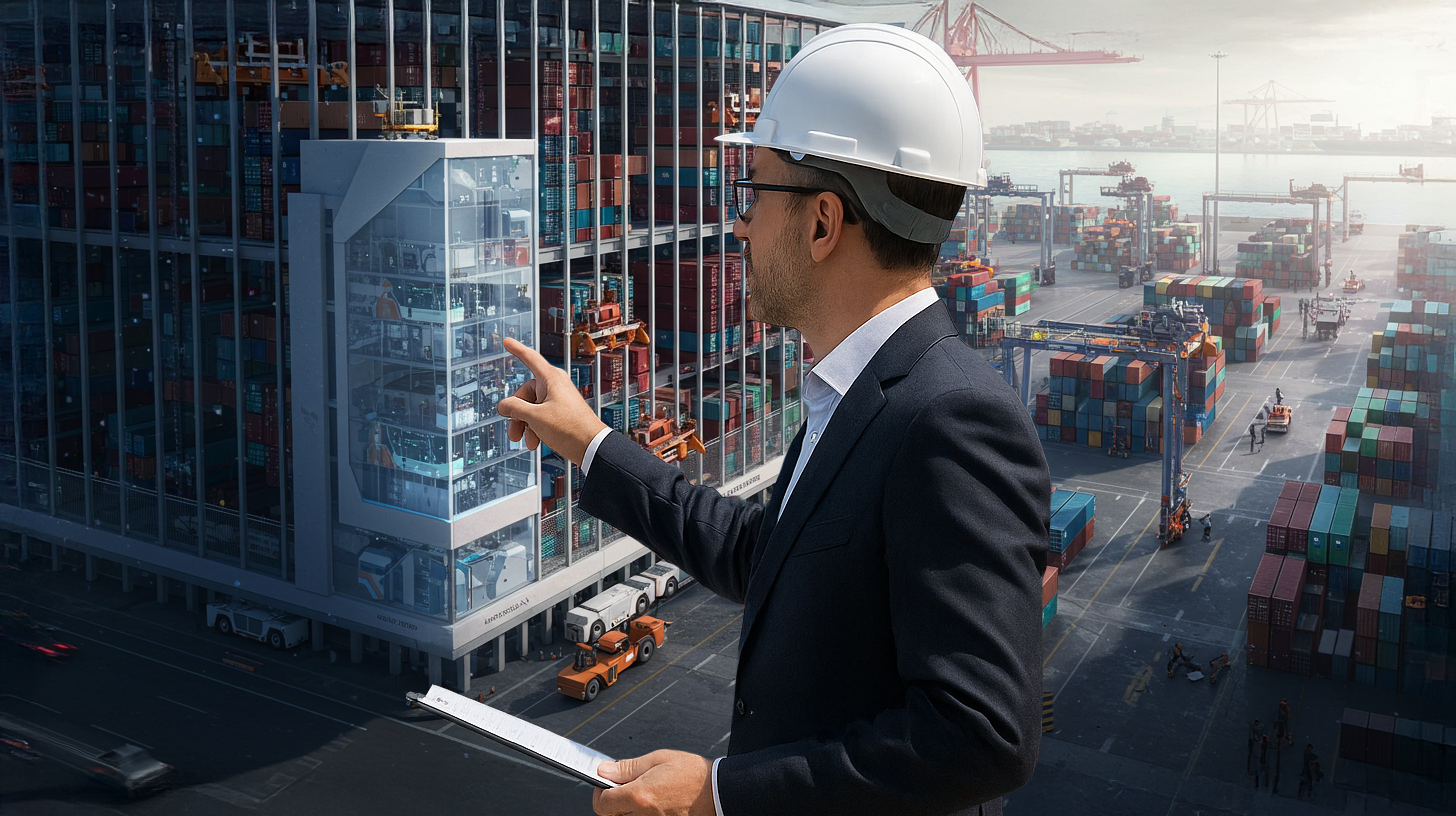
Container high-bay warehouses and container terminals: The logistical interplay – expert advice and solutions - Creative image: Xpert.Digital
This innovative technology promises to fundamentally change container logistics. Instead of stacking containers horizontally as before, they will be stored vertically in multi-story steel racking structures. This not only allows for a drastic increase in storage capacity within the same area, but also revolutionizes all processes at the container terminal.
More information here:
How the new deep-water port strengthens Poland as a logistics power
The timeline and next steps
The construction of the container port is proceeding according to a tight schedule. According to Deputy Infrastructure Minister Arkadiusz Marchewka, the first concrete construction work is slated to begin in the third or fourth quarter of this year. This will start with the construction of a technical access road, necessary for the delivery of building materials and heavy equipment.
In the coming months, work will be gradually intensified. The dredging for the new fairway is expected to take several years and represents one of the most time-critical aspects of the project. Simultaneously, work will begin on the quay facilities and the onshore infrastructure.
The entire project is scheduled for completion in 2029. This timeframe is ambitious, but realistic according to those responsible for the project. However, experience from other large-scale projects shows that delays are not uncommon in projects of this magnitude.
Integration into the European transport network
The new container port in Świnoujście will not operate in isolation, but is designed as an integral part of the trans-European transport network. Its connection to the hinterland is therefore crucial for the project's success.
Alongside the port construction, transport links are also being expanded. The rail connection is being modernized and electrified to enable efficient and environmentally friendly transport of containers inland. New motorway connections will provide improved road access.
Of particular importance is the connection to major logistics centers in Poland and beyond. The port will be directly linked to Warsaw, Krakow, and other major Polish cities via modern rail connections. At the same time, connections will be established to key economic centers in Germany, the Czech Republic, and Slovakia.
Technological innovation in port operations
The new container port will rely on state-of-the-art technology from the outset. Digitalization will play a central role. An intelligent port management system will control and optimize all processes, from ship registration and container handling to customs clearance.
Automated container cranes will ensure efficient handling. These cranes can be precisely controlled and operate largely autonomously. Driverless transport systems move the containers from the ships to the storage areas and vice versa. This automation not only increases efficiency but also safety in port operations.
The implementation of blockchain technology for document management will revolutionize the processing of customs and transport documents. Tamper-proof digital documentation will accelerate processes and minimize potential errors.
Related to this:
Sustainability as a guiding principle
Despite the project's size, sustainability plays a key role in the planning. The port will be built and operated according to the latest environmental standards. This encompasses various aspects, from energy supply and waste management to water protection.
A significant portion of the energy required for port operations will come from renewable sources. Large photovoltaic systems on the warehouses and wind turbines in the surrounding area will make a substantial contribution to the energy supply. At the same time, investments are being made in energy-efficient technologies to minimize overall energy consumption.
A modern shore power supply is being installed for incoming ships. This allows the ships to switch off their diesel generators while docked and instead draw clean electricity from the shore. This measure significantly reduces air pollution in the port area.
Impacts on the Baltic Sea region
The new container port will influence the dynamics of the entire Baltic Sea region. The established ports in Hamburg, Copenhagen, and Gothenburg will face a new, strong competitor. This will lead to increased competition, from which customers will ultimately benefit through better services and more competitive prices.
At the same time, new opportunities for cooperation are opening up. The port in Swinemünde could serve as a transshipment point for goods transported further into the Baltic Sea region. The improved infrastructure makes the entire region more attractive for international trade flows.
The geopolitical significance of the project should not be underestimated. With the new port, Poland is strengthening its position as a key player in European logistics while simultaneously reducing its dependence on foreign ports. This is particularly important given current global political developments.
The role of the port authority
The Port Authority of Szczecin and Świnoujście, as the investor, bears the main responsibility for the project. This organization has proven in recent years its ability to successfully implement complex infrastructure projects. Experience gained from operating the existing ports is being incorporated into the planning of the new terminal.
The administration is working closely with the Polish Ministry of Infrastructure, which has taken over the coordination of the project. This close integration of local expertise and national support is a key factor in the project's success.
At the same time, the port authority is preparing for future challenges. New organizational structures are being created, staff are being trained, and international partnerships are being established. All of this is being done with the aim of ensuring smooth operations from day one.
Education and training
A project of this scale requires a large number of qualified specialists. The region is therefore preparing intensively for this challenge. New training programs are being developed to qualify young people for work in the port.
Universities and universities of applied sciences in the region are expanding their degree programs in logistics and port management. At the same time, retraining programs are being offered for workers from other sectors. These measures are intended to ensure that sufficient qualified personnel are available when the port begins operations.
International cooperation also extends to the field of training. Exchange programs with established ports allow Polish professionals to gain international experience. At the same time, foreign experts are invited to share their knowledge in Poland.
Future prospects and expansion opportunities
Although the current project is already impressively large, the planners are already considering future expansions. The port area offers space for additional terminals and logistics facilities. Depending on the development of container traffic, further expansion phases could be implemented in the coming decades.
The possibilities in the area of specialized terminals are particularly interesting. In addition to traditional container handling, specialized facilities for refrigerated containers, hazardous materials, or project cargo could be built. The integration of production facilities directly within the port area is also being discussed.
Digitalization will continue to play a crucial role in the future. The port could become a testing ground for new technologies, from autonomous ships and drones for port surveillance to artificial intelligence for optimizing logistics processes.
Significance for German-Polish relations
The geographical proximity to Germany also makes the project relevant for German-Polish economic relations. German companies will benefit from the improved logistics opportunities, especially those with business relationships in Eastern Europe and Asia.
At the same time, opportunities arise for German suppliers and service providers. The proximity to the border enables close cooperation in various sectors. German engineering firms, logistics companies, and technology providers can contribute their expertise.
The challenge will be to minimize potential conflicts between the port project and tourism on the German side. Constructive dialogue and joint solutions are necessary to reconcile both interests.
Swinemünde Port of the Future: Billion-dollar investment strengthens Poland as an economic power
The construction of the deep-water container terminal in Świnoujście marks a turning point in the development of Poland's maritime industry. With investments amounting to billions, a port facility is being created here that sets new standards and establishes Poland as a major player in international maritime trade.
This project demonstrates the Polish government's courage and vision to invest in the future. Despite all challenges and obstacles, the project is being pursued relentlessly. Support at the highest political level and the involvement of international partners create excellent conditions for a successful completion.
When the first large container ships dock in Świnoujście in 2029, it will be a historic moment not only for Poland, but for all of Central Europe. The new port will shorten trade routes, promote economic growth, and sustainably transform the region. It will be exciting to see how this ambitious project develops in the coming years and what impetus it will provide for the economic development of Poland and its neighbors.
Consulting - Planning - Implementation

Markus Becker
I would be happy to serve as your personal advisor.
Head of Business Development
Consulting - Planning - Implementation
Konrad Wolfenstein
I would be happy to serve as your personal advisor.
You can contact me at wolfenstein∂xpert.digital or
Just call me on +49 7348 4088 965 .