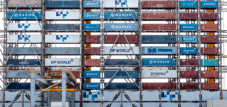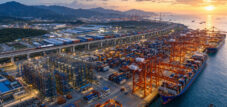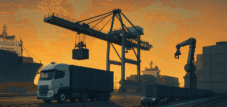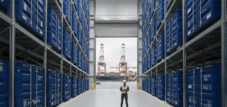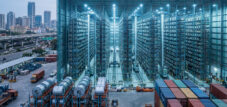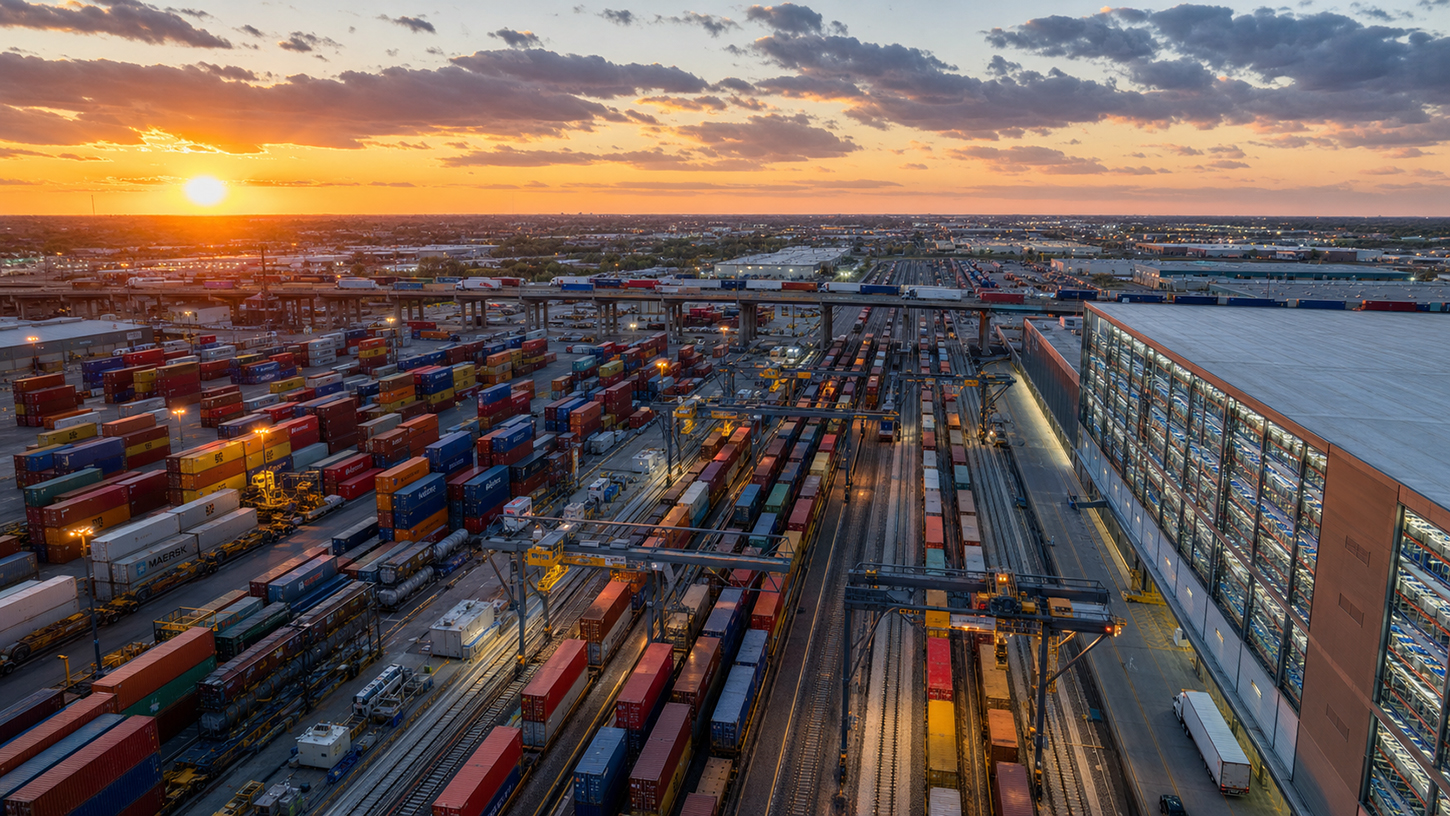
Container logistics in the USA: The untapped potential of a fragmented system – America is missing out on its own supply route – Creative image: Xpert.Digital
Logistics trap: Why the world's largest freight network is at a standstill
Robots, trains and mega-warehouses: This is how the US must now save its supply chains
On the brink of collapse? Why America's ports and roads desperately need an update
The US is the world's largest economy – yet its logistical backbone is threatening to buckle under its own weight. With staggering logistics costs of $2.58 trillion and chronically congested ports, the American freight network reveals fundamental weaknesses that extend far into supply chains. The bizarre paradox: Although the country boasts one of the longest and densest rail networks in the world, over 70 percent of freight travels costly and error-prone by road. The solution to this structural problem lies in a radical revolution of container logistics. By intelligently linking intermodal rail transport with fully automated high-bay warehouses, billions could be saved, supply chains stabilized, and CO2 emissions drastically reduced. However, political fragmentation, outdated systems, and a shortage of skilled workers are hindering this transformation. A detailed analysis reveals why the US has so far squandered its multi-billion-dollar logistical potential – and what the inevitable future of global supply chains must look like.
The structural supply crisis: When the world's largest economic system falters
The United States has the world's largest domestic market, a population of over 330 million people spread across its continental land area, and an economy that generated $2.58 trillion in logistics costs in 2025—an amount equivalent to 8.8 percent of its gross domestic product. This figure alone makes the importance of freight transport to the American economy unmistakably clear. And yet, a closer look behind these impressive figures reveals a system that is, in significant parts, inefficient, fragmented, and inadequately designed for the demands of the 21st century.
The US supply chain suffers from a fundamental systemic contradiction: On the one hand, it boasts one of the densest rail networks in the world, with a total length of approximately 230,000 kilometers; on the other hand, more than 70 percent of all goods are transported exclusively by truck – a ratio that is not only economically questionable but also poses a risk to infrastructure. Added to this are the chronic bottlenecks at the major container ports, which have worsened dramatically in recent years. The West Coast ports – especially Los Angeles and Long Beach – recorded a 20 to 30 percent increase in congestion in the first quarter of 2025 compared to the same period of the previous year. Container ships were sometimes anchored for days or even weeks, while port logistics operated at their limits.
This crisis is not new, but it has accelerated. Since the pandemic, which abruptly exposed global supply chains, companies, logistics providers, and policymakers have realized that the mere availability of infrastructure is not enough—its intelligent networking is crucial. This is precisely where container logistics comes into play as a systemic tool. The question is no longer whether, but rather at what pace, to what extent, and in which locations the United States will implement this transformation.
What containerization has already achieved: cost reduction, standardization and systemic resilience
To understand the impact of standardized container technology on US logistics, one must begin with a comparison. A fully loaded truck from Los Angeles to Chicago typically costs over $4,200 by road. The same transport by intermodal train – rail to the transshipment terminal, then truck for the last mile – costs between $2,800 and $3,300. This equates to savings of up to 35 percent for a single route. Multiplying this potential by the millions of shipments per year reveals an enormous potential for economic relief.
The Association of American Railroads confirms that replacing freight-only transport with rail-truck combinations on routes over 500 miles reduces transportation costs by an average of 20 to 30 percent. A study by the American Transportation Research Institute concludes that intermodal rail-truck combinations can save between $0.05 and $0.15 per ton-mile. The direct rail comparison is even more striking: A fully rail-based connection costs an average of $70.27 per net ton, while freight-only transport costs $214.96. That's a cost reduction of more than half.
Beyond direct cost savings, containerization has brought significant systemic benefits. The standardization of the ISO container—introduced as a simple rationalization measure—has drastically reduced terminal turnaround times, minimized cargo damage, and fundamentally improved supply chain predictability. BNSF Railway alone handled approximately five million intermodal shipments last year—more than any other North American railroad. Union Pacific has invested $1.4 billion in its intermodal product offerings since 2021, opening four new terminals and modernizing twelve existing facilities. These investments demonstrate that the industry has recognized and is actively leveraging the potential of container logistics.
Remarkable developments are also evident on the demand side. The North American intermodal market generated revenue of US$15.28 billion in 2023 and is projected to grow to US$31.59 billion by 2030 – representing an annual growth rate of 10.9 percent. Globally, the entire intermodal freight market is expected to reach US$58.13 billion by 2031, up from US$27.52 billion in 2025 – an annual growth rate of 13.28 percent. Behind these figures lies a fundamental structural shift: goods that were previously transported exclusively by truck are increasingly moving to rail.
The untapped dimensions: Why the true potential far exceeds what has been achieved so far
What has been achieved so far is remarkable – and yet it is only the beginning of what would be structurally possible. The true potential of container logistics in the USA lies in the depth of its as yet untapped application areas, which extend across at least five strategic dimensions.
The first and most tangible dimension is the shift in long-distance transport. Currently, a large proportion of transport over distances between 550 and 1,500 miles is still carried out by truck – precisely the range where intermodality offers its strongest cost advantages. The April 2026 freight market report by CH Robinson documents that demand in this segment is measurably increasing, as goods that had shifted to truck transport during the market downturn are gradually being shifted back to intermodal solutions. At the same time, truck prices are expected to rise by a high single-digit percentage in the second quarter of 2026, while intermodal price increases will remain in the low single digits – a gap that clearly favors rail based on economic logic.
The second dimension concerns the cold chain. Frozen food logistics and temperature-controlled transport are among the fastest-growing logistics segments in the US, driven by an expanding pharmaceutical industry, biologics pipelines, and changing consumer preferences in the food sector. Currently, intermodal transshipment and storage facilities are often lacking to efficiently transfer these goods to rail. United States Cold Storage (USCS), for example, has installed a highly automated high-bay warehouse with 26,000 pallet spaces, robotic order picking, and more than seven million cubic feet of refrigerated capacity at its Minooka, Illinois, location—a pioneering model that demonstrates the future direction, but is still the exception rather than the rule.
The third dimension lies in digital integration. Ports, railway stations, warehouses, and freight forwarders in the US still largely operate in separate IT ecosystems. While integrated digital platforms have long ensured seamless data flow in other highly developed logistics regions—such as Germany or the Netherlands—the American logistics landscape remains highly fragmented. The introduction of shared track-and-trace systems, AI-supported capacity planning, and digital freight exchanges would have the potential to drastically reduce empty runs and significantly increase capacity utilization.
The fourth dimension concerns the modal shift in e-commerce. In 2025, Amazon Logistics overtook the USPS as the largest US parcel delivery service by volume, processing 6.7 billion packages. The massive increase in e-commerce shipments has triggered a cost spiral, particularly in metropolitan areas, where the last mile now accounts for up to 41 percent of total logistics expenditures. Highly efficient intermodal feeder systems with integrated inner-city micro-hubs could significantly reduce these costs.
The fifth dimension is ecological: transporting goods by train reduces CO2 emissions by up to 75 percent compared to road transport, according to the EPA SmartWay Program. Given a broader political climate that makes CO2 pricing and emissions regulation in freight transport likely, at least in the medium term, this ecological premium will quickly translate into an economic cost advantage.
Regional bottlenecks: Where the expansion of container logistics is urgently needed
The United States is not a monolithic logistics system. Infrastructural and economic realities vary considerably from coast to coast, from metropolitan area to metropolitan area, and from state to state. A differentiated regional analysis reveals where the need for improvement is greatest and where efficiency gains are most urgently required.
The West Coast: Traffic jam at the bottleneck and lack of relief infrastructure
With a combined annual volume of over twelve million TEU, the Port of Los Angeles/Long Beach is by far the busiest container hub in North America. It handles around 40 percent of all US imports. And it is chronically congested. Container trains bound for inland destinations like Chicago, Memphis, and Kansas City often sit in Los Angeles and Long Beach for nine to ten days before departure—at a port theoretically designed for a three- to four-day dwell time. Labor disputes in 2025, ongoing delivery peaks due to trade incidents, and a lack of chassis availability have further exacerbated the situation.
The solution lies not in further densifying the port, but in systematically reducing congestion through a denser network of inland-oriented transshipment terminals. The route to Chicago, the largest intermodal hub in the Midwest, is one of the world's most important freight corridors, stretching over 2,000 miles. Every reduction in the speed of container transfer from the dock to the container train not only saves demurrage and handling fees, but also increases the overall capacity of the system. Union Pacific has already invested: The new Kansas City Intermodal Terminal enables the movement of inland containers 25 percent faster and saves up to 25 hours of transit time to and from Southern California.
The Midwest: A developing hub and the nation's logistical backbone
The Midwest—particularly the states of Illinois, Missouri, Iowa, Nebraska, and Indiana—is the logistical backbone of the American economy. Chicago is considered the largest rail hub in North America. However, Chicago is notorious for its bottleneck problem: when goods traveling from the West Coast to the East Coast have to pass through the city, delays occur that affect the entire rail network. At peak times, the average truck turnaround time at the BNSF Logistics Park Chicago increased from 53 to 76 minutes—a rise of 43 percent.
Kansas City is emerging as a strategic counterweight. The new BNSF facility in Kansas City spans 433 acres and has an initial hub capacity of 500,000 containers per year – with expansion potential to 1.5 million. Union Pacific's new Kansas City Intermodal Terminal, which opened in mid-2025, directly connects the rapidly growing markets in Nebraska, Iowa, and Missouri to Union Pacific's 32,000-mile network. This expansion exemplifies what is structurally necessary: a comprehensive densification of intermodal terminals throughout the Midwest to consolidate freight flows and reduce reliance on trucks for mid-range transportation.
The Southeast: Growth pressure meets underdeveloped infrastructure
The Southeast – Florida, Georgia, North Carolina, South Carolina, Alabama, Tennessee – is one of the fastest-growing economic regions in the USA. Atlanta, Nashville, and Memphis have developed into major logistics hubs; the Port of Savannah recently handled almost 4.3 million TEU annually, becoming the fourth-largest container port in the country. And yet, the Southeast's intermodal infrastructure lags far behind its population and economic growth.
Charleston experienced up to 14.5 days of waiting time for container ships in 2025—a symptom of a lack of land-based buffer and distribution capacity. The Port of Mobile, Alabama, is developing an inland container intermodal transfer facility in Montgomery—a facility that will connect the port, some 170 miles away, to five Class I rail lines and open up Alabama's inland economy. Such projects are urgently needed, but more are required. Norfolk Southern operates 54 intermodal terminals in the eastern US and is gradually opening new connections to growth markets such as Atlanta, Memphis, Nashville, and Louisville. Nevertheless, significant gaps remain—states like Mississippi, Arkansas, and large parts of Florida have hardly any efficient intermodal connections.
Texas and the Gulf Corridor: Dynamics in the South, underestimated capacity reserves
Houston is the logistics success story of the last decade. The port recorded growth of 3.9 percent in 2025, reaching over 4.3 million TEU – the highest growth rate among major US ports. Canal deepening, terminal expansions, and the development of the inland logistics network have made Houston the preferred alternative for freighters looking to bypass congestion on the East and West Coasts. Texas, not least because of its extensive industrial base – petrochemicals, agriculture, steel, and manufacturing – is a major player in inland logistics.
BNSF also plans to develop a massive regional logistics center on approximately 4,321 acres in northwestern Maricopa County near Phoenix, Arizona. The project will include an intermodal facility on 1,770 acres, a logistics park on 1,420 acres, and a direct rail hub on 1,131 acres—an integrated logistics world intended to serve as a supply hub for the entire southwestern United States. This model demonstrates how container logistics has evolved beyond individual terminals into an integrated ecosystem encompassing transportation, handling, storage, and distribution.
Rural areas and structurally weak states: The neglected last mile
Approximately 46 million people live in rural areas of the USA. For this population, supplying goods via conventional logistics systems costs two to five times more than in urban centers. This is due to a lack of infrastructure, vast distances, insufficient local warehousing, and inadequate digital infrastructure, which even complicates supply chain management. The states of the so-called "Flyover Country"—the agriculturally dominated areas between the Midwest and the Rocky Mountains, but also large parts of the Southeast and the Deep South—are structurally disadvantaged in intermodal logistics.
Intermodal systems cannot close these supply gaps on their own, but they can create the conditions for comprehensive basic supply: When intermodal terminals are combined with distribution centers serving the radius, regions without their own port access can be connected to the international container system. This requires political will, public co-financing, and a long-term planning perspective that goes beyond short-term, quarterly thinking.
LTW Intralogistics Solutions – Intermodal Transport

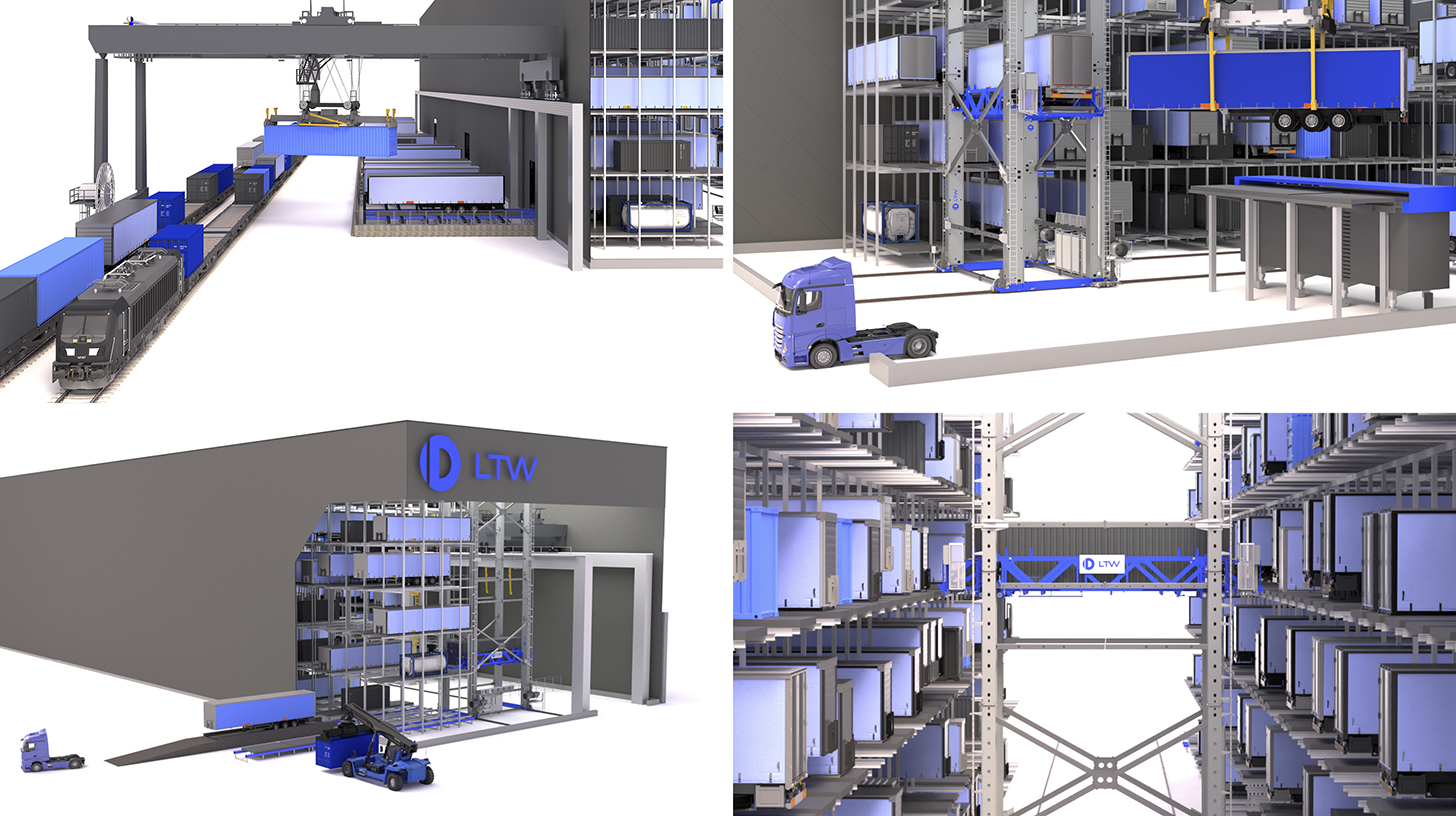
LTW Intralogistics Solutions – Intermodal Transport – Image: LTW Intralogistics GmbH
LTW offers its customers not individual components, but integrated complete solutions. Consulting, planning, mechanical and electrotechnical components, control and automation technology, as well as software and service – everything is networked and precisely coordinated.
In-house production of key components is particularly advantageous. This allows for optimal control of quality, supply chains, and interfaces.
LTW stands for reliability, transparency, and collaborative partnership. Loyalty and honesty are firmly anchored in the company's philosophy – a handshake still means something here.
Related to this:
Trimodal logistics: Rail, road and ASRS as a new lever for efficiency
High-bay warehouses in intermodal networks: The next evolutionary stage of US logistics
Container logistics – understood as an intermodal system encompassing rail, road, sea, and air freight – only reaches its full potential when integrated with high-performance buffer and distribution facilities. This is where the automated high-bay warehouse comes into play: as an infrastructural anchor of the intermodal network, as an intelligent buffer system, and as a logistical multiplier.
Technology meets structural need
An automated storage and retrieval system (ASRS) is far more than just a large warehouse. It is a fully automated system, designed for building heights of 12 to 50 meters and more, in which stacker cranes automatically store and retrieve pallets. A single such building can accommodate several hundred thousand pallet spaces. The global warehouse automation market was valued at US$18.1 billion in 2023 and is projected to grow to US$71.03 billion by 2032, representing an annual growth rate of 15.91 percent. The US is one of the most dynamic individual markets, driven by the e-commerce boom, labor shortages, and increasing pressure for supply chain precision.
The combination of an intermodal terminal and an attached high-bay warehouse is not new – but it is still far too rarely implemented consistently in the USA. The BNSF Logistics Park model, which connects an intermodal hub with neighboring distribution and storage centers, has already demonstrated the effectiveness of this principle in Chicago, Kansas City, and other locations. Nevertheless, such integrated structures are still largely absent in many parts of the country.
The trimodal principle: rail, road and warehouse as a unit
The economic leverage of the integrated logistics model lies in the synchronization of goods and information flow across all modes of transport. In a modern, integrated logistics center, a container train arrives at a rail transshipment terminal; automated gantry cranes lift the containers onto the site; a warehouse management system handles inbound logistics; high-bay racking provides short- to medium-term buffering; and autonomous industrial trucks or conveyor systems transport the goods to picking zones, from which small electric trucks handle the final distribution within the region. What sounds like science fiction is already a reality in some respects: The USCS project in Minooka, Illinois, demonstrates, with its robotic picking of 200 layers per hour, its fully automated ASRS structure, and its 26,000 pallet spaces, that this technology is industrially scalable.
Crucial to the economic success of such integrated systems is land-use efficiency. A 50-meter-high high-bay warehouse requires a footprint that is 8 to 12 times smaller than that of a conventional single-story distribution center for the same storage capacity. This advantage is particularly significant near ports and urban areas, where land is scarce and expensive. The combination of minimal footprint, maximum capacity, and fully automated operation makes the high-bay warehouse the ideal bridging infrastructure between long-distance transport and local distribution.
Where integration is most urgent: Four strategic network locations
By combining the regional analysis described above with the technological possibilities of high-bay warehouse construction, four types of strategic integrated locations can be identified where intermodal expansion would have the greatest economic impact.
The first type is the port-adjacent hub. At ports like Savannah, Houston, and Charleston, where large container volumes arrive and need to be quickly distributed inland, port-adjacent ASRS buffer storage facilities would be a direct means of alleviating congestion. Instead of storing containers for days on the port premises, they would be transferred directly to automated high-bay warehouses, from which inland distribution by rail and truck would be coordinated and managed. The Port of Savannah has already considered this principle with its expansions; Houston has taken initial steps with its Wharf 7 project at the Bayport Container Terminal. However, the structural need is far greater than the measures taken so far.
The second type is the inland distribution hub. Locations like Memphis (Tennessee), Louisville (Kentucky), and Columbus (Ohio) are situated at the intersection of major rail corridors, highway interchanges, and population centers. They are ideally suited for high-bay warehouses combined with intermodal terminals that function as regional supply hubs. Memphis is already home to FedEx and one of the world's most important cargo airports—integration with rail intermodality and ASRS would significantly increase the efficiency of the entire Southeast-North Triangle.
The third type is the border region hub along the Mexico Corridor. The corridor from Laredo via San Antonio to Houston, with a $10 billion investment project for a rail corridor to Monterrey, represents one of the largest infrastructure projects in the North American logistics sector. A new supply system is being developed on both sides of the border; automated high-bay warehouses in this corridor could act as a buffer between the Mexican supply network and the US distribution system – particularly in light of the nearshoring wave triggered by US trade policy and rising costs from China.
The fourth type is the urban micro-hub. In densely populated metropolitan areas like New York, Los Angeles, and Chicago, last-mile solutions are becoming increasingly expensive and logistically challenging. Compact, multi-story high-bay warehouses—so-called urban distribution centers—located in close proximity to intermodal terminals or city entrances could structurally shorten the last mile. The principle of the vertical warehouse, which also serves as a transfer station for small electric vehicles and bicycle couriers, has already been tested in Asian metropolises. Initial approaches are visible in the USA, but widespread implementation is still pending.
Systemic barriers: Why change is progressing more slowly than necessary
A sober assessment of the situation also requires examining the forces hindering the necessary expansion. Foremost among these is the fragmentation of the regulatory framework. Unlike centralized European states, where logistics infrastructure can be coordinated by a national authority, port decisions, railroad policy, and land-use planning in the US are divided across three levels – federal, state, and local. New terminals often require years of permitting processes, environmental impact assessments, and political compromises.
Added to this is the shortage of chassis, a problem well-known in the industry but rarely discussed publicly. Without sufficient trailer capacity to transport containers from the station to the recipient, even the best rail network is of little use. BNSF and other railroad companies reported significant bottlenecks in chassis availability in Chicago and other hubs as early as 2022. This problem remains structurally unresolved to this day.
Tariff and customs policies also create considerable planning uncertainty. The volatility of US trade relations with China—with import volumes fluctuating significantly depending on the tariff regime—has led many logistics providers to hesitate in making long-term infrastructure investments. Container volume for the full year 2025 was estimated at 25.4 million TEU, slightly below the previous year's level—a decline largely attributable to the uncertainty caused by trade tariffs. Those investing in high-bay warehouses or intermodal terminals with depreciation periods of 20 to 30 years need planning certainty—and this is currently sorely lacking.
Finally, staff shortages play a significant role. Employment in the railway sector in 2025 was around 22 percent lower than in 2022. The lack of train drivers, loading staff, and maintenance personnel limits the system's capacity despite the nominally existing infrastructure. This finding, incidentally, puts the idea of an automated system solution into perspective: Automation always relies on a functioning basic operation; it can supplement the workforce, but it cannot replace a systemically understaffed network.
System logic, political will, and the economics of networking
The US is at a turning point. Container logistics has proven its ability to reduce costs, strengthen supply chains, and revolutionize the flow of goods across continental distances. The North American market is growing—and it will continue to grow because the fundamental economic forces are unavoidable: rising trucking costs, increasing e-commerce, nearshoring, decarbonization pressures, and demographic shifts in consumer demand.
The crucial question, however, is whether American politics and business are capable of taking the necessary steps with the required consistency. A truly systemic expansion must address three levels simultaneously: primary infrastructure – ports, railways, terminals; secondary infrastructure – high-bay warehouses, transshipment centers, urban hubs; and tertiary infrastructure – digital integration, data standards, automated customs clearance.
What distinguishes America from other regions of the world is not a lack of technological expertise or capital. It is the institutional fragmentation that structurally hinders coordinated systems approaches. Where an investor in Germany or the Netherlands finds a state-coordinated trimodal concept, in the USA they encounter a web of competing interests, uncoordinated planning environments, and short-term-oriented private decision-making.
The potential is there, the technology is ready, and demand is growing – what's still missing is the systemic decision to understand container logistics not as a niche instrument of freight transport, but as what it truly is: the supply infrastructure of a 21st-century economy. High-bay warehouses combined with intermodal transport are not a luxury, but the logical consequence of an economic reality in which the costs of inaction are becoming more apparent every day.
Consulting - Planning - Implementation

Konrad Wolfenstein
I would be happy to serve as your personal advisor.
You can contact me at wolfenstein∂xpert.digital or
Just call me on +49 7348 4088 965 .
Your container high-bay warehouse and container terminal experts
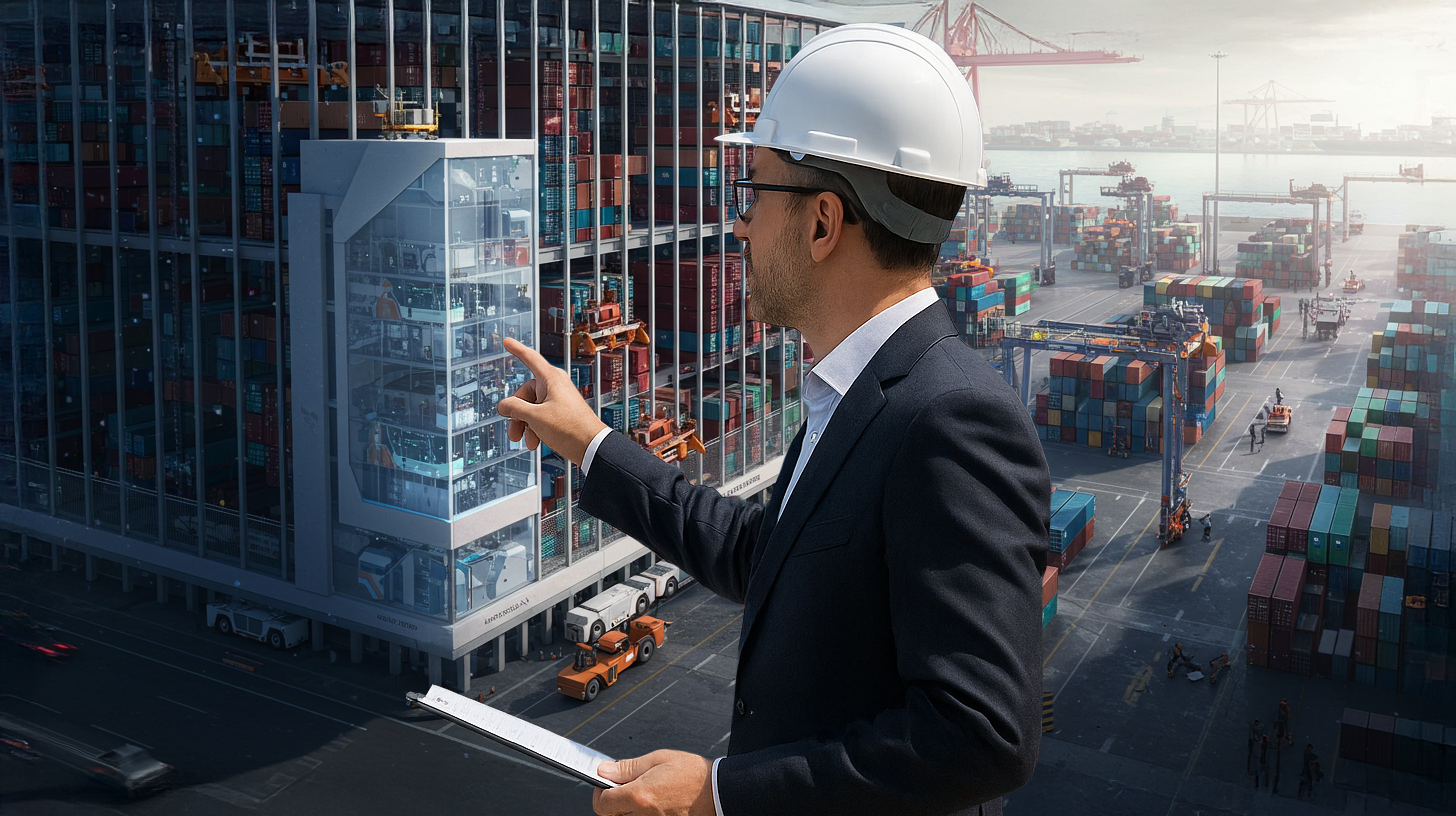
Container high-bay warehouses and container terminals: The logistical interplay – expert advice and solutions - Creative image: Xpert.Digital
This innovative technology promises to fundamentally change container logistics. Instead of stacking containers horizontally as before, they will be stored vertically in multi-story steel racking structures. This not only allows for a drastic increase in storage capacity within the same area, but also revolutionizes all processes at the container terminal.
More information here: