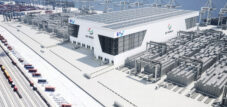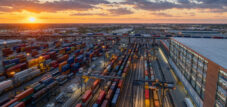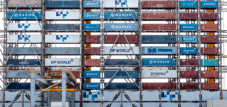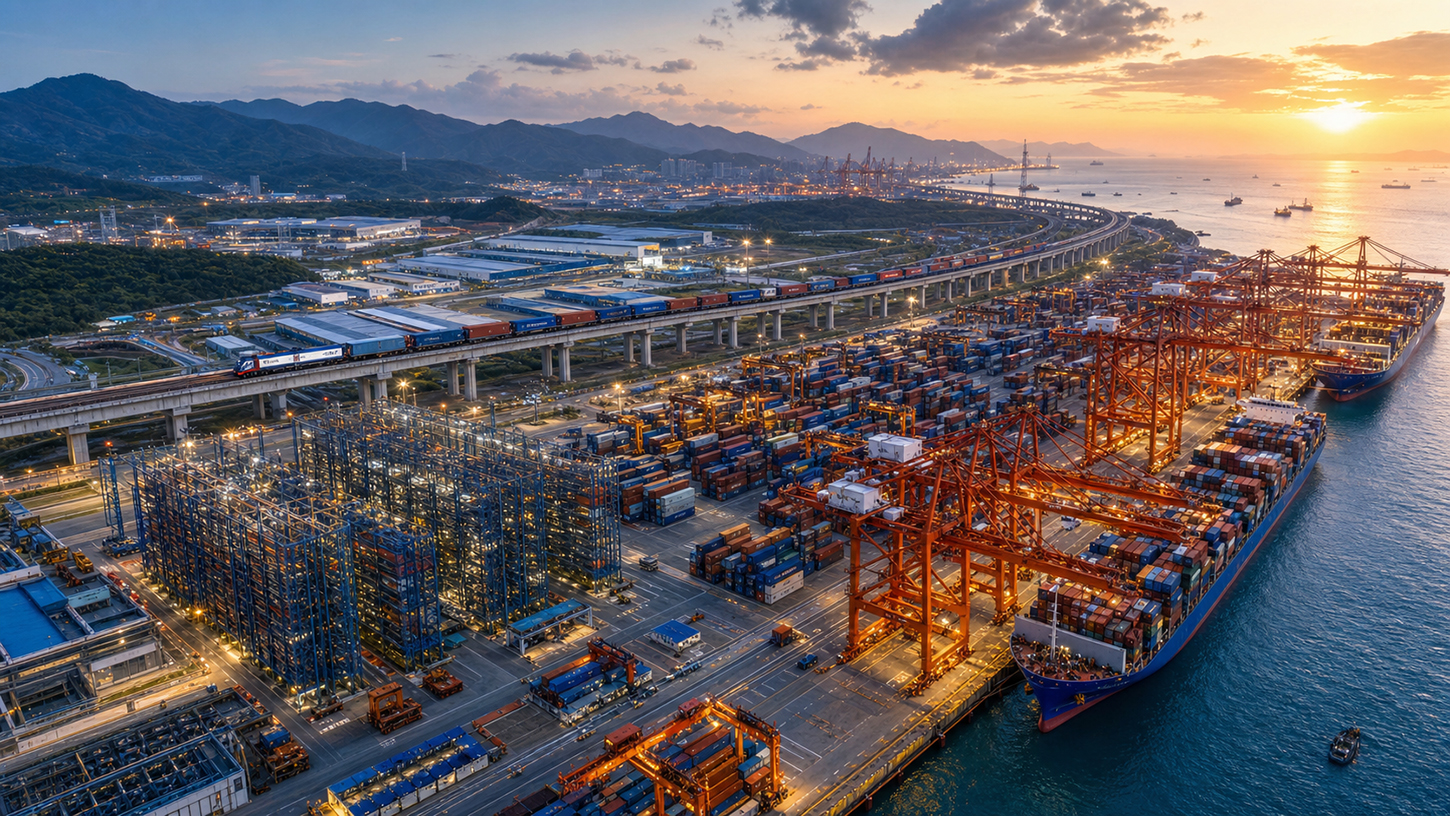
Container logistics in China – Global comparison, supply challenges and trimodal system solutions – Image: Xpert.Digital
Shanghai vs. Rotterdam: Why China's port infrastructure is miles ahead of the West
Containers on 11 floors: How new trimodal mega-hubs in China are securing the future of global trade
China's logistics secret: How mega-ports and smart hubs are revolutionizing global trade
China is the undisputed number one in global container logistics. With state-of-the-art mega-ports like Shanghai and Ningbo-Zhoushan, the country handles volumes that Europe and the US can only dream of. But the gleam of these technologically advanced coastal metropolises masks an immense internal challenge: Inland, particularly in the western and central provinces, the Chinese economy struggles with structural bottlenecks, a massive imbalance of empty containers, and incomplete distribution systems. To close this East-West divide and further secure its geopolitical position via the Belt and Road Initiative, Beijing is resorting to an unprecedented master plan. The solution no longer lies solely in horizontal expansion, but in an intelligent combination of trimodal logistics hubs, intermodal rail-sea corridors, and revolutionary high-bay container warehouses that drastically minimize space requirements. This article examines the global port comparison, analyzes China's hinterland supply challenges, and demonstrates why vertical automation and seamless system integration will define the future of global freight transport.
Far more than just coastal cities: This is how China is solving its biggest logistics problem inland
China dominates global container logistics with a force unmatched by any other nation: In 2024, Chinese ports handled approximately 203 million TEU – nearly four times the volume of top US ports and more than fifteen times the combined volume of Northern Europe. However, the structural weakness lies not on the coasts, but inland: While coastal provinces operate state-of-the-art terminals, western and central regions struggle with inadequate infrastructure, a lack of container handling facilities, and fragmented distribution systems. The answer to these challenges lies in the combination of state-supported intermodal rail-sea corridors, trimodal logistics hubs, and automated high-bay warehouse systems – a symbiosis that China is currently developing at full speed.
Global comparison: China, USA and Europe
China's port dominance
Shanghai leads the world's container port rankings for the 16th consecutive year, exceeding 55.06 million TEU for the first time in 2025 – a 6.9 percent increase compared to the previous year. Ningbo-Zhoushan follows in third place with approximately 43 million TEU, while Shenzhen achieved a record 33.38 million TEU (+11.7%) in 2024 – the highest growth rate in the last ten years. China's eight largest container ports together recorded an estimated volume of 224 million TEU in 2024, representing a 7 percent increase compared to 2023.
In the overall picture: China alone processes over 203 million TEU per year, making it home to four of the world's five largest and six of the ten largest container ports. China Merchants Port Holdings (CMPort) alone achieved a record 146.3 million TEU (+6.4%) across its entire global terminal network in 2024.
USA: Growth with structural weaknesses
The ten largest US ports recorded cumulative throughput of 51.3 million TEU in 2024 – an increase of 13.1 percent compared to 2023. The Los Angeles/Long Beach ecosystem remains by far the largest gateway to the US with around 20 million TEU. Los Angeles achieved 10 million TEU for the first time, while Long Beach saw a 24.3 percent increase in imports to 4.7 million TEU.
However, significant disruptions become apparent from 2025 onwards: As a result of the drastic US tariffs on Chinese goods under President Trump, container freight traffic from China to the ports of Los Angeles and Long Beach fell by up to 44 percent year-on-year. In the week of May 4-10, 2025, only 62,000 TEU were expected from China, compared to 120,608 TEU in the previous week. The structural problem for the US: Intermodal hinterland connections remain significantly weaker compared to China – rail freight, inland port networks, and dry port systems are far less developed.
Europe: Moderate recovery, structural limits
Europe's leading container ports recovered moderately in 2024. Rotterdam, Europe's largest port, handled 13.8 million TEU, Antwerp-Bruges 13.53 million TEU, and Hamburg 7.8 million TEU. Antwerp-Bruges showed significantly more dynamic growth of 6.8 percent, while Rotterdam grew comparatively slowly at 2.2 percent. Southern European ports such as Valencia (+15.4%) and Barcelona (+21.4%) are rapidly gaining in importance.
Europe's fundamental weakness lies in its fragmentation: compared to Shanghai (55 million TEU), Rotterdam, Antwerp, and Hamburg together barely handle 35 million TEU. Land scarcity, high property prices, and complex permitting processes are hindering expansion. The Belt and Road Initiative (China-Europe by rail) recovered strongly in 2024 (+80% compared to 2023) with 380,434 TEU, further increasing the rail corridor's importance as a key alternative to the sea route.
Key performance indicator comparison
| indicator | China (2024/2025) | USA (2024) | Europe – Top 3 (2024) |
|---|---|---|---|
| Largest single port (TEU) | Shanghai: 55.06 million. | Los Angeles: ~10 million. | Rotterdam: 13.8 million. |
| Total throughput of top ports | ~203–224 million TEU | Top 10: 51.3 million TEU | Top 3: ~35 million TEU |
| growth | 7% (Top 8) | 13.1% (Top 10) | 2–7% (per port) |
| Level of automation | High (state-funded) | Moderate (due to labor constraints) | High (due to area) |
| Intermodal networking | massively expanded | Limited | Good, but fragmented |
China's supply challenges
The coastal-hinterland divide
The fundamental problem of Chinese container logistics is structural and geographical: Economic concentration lies in the coastal east (Pearl River Delta, Yangtze Delta, Bohai Bay), while large parts of the interior – particularly western and northwestern provinces – are logistically underserved. Unlike coastal cities, which have complete container handling facilities, truck fleets, and empty containers, inland shippers have to wait for empty containers to be transported inland from the coast – increasing costs and lengthening lead times.
PwC analyses show that despite rapid domestic growth, talent shortages, inconsistent infrastructure, regulatory hurdles between regions, fragmented distribution systems, and a lack of technology adoption persist in some areas. China's more than 700,000 registered logistics companies often fail to offer seamless services between coastal and inland cities, significantly limiting visibility in goods movements.
Empty containers and structural imbalance
A particularly serious problem is the structural container imbalance: China exports significantly more than it imports, which means empty containers accumulate at coastal ports while inland regions have to wait for them. This considerably increases the cost of inland container logistics. To make matters worse, digital systems for container planning, loading, and international transport are not yet standard practice in many parts of the country.
Infrastructure investments as a countermeasure
In direct response to these challenges, China invested heavily in logistics infrastructure under its 14th Five-Year Plan (2021–2025): a total of 15.2 trillion yuan (approximately US$2.1 trillion) was allocated to the transportation sector, an increase of 23.3 percent compared to the previous planning cycle. The country now boasts 181 national logistics hubs and 105 key cold chain bases across all 31 provinces, establishing a nationwide backbone logistics infrastructure. Around 25 percent of the more than 2,700 logistics parks exceeding a certain size have their own rail connections.
The total costs of social logistics were reduced by a total of 890 billion yuan in the first four years of the plan, and the ratio of logistics costs to GDP fell by 0.6 percentage points.
Regional expansion needs: Where is expansion urgent and efficient?
Southwest China: Chongqing and Sichuan as pioneer projects
Southwest China – particularly the Chengdu-Chongqing metropolitan area – is the most dynamic growth region for inland container logistics and the starting point of the most important intermodal corridor. Guoyuan Port in Chongqing, the largest multimodal transport hub on the upper Yangtze River, has already established seven dry ports in Sichuan and Guizhou provinces, handling more than 3,100 TEU from Sichuan alone through these dry ports in 2025. The Longquanyi dry ports in Chengdu enable businesses to ship cargo via river-sea transport through Shanghai – eight days faster than before, with a 40 percent increase in cargo throughput and a reduction in logistics costs for companies of over 10 percent.
Guang'an in Sichuan is a current example: despite the region's rich freight resources, more than 98 percent of goods are transported by road or rail – the waterway is hardly used. The strategic cooperation between ports in Chongqing and Sichuan to establish an inland port in Guang'an aims to change this and create a seamless connection to the Shanghai-Chongqing express line.
Western China: Xinjiang as a strategic gateway
Xinjiang is geopolitically indispensable: The province lies at the intersection of the three main routes of the New Silk Road and borders eight countries, including Russia, Kazakhstan, and Mongolia. China's Belt and Road Initiative (BRI) strategy requires Xinjiang as a trade gateway to Central Asia and Europe. The region increased its foreign trade by 39 percent in the first half of 2022, but container logistics remains significantly underdeveloped given its strategic importance. The development of dry port infrastructure, automated transshipment terminals, and multimodal logistics centers along the corridors through Xinjiang is a fundamental prerequisite for realizing the BRI's ambitions.
Northwest China: The New Western Land Sea Route (NILSTC)
The New International Land-Sea Trade Corridor (NILSTC) is the most significant intermodal infrastructure development for Western China. With Chongqing as its operational hub, it connects Western Chinese regions to global markets via rail, sea, and road links through Guangxi and Yunnan. In 2025, the corridor transported 1.425 million TEU – an increase of 47.6 percent compared to 2024 and the first time it had exceeded the one million TEU mark. Since 2017, a total of 4.7 million TEU has been transported, with consistently double-digit growth rates.
The corridor now covers 73 inland cities in China and connects 556 ports in 127 countries and regions. 24 fixed rail services are in operation, including 14 routes between Beibu Gulf Port and key inland hubs such as Chongqing and Chengdu. 701,000 TEU were transported from western regions such as Sichuan, Chongqing, and Yunnan to southern ports (+40.4%), while 724,000 TEU were transported from ports to western inland areas (+55.3%).
Northern China and Inner Mongolia
Inner Mongolia, Shanxi, and other resource-rich northern provinces are heavily reliant on resource transport (coal, minerals) but have underdeveloped container logistics for manufactured goods. The China-Mongolia rail link struggles with inadequate infrastructure, high transport costs, and a lack of international coordination mechanisms. There is a significant need to develop container terminals and multimodal transport hubs.
Central and East Central China: Zhengzhou and the Henan Model
Zhengzhou in Henan Province has established itself as an innovative example of an inland port and serves as an important intermodal hub between coastal ports and western China. The planned expansion of opening up to western regions by the General Administration of Customs (GAC) includes support for international air freight hubs in Chengdu, Chongqing, Kunming, Xi'an, and Ürümqi – a clear signal that air freight is also gaining increasing attention as the third pillar of trimodal systems.
Priority matrix: Regions and urgency of action
| region | urgency | Main deficit | Solution approach |
|---|---|---|---|
| Chongqing/Sichuan | High (active) | Connectivity to seaports | Dry Ports NILSTC |
| Yunnan/Guizhou | High | ASEAN connection is missing | NILSTC extension |
| Xinjiang | Very high | BRI gateway underdeveloped | Dry harbors track expansion |
| Inner Mongolia/Shanxi | High | Resource transport only | Container diversification |
| Qinghai/Tibet | Medium | Extreme topography | Alpine logistics solutions air freight |
| Northeast (Liaoning, Jilin) | Medium | Old industrial infrastructure | Modernization multimodal |
| Central (Henan, Hubei) | Active resources | Fragmentation | Hub expansion Zhengzhou |
Our China expertise in business development, sales and marketing

Our China expertise in business development, sales and marketing - Image: Xpert.Digital
Industry focus areas: B2B, digitalization (from AI to XR), mechanical engineering, logistics, renewable energies and industry
More information here:
A thematic hub offering insights and expertise:
- Knowledge platform covering global and regional economies, innovation and industry-specific trends
- A collection of analyses, insights, and background information from our key areas of focus
- A place for expertise and information on current developments in business and technology
- A hub for companies seeking information on markets, digitalization, and industry innovations
Rethinking China's container logistics: Opportunities for German automation companies in the inland regions
High-bay warehouses combined with intermodal and trimodal logistics
Why high-bay warehouses are the key to vertical expansion
While terrestrial expansion is reaching its limits, vertical container stacking promises a quantum leap in terminal capacity. Innovative high-bay container storage systems like BOXBAY (a joint venture between DP World and the SMS Group) can store containers up to eleven levels high – each container in its own shelf compartment, individually accessible, without restacking. This triples the storage capacity of a conventional container terminal on the same footprint and reduces the required floor space by up to 70 percent.
The pilot project in Dubai (Jebel Ali Terminal 4), with 792 container slots, completed more than 63,000 container movements and proved the system's practicality. The first commercial deployment took place at the Busan New Port Corporation Terminal in South Korea, which already handles 5.3 million TEU annually. There, the system eliminates an estimated 350,000 unproductive movements per year and improves truck turnaround times by 20 percent.
The global market for high-bay racking systems and warehouse automation is projected to reach nearly US$29 billion by 2033. China's logistics automation market alone grew from US$25.5 billion (2024) to a projected US$80.7 billion by 2032 – an annual growth rate of 15.5 percent.
The Shenzhen Pinghu Model: Trimodality in its purest form
The most impressive real-world example of the integration of high-bay warehouses and trimodal logistics in China is the Shenzhen Pinghu South Comprehensive Logistics Hub – China's largest single logistics complex. With a total area of 1.11 million square meters, it embodies the principle of three-dimensional development: railway at ground level, intelligent storage on the upper floors, and the peripheral road network below.
Once all construction phases are completed, the hub is expected to achieve a freight throughput of more than 30 million tons annually by 2035, making it Asia's largest trimodal transport center. The system allows goods to be distributed directly from the train to the warehouse or onto the road network via an intelligent automation system after unloading – a seamless integration that minimizes handling times and eliminates empty runs.
Trimodal logistics: rail – road – water
The concept of trimodality – the planned integration of rail, road, and water transport – has become a guiding political principle in China. The NILSTC already combines all three modes of transport as standard practice: goods from western Chinese production centers reach Beibu Gulf Port (Guangxi) or Zhanjiang Port (Guangdong) by rail, where they are loaded onto ocean-going vessels and distributed globally. In the first half of 2025, 24 scheduled train services operated on this route, and the rail lines connect seamlessly with the China-Europe and China-Central Asia freight trains.
The Yangtze Economic Belt complements this system: The Guoyuan Port–Shanghai Express River-Sea Transport Line has reduced round-trip travel time by over 40 percent through innovative measures (departure confirmation for import transshipment, combined domestic and foreign trade on the same vessel). In the first half of 2025, the express line operated 647 voyages (+21.6% year-on-year) and transported 29,398 TEU (+34.6%).
China-Europe rail freight as a fourth corridor
In addition to domestic intermodal systems, the China-Europe Railway Express (CRE) freight trains are playing an increasingly important role. By the end of 2024, over 110,000 journeys had been completed, with around 10,000 rail-sea freight trains operating annually along the New Western Land-Sea Corridor. A total of 380,434 TEU were transported along the New Silk Road in 2024 – more than 80 percent more than in 2023. Around 23,790 TEU were transported by rail from China to Germany in 2024 (+84.9%). The journey from Shenzhen to Duisburg takes 16 days by train, which is about 15 days faster than by sea and costs only one-fifth of air freight.
Strategic growth areas: Where high-bay warehouses and intermodality have the greatest impact
Five key application areas are emerging where the combination of high-bay warehouses and intermodal logistics would have the greatest impact in China:
1. Inland ports (dry ports) in western China
Dry ports in Chengdu, Xi'an, Chongqing, and along the NILSTC are ideally suited for vertical high-bay warehouse terminals, as they optimally utilize limited space in densely populated areas and act as a link between rail and road transport. A high-bay racking system there triples storage capacity and eliminates search trips.
2. Beibu Gulf Port (Guangxi)
As the southern gateway of the NILSTC with the highest volume growth (+19.1% Jan–May 2024), Beibu Gulf Port is ripe for automated high-bay racking technology to handle the steeply increasing volumes without proportional area expansion.
3. Chengdu-Chongqing logistics axis
China's second largest inner-city logistics area after the Yangtze Delta has an acute need for vertically stacked, automated solutions in combination with the existing rail-sea links to Shenzhen and Shanghai.
4. Xinjiang – Border crossing points:
The border terminals with Kazakhstan (Alashankou, Horgos) urgently need high-performance, automated handling capacities to process container trains on the Middle Silk Road more efficiently. High-bay warehouses would act as buffers and reduce border congestion.
5. Coastal ports (Shanghai, Ningbo, Guangzhou)
Traditional container terminals are already reaching their physical capacity limits here. BOXBAY-like systems can drastically increase land productivity, as the pilot project in Busan demonstrates.
Strategic Assessment: China's Systemic Advantage
State-controlled system structure
China's decisive competitive advantage in global container logistics lies in its state-coordinated system design: ports, railways, logistics parks, dry docks, and high-bay warehouses are not developed in isolation, but rather as an integrated national network coordinated by five-year plans, federal funding, and the Belt and Road Initiative (BRI) strategy. While the US and Europe primarily rely on private-sector logistics decisions, China operates as a single, vertically integrated logistics conglomerate on a state scale.
Digitalization and AI as an operational basis
China is investing heavily in digital technologies – AI, big data, and 5G – to increase the efficiency of supply chains. Platforms like Huochebang use AI to manage the routing of approximately 8 million trucks. With over 30,000 smart factories, including around 1,200 high-level and 230 top-rated, China has built the world's largest smart manufacturing infrastructure. This provides the data foundation for precise, predictive logistics management.
Geopolitical dimension
The BRI's integration of container logistics gives it a geopolitical dimension that extends beyond mere trade efficiency. In 2024, Chinese BRI commitments reached a record high of US$70.7 billion in construction contracts and approximately US$51 billion in investments. The mega-port of Chancay in Peru (opened in November 2024, with an investment volume of approximately US$3.5 billion) symbolizes China's ambition to shape global supply chains according to its own vision. Cainiao operates overseas warehouses with a total area of more than 800,000 square meters in 18 countries.
Risks and limitations
Despite all the dynamism, systemic risks remain: US tariffs under Trump significantly disrupted China-US trade flows in 2025 (a 44% decline in freight traffic). Regulatory fragmentation between Chinese regions hinders seamless national integration. In many domestic operations, warehouse planning and international transportation continue to rely on manual experience rather than data systems – a structural digitalization deficit that persists despite the high technological level at coastal ports.
Intermodal to intelligent: Why German technology can close China's logistics gap
China's container logistics is globally unrivaled in its sheer scale, strategic coherence, and investment intensity. The real challenge lies not in the world-class ports of Shanghai, Ningbo, or Shenzhen, but in the complete integration of the logistically underserved inland regions. The combined strategy of intermodal corridors (NILSTC, China-Europe Rail, Yangtze River-Sea System), trimodal logistics hubs (Shenzhen Pinghu South Hub, Guoyuan Port), and high-bay warehouse automation (BOXBAY-like systems, smart inland terminals) represents the most promising approach to closing these supply gaps.
For external partners and investors – particularly from Germany – the greatest opportunities lie in automation technology for logistics parks (robotics, AI-supported warehouse management systems), high-bay warehouse engineering for dry port projects in western China, and digital supply chain integration for the growing e-commerce sector. Companies such as the KION Group, SSI Schäfer, and the SMS Group have already established a foothold in these areas and can significantly benefit from the exploding demand.
Consulting - Planning - Implementation

Konrad Wolfenstein
I would be happy to serve as your personal advisor.
You can contact me at wolfenstein∂xpert.digital or
Just call me on +49 7348 4088 965 .
🎯🎯🎯 Sino-Cooperation

Sino-Cooperation is a platform based in China and Germany
Sino-Cooperation is a platform based in China and Germany that promotes exchange and cooperation between German and Chinese companies, especially through events, digital formats and an online cooperation exchange for market entry and partnerships.
More information here:
Your container high-bay warehouse and container terminal experts
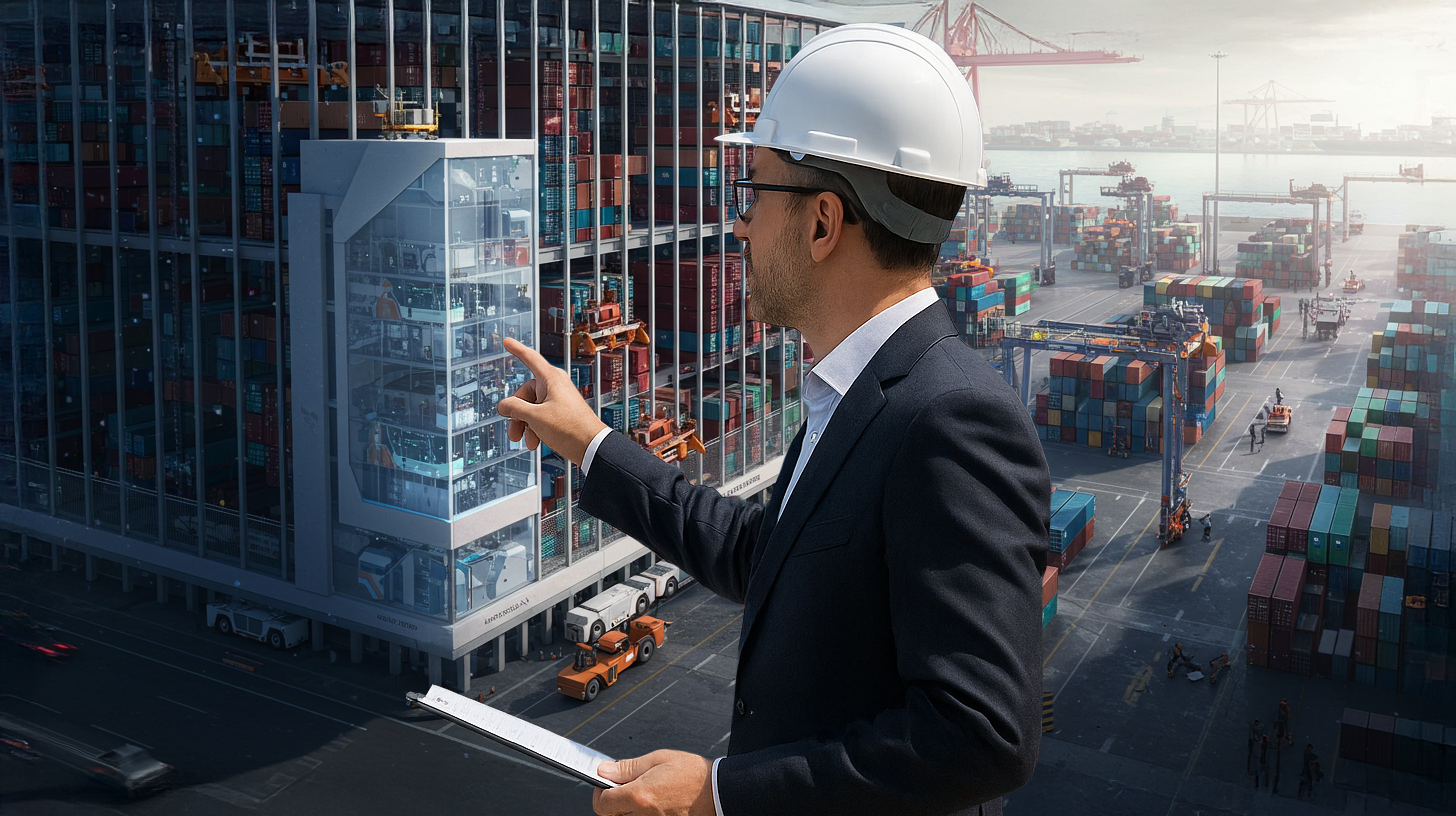
Container high-bay warehouses and container terminals: The logistical interplay – expert advice and solutions - Creative image: Xpert.Digital
This innovative technology promises to fundamentally change container logistics. Instead of stacking containers horizontally as before, they will be stored vertically in multi-story steel racking structures. This not only allows for a drastic increase in storage capacity within the same area, but also revolutionizes all processes at the container terminal.
More information here: