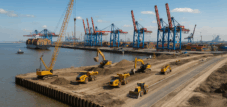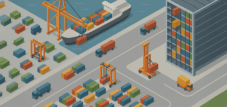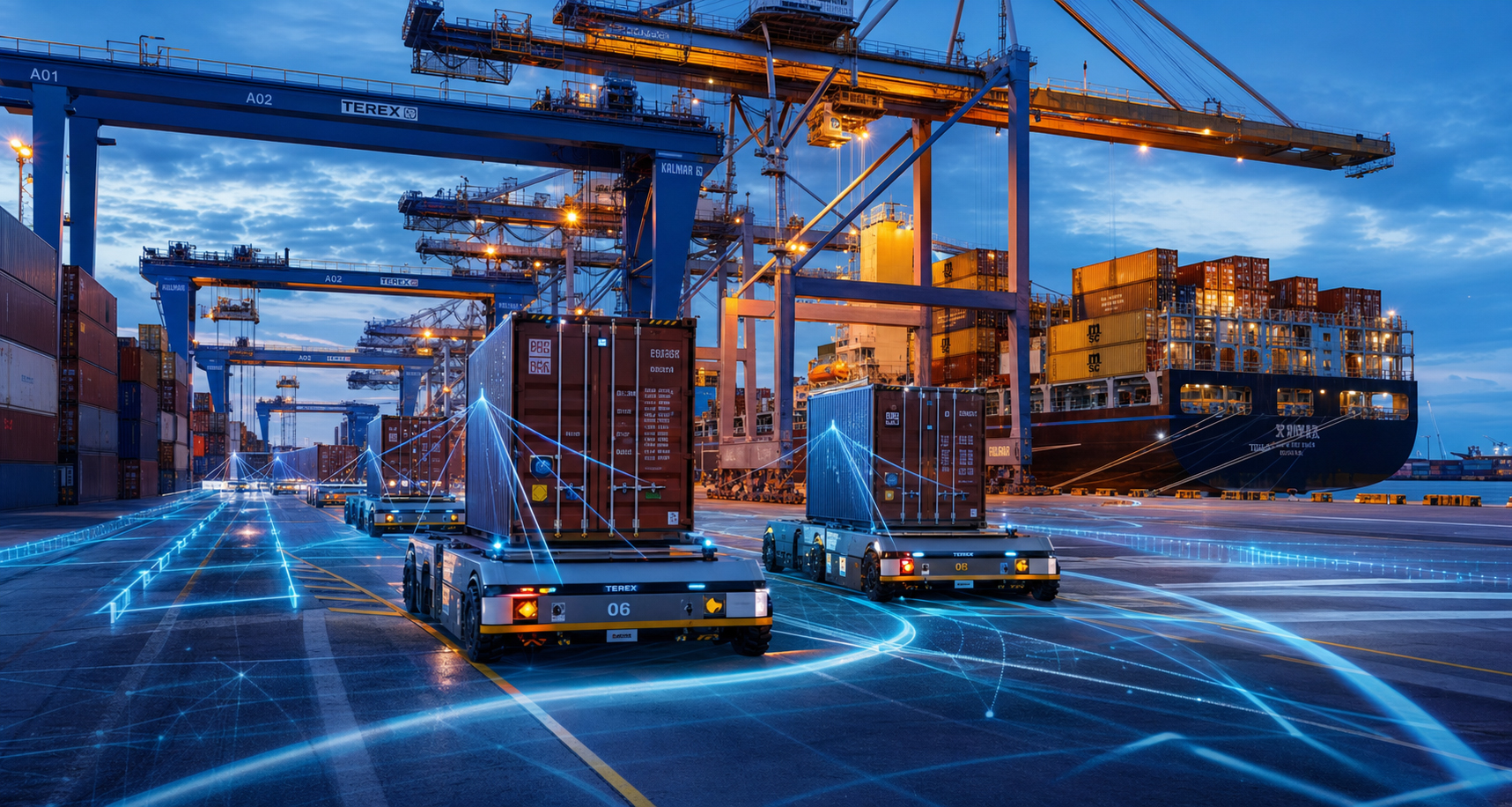
Freight Rate Shock 2026: Container handling in port terminals and inland hubs in the age of AI automation – Creative image on the topic, with AI: Xpert.Digital
AI in port operations: Why terminals without automation now face final closure
Ghost ports of the future? How autonomous vehicles and AI are transforming global trade
Saving millions without new construction: The AI trick for outdated port terminals
Global supply chains will remain under immense pressure in 2026: Exploding freight rates, geopolitical crises, and unpredictable ship arrivals are pushing traditional container terminals to their absolute limits. At the same time, increasingly tight deadlines and a pervasive shortage of skilled logistics personnel are driving demands even higher. In this toxic mix, technological upgrades are transforming from a mere luxury into a matter of sheer survival. But the good news for operators is that a years-long, prohibitively expensive complete infrastructure overhaul is often unnecessary. Our detailed industry analysis reveals how AI-supported control systems, autonomous vehicles, and modular automation can gradually future-proof existing port and inland terminals – and why hesitation now will mean the irrevocable loss of market share.
Port terminals and inland hubs in the age of AI automation: If your terminal is still operating in yesterday's terms, it's missing out on tomorrow's business
Global supply chains are in a state of constant turmoil. A glance at freight rate indices in the summer of 2026 immediately reveals that normalization is nowhere in sight. The Drewry World Container Index climbed to over US$4,600 per 40-foot container, while the Shanghai-Los Angeles route became more than 250 percent more expensive year-on-year. At the same time, detours around the Cape of Good Hope, triggered by the ongoing crisis in the Red Sea and, at times, tensions in the Strait of Hormuz, are tying up significant portions of global shipping capacity. Nearly eleven percent of the global container fleet is currently stuck in congestion or taking detours. For terminals and inland hubs, this means that ship arrival times are more unpredictable than ever before, while industry and trade are simultaneously demanding ever-tighter timeframes for their just-in-time processes. This situation is hitting a sector already suffering from chronic staff shortages, high energy prices, and outdated yard processes. The crucial question is no longer whether automation is necessary, but how it can be implemented without a complete rebuild of the infrastructure.
Why planned processes are becoming the exception
For decades, container terminals were planned based on relatively stable arrival patterns and predictable trade volumes. This fundamental assumption is now obsolete. The geopolitical situation surrounding key waterways has become a persistent source of uncertainty, altering shipping routes at short notice and thus also shifting arrival times at the terminals. Analyses by consulting firms like AlixPartners show that North American and Asian supply chains are already operating near capacity, while European networks, although they still have some buffer, are rapidly converging. This uneven utilization further complicates planning because shipping companies flexibly shift their capacity between trade routes to respond to fluctuations in demand. For terminal operators, this manifests as so-called clustering effects: instead of evenly distributed arrivals, several large vessels arrive within short timeframes, simultaneously straining quay capacity, crane performance, and yard space. Those who continue to rely on rigid, experience-based scheduling plans in this situation systematically create delays that propagate along the entire supply chain.
The expensive waiting time as a symptom of structural weaknesses
Container demurrage and detention charges, known in industry jargon as demurrage and detention, are no longer a marginal issue but a significant cost factor for importers and exporters. Current tariff overviews from the United States show that a single container at ports like Los Angeles, Long Beach, or New York can incur charges after just three to four days of inactivity, quickly exceeding US$2,000 depending on the delay. In India, at terminals like Jawaharlal Nehru Port, the costs for importers handling several dozen containers per month add up to several lakh rupees per year, solely due to avoidable downtime. These charges are not only a burden for terminal customers but also a warning signal for the operators themselves. Every hour a container spends unnecessarily on the terminal premises blocks storage capacity, exacerbates congestion at the gates, and increases turnaround times for subsequent cargo. The cause is rarely a single error, but usually a chain of minor inefficiencies: delayed information transfer between shipping company, freight forwarder and terminal, lack of transparency about the actual container location in the yard and yard planning based on static rules instead of real-time data.
How data-driven systems are reorganizing operations
Modern terminals are increasingly relying on AI-powered control systems that treat crane operations, yard blocks, gate processes, rail connections, and security checks not in isolation, but as a cohesive operational system. Reports from the first quarter of 2026 from terminals such as Shanghai Yangshan, Long Beach, and Felixstowe demonstrate that the use of AI-powered optimization algorithms for container stacking and the operation of autonomous vehicles has reduced average ship turnaround times by up to 15 percent compared to conventionally operated terminals. This improvement is not achieved through a single measure, but through the interplay of several technologies: predictive maintenance reduces unplanned crane and vehicle downtime, computer vision systems detect container conditions and positions in real time, and adaptive scheduling algorithms dynamically distribute resources at the quayside instead of according to rigid schedules. The crucial difference from previous waves of automation lies in the processing speed. Where previous systems recalculated optimizations once a day or week, current platforms work with continuous decision loops that adapt to changing conditions within minutes.
Why existing facilities don't necessarily have to be demolished
A common misconception among terminal operators is that true automation can only be achieved through a complete rebuild of the facility. This view overlooks the fact that the market has divided into two clearly distinguishable paths. New greenfield projects, such as the Tuas terminal in Singapore, typically take four to six years from planning to full operation and allow for a fully integrated automation architecture from the ground up. For the vast majority of existing terminals, however, this approach is neither financially feasible nor practical in terms of time. The second approach, the phased retrofitting of existing facilities, as practiced at the APM terminal in Rotterdam or the TraPac terminal in Long Beach, extends over eight to twelve years but allows for continuous operation during the conversion phase. The modularity of the systems used is crucial in this scenario. Autonomous vehicles operating on existing routes, sensors retrofitted to existing cranes, and software layers superimposed on existing terminal operating systems now enable a level of automation that would have required a complete rebuild just a few years ago.
Autonomous vehicles as the backbone of internal transport
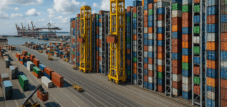
The transport of containers between the quay, yard, and gate has long been considered one of the most labor-intensive and error-prone aspects of terminal operations. Automated Guided Vehicles (AGVs) have become the key technology for decoupling this section from human intervention. Current figures illustrate the extent of their adoption: the Port of Hamburg already operates more than one hundred autonomous vehicles, Rotterdam more than two hundred, and Singapore plans to deploy over one thousand autonomous units at its Tuas terminal by 2027. These vehicles navigate using a combination of GPS, lidar sensors, and computer vision. They are coordinated by central fleet management systems that control hundreds of units simultaneously, avoid collisions, and optimize routes in real time. The economic advantage lies not only in the reduction of personnel costs but also in operational continuity. Autonomous vehicles operate around the clock without shift changes, reduce human error, and lower both energy consumption and emissions through more efficient driving patterns and electric propulsion. For terminal operators, who are increasingly being measured against sustainability goals, the electrification of cranes and vehicles is now just as relevant a decision criterion as pure efficiency improvement.
LTW Intralogistics Solutions

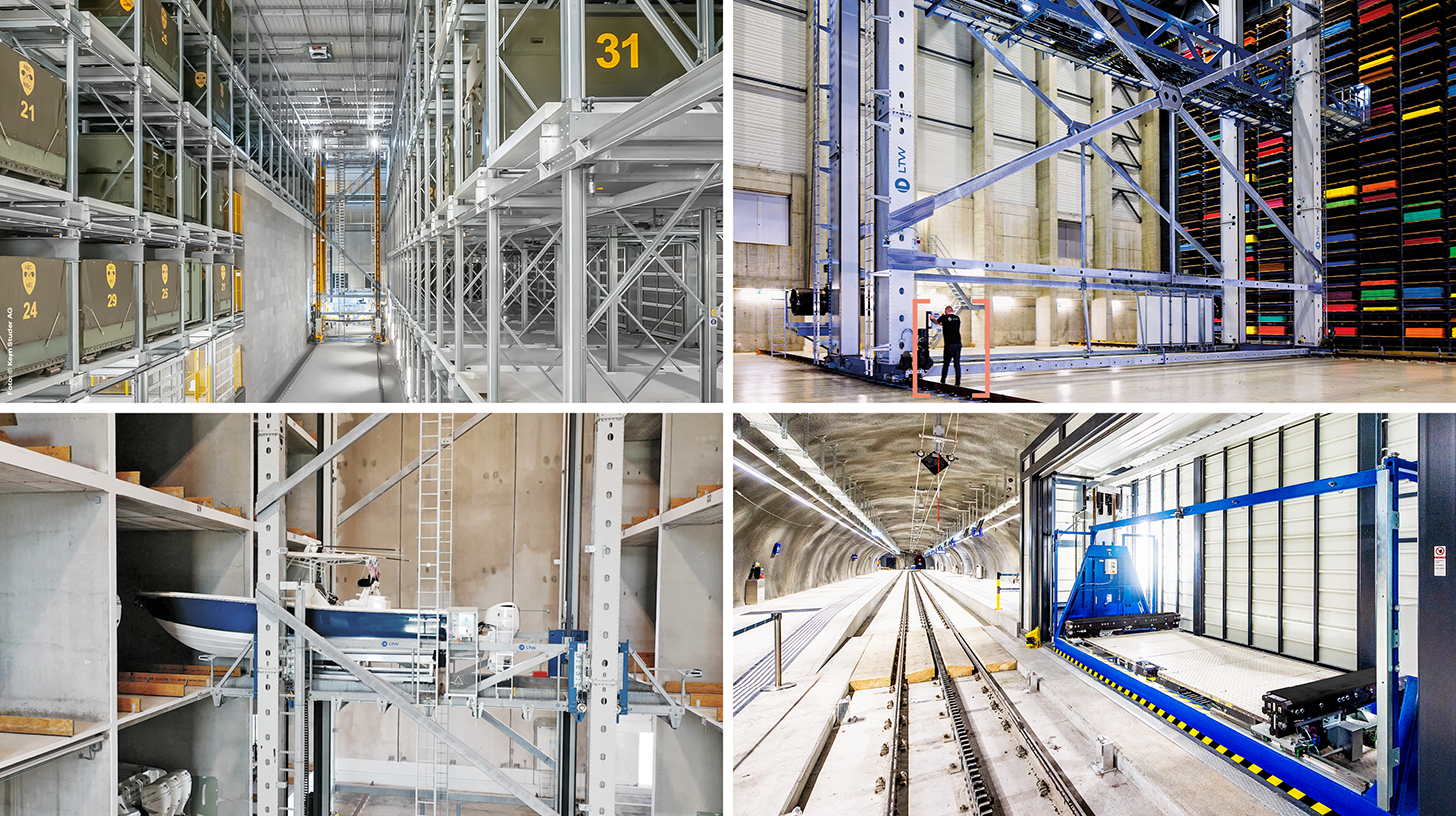
LTW Intralogistics – Engineers of Flow - Image: LTW Intralogistics GmbH
LTW offers its customers not individual components, but integrated complete solutions. Consulting, planning, mechanical and electrotechnical components, control and automation technology, as well as software and service – everything is networked and precisely coordinated.
In-house production of key components is particularly advantageous. This allows for optimal control of quality, supply chains, and interfaces.
LTW stands for reliability, transparency, and collaborative partnership. Loyalty and honesty are firmly anchored in the company's philosophy – a handshake still means something here.
Related to this:
Automation as an answer to volatile freight rates: How terminals can remain competitive
The skilled worker shortage as a catalyst rather than a brake
The shortage of qualified personnel, particularly truck drivers for pre- and post-haulage and trained terminal staff, is frequently cited in many regions as an argument against investment, supposedly due to a lack of ability to operate complex new systems. In reality, the opposite is true. The shortage of personnel is one of the strongest drivers of automation investment because it forces operators to focus their existing workforce on higher-value tasks. Remotely controlled operations centers, from which entire terminals are monitored and where personnel only intervene in exceptional circumstances, fundamentally change the required skill set for employees. Instead of physically demanding and weather-dependent work on the terminal premises, jobs are now performed in climate-controlled control rooms, requiring different, often more attractive, qualifications. This shift does not completely solve the skills shortage, but it changes the nature of the skilled workers needed and gives terminal operators access to a broader labor market that is no longer exclusively focused on heavy physical labor.
Blockchain and data exchange as an underestimated lever
While automation at the physical interface between ship, crane, and vehicle represents the most visible change, an equally significant transformation is unfolding in the data exchange between the stakeholders involved. Blockchain-based platforms connect ports, shipping companies, customs authorities, freight forwarders, and cargo owners in a shared digital ecosystem where information is shared in real time, instead of relying on paper-based documentation, manual checks, and isolated data silos. These systems not only reduce administrative delays but also create the data foundation upon which AI systems can make meaningful predictions. A terminal that lacks reliable access to the actual position and status of incoming cargo cannot truly plan its yard operations proactively—regardless of the sophistication of the algorithms used. The combination of data transparency and physical automation is therefore not an optional add-on but the fundamental prerequisite for substantial efficiency gains.
The economic pressure caused by fluctuating freight rates
The dramatic rate fluctuations of 2026, from temporary drops of 25 percent in spot rates at the beginning of the year to subsequent doublings and triplings later on, directly impact the investment decisions of terminal operators. During periods of low rates, terminals are under pressure to reduce their operating costs to remain competitive. During periods of exploding rates, such as those experienced in the summer of 2026 due to a combination of tariff pull-forward effects, geopolitical constraints, and the strategic capacity discipline of shipping lines, the pressure increases to turn over all available capacity as quickly and efficiently as possible to maintain their position against competing ports. Paradoxically, both scenarios lead to the same result: increased interest in automation technologies that can both reduce costs and increase throughput. The global market for port infrastructure is estimated at approximately US$222 billion for 2026, with an expected increase to over US$316 billion by 2034, representing an annual growth rate of around 4.5 percent. These figures demonstrate that the willingness to invest remains strong despite – or perhaps even because of – market volatility.
Regional differences and the question of pioneering role
The Asia-Pacific region remains the world's leading region for the development of smart ports, with Singapore and Shanghai serving as benchmarks for advanced automation projects. This pioneering role is no accident, but rather the result of consistent government support and strategic positioning as key transshipment points in global trade. European ports such as Rotterdam and Hamburg are following suit with their own extensive automation programs, but face the additional challenge of retrofitting their facilities while maintaining operations and simultaneously complying with stringent European environmental and safety regulations. North American terminals operate in a more complex regulatory and labor environment, where unions traditionally play a stronger role and automation projects are often linked to job security negotiations. These regional differences result in an uneven pace of transformation, which will significantly influence the competitive position of individual ports within the global cargo network in the long term.
Inland hubs as a neglected link
While public debate focuses heavily on the major seaports, the importance of inland terminals and dry ports is often overlooked. Yet these hubs are crucial in determining whether efficiency gains achieved on the coast actually reach the end customer. A terminal that accelerates its ship handling by 15 percent through automation gains little economic benefit if the containers then sit for days in an overloaded inland hub awaiting onward transport. Therefore, integrating rail connections, automated handling equipment, and digital booking systems at these inland locations is not a secondary addition, but an integral component of any serious automation strategy. Terminals that link their AI-powered planning systems beyond the port boundaries to downstream inland hubs gain a competitive advantage that extends far beyond the quayside itself, as they can optimize the entire transport chain all the way to the final delivery point.
Limits and risks of the automation wave
Despite the compelling efficiency data, caution is advised when terminal operators view automation as a panacea. High initial investment costs continue to pose a significant hurdle for small and medium-sized ports, particularly in a market environment where freight rates can fluctuate by several hundred percent within weeks, complicating refinancing planning. Moreover, the geopolitical events of 2026—from the Red Sea crisis and Strait of Hormuz instability to new trade tariffs—demonstrate that even the most sophisticated automation system cannot address external disruptions that alter a vessel's entire route. Automation optimizes processes within terminal boundaries, but it cannot prevent wars or predict political tariff decisions. It would therefore be a mistake to see technological upgrades as a substitute for the strategic diversification of trade routes and supplier relationships. The most astute operators combine both: robust internal processes through automation and a flexible external network strategy that utilizes multiple ports and routes simultaneously.
A sober assessment of the coming years
Developments over the past few months suggest that the volatility of global supply chains will not subside in the foreseeable future. Too many structural factors, from geopolitical tensions and regulatory tightening to climate-related disruptions, are simultaneously impacting a system that has already been pushed to its limits several times in recent years. In this environment, a terminal's ability to maintain stable and efficient internal processes despite external uncertainty is becoming a key competitive advantage. AI-powered automation does not offer a complete solution, but it is a highly effective tool for significantly increasing responsiveness. Terminal operators who invest now in modular, phased automation solutions gain a structural advantage over those waiting for a calmer market cycle, which is unlikely to materialize. The real question, therefore, is not whether automation is worthwhile, but how quickly a terminal can integrate it into its existing operational structure before competitive pressure from faster competitors becomes irreversible.
Consulting - Planning - Implementation

Konrad Wolfenstein
I would be happy to serve as your personal advisor.
You can contact me at wolfenstein∂xpert.digital or
Just call me on +49 7348 4088 965 .
Your container high-bay warehouse and container terminal experts
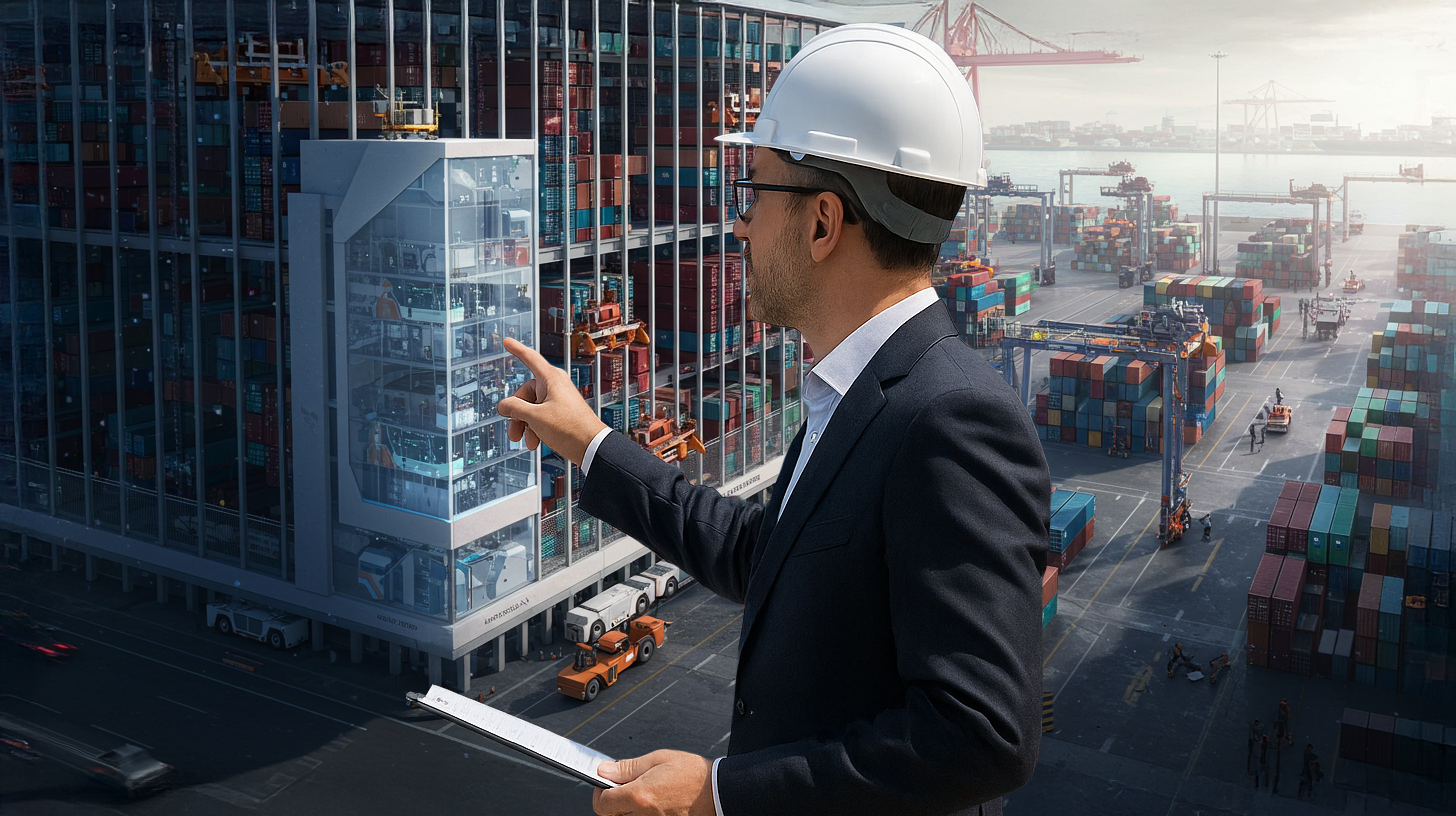
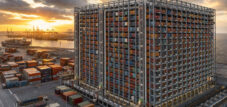
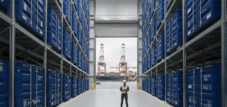
Container high-bay warehouses and container terminals: The logistical interplay – expert advice and solutions - Creative image: Xpert.Digital
This innovative technology promises to fundamentally change container logistics. Instead of stacking containers horizontally as before, they will be stored vertically in multi-story steel racking structures. This not only allows for a drastic increase in storage capacity within the same area, but also revolutionizes all processes at the container terminal.
More information here: