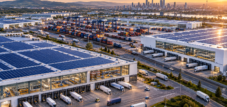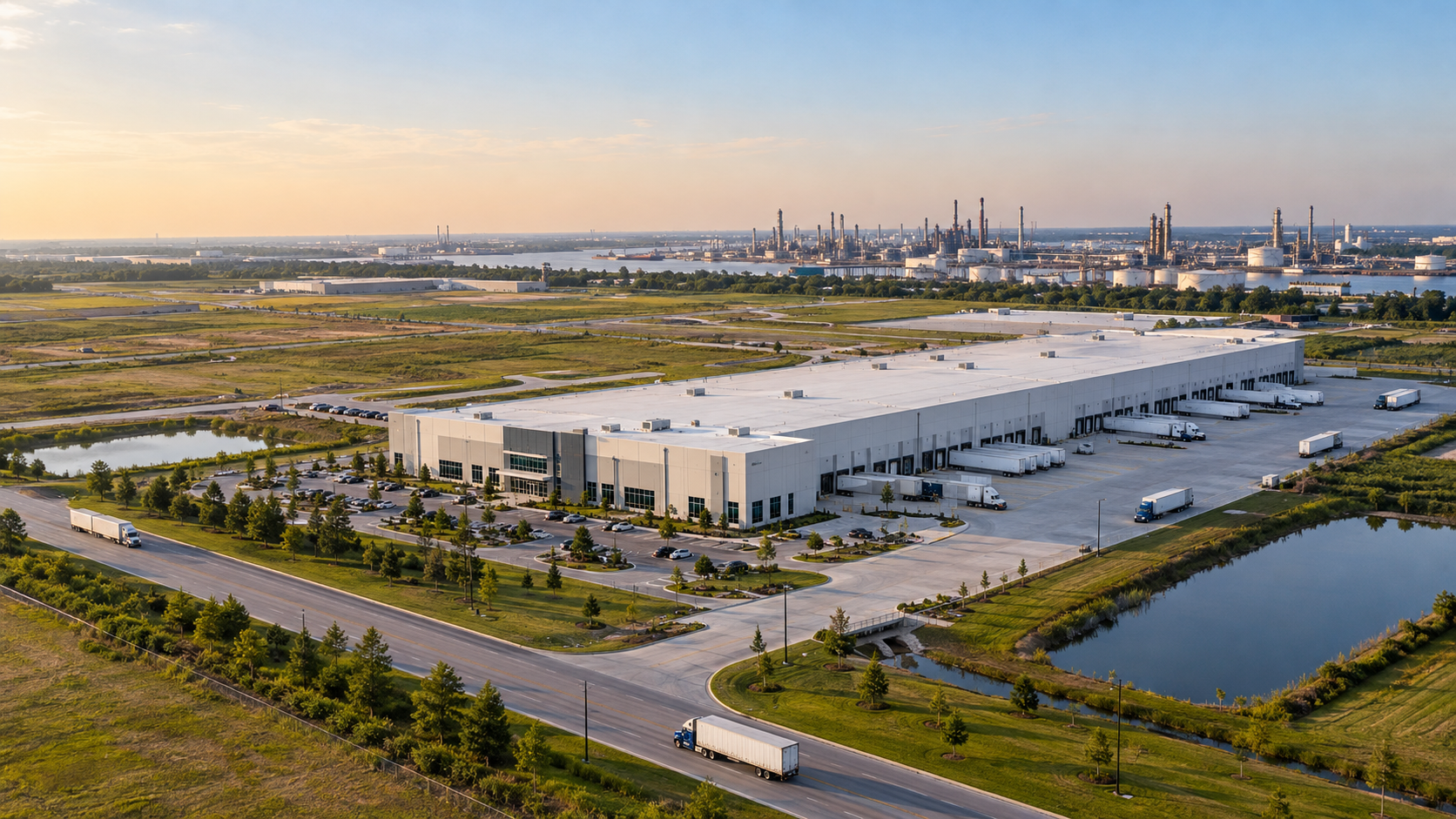
Construction of a distribution center in Louisiana: Geismar in the spotlight of the logistics industry – creative image on the topic, using AI: Xpert.Digital
Growth through efficiency: Magnolia Ridge as a key for the petrochemical industry
Magnolia Ridge: An important step in modern warehouse logistics
The future of logistics: Magnolia Ridge as an answer to the lack of space
The Magnolia Ridge Logistics Park in Geismar, Louisiana, is about to begin construction on a groundbreaking 18,580-square-meter distribution center. This project, slated for completion in the first quarter of 2027, is not just another real estate development; it has the potential to significantly shape the region's industrial landscape. With its strategic location at the heart of one of the United States' most important petrochemical production clusters, Magnolia Ridge will become a hub for logistics companies, warehousing operators, and industrial service providers.
Investors JRE Capital and Ratcliff Development have developed a comprehensive concept that encompasses not only modern construction and infrastructure but is also tailored to the specific needs of the industry. At a time when the demand for large, modern warehouse space is increasing, while vacancy rates in the region have decreased dramatically, Magnolia Ridge is seen as a solution to the challenges facing today's logistics services. By combining capital, project development, and market access, the project promises to significantly increase the efficiency and responsiveness of regional supply chains.
The following sections will analyze the project in detail, highlighting both the economic and infrastructural aspects that make Magnolia Ridge a significant factor in logistics and industrial development.
Magnolia Ridge: The logistics park that is reshaping Geismar's industry
From construction project to location signal: If the hall is missing, even a billion-dollar industry grinds to a halt
The planned distribution center in Magnolia Ridge Logistics Park appears at first glance to be a single real estate project: 18,580 square meters, or 200,000 square feet, of building space, constructed as a modern Class A facility using tilt-wall construction with rear loading access. The site is located in Geismar, Louisiana, and construction is scheduled to begin in the first quarter of 2027. However, its economic significance extends far beyond the dimensions of a single warehouse. The building represents the first phase of a multi-building development on an approximately 80-hectare site and is intended to serve the petrochemical industry, logistics companies, warehousing operators, and industrial service providers.
JRE Capital and Ratcliff Development are acting as joint developers and owners of the park. Ratcliff Construction Co. is acting as the general contractor, Powers Brown Architecture is responsible for the design, and Lee & Associates will manage marketing and leasing. This division of labor combines capital, project development, construction, architecture, and market access in a vertically integrated structure. For a project whose success depends on cost control, technical suitability, and rapid leasing, this integration can be a significant advantage.
The true essence of the project lies in its locational economics. Magnolia Ridge is not being built on a greenfield site without any industrial context, but rather within the vicinity of one of the most important petrochemical production clusters in the United States. There, every major production site generates additional demand for spare parts, packaging, operating supplies, technical maintenance, plant engineering, transportation, and intermediate storage. A modern distribution center is therefore not an isolated building, but a component of the industrial division of labor. It shortens transport routes, increases response speed, and creates space where specialized companies can consolidate their services in close proximity to their customers.
The bottleneck is in front of the factory gate
The economic logic of Magnolia Ridge becomes especially clear when considering the local supply. The Baton Rouge metropolitan industrial market had a vacancy rate of 2.6 percent at the end of the second quarter of 2025. With a total of approximately 44.5 million square feet, only 10,500 square feet of new space were added in the twelve-month period. The average asking rent was $10.33 per square foot per year, 3.7 percent higher than the previous year. While different market reports may record inventory and the exact vacancy rate differently due to varying area and property definitions, they all show the same basic pattern: Modern industrial space was scarcer in the southern submarkets than the aggregated figures for the entire metropolitan area would suggest.
At the end of 2025, the vacancy rate in the greater Baton Rouge area rose to 4.38 percent. However, the increase was concentrated primarily in North Baton Rouge. Ascension Parish and South Baton Rouge together had only about 321,000 square feet of available industrial space, and tenants with a need for more than 50,000 square feet continued to face significant difficulties finding suitable properties. This is precisely where the planned building comes in: at 200,000 square feet, it addresses a size category where finding suitable space is particularly challenging for expanding businesses.
The new building is therefore less a bet on abstract space growth than a response to a qualitative deficiency. A market can statistically have vacant warehouses and still be functionally underserved if these warehouses are too small, technically outdated, poorly located, or unsuitable for modern logistics processes. Users don't just need any old space, but sufficient ceiling heights, durable floors, safe traffic flow, modern fire protection technology, high-performance energy and data connections, and enough maneuvering and parking space. The more specialized a tenant's business model, the less meaningful the vacancy rate alone becomes.
This discrepancy between nominal availability and actual usability explains why new projects continue to emerge in select locations within an overall normalizing US industrial real estate market. Nationally, the vacancy rate stood at 6.9 percent in the second quarter of 2026, while demand for space increased and completions declined year-over-year. Modern logistics facilities and large-scale distribution centers contributed to the improvement, but significant regional disparities persisted. Geismar, therefore, is not representative of the entire US market but rather a specialized submarket whose demand is more heavily reliant on manufacturing and industrial services than on general online retail.
The petrochemical industry generates its own logistics
Ascension Parish is one of the most concentrated locations for chemical production in the United States. BASF, CF Industries, Linde, Methanex, Shell, and other international companies operate large facilities there. The industrial network encompasses traditional petrochemicals as well as fertilizers, industrial gases, methanol, specialty chemicals, and increasingly, lower-emission production processes. This diversity does not reduce the dependence on the core industry, but it expands the number of potential user groups for storage, distribution, and service areas.
Production facilities of this type are capital-intensive and often operate continuously. Downtime can be very costly, which is why the availability and speed of spare parts, fittings, pumps, measuring instruments, safety equipment, and consumables are of high economic value. A nearby warehouse not only reduces transport distances but, more importantly, shortens the time between request and delivery. For an industrial company, avoiding even a few hours of downtime can be more economically significant than a small difference in annual rent.
This explains why industrial logistics in Geismar has different priorities than a consumer-oriented distribution center on the outskirts of a metropolis. While e-commerce logistics primarily optimizes reach, parcel throughput, and proximity to households, a petrochemical-focused site must guarantee reliability, occupational safety, technical compatibility, and short-term availability. Users can store large items, dispatch maintenance teams, pre-package materials, or serve regional customers from a combined warehouse and office location. The hall thus becomes an operational platform rather than a passive storage facility.
The economic ties to industry are substantial. Since 2006, according to regional institutions, Ascension Parish has attracted tens of billions of dollars in investment; industrial companies constitute a large proportion of the most important employers and taxpayers. A previous analysis put the industry's share of local property taxes at nearly 24 percent. Such figures illustrate that additional logistics space does more than simply meet real estate demand. It supports a manufacturing complex that generates employment, municipal revenue, and contracts for numerous suppliers.
18,580 square meters as a calculated bet
The project has the character of a preemptive bid decision. The developers are creating modern capacity before the park's entire long-term demand needs to be contractually secured. Such speculative development is riskier than a custom-designed building with a pre-determined tenant, but in a tight market, it can react more quickly to actual expansion. A company that needs space in the short term often cannot wait for a multi-year planning, permitting, and construction process.
The timing is remarkable. Nationally, high financing costs, increased construction prices, and improved availability following the pandemic boom had dampened speculative building activity. Significantly fewer completions were projected for 2026 compared to peak years. At the same time, demand shifted towards modern, efficient, and specialized properties, while older sites lost competitiveness. Magnolia Ridge is therefore not blindly following a general construction boom, but rather capitalizing on a local supply gap amidst greater national caution.
The risk remains real, however. A building of this size ties up considerable capital before rental income is generated. Delays, cost increases, or a longer marketing phase reduce the return on investment. Furthermore, companies may postpone investment decisions if interest rates, energy prices, or trade policies become uncertain. Therefore, success depends not only on the existence of the petrochemical cluster itself, but also on whether the location, facilities, lease terms, and divisibility of the space meet the specific needs of the users.
The developers benefit from the option of expanding the park in stages. The first building is large enough to establish a visible market standard, but small in relation to the total area of approximately 80 hectares. This phased approach limits risk: subsequent buildings can be adapted to leasing success, user preferences, and capital market conditions. A successful first building provides comparable rents, operational experience, and a benchmark for later phases. Conversely, a weaker start allows time to adjust the pace or product strategy of further expansion.
Class A is not a label
The designation "Class A" does not describe a uniform legal standard for industrial properties. In the market, it signifies a modern building with high technical and operational quality. The decisive factor is whether the property improves processes, reduces risks, and can accommodate diverse users. In Geismar, this requirement encompasses the integration of warehousing, distribution, and industry-related services.
For tenants, the value of modern storage facilities stems from several components. Efficient building depth and a clear column layout increase usable storage space. Sufficient ceiling height allows for denser storage. A high number of functional loading docks reduces waiting times. Large maneuvering areas minimize conflicts between incoming and outgoing trucks. Modern lighting, insulation, and building technology limit energy consumption. High-performance sprinkler and safety systems can expand the range of permissible uses, although the storage of certain hazardous materials always requires additional permits and safety measures.
Economically, Class A warehouses should therefore be understood as productivity capital. Higher rent can be justified if a company achieves higher throughput, lower energy consumption, reduced damage, or shortens personnel travel distances within the same area. The relevant comparison is not rent per square meter, but total cost per unit delivered or per supported operating hour. Since transport costs usually weigh significantly more heavily than real estate costs in supply chain budgets, a well-located warehouse can be the more cost-effective solution overall, despite the higher rent.
Future-proofing is another crucial factor. Modern users expect reserve capacity for automation, charging infrastructure, digital inventory management, and potentially photovoltaics. Not every technology needs to be installed on the first day of operation. What's essential is that the supporting structure, power supply, roof, and exterior surfaces allow for future modifications. A building that offers these options ages more slowly and remains attractive to a wider range of tenants.
Concrete becomes an insurance strategy
The planned tilt-wall construction method is well-suited to the scale and risk profile of the site. Large concrete wall elements are typically prefabricated on-site and then erected. This method is particularly suitable for buildings with repeatable facade sections and can combine construction time, durability, and cost-effectiveness. Concrete also offers high fire resistance, low maintenance requirements, and thermal mass.
On the Gulf Coast, building design takes on an additional strategic dimension. Buildings must withstand heavy rain, high wind loads, humidity, and potential business interruptions. A robust building envelope doesn't eliminate these risks, but it can improve resistance to certain types of damage. This makes building design a key factor in the risk assessment of owners, tenants, lenders, and insurers.
However, it would be wrong to equate tilt-wall construction with complete resilience. Roof systems, gates, windows, drainage, ground level, and emergency power supply remain critical factors. A robust wall element is of little use if water penetrates through access points or technical openings. Maintenance plans, secure data connections, and operational emergency plans are equally important. The quality of a resilient logistics property is therefore reflected in the overall system, not in a single building material.
The construction method also impacts financing. Permanent, marketable buildings tend to be viewed more favorably by investors than highly customized, specialized buildings that only function for a single user. The planned center must therefore balance two objectives: it should meet the increased demands of industrial users without losing its capacity for alternative uses. The easier the space can be adapted when tenants change, the lower the long-term obsolescence risk.
Rear access with clear function
The proposed rear-load configuration positions the loading docks on one side of the building, typically at the rear. This allows the front to be used for offices, visitors, employee parking, and a clear address, while keeping heavy goods traffic spatially separated. This layout is attractive for companies that combine customer contact, technical administration, and warehousing operations within a single facility.
Compared to a cross-dock building with doors on two opposite sides, rear-loading facilities often require less depth on the site and can be better suited for medium-sized units or multiple tenants. However, throughput is less optimal for extremely high throughput volumes. This choice demonstrates that Magnolia Ridge is not exclusively targeting large national logistics companies. The building is also intended to accommodate regional dealers, plant engineers, maintenance companies, and industrial service providers.
Flexibility can be a decisive factor in leasing. A single tenant could occupy the entire space, but a sensible subdivision would distribute the demand risk among several companies. Technical installations, fire compartments, office zones, access roads, and parking spaces must be planned in such a way that sub-areas can function independently. Excessive specialization increases the costs of later modifications; conversely, insufficient preparation makes multi-tenant occupancy more difficult. Good planning therefore creates options without unnecessarily tying up capital in uncertain special requests.
Eighty hectares create real opportunities
The size of the Magnolia Ridge Logistics Park is more economically significant than the footprint of the first building. Approximately 80 hectares allow for phased development with various building types. In addition to larger distribution centers, smaller office-warehouse combinations, manufacturing facilities, or user-specific buildings can be constructed in the long term. The park will thus become a platform where the supply of space and industrial demand can be aligned over many years.
In investment calculations, undeveloped but serviced land is a viable option. Owners don't have to build on every plot immediately. They can wait until market rents, construction costs, and actual demand reach a favorable balance. At the same time, the initial construction phase increases the value of the remaining land because access, visibility, and market acceptance of the location are improved. However, this increase in value depends on whether the basic infrastructure is designed to be scalable and whether subsequent construction phases disrupt ongoing operations.
The modular strategy mitigates the risk of a one-off overproduction. A park built entirely in advance could lead to prolonged vacancies during a downturn. A phased development, on the other hand, allows for learning processes. If the first building is primarily leased to industrial service providers, later phases can prioritize smaller and more flexible units. If a major manufacturer expresses interest, a plot can be reserved for a custom-designed building. This adaptability is a valuable economic asset.
At the same time, a concentration advantage arises. Multiple users in the same park can share service providers, security structures, and traffic areas. Suppliers benefit from short distances to neighboring businesses. For the owner, certain development costs per building decrease because central infrastructure is spread over several phases. However, these advantages only materialize as occupancy increases. In the early phase, the developer bears a larger share of the upfront costs.
Your intralogistics experts

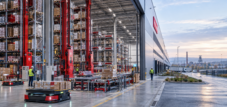
Consulting, planning and implementation of complete solutions for high-bay warehouses and automated storage systems - Image: Xpert.Digital
More information here:
Innovative logistics solutions for the petrochemical industry
Location beats low rent
Geismar's strength lies in its connection to the petrochemical corridor and regional transportation routes. Louisiana Highway 30 provides access to numerous industrial facilities and links them to Interstate 10. Comparable industrial sites within the corridor are located just a few kilometers from the highway, approximately two kilometers from a rail line, and within easy reach of the Mississippi River and the ports of Greater Baton Rouge and South Louisiana. This proximity expands potential supply chains beyond road transport alone.
The Mississippi River is more than just a geographical backdrop. The Port of South Louisiana quantifies the regional impact of the businesses located within its jurisdiction at $12.7 billion in revenue, over $5.1 billion in added value, and approximately 19,200 direct, indirect, and induced jobs. According to port analysis, the average earnings for these jobs exceed $91,000. This demonstrates the high productivity of the industrial and logistics system in which Magnolia Ridge is embedded.
For most potential tenants, however, road access remains crucial. Spare parts, tools, and technical teams need to reach their facilities with pinpoint accuracy. A location near LA 30 and I-10 reduces travel times and makes the same location accessible to customers in Baton Rouge, New Orleans, and along the river corridor. The economic benefit arises from the combination of proximity and network connectivity: Only those who can quickly reach the factory gate and simultaneously have reliable access to the national transportation network can serve both markets.
This location quality comes at a price. Well-connected, industrially permissible, and sufficiently large plots of land are limited. Flood control requirements, drainage, environmental regulations, and competing land uses increase the barriers to entry. As a result, already developed sites gain in value. For tenants, a higher site rent can be rational if it is more than offset by shorter travel times, improved delivery capabilities, and lower susceptibility to disruptions.
Growth meets congested roads
The proximity to the industrial cluster also creates the biggest bottleneck. LA 30 and LA 73 carry a significant portion of commuter, construction, and heavy goods traffic. Regional planning prioritized additional lanes; at the same time, investments in roundabouts and interchanges around Interstate 10 were being pushed forward. At one point, 22 major industrial projects were planned for Ascension and St. James Parish, eleven of which had a volume exceeding one billion US dollars each.
New logistics areas can organize transport more efficiently, but they also generate additional journeys. This is especially true during the construction phase and periods of high transshipment intensity. If road capacity and intersections don't keep pace, the location's advantages can be partially negated. Congestion increases personnel costs, makes reliable time slots more difficult, and increases fuel consumption. For Magnolia Ridge, therefore, transport infrastructure is not an external, secondary consideration, but rather an integral part of its economic value proposition.
Power and communication networks must also keep pace. While modern warehouses typically require less energy than chemical plants, automation, air conditioning, charging infrastructure, and digital systems increase connection requirements. With multiple construction phases, the load grows gradually. Early coordination with utility providers reduces the risk of completed buildings being only partially usable due to insufficient grid capacity.
The public sector faces a classic coordination problem. Private investments increase the tax base and employment, but put pressure on public infrastructure. If roads and drainage systems are expanded too late, the entire corridor loses productivity. If they are built too early and too large, the public bears the risk of projects not being realized. Therefore, sound development planning must link realistic construction phases, traffic volumes, and financing options.
Construction stimulus and sustainable value creation
The construction of the first building will generate short-term demand for planning, earthworks, concrete, steel, building services, electrical work, transport, and construction management. Since Ratcliff Construction Co. is slated to act as the general contractor, there is a close link between project development and execution. This can accelerate decision-making and improve cost calculations, but it does not eliminate the risks of fluctuating material prices and skilled labor shortages.
The greater economic impact begins after completion. New businesses create jobs in warehouse management, logistics, maintenance, sales, and administration. Indirect effects also occur in freight forwarding, equipment suppliers, cleaning services, security, catering, and other local services. The type of use is crucial: a highly automated central warehouse can require fewer direct employees on the same area than several industrial service companies, while simultaneously generating higher productivity and wages.
Municipal revenues also depend on actual occupancy. A constructed building expands the property tax base, while business activity can generate additional revenue and local spending. However, the net fiscal impact must be weighed against the costs of roads, security, drainage, and other public services. A project is particularly valuable to the region if it not only consumes land but also attracts and retains productive businesses on a long-term basis.
Furthermore, the park can increase the cluster's resilience. Additional storage capacity allows companies to keep critical inventory closer to their facilities. While this contradicts an extremely lean just-in-time logic, it aligns with the growing interest in safety stocks and multiple sources of supply since global supply chain disruptions. The economic challenge lies in gaining resilience without unnecessarily tying up capital in slow-moving inventory.
The tenant decides the success
Addressable demand is broad, but not unlimited. Petrochemical producers could utilize external storage or project space. Wholesalers of valves, pipes, pumps, and measuring instruments require combined warehouse and office space. Industrial service providers can station materials, vehicles, and tools. Third-party logistics companies handle inventory management and distribution for multiple clients. Manufacturers from further afield could use Geismar as a regional supply hub.
These groups differ significantly in their space requirements, lease terms, and technical equipment. A retailer prioritizes shelf layout and fast delivery, a maintenance service provider may need more outdoor space and workshop area, and a manufacturer requires specific safety or environmental technology. The building must combine sufficient standardization for cost-effective construction with enough flexibility to meet real-world user needs.
The greatest leasing opportunity lies in proximity to demand. The greatest risk lies in the same concentration. If investment conditions in the chemical industry deteriorate, not only will the demand of a single tenant decline, but potentially that of an entire supplier network. Diversification within the park should therefore encompass not just several company names, but different revenue drivers. Logistics, manufacturing, technical services, and regional distribution do not react entirely uniformly to energy prices, economic cycles, and investment cycles.
The market situation nevertheless favors modern spaces. In Ascension Parish, industrial properties accounted for nearly 40 percent of commercial investment in 2025; Geismar alone represented a significant share of these transactions. A 200,000-square-foot, fully leased building completed in 2023 in nearby Rivermark 185 sold for $34.45 million in the second quarter of 2025. This comparison is not a direct valuation of Magnolia Ridge, but it demonstrates that institutionally usable industrial properties can attract capital in this submarket.
Return on investment arises between rent and risk
Without published construction costs, financing terms, and target rents, the project's return on investment cannot be reliably quantified. However, its mechanics are clear. On the revenue side, there are base rents, potential reimbursements of ancillary costs, contractual rent increases, and the long-term value of the remaining parking spaces. On the cost side, there are the land and development costs, building construction, financing, marketing, tenant improvements, insurance, property taxes, and ongoing maintenance.
The crucial variable is not just the prime rent, but the time it takes to achieve stable occupancy. Every additional month of vacancy delays income while interest and operating costs continue to accrue. A developer can accelerate leasing through lower initial rents, rent-free periods, or interior fit-out subsidies. Such incentives reduce the nominal yield but can increase the present value if they prevent prolonged vacancies.
The local market is sending mixed but constructive signals. In the third quarter of 2025, the average triple-net asking rent in the greater Baton Rouge area was around $10.12 per square foot per year, the vacancy rate was 4.19 percent, and the average capitalization rate was about 9.5 percent. High capitalization rates reflect attractive ongoing income but also the higher perceived risks of a smaller market. A new, well-leased Grade A property may be valued higher than the market average, but it must justify this quality premium through creditworthiness, lease term, and alternative use potential.
Rising interest rates have a twofold effect. They make financing construction more expensive and increase the return requirements of future buyers. At the same time, they stifle competing new construction projects. For Magnolia Ridge, this supply-side discipline can be advantageous if developers control financing and construction costs. It becomes problematic, however, if high capital costs drive up the necessary rent to such an extent that potential tenants opt for older properties or owner-occupied buildings.
Climate risk becomes a cost item
Louisiana offers industrial advantages but also faces significant weather and flood risks. Heavy rains, hurricanes, and prolonged power outages can disrupt buildings and supply chains. These hazards not only translate into potential damage but also affect building requirements, insurance premiums, deductibles, and financing terms.
For a logistics center, resilience therefore means more than just sturdy walls. Terrain modeling, rainwater retention, adequately sized drainage, and protected technical rooms are equally important. Gates and the roof must withstand heavy loads. Critical systems require emergency power or orderly shutdown procedures. Data should be backed up redundantly so that inventory and delivery orders remain traceable even in the event of local outages.
The climate risk surcharge can alter the competitiveness of a location. If insurance is very expensive or only available with high deductibles, the overall rent increases from the user's perspective. On the other hand, a new building constructed to current standards can offer an advantage over older facilities. The higher initial investment is then partially offset by lower susceptibility to damage, better insurability, and faster recommissioning.
Therefore, long-term economic viability should not be calculated solely under normal operating conditions. Reliable models take into account interruptions, repairs, and rising premiums. Especially in an industrial cluster whose customers depend on a continuous supply, the ability to quickly resume operations can constitute a distinct competitive advantage.
Environmental performance becomes a rental factor
The site is located in a region where industrial value creation and environmental impact have been closely intertwined for decades. A new distribution center will produce lower direct emissions compared to a chemical plant, but will affect land sealing, rainwater runoff, traffic, energy consumption, and local air quality. The quality of the development will therefore also be measured by how effectively these impacts are mitigated.
Efficient lighting, good insulation, demand-controlled building technology, and roofs prepared for solar panels can reduce operating costs and emissions. Charging infrastructure can support the transition to electric cars and certain commercial vehicles. Intelligent traffic management reduces idle time and conflicts. Rainwater retention areas and robust vegetation stabilize water management. Such measures are not merely about image enhancement, provided they generate measurable cost or risk advantages.
For international tenants, reporting on supply chain emissions is also gaining importance. An energy-efficient building with traceable consumption data facilitates the recording of indirect emissions. Proximity to a location reduces transport distances to regional customers, even though the actual climate impact depends on the vehicle type, capacity utilization, and the overall supply chain. Therefore, a blanket statement that every local warehouse is automatically sustainable would be too simplistic.
Economically, social acceptance is crucial. New industrial and logistics projects compete with residential development, green spaces, and public infrastructure. Transparent drainage, traffic, and safety concepts reduce conflicts and permitting risks. A park that visibly limits local impacts also protects the long-term value of its properties.
Skilled workers are the invisible infrastructure
Buildings alone do not create efficient logistics. Drivers, dispatchers, warehouse staff, technicians, electricians, security personnel, and management are needed. Ascension Parish, with its industrial history, has a comparatively large pool of technical expertise. The River Parishes Community College offers industry-related training in areas such as process engineering, welding, instrumentation, and maintenance.
At the same time, logistics companies are competing with large industrial employers who often pay high wages and offer extensive benefits. A new tenant must therefore not only offer competitive compensation but also make shift work, professional development, and safe working conditions attractive. Automation can alleviate certain bottlenecks but increases the need for mechatronics, data expertise, and maintenance.
The location between growing communities and industrial plants offers opportunities but also generates commuting. Affordable housing, road capacity, and reliable travel times influence the actual size of the job market. When employees face long and unpredictable commutes, employee turnover and recruitment costs increase. This makes regional quality of life a factor in real estate demand.
A coordinated strategy can be beneficial for the park operator. Shared contacts with educational institutions, standardized security programs, and coordinated traffic solutions create advantages for multiple tenants. Such soft location factors are less visible than a new building, but can be crucial for securing long-term business relationships.
Three paths to stabilization
In the baseline scenario, construction begins as planned in the first quarter of 2027. Demand remains solid due to ongoing industrial investment and the shortage of large, modern spaces. The building will be leased in phases, with several logistics and industrial service tenants sharing the space or a larger anchor tenant occupying a substantial portion. The first phase confirms the site hypothesis, with further buildings following at a controlled pace. This scenario appears plausible because Ascension Parish is structurally scarce, and companies continue to seek modern, high-quality facilities.
In a positive scenario, additional production projects, manufacturing investments, and the outsourcing of logistics processes accelerate demand. The first building is secured early, and developers can plan further phases at higher rents. Economies of scale in development and park operation improve returns. Simultaneously, land value increases as Magnolia Ridge transitions from a project to an established location. The benefits for the region grow, provided roads, energy, and labor keep pace.
In a negative scenario, high interest rates, construction costs, or economic uncertainty delay completion and leasing decisions. A decline in petrochemical investment affects several potential users simultaneously. The building requires significant compromises or remains partially empty while financing and insurance costs accrue. Further parking phases are postponed. The large land reserve then becomes a long-term option, but ties up capital without generating short-term returns.
Crucially, these scenarios don't depend solely on the overall US economic climate. Local mega-projects, facility maintenance cycles, available competing sites, and the efficiency of LA 30 can influence development more significantly than national averages. Therefore, success should be monitored using specific leading indicators: lease inquiries by size category, pre-leasing rates, construction costs per square foot, committed tenant improvements, traffic patterns, and announced investments by regional industry.
A sensible building project facing a tough test
Magnolia Ridge is economically compelling because the project combines three scarce resources: a large, contiguous area, modern building technology, and immediate proximity to a productive industrial cluster. The planned center fills a qualitative supply gap and can improve the responsiveness of regional supply chains. The first phase also serves as a test case for the long-term development of the approximately 80-hectare park.
The clear outlook, however, is not that every new warehouse will automatically be successful. The domestic market has shown how quickly a construction boom can lead to higher vacancy rates and weaker rental growth. While US fundamentals improved again in the second quarter of 2026, capital and construction costs remained high, and there were significant differences between locations. Magnolia Ridge must therefore be marketed as specialized industrial infrastructure and not reduced to the interchangeable logic of an ordinary large warehouse.
The most important success factor is the combination of flexibility and discipline. The building should be able to accommodate diverse users without compromising on technology, safety, and resilience. Further construction phases should only be accelerated when real demand and infrastructure support it. With consistent implementation, the park can attract additional companies, deepen local value creation, and strengthen Geismar as a supply hub for the petrochemical corridor.
This project is therefore also an example of a larger development: In modern industrial clusters, competitiveness is not solely determined by the production facility itself. Crucially, it is the network of storage, maintenance, transport, data, and skilled personnel that supports it daily. Magnolia Ridge is initially constructing 18,580 square meters. However, the economic investment is focused on something much bigger: the ability of an entire region to reliably translate billions in investment into ongoing production, employment, and added value.
Your global marketing and business development partner
☑️ Our business language is English or German
☑️ NEW: Correspondence in your native language!

Konrad Wolfenstein
I and my team are happy to be available to you as your personal advisor.
You can contact me by filling out the contact form here wolfenstein@xpert.digital:or simply call me at +49 7348 4088 965. My email address is
I'm looking forward to our joint project.