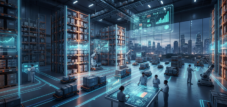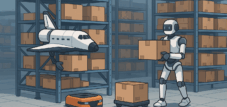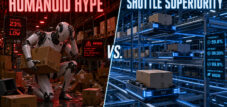
Shuttle or stacker crane? Compact warehouse versus high-bay warehouse: Which automation strategy wins? – Creative image: Xpert.Digital
Space, throughput, costs: The ultimate system comparison for your new automated warehouse
Two worlds of automation: Which warehouse system is the perfect fit for your strategy?
High-bay racking or shuttle? The 7 key criteria for your next intralogistics investment
The automation of intralogistics is no longer a question of "if," but rather a strategic bottleneck that determines the future viability and competitive position of companies. Anyone planning a new warehouse or modernizing an existing one today inevitably faces the most fundamental of all system questions: Should they opt for a highly dynamic compact warehouse with agile shuttles or the proven engineering of a classic high-bay warehouse with a storage and retrieval machine (SRM)? Both technologies promise maximum efficiency and performance, but their architectural concepts, strengths, and cost structures could hardly be more different. A wrong decision here not only slows down daily goods throughput but also becomes a massive financial burden over the decades. In this comprehensive comparison, we examine the crucial differences between these two approaches – from throughput and space utilization to total cost of ownership – and use seven key criteria to show you which system truly suits your individual growth strategy.
Two philosophies, one decision – and whoever makes the wrong one pays for it for decades
Two worlds of automated intralogistics
The automation of warehouse processes is no longer a question of whether, but rather how. The global market for intralogistics automation solutions was estimated at around US$48 billion in 2024 and is projected to grow to approximately US$86 billion by 2035, representing an average annual growth rate of over 5 percent. Other estimates even predict a compound annual growth rate (CAGR) of more than 8 percent. These figures clearly demonstrate that automated warehouse technology is poised for a massive expansion phase, driven by e-commerce, omnichannel requirements, the shortage of skilled workers, and the pressure to reduce costs.
Within this development, two system families are central to all strategic decisions: on the one hand, the compact warehouse with shuttle vehicles, and on the other hand, the classic high-bay warehouse with stacker cranes. Both systems pursue the same fundamental goal – the fully automated, space-saving, and error-free storage and retrieval of goods – yet they differ so fundamentally in architecture, strengths, weaknesses, and ideal application areas that an incorrect system choice not only produces operational inefficiencies but also entails significant financial burdens over decades. The decision for an automated storage system is a strategic course correction that will influence the efficiency, capacity, and operating costs of a company and its intralogistics in the long term.
What's really behind the term compact bearing
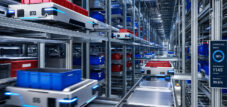
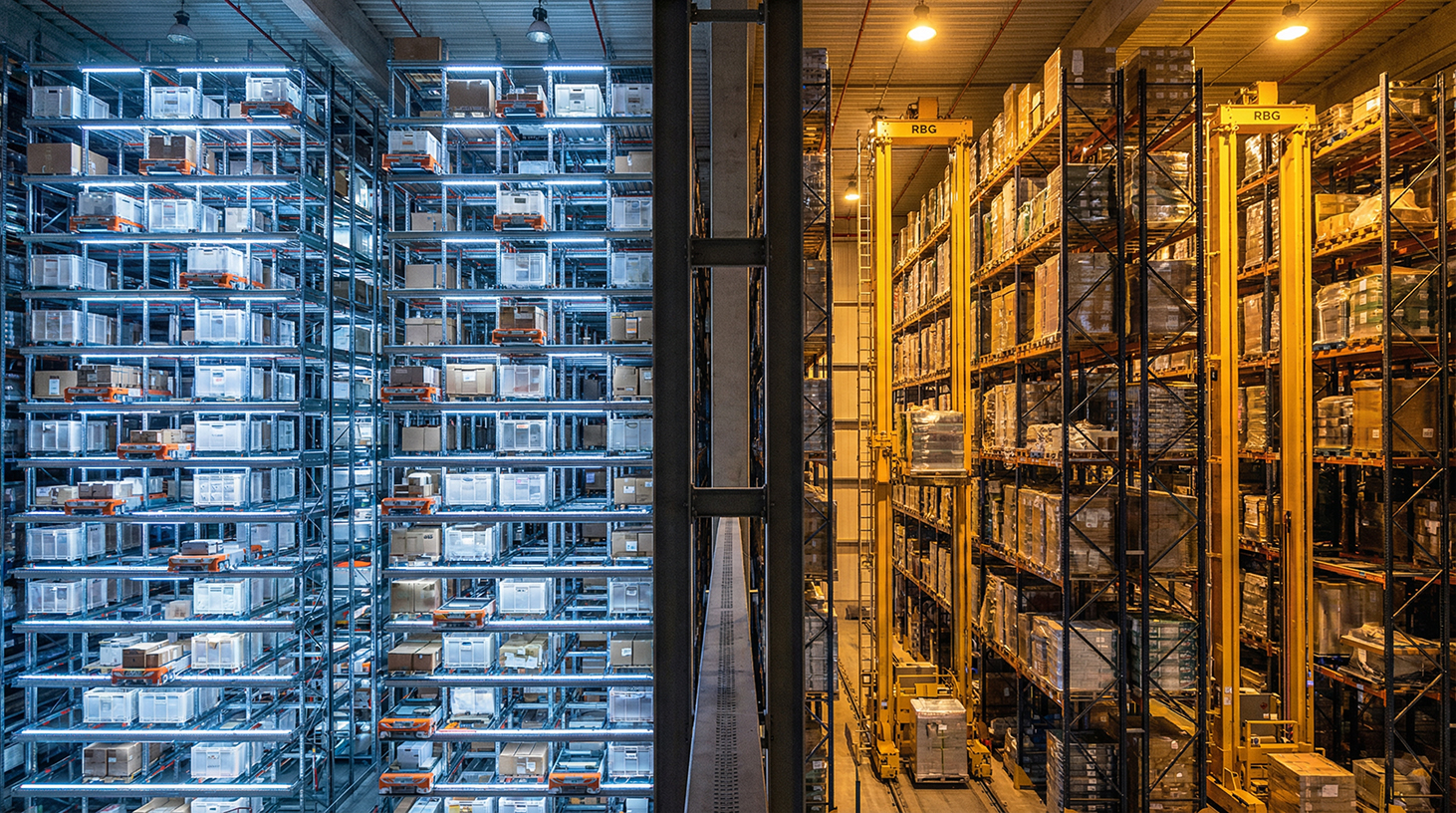
When referring to a compact warehouse with shuttles, this means an automated storage solution with high storage density, in which motorized satellite vehicles – the so-called shuttles – operate independently within a racking system and transport the load. Unlike a traditional high-bay warehouse, where one large unit serves an entire aisle vertically and horizontally, a shuttle system utilizes many small vehicles. These flat, self-propelled units move horizontally on rails within racking channels and, in most configurations, are level-bound, meaning each shuttle is responsible for a specific racking level.
In classic shuttle systems, vertical transport between racking levels is handled by separate vertical conveyors, known as lifts or hoists. Horizontal and vertical transport are thus functionally separated. In multi-level shuttle systems, vehicles can also be moved between levels, a process known as vertical or 3D roaming. The fundamental strength of this architecture lies in its parallelization capabilities: because many shuttles can operate simultaneously on different levels and in different aisles, a very high throughput can be achieved, which would be impossible with a single vehicle per aisle.
The concept of compact storage with shuttles is used for both small parts storage, i.e., for containers, cartons, and trays within automated small parts warehouses (AS/RS), and pallet storage. In the former case – the miniload shuttle – its strength lies in the high-frequency handling of light load units up to approximately 50 kilograms. Modern miniload shuttle systems can handle up to 1,500 load carriers per hour and aisle. For pallet storage, pallet shuttle systems are used, which store and retrieve load units weighing up to 1.5 tons in multi-deep storage channels.
The high-bay warehouse with storage and retrieval machine: Engineering in the vertical dimension
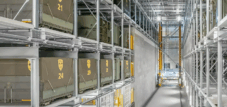
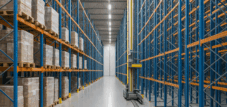
Automated high-bay warehouses with stacker cranes look back on over sixty years of development – the first systems were built in the 1960s – and have since established themselves as the technological backbone of industrial warehousing. Unlike shuttles, which operate exclusively on one level or within a limited height range, the stacker crane handles both horizontal and vertical movement in a single machine. An stacker crane moves along a storage aisle on rails, picks up pallets or containers with a telescopic fork, and positions them precisely in the storage bays.
The technical performance parameters of modern storage and retrieval machines are impressive. High-bay warehouses can reach heights of up to 45 meters, and in some cases even up to 50 meters. The maximum load capacity of standard machines is around 1,500 to 3,000 kilograms per load unit, while custom-designed machines can transport up to 10 tons. Depending on the manufacturer, the horizontal travel speed is between 120 and 200 meters per minute, and the maximum lifting speed is approximately 54 to 66 meters per minute. A single storage and retrieval machine typically serves a single aisle, although high-performance systems can utilize two vehicles per aisle.
The silo construction method, in which the racking system simultaneously forms the building's load-bearing shell, makes high-bay warehouses particularly cost-effective solutions for new construction projects, as the separate building envelope and racking structure are eliminated. According to industry sources, investments in a medium-sized, fully automated high-bay warehouse start at approximately 5 to 20 million euros, although the range is considerable depending on size, level of automation, and site conditions. A single storage and retrieval machine costs between 100,000 and several hundred thousand euros, depending on its dimensions and features.
The crucial difference: throughput and power architecture
The most important dividing line between the two systems lies in how they generate throughput. The stacker crane system defines its throughput by the number of storage and retrieval cycles of a single vehicle per unit of time. For a typical automated small parts warehouse (AS/RS) configuration with four aisles, each with one stacker crane equipped with two load handling devices and double-deep storage, an aisle length of 80 meters, and a rack height of 15 meters, a guideline value of approximately 400 storage and retrieval cycles per hour is realistic. The shuttle system, on the other hand, generates throughput through parallelization: A captive system—that is, a system with one shuttle per level—with a double pre-zone and two lift systems per aisle can achieve throughputs of over 600 storage and retrieval cycles per hour and aisle with single transport.
This difference has a direct consequence for system selection: If the required throughput can no longer be achieved with a reasonable number of stacker crane aisles, the shuttle system is the only sensible alternative. The transition from stacker cranes to shuttles is therefore less a matter of preference than one of hard performance requirements. If a company needs throughput in the short or long term that the automated small parts warehouse (AS/RS) with stacker cranes can no longer handle, the move to a shuttle warehouse must be made.
At the same time, the shuttle system's performance is essentially scalable upwards: by adding more shuttles or additional lift systems, performance can be increased during operation. This is one of the most significant strategic advantages for growing companies, especially in e-commerce and the fast-moving consumer goods sector. In contrast, the stacker crane system can primarily be scaled by adding entire aisles, which always entails an expansion of storage capacity and represents a considerably coarser scaling granularity.
Space utilization, building height and storage density in comparison
When it comes to space utilization, there's no single answer favoring one system over the other – it depends heavily on the storage height. As a guideline: with a storage height of around 400 millimeters, every automated storage and retrieval system (AS/RS) is superior to a shuttle warehouse in terms of pure storage capacity from a rack height of approximately 14 meters. The reason lies in the system architecture: shuttle warehouses require maintenance levels and structural intermediate platforms along the entire rack height, occupying rack levels for data storage. The AS/RS, on the other hand, handles the vertical transport itself without using these intermediate spaces and can therefore utilize the storage matrix more densely.
For very high building heights of 35 to 45 meters – typical in the automotive, food logistics, or chemical industries – high-bay warehouses with stacker cranes are clearly the dominant solution. Jungheinrich, KNAPP, and other leading manufacturers offer stacker cranes for heights up to 45 meters. Shuttle systems, on the other hand, are optimized for storage heights of approximately 15 to 30 meters; at greater heights, the static demands on the racking structure and vertical conveyors would increase disproportionately.
Compact storage systems with shuttles, on the other hand, excel in horizontal space utilization in lower buildings and with unconventional hall layouts. Shuttle systems can utilize the dimensions of an existing building more flexibly: In principle, the storage levels of an aisle can be of different lengths due to variations in height, and roaming systems allow even very complex building geometries to be used. This is a decisive advantage when retrofitting existing industrial buildings or in brownfield projects where the building structure is predetermined.
Load limits and charging units: The physical limit
One of the sharpest technical differences between the two systems is the maximum load capacity. Shuttle systems are optimized for light to medium-weight loads, typically up to 1.5 tons per load unit. This limit is inherent to the system: the shuttle vehicles must be light enough to operate energy-efficiently on narrow rail systems, and the rail infrastructure and vertical conveyors are designed for corresponding weight classes.
Storage and retrieval machines, on the other hand, can move loads of up to 3,000 kilograms in standard models and up to 7,500 kilograms or even 10 tons in custom designs, depending on the model. This makes them the only option for storing heavy bulk goods such as steel, automotive components, wire mesh containers filled with bulk materials, or oversized special load carriers. This physical reality is undeniable: anyone wanting to store heavy pallets or special load units automatically cannot avoid using a storage and retrieval machine. Pallet storage and retrieval machines can precisely store and retrieve Euro pallets weighing up to 3,000 kilograms at heights of up to 45 meters – even in tropical and arctic temperatures.
This strength is reflected in industry applications: In the automotive industry, construction chemicals, mechanical engineering, and heavy industry, high-bay warehouses with stacker cranes are the standard. Robust stacker cranes are also the preferred choice for deep-freeze warehouses and cold storage facilities where the operating temperature drops to minus 30 degrees Celsius – although modern shuttle systems can also be designed for refrigerated operation.
LTW Intralogistics Solutions

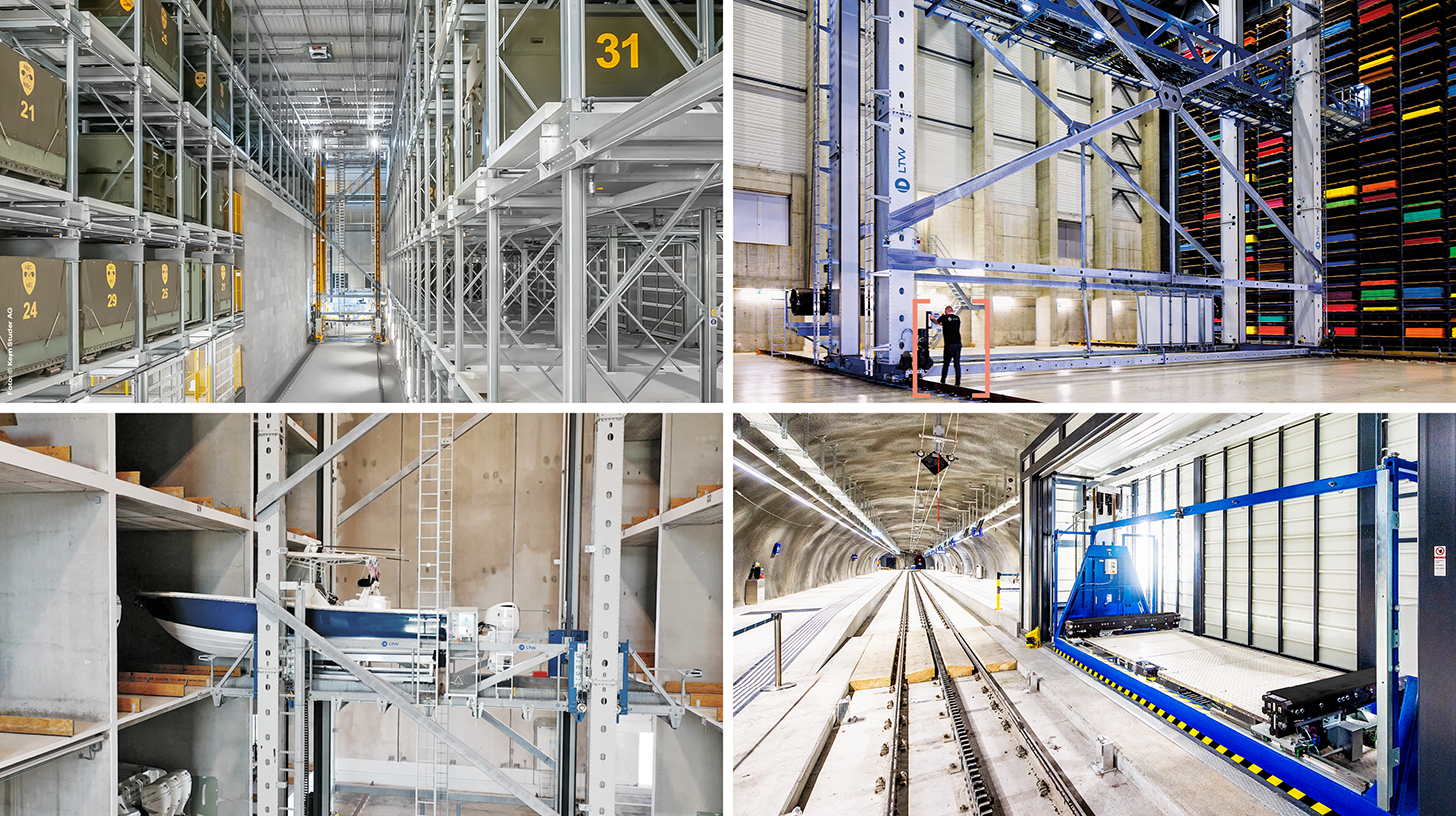
LTW Intralogistics – Engineers of Flow - Image: LTW Intralogistics GmbH
LTW offers its customers not individual components, but integrated complete solutions. Consulting, planning, mechanical and electrotechnical components, control and automation technology, as well as software and service – everything is networked and precisely coordinated.
In-house production of key components is particularly advantageous. This allows for optimal control of quality, supply chains, and interfaces.
LTW stands for reliability, transparency, and collaborative partnership. Loyalty and honesty are firmly anchored in the company's philosophy – a handshake still means something here.
Related to this:
Hybrid instead of either/or: Practical solutions for modern warehouses
Investment costs and total cost of ownership: What really matters
A common misconception is to choose a system solely based on acquisition costs. The correct business approach includes the entire Total Cost of Ownership (TCO) over the entire life cycle of a system – and this is where the two systems differ significantly.
In terms of acquisition costs, automated storage and retrieval systems (AS/RS) traditionally have an advantage. The technology has been established for decades, manufacturing processes are standardized and efficient, and the main component per aisle is a single, robust unit. Shuttle systems, on the other hand, often have higher initial investments per storage location: The multitude of required active components—multiple shuttles per aisle, separate vertical lifts, complex control infrastructure, and power supply—drives up the investment. In a pure investment comparison, the AS/RS therefore comes out on top: Lower requirements for the steel structure and the vertical transport handled by the AS/RS generally make the classic small parts warehouse more cost-effective.
The picture is different when it comes to ongoing operating costs. Shuttle systems are more energy-efficient per storage and retrieval cycle. This is due to their lightweight construction and the separation of horizontal and vertical movement: A shuttle moves horizontally with a relatively low mass, while a separate, energy-optimized lift handles the power-intensive vertical transport. In contrast, a stacker crane has to move its entire, massive structure with every lifting operation. This physical discrepancy is obvious in a stacker crane and is only partially compensated for by modern energy recovery systems – why should a load of just a few kilograms move a machine weighing several tons?
When it comes to maintenance, the picture is reversed. Thanks to their simpler, more robust design and fewer components, automated guided vehicles (AGVs) generally have lower maintenance costs. One AGV per aisle means there's only one unit that needs servicing. In contrast, shuttle systems require maintenance for each individual shuttle, each lift, and the associated infrastructure – making maintenance more complex and expensive. Furthermore, the high number of active components makes the overall shuttle system somewhat more prone to failure, and the lifts can quickly become the limiting factor in operation.
Reliability and availability: Two paths to redundancy
System availability is often crucial for operators because a downtime in warehouse automation immediately impacts the entire supply chain. Both systems address the redundancy problem in fundamentally different ways.
The shuttle system relies on decentralized redundancy through sheer numbers: Because many identical vehicles are active in the system, operations can be largely maintained even if a single shuttle fails. The other vehicles take over the tasks, and shuttles are replaced during operation. This makes the system particularly suitable for rapidly growing companies with a broad and frequently changing product range. With two lifts in operation, product availability is generally guaranteed in the shuttle warehouse – while the failure of one lift would result in a 50 percent loss of capacity, all storage locations in the aisle would remain accessible.
At first glance, the stacker crane system appears more vulnerable because the failure of a single storage and retrieval machine can potentially paralyze an entire storage aisle. In a traditional automated small parts warehouse (AS/RS), if the stacker crane fails, the entire aisle is affected. However, modern systems mitigate this risk through various measures: Variable center blocks without a fixed center boundary allow a storage block to be accessed from the two flanking aisles. In large systems, multiple stacker cranes operate in a single aisle, so if one fails, another takes over. Software-based alternative transport routes and consistent system monitoring ensure additional availability. Fundamentally, stacker crane systems, thanks to decades of continuous development, are extremely low-maintenance and reliable – modern systems achieve availability rates well over 99 percent.
Use cases and industries: Who needs what?
The question of which system is better can only be answered in context. Both technologies have clearly defined areas of application.
The compact warehouse with shuttles is ideal for companies with high throughput, small to medium-weight load units, and dynamically growing order volumes. In e-commerce and omnichannel retail, where thousands of small orders are processed daily and batch size 1 and same-day delivery have become standard, the shuttle system is the solution of choice. It also offers clear advantages for pharmaceutical companies that store small containers with precise batch tracking and high picking frequencies, as well as for fast-moving consumer goods (FMCG). The system's flexible scalability makes it particularly attractive for rapidly growing companies that want to gradually increase their level of automation.
High-bay warehouses with automated guided vehicles (AGVs) dominate wherever heavy, bulky goods or goods requiring large quantities must be stored in a confined space at great heights. In the automotive industry, AGV high-bay warehouses store body parts, supplier components, and assembly materials for just-in-time production. In the food industry—especially in cold storage and deep-freeze warehouses, where operating costs are significantly impacted by high energy costs—AGVs impress with their robustness and low maintenance requirements. The pharmaceutical industry uses high-bay warehouses with AGVs for temperature-controlled products in GMP-compliant environments. The strengths of AGVs therefore lie primarily in medium to high throughput combined with medium to low product variety, and especially with large load units or heavy loads.
The geographical component is also interesting: In urban locations with expensive land, maximizing building height through high-bay warehouses is particularly attractive because it minimizes the valuable ground area. Shuttle systems, on the other hand, are ideally suited for brownfield projects in existing buildings with irregular geometries or low ceiling heights.
The hybrid solution: When both systems merge
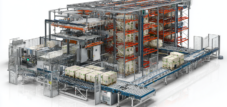
The discussion between shuttle and automated storage and retrieval systems (AS/RS) is often too simplistic in practice. In reality, hybrid system architectures exist that combine the best of both worlds. Modern, integrated systems from major intralogistics providers such as Westfalia, SSI Schäfer, Dematic, KNAPP, and Swisslog integrate both AS/RS-operated high-bay racking for heavy pallets and shuttle zones for small, fast-moving items into a single warehouse. This hybrid strategy allows the optimal technology principle to be used for each product category and throughput requirement.
A striking example is the so-called satellite storage system, as offered by Westfalia Technologies. Here, stacker cranes are equipped with a small, channel-traveling shuttle vehicle, the so-called satellite, which detaches from the main stacker crane and autonomously navigates multi-deep storage channels. Technically, this system belongs to both stacker crane systems and multi-level shuttle systems, thus combining high storage density with the load-bearing capacity and height of a stacker crane. The boundaries between the system families are therefore fluid, and technological convergence continues to advance.
Market developments confirm this trend. Leading providers in the global intralogistics automation market include companies such as KION Group, Dematic, Siemens, Daifuku, Mecalux, Swisslog, Jungheinrich, and Vanderlande – all of which offer both stacker crane-based high-bay warehouses and advanced shuttle systems. The competition between technologies is therefore also a competition among the major providers themselves, who are increasingly selling integrated, complete solutions instead of individual products.
Technological maturity versus innovation: Where do both systems stand today?
The automated high-bay warehouse with stacker cranes is a mature technology with over sixty years of development. This maturity brings concrete advantages: standardized components, proven standards and regulations, in-depth market expertise, a stable supply of spare parts for decades, and predictable operating costs. Modern high-bay warehouses can utilize advanced systems for recovering braking energy and offer the possibility of using roof space for photovoltaic systems, making them attractive from a sustainability perspective as well.
The shuttle system, on the other hand, represents the younger, more dynamic generation of systems and is experiencing strong growth in the wake of the e-commerce boom and the increasing demand for automated small parts warehouses (AS/RS). The pace of innovation is high: new roaming concepts, AI-supported vehicle control, improved battery technologies, and modular system architectures are being developed rapidly. At the same time, long-term spare parts supply and system support over 20 to 30 years are less established for shuttle systems than for the tried-and-tested high-bay warehouse. This is a significant factor for investment decisions with very long depreciation periods.
The increasing digitalization through warehouse management systems (WMS), the Internet of Things, and predictive maintenance benefits both system types. System monitoring that provides early warnings of impending failures and optimizes maintenance intervals improves the overall system availability of both technologies – and increasingly renders the traditional discussion about the reliability of stacker cranes versus shuttle redundancy obsolete, provided that monitoring is consistently implemented.
The decision framework: Seven key criteria
A well-founded system selection can be condensed into seven key decision criteria. None of these dimensions should be considered in isolation – only their interplay provides the complete picture.
- Firstly, the weight of the load units is the most significant dividing line. Loads exceeding 1.5 tons absolutely require an RBG system; for lighter goods, the shuttle is generally suitable.
- Secondly, the required throughput determines the system architecture. High to very high throughput with a limited number of storage aisles favors the shuttle; medium throughput with a sufficient number of aisles justifies the RBG.
- Thirdly, the planned or existing building height sets clear limits. Above 30 meters, the high-bay warehouse with stacker cranes is economically superior; below 15 to 20 meters, the shuttle system has its strengths.
- Fourth, the depth of the product range influences the system's suitability. Broad product ranges with many SKUs and frequently changing items benefit more from the flexibility of the shuttle system; homogeneous product ranges with few SKUs cope well with the structured logic of the stacker crane warehouse.
- Fifth, the available investment budget is a pragmatic factor. RBG systems typically have lower initial investments per parking space, while shuttle systems mean higher capital expenditure but potentially lower energy costs during operation.
- Sixth, the company's growth strategy is the deciding factor. Those planning rapid, flexible growth and wanting to gradually increase performance are better served by a shuttle system. Those with a stable business model and predictable volume growth benefit from the reliability of the RBG (Rail-Based Logistics System).
- Seventh, environmental conditions such as temperature, explosion protection requirements, and specific hygiene regulations play a role. Both technologies have proven effective for extreme deep freezing and continuous operation under harsh conditions, although robust RBG systems traditionally have a slight advantage in extreme temperature ranges.
Strategic implications for investment decisions
Warehouse automation is not just a technical issue – it's a strategic business decision with a direct impact on competitiveness, delivery capability, and cost structure. Choosing the wrong technology today means bearing the consequences not for two or three years, but for twenty to thirty. Studies show that 86 percent of companies consider system reliability and the total cost of ownership, including maintenance costs, to be extremely important criteria for automation decisions.
High-bay warehouses with automated guided vehicles (AGVs) remain the system of choice when it comes to achieving maximum storage capacity for heavy goods at great heights on a minimal footprint. It is the economically superior solution for medium to high throughput, long depreciation periods, stringent maintenance requirements, and anything exceeding the load-bearing capacity of shuttle systems. The robustness and longevity of this technology is an asset that only fully pays off over the entire life cycle of a facility.
The compact warehouse with shuttles, on the other hand, dominates wherever flexibility, scalability, and maximum throughput with small to medium loading units are paramount. It is the system that best meets the demands of modern retail – e-commerce, omnichannel, same-day delivery, and high order volumes with small order sizes. Its ability to be expanded incrementally and its high redundancy through numerous identical vehicles make it particularly suitable for dynamic growth scenarios and for operators who cannot tolerate long downtimes.
The best decision is one based on a comprehensive analysis of one's own requirements – both today and in ten years. Those who approach this question with the necessary thoroughness, instead of being guided by trends or superficial cost comparisons, will be able to make an investment decision that strengthens the company in the long term and avoids costly corrections.
Consulting - Planning - Implementation

Konrad Wolfenstein
I would be happy to serve as your personal advisor.
You can contact me at wolfenstein∂xpert.digital or
Just call me on +49 7348 4088 965 .
Your intralogistics experts
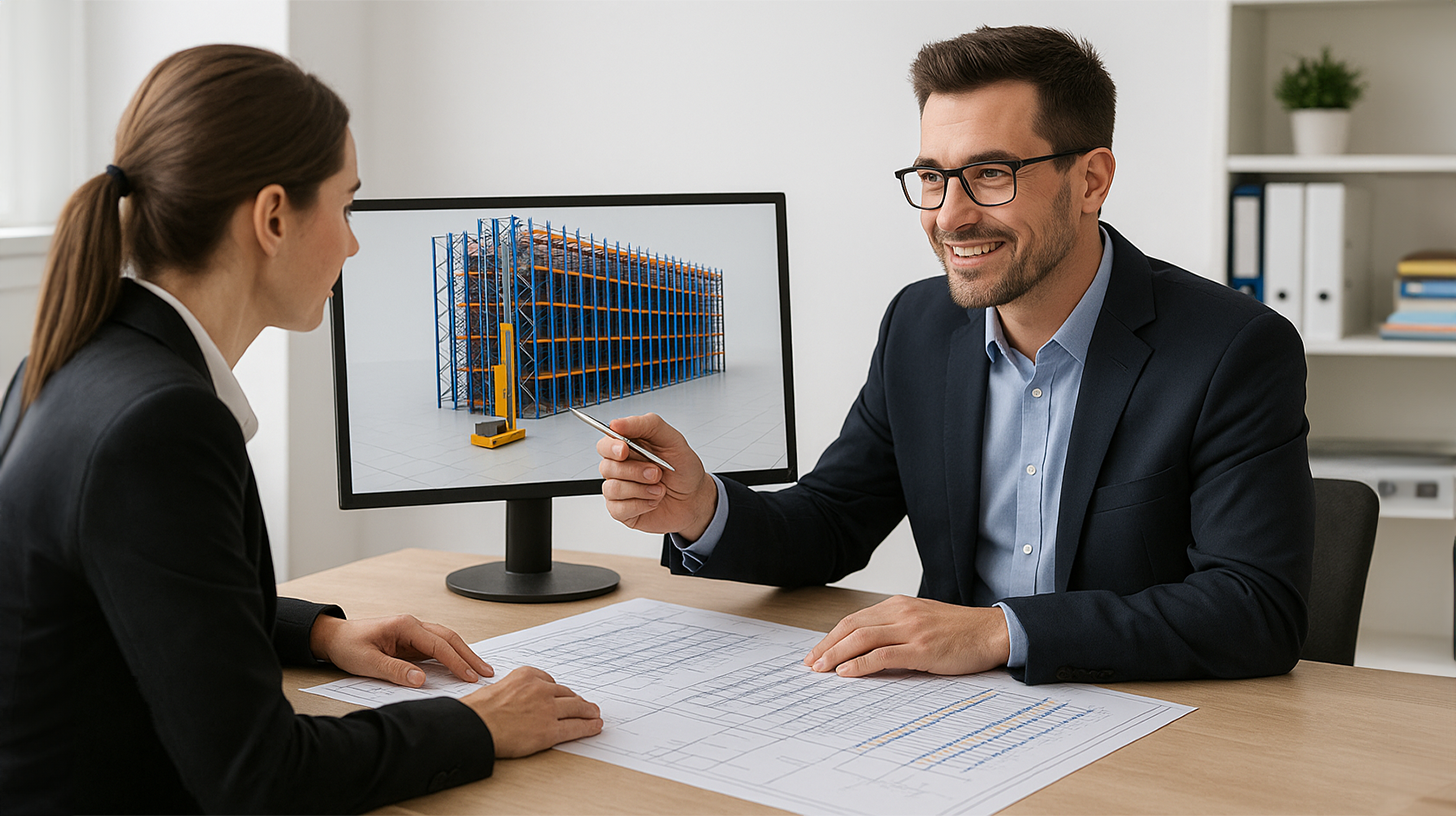
Consulting, planning and implementation of complete solutions for high-bay warehouses and automated storage systems - Image: Xpert.Digital
More information here: