
Cstuneral chain logistics for seafood: Requirements and challenges in the transport network
Xpert pre-release

Available in 27 languages 📢
Prefer Xpert.Digital on GoogleⓘPublished on: April 20, 2025 / update from: April 21, 2025 - Author: Konrad Wolfenstein
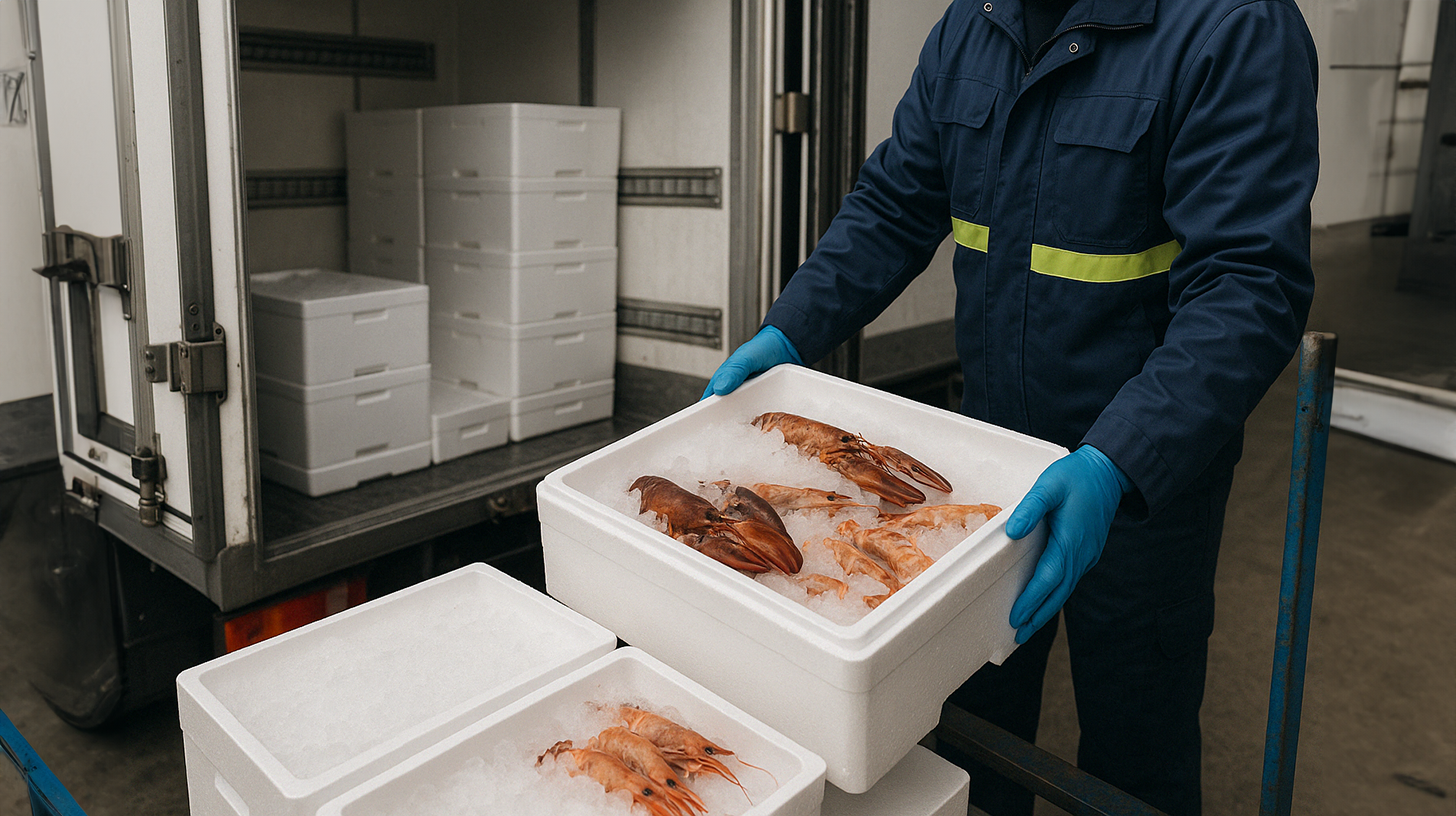
Cstemty chain logistics for seafood: Requirements and challenges in the transport network - Image: Xpert.digital
Optimize transport networks: Food safety in seafood
How temperature control ensures the quality of seafood
The cooling chain logistics for seafood is a complex challenge due to the special sensitivity of these products. In seafood, seamless temperature control from catch to consumption is crucial for quality, durability and food safety. This report analyzes the specific requirements and challenges associated with the transport network for seafood, and shows current developments and solutions.
Basics of cooling chain logistics for seafood
The cooling chain describes a continuous temperature control system that is divided into four essential stages: production, storage, transport and delivery. This system is particularly critical for seafood, since even slight temperature fluctuations can significantly affect the quality. In essence, it is about keeping a product from its creation to the end consumer in a defined temperature range.
Seafood are one of the foods that are particularly sensitive to temperature fluctuations. Even slight deviations from the specified temperature range can endanger the quality and safety of the product and accelerate the decay. This makes maintaining a constant temperature over the entire supply chain a special challenge.
The global market for cold chain logistics was rated in 2023 with USD 293.58 billion, which underlines the economic importance of this sector. The increasing consumer demand for perishable goods such as seafood continues to grow growth, while at the same time the requirements for quality and security increase.
Suitable for:

Temperature requirements for seafood
The temperature requirements for seafood are strictly defined and must be adhered to precisely. Fresh sea animals should be cooled down to 0 to 2 ° C immediately after the catch, preferably in melting ice. A temperature requirement of -18 ° C or below the entire product applies to frozen fishing products. Compared to other foods such as beef (maximum 7 ° C) or poultry (maximum 4 ° C), fish may be warm a maximum of 2 ° C, which illustrates the special sensitivity.
Challenges in the transport network for seafood
Temperature control along the complex supply chain
One of the greatest challenges is to maintain a constant temperature over the different phases of the supply chain. The complexity of modern supply chains with many sales channels and long transit paths makes the temperature control particularly demanding. Each transition between different means of transport or storage facilities carries the risk of temperature deviations or physical damage.
The coordination of several participants, including suppliers, transport service providers and warehouse operators, increases the difficulty of ensuring a complete cold chain. This often leads to time delays and gaps in communication and data exchange. These risks potentiate, especially in long transport routes over several countries or continents.
Technical and logistical challenges
Special vehicles with cooling units are required to transport seafood. These must work reliably and keep the prescribed temperatures constant. However, the reality shows frightening defects: almost every third freezer in Germany with fish or meat is too warm. It is particularly worrying that according to an examination, 13 percent of the driver does not even know the prescribed cooling temperature.
A current example illustrates the possible consequences: In March 2025, a 42-year-old driver was stopped in Ingolstadt, which transported around 250 kilograms of meat, fish and seafood in a van without cooling system. The products had to be destroyed because the cold chain was interrupted and some were even expired.
Energy consumption and operating costs
The operation of refrigerated transporters and cooling bearings is associated with considerable energy expenditure. The fuel costs and efficient fuel consumption management represent large challenges for refrigerated chain providers. Companies in the cold chain cause significantly higher annual operating costs per cubic foot. This not only raises economic questions, but also ecological concerns about CO2 footprint.
Innovative technologies and solutions
Modern cooling and monitoring systems
In order to cope with the challenges of cold chain logistics, companies are increasingly relying on advanced technologies. Leading logistics companies such as MSC have the latest cooling and dehumidification technology, including settings for CA (controlled atmosphere)-controlled air conditioning and ventilation openings to ensure optimal air flow. DFDS offers special refrigerated transports with built -in cooling systems that hold the goods at a regular temperature during the entire transportation.
In Japan, modern technologies such as the Internet of Things (IoT) are used to improve cooling chain drains and ensure that products in the entire supply chain are kept in the correct temperature range. In 2022, the expected value of user expenditure for the Internet of Things in Japan was 6.8 billion USD.
Digitization and real-time monitoring
Digitization in cold chain logistics enables real-time monitoring of the temperatures and an immediate reaction in deviations. Minew, for example, offers a cooling chain monitoring solution, which consists of BLE sensor tags, asset trackers and Bluetooth beacons to ensure continuous monitoring. These technologies help to increase transparency and to identify potential problems at an early stage.
Thermometers and temperature monitoring systems are essential for the ongoing check of the temperature. Modern technologies such as RFID sensors can be used for automatic temperature monitoring and thus offer additional safety along the entire cold chain. It is advisable to use a digital recording system for the temperatures in order to be able to detect compliance with the cold chain.

Xpert partner in warehouse planning and construction
Legal framework and quality assurance
HACCP concept and legal requirements
Legal regulations were determined to minimize the dangers of an interrupted cold chain. The HACCP concept (Hazard Analysis and Critical Control Points) is a binding quality assurance system for food that is internationally valid. It includes the holistic recording and monitoring of the temperatures in the manufacturing process, through transport to the storage of the food.
The central element of official surveillance is the review of the company's own controls based on a HACCP system. In addition to compliance with the general hygiene regulations in accordance with Appendix II of Regulation (EC) No. 852/2004, the special hygiene requirements of Regulation (EC) No. 853/2004 must also take into account.
Consequences if the cooling chain is not adhered to
The consequences of an interrupted cold chain can be serious. If the cold chain is interrupted, bacteria and dangerous microorganisms can form and multiply in the food. These can cause diseases such as food poisoning. Every year, more than 100,000 people in Germany are infected in eating with pathogens, which often lead to stomach cramps, diarrhea and vomiting.
In addition to the health risks, economic damage can also occur. With interrupted cold chain, the quality of the food always suffers and you can lose your specific product properties. In addition, the best-before or consumption date can be significantly shortened.
Suitable for:

Specific requirements for seafood transport
From catching to processing
In industrial fishing, the marine animals are often slaughtered on board the ship, dusted, except and possibly filleted. In the case of smaller ships, the timely processing is only partially on land. In order to ensure high quality, marine animals should be cooled or frozen as quickly as possible.
An example of advanced processing methods is the RSW system (refrigerated Seawater), in which fish are stored in special tanks flooded with chilled sea water or fluid ice. After sorting, specialized systems such as vertical plate frosers can be used, which, for example, freeze mackerel for handy blocks, which are then stored in isolated storage rooms at -25 ° C.
Transport options and requirements
Various options are available for transport, including three -layer polyethylene containers with water and ice cream for entire fresh fishing products. Promotion in such containers must not take longer than three days. An alternative method is the superchilling process, in which the temperature in the core of the product must be between -0.5 and -2 ° C. The duration of the transportation and storage of fishing products, which is super -cooled by superchilling, must not exceed five days.
Frozen fishing products must be stored at a temperature of -18 ° C or below in the entire product. Short temperature fluctuations of no more than 3 ° C are permitted during transport, but the temperature of -18 ° C must basically be observed.
Current developments in global sea freight traffic
The current developments in sea freight traffic have a significant impact on global supply chains and the logistics for seafood. Since the end of 2023, freight rates have risen significantly in maritime traffic and have great volatility. The main reasons for this are the bypass of the Suez Canal due to increased security risks in the Red Sea and the associated detours around the Cape of Good Hope. This route, which is about 6,000 kilometers longer, leads to higher fuel costs and extended transport times, which reduces the available capacities and continues to drive the freight rates.
The expansion of the seafood industry in China is attributed to various causes, including technological developments in the areas of processing, packaging and storage. In 2023, China claimed his position as the world's leading seafood producer with official estimates of 71 million tons, which corresponds to an increase of 3.5 percent compared to 2022.
Recommendations for optimizing the transport network
Continuous monitoring and documentation
Effective cooling chain logistics for seafood requires continuous monitoring and documentation of the temperatures. Companies should invest in reliable temperature monitoring systems and carry out regular controls. The documentation should be complete and cover all transfer points in the supply chain.
It is advisable to implement a HACCP concept that is tailored to the specific requirements of seafood. This includes the identification of critical control points, the determination of limit values, the monitoring of these points and the definition of corrective measures in the event of deviations.
Integration of technologies
The integration of modern technologies can significantly improve the efficiency and safety of the cooling chain logistics for seafood. IoT devices, real-time monitoring and automated alarm systems enable precise monitoring and quick reaction in the event of problems. A multimodal transport that optimally combines different means of transport can contribute to saving fuel costs.
Companies should also invest in energy -efficient cooling technologies in order to reduce the operating costs and reduce ecological footprint. MSC, for example, invests strongly in the latest environmentally friendly technology, systems and processes to contribute to the cleanliness of seas, country and loads.
Training and process optimization
Insufficient training of the staff regarding the importance of the cold chain is a common challenge. Companies should therefore invest in regular training courses to ensure that all employees know the temperature requirements and understand the importance of the cold chain.
The regular maintenance of the cooling devices plays an important role in avoiding technical problems. This includes checking the cooling units, keeping the ventilation slots free and monitoring the door seals. Malfunctions are recognized early and can be remedied before they lead to an interruption of the cold chain.
Optimized cooling chain logistics: technologies for maximum food safety
The cooling chain logistics for seafood places high demands on the transport network due to the special sensitivity of these products. An uninterrupted cold chain is the key to food safety and quality maintenance. The challenges range from the maintenance of constant temperatures to the coordination of various actors to energy efficiency.
Modern technologies and innovative solutions offer promising approaches to optimize cooling chain logistics. The integration of IoT devices, real-time monitoring and energy-efficient cooling systems can help to ensure the quality and safety of seafood and at the same time reduce operating costs.
In view of the growing importance of the cold chain market and the increasing consumer demand for seafood, the optimization of the transport network becomes a decisive competitive factor. Companies that invest in modern cooling chain logistics and take into account the specific requirements of seafood will be successful in the long term and will contribute to the safety and quality of these sensitive foods.

Xpert.Plus warehouse optimization - high-bay warehouses such as pallet warehouses consulting and planning
We are there for you - advice - planning - implementation - project management
☑️ SME support in strategy, consulting, planning and implementation
☑️ Creation or realignment of the digital strategy and digitalization
☑️ Expansion and optimization of international sales processes
☑️ Global & Digital B2B trading platforms
☑️ Pioneer Business Development

Konrad Wolfenstein
I would be happy to serve as your personal advisor.
You can contact me by filling out the contact form below or simply call me on +49 7348 4088 965 (Munich) .
I'm looking forward to our joint project.
Write to me

Xpert.Digital - Konrad Wolfenstein
Xpert.Digital is a hub for industry with a focus on digitalization, mechanical engineering, logistics/intralogistics and photovoltaics.
With our 360° business development solution, we support well-known companies from new business to after sales.
Market intelligence, smarketing, marketing automation, content development, PR, mail campaigns, personalized social media and lead nurturing are part of our digital tools.
You can find out more at: www.xpert.digital - www.xpert.solar - www.xpert.plus
Keep in touch











