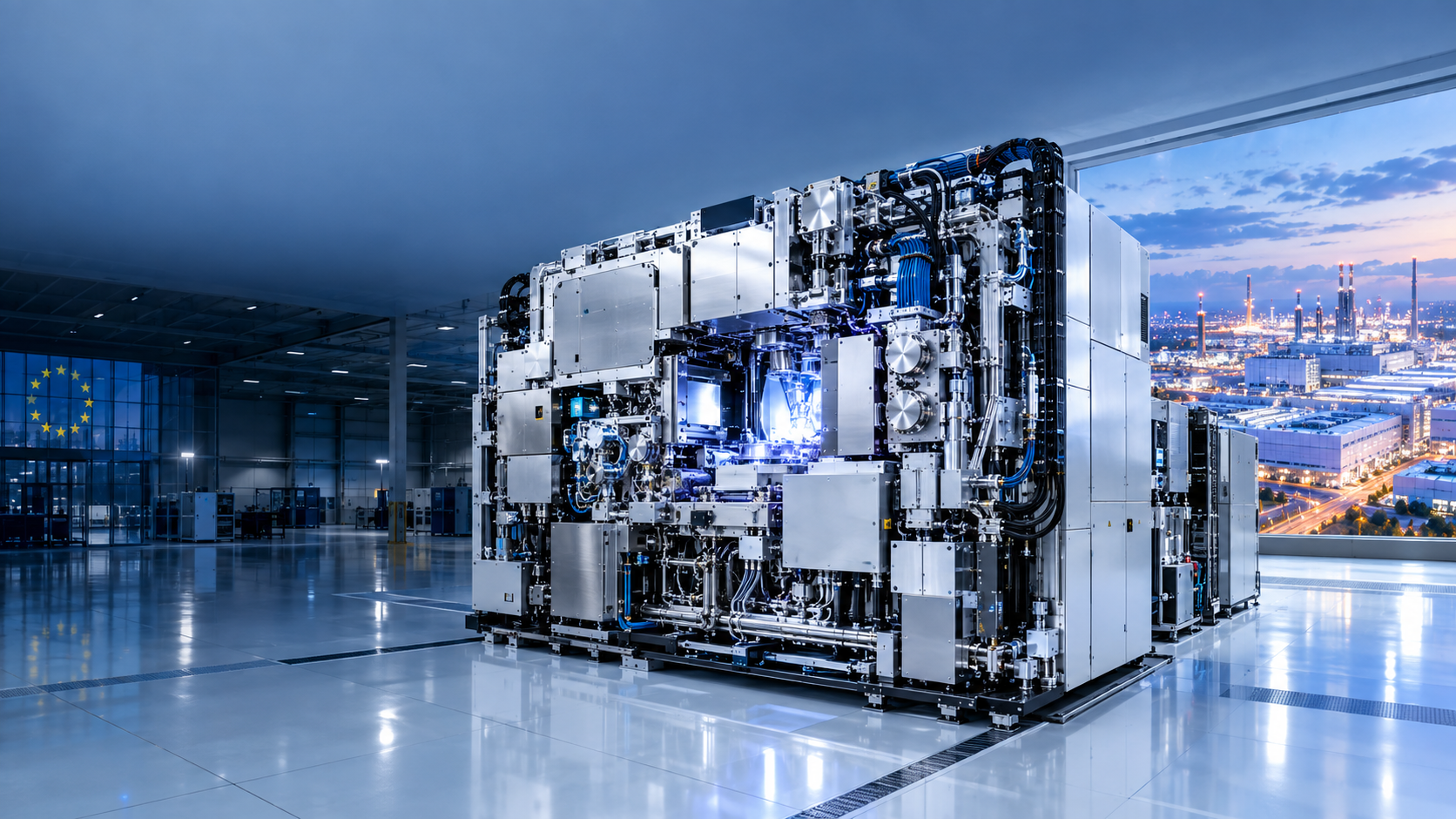
Europe's absurd semiconductor paradox: We build the world's most important chip-making machines – yet nobody here buys them – Creative image on the topic, with AI: Xpert.Digital
The ASML Illusion: Why the world's best chip-making machines are currently superfluous for Europe's factories
World market leaders without their own mega-factories? The dangerous imbalance of European chip strategy
Billions for the AI boom: Why Europe is voluntarily just watching the battle for super chips
It is one of the greatest paradoxes of modern industrial policy: With the Dutch corporation ASML, Europe is home to the undisputed monopolist for the most advanced and expensive equipment in global chip production – yet almost no one on its own continent is buying it. While corporations in Asia and the United States are investing tens of billions of dollars to secure the latest EUV systems for the global AI race, there is a glaring slump in orders on the European domestic market. Has the European semiconductor strategy thus definitively failed? The reality is far more complex. The apparent weakness in absolute high-end processors contrasts sharply with an enormous and often underestimated strength in industrial, energy, and automotive semiconductors, for which established technologies are perfectly adequate. This analysis unflinchingly sheds light on the true reasons for Europe's semiconductor paradox. It shows why prestige projects worth billions can fail, why locations like Dresden are nevertheless booming, and what a realistic agenda must look like that creates genuine digital sovereignty instead of blindly chasing unattainable market shares.
ASML's paradoxical home: Europe's key technology finds its buyers elsewhere
Europe builds the best chip-making machines – but hardly any of the factories they need
The fact that a European technology company dominates the global market for the most sophisticated semiconductor manufacturing equipment is an industrial policy success story. However, the fact that this same company temporarily sold virtually no new lithography systems on its home continent is a warning sign. It doesn't show that Europe is insignificant to the global chip industry. Rather, it shows that Europe's strengths lie elsewhere in the value chain than where the largest investment budgets, highest production volumes, and most expensive machines currently converge.
The crucial question, therefore, is not only why European companies are ordering so few ASML systems. Equally important is who is actually buying these systems, what economic logic underlies the orders, and which European companies are even potential future customers. The answer points to a small group of global semiconductor manufacturers: TSMC in Taiwan, Samsung Electronics and SK Hynix in South Korea, Intel and Micron in the United States, and – with limited technological access – a number of Chinese producers. They are not investing primarily for industrial prestige, but because they possess sufficient demand, capital, process expertise, and production volume to economically utilize systems worth several hundred million euros.
Europe's problem, therefore, is not a lack of mechanical engineering expertise. With companies like ASML, Carl Zeiss SMT, numerous specialized suppliers, research institutes such as imec and Leti, and strong semiconductor companies, the continent boasts an exceptionally powerful ecosystem. The gap arises where research needs to be translated into large-scale industrial production. Europe can supply key components, but has only limited manufacturing capacity for leading logic processors and advanced memory chips. It is precisely in these segments that most EUV and, in the future, High-NA EUV systems will be needed.
The provocative diagnosis is therefore: Europe is the world market leader in the most important machine of modern industry, but is largely a spectator on the user side. This is not a complete description of the European semiconductor industry, but it is a precise highlighting of its structural imbalance.
Who actually orders ASML's billion-dollar machines
ASML's global customer base is significantly smaller than the size of the semiconductor market would suggest. In advanced EUV lithography, demand is concentrated among a few major corporations. TSMC, the world's leading foundry, manufactures processors for numerous developers of smartphones, data centers, high-performance computers, and AI accelerators. Samsung combines contract manufacturing, logic chip production, and memory production. Intel develops and manufactures processors while simultaneously expanding its manufacturing business for external customers. SK Hynix, Samsung, and Micron are investing in advanced DRAM and HBM memory, the importance of which has increased dramatically due to the expansion of AI data centers.
These companies don't buy individual machines in isolation. A modern semiconductor factory is a coordinated production system comprising lithography, etching, coating, deposition, cleaning, metrology, inspection, automation, and utilities. For a new generation of processes, numerous systems must be procured, qualified, and integrated into a stable workflow simultaneously. The value of an ASML machine, therefore, only emerges in conjunction with thousands of other process steps and a factory that operates at high capacity for years.
In the second quarter of 2026, 43 percent of ASML system sales by destination were in South Korea, 30 percent in Taiwan, 14 percent in China, nine percent in the United States, and four percent in Japan. Europe played no measurable role in this quarterly distribution. This snapshot should not be equated with a permanent zero, but it does illustrate the current investment geography. The largest budgets are flowing to where leading contract manufacturers and memory producers are expanding their capacities for AI, high-performance computing, and mobile devices.
ASML's revenue structure also illustrates why its geographic distribution varies so significantly. In the second quarter of 2026, the company generated €9.3 billion in revenue. Of this, €6.6 billion was attributable to systems and €2.8 billion to services, spare parts, and upgrades to the installed base. Within system sales, EUV systems accounted for 57 percent of the value, while ArF immersion systems reached 29 percent. Demand was almost evenly split across application areas, with 51 percent for logic and 49 percent for storage. These figures demonstrate how strongly the investment cycle is now driven by AI processors, advanced logic processes, and high-performance storage.
Why not every chip manufacturer needs EUV
Public debate often equates modern semiconductors with the smallest possible feature sizes. Economically, this equation is too simplistic. A power semiconductor for an electric vehicle, a sensor for a factory, a microcontroller for a braking system, or an analog component for power supply does not necessarily require the same manufacturing process as an AI accelerator. Many European manufacturers are strong in precisely these specialized segments. For them, reliability, voltage resistance, temperature resistance, long product lifecycles, and low defect rates are often more important than the smallest feature size.
Therefore, European factories predominantly use DUV lithography and other established processes. DUV stands for deep ultraviolet and encompasses several generations of machines. Modern ArF immersion systems can produce highly complex structures, while KrF and i-Line systems remain economically viable for less fine layers and older processes. Even in sophisticated chips, EUV is not used for every layer. Factories combine different lithography methods to balance cost, precision, and throughput.
An EUV system is therefore neither a general seal of quality nor automatically the best investment for every factory. Its advantage lies in the ability to produce particularly fine structures with less complex multiple exposures. This benefit is significant where the feature size, the number of critical layers, and the value of the finished chip justify the high equipment and operating costs. For many automotive, industrial, analog, and power semiconductors, however, EUV would be economically overkill.
This explains part of the European paradox. While the continent does produce semiconductors and is building new capacity, a significant portion of this production does not require a large number of state-of-the-art EUV systems. Therefore, a statement about low ASML sales in Europe should not be interpreted as evidence of complete industrial inactivity. Rather, it shows that the European investment profile does not align with the currently most lucrative part of the ASML portfolio. Europe is primarily expanding capacity for the chips required by its automotive, energy, and industrial companies. Asia, and increasingly the United States, are also investing heavily in leading logic and memory technologies.
The price of a machine is just the beginning
The investment hurdle begins with the machine, but by no means ends there. A conventional EUV system costs well over US$200 million, depending on the configuration. A high-NA EUV system, which enables even smaller structures with a higher numerical aperture, costs more than US$400 million. DUV systems are considerably cheaper, but still range from several million to high tens of millions of dollars. A competitive, state-of-the-art lithography factory requires many systems, not just one.
In addition, cleanrooms, energy supply, ultrapure water, specialty gases, chemicals, vacuum systems, building technology, automation, and a large inventory of other manufacturing equipment are required. A leading megafab therefore requires investments in the tens of billions. It only becomes economically viable when enough wafers are processed, the yield is high, and customers purchase large volumes over many years. A government can subsidize the construction, but it can neither guarantee sustained capacity utilization nor replace missing customers.
This is precisely the key difference between Europe and the leading Asian locations. TSMC consolidates orders from many of the world's most valuable chip developers and spreads the high investment costs across enormous production volumes. Samsung can combine manufacturing, memory, and its own products. SK Hynix and Micron benefit from the rapidly increasing demand for HBM memory for AI systems. In these business models, a new ASML plant is part of a clear revenue trajectory.
European companies do possess large end markets, particularly in the automotive, mechanical engineering, energy, and industrial automation sectors. However, this demand is fragmented and often concentrated on specialized chips with longer lifecycles. For a leading European chip manufacturing facility, this demand would need to be consolidated and supplemented with customers from the global markets for data centers, smartphones, and high-performance computing. Without this scaling, an expensive facility risks operating below capacity. Purchasing an EUV machine would then be technologically impressive, but hardly justifiable from a business perspective.
Europe's semiconductor industry is strong, but strong in a different way
Europe should neither downplay nor gloss over its position. The continent possesses strategic capabilities that are difficult to replace worldwide. ASML has mastered EUV lithography. Carl Zeiss SMT supplies the high-precision optical systems. Specialists from Germany, the Netherlands, and other countries produce laser components, vacuum technology, mechatronics, metrology, and high-purity materials. Research centers like imec and Leti are among the international leaders in process development and pilot production.
Strong European companies also exist on the chip side. Infineon is a leader in power semiconductors and automotive applications. STMicroelectronics covers a broad spectrum from microcontrollers and sensors to power electronics. NXP holds a strong position in automotive, industrial, and security chips. Bosch produces semiconductors for its own and external applications. GlobalFoundries operates a significant manufacturing facility for specialized processes in Dresden. These competencies are of great importance to the real economy because modern vehicles, power grids, factories, wind turbines, and data centers would not function without such components.
The weakness is obvious, however. Europe lacks a technologically advanced contract manufacturing facility comparable to TSMC. It doesn't have a memory manufacturer on the scale of Samsung, SK Hynix, or Micron. And so far, it has no domestic supplier capable of developing leading AI processors on a large scale while simultaneously utilizing a top-tier European factory. The value chain is therefore efficient, but unbalanced.
This asymmetry creates an industrial policy risk. A continent can generate high export revenues with key components and still remain dependent on other countries for the supply of finished products. ASML's success does not automatically protect Europe from shortages of processors, memory chips, or modern accelerators. Conversely, it would be wrong to try to completely regionalize all stages of the value chain. Semiconductors are the result of a highly international division of labor. Strategic resilience therefore does not mean autarky, but rather the ability to limit critical dependencies, develop alternatives, and secure essential national competencies.
Dresden shows what is possible – and what is not
Dresden is the strongest counter-argument to the claim that Europe isn't building any new chip factories at all. Infineon opened a new Smart Power Fab there in July 2026. The investment volume is five billion euros, production takes place on 300-millimeter wafers, and the site is creating around 1,000 direct jobs. The new factory doubles Infineon's capacity in Dresden and focuses on intelligent power semiconductors as well as analog and mixed-signal technologies. These chips are needed for electric vehicles, renewable energies, power grids, industrial plants, and efficient power supplies for AI data centers.
Alongside this, the first European factory of the Taiwanese contract manufacturer TSMC is being built in ESMC. TSMC holds a 70 percent stake in the joint venture, while Bosch, Infineon, and NXP each hold ten percent. The project represents an investment of more than ten billion euros and is scheduled to begin production in the second half of 2027. The planned processes will operate at 28 and 22 nanometers as well as 16 and 12 nanometers. The factory will thus primarily target automotive electronics, industrial applications, and connected devices.
Both projects are strategically important, but will not fundamentally change European sales of high-NA EUV. The technologies involved can be produced primarily using DUV lithography. ESMC is not a copy of the most modern TSMC factories in Taiwan or the United States. Nevertheless, the Dresden plant brings important process expertise, additional supply capacity, and a globally leading operator to Europe. Its value should not be measured by whether it achieves the smallest feature sizes, but by its ability to reliably and competitively meet critical European demand.
Dresden thus illustrates the sobering reality of European chip strategy. Investments are possible when an existing industrial ecosystem, concrete customers, a skilled workforce, public funding, and a compelling business model converge. At the same time, the location underscores that Europe's focus remains on automotive, industrial, analog, and power electronic applications. This is economically sound, but it does not replace a strategy for leading logic and memory technologies.
Magdeburg became a symbol of false expectations
The planned Intel factory in Magdeburg was originally intended to represent Europe's major leap into state-of-the-art semiconductor manufacturing. With an announced investment volume of around €30 billion and billions in government support, it would have become a potentially significant buyer of cutting-edge ASML systems. After Intel abandoned the project in 2025, not only was a major investment lost, but Europe also lost one of the few projects that would have required a large number of EUV systems in the foreseeable future.
The failure cannot be attributed solely to German permits, energy costs, or European bureaucracy. Intel itself was undergoing a profound strategic and financial restructuring. The company had to prioritize investments and re-evaluate its manufacturing model. This highlights a fundamental problem with government chip strategies: governments can create attractive frameworks, but remain dependent on the economic situation and the global priorities of individual companies.
Magdeburg also demonstrates how risky it is to measure industrial policy success by announced investment sums. Many years lie between a letter of intent, approval, construction, installation, process qualification, and series production. Real capacity only comes into being when equipment is ordered, delivered, and put into productive use. Political communication often treats announcements as if factories were already built. ASML's sales figures, on the other hand, ruthlessly reveal whether investments are actually being made.
This setback, however, does not mean that Europe should abandon large-scale projects. Rather, funding decisions must be more closely tied to robust customer relationships, realistic technology pathways, financial strength, and concrete milestones. A subsidized plant is only strategically valuable if it maintains long-term competitiveness. Otherwise, it becomes an expensive facility whose continued operation is questionable once the funding ends. The challenge, therefore, is not to present the next biggest name, but to build a viable portfolio encompassing specialized manufacturing, advanced processes, design expertise, packaging, and guaranteed demand.
🎯🎯🎯 Data-driven B2B industry hub as a quasi-in-house solution

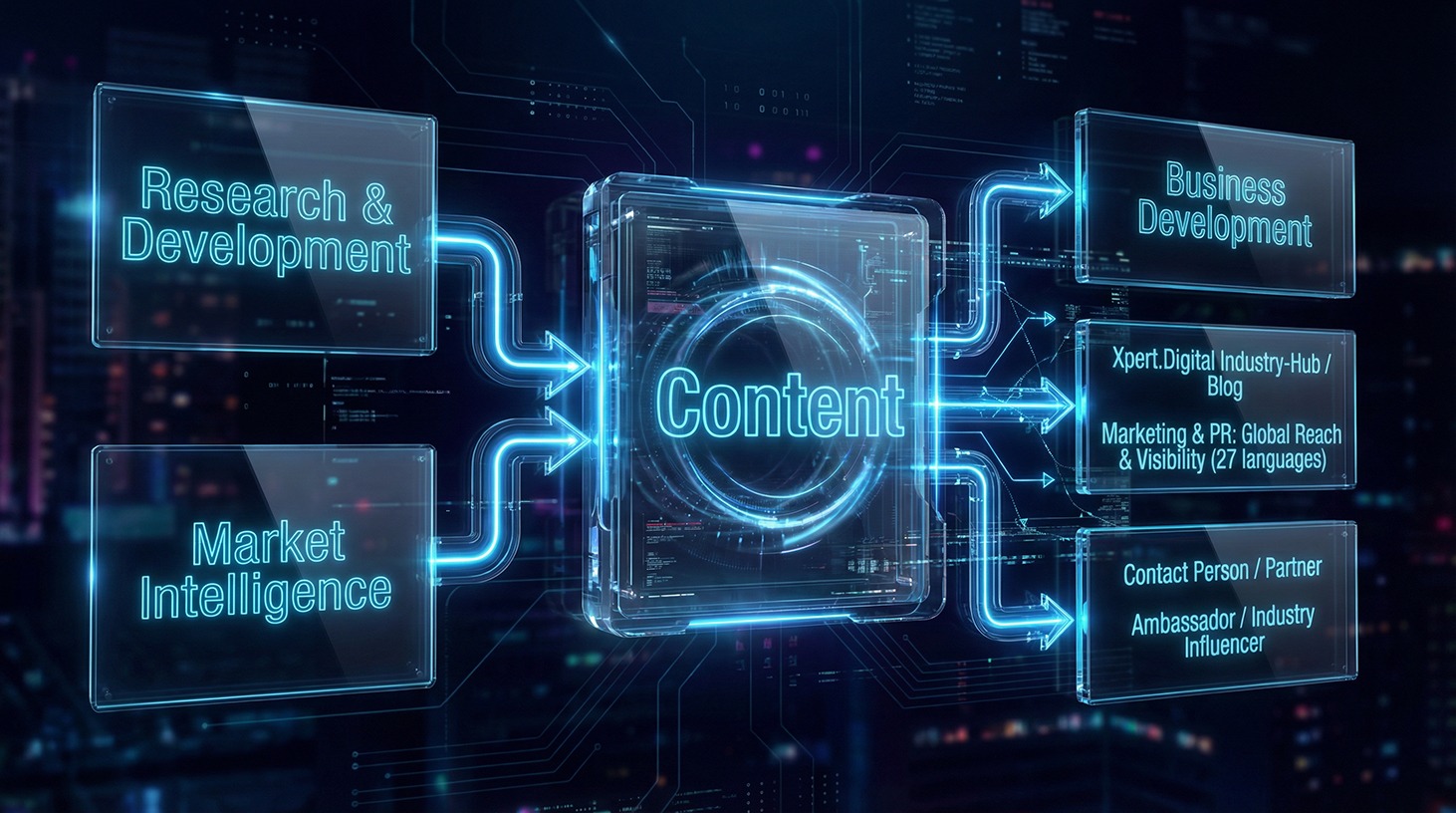
The quasi-in-house solution: How Xpert.Digital closes operational gaps in B2B marketing and sales – Smart Content-Driven Business - Image: Xpert.Digital
Xpert.Digital is a data-driven B2B industry hub led by Konrad Wolfenstein . The company acts as an external, quasi-in-house solution for industrial partners, closing operational gaps in marketing, content, and sales – without requiring additional resources on the client side.
More information here:
Demand and subsidies: An imbalance in the chip industry
Europe's chip law is reaching the limits of political targets
The European Chips Act aimed to increase the European Union's share of global semiconductor production to 20 percent by 2030. While this goal was politically effective, it was extremely challenging economically from the outset. The global semiconductor industry is growing rapidly, meaning that Europe would not only have to double its production but expand it significantly more to achieve its corresponding increase in its relative share.
The European Commission originally projected more than €100 billion in policy-driven public and private investment by 2030. By 2026, numerous state aid decisions had been approved for innovative manufacturing projects. These projects cover a broad spectrum: silicon carbide, FD-SOI, power electronics, sensors, photonics, packaging, and traditional CMOS processes. This strengthens the breadth of the European ecosystem but does not automatically translate into a large market for EUV equipment.
The European Court of Auditors assessed the 20 percent target as very likely unattainable. According to Commission forecasts, the European share could only rise from 9.8 percent in 2022 to 11.7 percent in 2030. Despite missing the target, this would not represent stagnation: In a rapidly growing global market, absolute European production would increase significantly. The political metric of market share thus partially obscures the fact that new capacity is being created. At the same time, it reveals that other regions are investing even faster.
The distribution of funds is crucial. The EU level controls only a limited portion of funding, while member states manage the majority through national subsidies. This leads to competition between European countries, projects are not always selected according to a common value creation strategy, and financially strong states have an advantage. Effective European policy would therefore need to better coordinate which capabilities are actually lacking. Simply adding up national factory projects does not create a robust European semiconductor strategy.
For whom would an ASML purchase in Europe make sense?
The most obvious future buyer of state-of-the-art ASML equipment in Europe would be a manufacturer producing leading logic processes or advanced memory chips in large volumes. In practice, this primarily involves international corporations. Intel could become relevant again during a later European expansion, provided its foundry strategy becomes financially stable. TSMC would be another candidate if European customers and governments justify a more advanced expansion than the ESMC plant in Dresden in the long term. Samsung could theoretically also invest, but currently has stronger industrial focus in South Korea and the United States.
Among European companies, STMicroelectronics, due to its size and manufacturing experience, is a potential buyer of additional advanced lithography systems; however, its product mix does not fit the typical profile of a large EUV customer. Infineon, Bosch, and NXP primarily require systems for power, analog, sensor, security, and automotive chips. For these applications, DUV systems remain predominantly more economical. GlobalFoundries also focuses on differentiated, specialized processes rather than the smallest logic structures.
Another possibility would be a European contract manufacturing enterprise, created not from an existing company but through a consortium. This would require states, industrial companies, chip designers, and an experienced technology partner to pool capital and demand. However, such a model would be exceptionally difficult. Cutting-edge manufacturing demands not only money but also decades of process knowledge, a dense supplier base, stable customer relationships, and a culture of continuous improvement. Therefore, establishing a politically desired competitor to TSMC would be associated with significant losses and considerable execution risk.
A phased approach seems more realistic. Europe could initially locate advanced processes where demand already exists, for example, in automotive electronics, secure communications, defense, industrial AI, and energy-efficient data centers. If sufficient volume and design activity result from this, the technological requirements could be increased gradually. Purchasing an EUV system would then not be the start of a strategy, but rather the result of a growing market.
Demand is a stronger factor than subsidies
Funding programs often focus on factories and machinery because buildings, investment sums, and jobs can be presented in a politically visible way. The more difficult question, however, is which products should be manufactured in these factories and by whom they should be purchased. Without reliable demand, production support remains incomplete.
Europe possesses large potential anchor customers. Automotive manufacturers, mechanical engineering companies, energy companies, telecommunications providers, cloud operators, and public procurement agencies purchase enormous quantities of electronic systems. However, this demand is rarely consolidated in such a way as to result in long-term offtake agreements for European semiconductor manufacturing. Individual companies optimize their supply chains based on price, performance, and availability. While this is rational from a business perspective, it can conflict with the industrial policy goal of a more regionally resilient supply chain.
A more effective strategy would therefore need to connect supply and demand. Long-term purchase agreements, joint technology roadmaps, pre-orders for strategically important chips and standards that don't categorically favor European production but measurably assess security of supply would all be conceivable. Public procurement in defense, aerospace, critical infrastructure, and administration could serve as reliable initial customers. European data center and AI projects could also specifically generate demand for accelerators developed and partially manufactured in Europe.
Caution is advised. A rigid obligation to purchase European chips would increase costs, weaken competition, and potentially violate trade rules. A resilience premium makes more sense: buyers could still source globally, but would have to consider supply reliability, geopolitical risks, transparency, and alternative production locations. If European factories offer economic value based on these attributes, a viable market could emerge.
ASML itself ultimately benefits not from subsidies for empty buildings, but from productive factories with long-term expansion plans. The continent should therefore focus less on who should buy a machine and more on which products can keep such a machine operating at full capacity for ten or fifteen years.
AI exacerbates Europe's structural gap
The current investment boom is largely driven by artificial intelligence. AI data centers require powerful accelerators, fast network chips, central processing units, and large amounts of HBM memory. These products are predominantly manufactured using advanced logic and memory processes. As a result, demand for EUV systems is increasing among both contract manufacturers and memory vendors.
ASML's financial figures reflect this trend. Revenue rose to €32.7 billion in 2025, and after a strong first half of the year, the company expected further significant growth in 2026. Almost all of its available EUV capacity was booked through the end of 2027. At the same time, TSMC, Samsung, SK Hynix, and Micron are increasing their investment budgets. These companies are not only making purchases due to general digitalization but are also responding to specific shortages of AI processors and HBM.
Europe faces a double dependency. While the continent supplies key production equipment through ASML and its suppliers, it also imports many of the high-end chips manufactured with it. Therefore, every new AI data center does not automatically increase European semiconductor value creation. A significant portion of the investment flows into processors and memory manufactured in Asia or the USA.
This gap cannot be closed in the short term. However, Europe can take action in several areas. In-house chip designs for specialized AI applications, energy-efficient edge systems, industrial models, and secure infrastructures could create a demand base. Advanced packaging and chiplet architectures enable high-performance systems without requiring every component to be manufactured on the smallest process. Power electronics for data centers is already a European strength. Photonics, neuromorphic approaches, and application-specific accelerators also offer opportunities for differentiation.
The crucial perspective, therefore, is not to copy Nvidia or TSMC in the short term. Europe should combine its industrial strengths with its own semiconductor and AI expertise. If this succeeds, a larger domestic market for advanced manufacturing will gradually emerge. If it fails, Europe will remain a supplier of machinery and a sales market, while the majority of digital value creation takes place elsewhere.
ASML itself becomes a target of global location policy
The small number of European machine buyers is only one side of the problem. At the same time, the United States, China, and India are vying for ASML's own investments. The company needs to expand its production, development, and service capacities because global demand is rising. The greater the gap becomes between European customers and non-European growth markets, the stronger the economic pressure to establish additional operations closer to customers.
ASML remains deeply rooted in the Netherlands and its European supplier network. The complexity of its technology, its specialized personnel, and its close collaboration with partners make a simple relocation difficult. Nevertheless, no industrial location is permanently guaranteed. Research, software development, assembly, service, and individual production steps can be geographically distributed. A significant portion of the company's research already takes place in the United States, and American companies are seeking to expand this presence.
China and India are attracting investment with large markets, government support, and the desire to build their own semiconductor ecosystems. While export controls limit the cutting-edge technology that can be shipped to China, they do not eliminate interest in DUV systems, services, and local expertise. India, in turn, is attempting to assume a larger role in semiconductor manufacturing for the first time with new factory projects and requires international equipment suppliers and process partners to achieve this.
This leads to a second industrial policy challenge for Europe: it must not only attract chip factories, but also retain and expand the ASML ecosystem in its location. This includes housing, transportation, energy, international schools, immigration of highly skilled professionals, fast permitting processes, and reliable research funding. A global market leader doesn't stay in a location solely out of historical ties. It invests where personnel, infrastructure, customers, and political stability are all aligned.
The greatest danger, therefore, would not be ASML suddenly leaving Europe. A gradual shift in growth is more likely. If new research labs, service centers, and manufacturing facilities are predominantly built outside Europe for years, the continent will lose relative importance, even though the existing site continues to grow.
Export controls are changing sales and technology pathways
ASML is at the center of the geopolitical conflict over semiconductors. EUV systems are banned from being shipped to China, and the export of certain advanced DUV equipment is also restricted. These rules are intended to prevent Chinese companies from developing cutting-edge manufacturing capabilities for civilian and military applications. For ASML, they mean that a large potential market is being politically limited.
Nevertheless, China remained a significant revenue driver in 2025. Chinese manufacturers are investing heavily in older and mid-generation processes for which approved DUV systems can be used. The strong Chinese demand demonstrates that semiconductor autonomy is not only pursued at the cutting edge of technology. Large capacities for established chips also possess strategic value because they supply the automotive, industrial, telecommunications, and consumer goods sectors.
Europe must balance several interests here. On the one hand, cooperation with the United States on security and export issues is crucial. On the other hand, Europe bears some of the economic costs if ASML forgoes business. Overly broad restrictions could accelerate Chinese alternative developments without permanently halting technological progress. Conversely, overly lax regulations could foster security-relevant capabilities.
A robust policy therefore requires clear criteria, close coordination with allies, and regular review. Export controls should target genuinely critical technologies and not be constantly expanded due to short-term political pressure. At the same time, Europe must invest in its own research so that its negotiating position is based on technological superiority. Only those who remain indispensable for the next generation of machinery can help shape regulations without being easily circumvented economically.
Export controls have an indirect impact on the question of European buyers. They increase the incentive to establish strategic production in politically stable regions. Europe could benefit from this if it offers competitive locations. However, security alone does not replace economic viability. A factory will not produce in Europe permanently simply because another location is geopolitically riskier.
Why Europe shouldn't manufacture every type of chip itself
The goal of complete semiconductor self-sufficiency would be neither realistic nor efficient. The industry thrives on global specialization. Machines from the Netherlands contain optics from Germany, light sources with American technology, materials from Japan, and components from many other countries. Chip designs utilize software and intellectual property from various vendors. Wafers are manufactured, tested, packaged, and integrated into end products, often across multiple continents.
If Europe were to fully duplicate every stage, enormous costs would be incurred, often resulting in much smaller production runs. Lower capacity utilization would increase unit costs and necessitate further subsidies. Moreover, technologies are developing so rapidly that politically planned capacities may already be less attractive by the time they are completed. Strategic industrial policy must therefore be selective, rather than striving for self-sufficiency everywhere at once.
A portfolio-based approach makes sense. Europe should secure its existing strengths in lithography, power electronics, sensor technology, automotive chips, industrial semiconductors, research, and specialty materials. In addition, it needs minimum capabilities in areas whose failure would jeopardize critical infrastructure. These include certain advanced logic processes, secure processors, communications technology, defense applications, packaging, and testing. For extremely capital-intensive standard products, diversified supply through reliable partners can be more economical than complete domestic production.
This strategy requires a more precise definition of sovereignty. Sovereignty is not about producing everything domestically, but about remaining capable of acting in a crisis. This includes domestic expertise, multiple sources of supply, warehousing and emergency plans, long-term contracts, and influence in international partnerships. ASML gives Europe considerable influence, but it must not be misunderstood as a substitute for missing capacities at other levels.
A European purchase of ASML systems is therefore not an end in itself. It makes sense where a concrete strategic capability can be combined with competitive production. Prestige projects without demand would tie up Europe's resources and could even weaken its credible industrial policy.
A realistic agenda for Europe's next chip phase
The next European semiconductor strategy should move away from a single market share figure. Measurable capabilities are more important: Which types of chips can be developed and manufactured in Europe? How quickly can capacities be increased in a crisis? What dependencies exist regarding materials, equipment, design software, packaging, and skilled workers? Which European customers are committed to long-term purchase agreements? Such questions are closer to economic reality than the abstract goal of a 20 percent global market share.
First, Europe needs a coordinated investment strategy. New projects should fill gaps, rather than simply shifting existing capacities between member states with high subsidies. Second, permits, grid connections, and infrastructure must be reliably expedited. Semiconductor factories require large amounts of electricity and water; their planning must therefore be linked to energy and regional policy. Third, the skills shortage is a strategic issue. Universities, vocational training, international recruitment, and faster visa processing must be jointly expanded.
Fourth, funding should be more closely linked to private risk-sharing and concrete milestones. Public funds can compensate for locational disadvantages and pay for societal resilience benefits. However, they should not replace business models. Fifth, Europe needs more capital for chip design because new factories without innovative products will not generate sustainable demand. Particularly in industrial AI, edge computing, energy efficiency, mobility, and security, there are application areas where European companies possess deep domain expertise.
Sixth, advanced packaging needs to be given greater consideration. Modern systems combine several specialized chips in a single package. This shifts part of the value chain from the smallest feature size to intelligent integration. Europe can build on its expertise in materials, mechanical engineering, and application development in this area. Seventh, cooperation with TSMC, Intel, Samsung, and other international manufacturers should not be seen as a defeat. Strategic partnerships can bring knowledge, capacity, and competitiveness to Europe, provided they are linked to local supply chains, research, and training.
Such an agenda would probably not immediately lead to mass orders for High-NA EUV printers in Europe. However, it could create the conditions under which advanced lithography becomes economically viable in the long term.
The real message behind the European order slump
ASML's temporary suspension of new system sales in Europe is both a snapshot in time and a structural indicator. It doesn't mean that no European factories are investing, that Europe lacks semiconductor expertise, or that every new plant must utilize EUV technology. The new facilities in Dresden refute sweeping doomsday narratives. Europe's strength in power electronics, automotive, and industrial chips remains substantial.
At the same time, it would be equally wrong to dismiss the low demand as a statistical anomaly. The largest global investments are flowing into leading logic and memory technologies, driven by artificial intelligence, data centers, and mobile platforms. Europe participates in this boom primarily as a supplier of machinery and components, as well as a buyer of finished chips. The continent thus has influence, but not a balanced position in the value chain.
The buyers of the most expensive ASML systems are companies that combine three prerequisites: cutting-edge technological processes, very large sales volumes, and enormous investment capacity. Currently, there is no company in Europe that consistently fulfills this combination on a comparable scale. Potential buyers would therefore primarily be European plants of international corporations or a long-established European foundry with guaranteed demand. Infineon, STMicroelectronics, Bosch, NXP, and GlobalFoundries remain important ASML customers for DUV and specialty applications, but are not obvious large-scale buyers of high-NA EUV.
The clear perspective is this: Europe doesn't need as many ASML machines as possible on its own soil, but rather profitable and strategically relevant factories that fit its industrial needs. Some of these will use DUV, others may require EUV in the future. Crucially, research, design, production, packaging, and demand must be better integrated.
The real failure wouldn't be if Europe's share of ASML's sales continued to fluctuate. It would be if the continent failed to leverage its unique engineering advantage to build adjacent value chains. ASML proves that Europe can create technological monopolies. The next challenge is to build a broader industrial system from this strength—not through symbolic machine purchases, but through customers, products, skilled workers, and factories that can thrive even without constant political support.
📈🚀 From visibility to trust 👀🤝 Your scalable path with Xpert.Digital


From visibility to trust: Your scalable path with Xpert.Digital - Image: Xpert.Digital
In industrial B2B, sustainable business relationships rarely emerge overnight. They develop step by step – through visibility, professional relevance, recurring touchpoints, and growing trust. Xpert.Digital's 4-stage model addresses precisely this: It offers a structured path that begins with a manageable entry point and can evolve into deeper collaboration in business development if needed.
Instead of relying on loud marketing promises, this model puts the relationship at the forefront. Companies start with clearly defined, easily calculable measures and then decide, based on their own experience, how far they want to expand the collaboration. A key factor for this undisturbed trust-building process: The platform completely avoids annoying advertising ads, so the editorial focus remains solely on the companies' expertise.
More information here:
Your global marketing and business development partner
☑️ Our business language is English or German
☑️ NEW: Correspondence in your native language!

Konrad Wolfenstein
I and my team are happy to be available to you as your personal advisor.
You can contact me by filling out the contact form here wolfenstein@xpert.digital:or simply call me at +49 7348 4088 965. My email address is
I'm looking forward to our joint project.