
Bizarre US boom: A shocking truth reveals what would really happen without the AI hype
Xpert Pre-Release

Available in 27 languages 📢
Prefer Xpert.Digital on GoogleⓘPublished on: September 27, 2025 / Updated on: September 27, 2025 – Author: Konrad Wolfenstein
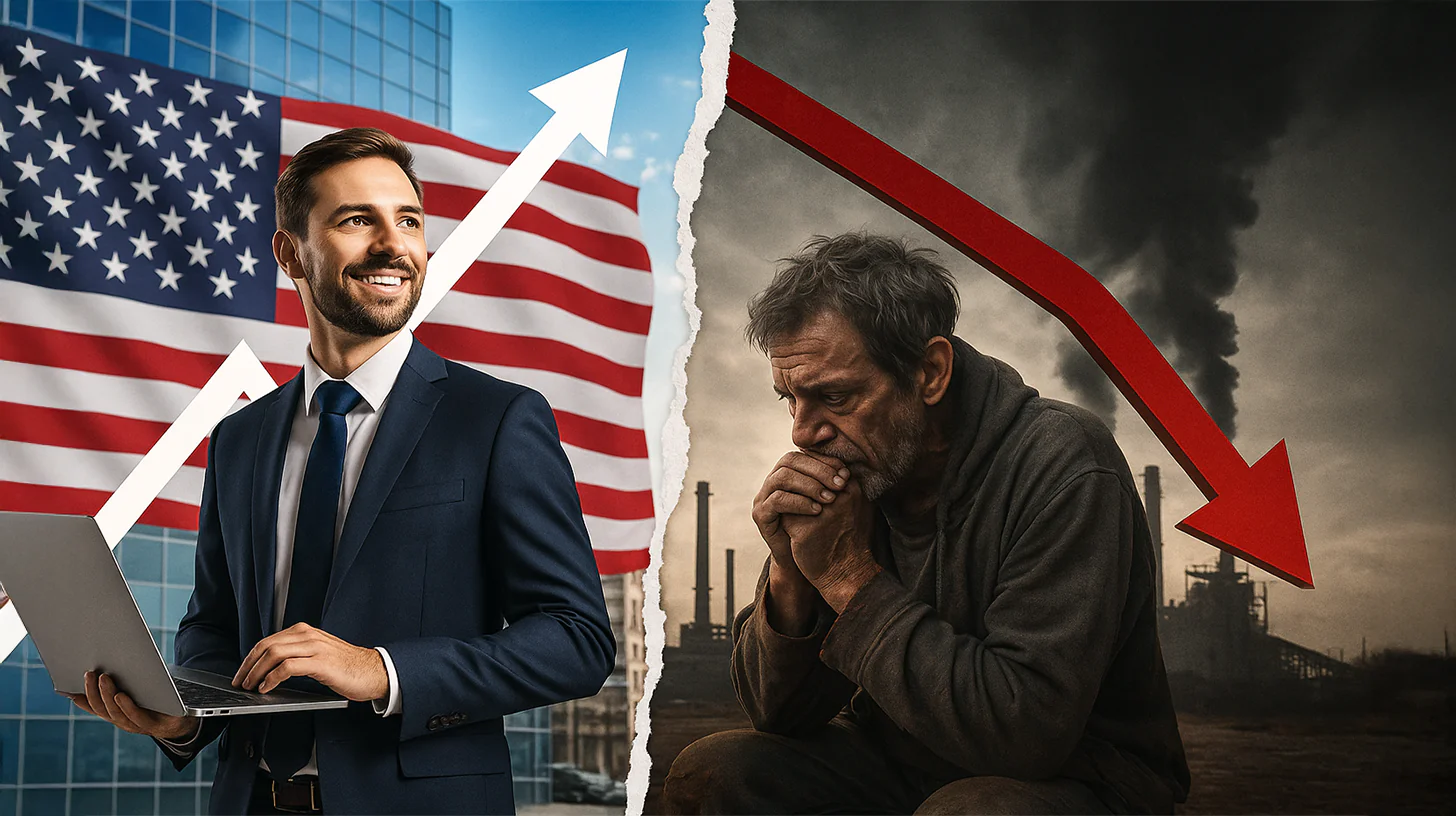
Bizarre US boom: A shocking truth reveals what would really happen without the AI hype – Image: Xpert.Digital
The AI boom as a paradoxical lifeline - An analysis of American economic dynamics
The shocking truth behind US economic resilience
The year 2025 reveals an interesting paradox of the American economy. While economists predicted a recession at the beginning of the year, the US is showing astonishing resilience, albeit one built on a surprisingly fragile foundation. As early as 2024, Deutsche Bank presented a shocking finding in a remarkable analysis: without the massive investments in artificial intelligence, the United States would already be in recession or on the verge of one.
AI investments as an unexpected economic engine
George Saravelos, Global Head of FX Research at Deutsche Bank, has already formulated a concise diagnosis that sheds new light on economic events. In his research note from September 2024, he explained that AI machines are, quite literally, saving the US economy. This assessment is based on the remarkable fact that without the enormous technology spending, the US would be close to, or already in, a recession.
Deutsche Bank warns: Fragile recovery depends on a single sector
The scale of current AI investments is extraordinary. The four largest tech hyperscalers—Amazon, Google, Microsoft, and Meta—recorded record capital expenditures of $244 billion in 2024, with forecasts for 2025 reaching approximately $300 billion. These expenditures are primarily being channeled into building AI infrastructure, data centers, and the necessary energy supply. Global AI spending is projected to climb to nearly $1.5 trillion by the end of 2025.
Particularly noteworthy is that the contribution to GDP growth from data center construction slightly exceeded the contribution of consumer spending between the fourth quarter of 2024 and the end of June 2025. This underscores the exceptional role that AI infrastructure construction plays in economic growth.
Related to this:
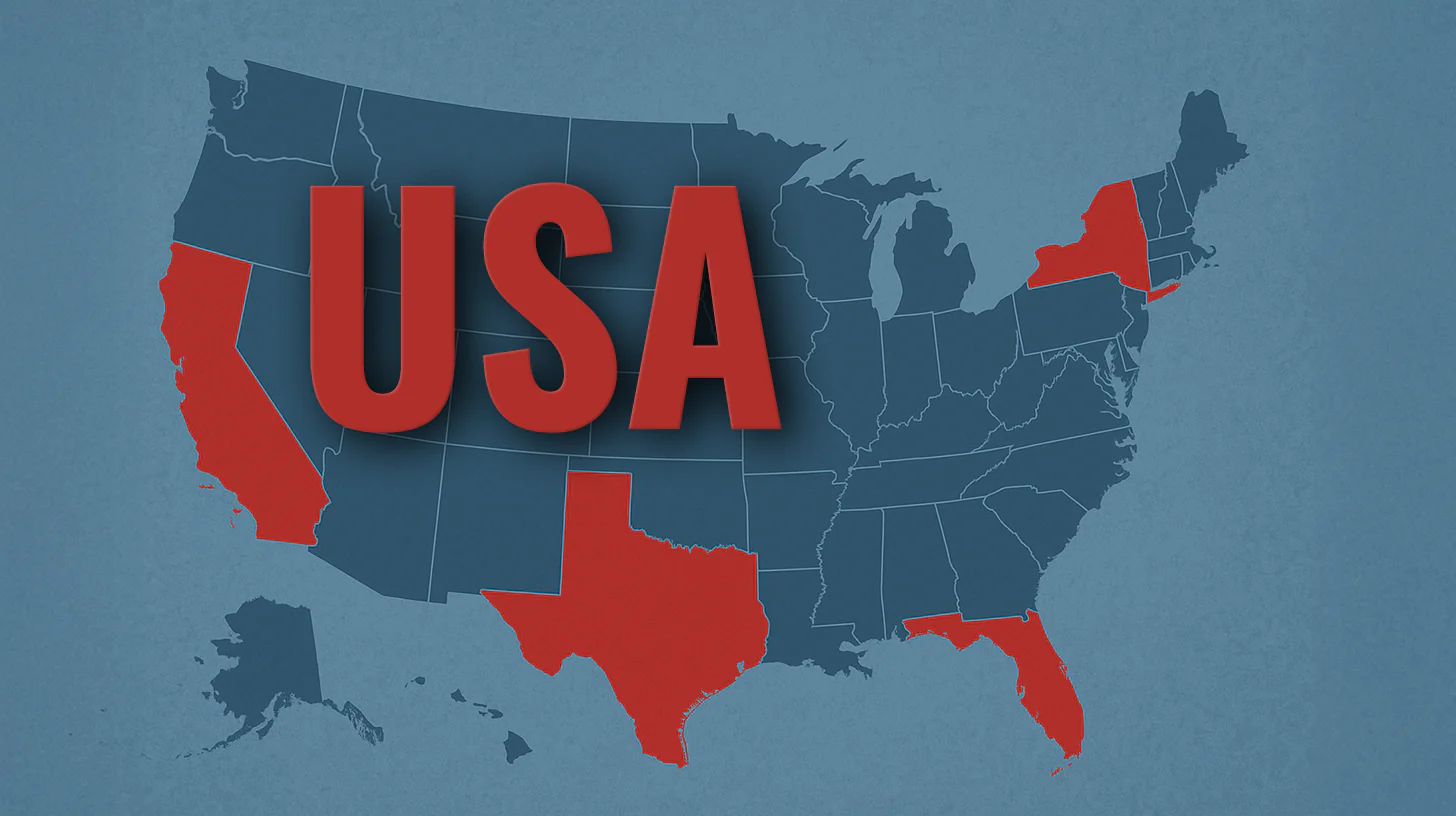
The paradoxical nature of the AI boom
Saravelos' analysis reveals a paradoxical truth: Economic growth does not stem from revolutionary AI applications, but from the mere development of the infrastructure to generate AI capacity. This insight is crucial because it demonstrates that the economy does not benefit from the promised productivity gains through AI, but rather from investments in the fundamentals.
It is perhaps no exaggeration to say that Nvidia, the primary supplier of capital goods for the AI investment cycle, is currently bearing the brunt of US economic growth. Nvidia's recent $100 billion investment in OpenAI underscores the enormous sums involved in the AI game. This partnership is intended to support OpenAI in building and scaling data centers with Nvidia hardware.
Related to this:
The "sleight of hand" here is that the financial and business relationship between Nvidia and OpenAI appears to be a "trick"—albeit a very effective one. Nvidia provides OpenAI with funding to build new data centers. These data centers are then equipped with Nvidia's most expensive components: the AI chips (GPUs). This means Nvidia invests money while simultaneously profiting, because OpenAI is obligated to purchase Nvidia's products.
The key figure here is that 60–70 percent of the cost of a new data center is attributable to Nvidia chips alone. This illustrates just how crucial and expensive these processors are. The "trick," therefore, is that Nvidia partially finances its own major customers, thus ensuring that the demand for its chips remains enormous.
Simply put: Nvidia injects money into the system, and by building new data centers, an even larger portion of that money flows back to Nvidia itself. This is a core mechanism of the current AI boom.
Related to this:

The $800 billion gap as a warning signal
Parallel to Deutsche Bank's analysis, Bain & Company warns of a dramatic funding gap. By 2030, AI companies will need $2 trillion in annual revenue to finance the necessary computing power. However, their revenue is expected to fall short of this target by $800 billion.
This discrepancy between investments and expected returns is growing exponentially. Goldman Sachs estimates AI capital expenditures will reach $368 billion by August 2025, led by Amazon Web Services, Microsoft Azure, and Google Cloud. However, empirical studies show sobering results: MIT researchers found that 95 percent of attempts to integrate generative AI into businesses have so far failed to generate rapid revenue growth.
The warning about the future
The Deutsche Bank analyst expressed serious concerns about the sustainability of this development. The bad news is that capital investment must remain parabolic for the technology cycle to continue contributing to GDP growth. This is highly unlikely. This warning is particularly significant because it demonstrates that the current economic boom is based on an exponential growth pattern that cannot be sustained indefinitely, either physically or economically.
The extreme concentration in a few technology companies poses systemic risks. Tech stocks have accounted for roughly half of the S&P 500's gains this year. Apollo's chief economist, Torsten Sløk, warned of an extreme level of concentration in the S&P 500, with equity investors dramatically overweight in AI.
America's structural advantage: The domestic market as an economic engine
While the AI boom dominates current headlines, the fundamental reason for American economic resilience lies in a much more basic structure: the enormous US domestic market. This structural superiority explains why the US would be better positioned than its European competitors even without the AI hype.
Related to this:

The power of domestic consumption
The figures speak for themselves: Americans drive their economy through consumer spending, accounting for a record 68.8 percent of their gross domestic product, while in Germany this figure is only 49.9 percent. This fundamental discrepancy lies at the heart of American resilience and German fragility.
With over 335 million inhabitants and private consumption exceeding $21 trillion, the US has the largest single source of household spending worldwide. Domestic demand contributes over 90 percent to American economic growth—a buffer that can cushion even massive external shocks. Personal spending rose by 0.6 percent in August 2025 compared to the previous month, marking the strongest increase in five months.
Trade independence as a strategic advantage
Paradoxically, the US is one of the least trade-oriented economies in the world, with a trade ratio of only 27 percent of GDP. By comparison, Germany has a trade ratio of between 70 and 80 percent of GDP and is thus one of the most trade-dependent nations worldwide.
This apparent weakness is proving to be a fundamental strength. While Germany suffers from weakening global trade – its export performance fell by 6.9 percent between 2015 and 2024 – the US economy can rely on its robust domestic consumption. Paradoxically, the US structural trade deficit of $78.3 billion reflects its domestic market strength – it can afford massive imports because domestic demand is so strong.
EU single market: Size without efficiency
At first glance, the EU single market, with its 450 million consumers, seems to offer Germany a similar advantage to the American market. The EU's GDP is comparable to China's and only slightly below that of the USA.
However, fundamental structural differences exist that make the EU single market less efficient. Fragmentation, rather than unity, is evident in the 27 different governments versus a single, centralized US government. Despite harmonization efforts, regulatory complexities persist due to national differences. Germany cannot benefit from automatic transfer payments like those between US states because it lacks a fiscal union. Cultural and linguistic barriers generate higher transaction costs than in the homogeneous US market.
The fragmentation of the European market has measurable consequences. IMF economists point out that the costs of trading goods within the EU single market are three times higher than those of trade between US states. These structural inefficiencies significantly hinder European companies in global competition.
Crisis resilience in practice
The different structures become particularly apparent in crisis situations. When the US imposed tariffs on EU goods in 2025, German exports to the US fell by 7.7 percent, reaching their lowest level since March 2022. The US economy remained largely unaffected, as the domestic market compensated for the losses.
German vulnerability is becoming visible
Germany's dependence on the EU single market is increasingly showing its limitations. 58.5 percent of all German exports go to EU countries, while 66 percent of all German imports originate from the EU. Germany is losing market share in 131 of its 193 import countries. After 2019, exports contributed only 0.3 percentage points annually to GDP growth – a collapse of the German growth model.
The psychological dimension: Trump's mental influence on the economy
The phenomenon of US economic development under Donald Trump can be explained to a considerable extent by what the German economics minister Ludwig Erhard recognized during the economic miracle: economics is 50 percent psychology. This insight proves to be the key to understanding the Trump enigma – why the American economy is showing remarkable resilience despite gloomy expert forecasts.
Related to this:

How long will Trump's psychological boost last?
The psychological factor manifests itself in several dimensions of the current US economic situation. Trump's communication strategy acts as a catalyst for economic expectations. His constant promises of an economic upswing and the return of American jobs create a sense of optimism among parts of the population and the business community. This positive attitude translates into real economic activity: companies invest in anticipation of better times, and consumers continue to spend money despite uncertainties.
Paradoxically, Trump's disruption strategy also has a psychologically stimulating effect. While the constant announcements of new tariffs and political U-turns create uncertainty, they also generate a form of creative tension. Companies and investors are forced to react and adapt more quickly – which, ironically, reinforces the often-praised flexibility of the American economy.
The discrepancy between mood and behavior
Particularly noteworthy is the discrepancy between sentiment and behavior. While the University of Michigan's consumer confidence index fell to 55.4 points in September 2025, actual consumer spending rose steadily throughout the second quarter. Americans talk pessimistically but continue to act optimistically—a classic example of how psychological factors are more complex than simple sentiment barometers suggest.
Trump's declining approval ratings as a risk factor
Political support for Trump's economic policies is eroding, threatening the sustainability of the psychological impact of his presidency. His approval ratings have now fallen to just 40 to 41 percent, down from 50 percent when he took office. Particularly worrying is his especially poor performance on the economy, a key issue for him. Fifty-four percent of Americans believe the economy is worsening, while only 31 percent give Trump high marks for his handling of the cost of living.
The America First narrative as an emotional anchor
Trump's "America First" narrative fosters a psychological identification with economic success. The message that America is winning again mobilizes emotional resources, which translate into increased risk tolerance in investments and consumer decisions. This patriotic component of economic psychology should not be underestimated—it can motivate decisions that are difficult to justify rationally.
The dynamics of expectations function as a self-reinforcing mechanism. As long as enough actors believe that Trump's policies will be successful in the medium term, they will behave accordingly and thus contribute to their actual success. This self-fulfilling prophecy explains why the economy has so far defied the apocalyptic scenarios of many economists.
Our US expertise in business development, sales and marketing

Our US expertise in business development, sales and marketing - Image: Xpert.Digital
Industry focus areas: B2B, digitalization (from AI to XR), mechanical engineering, logistics, renewable energies and industry
More information here:
A thematic hub offering insights and expertise:
- Knowledge platform covering global and regional economies, innovation and industry-specific trends
- A collection of analyses, insights, and background information from our key areas of focus
- A place for expertise and information on current developments in business and technology
- A hub for companies seeking information on markets, digitalization, and industry innovations
Debt, job losses, AI risk – when will Trump's economic magic end? Experts see a turning point in 2026
Medium-term risks and expert assessments
Economic experts' assessments of medium-term developments paint a nuanced picture, reflecting both cautious optimism and well-founded concerns. Experts are particularly critical of the second half of Trump's term. Harvard economist Kenneth Rogoff predicts that the US economy will likely slow down and experience a downturn in the second half of the year.
Related to this:

The debt crisis as a structural threat
Parallel to short-term economic indicators, American national debt is developing into an increasingly threatening structural challenge. In August 2025, the national debt reached a new record high of $37.27 trillion, which corresponds to a debt-to-GDP ratio of approximately 124 percent.
The US now has to spend over $1.1 trillion annually on interest payments alone, making interest payments the largest single expenditure in the federal budget. Harvard economist Kenneth Rogoff even predicts a severe debt crisis within the next five years.
The labor market as a critical turning point
While other economic indicators still show strength, the labor market is revealing the first clear signs of weakness. The unemployment rate rose to 4.3 percent in August 2025, the highest level since October 2021. Only 22,000 new jobs were created in August, far fewer than the expected 75,000.
The developments in key sectors are particularly alarming. The manufacturing sector lost around 12,000 jobs, while the federal government cut 15,000 positions. Since the beginning of the year, almost 100,000 federal jobs have been eliminated, highlighting the impact of Trump's austerity measures in the public sector.
Migration policy as an economic risk
Immigration policy poses significant economic risks. According to estimates by the Peterson Institute, Trump's planned mass deportations could shrink the US economy by more than 7 percent by 2028. The sudden loss of workers would not only affect individual companies but could destabilize entire industries while simultaneously exacerbating inflationary pressures.
The American Enterprise Institute estimates that the Trump administration's immigration policies will lead to a negative net migration in 2025 for the first time in decades. This would represent a shock to economic growth, amounting to between minus 0.3 and minus 0.4 percent of US GDP, depending on the scenario.
Related to this:

When will economic psychology tip over?
The Trump phenomenon is likely at a critical turning point. The remarkable resilience of the American economy in the first months of his second term could prove to be the calm before the storm. The combination of growing structural problems, dwindling political support, and increasing macroeconomic imbalances suggests that a counter-trend may already be underway.
The next few months will be crucial. If the labor market weakness persists, inflation continues to rise, and the debt crisis intensifies, the psychological foundation of Trump's economic policies could quickly erode. The American economy has proven to possess considerable capacity for self-healing, but this capacity is not unlimited.
The psychological component also carries considerable risks. Economic psychology can quickly reverse course if real-world results deviate too much from expectations. As soon as unemployment rises noticeably or inflation significantly strains household budgets, psychological support for Trump's policies could crumble – with correspondingly negative consequences for economic development.
Related to this:

The critical phase of the AI investment cycle
2026 is likely to be a pivotal year for the AI economy. By 2025, planned investments by US companies in AI projects will exceed $400 billion. Capital expenditures by major tech companies currently amount to around 60 percent of their EBITDA – a level comparable to the 72 percent that AT&T reached at the height of the telecom bubble in 2000.
The transition from cash- to debt-financed investments always marks a critical moment in such cycles. All major recessions and downturns stemmed from credit bubbles in the private sector that ultimately burst. The US is currently far from that point, but 2026 is likely to be the decisive turning point: Will investments in the AI economy deliver adequate returns on capital, or will a debt-financed investment cycle with only weak returns lead into risky territory?
A fragile recovery with structural differences
Deutsche Bank's analysis reveals a bizarre truth about the US economic upswing: the economy is not being driven by revolutionary AI applications, but by the hope of them. Without the massive infrastructure investments, the US would already be in recession. This dependence on a single sector makes the economy fragile and raises questions about the long-term sustainability of the current growth model.
But the underlying reality shows that even without the AI hype, the US has a structural advantage over Europe. While German exporters suffer under US tariffs, the American economy remains largely stable thanks to its strong domestic consumption. Despite the EU single market, Germany is structurally more fragile because the fragmentation of Europe does not offer the same economies of scale and crisis resilience as the integrated US market.
The US benefits significantly more from its domestic market than Germany does from the EU single market. The American domestic market, with its size, homogeneity, and institutional unity, offers a more stable basis for economic growth. Domestic consumption of 68.8 percent versus 49.9 percent demonstrates the fundamentally different orientations of the two economic areas.
Deutsche Bank's warning should be seen as a wake-up call: Economic growth based solely on exponentially increasing investments in unproven technologies is, by definition, unsustainable. The question is not if, but when this development will reach its limits. Then it will become clear whether the structural advantages of the American domestic market are sufficient to avoid a hard landing – or whether the US, too, will have to face the reality of its AI-driven speculative bubble.
The psychological component actually accounts for about 50 percent of the economy, as Ludwig Erhard recognized. As long as Trump manages to control psychological expectations and maintain confidence in the economic future, his administration can compensate for even objectively problematic policies. The crucial question is how long this psychological effect will last and whether it is strong enough to cushion even major economic shocks. The Trump phenomenon may not have completely disappeared, but there are increasing signs that its time is running out. The economy is too complex to be permanently controlled solely by psychology and political rhetoric. Sooner or later, economic fundamentals will prevail, and these are increasingly pointing in a worrying direction.
Your AI transformation, AI integration and AI platform industry expert
☑️ Our business language is English or German
☑️ NEW: Correspondence in your native language!

Konrad Wolfenstein
I and my team are happy to be available to you as your personal advisor.
You can contact me by filling out the contact form here or simply call me at +49 7348 4088 965. My email address is: [email protected]
I'm looking forward to our joint project.
☑️ SME support in strategy, consulting, planning and implementation
☑️ Creation or realignment of the AI strategy
☑️ Pioneer Business Development
A new dimension of digital transformation with 'Managed AI' (Artificial Intelligence) - Platform & B2B solution | Xpert Consulting

A new dimension of digital transformation with 'Managed AI' (Artificial Intelligence) – Platform & B2B solution | Xpert Consulting - Image: Xpert.Digital
Here you will learn how your company can implement customized AI solutions quickly, securely and without high entry barriers.
A managed AI platform is your all-inclusive, worry-free solution for artificial intelligence. Instead of dealing with complex technology, expensive infrastructure, and lengthy development processes, you receive a ready-made solution tailored to your needs from a specialized partner – often within just a few days.
The key advantages at a glance:
⚡ Rapid implementation: From idea to ready-to-use application in days, not months. We deliver practical solutions that create immediate added value.
🔒 Maximum data security: Your sensitive data stays with you. We guarantee secure and compliant processing without sharing data with third parties.
💸 No financial risk: You only pay for results. High upfront investments in hardware, software, or personnel are completely eliminated.
🎯 Focus on your core business: Concentrate on what you do best. We take care of the entire technical implementation, operation, and maintenance of your AI solution.
📈 Future-proof & scalable: Your AI grows with you. We ensure continuous optimization and scalability, and flexibly adapt the models to new requirements.
More information here:








