

Apple is investing $ 500 billion in the USA-impact on production and logistics
Xpert pre-release

Available in 27 languages 📢
Prefer Xpert.Digital on GoogleⓘPublished on: March 1, 2025 / Updated on: March 1, 2025 – Author: Konrad Wolfenstein
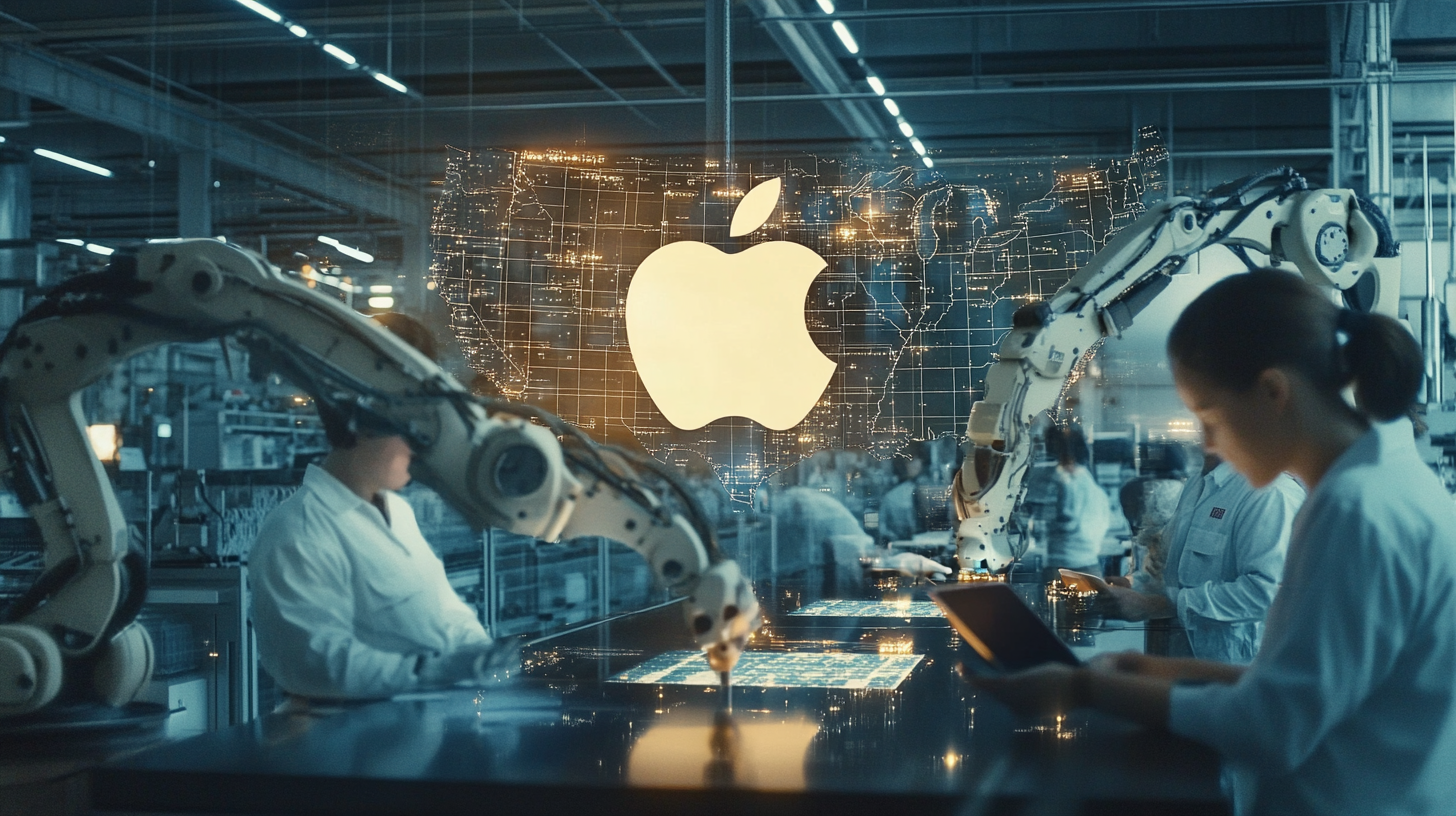
Apple invests $500 billion in the USA – impact on production and logistics – Image: Xpert.Digital
This is how massively Apple is changing its production: The $500 billion investment and its global consequences
Job boom in the USA? Apple creates 20,000 new jobs – Here's what's behind the mega-investment!
In a groundbreaking announcement that sent shockwaves through the global business world, technology giant Apple has pledged an incredible $500 billion investment in the United States. This colossal sum, to be disbursed over the next four years, is not only a sign of confidence in the US as a business location, but also a strategic move of immense significance. The announcement came amid geopolitical tensions and a growing debate about the resilience of global supply chains. It sheds new light on Apple's production strategy, its relationship with the US, and the future direction of the global technology industry.
This investment is more than just a financial commitment; it's a comprehensive program designed to fundamentally transform and strengthen Apple's presence in the U.S. At its core are the creation of 20,000 highly skilled jobs, the construction of a state-of-the-art AI server factory in Texas, the doubling of a multi-billion-dollar fund to boost chip manufacturing, and the establishment of an academy to empower small businesses. These initiatives are not only significant for Apple itself, but have the potential to have a lasting impact on the U.S. economy and reshape global supply chains.
The reasons behind this decision are multifaceted, ranging from political considerations to long-term strategic goals. While some observers see the investment as a response to protectionist tendencies and trade conflicts, others point to Apple's desire to diversify its supply chains, be closer to key sales markets, and benefit from US innovation. Regardless of the precise motives, it is clear that this investment represents a turning point for Apple and potentially for the entire global technology industry.
In this comprehensive article, we examine the key aspects of Apple's $500 billion investment in detail. We analyze the strategic goals, the potential impact on production and logistics, the changes in global supply chains, and the resulting challenges and opportunities for Apple and the US economy. Furthermore, we consider the long-term consequences of this decision and its significance for the future direction of the global technology industry. Join us on a fascinating journey through the world of high technology, global economics, and strategic corporate decision-making to fully grasp the implications of Apple's multi-billion dollar investment.
Suitable for:

Apple's billion-dollar investment in the USA: A strategic move with far-reaching consequences for production, logistics and the global economy
The announcement by technology giant Apple that it will invest an impressive $500 billion in the United States over the next four years has caused a stir in business circles worldwide. This massive capital commitment, which became public shortly after a meeting between Apple CEO Tim Cook and then-US President Donald Trump, not only signals a strong commitment to the US as a business location, but also sheds light on the changing global dynamics in production and trade.
This investment drive is unprecedented in its scale and far surpasses previous Apple announcements. It is a multifaceted undertaking that extends well beyond mere financial commitments and will have profound implications across various areas. To fully grasp the scope of this decision, it is essential to examine the key aspects of the investment and analyze its potential consequences for Apple, the U.S. economy, and global supply chains.
The pillars of the $500 billion investment: A detailed look
Apple's investment plan rests on several pillars that are strategically aligned and address various aspects of the company's growth and economic development in the USA:
1. Creation of 20,000 new, highly skilled jobs
A key component of the investment is the creation of 20,000 new jobs in the US. These positions will primarily focus on future-oriented fields such as research and development, software engineering, artificial intelligence (AI), and machine learning (ML). This focus underscores Apple's strategic commitment to innovation and the development of cutting-edge technologies. These are not simply manufacturing jobs, but highly skilled positions designed to strengthen the intellectual capital and innovative capacity of the US. The distribution of these jobs is expected to span various locations across the US, with a focus on centers such as California, Texas, and potentially other technology hubs. The creation of these jobs will not only have a direct positive impact on employment but also indirect effects by stimulating the local economy, increasing purchasing power, and fostering innovation in related industries.
2. Construction of a state-of-the-art factory in Houston, Texas, for AI servers
A particularly significant part of the investment is the construction of a new factory in Houston, Texas. This facility will specialize in manufacturing AI-enabled servers, which will play a central role in Apple Intelligence. The choice of Houston as the location is strategically astute. Texas has developed into a major technology hub in recent years, benefiting from business-friendly policies, lower living costs compared to California, and a growing pool of skilled professionals. Manufacturing AI servers in the US sends a clear signal that Apple intends to concentrate more critical infrastructure and key technologies domestically. AI servers are the backbone of modern data-driven applications and services, and their local production strengthens technological sovereignty and resilience. While the size of the planned factory and its exact production capacity have not been publicly disclosed, it is expected to be a significant investment in a state-of-the-art, cutting-edge manufacturing facility.
3. Doubling of the “US Advanced Manufacturing Fund” to promote chip production
Apple has announced it will double its US Advanced Manufacturing Fund from $5 billion to $10 billion. This fund was established to promote and support innovative manufacturing processes in the United States, with a particular focus on chip production in Arizona. The semiconductor industry is of strategic importance to the entire modern economy, and global reliance on a few chip manufacturers, especially in Asia, has been a growing concern in recent years. Doubling the fund and specifically promoting chip production in Arizona is a crucial step toward strengthening the domestic semiconductor industry and reducing dependence on foreign supply chains. Arizona has become a major center for semiconductor manufacturing in the US, and companies like TSMC (Taiwan Semiconductor Manufacturing Company) are investing heavily in new factories in the state. Apple's commitment to this sector sends a strong signal about the importance of the semiconductor industry and the need to expand manufacturing capacity in the US.
4. Establishment of a “Manufacturing Academy” in Detroit to strengthen small and medium-sized enterprises (SMEs)
Detroit, the former "Motor City" of the USA, is set to become the location of a new "Manufacturing Academy." This academy aims to support and promote small and medium-sized enterprises (SMEs) in the manufacturing sector. Detroit has undergone a structural transformation in recent decades and is seeking new ways to diversify its economy and create new jobs. The "Manufacturing Academy" could play a vital role in revitalizing the local manufacturing sector by providing SMEs with access to training, resources, and networks. The exact details of the academy, such as the programs offered and target audiences, have not yet been fully disclosed. However, it is expected that the academy will aim to train skilled professionals, disseminate innovative manufacturing technologies, and strengthen the competitiveness of SMEs in the region. The choice of Detroit as the location is also symbolically significant, as it underscores Apple's commitment to supporting regions facing economic challenges.
5. Significant investments in existing sites in Arizona, Iowa, Nevada, North Carolina and Oregon
In addition to the aforementioned major projects, Apple also plans significant investments in existing locations in Arizona, Iowa, Nevada, North Carolina, and Oregon. These locations already play a vital role in Apple's operational structure, encompassing various functions such as data centers, customer support, logistics, and research facilities. The additional investments in these locations indicate that Apple intends to further expand its existing infrastructure and strengthen its presence in these regions. While the specific details of the investments at each location have not been disclosed, it is likely they will focus on expanding capacity, modernizing facilities, and creating additional jobs. Diversifying investments across different states demonstrates Apple's strategic foresight and its commitment to leveraging the unique strengths and resources of each region.
Strategic motives behind the investment offensive: More than just a political reaction
Apple's massive investment drive is often interpreted as a reaction to political developments under the Trump administration, particularly the threatened trade barriers and tariffs on imports from China. Undeniably, political considerations may have played a role in this decision. Shifting production capacity to the US can help mitigate potential risks associated with trade conflicts and strengthen relations with the US government. However, it would be an oversimplification to view the investment solely as a political reaction. A number of other strategic motivations likely influenced this decision:
Diversification of supply chains and risk minimization
The global pandemic and geopolitical tensions have starkly highlighted the vulnerability of global supply chains. The concentration of production in a few regions, particularly China, poses significant risks. By diversifying its supply chains and shifting production capacity to the US, Apple can reduce its dependence on individual regions and increase the resilience of its supply chains. This is a long-term strategic advantage that remains relevant regardless of short-term political developments.
Proximity to important sales markets and customers
The US is one of Apple's largest and most important markets. Manufacturing in the US allows Apple to be closer to its customers, shorten delivery times, and respond more quickly to market demands. This is particularly advantageous in fast-paced markets like the technology sector. Furthermore, local production enables better control over product quality and closer collaboration with suppliers and partners in the region.
Suitable for:

Utilizing the innovation potential and the pool of skilled workers in the USA
The US possesses enormous innovation potential and a large pool of highly skilled professionals in technology, research, and development. Increased investment in the US allows Apple to leverage this potential and further strengthen its innovative capabilities. Proximity to universities, research institutions, and technology clusters in the US provides Apple with a competitive advantage in developing new products and technologies.
Long-term cost considerations and automation
Although production costs in the US are generally higher than in China, long-term cost considerations and automation technologies can improve the profitability of domestic production. By employing advanced automation technologies and optimizing production processes, labor costs can be offset. Furthermore, factors such as lower transportation costs, shorter supply chains, and improved quality control can lead to long-term cost savings.
Strengthening the brand image and the “Made in USA” factor
In the US and many other countries, “Made in USA” is often associated with quality, innovation, and reliability. By increasing production in the US, Apple can strengthen its brand image and leverage the “Made in USA” factor as a competitive advantage. This can be particularly important in an environment where consumers increasingly value regional production and ethical considerations.
Impact on global supply chains and partnerships: A realignment of the global production landscape
Apple's massive investment in the US will inevitably have significant repercussions for the company's global supply chains and the global manufacturing landscape. These repercussions are multifaceted and affect various aspects:
Diversification and strengthening of domestic production
The investment in the US is a clear signal of Apple's commitment to reducing its reliance on international supply chains and strengthening domestic production. This is a trend seen in many industries as companies seek to make their supply chains more resilient and less vulnerable to geopolitical risks and global crises. The new factory in Houston and the increased chip production in Arizona are concrete examples of this strategy. Shifting manufacturing capacity to the US can help reduce dependence on individual regions and increase the flexibility and responsiveness of supply chains.
Reorientation of supplier relationships and global partnerships
Apple's investment will likely lead to a realignment of its supplier relationships. The company will increasingly work with US-based manufacturers, particularly in areas such as semiconductors, components, and advanced manufacturing technologies. This could strengthen the US supplier industry and lead to the formation of new partnerships. At the same time, the shift of manufacturing capacity to the US could impact existing partnerships with suppliers in Asia, especially in China, Taiwan, and Vietnam. However, it is unlikely that Apple will completely sever its ties with Asian suppliers. Rather, the goal will be to create a balanced portfolio of suppliers and manufacturing locations to diversify risk and increase flexibility.
Technological innovations and supply chain resilience
A significant portion of the investment is allocated to research and development, particularly in areas such as artificial intelligence, machine learning, and advanced hardware. These investments can lead to technological innovations that improve the efficiency, flexibility, and resilience of supply chains. Examples include the use of AI and ML to optimize logistics processes, the development of new materials and manufacturing technologies, and the implementation of Industry 4.0 concepts in production facilities. By fostering technological innovation, Apple can strengthen its competitiveness and make its supply chains more resilient to disruptions.
Challenges and opportunities for Apple and the US economy
Apple's investment drive presents both challenges and opportunities for the company and the US economy. One of the biggest challenges is striking a balance between strengthening domestic production and maintaining key international partnerships. Apple is a global company with a complex network of suppliers and customers worldwide. It will be crucial to leverage the benefits of domestic manufacturing without compromising the competitiveness and efficiency of global supply chains. In the short term, higher production costs in the US could pose a challenge. However, in the long term, improved supply chain resilience, potential savings on tariffs and transportation costs, and the "Made in USA" factor could offset these costs. For the US economy, Apple's investment drive offers a significant opportunity to strengthen the manufacturing sector, create jobs, and foster innovation. Investments in research and development, chip production, and the training of skilled workers can help strengthen the competitiveness of the US economy in the long run.
A turning point for Apple and a signal for the global economy
Apple's massive $500 billion investment in the U.S. is more than just a financial commitment. It's a strategic move that will have profound implications for the company, the U.S. economy, and the global manufacturing landscape. This investment signals a turning point in Apple's global strategy and underscores the company's commitment to strengthening domestic manufacturing, diversifying supply chains, and driving technological innovation. It also signals to the global economy that the importance of regional manufacturing and resilient supply chains is growing in an increasingly volatile and uncertain world. It remains to be seen how this investment will play out in the long term and what specific effects it will have on Apple, the U.S. economy, and global markets. One thing is certain, however: Apple's decision will further fuel the debate about the future of global manufacturing and the role of the U.S. in the world economy.
Suitable for:


Xpert.Plus warehouse optimization - high-bay warehouses such as pallet warehouses consulting and planning
We are there for you - advice - planning - implementation - project management
☑️ Xpert.Plus - logistics consulting and logistics optimization
☑️ Industry expert, here with his own Xpert.Digital Industry Hub with over 1,500 specialist articles

Konrad Wolfenstein
I would be happy to serve as your personal advisor.
You can contact me by filling out the contact form below or simply call me on +49 7348 4088 965 (Munich) .
I'm looking forward to our joint project.
Write to me

Xpert.Digital - Konrad Wolfenstein
Xpert.Digital is a hub for industry with a focus on digitalization, mechanical engineering, logistics/intralogistics and photovoltaics.
With our 360° business development solution, we support well-known companies from new business to after sales.
Market intelligence, smarketing, marketing automation, content development, PR, mail campaigns, personalized social media and lead nurturing are part of our digital tools.
You can find out more at: www.xpert.digital - www.xpert.solar - www.xpert.plus
Keep in touch










