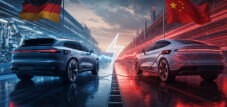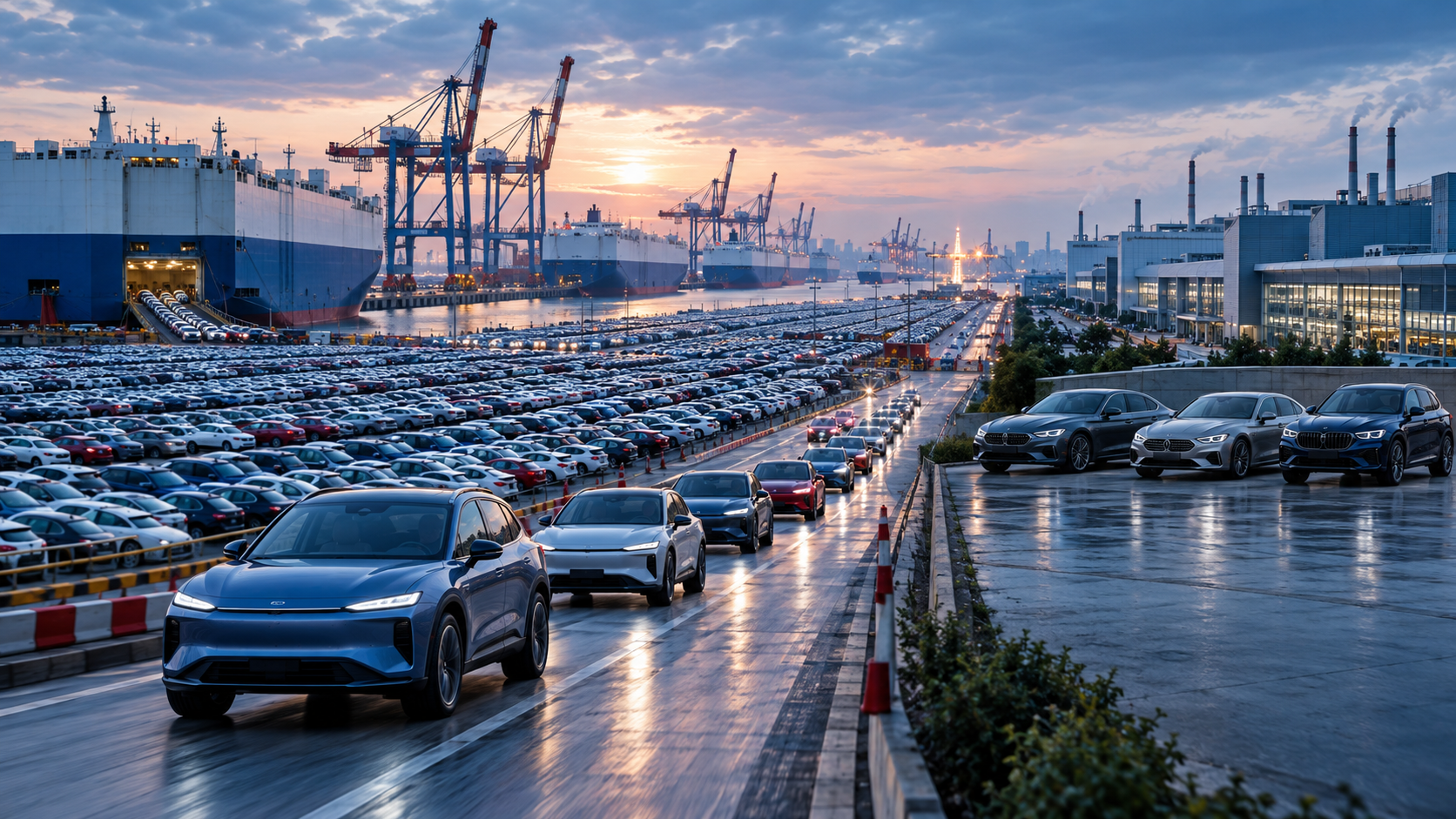
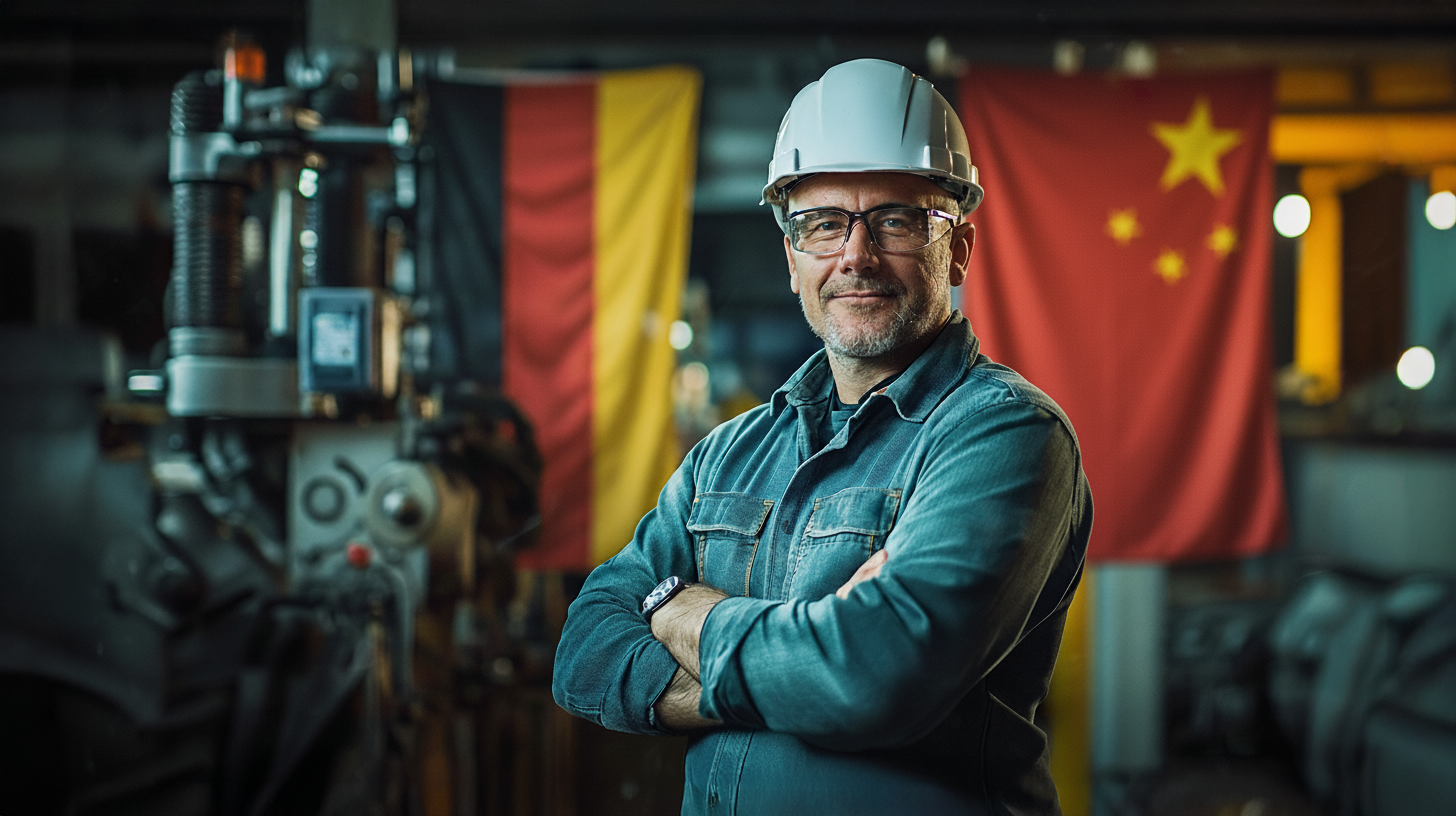
China sells 28% fewer cars domestically, while car exports explode by 73% – Creative image on the topic, created with AI: Xpert.Digital
China's car exports: A wake-up call for the European automotive industry
From crisis to opportunity: China's automotive market and the challenges for Europe
The automotive industry is currently undergoing a momentous transformation, driven primarily by the dynamic developments in China. While sales figures in the Chinese domestic market fell by approximately 28 percent in September 2026 compared to the previous year, exports of Chinese vehicles surged. With around 923,000 passenger cars exported within a single month, a clear trend is emerging: China's automotive industry is increasingly focusing on international markets. This development not only poses a challenge for European manufacturers such as Volkswagen, BMW, and Mercedes-Benz, but could also fundamentally alter the entire structure of the global automotive industry.
Analysis of the current situation reveals that the weakness of the Chinese domestic market is not deterring companies from expanding their production capacities and pursuing aggressive export strategies. The European automotive industry is therefore under pressure to adapt quickly to the changing market conditions. Factors such as technological innovation, price competition, and the need to rethink business models play a central role in this. In this critical phase, it is essential for European manufacturers not only to defend their market share but also to remain competitive and secure their place in the global automotive market.
It's not China that's crushing Europe's car manufacturers – their slow response could
The latest figures from the Chinese automotive market mark more than just a cyclical shift. They reveal how the center of the global automotive industry is reorganizing itself. In September 2026, approximately 1.63 million passenger cars were sold to end customers in China's domestic market. This was about 28 percent fewer than a year earlier. At the same time, depending on the definition, around 917,000 to 923,000 passenger cars left the country; compared to September 2025, this represented an increase of approximately 73 percent. Including commercial vehicles, total Chinese vehicle exports reached 1.053 million units. This means that, for the first time in a single month, China exported on a scale that would have seemed like a long-term future scenario just a few years ago.
This development can be described, somewhat pointedly, as a frontal assault on the European automotive industry. However, a different diagnosis is more economically accurate: China is attempting to manage a combination of weak domestic demand, high production capacities, intense price competition, and technological structural change through the accelerated internationalization of its automotive companies. This creates a double burden for Volkswagen, BMW, Mercedes-Benz, and their suppliers. They are losing market share to domestic manufacturers in China and simultaneously facing the same competitors in Europe and key emerging markets. The danger, therefore, lies not only in additional imports. It lies in the emergence of global Chinese manufacturers whose cost structures, development cycles, battery access, and digital product architectures are challenging many established business models.
A record month with figures that require explanation
The September figures are spectacular, but they must be interpreted carefully. The decline to approximately 1.63 million vehicles refers to Chinese retail sales of passenger cars, essentially sales to end customers. The export figure of around 923,000 units also stems from a passenger car-specific analysis and can vary slightly depending on the recording date, rounding, and whether disassembled kits are included. The figure of 1.053 million vehicles, on the other hand, encompasses all vehicle exports, including commercial vehicles. Retail sales, manufacturer sales, and wholesale deliveries also differ. Mixing these figures creates a dramatic but statistically inaccurate picture.
Despite these distinctions, the trend remains clear. For approximately 1.63 million passenger cars sold domestically, around 923,000 were exported. This equates to a ratio of roughly 57 exported vehicles for every 100 domestic sales to end customers. In purely mathematical terms, this represents approximately 30,000 exported passenger cars per day, or about 21 vehicles per minute. This comparison does not imply that more than half of Chinese production was exported, as domestic manufacturing and distribution also play a role, and not every exported vehicle has yet been sold to an end customer. Nevertheless, it illustrates how rapidly exports have become a major pillar of the economy.
Even more important is the annual context. In the first nine months of 2026, China exported approximately 8.2 million vehicles, using a broad definition. More than four million of these were vehicles with new drive technologies, primarily battery-electric models and plug-in hybrids. This increase in exports is therefore not an anomaly of a single month. It is the result of a multi-year shift from a predominantly domestically oriented industry to a global production, technology, and distribution system.
The domestic market is weak, but not insignificant
A decline of around 28 percent in Chinese passenger car sales appears to be a market collapse. In fact, sales in September marked the twelfth consecutive month below the previous year's level. Weaker consumer sentiment, problems in the real estate market, high economic uncertainty, and changes in subsidy conditions weighed on major purchases. Added to this was a pull-forward effect: Time-limited purchase incentives and scrappage programs had shifted some demand to earlier periods. As soon as such incentives expire or are reduced, the comparison with the previous year becomes particularly unfavorable.
However, this does not mean that the Chinese market is losing its industrial significance. With over 1.6 million passenger car sales in a relatively weak month, it remains enormous. Moreover, its internal structure is shifting faster than in Europe. Vehicles with new drive technologies achieved a very high share of production and sales in September. Battery-electric cars and plug-in hybrids are no longer a niche market in China, but rather shape model policy, cost accounting, and purchasing decisions. It is precisely this size of the domestic market that allows manufacturers to scale up new platforms, batteries, power electronics, and software in volumes from which many foreign competitors can only benefit in individual segments.
The decline in sales therefore not only has a dampening effect. It intensifies competition and increases the pressure to innovate. Manufacturers have to launch new models more frequently, update features faster, and calculate prices more aggressively. For weak companies, this is a threat to their very existence. For financially strong market leaders, on the other hand, it can become a selection mechanism: They gain market share, acquire technologies and sales capacities, or displace suppliers who can no longer meet the capital requirements. China's current weakness and its long-term industrial strength are therefore not mutually exclusive.
Excess capacity becomes an export engine
The export offensive has a clear supply-side cause. China's automotive industry possesses far greater production capacity than the domestic market can currently absorb. Estimates suggest a theoretical capacity of more than 55 million vehicles per year. Such figures should be treated with caution, as not every nominal plant is economically viable and some factories are technologically outdated. Nevertheless, capacity utilization rates and declining industry profits demonstrate that significant capacity remains unused.
For a manufacturer with high fixed costs, exporting is often more attractive than shutting down production lines. As long as the price achievable abroad exceeds the additional logistics, distribution, and adaptation costs, exports can generate contribution margins and improve capacity utilization. In many markets, margins are also higher than in the Chinese price war. This explains why companies, despite intense competition at home, are investing heavily in ports, car carriers, dealer networks, and international brand management.
This mechanism carries risks. If exports primarily serve to sell off surplus production, aggressive discounts and increasing inventories can negatively impact residual values. Dealers abroad not only have to import vehicles but also actually sell them to customers. Therefore, a portion of exports initially sits on ships, in logistics centers, or in dealer inventories. Export statistics are not synonymous with end-customer demand. Sustainable success only arises when service, spare parts availability, financing, insurance, used car values, and brand trust grow in tandem with sales.
Nevertheless, it would be wrong to dismiss the export surge simply as a consequence of Chinese overproduction. Overcapacity accelerates the process, but it doesn't explain the high technological competitiveness of many models. China isn't exporting just because it produces too many cars. It's also exporting because numerous vehicles have become attractive to international buyers in terms of price, range, charging capacity, digital features, and interior design.
The real advantage lies in the industrial system
China's lead is not based on a single low-cost factor. It is the result of an industrial system that closely integrates battery raw materials, cell chemistry, components, mechanical engineering, vehicle electronics, software, platforms, and final assembly. The production costs of a battery-electric car in China are, on average, significantly lower than those in advanced Western economies. Part of the difference stems from cheaper battery cells, another part from greater economies of scale, faster manufacturing processes, increased automation, and a dense network of specialized suppliers.
The battery is particularly important. China dominates large parts of global cell manufacturing and holds very high market shares in cathode and anode materials. Lithium iron phosphate batteries have improved so significantly that they offer sufficient range, durability, and charging capacity for many everyday vehicles. At the same time, they are often cheaper and less dependent on nickel and cobalt. Manufacturers like BYD combine cell production, battery packs, power electronics, and vehicle development within a single group. This reduces interface costs, development times, and dependence on external suppliers.
Furthermore, there's a different product logic at play. Many Chinese buyers view the car as a digital consumer good. Large screens, voice control, connectivity, driver assistance systems, regular software updates, and a comfortable interior strongly influence their purchasing decisions. Chinese manufacturers therefore often develop their vehicles around a central electronics and software architecture. While European companies possess excellent chassis expertise, safety competence, quality processes, and strong brands, their historically developed control unit and supplier structures often hinder rapid, vehicle-wide software updates.
Competition is therefore no longer solely between vehicle models. It is between industrial operating systems. The decisive factor is who can combine development, procurement, production, software, data, sales, and customer service more quickly into a scalable overall offering.
The price war is both a strength and a warning signal
China's domestic market has experienced fierce price competition for several years. Average selling prices for electric vehicles have declined significantly, while the number of new models has remained high. This development has improved affordability and forced manufacturers to adopt more efficient platforms. However, it has also eroded margins, burdened suppliers, and increased the risk of economically irrational discounts. An industry cannot sustainably rely on almost all participants striving for increased volume while simultaneously losing profitability.
Chinese policymakers are therefore attempting to curb the ruinous aspects of this competition. Measures against below-cost selling, stricter requirements for manufacturers, the clearing of inactive production licenses, and shorter payment terms for suppliers aim at consolidation. These interventions disprove the notion of an entirely unstoppable export machine. Chinese companies, too, are subject to financing costs, exchange rate risks, warranty obligations, and the need to generate profits.
For Europe, it would still be dangerous to hope for an automatic collapse of Chinese manufacturers. A consolidation process can actually make the strongest companies even more competitive. If weak brands disappear, what remains are corporations with high production volumes, integrated supply chains, proprietary battery technology, and growing international experience. BYD, Geely, and Chery differ in strategy and brand portfolio, but share the ability to develop products quickly and to tap into international markets with substantial capital.
The crucial question, therefore, is not whether every Chinese brand will survive. None will. The crucial question is whether a few Chinese groups will rise to become permanently profitable global corporations. Past developments suggest that this is precisely what is happening.
Europe is important, but not the only goal
China's expansion is global. In 2026, Russia, Brazil, the United Kingdom, Belgium, Australia, Italy, and Spain were among its key target markets. Europe and Central and South America each imported approximately 1.1 million vehicles produced in China during the first half of the year. Russia gained particular importance following the withdrawal of numerous Western manufacturers. Brazil developed into a major market for electrified models, while Belgium serves as a logistical gateway to the European single market.
This geographical diversification reduces dependence on individual regulatory jurisdictions. If imports into the European Union become more expensive due to tariffs, manufacturers can focus their growth more on Southeast Asia, Latin America, the Middle East, Africa, or other European countries. However, the markets differ considerably. In some regions, combustion engines still dominate, while in others, plug-in hybrids or pure electric vehicles prevail. Chinese companies therefore utilize a broad technology portfolio and by no means export only battery-electric vehicles.
Plug-in hybrids, in particular, have proven to be a strategic bridge. They circumvent the range anxiety of many buyers, are well-suited to markets with patchy charging infrastructure, and were initially not affected to the same extent by certain additional European tariffs on Chinese battery-electric vehicles. This allowed manufacturers to exploit regulatory loopholes and market preferences simultaneously. Europe's response to Chinese imports must therefore be technologically neutral. Those who focus solely on pure electric vehicles underestimate the adaptability of manufacturers.
In the long term, trade flows will change. The more Chinese companies produce outside of China, the less meaningful export statistics alone become. A BYD built in Hungary, a Chery assembled in Spain, or a Geely model produced jointly with a European partner is not an imported vehicle from China, but it remains part of China's industrial expansion.
Tariffs buy time, but they don't solve the cost problem
Since 2024, the European Union has levied additional countervailing duties on battery-powered cars produced in China. This is a response to state subsidies and the risk of economic damage to European manufacturers. From a trade policy perspective, this instrument is understandable. It can reduce the price gap, dampen a sudden surge in imports, and give European companies time to invest.
Tariffs, however, have their limits. They also increase the price of vehicles from Western brands that are produced in China and shipped to Europe. They can trigger countermeasures and affect a European industry that continues to generate significant revenue in China. Most importantly, they do not eliminate the root causes of the competitive disadvantage: high energy costs, slow approval processes, fragmented capital markets, expensive batteries, complex regulations, and long development cycles.
Furthermore, Chinese manufacturers are responding with localization. BYD is expanding its European production, Chery is utilizing a former Nissan factory in Barcelona, and Geely is developing production partnerships with European corporations. Existing, sometimes underutilized, plants allow for faster market entry than entirely new factories. Local production reduces transport and customs costs, improves political acceptance, and can meet requirements for European value-added content.
This shifts the political task. Europe must distinguish between fairly defending against competition-distorting imports and productively integrating Chinese investments. Local factories can create jobs and tax revenue. However, if batteries, software, key components, and strategic decisions continue to originate in China, the majority of technological value creation will remain outside Europe. A sensible industrial policy should therefore consider not only final assembly but also research, supply chains, data access, battery cells, power electronics, and skilled employment.
Germany is losing ground both in China and at home
The situation is particularly challenging for Volkswagen, BMW, and Mercedes-Benz. For decades, China was not just a sales market, but a key source of profit. High production volumes, strong brands, and profitable joint ventures financed investments in other regions. This model is eroding. In the third quarter of 2026, Volkswagen deliveries in China fell by around 38.5 percent. BMW lost about a quarter there, and Mercedes-Benz around 31 percent. These declines significantly impacted global results.
The weakness cannot be explained solely by the overall market. Chinese manufacturers have gained market share in key segments because they often offer electrified vehicles that are cheaper, more digital, and faster. German premium manufacturers remain strong in terms of perceived quality, driving dynamics, safety, and brand status. However, the definition of premium is shifting in the Chinese market. Software, intelligent driver assistance systems, connectivity, and an interior tailored to local users can be more important than traditional engine characteristics or decades of brand heritage.
At the same time, Chinese competitive pressure in Europe is growing. Chinese-controlled manufacturers already achieved double-digit monthly market shares in Europe in 2026, although the exact percentage depends on whether brands like Volvo and Polestar are considered part of the Geely Group. BYD, Chery, Leapmotor, Geely, and SAIC increased their registrations significantly faster than the overall market. What was previously a manageable share could thus become a strategically significant force within just a few years.
Germany is thus experiencing a reversal of its previous success model. Previously, German companies developed vehicles and technologies domestically, scaled them internationally, and profited particularly in China. In the future, Chinese manufacturers could scale in their home market, roll out their technologies globally, and localize an increasing share of the value chain in Europe. It is precisely this mirrored movement that makes the situation so serious.
Our China expertise in business development, sales and marketing

Our China expertise in business development, sales and marketing - Image: Xpert.Digital
Industry focus areas: B2B, digitalization (from AI to XR), mechanical engineering, logistics, renewable energies and industry
More information here:
A thematic hub offering insights and expertise:
- Knowledge platform covering global and regional economies, innovation and industry-specific trends
- A collection of analyses, insights, and background information from our key areas of focus
- A place for expertise and information on current developments in business and technology
- A hub for companies seeking information on markets, digitalization, and industry innovations
Volkswagen faces massive challenges in China
Volkswagen bears the greatest volume risk
Volkswagen is particularly exposed due to its high production volumes, broad brand portfolio, and long-standing dependence on China. The company must simultaneously offer affordable electric vehicles in Europe, localize its business in China, resolve software issues, and finance substantial investments. Its strengths lie in its industrial experience, purchasing power, dense dealer network, and well-known brands. Its weaknesses lie in the company's complexity and decision-making processes that are often slower than the product cycles of its Chinese competitors.
The answer cannot simply be to copy Chinese vehicles. Volkswagen needs a clearer regional architecture. In China, locally developed platforms, software, and digital functions are required because customer demands and the pace of innovation there are different. In Europe, the company must leverage its economies of scale to offer compact electric cars profitably and in high volumes. At the same time, it must not abandon combustion engine revenues too soon, as these finance the transition.
Partnerships with Chinese technology companies can accelerate development, but they also increase dependence. Crucially, Volkswagen must retain certain capabilities: system integration, vehicle architecture, safety expertise, data control, and customer relations. Those who contribute only the body, brand, and sales will lose negotiating power in the long run. Conversely, those who combine Chinese speed with European engineering and production expertise can reposition the company.
Volkswagen's risk, therefore, lies less in its immediate disappearance than in a gradual loss of volume and pricing power. Even moderate losses in market share have a significant impact on unit costs in capital-intensive factories. Declining capacity utilization leads to higher costs per vehicle, making further price reductions more difficult. This cycle must be broken early.
BMW and Mercedes need to redefine premium
BMW and Mercedes-Benz are in a different position. Their business models rely more heavily on premium prices, brand value, and high margins than on maximum volume. This partially protects them from pure price competition. Affluent customers continue to pay for driving dynamics, comfort, safety, quality, and international prestige. Nevertheless, the barrier to entry has been lowered.
Chinese brands are not only challenging the premium segment with lower prices. They offer large batteries, high charging capacities, luxurious interiors, powerful entertainment systems, and extensive driver assistance features. Some models are even challenging traditional class logic by delivering the space and features of a larger vehicle for the price of a European mid-size sedan. At the same time, independent luxury brands are emerging that no longer want to be seen as merely a budget alternative.
BMW and Mercedes must therefore avoid confusing premium with mere high price. A high price remains sustainable only if the customer perceives clear added value. This includes a reliable software environment, ease of use, fast charging capability, convincing efficiency, and a consistent digital customer experience. Additional features tied to complicated subscriptions, on the other hand, can damage trust.
Both manufacturers benefit from their global brand recognition and extensive service networks. Especially outside of China, residual values, workshop quality, spare parts, and financing are key competitive advantages. These strengths should be combined with faster development processes. Premium manufacturers don't need to introduce a completely new platform every year. However, they must improve digital features, battery technology, and efficiency at a pace that customers perceive as modern.
Suppliers bear an underestimated portion of the risk
The debate often focuses on major vehicle brands. However, the supplier industry is just as economically important. Germany and Central Europe have a dense network of mechanical engineering companies, metal processors, electronics firms, engineering service providers, and specialized component manufacturers. Many of these companies are heavily dependent on combustion engines, transmissions, exhaust aftertreatment systems, or mechanical assemblies.
Electric drives require fewer moving parts. At the same time, value creation is shifting to batteries, semiconductors, power electronics, software, sensors, and thermal management. Chinese manufacturers often bring their established suppliers with them or source components from an integrated Asian network. Even if vehicles are assembled in Europe in the future, it is therefore not guaranteed that European suppliers will benefit proportionally.
Particularly vulnerable are medium-sized companies with few major customers, high energy costs, and limited investment resources. They must continue supplying existing products while simultaneously developing new competencies. Declining demand, price pressure, and shorter model cycles exacerbate the financing gap. A disorderly structural collapse could therefore hit regions where automotive employment, municipal tax revenues, and vocational training are closely intertwined.
The most sensible response is not the continued subsidization of components that are no longer competitive. What is needed are predictable transformation pathways, faster investment approvals, better financing for industrial scaling, and the active establishment of new value creation sectors. Battery recycling, power electronics, production automation, industrial software, and testing expertise offer opportunities. Europe's strength in mechanical engineering can be beneficial if it is consistently combined with electronics and data.
The economic impact is exceptionally high
The automotive industry is far more than just a consumer goods sector for Europe. Millions of jobs depend directly and indirectly on vehicle production, supply, trade, financing, logistics, and services. The sector accounts for a significant portion of industrial research and development and traditionally generates a large foreign trade surplus. In Germany, more than 700,000 people are directly employed in the automotive industry. According to industry figures, more than 50,000 jobs were lost between mid-2024 and mid-2025 alone.
Market share losses therefore have macroeconomic consequences. Less production reduces added value, investment, and exports. Research spending can decline when profits come under pressure. Industrial regions lose skilled jobs, while at the same time the state has to bear higher transformation costs. This effect is hitting Germany at a time of weak growth, high location costs, and declining industrial production.
At the same time, protectionism would be economically costly. Cheaper and technologically advanced vehicles increase consumer purchasing power and potentially accelerate electrification. Competition forces established manufacturers to innovate and lowers prices. Chinese investments can repurpose dormant factories and create new jobs. The economic policy objective, therefore, is not to preserve every market share held by European manufacturers. It is to ensure fair competition while simultaneously maintaining Europe's ability to produce key technologies and high-quality industrial labor domestically.
The goal must not be national self-sufficiency. No major automotive market is completely independent when it comes to raw materials, semiconductors, batteries, and software. Crucially, robust diversification is needed so that Europe does not become dependent on a single supplier country or on a few non-European technology platforms.
Europe needs cheaper cars, not just stricter rules
A key problem in Europe's electric vehicle transformation is affordability. Many new electric cars initially focused on larger and more expensive segments because high battery costs could be more easily factored into the sales price there. This limited the range of smaller, more affordable models. Chinese manufacturers are targeting precisely this gap or offering more features and greater range in the same price range.
A successful European strategy must reduce overall costs. This includes battery cells, energy, financing, approval, development, and sales. More uniform European rules and larger common markets could improve economies of scale. A reliable charging infrastructure reduces the perceived risk for buyers and allows for smaller batteries, because not every everyday concern needs to be compensated for by maximum range. Fleet regulations and purchase incentives should be predictable so that manufacturers and customers do not make investments dependent on short-term political changes.
Vehicle design also needs to change. An entry-level electric car doesn't need to possess all the characteristics of a heavy premium vehicle. Lower weight, efficient aerodynamics, standardized components, and a limited number of sensible variants can reduce costs. Europe has well-known brands and a strong tradition of small cars. This strength must be carried over into the electric era, instead of surrendering the market to price-aggressive importers without a fight.
More affordable vehicles are not merely a social policy on the fringes of industrial policy. They determine the potential production volume. Without sufficient volume, factories remain underutilized, battery procurement is expensive, and charging infrastructure is underutilized. Affordability is therefore the core of industrial scaling.
Speed becomes the decisive productive force
Chinese manufacturers are shortening development cycles and releasing new or revised models more frequently. This increases the pressure on European companies, whose platforms are traditionally designed for long lifespans. However, speed should not be confused with rushed product maturity. Safety, durability, data privacy, and repairability remain crucial quality features.
The challenge lies in eliminating slow organizational processes without sacrificing technical diligence. Modular hardware, more centralized electronics architectures, virtual development, standardized software components, and early supplier integration can reduce development times. Equally important are clear lines of responsibility. When corporate brands develop parallel systems, coordinate interfaces multiple times, and distribute decisions across numerous hierarchical levels, complexity becomes a cost factor.
Software-defined vehicles also change the revenue model. Functions can be improved or added after delivery. This allows for longer-lasting technological relevance, but requires stable operating systems and a sound data architecture. European manufacturers must decide which software layers are strategically essential and where cooperation makes sense. Complete in-house development is not always efficient. However, total dependence on external platforms would mean relinquishing control of the customer interface and a growing portion of the value chain.
The greater speed of Chinese companies is therefore not a cultural imperative. It arises from market intensity, capital allocation, proximity of supply chains, and organizational design. These factors can influence European companies if they are willing to fundamentally change their structures.
The German response must go beyond purchase incentives
Short-term purchase incentives can stabilize demand, but they do not solve structural location problems. Germany needs an industrial policy that combines affordable energy, grid expansion, digital administration, faster permitting, skilled workers, and capital for scaling. Individual funding programs without reliable framework conditions create windfall gains, but rarely sustainable competitiveness.
The European level is of particular importance. A fragmented market with differing funding rules, charging conditions, and approval requirements prevents economies of scale. Common standards, cross-border energy and data networks, and a more robust capital market would help European manufacturers and suppliers finance investments more quickly. Public procurement can generate demand for buses, municipal fleets, and commercial vehicles, but should be tied to transparent criteria for safety, sustainability, and regional value creation.
Research policy must give greater consideration to the transition from invention to industrial production. Europe excels in many fundamental research areas but often falls short in commercialization and scaling. Pilot plants alone are insufficient if subsequent capital, permits, or customers are lacking. Battery cells, semiconductors, recycling, and industrial software require long-term investment conditions.
At the same time, European rules should become more innovation-friendly and technologically coherent. Companies need clear objectives, not constantly changing details. Regulation must protect safety, the climate, and competition without tying up development resources in excessive documentation. The benchmark should be whether a rule measurably contributes to achieving the objective and can be implemented uniformly across the single market.
Cooperation with China remains necessary
Despite growing competition, complete economic decoupling is neither realistic nor desirable. German manufacturers continue to produce, develop, and sell in China. European companies source battery cells, materials, electronics, and machinery from Chinese supply chains. Conversely, Chinese manufacturers need European markets, technologies, brand partnerships, and industrial sites.
Cooperation should, however, be coupled with a pragmatic risk management policy. Companies must identify critical dependencies, develop alternative suppliers, and protect sensitive data. Joint projects should be designed in such a way that European partners retain their own core competencies. Policymakers, in turn, must consistently apply investment screening, cybersecurity, and competition law without treating every instance of Chinese involvement as a blanket threat.
Local Chinese production in Europe can be part of a balanced strategy if it creates genuine added value. This includes skilled employment, research, supply chain relationships, tax contributions, and compliance with European labor, environmental, and data protection standards. Reciprocity is crucial: European companies should have comparable opportunities in China to those Chinese investors claim in Europe.
Such a policy is more sophisticated than simple isolation or unconditional openness. It combines competition with security interests and utilizes foreign capital without recklessly abandoning strategic capabilities.
Why the doomsday narrative falls short
The claim that China will completely displace the European automotive industry underestimates several opposing forces. Brand trust, service networks, perceived safety, fleet relationships, financing, and residual values don't develop overnight. The European market is regulatory complex and fragmented in terms of customer preferences. New entrants face high marketing expenditures and must build up spare parts, repair shops, and used car markets in the long term.
Chinese companies are also vulnerable. Low margins, high investment costs, exchange rate fluctuations, political countermeasures, and potential quality issues can hamper expansion. Not all brands will survive. Some exporters might withdraw if dealer inventories grow or warranty costs have been underestimated. Furthermore, local production in Europe leads to higher labor, energy, and regulatory costs, thus diminishing some of China's cost advantage.
Conversely, appeasement would be equally wrong. The export figures reveal an industrial scale that is fundamentally altering global price and innovation competition. Chinese manufacturers don't need to completely dominate Europe to trigger significant consequences. Even an additional market share of just a few percentage points can reduce the capacity utilization of European plants and put margins under pressure, especially in the face of stagnant demand. In a capital-intensive industry, such shifts are economically significant.
The appropriate perspective, therefore, lies somewhere between panic and denial. China will not necessarily wipe everything out. However, it is forcing the European automotive industry to change its costs, products, and organization more quickly than would have happened without this pressure.
The global scale will determine Europe's future
The long-term competitiveness of Volkswagen, BMW, and Mercedes-Benz will not be determined solely in Germany or China. Future growth will primarily arise in a multitude of markets with varying incomes, infrastructures, and political frameworks. Successful manufacturers therefore require regional product strategies, flexible powertrain offerings, and local partnerships. A single global vehicle concept is hardly sufficient.
European companies should leverage their strengths more effectively. These include safety, handling, industrial quality, premium positioning, financing, fleet management, and an established service network. These advantages must be combined with lower costs, better software, and faster model cycles. A strategy that relies solely on heritage and tradition will not suffice.
China, in turn, faces the challenge of transforming export volume into lasting brand loyalty. The transition from a price-aggressive supplier to a globally responsible manufacturer requires transparent warranties, reliable spare parts, data protection, local development, and stable resale values. Some companies will make this transition; others will not.
The decisive industrial battle of the coming years is therefore not Europe versus China. It is: Which business systems can best combine technology, costs, trust, and global adaptability? Origin remains important, but operational performance will become even more so.
Europe's car manufacturers still have time, but no more buffer
The September 2026 figures are a warning signal, not a final decision about winners and losers. China's weak domestic market is accelerating export pressure, while the strength of its battery and vehicle industries allows companies to translate this pressure into competitive products. Nearly one million passenger cars exported in a single month demonstrate that internationalization has reached a new scale.
For Germany, this leads to a clear priority. Protecting existing production must not be confused with preserving existing structures. Tariffs can buy time, but only productivity, innovation, and attractive vehicles secure market share. Purchase incentives can shift demand, but only competitive costs create sustained capacity utilization. Cooperations can accelerate development, but only in-house core competencies ensure strategic capability.
Volkswagen must reduce complexity and translate its volume strength into affordable electric models. BMW and Mercedes-Benz must redefine premium in a digital, efficient, and customer-centric way. Suppliers need realistic transformation pathways to new components and business models. Policymakers must improve business conditions instead of presenting a series of isolated measures as a strategy.
The provocative claim that China will wipe everything out is therefore understandable as a wake-up call, but too absolute as an economic forecast. Europe's automotive industry still possesses capital, brands, engineering expertise, production competence, and customer access. What it lacks is not fundamentally the ability to respond, but often the speed and decisiveness. If it fails to develop both, its decline will not be solely caused by China. It would then be, to a considerable extent, the result of its own delays.
🎯🎯🎯 Data-driven B2B industry hub as a quasi-in-house solution


The quasi-in-house solution: How Xpert.Digital closes operational gaps in B2B marketing and sales – Smart Content-Driven Business - Image: Xpert.Digital
Xpert.Digital is a data-driven B2B industry hub led by Konrad Wolfenstein . The company acts as an external, quasi-in-house solution for industrial partners, closing operational gaps in marketing, content, and sales – without requiring additional resources on the client side.
More information here:
Your global marketing and business development partner
☑️ Our business language is English or German
☑️ NEW: Correspondence in your native language!

Konrad Wolfenstein
I and my team are happy to be available to you as your personal advisor.
You can contact me by filling out the contact form here wolfenstein@xpert.digital:or simply call me at +49 7348 4088 965. My email address is
I'm looking forward to our joint project.