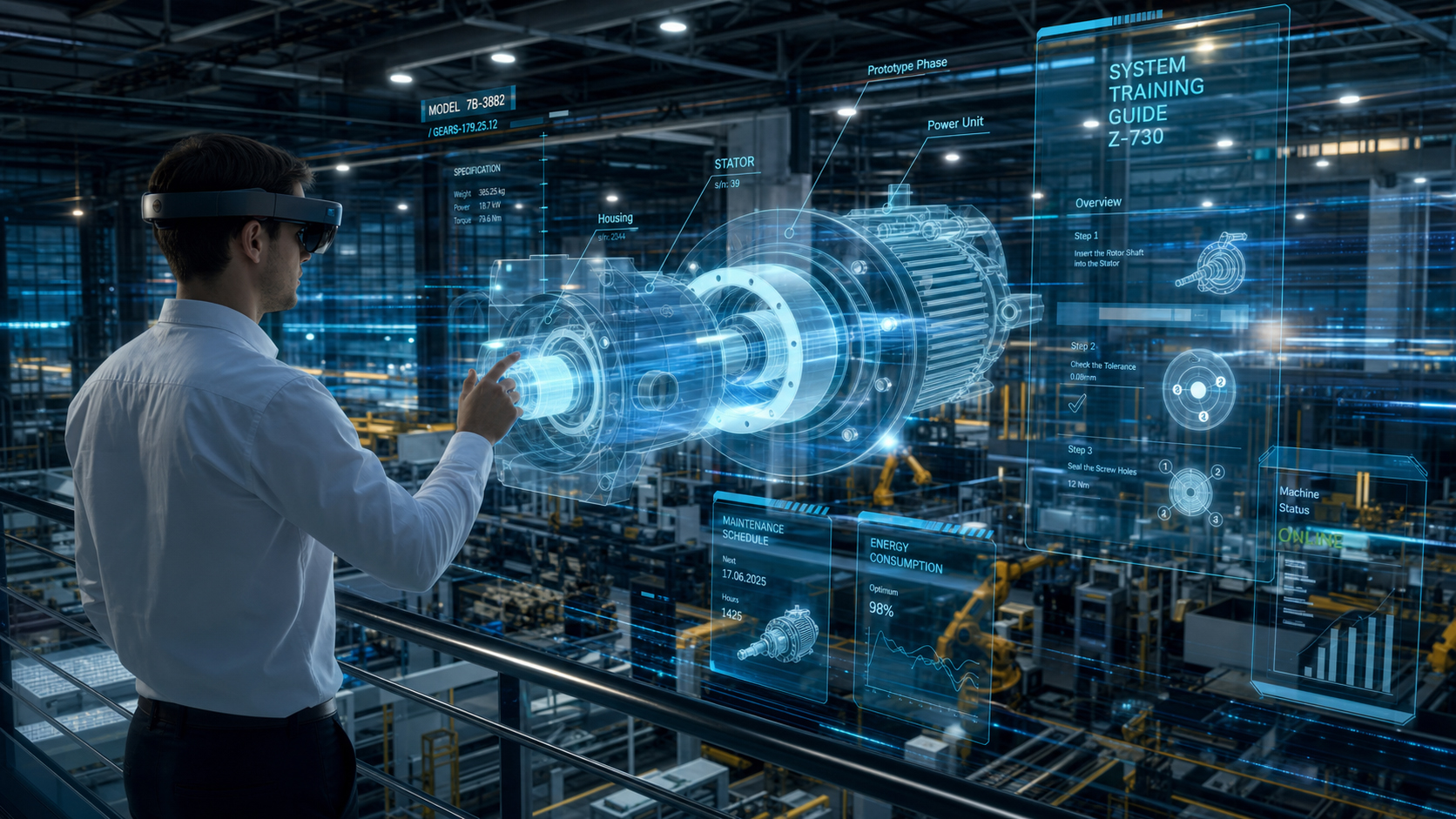
XR implementation in companies: From pilot project to operational reality – 7 steps to successful XR integration – Image: Xpert.Digital
Enough with the hype: Extended Reality (XR) pays off in these 5 areas
Metaverse was yesterday: How augmented and virtual reality are now bringing real profits to the industry
Extended Reality (XR) has long since left its playful hype phase behind and arrived in harsh economic reality. While spectacular but often empty metaverse visions from tech giants fizzle out in the media, a quiet revolution is taking place in production halls, logistics centers, and training rooms worldwide. Technologies like Virtual Reality (VR), Augmented Reality (AR), and Mixed Reality (MR) prove their value daily: They drastically reduce error rates, halve training times, and make expensive travel costs obsolete through efficient remote maintenance.
Despite these measurable successes, the industry faces a significant problem: Between 80 and 95 percent of all XR initiatives fail in the so-called "pilot trap." They function flawlessly from a technical standpoint, but never make the leap into productive, company-wide day-to-day operations. Why is this? The reasons are rarely technological, but almost always strategic and structural. Those who view XR merely as a new IT toy will fail. However, those who understand it as a profound transformation tool secure a decisive competitive advantage. This article unflinchingly reveals the true state of the market, in which application areas a return on investment (ROI) is quickly achieved, and which strategy your company can use to successfully avoid the pilot trap.
The multi-billion dollar market of Extended Reality: How smart glasses are revolutionizing production and logistics
Extended Reality is no longer a future technology; it's a current competitive advantage. Companies that strategically and methodically implement XR technologies report measurable benefits: faster onboarding, reduced error rates, more efficient remote maintenance, and demonstrable cost savings in production and logistics. However, the sobering reality is that between 80 and 95 percent of all technological pilot projects in a corporate context never reach the threshold of productive use. This article provides a sound overview: what Extended Reality can actually do, which market dynamics are at play, why projects fail – and how to achieve a successful implementation that goes beyond the pilot phase.
The market behind the hype – figures, growth and economic reality
Despite media headlines and spectacular setbacks, the global XR market is on a stable growth trajectory. According to ABI Research, the enterprise XR sector will grow from approximately $44.7 billion in 2024 to $299.3 billion in 2030, with the enterprise market alone projected to reach $129.9 billion. Fortune Business Insights estimates the global XR market at around $253 billion for 2025 and forecasts a volume exceeding $1.6 trillion by 2032, with an annual growth rate of approximately 30 percent.
These diverging figures are not a sign of analytical imprecision, but rather an expression of differing definitions: Whether one counts only hardware or includes platforms, software, content production, and B2B services naturally results in different market volumes. What remains consistent, however, is the direction of growth. The European Commission projected that XR would generate between €35 billion and €65 billion in growth in Europe by 2025 and create up to 1.2 million new jobs. McKinsey estimates the global XR market at over US$600 billion by 2030.
Meta's Metaverse debacle didn't weaken the market, but rather focused it on the essentials. Meta's Reality Labs burned through over $70 billion since 2021, with an operating loss of around $19 billion in 2024 alone. In January 2026, approximately ten percent of the Reality Labs workforce was laid off, and the Metaverse budget is slated to be cut by up to 30 percent in 2026. This development teaches a significant economic lesson: platform markets cannot be forced through capital alone. Technically impressive demos in empty virtual spaces don't create mass-market value. Companies that apply XR to concrete problems in specific processes, on the other hand, report measurable returns on investment.
What XR really is – Understanding the spectrum of immersive technologies
Before a company invests in an XR implementation, it needs to clarify its understanding of the technology. XR is an umbrella term for a range of immersive technologies that encompasses three basic categories.
Virtual Reality refers to the complete decoupling from physical space. The user immerses themselves in a computer-generated, interactive 3D environment. VR is particularly effective when real-world training settings would involve high costs, risks, or production interruptions. Welding simulations, emergency training in the chemical industry, or virtually walking through assembly processes before a factory is even built are classic examples.
Augmented Reality enriches the real environment with digital content: overlays, step-by-step instructions, and pop-ups directly in the worker's field of vision. AR applications guide technicians through complex processes, enable remote assistance where a remote expert can virtually look over the shoulder of a colleague at the machine, and display maintenance instructions directly on the device without the need to search for a manual. Mixed Reality is the most sophisticated form: real and virtual objects interact dynamically, and virtual elements react to the physical environment in real time.
These technological differences are not merely academic. They directly determine which use case is suitable for which technology. AR guides users step-by-step through non-repetitive, complex tasks. VR provides training in high-risk scenarios without real-world risk. MR enables collaborative design reviews where virtual prototypes become physically accessible before the first material is processed.
Where XR demonstrably creates value – Industrial applications with proven ROI
The economic value of XR cannot be stated abstractly; it must be demonstrated in concrete application areas. Practice shows where XR delivers the strongest return.
Training and qualification in manufacturing
Learning through XR demonstrably reduces onboarding times. PwC studies show a reduction in learning time of up to 40 percent through VR-based training. Semiconductor manufacturer GlobalFoundries reported that learning certain standard tasks via AR-supported training was ten times faster than with traditional video content – cutting the total training time in half. GE Aerospace put it strategically clearly: If XR tools help train 50 percent more employees per year, the multiplier effect across the entire production chain is more valuable than direct savings in training costs.
Remote assistance and remote maintenance
Airbus is using smart glasses for repairs and maintenance, enabling remote technicians to support colleagues on-site. Together, they can view CAD drawings and troubleshoot problems without requiring an expert to travel. This application is not only economically attractive, but it also addresses the industry's demographic challenges: when experienced professionals retire, their knowledge can be leveraged for years to come through AR-supported remote assistance.
Construction, design review and building
In the construction and product development sectors, VR provides the ability to traverse 1:1 scale digital models before the first brick is laid or the first machine is produced. Autodesk Workshop XR enables engineers, architects, and clients to collaboratively discover and correct collisions and errors in a virtual building environment, errors that would have resulted in costly rework in reality. The AR/VR market in construction is projected to reach $2.2 billion by 2025.
Healthcare and medical education
The healthcare sector is considered one of the fastest-growing XR areas, with a projected annual growth rate of 32.2 percent. Surgeons use AR headsets to overlay MRI scans, blood vessel networks, and tumor boundaries directly into their field of vision. Medical students practice complex procedures in risk-free VR environments. And in psychotherapy, controlled VR exposure therapy is used for phobias and anxiety disorders.
Logistics and intralogistics
In logistics, pick-by-vision, i.e., navigating warehouses using AR glasses with superimposed picking instructions, has increased significantly in recent years. Picking error rates decrease, training times are shortened, and older or physically impaired employees can take on more complex tasks thanks to AR support.
The foundation of failure – Why pilot projects don't scale
The most structurally significant problem in XR implementation is the so-called pilot trap. This refers to the situation in which a company has conducted a technically successful pilot project but is unable to transition it into a permanent, company-wide implementation. Practical analysis shows that between 80 and 95 percent of all pilot projects remain in this state of permanent evaluation: technically functional, but strategically disconnected from the operational transformation processes that enable genuine scaling success.
The reasons are structural, not technological. The first problem is the lack of metrics based on genuine business value rather than technical parameters. Unclear ownership and governance – who decides on budgets, maintenance, and further development? – is the second. Technical debt from ad-hoc architectures that function in the pilot project but are not integrated into enterprise IT standards is the third stumbling block. And change management, treated as a soft constraint in the pilot but crucial for acceptance and failure at scale, is the fourth.
A company that delivers an impressive XR demo and generates internal enthusiasm subsequently faces a number of questions that were easily overlooked in the pilot phase: Who bears the ongoing costs? What IT standards must the system meet? Who maintains the headsets across the organization? How is content kept up-to-date? And how are employees motivated to use the system long-term? These questions determine whether the pilot project becomes a company-wide reality.
The strategic approach – analyze, prioritize, substantiate
A successful XR implementation doesn't begin with hardware demos, but with strategic clarity. The first step is the systematic identification of use cases that meet three basic requirements: They must be genuinely easier to solve with XR than without it, they must build on the company's existing processes, and they must generate measurable added value that can be communicated to decision-makers.
Not every process benefits equally from XR. AR is particularly effective where employees need to be guided step-by-step through complex, non-repetitive tasks, such as assembling individual components, troubleshooting unknown machine conditions, or receiving initial training in hazardous work areas. VR is especially valuable where real-world training settings would involve high risk, high costs, or production interruptions: emergency drills, welding simulations, and complex surgical training.
The Extended Reality Canvas, developed by researchers at the University of Osnabrück, provides a structured methodological framework for this phase. It divides the implementation preparation into eleven action areas across four dimensions: technology (hardware selection, content, IT architecture), organization (transformation, stakeholders, implementation, cost structure), environment (legal, operating conditions), and users (health, acceptance). The canvas is used as a collaborative workshop tool: Interdisciplinary teams of business users, IT, HR development, and management complete it together – thereby identifying not only the use case but also potential barriers before they come into play.
The starting point is always the value proposition: What exactly should XR enable within the company? What concrete added value is expected? This question sounds trivial, but it is regularly skipped when technological enthusiasm overshadows strategic analysis. Only when the value proposition is clearly defined can a comprehensible basis for all further decisions be derived from it: which hardware makes sense, which IT integration is necessary, which employee groups need training, and which legal frameworks must be observed.
The hardware question – decisions without the trap of technological fixation
Hardware selection is one of the most visible decisions in the XR adoption process, but it's not the most important. It's driven by the requirements of the use case, not the other way around. A common mistake is to purchase hardware first and then look for use cases.
In an industrial context, the following rule of thumb applies: environmental parameters such as dust, heat, noise, risk of explosion, and changing lighting conditions significantly limit hardware selection. Devices like the RealWear Navigator 500 are designed for harsh industrial environments and are voice-controlled, which is crucial when working with gloves. The Microsoft HoloLens 2 excels in precise mixed-reality applications in controlled environments such as laboratories or design offices. High-resolution, wired PCVR systems, such as those offered by Pimax in collaboration with Xpert.Digital, are ideal when the highest visual precision is essential for design reviews or simulations.
For professional enterprise use, it is recommended to clarify software requirements before deciding on hardware. Which existing CAD, ERP, or PLM systems need to be integrated? Are there standard interfaces? Can content be updated regularly without high adaptation costs? A headset that is technically excellent but cannot be integrated into the existing IT infrastructure generates more costs than benefits.
Mobile Device Management (MDM) is an often underestimated aspect. Widely deployed device fleets must be centrally managed: app deployment, remote maintenance, data protection compliance (GDPR), kiosk mode, and automated enrollment are not optional, but rather fundamental requirements for scalable enterprise solutions. Software platforms like Unity or Unreal Engine offer flexible development environments for complex 3D content. WebXR frameworks enable browser-based AR applications without app installation. Cloud-based streaming solutions like NVIDIA CloudXR enable computationally intensive VR experiences on less powerful local hardware.
🎯🏢🥽 Enterprise XR Solution Hub for B2B projects – from digital twins to customized extended reality solutions

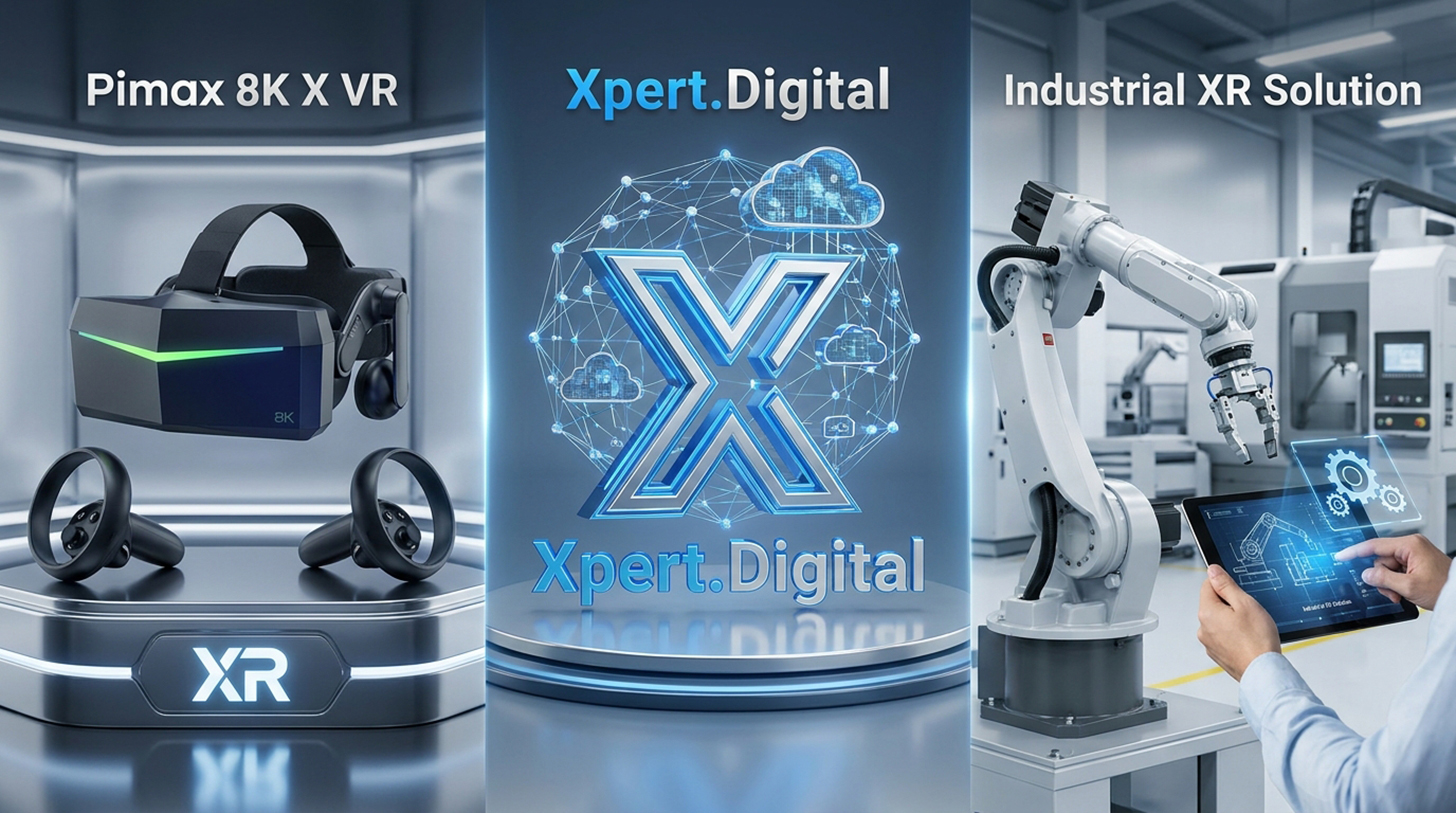
Enterprise XR Solution Hub for B2B projects – from digital twins to customized mixed reality solutions – Image: Xpert.Digital
Xpert.Digital acts as a holistic Enterprise XR Solution Hub, seamlessly integrating high-performance Pimax hardware into industrial B2B workflows. From digital twin analysis in engineering ("top floor") to immersive training on the production floor ("shop floor"), companies receive a customized, comprehensive solution including strategic consulting and support.
More information here:
XR in the company: How the pilot project becomes a scalable competitive advantage
The pilot project as a learning laboratory – approach, selection criteria and metrics
The pilot project is not the endpoint of the XR rollout; it is the starting point. Its purpose is to generate insights that enable informed decisions about scaling, not to prove a technology.
The proof of concept should be tested on a manageable, clearly defined use case: one department, one training module, one maintenance procedure. This minimizes financial risk while maximizing the insights gained. It is important to define clear, business-value-based KPIs right from the pilot phase: How much longer is the learning time compared to traditional methods? How much does the error rate in assembly processes decrease? How do the costs per training participant develop? How much does remote assistance increase productivity compared to on-site support?
For user evaluation, the Kirkpatrick model has proven effective in practice: It measures training outcomes on four levels – the learners' immediate response, measurable knowledge gain, behavioral changes in the workplace, and finally, operational results. A/B tests between XR-supported and conventional training formats provide reliable comparative data. It is crucial to test the pilot with real users and iteratively incorporate their feedback into the development process. The best XR solution is useless if no one uses it. Acceptance is not automatic; it must be actively cultivated.
Organization and Change Management – The underestimated level of transformation
If XR is treated as a purely IT project, it will fail. If it is understood as a transformation project, it will succeed. This difference is fundamental and constitutes the very core of successful implementations.
Change management doesn't begin after the pilot project, but before the first workshop. It's about reaching different stakeholder groups with different arguments. What convinces management won't necessarily convince frontline workers. Decision-makers are interested in return on investment, capacity growth, and strategic differentiation. Shop floor employees are interested in whether the tool truly simplifies their daily work and whether they feel monitored. Anyone who uses the same ROI argument aimed at management to motivate employees will lose acceptance among the user base.
So-called lead users are a proven method: employees with prior XR knowledge, who are tech-savvy and serve as role models within their group, take on the role of internal ambassadors. They make the technology tangible for their colleagues, break down prejudices, and are the first point of contact for problems. Internal communication should be designed like a marketing campaign: making the technology tangible, emphasizing its advantages, and using consistent and positive language.
Early involvement of the works council, where one exists, is recommended. Since AR and VR systems potentially capture the user's environment through their sensors, data protection and works constitution law issues arise that must be addressed through transparent communication and clear technical limitations.
Technology acceptance is closely linked to perceived benefits. Employees who experience XR as actually simplifying their work, reducing cognitive load, or lowering the risk of errors develop a positive attitude toward the technology in the long run. Conversely, those who feel the system was imposed without considering their perspective remain persistent skeptics—and hinder scaling.
IT Integration and Architecture – Scalability as a Design Principle
A pilot project can run on minimal IT infrastructure. A company-wide implementation cannot. Therefore, scalability and IT integration must be considered in the pilot design, not just in the rollout phase.
The central question is: How is XR integrated into the existing IT architecture? ERP systems, PLM platforms, learning management systems, and MES infrastructures must be able to communicate with the XR system. Missing or non-standardized interfaces are one of the most frequent causes of integration problems, which were not apparent in the pilot phase but can become prohibitive when scaling. A robust data architecture with clear responsibilities for data maintenance, update cycles, and access control is equally essential.
GDPR compliance is non-negotiable in the European context. Since AR headsets in industrial environments can generate both biometric user data and recordings of the work environment, every XR system needs a data protection foundation built into its architecture from the outset. This means: clear consent, technical data minimization, and transparent processing rules.
Content lifecycle management is another strategically underestimated factor. XR content isn't a one-time investment; it's living learning material that becomes outdated as processes change, new devices are introduced, or security standards are updated. Companies that don't establish a clear content maintenance process will find their XR system losing relevance and acceptance over months.
From pilot phase to scaling – Structured steps to productive use
Failure during the scaling phase is not a weakness of individual companies; it is a systemic pattern. It can be broken if scaling is understood not as a quantitative increase of the same, but as a qualitatively new phase that requires its own prerequisites and measures.
Companies like GE Aerospace, Ford, FedEx, Daimler Trucks, and Volvo, which have successfully scaled XR, describe similar success patterns. First, ROI metrics based on business value, rather than technology KPIs, are embedded from the outset. Second, the IT department is involved early and enforces production standards before the pilot rollout. Third, change management is not a secondary communication measure but an integral part of the project from phase one.
For operational scaling, a seven-step approach is recommended. The first step is clearly defining objectives with measurable quality drivers: scrap rate, onboarding time, error rate, and training costs per employee. The second step is building a robust technical architecture with defined interfaces, edge computing for latency-sensitive processes, and a central data platform. The third step is standardization: uniform data models, standard work instructions, and reproducible process templates. Based on this foundation, a controlled rollout, active user training, the establishment of internal support structures, and continuous performance measurement with defined review cycles follow.
Legal, normative and ethical framework
The legal framework for XR in companies is complex and constantly evolving. Because AR and VR systems, with their sensors, potentially capture movement data, eye movements, biometric characteristics, and audio recordings of the environment, data protection requirements arise that go beyond the GDPR. Companies must clarify what data is actually collected, for what purpose, in which system it is stored, and what rights employees have regarding this data.
From an occupational health and safety perspective, special precautions are necessary: The limited field of vision with head-mounted displays can lead to accident hazards in the physical environment, especially at mobile workstations and near machinery. Ergonomic aspects such as weight, heat generation, and wearing time must be addressed in work instructions and usage guidelines. VR sickness (motion sickness), i.e., nausea and dizziness caused by latency issues or discrepancies between visual and vestibular perception, can also occur in certain user profiles and must be addressed preventively.
The lack of industry standards remains a real challenge. Unlike mature enterprise technologies such as ERP or MES, no binding industry standards currently exist for XR, which complicates integration, certification, and long-term compatibility. Open platform standards like OpenXR and WebXR, promoted by Google, Samsung, and Qualcomm as part of Android XR, are a positive sign – but not yet a complete replacement for binding industry standards.
The AI Dimension – When XR Becomes Intelligent
The most important structural development in the XR market is not a new generation of headsets, but the profound integration of artificial intelligence into immersive systems. This paradigm shift fundamentally changes the nature of XR applications: headsets are evolving from rigid tools into context-aware assistants.
The Samsung Galaxy XR, from Google and Qualcomm and the first product on the Android XR platform, demonstrates this approach. Google Gemini is systemically integrated into the operating system and understands the user's environment via cameras and microphones. It responds interactively and proactively suggests actions instead of simply executing commands. Users can retrieve information by pointing at objects, explore spatial maps in three dimensions, or automatically convert photos into 3D renderings. The platform supports open standards such as OpenXR, WebXR, and Unity, making it attractive to developers and reducing dependence on proprietary ecosystems.
For companies, this AI integration means, specifically: Next-generation XR systems can not only display predefined work steps, but also understand the context of a task, assess progress in real time, provide personalized assistance, and detect anomalies. VR training environments can adapt to the user's learning speed and error patterns. Remote assistance systems can automatically retrieve relevant documentation through AI-powered image recognition, even before the expert on the other end of the call is asked for it.
Bitkom data shows that 74 percent of German industrial companies consider XR an important future trend, particularly in the areas of remote maintenance, training, and machine visualization. The combination of XR with 5G, IoT, edge computing, and AI is seen as the key growth driver for new digital ecosystems that permanently connect physical and virtual process levels.
Costs, ROI and profitability – A sober calculation
The economic viability of XR projects cannot be described using a single model. It depends heavily on the use case, scalability, existing IT infrastructure, and the company's existing benchmarks for traditional training solutions.
On the cost side, there are initial expenses for hardware, software licenses, and content production, as well as ongoing costs for maintenance, content updates, and technical support. Hardware costs vary considerably: consumer-oriented headsets like the MetaQuest range from three to low four figures, while professional industrial AR glasses like the HoloLens 2 or RealWear devices cost between €2,500 and €5,000 per unit. High-resolution PCVR systems for design reviews can cost up to €10,000 per station, but quickly pay for themselves through savings on physical prototypes.
On the revenue side, the economic benefits include shorter onboarding times, reduced error rates, lower travel costs through remote assistance, fewer production interruptions thanks to low-risk simulation training, and increased employee satisfaction through modern tools. Companies using XR in training report cost savings of up to 75 percent compared to in-person training when the solutions are scaled to more than a few hundred learners. The larger the company and the more frequent the training events, the more attractive the economies of scale become.
External consulting and partner networks – When to seek help
Anyone introducing XR without any prior internal knowledge faces a steep learning curve. External consultants and partner networks are not a sign of weakness, but of strategic soundness: They bring proven methods, experience from similar implementations, and technical expertise that is usually lacking internally.
The choice between developing a solution entirely in-house and collaborating with an XR service provider is not a simple black-and-white decision. In-house development offers maximum flexibility and independence in the long run, but requires significant initial investments in personnel and skills development. Collaborating with a specialized partner reduces risk, accelerates implementation, and enables a focused transfer of know-how that can be leveraged internally in the long term.
Xpert.Digital's Enterprise XR Solution Hub, in collaboration with Pimax and an established partner network, offers precisely this approach: holistic support from strategic consulting and hardware selection to system integration and ongoing B2B support. The offering ranges from the engineering environment (PLM and CAD integration with high-resolution PCVR systems for design reviews and digital twin analysis) to the shop floor level (immersive training and maintenance scenarios to reduce downtime). Crucially, the approach focuses not only on delivering hardware but also on solving the integration problem: building a functioning enterprise ecosystem from isolated headsets and CAD data.
Technology is the tool – strategy is the key
XR technology is mature enough to deliver real added value in industrial business environments. The market is growing robustly, the use cases are proven, and the hardware is becoming more powerful and affordable. And yet: The majority of companies that start with XR don't fail because of the technology; they fail because of themselves.
The lesson from analyzing successes and failures is clear: those who treat XR as an IT procurement measure end up with an expensive pilot project. Those who understand it as a strategic transformation gain a sustainable competitive advantage. The difference lies not in the headset, but in organizational maturity, the quality of change management, the clarity of the value proposition, and the willingness to build internal expertise and establish clear responsibilities.
The XR revolution is happening. It's not happening in empty metaverse worlds, but in factory halls, logistics centers, operating rooms, and design offices. Companies that begin planning methodically and thoroughly now have a structural head start over those waiting for a clearer future, a head start they should leverage.
Your global marketing and business development partner
☑️ Our business language is English or German
☑️ NEW: Correspondence in your native language!

Konrad Wolfenstein
I and my team are happy to be available to you as your personal advisor.
You can contact me by filling out the contact form here wolfenstein@xpert.digital:or simply call me at +49 7348 4088 965. My email address is
I'm looking forward to our joint project.
☑️ SME support in strategy, consulting, planning and implementation
☑️ Creation or realignment of the digital strategy and digitization
☑️ Expansion and optimization of international sales processes
☑️ Global & Digital B2B trading platforms
☑️ Pioneer Business Development / Marketing / PR / Trade Fairs
🎯🎯🎯 Data-driven B2B industry hub as a quasi-in-house solution


The quasi-in-house solution: How Xpert.Digital closes operational gaps in B2B marketing and sales – Smart Content-Driven Business - Image: Xpert.Digital
Xpert.Digital is a data-driven B2B industry hub led by Konrad Wolfenstein . The company acts as an external, quasi-in-house solution for industrial partners, closing operational gaps in marketing, content, and sales – without requiring additional resources on the client side.
More information here: