Wind power in transition: Recycling as an opportunity rather than a problem – What actually happens to wind turbines after they are no longer operational? – Image: Xpert.Digital
From wind turbine to playground: The ingenious second career of old rotor blades
Wind power myth debunked: Why old rotor blades are no longer a waste problem
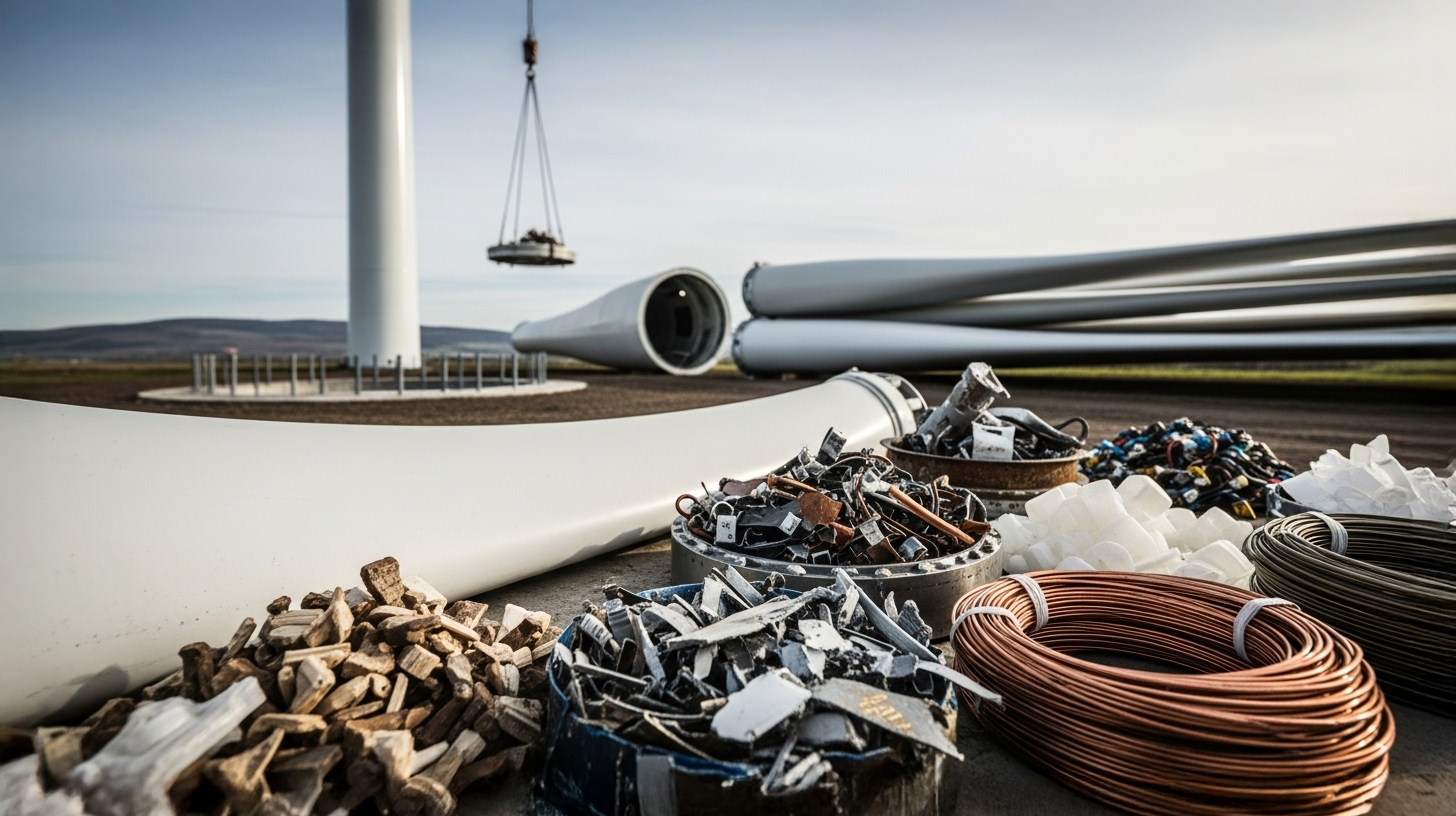
This question concerns both proponents and critics of wind energy. After about 20 to 25 years, wind turbines reach the end of their economic lifespan. Recycling most components is already relatively straightforward – steel, copper, and concrete can be recycled using established processes. The primary challenge lies with the rotor blades, which are made of composite materials that are difficult to separate.
What quantities of rotor blades need to be recycled in Germany?
Germany is facing a significant wave of wind turbine decommissioning. At the turn of the year 2020/2021, the 20-year feed-in tariff under the Renewable Energy Sources Act (EEG) ended for approximately 5,200 wind turbines, with another 8,000 turbines to follow by the end of 2025. According to industry estimates, around 25,000 rotor blades will need to be dismantled by 2030, which corresponds to approximately 400,000 tons of material.
These materials consist largely of glass fiber reinforced plastic (GFRP), a durable but technically challenging composite material for recycling. The rotor blades account for only about 5 percent of the total weight of a wind turbine, while up to 90 percent of the other components can already be returned to established recycling loops.
What specific recycling processes already exist?
The industry has developed four main recycling pathways, some of which are already established on an industrial scale:
The mechanical-thermal process utilizes cement plants as recycling sites. Companies like Holcim have already implemented successful concepts. In this process, the rotor blades are first shredded; the glass fibers replace aggregates, and the resin components provide energy for the cement production process. This method is already industrially scalable and economically established.
Until recently, Holcim GmbH's Lägerdorf cement plant in Schleswig-Holstein used shredded wind turbine blades as a substitute fuel. This thermal recycling reduces CO2 emissions by replacing fossil fuels. Using 1,000 tons of recycled fiberglass-reinforced plastic (FRP) can save up to 450 tons of coal, 200 tons of chalk, and 200 tons of sand.
How does chemical recycling work for rotor blades?
Chemical recycling processes such as pyrolysis and solvolysis are still under development, but show promising approaches. These processes separate composite materials into their basic components, allowing glass fibers and resins to be recovered.
Pyrolysis is particularly suitable for separating fibers from thermoset polymer matrices. In this process, the thick-walled fiber composite structures of the rotor blades are treated at high temperatures in an inert atmosphere. After appropriate processing, the recovered fibers can be reused in industrial applications.
The RE_SORT research project is developing new pyrolysis technologies specifically for thick-walled fiber composite structures with wall thicknesses of up to 150 mm, such as those found in rotor blades. In addition to the recycled fibers, the resulting pyrolysis oils and gases can also be used industrially.
What does "design for recycling" mean for modern rotor blades?
The wind industry is already working on rotor blades that are fundamentally recyclable for future turbines. Siemens Gamesa has developed a solution called RecyclableBlade, which has been commercially available since 2022.
These RecyclableBlades utilize a special resin technology that allows for the complete recovery of materials at the end of their lifespan. Immersion in a mild acid solution causes the resin to dissolve at elevated temperatures, enabling the separation of fiberglass, resin, wood, and metal for reuse in other industries.
The first commercial offshore project using these recyclable rotor blades was implemented in 2022 at the Kaskasi wind farm in Germany. RWE, the operator, is now also using 132 RecyclableBlades in the Sofia project.
What role does Vestas play in the circular economy?
Vestas is pursuing a systematic approach to its goal of zero-waste turbines by 2040. The company is working on two parallel initiatives: DecomBlades for existing rotor blades and CETEC for future circular economy solutions.
The CETEC project (Circular Economy for Thermosets Epoxy Composites) is developing a chemical recycling method that breaks down epoxy resins into their basic components. These can then be reused in the production of new rotor blades, creating a completely circular system.
Currently, Vestas turbines are 85 percent recyclable. Blade recyclability is to be increased to 50 percent by 2025 and to 100 percent by 2030.
What creative upcycling approaches are there?
In addition to industrial recycling processes, innovative upcycling projects are emerging that directly transform decommissioned rotor blades into new applications. The Dutch company BladeMade converts rotor blades into street furniture, playgrounds, bus stops, and infrastructure.
These applications utilize the unique properties of rotor blades: they are extremely durable, weather-resistant, vandal-proof, and have a distinctive design. A single rotor blade can be cut into segments for various applications – the strongest section is used as a load-bearing structure, the tip as a bench, and the rounded sections as planters.
For example, 200 rotor blades can be used to build one kilometer of noise barrier. These projects save up to 90 percent CO2 emissions compared to conventional materials and give the rotor blades a second lifespan of 50 to 100 years.
How much material is actually lost through abrasion?
Rotor blade abrasion is a frequently discussed topic, but its impact is manageable. According to Fraunhofer IWES, erosion results in approximately 0.1 to 5 kg of material loss per rotor blade per year, depending on location, coating, and wind load.
These values are comparable to other technical systems – a truck tire loses about 2 kg of material per 10,000 km driven. Offshore installations are subject to particularly strict environmental regulations, including documentation and regular inspections.
Fraunhofer IWES develops test methods for evaluating different coating systems and works on optimized films and paints to minimize erosion-related losses while simultaneously improving aerodynamic properties.
New: Patent from the USA – install solar parks up to 30% cheaper and 40% faster and easier – with explanatory videos!

New: Patent from the USA – Install solar parks up to 30% cheaper and 40% faster and easier – with explanatory videos! - Image: Xpert.Digital
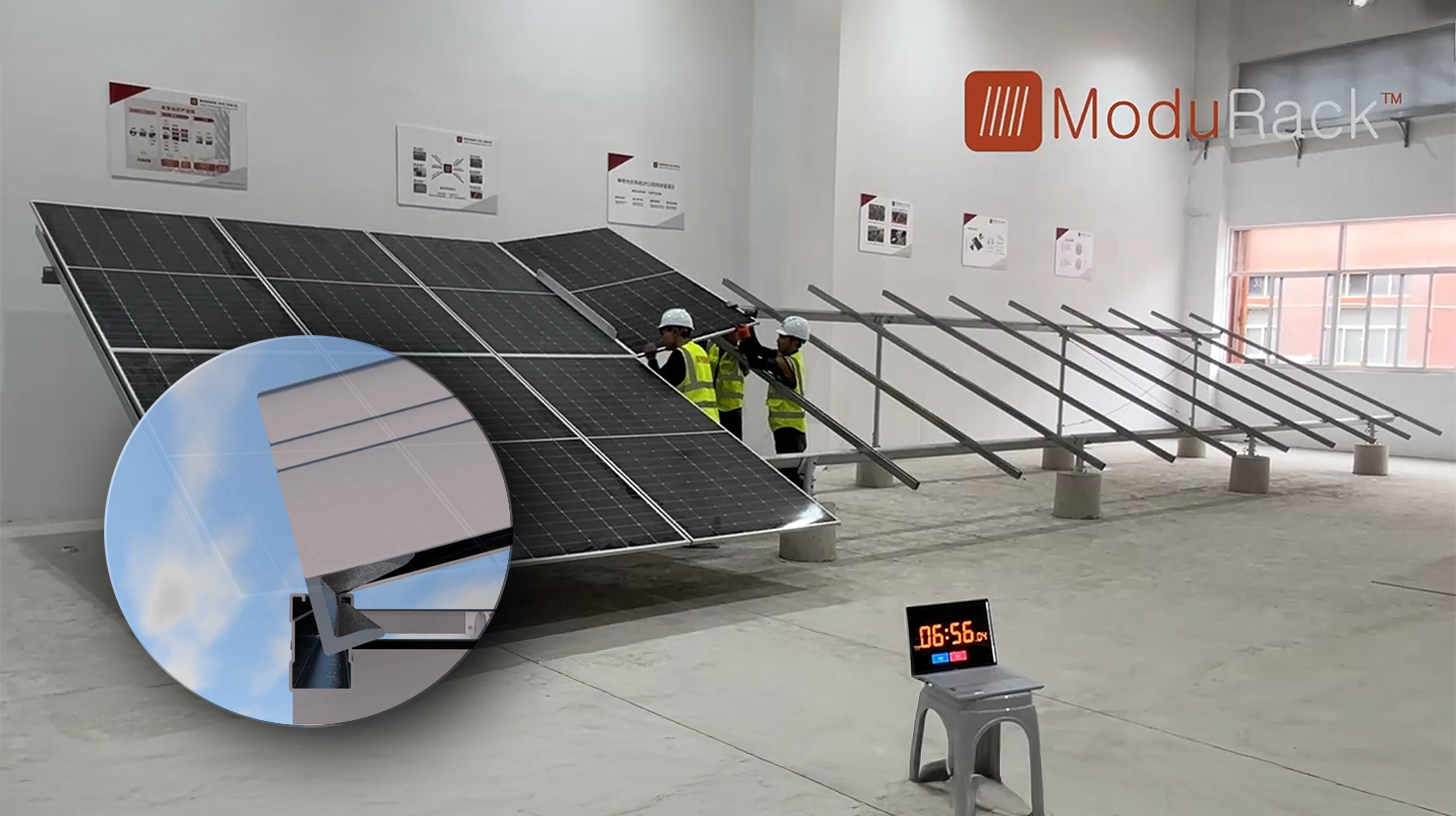
The core of this technological advancement is the deliberate departure from conventional clamp mounting, which has been the standard for decades. The new, more time- and cost-effective mounting system addresses this with a fundamentally different, more intelligent concept. Instead of clamping the modules at specific points, they are inserted into a continuous, specially shaped support rail and held securely in place. This design ensures that all forces – whether static loads from snow or dynamic loads from wind – are distributed evenly across the entire length of the module frame.
More information here:
Why Germany is a world leader in wind power recycling
What standards and norms regulate wind energy recycling?
With DIN SPEC 4866, the industry has created its first uniform standard for the sustainable dismantling and recycling of wind turbines. This specification was developed in 2020 by 25 experts from industry, science, and government agencies and defines requirements for the entire dismantling process.
RDRWind eV (Industry Association for Repowering, Dismantling and Recycling of Wind Turbines) initiated this standard and is now working on a complete DIN standard as well as a quality mark for dismantling processes. This is intended to create transparency and comparability regarding quality, safety requirements and environmental compatibility.
How is the recycling infrastructure developing?
Recycling infrastructure is being continuously expanded. Companies like neocomp GmbH in Bremen already operate shredding plants with capacities of up to 120,000 tons of waste GRP per year. These plants can easily handle the quantities generated and already process approximately 30,000 tons annually.
European initiatives like the DecomBlades project pool expertise along the entire value chain. Ten project partners are working together on the commercialization of sustainable recycling technologies for rotor blades.
What exactly happens to the recycled materials?
The recycled materials have diverse applications. Glass fibers from mechanical recycling are used as a sand substitute in cement production, while the organic components serve as a coal substitute. These co-processing methods directly replace fossil raw materials.
Chemical recycling processes produce higher-quality products. The recovered fibers can be reused in fiber composite applications after appropriate processing. Pyrolysis oils are used as chemical feedstocks, while pyrolysis gases can be used for energy production.
The Siemens Gamesa RecyclableBlade process even allows for the recovery of materials in their original quality. The separated components – resin, fiberglass, and wood – can be used in new products such as cases or monitor housings without any loss of quality.
What challenges remain?
Despite the progress, challenges remain. Chemical recycling processes are still in the pilot and scaling stages and must prove their industrial viability. The economic viability of different processes depends heavily on regional infrastructure and raw material prices.
Offshore installations present additional logistical challenges, as the rotor blades must first be transported to shore. Coordination between various stakeholders – from plant operators and decommissioning companies to recycling firms – requires standardized processes.
How will recycling develop in the future?
The trend is clearly moving towards a circular economy. Manufacturers such as Siemens Gamesa and Vestas have set themselves binding targets for fully recyclable turbines – Siemens Gamesa by 2040, Vestas also by 2040.
New materials based on renewable resources are being researched. Scientists are working on bio-based lightweight materials made from hemp fibers and hemp seed oil for future rotor blades. These could fundamentally simplify recycling.
The European Environment Agency is working on a Europe-wide ban on landfilling rotor blades, which would require all decommissioned blades to be reused, recycled, or recovered. This would create additional incentives for innovative recycling solutions.
Which economic aspects are relevant?
Recycling is evolving from a cost factor to a business opportunity. Companies like Holcim are using the BLADES2BUILD project to tap into new sources of raw materials while simultaneously reducing their CO2 emissions. Predictable disposal prices provide plant operators with planning certainty.
The upcycling projects demonstrate that high-quality products can be created from what is considered waste. BladeMade, for example, can produce 5 percent of its total output of playgrounds, bus stops, and street furniture from recycled rotor blades.
How does Germany compare internationally?
Germany plays a pioneering role in wind energy recycling. DIN SPEC 4866 is considered an international reference standard and is available in English. German research institutions such as Fraunhofer IWES and IFAM are developing leading recycling technologies.
Germany leads Europe in wind power expansion – in the first half of 2025, new wind turbines with a capacity of 2.2 gigawatts were installed here, more than in any other European country. This creates both a greater need for recycling and stronger innovation momentum.
What does this mean for the future of wind energy?
These developments show that wind power is not only climate-friendly during operation, but can also be managed responsibly after its use. The combination of established thermal recovery processes, emerging chemical recycling technologies, innovative upcycling approaches, and fully recyclable new developments offers a comprehensive solution.
The industry is actively investing in research and development, standards are being established, and the regulatory framework is evolving towards a circular economy. What is currently considered a challenge is increasingly becoming an opportunity for new business models and value chains.
Wind energy thus exemplifies how an industry can proactively take responsibility for the entire product life cycle, creating both ecological and economic benefits. Rotor blades are therefore no longer a waste problem, but become a valuable raw material for the future.
Look, this little detail saves up to 40% installation time and reduces costs by up to 30%. It comes from the USA and is patented.

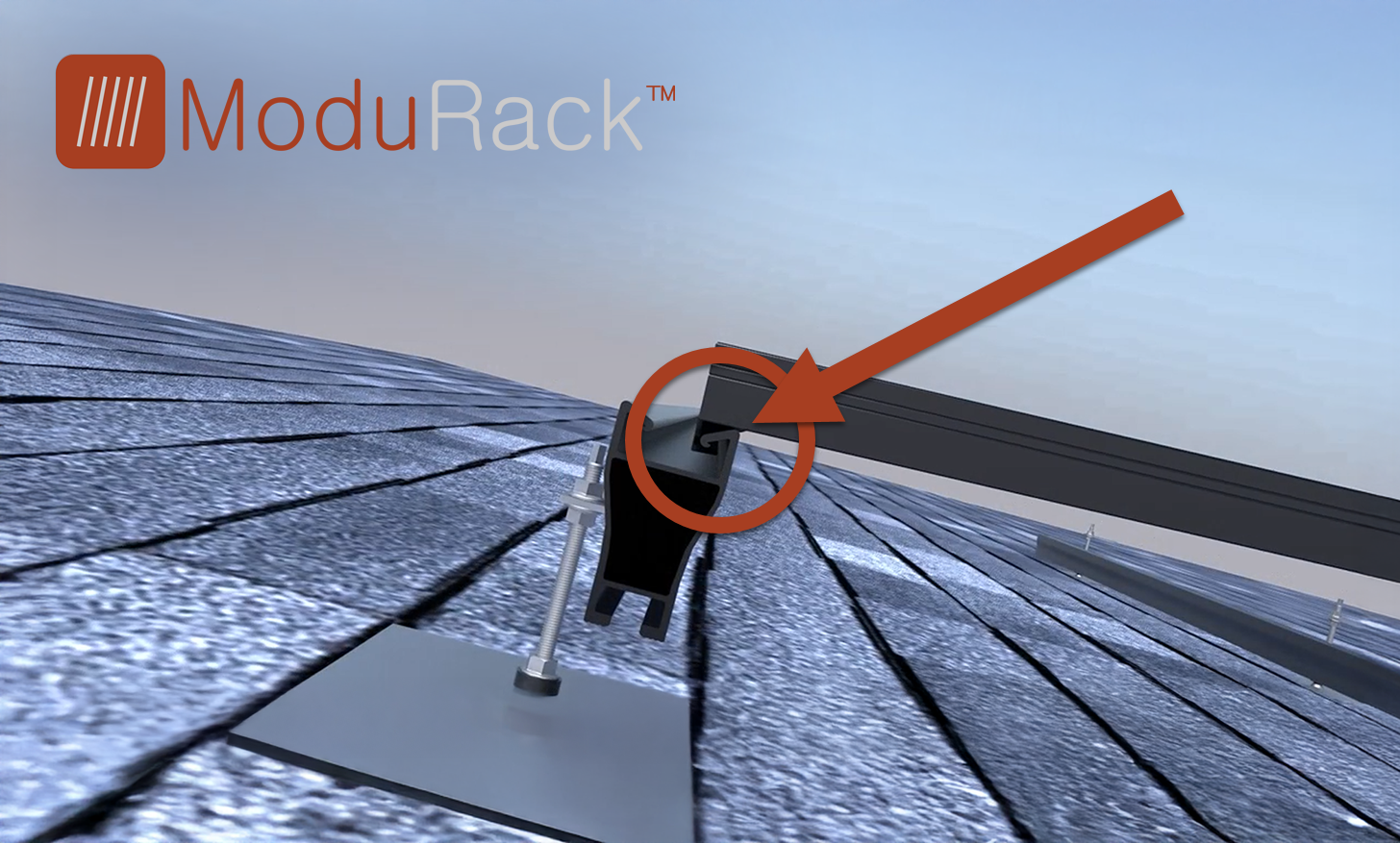
NEW: Ready-to-install solar systems! This patented innovation significantly accelerates your solar construction project
The core of ModuRack 's innovation lies in the departure from conventional clamp fastening. Instead of clamps, the modules are inserted and held in place by a continuous support rail.
More information here:
Your partner for business development in the fields of photovoltaics and construction
From industrial rooftop PV to solar parks and larger solar parking lots
☑️ Our business language is English or German
☑️ NEW: Correspondence in your native language!

Konrad Wolfenstein
I and my team are happy to be available to you as your personal advisor.
You can contact me by filling out the contact form here wolfenstein@xpert.digital:or simply call me at +49 7348 4088 965. My email address is
I'm looking forward to our joint project.