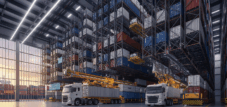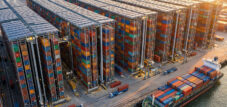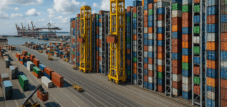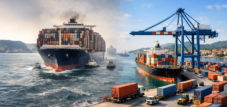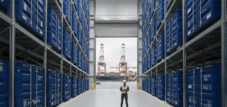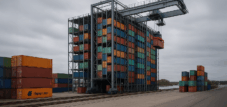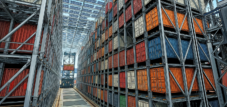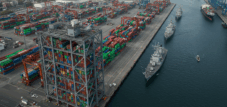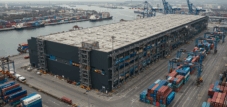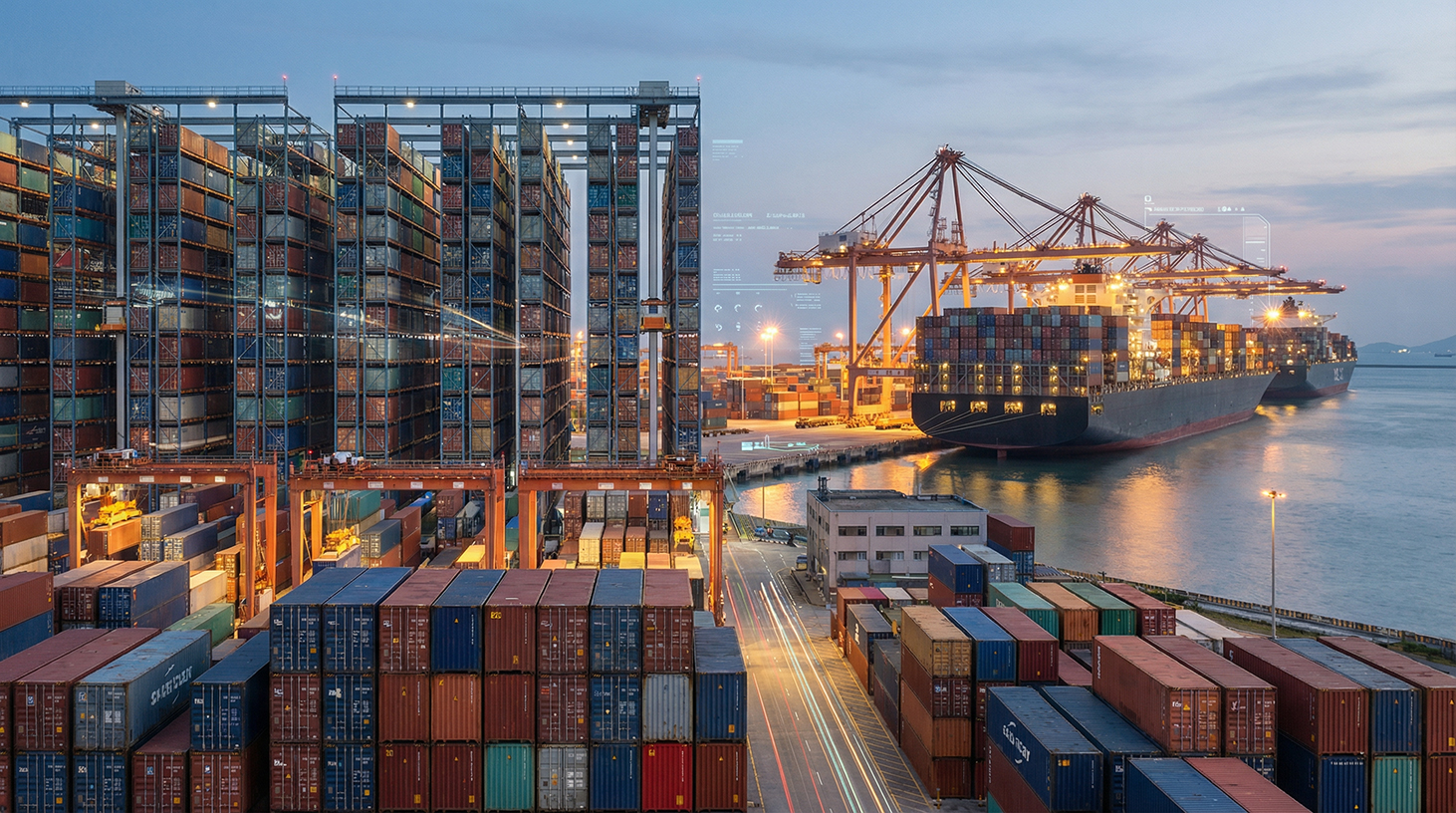
When containers run out of space: Why logistics isn't struggling with ships, but with space and complexity – Creative image: Xpert.Digital
“Container tsunamis” in the port: The true bottleneck of global supply chains
High-bay racking for shipping containers: How the industry plans to solve its massive space problem
For years, everything revolved around ever-larger container ships, the optimization of sea routes, and the pursuit of maximum economies of scale. But the real supply chain crisis is playing out elsewhere: on land. When massive "container tsunamis" hit ports, terminals, and hinterland hubs, it suddenly becomes clear that the problem isn't a lack of transport capacity, but simply a lack of physical space. Conventional areas are reaching their limits, intermediate storage facilities are becoming clogged, and the traditional growth model of maritime logistics is collapsing under the sheer mass of stacked steel boxes.
Added to this are an increasingly fragmented global economy, new climate regulations, and the trend toward nearshoring. These factors are forcing companies to move away from the classic "just-in-time" model and instead build up larger safety stocks. As a result, the demand for functionally usable warehouse space is exploding – and the square meter is becoming the scarcest resource in the global economy. The solution to this bottleneck no longer lies in horizontal expansion, which is hardly feasible anymore for political and geographical reasons, but in the third dimension. Read on to learn why the "just-in-space" trend is dominating the industry and how high-bay warehouses for containers and AI-supported automation are expected to save the logistics of the future.
Related to this:

The new reality of logistics: Overcrowded yards, empty promises
The logistics industry will face a paradoxical situation in 2026: Globally, there will be more container ships and more containers available than ever before, while ports, terminals, and hinterland hubs will be reaching their capacity limits. The bottlenecks will not occur at sea, but on land – where the containers have to be physically handled and temporarily stored.
The boom in ever-larger container ships, the consolidation of shipping companies, and the desire for economies of scale have led to enormous volumes of cargo arriving suddenly at individual ports. These "container tsunamis" are impacting areas historically designed for smaller ships, lower throughput, and less volatile flows. Furthermore, many port areas are densely built-up and offer little opportunity for horizontal expansion.
The biggest challenge in logistics is therefore no longer whether sufficient means of transport are available, but whether scarce space is developed and managed in the right location, with the right structure, and with the right technology. Capacity, in the sense of "space that can be used functionally," thus becomes the scarcest resource in both maritime and land-based logistics.
Global economy under pressure: Fragmentation instead of free flow
Parallel to this physical scarcity of land, the economic environment is shifting. Trade conflicts, tariffs, sanctions regimes, and climate regulations are fragmenting the global economy. World trade is growing significantly more slowly than in previous decades, and political intervention in trade and supply chain decisions is increasing.
States no longer use tariffs merely as a protective instrument for individual industries, but as a geostrategic tool. The result is a decoupling trend between major blocs, in which supply chains are used to project power and exert pressure. Companies must now align their supply chain architecture not only with costs and time, but also with geostrategic risks, regulatory predictability, and political resilience.
In this context, the classic logic of globalization – production where it is cheapest, consumption where purchasing power is highest – loses its explanatory power. Decision-makers talk less about optimization and more about hedging, diversification, and strategic redundancy.
Germany's export model facing headwinds
Germany is particularly exposed in this environment. Its export-oriented business model is based on open markets, reliable regulations, and highly specialized industry. If trade conflicts follow escalation patterns and, at the same time, key sales markets like China increasingly rely on their own technologies and products, this model comes under structural pressure.
German foreign trade is suffering doubly:
- On the demand side, this is due to weaker growth or closing off of markets.
- On the supply side, this is due to disruptive, extended and increasingly expensive supply chains, which complicate intermediate storage, transport and planning.
Added to this are increasing regulatory requirements – from carbon border adjustment mechanisms to supply chain due diligence obligations. All of this increases fixed costs and forces companies to fundamentally rethink their logistics and production networks.
The bottleneck on land: When the yard becomes the limit
The real bottleneck in modern container logistics is not the ships, but the available space in the port and at upstream and downstream hubs. The classic response to growing volumes has long been: stack higher, pack more densely, work faster. But this logic is now reaching its limits.
In conventional container terminals, the containers are stacked in block storage using stacking devices or gantry cranes. As long as the occupancy remains moderate, this works relatively efficiently. However, the system becomes unsustainable at high occupancy levels
- An ever-increasing proportion of crane movements are used solely to clear other containers out of the way in order to access the one that is actually needed.
- The number of restacking operations increases exponentially the denser and higher the stacking.
- The terminal's performance indicators are plummeting, even though there is theoretically still "space" available.
From a systems logic perspective, the yard is therefore not just physical storage space, but a complex, three-dimensional puzzle. Every arrival and departure time, every slot booking, and every terminal planning process affects the actual layout. Errors or short-term disruptions cause cascading effects that can block the entire terminal.
This is precisely where it becomes clear why the statement "capacity is not the problem" falls short: While the available area can be measured in square meters, in practice it is largely predetermined by the combination of stacking height, accessibility, travel routes, and safety distances. Efficient capacity is not simply the gross area, but the result of a highly complex layout and control problem.
Megaships, mega problems: Economies of scale with side effects
The economics of container shipping have pushed for larger vessels over decades. The more TEU a ship can hold, the lower the unit costs. Shipping companies have aggressively exploited this economies of scale.
The side effects of this strategy are felt most acutely in port and hinterland logistics:
- When several megacarriers are handled within short time windows, massive volume peaks occur in the yard and on the pre-storage areas.
- The traffic flows to and from the terminals – trucks, trains, inland waterway vessels – can only partially compensate for these peaks.
- Even if there are theoretically enough container storage spaces, the necessary temporal and spatial structure is lacking to make containers available in the right place at the right time.
The result is congestion at ports, overloaded terminals, overcrowded interim storage facilities, and skyrocketing demurrage charges. The ports are not becoming too small because they lack overall space, but because they were designed for concentrated loads that the traditional growth model no longer accommodates.
Interim storage as a systemic bottleneck
The bottlenecks don't end at the port gate. Along the entire value chain, container flows are increasingly shifting from smooth to congested processes:
- Ports are forced to use their yards as long-term storage facilities when shippers fail to pick up goods on time or trains are unavailable.
- Inland terminals become buffer zones because seaports are overloaded or shipping companies are changing their schedules.
- Industrial companies have to temporarily store containers on their own factory premises because coordination with freight forwarders and terminals no longer works smoothly.
This shift transforms containers from short-term transit goods to effectively permanent inventory. However, the areas where this inventory is stored were neither structurally nor organizationally designed for this purpose.
Especially in densely populated port and industrial regions, logistics areas compete with housing construction, commercial development, and environmental and land conservation. The result is a structural scarcity of land – not globally, but locally precisely where container flows are concentrated.
Related to this:

Vertical response: High-bay racking solutions for containers
Because horizontal expansion is hardly possible, a logical answer lies in the third dimension: not only stacking containers higher, but storing them industrially like palletized goods – with defined access, addressed storage logic and automated movement.
High-bay and high-rack storage systems for containers go far beyond the classic "stacking higher". Their basic principle:
- Containers are stored in multi-story steel racks, similar to pallets in an automated high-bay warehouse.
- Shuttle, lift or crane vehicles move containers to specific storage and retrieval positions.
- Each storage position is addressed in the system; access is direct, not via restacking.
Solutions like the well-known BoxBay concept or comparable high-bay racking systems from LTW Intralogistics address precisely this need: They aim to multiply the productive storage density per square meter while drastically reducing the number of unproductive restacking operations. Pilot and test facilities have demonstrated that a significantly higher number of containers can be stored on the same footprint while simultaneously improving access and handling times.
However, such systems are technologically demanding. They require:
- Heavy-duty steel structures with extreme safety reserves.
- Highly dynamic, precise drive systems and conveyor technology.
- Seamless IT integration between terminal operating system, warehouse control and handling planning.
This is where specialized companies come into play – for example, those in the field of heavy-duty intralogistics, shuttle and storage equipment manufacturers, or automated container storage. The number of suppliers with extensive experience in these areas is limited. This leads to a twofold bottleneck: space is scarce, and so are the suppliers who can develop it vertically.
LTW Intralogistics Solutions

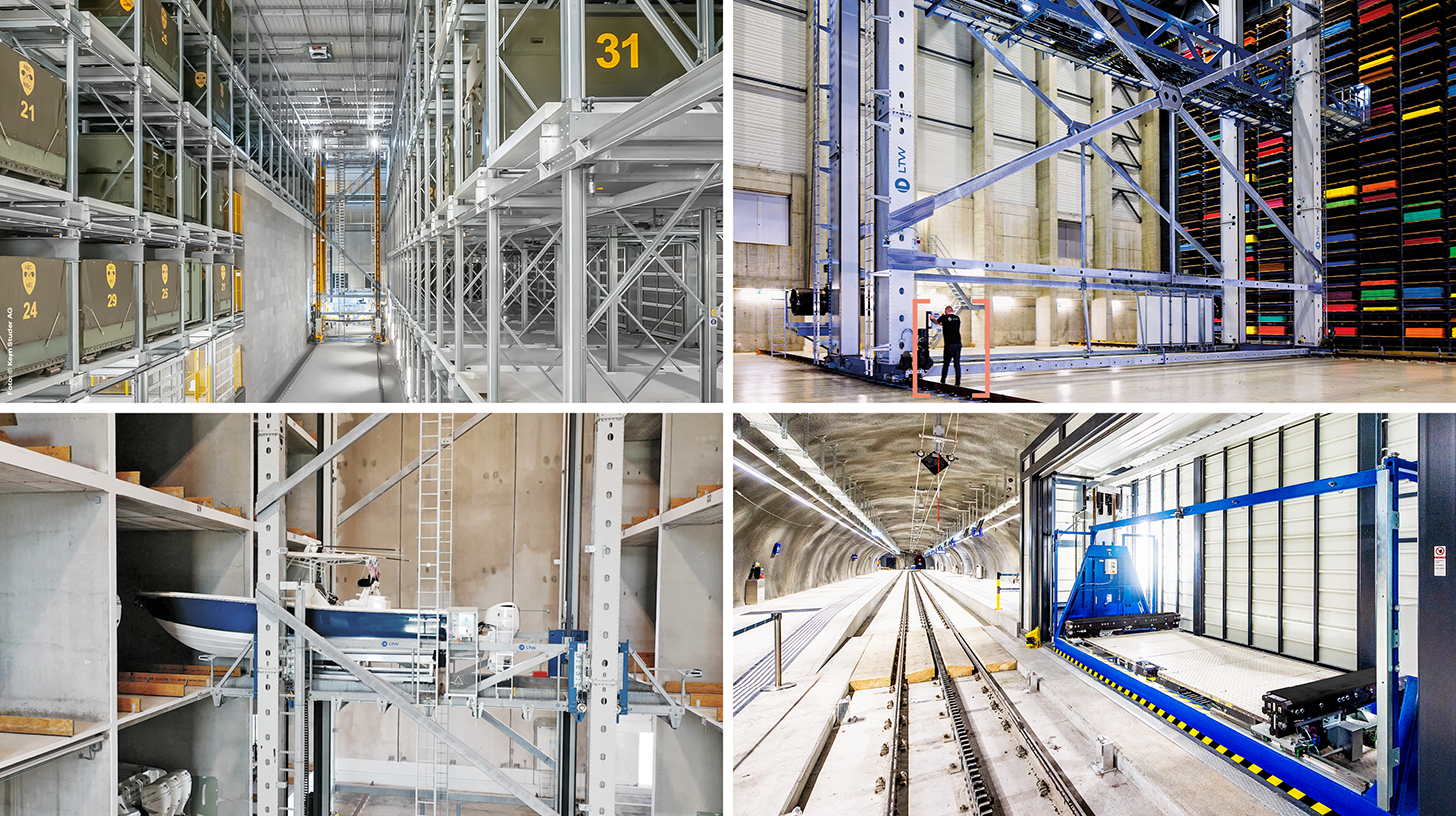
LTW Intralogistics – Engineers of Flow - Image: LTW Intralogistics GmbH
LTW offers its customers not individual components, but integrated complete solutions. Consulting, planning, mechanical and electrotechnical components, control and automation technology, as well as software and service – everything is networked and precisely coordinated.
In-house production of key components is particularly advantageous. This allows for optimal control of quality, supply chains, and interfaces.
LTW stands for reliability, transparency, and collaborative partnership. Loyalty and honesty are firmly anchored in the company's philosophy – a handshake still means something here.
Related to this:
The real bottleneck of the future is not the container, but the square meter
Nearshoring: Relocated production, changed logistics
Parallel to the physical space problem, the geography of value creation is also shifting. Many companies are relocating production and procurement closer to their sales markets – for reasons of risk, cost, and regulation.
Nearshoring is intended to:
- Reduce dependence on distant, politically risky locations.
- Reduce transport times and risks.
- Better compliant with climate rules, CBAM levies and supply chain laws.
However, from an economic perspective, nearshoring is not a sure thing. In many Eastern European countries, wages, energy prices, and land costs are rising faster than productivity. Skilled workers are becoming scarce, permitting processes remain lengthy, and infrastructure projects are delayed.
For logistics, nearshoring does not simply mean relief, but rather a structural shift:
- More volume on shorter, but more densely packed corridors (e.g. inland waterways and short sea routes instead of transcontinental routes).
- Increase in hub-and-spoke structures in the hinterland, where intermediate storage and transshipment functions are gaining in importance.
- Increasing importance of land-based transport modes (rail, inland waterway), which in turn require space for terminals, transshipment facilities and buffer zones.
Nearshoring thus shifts capacity problems from intercontinental routes to regional logistics networks – but does not automatically solve them.
Related to this:

Regulatory: CBAM, climate policy and land pressure
The EU is intensifying economic pressure on long supply chains with climate protection instruments such as the Carbon Border Adjustment Scheme (CBAM) and expanded emissions obligations in shipping. CO₂-intensive transport is becoming more expensive, while regional and shorter routes are becoming relatively more attractive.
At the same time, large-scale development projects are increasingly caught in the tension between:
- Climate policy and land sealing targets.
- Citizen participation and local politics.
- Nature conservation and environmental regulations.
The construction of new container terminals, logistics hubs, or large-scale high-bay warehouses therefore often encounters resistance and lengthy approval processes. This further restricts supply and slows development – precisely where new space is urgently needed.
The economic consequence: Land becomes a strategic asset. Those who can secure, develop, and technologically upgrade logistics areas located near terminals or with favorable infrastructure today build a lasting competitive advantage.
Paradigm shift in inventory strategy: From just-in-time to "just-in-space"
In addition to the existing shift from just-in-time to just-in-case, another, often underestimated dimension is emerging: just-in-space. Not only are the time buffers along the supply chain increasing, but so are the space requirements.
Companies are holding more safety stocks:
- to intercept disruptions caused by political decisions, strikes, natural disasters or cyberattacks,
- to compensate for the unreliability of timetables, slot and capacity commitments,
- to better serve volatile demand.
These inventories must be physically stored somewhere. And they don't exist in a vacuum, but rather in ports, hubs, factory warehouses, buffer zones, and intermediate storage facilities. Every strategic decision for higher safety stock levels is therefore simultaneously a decision for additional space requirements – or for investments in technologies that utilize existing space radically more efficiently.
Following this logic, the issue of space becomes a hard business metric: €/m² of storage space, €/unit moved, €/additional day of inventory holding time. Those who tap into the third dimension through high-bay racking, automation, and intelligent control reduce space costs per unit and gain flexibility in their inventory strategy.
Artificial intelligence and automation: Tools to combat space and process bottlenecks
In this context, AI and automation are not primarily cost reducers, but rather levers for complexity and space utilization. Their added value lies in maximizing usable output per square meter, per crane hour, and per parking space.
In container terminals, hubs and industrial plants, this means:
- AI-powered slot, yard and traffic planning that minimizes arrivals, departures, peak loads and rehandling.
- Agent-based systems that make autonomous decisions about parking space selection, access order, and vehicle deployment.
- Digital twins that simulate different occupancy and traffic strategies before they are implemented in live operation.
In automated high-bay warehouse solutions, the movements of shuttles, storage vehicles, and conveyor technology are coordinated via algorithmic control to identify bottlenecks early and balance loads. The integration of forecasting, simulation, and control is key to achieving significantly higher logistical performance from the same footprint.
Automation alone is not enough. It must be accompanied by consistent standardization of charging units, interfaces, and information flows. Only when physical and digital flows are synchronized can the technology reach its full potential.
Area specialists as strategic key players
In this new logic, companies that can plan, build, and operate complex heavy-duty and high-bay racking solutions for containers and other heavy goods are rising to the status of strategic system suppliers. Their expertise:
- combines intralogistics, steel construction, drive technology, automation and IT,
- It enables high throughput rates to be achieved in a small space,
- This reduces dependence on pure land expansion, which is hardly feasible anymore from a political and geographical perspective.
For port operators, terminal companies and larger industrial companies, this means:
- You need to establish partnerships with such specialists early and for the long term.
- They should actively link their spatial strategies with technological roadmaps.
- They need to shift the investment logic away from "building more space" towards "making the most of existing space".
Anyone who believes today that the problem can be solved with more concrete and more asphalt risks reaching the same limits again in a few years – only with higher fixed costs.
Classification: Capacity is needed, but in the right place and in the right format
How can all of this be combined into a consistent statement?
- Globally speaking, there is no acute shortage of shipping capacity, containers, or theoretically usable space.
- There is indeed a drastic shortage of functionally usable, intelligently developed and sufficiently flexible space capacity at the crucial hubs.
- The biggest bottlenecks arise where mega-volumes meet historically grown, flatly organized infrastructures that can only be expanded to a limited extent.
This makes it clear: The bottleneck of the future is not the container, but the square meter. Not the ship, but the steel beam in the high-bay warehouse. Not simply the size of the area, but its algorithmically optimized use.
Strategic consequences for decision-makers
This analysis has several key implications for decision-makers in ports, terminals, industry and trade:
1. Spatial strategy as a board issue
Storage and handling areas should no longer be viewed as a purely operational resource, but as a strategic production factor with a direct impact on competitiveness, service level and resilience.
2. Vertical integration instead of expansion
Since horizontal expansion is limited politically, ecologically and geographically, vertical development (high-bay storage, multi-level hubs) becomes the central lever.
3. Build technology partnerships
Cooperation with specialized intralogistics and heavy-lift technology companies is not a "nice to have", but a prerequisite in order to be able to operate high-bay racking solutions, automated yards and complex hubs at all.
4. Actively manage complexity
Uncontrolled capacity only creates congestion elsewhere. AI-supported planning, simulation, and real-time control are necessary to extract maximum performance from limited space.
5. Realistically assess nearshoring
Relocating production to Eastern Europe or other nearby regions should not be based on the expectation that logistics will automatically become easier. The issues of land and infrastructure arise there as well – just in a different form.
The logistics of the future is a game of space and control
Today, the biggest challenge in logistics is not just complexity – it is the combination of structural space scarcity at critical nodes, growing system complexity, and a long-standing misunderstanding about capacity.
Those who view the problem merely as a matter of additional containers, ships, or warehouses are treating only the symptoms. Those who, however, understand space as a strategic resource, utilize vertical and automated solutions, and prioritize control, can extract significantly more logistical performance from the same physical infrastructure.
In a world of fragmented markets, politically volatile rules and growing sustainability requirements, precisely what was previously considered "unproductive" space is becoming the core of a new, resilient logistics economy.
Consulting - Planning - Implementation

Konrad Wolfenstein
I would be happy to serve as your personal advisor.
You can contact me at wolfenstein∂xpert.digital or
Just call me on +49 7348 4088 965 .
Your container high-bay warehouse and container terminal experts
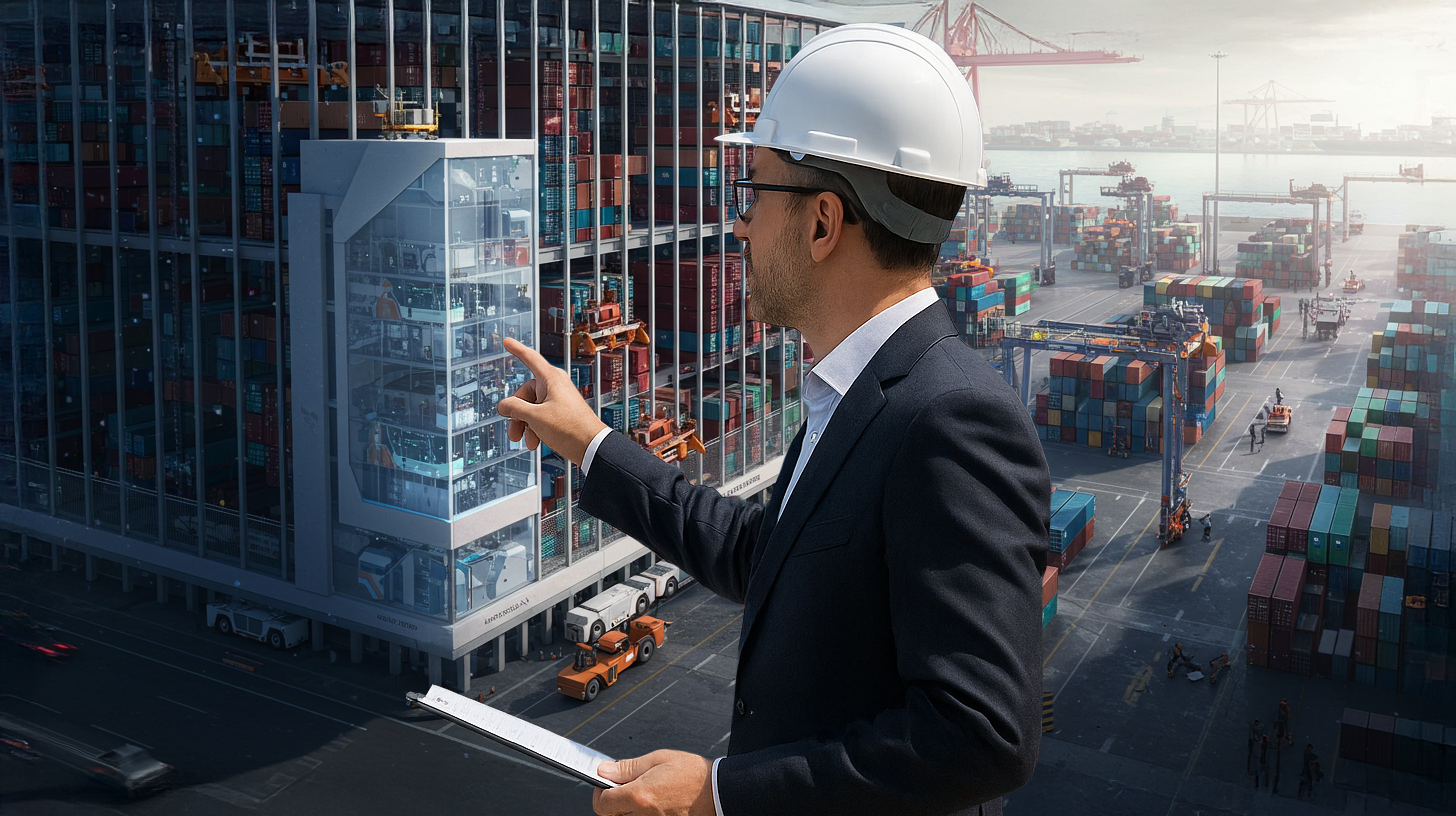
Container high-bay warehouses and container terminals: The logistical interplay – expert advice and solutions - Creative image: Xpert.Digital
This innovative technology promises to fundamentally change container logistics. Instead of stacking containers horizontally as before, they will be stored vertically in multi-story steel racking structures. This not only allows for a drastic increase in storage capacity within the same area, but also revolutionizes all processes at the container terminal.
More information here: