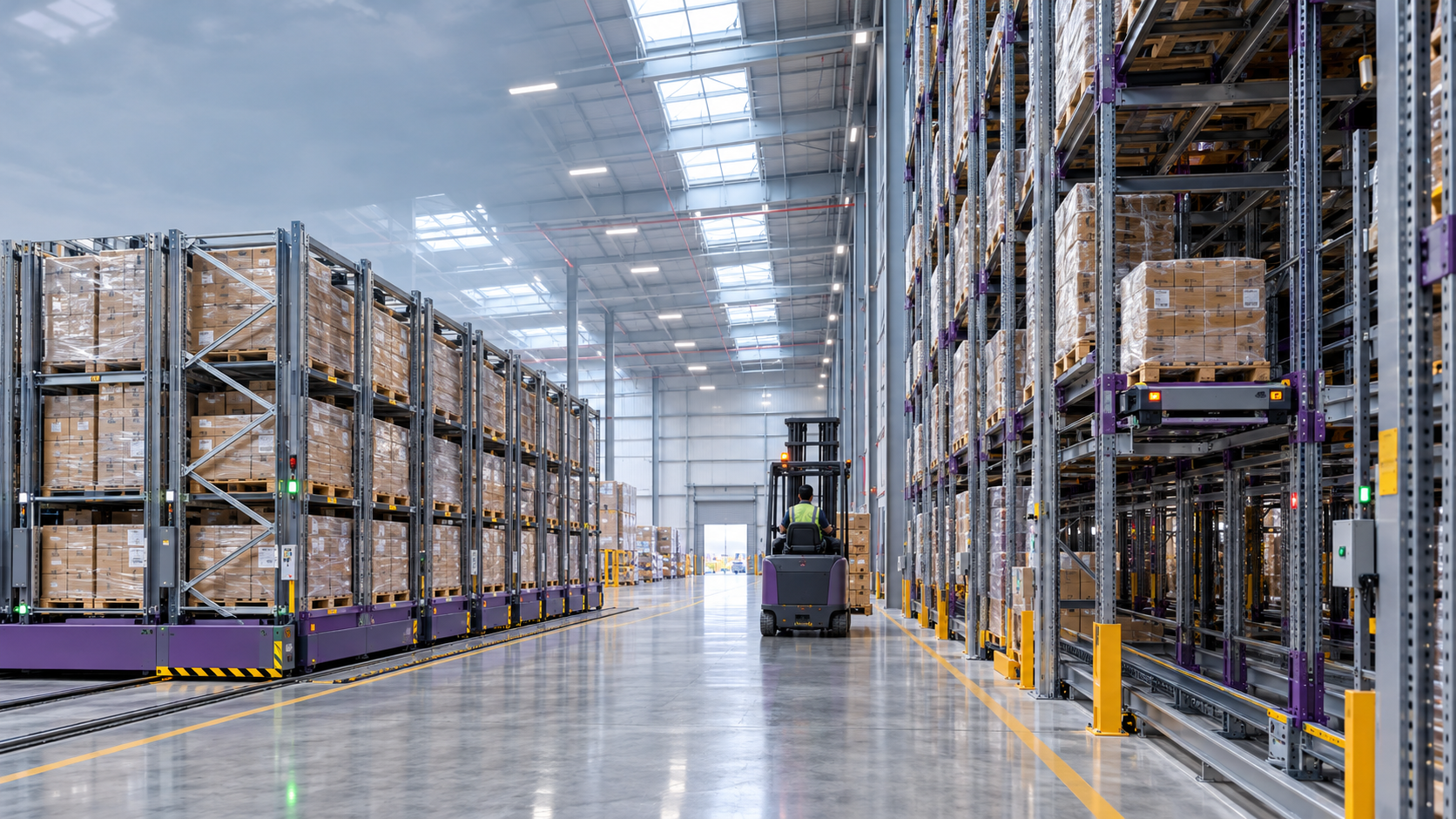
Warehouse boom in India: India's warehouse space is becoming scarce – How mobile shelves and shuttles create more space – Creative image on the topic, with AI: Xpert.Digital
More pallets in the same space: Godrej's strategy for India's warehouse boom
Mobile shelving or shuttle systems? This is how to use storage space more efficiently
More storage capacity without new construction: Which technology is worthwhile for companies?
India's industrial and logistics market is growing rapidly – but well-connected warehouse space is not developing quickly enough in many metropolitan areas. This is changing the central question of warehouse planning: it's no longer just about how many square meters a hall offers, but about how many pallets can be accommodated in the available space and how efficiently they can be moved. Godrej is addressing this with mobile pallet racking and shuttle systems. Both technologies consolidate inventory but are suitable for different product profiles and operational processes.
Mobile racking systems provide direct access to individual pallets by opening an aisle only when needed. Shuttle systems, on the other hand, store and retrieve pallets in deep channels – a remotely controlled vehicle handles some of the movement that would otherwise require a forklift. Which solution is more cost-effective depends not only on the theoretical number of storage spaces. Crucial factors include the number of items, the number of pallets per item, the throughput, the required access speed, and the cost of the space.
The systems are particularly interesting for cold storage facilities, pharmaceutical warehouses, and logistics centers in expensive metropolitan areas. In these locations, better utilization of existing building volume can help avoid new construction or additional rental space. However, high density is not an end in itself: if incorrectly dimensioned, it can impair throughput and flexibility. Godrej's approach therefore demonstrates a broader shift in intralogistics – away from the search for a one-size-fits-all solution and towards warehouse concepts that strategically distribute different inventory across different systems.
More storage without more land: Why Godrej relies on mobile racking and shuttle technology
India's warehouse boom is consuming space – and that's precisely what makes the cubic meter more valuable than the square meter
India's industrial and logistics market is growing faster than new, well-connected space can be made available in many metropolitan areas. This shifts the core economic question of warehouse planning. The decisive factor is no longer just the square footage of a building, but rather how many pallet spaces, goods movements, and error-free orders can be achieved from each cubic meter. In this environment, Godrej focuses specifically on two systems: mobile pallet racking and shuttle pallet racking. Both consolidate inventory, but do so using different technical principles and are suitable for different inventory structures.
The strategic logic behind this extends far beyond simply selling additional racking systems. Rising land prices, more complex permitting processes, lengthy construction times, increased demands for delivery speed, and a growing product range are all driving up the economic value of existing warehouses. In many cases, an additional pallet that can be accommodated within the existing building envelope requires less capital than expanding the site. This is especially true for cold storage facilities, pharmaceutical warehouses, spare parts logistics centers, and urban distribution hubs, where not only space but also refrigeration, security, energy supply, and building services are expensive.
The combination of these two systems is therefore not merely a product strategy. It represents a broader shift in intralogistics: companies are increasingly moving away from the notion that a single racking concept must meet all requirements. Instead, hybrid warehouses are emerging in which different inventory classes are assigned to different storage zones based on turnover, product variety, batch size, temperature requirements, and service level. Mobile racking ensures high density with direct access to a wide range of items. Shuttle systems consolidate large quantities of identical or similar goods while simultaneously increasing throughput. When used correctly, both approaches complement each other. However, if incorrectly dimensioned, they can create new bottlenecks and tie up capital.
From land expansion to increased efficiency
The Indian market provides a strong economic argument for more intensive use of existing warehouse space. In the eight largest industrial and logistics markets, transaction volume rose to approximately 72.5 million square feet in 2025. This represented a 29 percent increase compared to 2024, when around 56.4 million square feet were transacted. Various market analyses already showed a very strong increase in the first half of 2025. Depending on the definition used, figures of 27.1 or 32.1 million square feet were reported for the leading cities. The difference is explained by varying definitions of industrial and warehouse space, but it underscores the same trend: demand grew considerably faster than in many previous periods.
In parallel, the share of high-quality Grade A sites increased. By 2025, this segment accounted for approximately 63 percent of the transaction volume. Grade A does not refer to a uniform technical standard, but rather generally to modern buildings with greater heights, better flooring, suitable fire protection technology, sufficient maneuvering space, efficient energy supply, and professional building management. These very features facilitate the use of compact, mechanized, or automated storage systems. Conversely, a tall warehouse without suitable flooring, fire protection planning, or a material flow concept offers no economic advantage.
The total inventory in the eight largest markets exceeded half a billion square feet in 2025, reaching approximately 549 million square feet by the end of the year. Some industry forecasts project a nationwide inventory of around 850 million square feet by 2030. Such projections should be treated with caution due to differing market definitions. Nevertheless, they illustrate the scale of the expected expansion. Even with significant new space being added, better utilization of existing buildings remains economically relevant. Increased floor space alone will not solve either the shortage of well-connected locations or the operational complexity of growing goods flows.
Furthermore, new construction and densification are not mutually exclusive. New Grade A warehouses are increasingly being designed to accommodate higher racking, mobile systems, shuttle channels, conveyor technology, and future automation. At the same time, existing buildings can be upgraded through new layouts, floor renovation, racking adjustments, and software integration. The market is thus shifting from pure spatial expansion to performance optimization. The economic benchmark is no longer square meters at any cost, but rather logistical performance per rupee invested, per square meter, and per working hour.
Why two systems can do more than one universal solution
Mobile pallet racking and shuttle pallet racking solve the same fundamental problem, but in different ways. Both reduce the floor space occupied by unproductive aisles. With conventional selective racking, almost every row of racking requires its own aisle for the forklift. This provides immediate access to every pallet, but ties up large portions of the warehouse floor as traffic space. High-density systems attempt to shift this balance in favor of storage space without completely sacrificing the operationally necessary accessibility.
With mobile pallet racking, the shelves stand on motorized carriages that move laterally on floor rails. Normally, the racking rows are pushed together. An aisle is only opened where a forklift needs to access a pallet. This maintains direct access to virtually every storage location, even though significantly fewer permanently open aisles are required. Godrej states that his system can potentially increase usable floor space by around 40 percent. Depending on the initial layout, building geometry, and safety requirements, capacity can increase even more compared to conventional racking. However, such percentages are never universally applicable to every project.
The shuttle racking system follows a different logic. It creates deep storage channels in which a battery-powered, radio-controlled shuttle autonomously stores and retrieves pallets. The forklift places the pallet and shuttle at the channel entrance but does not need to drive into the channel itself. This eliminates many aisles while significantly increasing the racking depth. Godrej cites channel depths of up to 100 meters, heights of up to 20 meters, and a load capacity of up to 1,500 kilograms per pallet. Depending on the layout, the system can operate according to the Last In, First Out (LIFO) or First In, First Out (FIFO) principle.
The two systems therefore address different inventory profiles. Mobile racking is suitable for many items with relatively few pallets per item, where direct access remains important. Shuttle solutions are better suited for fewer items with many pallets per item and regular turnover. A hybrid warehouse can handle both profiles separately. This is often more economically sensible than forcing the entire product range into a single, technically optimized system.
Mobile shelving transforms the aisle into a variable resource
The mobile pallet racking system transforms the aisle from a permanently occupied space into a demand-driven resource. The racks stand on heavy, electrically powered trolleys. Sensors, safety edges, and controls monitor the movement while an operator opens the desired aisle. The principle sounds simple, but requires precise coordination of the floor, rails, racking structure, fire protection, power supply, and vehicle operation. Godrej cites load capacities of up to 30 tons per rack bay and up to 700 tons per trolley for his system. The maximum height is approximately twelve meters, and the trolleys travel at a speed of four to five meters per minute.
The most important advantage is the combination of high density and complete selectivity. Unlike deep channel storage systems, every pallet remains directly accessible as soon as the corresponding aisle is opened. This is particularly attractive when a warehouse carries many part numbers, needs to monitor expiration dates, or requires separate handling of batches. Pharmaceutical products, high-value spare parts, slow-moving industrial goods, and temperature-controlled goods can all benefit from this. Even with fluctuating product ranges, the solution is more flexible than a deep channel system because individual storage locations do not have to be permanently assigned to large, homogeneous batches.
The price of increased space efficiency is an additional time component. Before the forklift can enter, the racking system must be moved. For individual, unplanned accesses, this can increase response time. Multiple aisles needed simultaneously can only be opened if the layout and the number of mobile units are designed for this; however, each additional open aisle reduces the maximum possible density. In a warehouse with extremely high access frequency to many different items, a conventional selective storage system can therefore be more productive despite its lower space utilization.
The economic efficiency of the mobile system therefore depends on the order structure. If accesses are bundled by a warehouse management system, several movements within an open aisle can be processed sequentially. Conversely, if individual orders are entered without intelligent sequencing, unnecessary shelf movements and waiting times result. The hardware provides the density, but it is the software that transforms this into an efficient process. The benefits are particularly significant in expensive refrigerated areas: More pallets in the same refrigerated volume spread construction, insulation, and energy costs across a larger quantity of goods.
Shuttle technology separates forklift travel and pallet movement
The shuttle system shifts movement within the racking channel from the forklift to a small vehicle. This allows the forklift operator to pick up the next pallet while the shuttle positions the previous one in the channel. This parallel operation reduces unproductive travel time and minimizes the risk of forklifts damaging racking in deep channels. It creates an intermediate stage between manual compact storage and a fully automated storage and retrieval system.
Godrej describes its shuttle solution as a semi-automated, high-density system for environments requiring minimal manual intervention. The shuttle is radio-controlled, travels through the channel under load, and arranges pallets to largely eliminate gaps. The permissible temperature range is approximately -30 to +45 degrees Celsius. This makes the system fundamentally suitable for deep-freeze and refrigerated applications, provided the battery, electronics, lubricants, and maintenance processes are consistently adapted to the environment.
A key advantage lies in the combination of density and throughput. While conventional drive-in racking also achieves high density, it forces the forklift to enter the aisle. This costs time and increases the risk of collisions. With the shuttle system, the forklift remains in front of the racking. Depending on the design and operating conditions, Godrej shuttles achieve speeds of approximately 35 meters per minute with a load and up to 70 meters per minute without a load. In semi-automated configurations, roughly 20 pallet movements per hour per shuttle is a plausible figure, although channel changes, forklift performance, transfer points, and order mix significantly influence the actual value.
Efficiency is highest when many pallets of the same item are located in a single channel. However, with a very large variety of items, many partially filled channels can result. This so-called "honeycomb" effect reduces effective capacity. While the shuttle can utilize free positions within a channel more effectively than a purely manual system, the separation of items imposes physical limitations. Therefore, the number of pallets per item, batch, and temperature class must be carefully analyzed. A theoretically dense rack can be operationally disappointing if the inventory structure does not align with the channel principle.
The real bottleneck lies in the product range
When selecting a storage system, the focus is often too early on the maximum number of pallet spaces. However, effective capacity is more crucial for cost-effectiveness. This refers to the proportion of theoretically available storage spaces that can actually be used under real-world conditions. Safety distances, product segregation, batch sizes, expiration dates, damaged pallets, seasonal peaks, and the need for free space for relocations can significantly reduce the usable capacity.
A shuttle rack with very deep channels can be physically impressively dense. However, if 500 items, each requiring only a few pallets, need to be stored, numerous partially used channels are created. This reduces the effective density while increasing complexity. In such a situation, a mobile rack might offer fewer theoretical storage locations, but it can utilize them more efficiently because each location remains independently accessible. Conversely, a selective or mobile system wastes potential when thousands of pallets of fewer, more homogeneous items are stored for extended periods.
The key planning parameter is therefore the ratio of the number of items to the number of pallets per item. In addition, turnover rate and access patterns are important. Fast-moving A-items with large inventories are often suitable for shuttle channels. Medium-moving B-items, depending on the batch size, can be located in shorter shuttle channels, mobile racks, or conventional zones. Slow-moving C-items with low inventory levels require high selectivity and should not automatically be moved to the densest system.
A sound decision requires historical data on a daily or weekly basis. Average inventory levels alone are insufficient. Peak inventory levels, hourly inbound and outbound movements, concurrent orders, pallet dimensions, weights, batch rules, seasonal trends, and planned assortment changes are all necessary. From this data, a suitable storage strategy can be derived for each item. Only then should the technical configuration begin. The common practice of first selecting a system and then cramming the product range into it reverses the economic logic.
Godrej's focus on two different high-density systems should therefore be understood primarily as a response to the heterogeneity of modern warehouses. It's not one technology that wins, but rather better segmentation. The highest density in the wrong location can worsen throughput. A slightly lower density with appropriate access can be economically superior.
Throughput trumps the sheer number of parking spaces
A warehouse doesn't make money by having as many pallets as possible sitting idle. It creates economic value when goods are reliably, safely, and on time received and retrieved. Therefore, capacity shouldn't be considered in isolation from throughput. A system that increases the number of storage locations by 60 percent but slows down order processing may require additional vehicles, shifts, or buffer areas. The supposed space gain would then be partially lost elsewhere.
Mobile racking systems inherently present a trade-off between density and parallelism. The more compact the racking blocks are, the fewer aisles can be opened simultaneously. This is hardly a problem with a stable inventory. However, in a distribution center with many simultaneous accesses, queues can form. Planning must therefore consider not only the average but also the maximum number of parallel forklift movements. Multiple mobile blocks, appropriate aisle lengths, and intelligent order bundling can alleviate this bottleneck.
With shuttle systems, the bottleneck is often at the channel entrance, during shuttle changes, or in the number of available vehicles. A shuttle operating deep within the channel only increases throughput if the forklift delivers or retrieves new pallets in a timely manner. If only a few shuttles are used to move between many levels and channels, the transport time of the equipment can become the dominant loss factor. Conversely, if many shuttles are used on a fixed or semi-flexible basis, the capital requirement increases. The economically optimal number lies between maximum utilization and sufficient redundancy.
Upstream processes must also grow in tandem. Goods receipt, quality control, labeling, conveyor technology, order picking, and shipping must not lag behind the increased warehouse capacity. If additional pallet spaces are created without adjusting the handling areas, the bottleneck simply shifts. Effective high-density planning therefore considers the entire material flow from the loading dock to the storage location and back. It measures not only pallet spaces but also pallet movements per hour, order processing time, on-time delivery, error rate, and cost per movement.
LTW Intralogistics Solutions

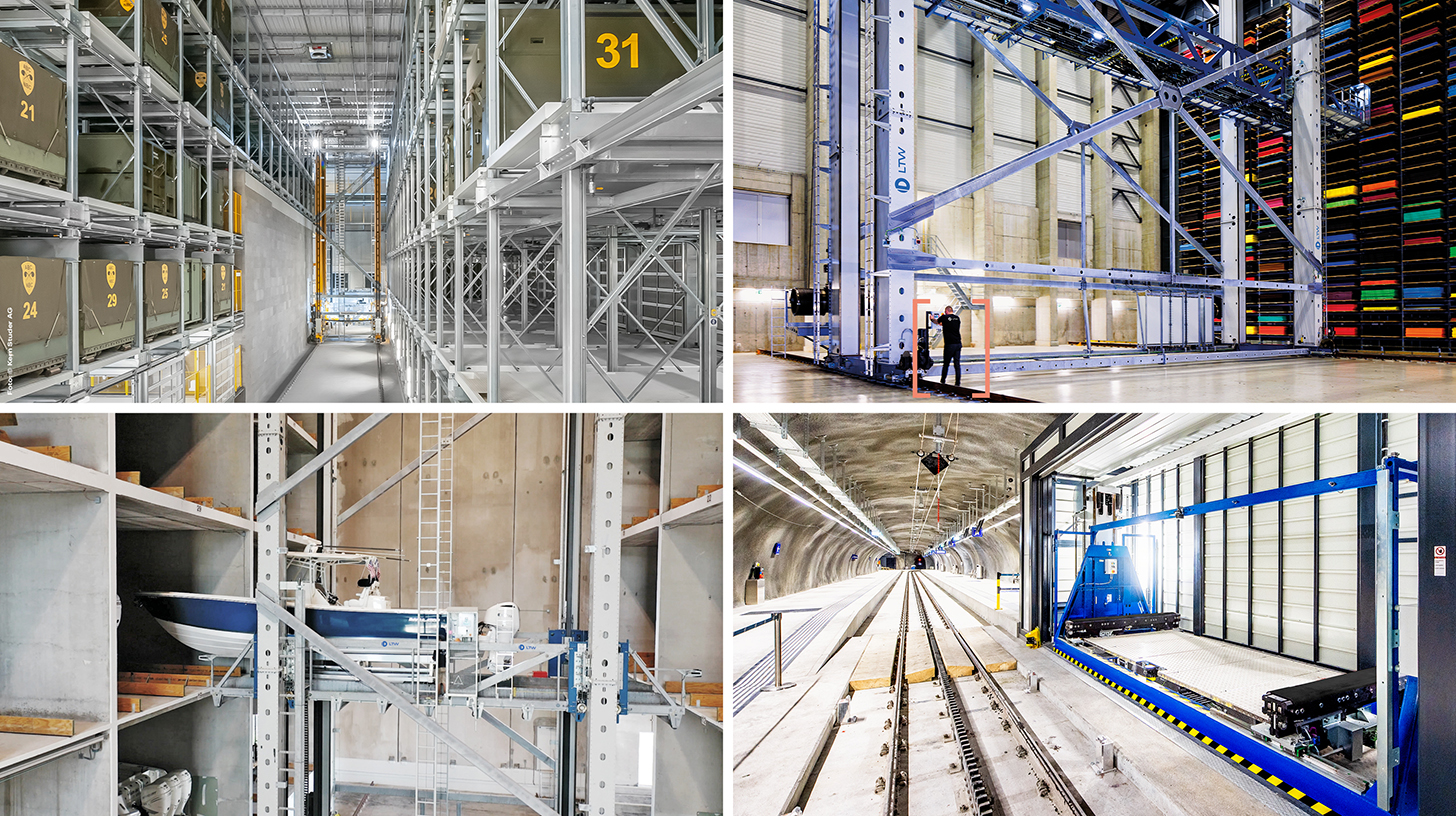
LTW Intralogistics – Engineers of Flow - Image: LTW Intralogistics GmbH
LTW offers its customers not individual components, but integrated complete solutions. Consulting, planning, mechanical and electrotechnical components, control and automation technology, as well as software and service – everything is networked and precisely coordinated.
In-house production of key components is particularly advantageous. This allows for optimal control of quality, supply chains, and interfaces.
LTW stands for reliability, transparency, and collaborative partnership. Loyalty and honesty are firmly anchored in the company's philosophy – a handshake still means something here.
Related to this:
Innovative storage solutions for India's boom
High land prices change the investment calculation
The economic attractiveness of compact storage facilities increases with the value of the space saved. This value encompasses more than just land and rent. It includes construction costs, site development, fire protection, lighting, energy supply, access roads, insurance, and ongoing maintenance. In cold storage facilities, insulation, refrigeration systems, and consistently high energy consumption are added to the equation. The more expensive the enclosed and technically equipped cubic meter, the more justifiable a more investment-intensive racking solution becomes.
A sound investment analysis compares at least three scenarios: continued operation of the existing layout, expansion or leasing of additional space, and densification within the existing building. The analysis includes the purchase and installation of racking, track work, floor adjustments, control systems, shuttle vehicles, batteries, software, fire safety modifications, project downtime, training, and maintenance. These costs are weighed against avoided rent, avoided new construction, shorter distances, fewer forklift hours, reduced damage, energy savings, and potential productivity gains.
The net present value depends heavily on the service life and utilization rate. A mobile racking system can incur high initial costs, but provides additional storage space for many years. With consistently high occupancy, the cost per additional pallet space is often attractive. In cases of uncertain demand or frequent relocations, a less capital-intensive solution may be more sensible. Shuttle systems can be expanded modularly to some extent, but even here it must be assessed whether additional channels, shuttles, and charging infrastructure can be added later without significant disruption.
The value of time is of particular importance. A new building can take years from site selection to commissioning. Retrofitting an existing facility is often faster, but can disrupt ongoing operations. Those who can provide additional capacity more quickly can accept customer orders, manage seasonal peaks, or support production growth. This lost or gained contribution margin must be factored into the calculation. Therefore, the right decision is not necessarily the solution with the lowest acquisition costs, but rather the one with the best balance of capacity, speed, flexibility, and risk.
Cold storage facilities are becoming the most common use case
Temperature-controlled storage facilities are a particularly compelling application for mobile and shuttle-based high-density systems. The construction and operating costs of a single cubic meter of refrigerated space are significantly higher than those of a conventional dry storage facility. Each unproductive aisle still requires cooling, lighting, and maintenance. Storing the same inventory in a smaller refrigerated volume reduces energy consumption per pallet, although the absolute savings depend on insulation, temperature control, door openings, and system technology.
Mobile shelving systems are suitable when many different refrigerated or pharmaceutical products need to remain readily accessible. However, operation in sub-zero temperatures requires cold-resistant drives, sensors, cables, lubricants, and maintenance procedures. Condensation and ice formation must not impair the rails. Furthermore, adequate air circulation must be ensured despite the compact shelving configuration. Modern control systems can operate the shelving in a ventilation mode, creating small gaps between the rows. Nevertheless, fire protection and temperature distribution must be simulated and tested on a project-specific basis.
Shuttle racking systems demonstrate their strengths when storing large batches of similar frozen goods, food raw materials, or pharmaceutical products. The forklift remains outside the deep aisles, which can reduce travel distances and door opening times. At the same time, the time employees spend in cold areas is reduced. However, battery performance and charging cycles change at low temperatures. A shuttle that achieves sufficient runtime at room temperature may need to be charged or replaced sooner in deep-freeze conditions. Therefore, backup units and a well-designed battery management system are integral parts of the operational concept.
The cold chain also tightens the requirements for First In, First Out (FIFO), batch traceability, and minimum shelf life. Shuttle systems can be configured as a FFO solution with access from both sides. With one-sided access, Last In, First Out (LIFO) is often the dominant approach. The physical configuration must be compatible with the inventory turnover. A high density gain does not justify the risk of write-offs due to expired goods. Economical storage density therefore always implies correct inventory turnover.
South India is becoming a testing ground for modern intralogistics
South India is of particular importance for the further development of the warehousing sector. The region combines automotive manufacturing, vehicle suppliers, mechanical engineering, electronics, consumer goods, food processing, retail, e-commerce, and logistics services. Chennai is a key industrial, port, and distribution hub. This mix not only generates high demand for space but also very diverse warehousing profiles: from heavy industrial components and export-oriented finished goods to fast-moving consumer items.
Chennai boasts a high proportion of modern Grade A warehouse space compared to other Indian cities. By early 2025, the share of high-quality warehouse space in the local inventory was projected to reach approximately 78 percent. This is largely due to the strong automotive and supplier industries, which demand robust flooring, higher ceilings, fire protection, organized material flows, and reliable supply chains. Such buildings are generally better suited for mobile racking, shuttle systems, and advanced automation than informal or technically inadequate warehouses.
Regional demand arises from several sources. Manufacturers need buffers for raw materials and components to avoid production interruptions. E-commerce and retail require fast order fulfillment near major consumer centers. Third-party logistics providers consolidate customers and seek standardized, flexibly usable warehouses. Food processors need refrigerated and deep-freeze capacity. Electronics and pharmaceutical customers place high demands on inventory accuracy, security, and traceability. A single warehouse layout can rarely meet these requirements efficiently.
This makes South India a suitable market for modular, combined solutions. Mobile racking can consolidate high-value, diverse inventory. Shuttle channels can accommodate large-volume items and production buffers. Selective racking remains important for quickly accessible mixed assortments, while automated high-bay warehouses become economical for very large, stable volumes. Therefore, competition will not be solely determined by steel prices. Successful suppliers will be those who combine buildings, racking, vehicles, software, service, and safety concepts into a robust overall system.
Automation doesn't begin with a fully automated high-bay warehouse
Discussions about warehouse automation are often reduced to large driverless systems, stacker cranes, and robotics. However, the shuttle racking system demonstrates that automation can be implemented in stages. The forklift remains manned while its movement within the channel is automated. This reduces investment costs and integration risks compared to a fully automated warehouse. Simultaneously, initial digital data points are generated regarding journeys, positions, battery status, and usage.
Mobile racking systems are also mechatronic systems. Drives, light barriers, safety edges, access controls, and operating modes must be coordinated. Godrej describes, among other things, sensors for recording forklift entries and exits. Such data can help analyze aisle occupancy, waiting times, and access patterns. A prerequisite is that the control system is connected to the warehouse management system and that clear data models exist. Without integration, many functions remain isolated at the local machine level.
The next development step involves integration with warehouse management and warehouse control systems. The warehouse management system decides which order is processed when and in which storage location the goods are stored. The system control coordinates racks, shuttles, conveyor technology, and, if applicable, autonomous vehicles. Intelligent sequencing can proactively open mobile aisles, bundle shuttle orders, and reduce empty runs. This increases performance without necessarily requiring the installation of additional hardware.
This modular approach is particularly relevant for Indian companies. It allows for a phased approach to capital investment. Businesses can initially increase their physical footprint, later integrate software, and subsequently automate subprocesses. This reduces the risk of technological over-engineering. However, modularity should not be confused with arbitrariness. Interfaces, wireless coverage, IT security, master data quality, and future expansions must be considered from the outset. Companies that initially install proprietary, isolated solutions may face high additional costs during later integration.
Godrej's broader portfolio extends beyond mobile and shuttle systems to include automated storage and retrieval systems as well as rack-based high-bay warehouses. A 36-meter-high, fully automated Rack-Clad warehouse with 6,316 pallet positions on a footprint of approximately 11,490 square feet demonstrates the level of vertical densification that is technically possible. The two systems currently being highlighted, however, occupy the significant gap between conventional storage and full automation. This is precisely where the most realistic investment path lies for many companies.
Security determines economic success
Higher storage density increases the concentration of goods value, weight, and fire load. Safety considerations are therefore not a secondary technical formality, but a central part of the investment calculation. Damage in a densely populated warehouse can affect more inventory and cause longer operational downtime than in a less compact facility. Structural engineering, flooring, rack protection, fire protection, and maintenance must be planned accordingly.
Mobile racking systems involve moving very large masses. Sensors and safety edges must reliably detect people, vehicles, and obstacles. Emergency stop functions, controlled speeds, and clear access rules are essential. The floor and embedded rails must remain permanently level and load-bearing. Settling or damage can not only reduce availability but also cause uneven stress on the racking structure. Regular inspections and preventative maintenance are therefore more cost-effective than reactive operation until failure occurs.
The shuttle system eliminates the need for forklifts to travel within the racking, thus reducing collision damage to columns and bracing. However, this introduces new risks due to the battery, radio communication, sensors, and the retrieval of a malfunctioning unit from a deep channel. The operational concept must define how a shuttle can be safely accessed, shut down, and retrieved. Spare parts, diagnostic capabilities, and trained personnel determine how long a channel remains blocked in the event of a malfunction.
Fire protection is particularly challenging in high-density storage systems because water distribution, smoke extraction, and accessibility are all affected. Mobile racking can create defined gaps for fire suppression and ventilation, but this must be coordinated with the fire detection and control systems. Deep shuttle channels may require additional sprinkler levels or project-specific solutions. A maximum number of storage spaces that later has to be reduced due to fire safety regulations is not a planning advantage. Therefore, safe operation must be demonstrated before the final layout decision.
Service and spare parts are becoming an underestimated competitive factor
With increasing mechanization, the relationship between warehouse operators and system providers is changing. A static rack can be repaired locally in the event of minor damage. Mobile chassis and shuttle vehicles, on the other hand, require specialized diagnostics, electronics, batteries, control components, and software expertise. Technical availability therefore depends more heavily on the service network and spare parts logistics.
Godrej boasts a broad installed base, citing more than 50,000 constructed warehouses and distribution centers, over 250 million square feet of realized storage space, and a production capacity exceeding 85,000 tons per year. Such figures demonstrate industrial scale, but are only valuable to individual operators if they translate into short response times, readily available spare parts, and competent on-site support. What matters is not just how many facilities a supplier has built, but how reliably they maintain them over ten or fifteen years.
Maintenance contracts should clearly define response times, critical spare parts, software support, battery replacement, safety checks, and escalation procedures. Operators must also clarify which tasks their own personnel are authorized to perform and which interventions require the manufacturer's involvement. Excessive reliance on the manufacturer can increase operating costs; too much in-house maintenance without proper qualifications can compromise safety and warranties. A tiered model is advisable, consisting of daily visual inspections, trained initial diagnostics, preventative professional maintenance, and clearly defined emergency support.
Later adaptability is also part of the lifecycle. Product ranges, pallet heights, weights, and throughput requirements change. Mobile racking systems can be reconfigured to a certain extent, shuttle channels adjusted, and control systems updated. However, every change must be tested for structural integrity and safety. Therefore, lifecycle costs include not only maintenance but also modifications, software updates, replacement investments, and potential downtime. A low purchase price can quickly become irrelevant due to lengthy downtimes or limited availability of components.
The limit of densification
High-density storage is not an end in itself. It is only economical when limited space is the primary constraint and the existing inventory structure is compatible with the technology. In regions with low land costs and ample space, a simple selective storage system can offer a better return on investment. It is easier to understand, more flexible in its use, quickly accessible, and less dependent on technology. Not every warehouse needs mobile racking or shuttle vehicles.
Even in situations of severe space constraints, maximum density can be a mistake. An e-commerce warehouse with thousands of items and very small inventory levels primarily needs fast, parallel access and efficient order picking. Deep pallet channels are only helpful for a limited portion of the product range. A production warehouse with stable large batches, on the other hand, benefits significantly more. Therefore, the decision must be based on actual inventory and order data, not on general growth forecasts.
Another risk is overestimating future volumes. If shelves are designed for strong growth that ultimately fails to materialize, capital productivity declines. Conversely, systems planned too conservatively can quickly reach their limits. Scenario analyses should therefore include at least one conservative, one realistic, and one strong growth scenario. Crucially, it's not just the maximum capacity that matters, but also how efficiently the system operates at 50, 70, or 90 percent capacity.
Finally, increased density must not come at the expense of resilience. Buffer zones, quarantine areas, returns, damaged goods, and seasonal peaks all require space. A warehouse that is theoretically 98 percent full under normal operating conditions often loses operational flexibility. Relocations become more difficult, access times are longer, and minor disruptions have a greater impact. Therefore, optimal utilization is below theoretical full capacity. The most economically efficient facility is not the densest, but the one that delivers reliable performance under real-world fluctuations.
What a sound decision must measure
Before investing, operators should create a digital or analytical model of their material flow. The data should cover at least twelve months, and preferably several years for highly seasonal businesses. The data should include pallet inventory per item, daily inbound and outbound movements, peak hours, dwell time, batches, expiration dates, pallet weight, dimensions, temperature zones, and damaged load carriers. This will generate a profile that reveals the technical suitability and economic benefits.
For mobile racking systems, the variety of items, access frequency, number of forklifts operating simultaneously, and potential order bundling are particularly relevant. For shuttle systems, the number of pallets per item and batch, channel fill level, required sequence, number of channel changes, and desired throughput are crucial. In hybrid systems, it is also necessary to monitor how often goods are transferred between zones. Every unnecessary transfer costs time, energy, and capacity.
Key performance indicators (KPIs) should go beyond simply the number of pallet spaces. Important metrics include effective pallet space utilization, movements per hour, order processing time, forklift kilometers, energy consumption per pallet, damage, inventory accuracy, technical availability, and cost per movement. Financial KPIs such as investment per additional pallet space, annual savings, net present value, payback period, and sensitivity to rent, energy prices, and volume fluctuations are also crucial.
A pilot project or simulation can reveal planning errors early on. With mobile racking systems, it's possible to examine how often aisles change and how multiple vehicles affect each other. For shuttle systems, channel occupancy, number of shuttles, and forklift performance can be simulated. It's crucial not only to test ideal average values but also to include disruptions, peak loads, and staff shortages. A system that functions perfectly under normal circumstances but collapses during a shuttle failure or a delayed incoming goods wave is not robust enough.
Godrej's approach demonstrates the next stage of maturity in the Indian lager market
The focus on mobile pallet racking and shuttle pallet racking is an indicator of the maturing of Indian intralogistics. The market needs not only more warehouses, but more efficient ones. With growing manufacturing, e-commerce, consumer goods, food processing, and third-party logistics, the pressure is increasing to manage inventory more densely, quickly, and accurately. At the same time, capital discipline and gradual automation remain crucial. These two systems address precisely this intersection.
Mobile racking monetizes limited space without sacrificing direct access to individual pallets. Shuttle systems increase density and throughput for larger, homogeneous inventories and reduce the risky forklift maneuvers within the racking. A combined architecture allows for the economical separation of different product profiles. This is the true strength of the approach: not simply placing two products side by side, but rather combining two opposing requirements – selectivity and compactness.
Nevertheless, concrete statements about economic efficiency remain limited without project data. Prices, installation times, and guaranteed capacity increases depend on the building, flooring, shelf height, pallet format, fire protection, software, and operating model. Therefore, blanket promises should be viewed with caution. The published technical performance figures demonstrate the potential but do not replace layout planning or a simulation of the actual order profile.
The rationale is therefore this: High-density systems will experience above-average growth in India, but not as a widespread replacement for conventional racking. They will prevail where land, refrigerated volume, or internal pathways are particularly expensive and where inventory data allows for appropriate segmentation. Suppliers with local manufacturing, engineering, software integration, and robust lifecycle service have a structural advantage. For operators, however, success is not determined by the prospectus value of maximum capacity, but by effective day-to-day performance. Simply cramming more pallets into the same hall does not create a better warehouse. Optimizing space, product range, throughput, energy, security, and service together can transform the same building shell into a significantly more productive asset.
Consulting - Planning - Implementation

Konrad Wolfenstein
I would be happy to serve as your personal advisor.
You can contact me at wolfenstein∂xpert.digital or
Just call me on +49 7348 4088 965 .
Your intralogistics experts

Consulting, planning and implementation of complete solutions for high-bay warehouses and automated storage systems - Image: Xpert.Digital
More information here: