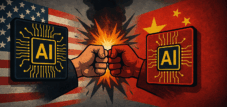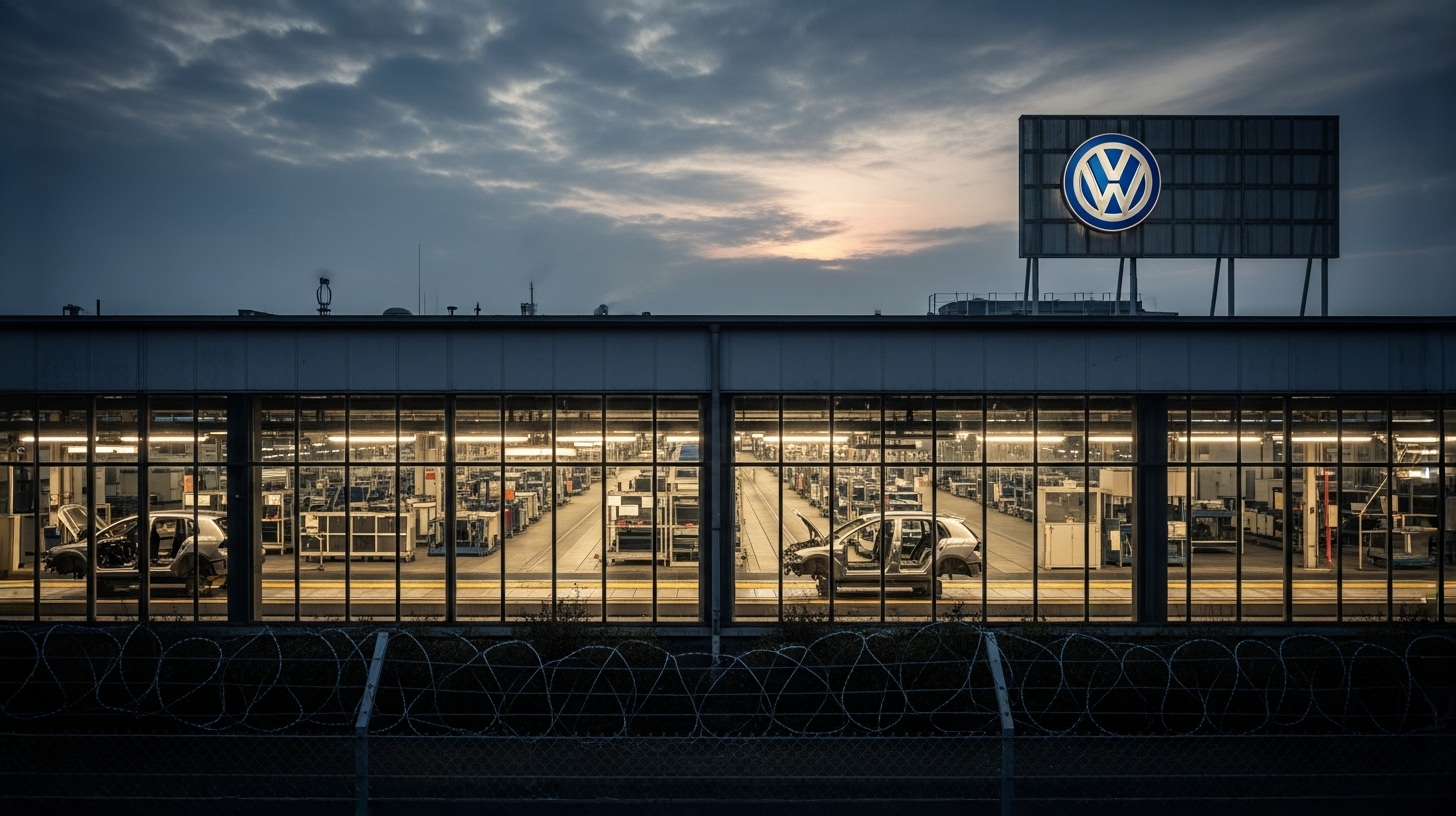
VW in the chip crisis – No chips, no cars: Production halt in Wolfsburg and looming short-time work – Creative image: Xpert.Digital
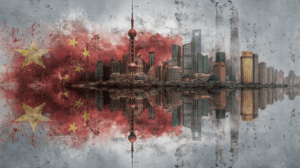
Power struggle over semiconductors: How the conflict between the USA and China is paralyzing production at VW
The Nexperia case explained: This one supplier is plunging the entire German automotive industry into crisis
A shock for Germany's automotive industry: Production of the successful Golf and Tiguan models is threatened at VW's main plant in Wolfsburg, and the threat of widespread short-time work looms. The reason is an acute shortage of essential semiconductors, triggered by an escalating geopolitical conflict surrounding the Dutch chip manufacturer Nexperia. After the Dutch government, under pressure from the US, took control of the company, China reacted with far-reaching export bans – thus crippling a critical supply chain for the entire industry.
For Volkswagen, this crisis comes at a particularly inopportune time. The company is already grappling with a multi-billion-euro funding gap and the pressure of its transition to electric mobility. Now, the production shutdown threatens further massive revenue losses and jeopardizes tens of thousands of jobs. But the repercussions extend far beyond Wolfsburg: from Mercedes and BMW to key suppliers like Bosch, all are affected by the missing components. This new chip crisis ruthlessly exposes the dependence of European industry on global supply chains and the technology war between the superpowers, the USA and China.
Related to this:

No chips, no cars: Why VW is now being forced to its knees and what that means for Germany
What is the current production situation at Volkswagen (VW), and what are the reasons behind the discussion about short-time work and the threatened production halt? This question encompasses numerous aspects, including both global economic and industry-specific perspectives. The following comprehensive question-and-answer presentation examines the VW case based on the events surrounding the chip manufacturer Nexperia, the consequences for the entire automotive industry, and the economic and social repercussions for Germany's largest car manufacturer.
What happened that could lead to a production halt at VW?
On October 21, 2025, it was announced that Volkswagen was preparing to halt production of key models such as the Golf and Tiguan at its main plant in Wolfsburg. The reason for this was an acute shortage of semiconductors, triggered by international trade and security tensions surrounding the chip manufacturer Nexperia and its Chinese owner, Wingtech. The Dutch government had taken control of Nexperia at the end of September 2025 after concerns were raised about technological safety and corporate governance under pressure from the US. China responded with export bans, which largely brought chip production at Nexperia to a standstill.
How will the dispute over Nexperia affect the automotive industry?
Nexperia produces essential standard semiconductors found in numerous components of modern vehicles – from simple control and display elements to safety-relevant functional groups such as airbags and vehicle systems. These components are integrated into finished assemblies by suppliers, thus finding their way into models like the Golf and Tiguan. For many of these chips, there are no readily certifiable alternatives. Besides VW, other manufacturers such as Mercedes and BMW, as well as suppliers like Bosch, are directly affected. Current stocks often only last a few weeks.
What specific measures has the Dutch government taken, and why?
On September 30, 2025, the Dutch government assumed operational control of Nexperia, citing security interests. This action was based on the Commodity Availability Act, which allows for the control of private companies in the interest of national and European technology hubs. The aim was to safeguard manufacturing know-how and potentially restrict the transfer of critical technology to China. Simultaneously, the Chinese CEO was removed by court order and an independent director was appointed. China subsequently prohibited the export of components produced by Nexperia, causing disruptions to its supply chains.
How dramatic are the effects for VW – and what does that mean for the Wolfsburg location?
The threatened production halt of the Golf and Tiguan models directly affects Wolfsburg, the Volkswagen Group's main plant and heart of the company. Supply is still guaranteed for the current week; however, the semiconductors could be installed as early as the following week, and production for certain models could be stopped. Such a halt would have serious economic consequences: slumps in sales and profits, disrupted supply chains, and the risk to numerous jobs. Production figures in Wolfsburg are already declining. Since the start of the coronavirus pandemic, the plant has recorded its lowest production figures since 1958.
Is short-time work imminent, or are other measures planned?
VW has already contacted the employment agency to apply for short-time work for parts of its workforce. Initially, several thousand employees could be affected, but if the crisis continues, this number could reach tens of thousands. The company is continuously analyzing the semiconductor crisis and its impact on production and is coordinating measures such as overtime reduction, plant shutdowns, and flexible working hours with the IG Metall union. Emergency clauses, such as reducing the weekly working hours to 28, are also being implemented before widespread short-time work becomes necessary. Existing collective bargaining agreements and job security models are being reviewed and adjusted.
Our global industry and economic expertise in business development, sales and marketing
Our global industry and economic expertise in business development, sales and marketing - Image: Xpert.Digital
Industry focus areas: B2B, digitalization (from AI to XR), mechanical engineering, logistics, renewable energies and industry
More information here:
A thematic hub offering insights and expertise:
- Knowledge platform covering global and regional economies, innovation and industry-specific trends
- A collection of analyses, insights, and background information from our key areas of focus
- A place for expertise and information on current developments in business and technology
- A hub for companies seeking information on markets, digitalization, and industry innovations
Eleven billion question: How VW still intends to secure its electric offensive
What is VW's financial situation, and what role do investments play?
The chip shortage and production decline come at a time when VW is under considerable financial strain. According to CFO Arno Antlitz, the company faces a funding gap of eleven billion euros for the coming year alone. This is due to high investments in electromobility, digital technologies, innovation programs, and declines in key markets such as China and the USA. The only short- and medium-term solution appears to be cost-cutting measures – such as selling off holdings and drastically reducing marketing, sales, and development costs. Without additional funds, crucial product investments cannot be realized, and the strategic realignment towards future technologies would be jeopardized.
Related to this:
What role do suppliers and semiconductor certification play?
Since Nexperia semiconductors are used by suppliers in components and systems, the entire European automotive industry is affected. A short-term switch to alternative chip manufacturers is not possible, as new products must undergo extensive certifications and testing, especially for safety-critical applications. Such processes often take several months until final approval and market authorization. This makes a short-term solution to the current shortage virtually impossible.
Have there been similar semiconductor crises before, and what lessons were learned from them?
Since the end of 2020, and increasingly during the COVID-19 pandemic, automakers have suffered from international shortages due to the rapid increase in demand for consumer electronics and IT systems, which disrupted supply chains. At that time, almost all manufacturers had to reduce production, resulting in significant financial losses. The industry subsequently attempted to diversify its supply chains and sourcing strategies, strengthen local and European semiconductor manufacturers, and establish long-term supply contracts. Nevertheless, supply remains fragile – especially since new geopolitical crises can disrupt major routes and supply flows at any time.
What are the reactions from the industry and politicians?
Industry associations like ACEA and suppliers are warning of a domino effect if the Nexperia chips remain unavailable. These components, installed in electronic control units, are essential for the smooth operation of modern vehicles. The German government and the EU Commission are closely monitoring developments and are urging their European partners to jointly strengthen security of supply and industrial policy objectives. The planned expansion of European semiconductor capacity remains sluggish, and players like Intel and other investors have so far only built up limited new capacity.
What role do geopolitical conflicts such as those between the USA and China play, and what are their effects on high technologies?
The current chip crisis stems from the global trade and technology war between the US and China. China is increasingly using its role as an exporter of components and rare earth elements as strategic leverage. The US has placed Wingtech, and consequently Nexperia, on its sanctions lists, and the Netherlands intervened directly in the ownership structure. Faced with AI, semiconductor technology, and digitalization, the world finds itself in a new kind of Cold War, characterized by clear blocs and standards. The consequences range from complete production shutdowns in industries like automotive, which are heavily reliant on global supply chains. Without substantial political solutions, the situation remains tense.
How is VW preparing for the future to cope with crises such as the semiconductor shortages?
VW has realigned its semiconductor procurement strategy, established closer partnerships with manufacturers and suppliers, and increased transparency across its supply chains. This includes proactive bundling agreements, flexible volume planning, reduced product complexity, and greater integration of development collaborations with technology partners. Elements such as the targeted definition of critical components and the expansion of in-house expertise are intended to increase resilience and innovation strength. Nevertheless, the dependence on a few key manufacturers and global supply chains remains critical, and a complete solution to the current crisis cannot be achieved in the short term.
Is there an outlook for the coming weeks – and what should employees and suppliers expect?
Most vehicle manufacturers have stocks of critical semiconductor components that will only last a few days to a few weeks. If no solution is found in the dispute over Nexperia or alternative supply options are available, further production stoppages, short-time work, and long-term structural adjustments in manufacturing are imminent. Suppliers and employees should be prepared for further measures such as flexible working hours and short-time work. A rapid restart of production lines is only possible once new certifications have been obtained and geopolitical compromises have been reached.
How could the industry become more resilient in the medium and long term?
Experiences from the semiconductor crises and the COVID-19 pandemic have shown that the European automotive industry urgently needs to diversify its supply chains and establish local semiconductor production. Strategies such as reshoring, increased research and development in Europe, universal chips, and innovative design architectures can reduce dependency. Cooperation between OEMs, suppliers, and governments is also essential for better crisis management. Rapid certification processes and contingency plans are just as important as political and technological independence.
Volkswagen and the chip shock: Why supply chains need to be rethought
The Volkswagen case illustrates not only the high dependence on modern global supply chains, but also the complex geopolitical and industrial policy entanglements of our time. The chip shortage is a symptom of a much broader transformation that will accompany and challenge the automotive industry, its employees, and suppliers in the coming years. Measures against production stoppages and short-time work will provide short-term relief, but the solution requires long-term strategies and political cooperation.
Your global marketing and business development partner
☑️ Our business language is English or German
☑️ NEW: Correspondence in your native language!

Konrad Wolfenstein
I and my team are happy to be available to you as your personal advisor.
You can contact me by filling out the contact form here wolfenstein@xpert.digital:or simply call me at +49 7348 4088 965. My email address is
I'm looking forward to our joint project.
☑️ SME support in strategy, consulting, planning and implementation
☑️ Creation or realignment of the digital strategy and digitization
☑️ Expansion and optimization of international sales processes
☑️ Global & Digital B2B trading platforms
☑️ Pioneer Business Development / Marketing / PR / Trade Fairs
🎯🎯🎯 Benefit from Xpert.Digital's extensive, five-fold expertise in one comprehensive service package | BD, R&D, XR, PR & Digital Visibility Optimization
Benefit from Xpert.Digital's extensive, five-fold expertise in a comprehensive service package | R&D, XR, PR & Digital Visibility Optimization - Image: Xpert.Digital
Xpert.Digital possesses in-depth knowledge across various industries. This allows us to develop tailored strategies precisely aligned with the requirements and challenges of your specific market segment. By continuously analyzing market trends and monitoring industry developments, we can act proactively and offer innovative solutions. The combination of experience and expertise generates added value and provides our clients with a decisive competitive advantage.
More information here: