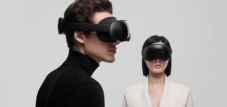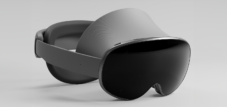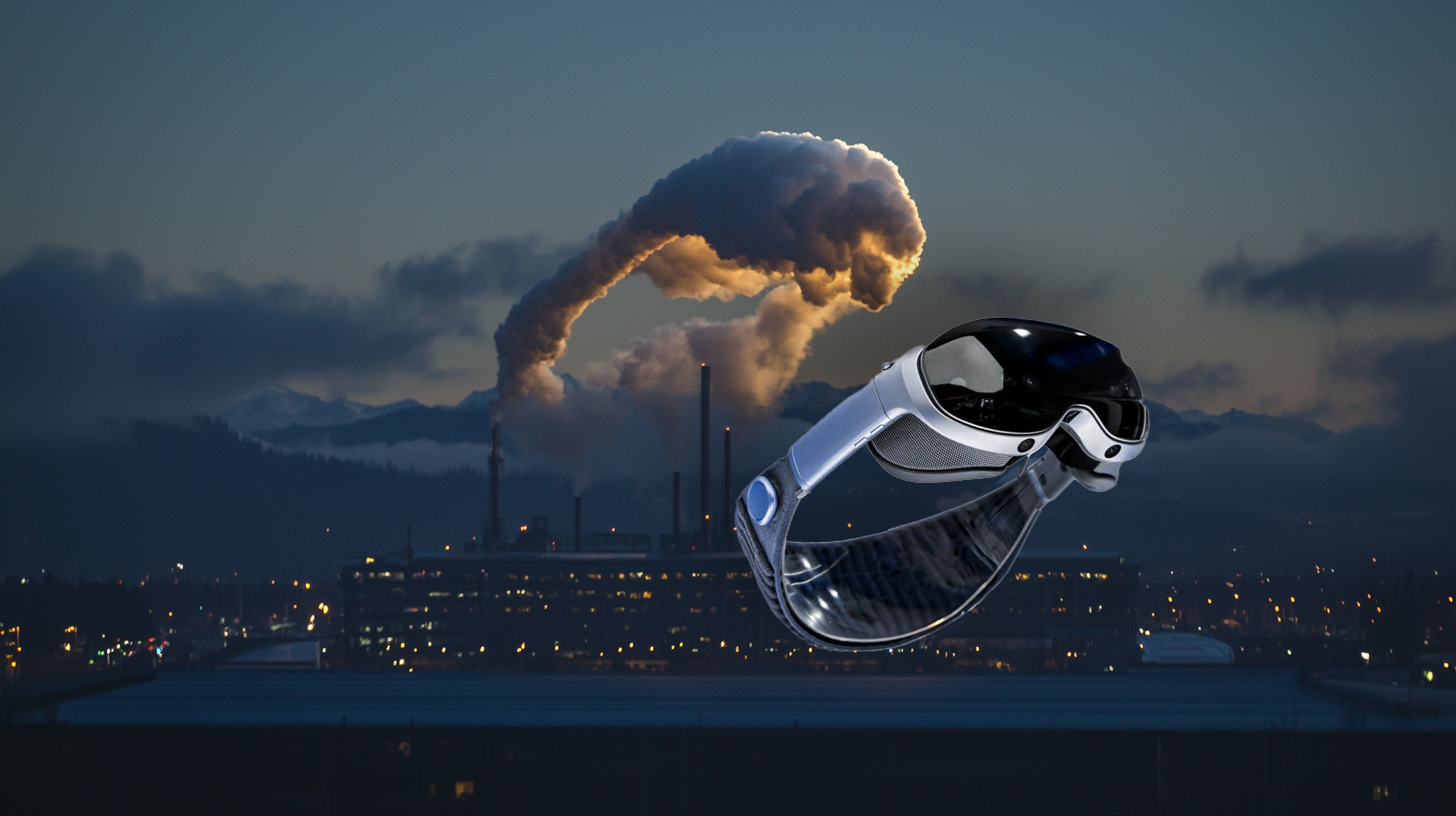
Vivo Vision VR headset: The new challenger in the mixed-reality market – Image source: Vivo / Creative image: Xpert.Digital
Smartphone giant focuses on the future: Vivo Vision in focus
Vivo Vision: The new challenger in the mixed reality market
Vivo recently announced its entry into the growing mixed reality technology market with the Vivo Vision – a headset that's generating buzz not only for its name but also for its strikingly familiar design. The prototype was unveiled at the Boao Forum for Asia and marks a strategic move by the Chinese smartphone manufacturer into new technological territory. While detailed technical specifications are still pending, the presentation reveals Vivo's ambitious plans in the fields of spatial computing and robotics.
The design: More than just inspired
The VivoVision features a design that will immediately strike observers as familiar. The resemblance to the Apple Vision Pro is so striking that many experts consider it a direct clone. The headset has gray fabric padding on the front, an identically designed back strap, and an external battery connected to the device via a cable. Even the name "Vision" and the use of the term "spatial computing" in marketing materials were adopted from Apple.
The black glass front, styled like ski goggles, houses several cameras, presumably for motion tracking and hand gesture recognition. The only noticeable difference from the Apple counterpart is the headset's earcups, which are finished in a metallic sheen instead of white.
Also noteworthy is the magnetic connector for attaching the battery to the headset, which bears a striking resemblance to Apple's solution – both in its construction and button-like design. However, the visor front of the Vivo Vision appears slimmer than that of the Vision Pro, suggesting a potentially lighter weight.
Related to this:


Functionality and specifications
So far, Vivo has not released any technical specifications or details regarding the headset's functionality. It's not even clear whether a working prototype exists, as no one outside the company has had the opportunity to test the device. It also remains unclear whether the headset will function independently or if it will need to be connected to a computer.
The lack of information raises questions: What hardware powers the Vivo Vision? Which operating system will it use? How long will the battery last? These and other important details are not expected to be revealed until the official unveiling in mid-2025.
Strategic importance for Vivo
The presentation of the Vivo Vision goes beyond the mere introduction of a new product – it marks a strategic shift in direction for the company. Simultaneously with the headset's unveiling, Vivo announced the establishment of its own robotics lab.
Hu Baishan, Executive Vice President and Chief Operating Officer at Vivo, stated that the smartphone industry is a microcosm of technological innovation in China, and Vivo's development reflects the progress of this sector. The company aims to combine its extensive experience in areas such as AI learning models and imaging with the spatial data processing capabilities of Vivo Vision to develop the "brain" and "eyes" of robots.
Vivo envisions a future where robotics enriches everyday life and is working with industry partners to bring robots into consumers' homes worldwide. This vision demonstrates that Vivo views the mixed-reality headset as part of a broader technology strategy that extends beyond VR and AR applications.
Market classification and competitive environment
Vivo's entry into the mixed reality market comes at a time when several major technology companies are expanding their positions in this field. Apple has set the bar high for mixed reality technology with its Vision Pro, but at a price of around $3,500 (approximately €3,000), it limits mass adoption.
Samsung is working with Google and Qualcomm on an Android XR headset (project name "Moohan"), which is expected to be unveiled in 2025. Meta currently dominates the market for more affordable VR headsets with its Quest 3.
Although Vivo has remained silent on the pricing of its headset, it is speculated that the company – similar to its smartphones – could position it in the mid- to high-price segment, possibly at a lower price than comparable high-end models. This strategy could give the Vivo Vision a competitive advantage, particularly in regions where both the Vision and competing products will be available.
Related to this:
Availability and future prospects
The Vivo Vision prototype is scheduled for official unveiling in mid-2025. So far, there is no information on whether the headset will be available outside of China and select Asian markets. This regional limitation could be a significant factor affecting the product's global competitiveness.
At least in China, Vivo could secure a strong position in the mobile phone market with the Vision. The company is already one of the leading smartphone manufacturers in the Chinese market and has a broad user base of over 500 million people in more than 60 countries worldwide.
Technological perspectives and innovation potential
Although details about Vivo Vision are still scarce, its connection to the company's robotics initiative suggests interesting future applications. The combination of spatial data processing, AI, and imaging technologies could be used not only for immersive VR/AR experiences but also for the development of household robots and other intelligent assistance systems.
The “Blue Technology Matrix” mentioned by Vivo is intended to improve the integration between the digital and physical worlds. This vision goes beyond traditional mixed-reality applications and shows that Vivo is thinking long-term – with the Vision headset as one building block in a larger technological ecosystem.
From smartphones to mixed reality: Vivo's future strategy
The Vivo Vision marks the ambitious entry of another major technology company into the mixed reality market. While the design is unmistakably inspired by – or even copied from – the Apple Vision Pro, it remains to be seen whether Vivo can impress with innovative features, competitive pricing, and compelling integration into its broader technology ecosystem.
The connection to the company's robotics initiative suggests a long-term vision that extends beyond simple VR/AR applications. If Vivo succeeds in transferring its expertise in smartphone technology, AI, and image processing to mixed reality and robotics, the company could play a significant role in the next phase of technological evolution.
With the official unveiling of the VivoVision, planned for mid-2025, we will learn more about its technical specifications, pricing, and market positioning. Until then, the headset remains a fascinating, if somewhat enigmatic, example of the increasing convergence of different technology fields—and of the intense competition in the burgeoning spatial computing market.
Related to this:
Your global marketing and business development partner
☑️ Our business language is English or German
☑️ NEW: Correspondence in your native language!

Konrad Wolfenstein
I and my team are happy to be available to you as your personal advisor.
You can contact me by filling out the contact form here wolfenstein@xpert.digital:or simply call me at +49 7348 4088 965. My email address is
I'm looking forward to our joint project.