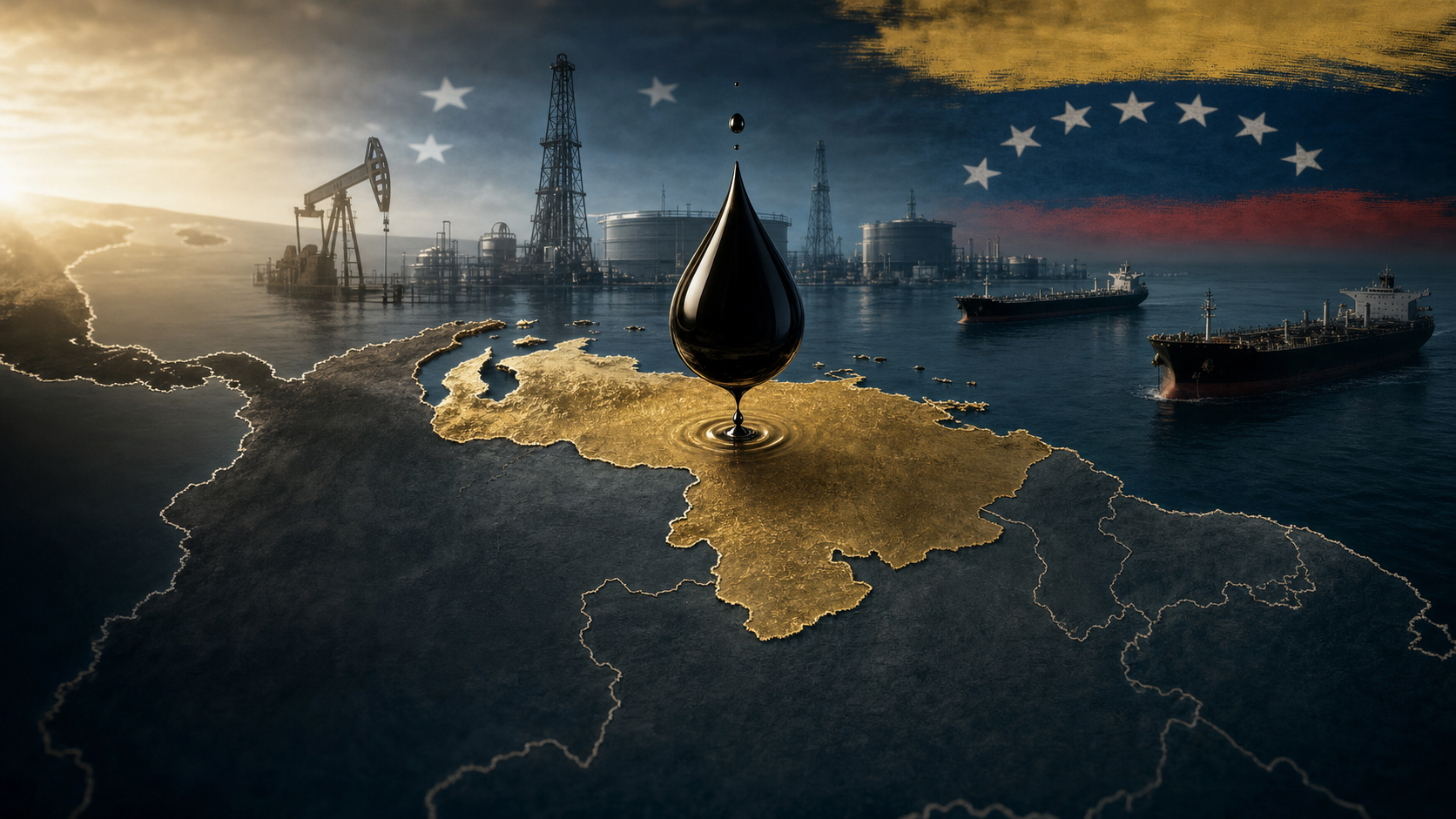
US-Venezuela oil deal: When Washington promises 65 billion barrels, but no one has seen the contract – is it all an election campaign bluff? – Image: Xpert.Digital
Washington and Caracas: Why the numbers don't add up in the world's biggest oil deal
Election campaign bluff or masterpiece? The truth about the US deal with Venezuela
Secret Pentagon role: The contradictions in Trump's historic oil coup
It was supposed to go down in history as the "biggest oil deal in the world": In August 2026, Donald Trump announced a historic agreement with Venezuela that was meant to secure US control over 65 billion barrels of oil, effectively double domestic reserves, and drastically reduce gasoline prices—all supposedly without costing the American taxpayer a single cent. But behind the grand political rhetoric lie significant gaps. While Washington speaks of century-long development rights and Pentagon involvement, the Venezuelan interim government under Delcy Rodríguez insists on strictly time-limited contracts, national sovereignty, and billions in tax revenue. Adding to this is an unprecedented detail for an agreement of this geopolitical magnitude: An official, signed text of the agreement was simply nowhere to be found, even days after the announcement. This is an analysis amidst geopolitical power plays, the American election campaign, and the pressing question of what aspects of this coup announcement are actually reliable.
An announcement coup without a contract text
On the evening of August 28, 2026, Donald Trump announced via his social network TruthSocial that the United States had concluded "the biggest oil deal in world history" with Venezuela. According to him, Washington secured majority control over more than 65 billion barrels of proven oil reserves, effectively doubling American reserves and simultaneously lowering fuel prices, all without requiring a single cent from American taxpayers. What is remarkable about this historic announcement, however, is that it was based almost entirely on social media posts, anonymous government sources, and contradictory individual statements, while a publicly available, signed contract text could not be found as of August 30, 2026. This discrepancy between the force of the political rhetoric and the scarcity of verifiable facts shapes any serious assessment of this event.
The political course was already set in January
To understand the deal, it's worth looking at the events leading up to 2026. On January 3, Nicolás Maduro was arrested in Caracas during a US operation, and Delcy Rodríguez assumed the duties of interim head of state. As early as January 29, the Venezuelan National Assembly reformed the Hydrocarbon Law, the Ley Orgánica de Hidrocarburos, thereby opening up the so-called primary oil production activities to mixed companies and private operators, while the state formally retained ownership of the subsurface. This legal opening was the essential prerequisite for everything that followed in August, because without it, there would have been no legal basis for private or foreign involvement in production.
During the spring, US Energy Secretary Chris Wright visited the Chevron-PDVSA Petropiar joint venture in Anzoátegui state in February, a clear signal that American oil companies remained operationally present despite the political upheaval. In June, severe earthquakes struck Venezuela, reportedly claiming more than 6,500 lives and massively increasing fiscal pressure on the already strained government in Caracas. By August, Venezuelan oil production had recovered to about 1.1 million barrels per day, according to OPEC secondary sources, significantly below the historical peak of more than three million barrels, but still an improvement compared to the previous crisis years.
Contradictory figures from the very beginning
Even in the days leading up to the official announcement, the figures circulating fluctuated considerably. The Wall Street Journal reported on August 27 that talks were advanced regarding a direct stake in more than a dozen oil fields with a potential of 90 billion barrels, which would have represented almost a third of Venezuela's energy reserves. Reuters reported on the same day on negotiations for long-term access to Venezuelan crude oil reserves, under which American companies would develop a group of oil fields whose production would be guaranteed to flow to the United States. By the time Trump released his version on Friday evening, the figure had settled at 65 billion barrels, which, according to Venezuelan government figures, corresponds to roughly one-fifth to one-quarter of the officially reported total reserves of 303 billion barrels.
Venezuela officially holds the world's largest proven oil reserves, the vast majority of which consists of extra-heavy crude oil in the Orinoco Belt, which is significantly more complex and economically expensive to extract than conventional light crude. This shift in figures from 90 to 65 billion barrels within just a few days suggests that, at the time of the announcement, a final, legally binding list of reserves was apparently not yet available, but rather that a politically negotiated outcome was being communicated.
Two governments, two completely different histories
The true significance of the transaction lies in the way Washington and Caracas are presenting the same deal to the public. A White House official told CNN that the United States would receive 55 percent of the effective output of a new private joint venture, which would thus become the world's second-largest private oil company by reserves. According to reports from several American news agencies, Rodríguez granted this entity 100-year development rights to the oil fields, and the new company would be the second-largest holder of proven reserves worldwide, after Saudi Aramco.
Delcy Rodríguez herself painted a distinctly different picture the following day in a speech broadcast on state television VTV. She spoke of a 25-year bilateral project to develop 17 strategic oil fields, with the goal of producing more than 1.5 million barrels per day from this agreement alone. Venezuela, she explicitly emphasized, would retain ownership and sovereignty over its natural resources. According to her calculations, $19 from every barrel sold to the United States would flow to the Venezuelan state, which, at a reference price of $65 per barrel, could theoretically amount to more than $209 billion in tax revenue for Caracas over the contract's duration. This difference between 100 and 25 years of duration is not merely a side note, but touches upon the constitutional core of the matter, because the Venezuelan Constitution, in its Articles 12 and 13, fundamentally prohibits the leasing of national territory to foreign states, while the reformed hydrocarbon law already limits the duration of mixed companies to a maximum of 25 plus 15 years.
The Pentagon as a silent co-owner
One of the most surprising twists in the entire affair concerns the role of the U.S. Department of Defense. The Wall Street Journal, citing sources familiar with the matter, reported that the Pentagon's Office of Strategic Capital is planning a passive 35 percent stake in North American Blue Energy Partners (NABEP), the Venezuelan private oil producer that serves as a key partner in the entire deal. This stake would be structured through penny warrants, a financial instrument that gives Washington an equity stake without requiring any significant upfront capital investment. In addition, the Pentagon would secure preferential rights to purchase 20 percent of future oil production at cost.
This arrangement raises a key legal question, because the Office of Strategic Capital was legally established as an instrument for providing loans, guarantees, and technical assistance to strategically important industries, not as a vehicle for direct equity investments in foreign resource companies. A Pentagon spokesperson subsequently publicly denied that the office was acquiring equity stakes, revealing a clear contradiction between anonymous insider reports and official government communications. Trump's claim that the deal costs the American taxpayer nothing is thus in clear tension with reports of loans, guarantees, and warrants, which, in all likelihood, do create government risks and potential liabilities.
Our US expertise in business development, sales and marketing


Our US expertise in business development, sales and marketing - Image: Xpert.Digital
Industry focus areas: B2B, digitalization (from AI to XR), mechanical engineering, logistics, renewable energies and industry
More information here:
A thematic hub offering insights and expertise:
- Knowledge platform covering global and regional economies, innovation and industry-specific trends
- A collection of analyses, insights, and background information from our key areas of focus
- A place for expertise and information on current developments in business and technology
- A hub for companies seeking information on markets, digitalization, and industry innovations
Venezuela oil deal: Between geopolitical staging and economic reality
The man in the center of the store
One of the least publicly scrutinized, yet structurally central figures in this deal is Venezuelan businessman Alejandro Betancourt López, whose company, North American Blue Energy Partners, is Venezuela's second-largest private oil producer. He has reportedly been the subject of investigations in both Switzerland and Spain, casting particular scrutiny on his role as a key private contractor in such a high-profile intergovernmental transaction. His former minority shareholder, Harry Sargeant III, is said to have been forced out of the company, with rumored buyout payments of around $300 million. The fact that such a controversial private actor is at the heart of a deal the U.S. government is hailing as a geopolitical milestone underscores just how intertwined private interests, government policy, and personal networks are in this case.
On the Venezuelan side, Rodríguez also mentioned ongoing talks with established international corporations such as Chevron, Eni, Shell, and BP in her speech, while Reuters reported that contracts were expected to be signed in the coming days with, among others, the American oilfield services company SLB and the Texas-based company Hunt Oil. Chevron is, in any case, the last major American oil company to have maintained a continuous presence in the country through existing joint ventures with the state-owned company PDVSA, even during the strictest years of sanctions.
Why the figures hardly stand up to close scrutiny
A dispassionate analysis of the key figures in this deal reveals significant methodological flaws. The claim that the United States would double its own reserves ignores the fact that the U.S. Energy Information Administration (EIA) records proven reserves according to strict accounting and geological criteria, and that foreign concession rights are not typically automatically included in U.S. national reserve statistics. U.S. reserves were recently estimated at around 44 to 46 billion barrels, meaning that a doubling through a foreign concession agreement would require a reinterpretation of the accounting figures, which has not yet been documented.
Even Venezuela's stated reserve figure of 303 billion barrels has been considered methodologically controversial by independent industry analysts for years, because a significant portion of it consists of extra-heavy crude oil from the Orinoco belt, the economic viability of which depends heavily on the world market price and the availability of specialized upgrading facilities. Without an independent third-party audit of the 17 named fields, neither the figure of 65 billion barrels nor their actual economic value can be reliably verified. The same applies to the figure of $209 billion in tax revenue for Venezuela, which is based on a simple multiplication of production volume, assumed oil price, and government share per barrel, without taking into account discounting, inflation, investment costs, or fluctuations in the world market price over a 25-year period. Such figures are therefore more akin to political rhetoric than reliable business forecasts.
The question of the legitimacy of the interim government
One aspect largely ignored in American discourse, but crucial for understanding the political implications of the deal, concerns the democratic legitimacy of the government that signed this agreement on behalf of Venezuela. Delcy Rodríguez assumed office after Maduro's violent arrest by American forces, not through a regular election. Critics argue that this commodity deal stabilizes a de facto client regime, binding the new leadership economically and politically to Washington. The New York Times described the reactions of many Venezuelans as an expression of concern about a new form of American colonialism, given that oil has been considered a national birthright in Venezuelan identity for decades.
It is also noteworthy that resistance arose even within the Chavista camp itself. Supporters of a Popular Front, described as anti-imperialist, protested in Caracas against the agreement and simultaneously demanded Maduro's release, demonstrating that criticism of the deal by no means originates solely from the traditional opposition, but extends across the political spectrum. At the same time, the opposing side points out that without such a liberalization, the Venezuelan oil industry, after years of sanctions and underinvestment, would simply have had no prospect of modernization, and that by invoking continued sovereignty over resources, the interim government is at least formally adhering to a red line of the Venezuelan constitution.
Between campaign promises and geopolitical necessity
From an American domestic political perspective, the timing of the deal, so close to the midterm elections in November 2026, is striking. American gasoline prices have been under pressure for months, partly due to the turmoil surrounding the Iran conflict and potential blockades of the Strait of Hormuz, while the United States' strategic oil reserves are considered comparatively low. A deal that demonstrably increases security of supply with Latin American oil can be politically marketed as a contribution to lowering fuel prices and as a success of a robust foreign policy, regardless of how quickly actual production increases would translate into higher fuel prices at US gas pumps.
From a technical perspective, this very time horizon is the real problem with the narrative of falling gasoline prices. Venezuelan Orinoco oil is extra-heavy and must be processed in specialized facilities before further refining, and these facilities exist only in limited numbers along the Gulf Coast in the United States. Even if investments were to begin immediately, significant production increases would realistically be several years in the future, while current production, at around 1.1 to 1.25 million barrels per day, is already far below historical potential. The political claim of short-term and substantial relief at American gas stations thus appears primarily as a communication strategy in the run-up to the midterm elections, rather than an immediately achievable energy-economic reality.
Geopolitical side issues with explosive potential
Beyond the bilateral dimension between Washington and Caracas, one aspect deserves particular attention, one that has received little attention in the public debate so far. Reuters reported that parts of the 17 oil fields mentioned are currently still subject to existing contracts with Chinese operators, contracts signed during the Maduro era. Should the new US-Venezuelan deal effectively supersede these existing concessions, this would not only create a legal conflict regarding potential compensation claims, but also a direct geopolitical point of friction between Washington and Beijing, the extent of which remains entirely unclear.
Bloomberg also reported that, given the new bilateral structure, Caracas is considering leaving OPEC, which could significantly alter the internal dynamics of the oil cartel and set a precedent for other oil-producing countries affected by Western sanctions. Meanwhile, old expropriation cases from the Chávez era, such as those involving ConocoPhillips and ExxonMobil, which were litigated against Venezuela before the International Centre for Settlement of Disputes (ICSID), remain a latent liability and lien risk for any new investment project, as it is unclear whether and how these legacy claims might conflict with the new contractual structures.
What will actually be reliable on August 30, 2026, and what will not
In summary, the current situation can be divided into three categories. It is certain that a political announcement was made on August 28, 2026, concerning a stake in 17 Venezuelan oil fields with a reserve potential of approximately 65 billion barrels, and that a private company called North American Blue Energy Partners, headed by Alejandro Betancourt López, plays a central operational role. Also certain is the profound contradiction between the American portrayal of 100-year rights and 55 percent effective control on the one hand, and the Venezuelan portrayal of a 25-year term, continued sovereignty, and a fixed dollar price per barrel on the other.
Virtually everything concerning the concrete legal and financial architecture of the deal remains unsubstantiated: there is no publicly available contract, no official decree in the Venezuelan Official Gazette, no confirmed field list with names and reserve classes, no disclosed capital structure of the new joint venture, and no independent confirmation of how the Pentagon's Office of Strategic Capital legally justifies its role. The question of which companies are actually supposed to raise the rumored $100 billion in fresh investment capital also remains unanswered without concrete commitments from individual companies. This combination of a highly politically charged announcement and a remarkably thin factual basis makes the Venezuelan oil deal a textbook example of how geopolitical communication and verifiable economic substance can diverge in the current global climate, and how crucial it remains to distinguish between a headline and a signed contract.
🎯🎯🎯 Data-driven B2B industry hub as a quasi-in-house solution


The quasi-in-house solution: How Xpert.Digital closes operational gaps in B2B marketing and sales – Smart Content-Driven Business - Image: Xpert.Digital
Xpert.Digital is a data-driven B2B industry hub led by Konrad Wolfenstein . The company acts as an external, quasi-in-house solution for industrial partners, closing operational gaps in marketing, content, and sales – without requiring additional resources on the client side.
More information here:
Your global marketing and business development partner
☑️ Our business language is English or German
☑️ NEW: Correspondence in your native language!

Konrad Wolfenstein
I and my team are happy to be available to you as your personal advisor.
You can contact me by filling out the contact form here wolfenstein@xpert.digital:or simply call me at +49 7348 4088 965. My email address is
I'm looking forward to our joint project.