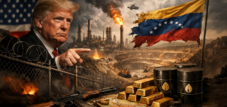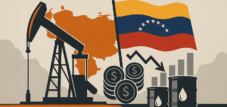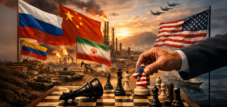
Disaster meets coup: The dramatic US experiment in Venezuela threatens to fail – Image: Xpert.Digital
Oil, power, and a devastating earthquake: Why Trump's Venezuela plan is becoming a geopolitical trap
A nation in a stranglehold: How the "America First" plan is turning into a fiasco for the world's largest oil-producing country
State revenues as pocket money: The radical US plan for Venezuela's oil – and Europe's dilemma
Venezuela is on the brink of collapse – and simultaneously at the center of an unprecedented global power struggle. When a devastating twin earthquake strikes the country's coast in the summer of 2026, claiming thousands of lives and causing tens of billions of dollars in damage, the nation's fragility is laid bare. But the natural disaster doesn't strike a normal, sovereign state, but rather a highly contested political construct. Following a spectacular US commando operation that imprisoned the former leader, Nicolás Maduro, Washington now controls the country's enormous oil revenues like a guardian. While the US government insists on strict economic control and strategically sidelines the democratically elected Nobel Peace Prize laureate, María Corina Machado, Europe finds itself in a diplomatic bind. This is a profound look into a country that has transformed itself into a quasi-colony – and into the question of why the "America First" plan is on the verge of shattering under the weight of its own contradictions and the earthquake's wreckage.
Venezuela in the stranglehold of oil: How Washington's "America First" calculation fails due to its own contradictions
A natural disaster as a political stress test
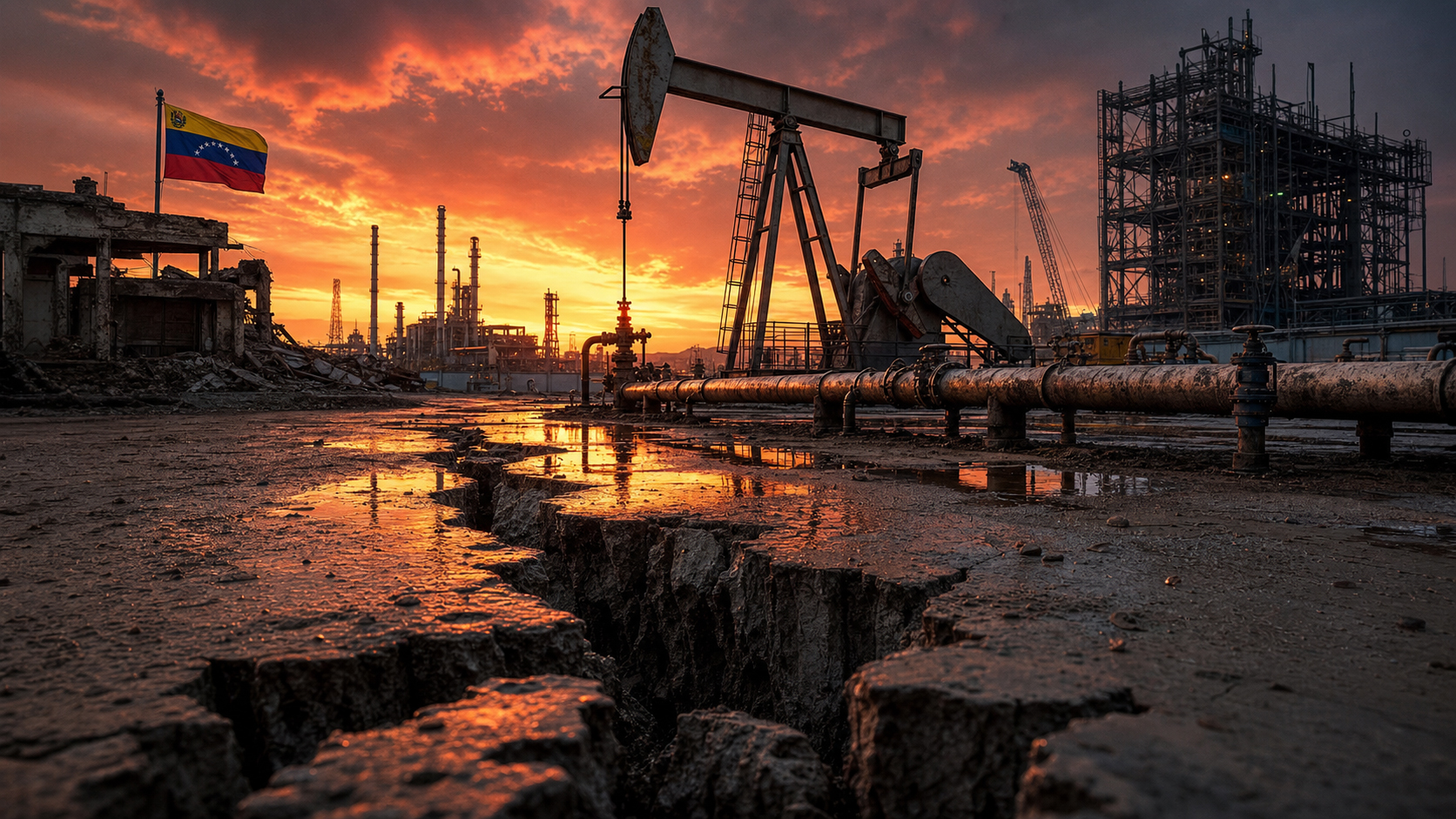
When two earthquakes measuring 7.2 and 7.5 on the Richter scale struck Venezuela's coastal region within just 39 seconds on June 24, 2026, the force not only devastated tens of thousands of buildings but also shattered a political structure that had been built on shaky foundations for months. The humanitarian toll was catastrophic: According to official figures from National Assembly President Jorge Rodríguez, more than 3,340 people were killed, over 16,740 were injured, and around 17,000 were left homeless. Media outlets critical of the government and international observers assume the actual number is considerably higher – the US Geological Survey (USGS) even modeled a scenario with more than 10,000 fatalities. The United Nations estimated that up to 68,000 people were considered missing.
The material damage exceeded all expectations. The UN Office for Disaster Risk Reduction (UNDRR) estimated the direct physical damage to residential buildings, schools, hospitals, public facilities, and infrastructure at a total of US$37 billion – of which approximately US$24 billion was for buildings and US$13 billion for critical infrastructure such as energy, water, and telecommunications. The UN appealed for donations of the equivalent of €260 million to provide aid to 1.3 million particularly affected people over the next six months. However, these figures only reflect the immediate physical damage; the overall economic damage from lost production, disrupted supply chains, and reconstruction costs is likely to far exceed the published estimates.
The earthquakes struck a country in a state of economic and political emergency. Venezuela had been under de facto US control for months – the result of a controversial military operation that had fundamentally altered the geopolitical landscape of the South American continent. The quake did not strike by chance, but with systemic precision, hitting the weak points of a structure built on a narrow democratic foundation, the stability of which was now being questioned by investors, European partners, and its own people alike.
The coup d'état by special forces – the backstory of an unusual intervention
To understand the current situation, one must go back to January 3, 2026. In the early morning hours, US special forces carried out an operation in Caracas in which Venezuelan President Nicolás Maduro and his wife Cilia Flores were arrested and immediately flown to New York. The White House released a video showing Maduro in handcuffs, surrounded by DEA agents, being led down a corridor. He is accused of, among other things, conspiracy to commit drug terrorism and conspiracy to import cocaine into the United States. According to the Communist Party of Cuba, 32 Cuban security forces who had been guarding Maduro were killed in the operation.
The intervention was highly controversial under international law. Twenty-six EU member states signed a joint declaration in which they referred to the principles of territorial integrity and state sovereignty enshrined in UN law. The European Parliament emphasized that international law must be respected under all circumstances. Washington, on the other hand, justified the action with the pending US drug charges against Maduro and portrayed it as an act of liberation for the Venezuelan people. However, Trump's public announcement that the country would be "stabilized" and that US oil companies would be brought into the country left little doubt as to the strategic interests behind the operation.
Venezuela's Supreme Court, closely tied to the ruling party, declared Maduro's absence temporary and transferred the duties of the presidency to the former Vice President, Delcy Rodríguez—initially for 90 days, with the possibility of an extension to six months by the equally pro-government National Assembly, chaired by her brother, Jorge Rodríguez. The constitutional maneuver was transparent: had the court permanently removed Maduro from office, new elections would have been mandatory within 30 days. The deliberate classification of his imprisonment as a temporary absence created a gray area that allowed the political system to remain formally intact—and any democratic opening to be postponed indefinitely.
The pocket money model – Washington's grab for Venezuela's oil revenues
No sooner had Rodríguez been sworn in than US Secretary of State Marco Rubio detailed before the Senate Foreign Relations Committee how Washington intended to exert control over Venezuela's state revenues. The blueprint was as simple as it was radical: All proceeds from Venezuelan oil exports—license fees, taxes, dividends—had to be deposited first into an account managed by the US Treasury Department, initially set up in Qatar to avoid legal complications. Only then could the Venezuelan government submit a monthly budget request to access a portion of these funds.
Rubio described the arrangement with rare candor: Caracas would submit a monthly budget requiring Washington's approval. The US Treasury Department would oversee disbursements and conduct audits to ensure the funds were used appropriately. Venezuela would be permitted to use the funds, for example, for police or purchasing medicine. This formulation, almost casual in its matter-of-factness, effectively transforms a sovereign treasury into a supervised children's account: Caracas must obtain approval for the proceeds from the sale of its own natural resources before it can spend them.
In February 2026, the U.S. Treasury Department's Office of Foreign Assets Control (OFAC) updated its guidelines stipulating that oil companies could only pay routine local taxes directly to Venezuelan authorities, while all other levies—royalties, federal taxes, and PDVSA dividends—were to be transferred to the U.S.-administered account. Sanctions exemptions were granted to BP, Chevron, Eni, Repsol, Shell, and the French company Maurel & Prom, while transactions with companies from China, Cuba, Iran, North Korea, and Russia remained explicitly blocked. Repsol CEO Josu Jon Imaz stated at the White House that his company was prepared to triple its production in Venezuela within the next two to three years. Finally, in April 2026, Washington lifted the sanctions against Rodríguez personally and recognized him in a civil suit as the sole head of state of Venezuela.
This gradual legal recognition occurred without any connection to democratic progress. Washington thereby created a system that essentially pursued three goals: first, securing US access to the world's largest oil reserves; second, suppressing Chinese, Russian, and Iranian influence; and third, creating financial leverage over the transitional government in Caracas. The price was the de facto suspension of democratic principles in favor of an economic stabilization scheme that Washington intended to completely control.
The earthquake as a system shock – When natural disasters test political constructs
The twin earthquakes of June 24, 2026, were exceptional not only in their tectonic force. For Venezuela, a country that had experienced its last truly devastating earthquake in 1967, which claimed 240 lives, it marked a historic turning point. The state of La Guaira, the main coastal area of the capital Caracas, was particularly hard hit, with the Simón Bolívar International Airport also being damaged. In the cities of Catia La Mar and Caraballeda alone, which at the time of the earthquakes had an estimated population of 30,000, 13,500 people were able to escape on their own, and 6,400 were rescued – the fate of the rest remains unknown.
The earthquake struck an economy already in a critical state of transition and weakness. Venezuela had endured 27 years of socialist economic management, during which the state-owned oil company PDVSA was destroyed, private companies were expropriated, and infrastructure was neglected. Oil production, which had been almost 3.5 million barrels per day in the early 1970s and still over 2.7 million barrels when Maduro took office in 2013, had plummeted to around 900,000 to one million barrels daily. This meant Venezuela supplied less than one percent of the global oil supply – despite the country possessing the world's largest proven crude oil reserves, estimated at 303 billion barrels, representing approximately 17 percent of global reserves.
Into this dilapidated and politically unstable situation, the earthquake acted as a catalyst for the existing contradictions. The interim government's initial financing plan—a $200 million fund to be provided by the IMF and World Bank—seemed almost symbolic in light of the total $37 billion in damages. The US initially pledged $150 million in aid and later doubled this to more than $300 million, which could hardly be more than a start. The earthquake ruthlessly exposed the fact that the funds needed for reconstruction were of a magnitude that the Washington-controlled system could neither provide on its own nor—given the political constraints—was willing to provide.
Missed Democratization – The Strategic Sidelining of María Corina Machado
The most striking contradiction in Washington's Venezuela policy from the outset has been the treatment of María Corina Machado. The opposition leader won the 2024 presidential election despite massive repression and unacceptable election conditions – at least according to the opposition and international election observers, who did not consider the official result, which declared Maduro, credible. For this, she received the Nobel Peace Prize, which she accepted in exile. Many Venezuelans had expected that, following Maduro's arrest, Machado would now rise to power.
Instead, Washington chose Delcy Rodríguez. CIA analysts had advised Trump that Machado and her presidential candidate, Edmundo González Urrutia, would face resistance from regime-loyal security forces, drug networks, and political rivals when attempting to assume power. Washington's priority was stability—more precisely, stability that would guarantee access to Venezuela's oil reserves. Rodríguez, a former loyal Maduro supporter with connections to the security apparatus and Chavista circles, seemed better suited for this than the democratic opposition leader, whose electorate expected a rapid and complete systemic transformation.
While Trump spoke of including Machado in some capacity, he made no secret of his doubts about her immediate leadership abilities. White House Press Secretary Karoline Leavitt emphasized that Machado lacked the necessary support to lead the country in the short term. In May 2026, Machado told NPR that she planned to return to Venezuela and work first toward a new, genuine election—under the protection and with the support of President Trump and Secretary of State Rubio. This phrasing revealed how heavily Machado remained dependent on American support, even though Washington denied her direct access to the levers of power.
Machado's disappointment became increasingly palpable in her public statements. Without naming names, she hinted that there were forces who feared her presence could jeopardize their plans. Venezuelan media outlets critical of the government interpreted this as a clear reference to the Trump administration. Machado countered: "They are mistaken in their assumption. I am a factor that could bring stability." This statement was both a correction and a cry for help: Someone who, as a Nobel Peace Prize laureate, is the most popular politician in her country, was fighting to be recognized as a relevant player at all.
The finding is geopolitically and strategically significant: Washington has installed a transitional government in Venezuela that is rejected by a substantial portion of its own Venezuelan exile community in Florida – because many of these people fled the very Maduro-Rodríguez regime whose representative now governs with USSegen . Relatives of political prisoners are demonstrating in front of the American embassy in Caracas. This domestic political dimension in the US is not a marginal factor: Florida is an important voting state, and the Venezuelan diaspora there is large, well-organized, and politically active.
The economic model of a quasi-colony – a resource curse under US supervision
The term "resource curse" describes the phenomenon that resource-rich countries, despite their enormous natural resources, often remain mired in poverty, instability, and poor governance. Venezuela has been a textbook example of this paradox for decades. Although the country possesses the world's largest oil reserves, it is one of the poorest countries in Latin America. The causes are structural: For more than 50 years, government revenues from the oil sector were used for short-term consumption and social programs without investment in diversification, institution building, or sustainable economic development. Chavismo and Madurism exacerbated this dependency by actively suppressing other economic sectors, expropriating private companies, and instrumentalizing PDVSA for political purposes.
The model implemented by the Trump administration reproduces this resource curse under new circumstances. Instead of allowing the Venezuelan state free rein over its oil revenues, these are centrally controlled and allocated according to political criteria. US corporations receive privileged access to the reserves, while other investors—particularly from China and Russia—are explicitly excluded. The Venezuelan state structure is reduced to its core functions: security, health, and basic administration. A structural economic transformation that would free the country from its dependence on oil is not included in this model.
Venezuelan economist José Manuel Puente, from the renowned IESA Institute, succinctly summarized the structural problem: International financing from multilateral organizations and allied governments in Europe and the US is essential for reconstruction after decades of socialist destruction and two devastating earthquakes. However, this requires the guarantee of reliable, free, and transparent elections. Only by building democratic institutions can Venezuela regain the international credibility necessary to attract foreign direct investment and enable broad, sustainable economic growth beyond the oil sector.
This diagnosis gets to the heart of the problem: The Washington model relies on stabilization through control, while investors and donor countries rely on stabilization through institutions and democratic legitimacy. Both sound similar at first glance, but their prerequisites and consequences are fundamentally different. Control without legitimacy creates fragile structures that are based on external pressure and collapse when that pressure is removed. Institutional development is slower, but it creates foundations upon which economic growth, the rule of law, and social peace can be built sustainably.
The European dilemma – solidarity with conditions
Europe finds itself in a diplomatically and economically awkward position. Since 2017, the European Union had established a comprehensive sanctions regime against Venezuela, including travel bans and asset freezes against 69 individuals – among them Delcy Rodríguez herself – before the US lifted its sanctions in April 2026. The EU sanctions are explicitly linked to human rights violations, election manipulation, and anti-democratic behavior. They can only be lifted if Venezuela makes demonstrable progress toward a democratic transition.
In April 2026, the European Parliament adopted a resolution by a vote of 507 to 31, calling on the EU Council to maintain sanctions until Venezuela took concrete steps towards a peaceful democratic transition. The Parliament stipulated as conditions the unconditional release of all political prisoners—of whom, according to the EU, at least 470 remained imprisoned in inhumane conditions—the withdrawal of politically motivated charges against the opposition, and a credible roadmap for free and fair elections. The resolution was even supported by the Social Democratic group, despite internal disagreements about the appropriate course of action against the Rodríguez government.
The situation is thus clearly defined: Washington has lifted its sanctions against Rodríguez and key Venezuelan companies, effectively recognizing the political legitimacy of the current system, while the EU adheres to its principle of democratic conditionality. The European Commission and the European Council reaffirmed that respecting the will of the Venezuelan people is the only lasting solution and that they are prepared to support all Venezuelans in a Venezuelan-led transition process. Both of these conditions—Venezuelan leadership and democratic legitimacy—are lacking in the current framework.
The economic implications are significant. The EU has concluded a far-reaching trade agreement with the Mercosur trade bloc, and Venezuela would potentially become part of this economic area once its suspension from the bloc is lifted. However, as long as the US dominates the economic and political agenda in Caracas and controls market access on its own terms, European access to Venezuelan raw materials and investment opportunities is effectively restricted. This structural power imbalance is evident in the fact that US Energy Secretary Chris Wright declared the US oil embargo, in place since 2019, to be effectively over, while the EU continues to insist on democratic preconditions and is thus falling behind economically.
Our South America and Latin America expertise in business development, sales and marketing

Our Latin America expertise in business development, sales and marketing - Image: Xpert.Digital
Industry focus areas: B2B, digitalization (from AI to XR), mechanical engineering, logistics, renewable energies and industry
More information here:
A thematic hub offering insights and expertise:
- Knowledge platform covering global and regional economies, innovation and industry-specific trends
- A collection of analyses, insights, and background information from our key areas of focus
- A place for expertise and information on current developments in business and technology
- A hub for companies seeking information on markets, digitalization, and industry innovations
From earthquake to democracy crisis: The economic price of political uncertainty
Three-phase plan without a timetable – Rubio's roadmap and its structural deficiencies
Foreign Minister Rubio presented an early three-phase plan for Venezuela: first, stabilization; second, recovery and reconstruction; and third, democratic transition. At first glance, this sequence sounds reasonable. On closer inspection, however, it reveals a key strategic problem: the order prioritizes securing economic control over democratic legitimacy. In practice, this means that the US will first secure key decisions regarding oil reserves and other raw materials before any democratic restructuring can take place.
Trump told the New York Times that he couldn't say how long the US would maintain control over Venezuela—only time would tell. This openness about the indefinite nature of the involvement was a warning sign for international investors and partners. Machado himself estimated that new elections could be organized within nine to ten months, provided the process began. This assessment contradicts Trump's own time horizon, which appears to be years in the making and primarily focused on developing Venezuela's oil reserves.
The structural flaw of the Rubio Plan lies in its exclusion of the political economy of investment. Foreign direct investment beyond politically secured US corporate licenses requires legal certainty, contractual reliability, and institutional predictability. These qualities cannot be guaranteed by a transitional government decreed by Washington, which is neither legitimized by elections nor controlled by independent institutions. Investors interested in a sustainable commitment—not just short-term resource extraction—need the assurance that their contracts will remain valid even after a change in political regime. This assurance, in turn, requires democratic stability.
The earthquake exacerbated the problem. The $200 million from the IMF emergency fund and the $300 million in US emergency aid are far from sufficient to rebuild the $37 billion in physical damage. This vacuum must be filled by international donor conferences, multilateral development banks, and private investors. All these actors are making their commitment contingent on conditions that are not met within the current political framework: transparency, the rule of law, and democratic oversight of how the funds are used. The earthquakes have thus maneuvered Washington's Venezuela strategy into a situation where the costs of the "America First" model are becoming visible to everyone.
Geopolitics of oil – resource power between Washington, Beijing and Brussels
Venezuela is more than just a regional Latin American problem. With 303 billion barrels of proven reserves—more than Saudi Arabia, the leading OPEC country—it is of paramount geopolitical importance. The majority of Venezuela's reserves consist of heavy oil from the Orinoco Belt in central Venezuela, which is expensive to extract but technically manageable and can be processed by several refineries on the US Gulf Coast. Access to these reserves is one of the strongest strategic drivers behind Washington's involvement in Venezuela.
Before the US intervention, China was by far the most important buyer of Venezuelan oil. Around a third of Venezuelan oil exports went to China in 2023, while 23 percent flowed to the US. Through sanctions exemptions that grant Western companies privileged access and the explicit blocking of Chinese and Russian transactions, Washington is pursuing a targeted economic reorientation of Venezuela. This is consistent in its geopolitical logic, but creates a new dependency: Venezuela's economy is now effectively geared towards US and, to a lesser extent, Western European energy companies, without any political justification for this.
This presents Europe with a complex strategic dilemma. On the one hand, European corporations like Repsol, ENI, and Shell have an interest in Venezuelan oil investments and benefit from the sanctions exemptions granted by Washington. On the other hand, European policy makes it clear that full integration of Venezuela into an economic partnership model based on EU values requires democratic preconditions. The EU-Mercosur agreement theoretically offers a framework for Venezuelan reintegration into the global economy, but it presupposes a Venezuela that avoids suspension from the alliance through democratic reforms. This path remains blocked as long as Washington fails to provide a clear timetable for elections.
The consequence is paradoxical: The US has opened Venezuela economically, but closed it politically. Europe can participate economically, but does so only to a limited extent because it sets political conditions that Washington has just suspended. China is excluded, but tries to maintain a presence indirectly. Russia has largely lost its influence. The result is a fragmented investment landscape in which the short- and long-term interests of various actors are in unproductive tension with one another – to the detriment of Venezuela and its people.
The democratic deficit as an economic bottleneck – Why elections are an economic issue
One of the most persistent misconceptions in the political economy of authoritarian regimes is that economic stabilization is a prerequisite for democratic liberalization. The opposite is more readily demonstrated empirically: democratically legitimized governments generally have lower investment risks because they protect property rights more effectively, guarantee contractual compliance more credibly, and produce fewer disruptive breaks during political transitions. This logic is particularly evident in the Venezuelan case, as the country suffered for almost three decades under a government that broke treaties, expropriated property, and systematically undermined the rule of law.
Puente's analysis aptly summarizes the economic dimension: Without rebuilding democracy and its institutions, Venezuela will not gain credibility in international markets and will not attract the direct investments that would enable broad growth beyond the oil sector. This statement is not idealistic, but pragmatic: It describes an economic necessity. A country that only protects investors as long as Washington compels it to do so through sanctions is not a reliable investment location. Nor is a country that risks an incalculable return to Chavista policies after a change of government (for example, through new elections).
The key to long-term economic stability therefore lies in institutional reforms: an independent judiciary, an independent electoral commission, a free press, and civil society oversight. Machado explicitly formulated this agenda and emphasized that Venezuela could become a model for credible elections precisely because the country had learned from the experience of massive election manipulation. Venezuela's existing democratic culture and civil society—despite decades of repression—fundamentally distinguishes the country from other US democratization projects such as Iraq or Afghanistan, as Machado himself pointed out. This strengthens the argument that a swift democratic transition in Venezuela might be more realistic than in other comparable situations.
But this path requires Washington to be willing to trade strategic control for strategic legitimacy. You can't have both at the same time. The illusion that oil revenues could be used to steer the Venezuelan government like a corporation according to Washington directives, while simultaneously generating international legitimacy and investor confidence, has been ruthlessly exposed by the earthquake. Reconstructing $37 billion in material damage in a country with shattered institutions, under the supervision of a government lacking democratic legitimacy and whose funds are allocated by the US Treasury, is a task for which the current model is structurally unsuited.
The legacy of 27 years of socialism – what reconstruction really means
The earthquakes have exposed the devastation wrought by 27 years under the socialist regime of Chávez and Maduro. The physical damage from the quake is compounded by an economy and infrastructure already deeply damaged by decades of mismanagement, corruption, and political interference. Venezuela ranks last globally in the rule of law and at the bottom of corruption perception indices. The education and healthcare systems have collapsed; doctors, engineers, and skilled workers have emigrated en masse. The diaspora, estimated at seven million Venezuelans abroad, continues to represent the country's economic potential—and will only return when security, the rule of law, and economic prospects are guaranteed.
The earthquake compounded this pre-existing damage. Hospitals, already inadequately equipped, were damaged; roads and bridges that had survived decades without repair collapsed; telecommunications infrastructure, which suffered $5 billion in damage, was already operating at a rudimentary level. Reconstruction after the earthquake is therefore not merely disaster relief, but rather the task of rebuilding a country from the ground up – with institutions, infrastructure, capital, and human resources all simultaneously lacking or deficient.
The political and economic complexity of this task can hardly be overstated. International development banks, donor countries, and private investors have many years of experience in reconstruction after natural disasters. The lessons from this experience are clear: Sustainable results require local ownership, credible state institutions, and political stability. Countries where reconstruction funds flow through corrupt or politically unchecked governments regularly suffer massive misuse of funds and fall behind in their development. Venezuela is currently facing precisely this risk: Billions of dollars are to flow into a system that is neither democratically legitimate nor institutionally sound, nor is it recognized without reservation by the international community.
Between pragmatism and principle – The outlook for new elections
The crucial question upon which Venezuela's economic future depends remains unanswered: When will free, fair, and internationally recognized elections be held? Machado has indicated that this process would take nine to ten months, provided it begins immediately. In the US Congress, lawmakers from both parties are calling for a swift transfer of governmental power to Venezuelan institutions. The EU is making any lifting of its sanctions and any substantial reconstruction aid contingent on a credible democratic roadmap. Multilateral organizations are ready to help but are bound by democratic conditions.
Trump, however, has not set a clear timeframe and has hinted in interviews that the US involvement in Venezuela could continue for years. The reason is obvious: as long as Washington controls the distribution of oil revenues, it exerts unprecedented influence over a country that possesses the world's largest oil reserves. Relinquishing this leverage requires strategic convictions that have not been evident in the Trump administration so far. The geopolitical logic of "America First" naturally tends to prioritize short-term resource and power acquisition over long-term systemic stability.
The real strategic paradox, however, is that Washington's maximization of its control over Venezuela, in the medium term, prevents precisely the investments and international support that would be necessary for reconstruction. The Europeans are signaling unequivocally: as long as there is no reliable democratization plan, substantial participation in reconstruction will be withheld. Multilateral institutions like the IMF will only release limited funds as long as the political situation remains unresolved. The Venezuelan diaspora—representing enormous economic potential in terms of human capital, savings, and networks—is waiting for signs that promise a sustainable return to a safe and rule-based country.
Machado's diagnosis is accurate: the economy cannot thrive without human rights and institutional protection for the population. The rule of law is not an ideological requirement, but an economic necessity. Anyone who enters into contracts, invests capital, or attracts skilled workers needs the assurance that these investments are protected by reliable rules—regardless of who is currently in political power. Venezuela can only regain this trust through democratic institutions, not through the informal patronage network that currently stretches between Washington and Caracas.
Structural Conclusions – When Oil Becomes a Geopolitical Trap
Venezuela's current situation condenses several of the central contradictions of contemporary geopolitics into a single, particularly extreme case study. First, the resource curse is not a law of nature, but the result of political decisions. Venezuela could use its oil potential to build institutions, finance education, and enable economic diversification. So far, no government—neither Chavismo nor the current arrangement under Rodríguez and US control—has chosen this path. Oil has been and remains a political instrument for securing power, not a foundation for development.
Secondly, the model of external stabilization without democratic legitimacy has a limited lifespan. History and political science vividly demonstrate this. Governments that derive their legitimacy from external power support rather than from the consent of their citizens are fragile. Any change in the external power structure—a political shift in Washington, economic pressure from falling oil prices, another natural disaster—can cause the entire construct to collapse.
Third, “America First” has de facto mutated into “America in Control” in Venezuela—and this control is proving costly. The US has incurred political, financial, and moral costs without even coming close to achieving the strategic goal of Venezuela’s self-sustaining stability. The earthquake has dramatically exposed these costs by raising the need for reconstruction to a level that the current model cannot structurally manage.
The economic analysis therefore leads to a clear recommendation, one that, however, runs counter to short-term power calculations: Venezuela needs a transparently communicated roadmap for free elections, agreed upon by all relevant actors – Washington, Brussels, the Venezuelan opposition, and the transitional government. Only on this basis can the international financing mosaic necessary for genuine reconstruction be assembled: multilateral institutions, private direct investment, European partnership, and the return of the diaspora. The earthquake did not create this need, but it catapulted it into the consciousness of the world with a force of 7.5 on the Richter scale.
Your intralogistics experts

Consulting, planning and implementation of complete solutions for high-bay warehouses and automated storage systems - Image: Xpert.Digital
More information here:
Your global marketing and business development partner
☑️ Our business language is English or German
☑️ NEW: Correspondence in your native language!

Konrad Wolfenstein
I and my team are happy to be available to you as your personal advisor.
You can contact me by filling out the contact form here wolfenstein@xpert.digital:or simply call me at +49 7348 4088 965. My email address is
I'm looking forward to our joint project.
☑️ SME support in strategy, consulting, planning and implementation
☑️ Creation or realignment of the digital strategy and digitization
☑️ Expansion and optimization of international sales processes
☑️ Global & Digital B2B trading platforms
☑️ Pioneer Business Development / Marketing / PR / Trade Fairs
Our global industry and economic expertise in business development, sales and marketing
Our global industry and economic expertise in business development, sales and marketing - Image: Xpert.Digital
Industry focus areas: B2B, digitalization (from AI to XR), mechanical engineering, logistics, renewable energies and industry
More information here:
A thematic hub offering insights and expertise:
- Knowledge platform covering global and regional economies, innovation and industry-specific trends
- A collection of analyses, insights, and background information from our key areas of focus
- A place for expertise and information on current developments in business and technology
- A hub for companies seeking information on markets, digitalization, and industry innovations