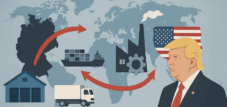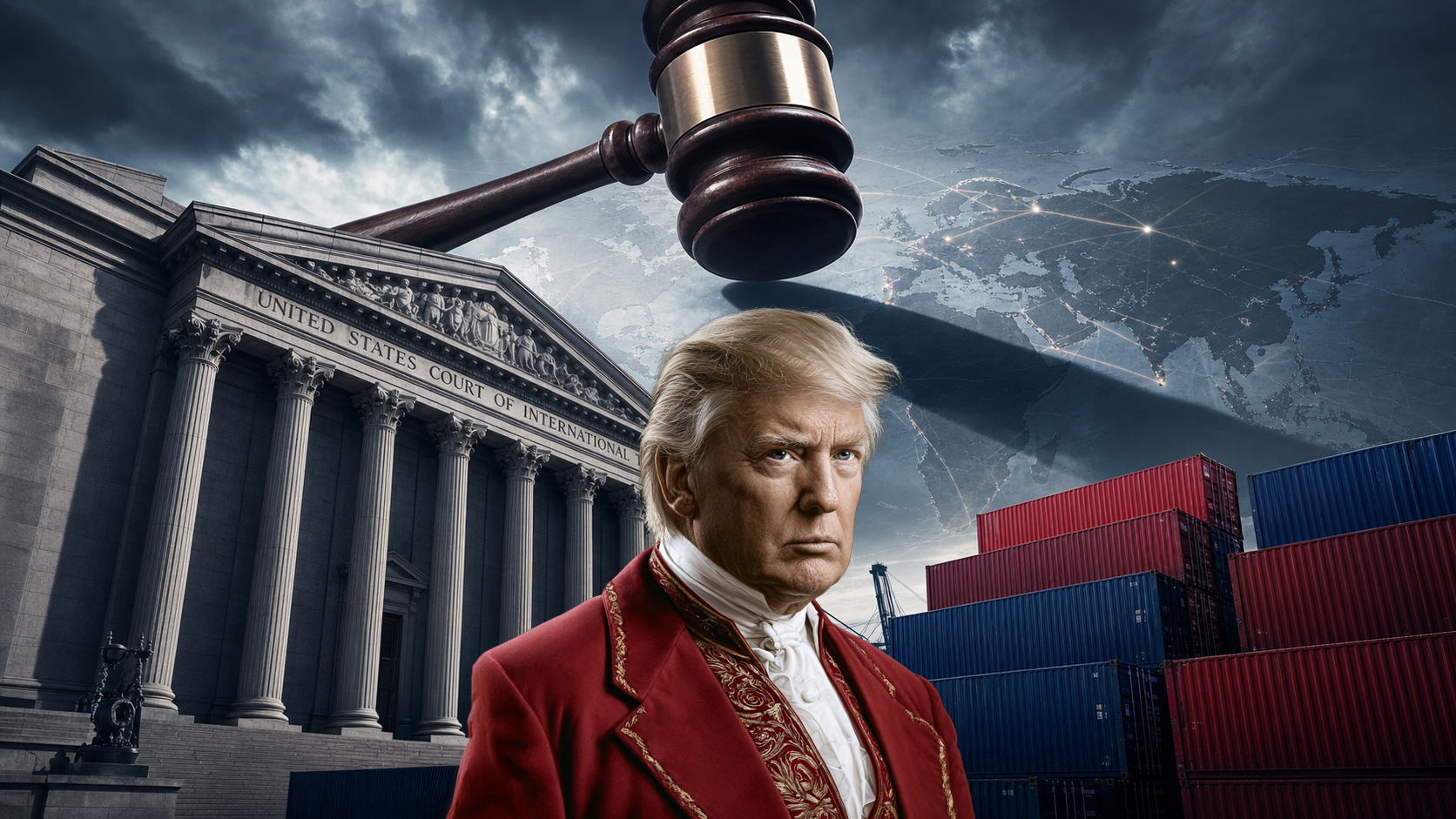
Ten percent tariffs inadmissible – When judges have to make trade policy: US court overturns Donald Trump's worldwide tariffs – Creative image: Xpert.Digital
Own goal in the billions: Despite tricks and billions in repayments – Trump's tariff chaos escalates in court
The President and the Law: Why Trump's most important economic weapon is failing miserably
Billion-dollar setback: US court overturns Trump's tariffs on all imports
In his second term, Donald Trump sought to upend the global trade order with a universal tariff and single-handedly end the chronic US trade deficit. However, reality has caught up with the US president twice over: Following the Supreme Court, the New York Court of International Trade also declared his drastic, blanket import duties unlawful in May 2026. The administration's attempt to justify far-reaching tariffs with historical emergency legislation or alleged balance of payments crises is increasingly failing due to the limitations of the US Constitution and hard economic facts. While Trump ignores the court ruling and risks an unprecedented escalation in the American legal system, the economic collateral damage is piling up: fueled inflation, stunted growth, and a looming wave of refunds amounting to billions for affected companies. This article analyzes the legal labyrinth of Trump's trade policy, reveals the fatal consequences for US consumers and the European economy, and explains why protectionism will never solve a structural trade problem.
Related to this:


The rule of law is showing its teeth – but Trump simply carries on
From emergency legislation to trade legislation: The rocky road of Trump's tariff policy
The trade policy of Donald Trump's second term is a story of repeated legal defeats followed by equally repeated executive improvisations. What began in the spring of 2025 as a fundamental restructuring of the global trade architecture spiraled into a legal quagmire, reaching its provisional nadir on May 7, 2026, when the Court of International Trade in New York declared the temporary universal tariffs of 10 percent unlawful. It was not the first, but the second major setback within a few months: As early as February 20, 2026, the United States Supreme Court had ruled by a 6-3 majority that the tariffs, based on the International Emergency Economic Powers Act (IEEPA), exceeded Trump's constitutional authority.
The sequence of these events is crucial for understanding the current situation. After taking office in January 2025, Trump imposed sweeping tariffs, invoking the IEEPA, an emergency law from 1977. The administration argued that the US trade deficits constituted a national emergency, authorizing the president to act unilaterally. However, the federal court in New York and several appeals courts rejected this argument. The Supreme Court ultimately clarified unequivocally: the authority to impose tariffs rests with Congress, not the president, according to Article I, Section 8 of the US Constitution. The justices ruled that while the IEEPA provides tools for economic crisis management, it does not contain an explicit authorization to impose tariffs.
That same evening as the Supreme Court ruling, Trump resorted to his next legal instrument. By Proclamation 11012 of February 20, 2026, he introduced a new, also ten percent, import tariff based on Section 122 of the Trade Act of 1974, which was to be in effect for 150 days – until July 24, 2026. This move initially appeared to be an elegant solution, since Section 122 explicitly designates tariffs as a permissible instrument. However, this path, too, proved to be legally fraught.
What Section 122 is and is not allowed to do: The logic of the Trade Act of 1974
The 1974 Trade Act is a cornerstone of American trade policy and contains numerous delegations to the executive branch. Section 122, in particular, allows the president to impose temporary import tariffs of up to 15 percent in the event of serious international balance of payments problems or significant risks to the stability of the US dollar. The crucial difference from the International Economic and Financial Action Plan (IEFP) lies in its explicitness: the Act names tariffs as a permissible tool. Nevertheless, their application is subject to factual prerequisites that cannot be arbitrarily defined.
The Court of International Trade in New York has now ruled by a two-to-one vote that the Trump administration failed to meet these requirements. The crux of the ruling: The US government could not sufficiently demonstrate the fundamental international payment problems that the law stipulates. Instead, the presidential executive order relied on trade and current account deficits, while Section 122 explicitly requires balance of payments deficits. This conceptual confusion is more than a semantic detail: trade balance, current account, and balance of payments are economically distinct concepts, and confusing them undermines the legal basis of the executive order.
A trade deficit, such as the one the US has experienced for decades, refers to the difference between imported and exported goods. The balance of payments, on the other hand, encompasses all of a country's economic transactions with other countries, including capital flows. The US traditionally does not exhibit a dramatic imbalance in its overall balance of payments, as the surplus in capital and financial accounts largely compensates for the trade deficit. The court thus acknowledged what many economists had criticized from the outset: the trade deficit is not a warning sign for the balance of payments, but rather an expression of structural economic patterns that are difficult to correct through tariffs.
At the same time, the court clarified that neither the US government nor US Customs and Border Protection (CBP) could demand import duties from the plaintiffs. Duties already collected must be refunded to the plaintiffs. The plaintiffs include the state of Washington and several small businesses that were directly affected by the flat-rate duties.
Related to this:

The anatomy of a constitutional dispute: Who has the right to impose tariffs in the USA?
Behind this specific ruling lies one of the most fundamental constitutional debates in American history: the question of the constitutional distribution of trade authority. According to Article 1, Section 8, Clause 3 of the US Constitution, regulating trade relations with third countries is an original prerogative of Congress. The Founding Fathers considered control over tariffs and foreign trade too powerful a weapon to be entrusted to a single individual. The president has no direct constitutional authority in trade matters—he is always dependent on legislative authorization.
However, Congress has delegated extensive powers to the executive branch over the past decades. Starting with the Smoot-Hawley Tariff Act of the 1930s, and increasingly since the Trade Expansion Act of 1962, the president was given specific trade instruments. This delegation initially followed an internal logic: faster action in trade crises, a more effective response to unfair trade practices by other countries, and more flexible negotiation of international agreements. What began as practical expediency has, over decades, evolved into an expanding framework of authorization, which Trump is now exploiting to its maximum extent.
The problem lies not in the principle of delegation, but in its limits. Courts have consistently emphasized that delegations extend only as far as the legislature has expressly authorized. The Major Questions Doctrine, which the Supreme Court has increasingly defined in recent years, states that decisions of extraordinary economic and political significance require a clear statutory basis. Trump's universal global tariffs—tariffs on all imports from around the world—constitute such a decision of extraordinary significance. The courts therefore require unambiguous authorization from Congress, which is not found in any of the cited laws.
This line of jurisprudence structurally restricts executive discretion in trade policy without eliminating it entirely. Sector- and country-specific tariffs based on Section 232 (national security) and Section 301 (unfair trading practices) remain unaffected by the rulings. This means that the steel and aluminum tariffs, the auto tariffs, and the China-specific tariffs remain in place. What falls are solely the blanket universal tariffs with which Trump attempted to reduce all trade policy to a single formula.
The White House's reaction: Defiance instead of dialogue
Trump responded to the court ruling of May 7, 2026, with a mixture of defiance and escalation characteristic of his presidency. He told reporters that he would continue his tariff policy regardless of the court's decisions. This stance is not merely rhetorical bravado: it raises fundamental questions about the functioning of the American legal system. When a president announces that he intends to disregard court rulings, the system of checks and balances faces a stress test that extends far beyond trade policy.
Formally, the government's path is clear: an appeal to the US Court of Appeals for the Federal Circuit, and then potentially to the Supreme Court. This sequence of appeals means that the May 7 ruling will not be fully enforced for the time being. The court must decide whether the suspensive effect of an appeal also applies to non-plaintiffs—that is, whether the tariffs may continue to be levied until a final decision is reached or must be suspended immediately for everyone. This question is legally open and of considerable practical importance for importers and customs authorities worldwide.
In addition, the administration's political strategy is already becoming clear: If Section 122 remains permanently blocked by the courts, Trump will activate other legal avenues. Section 232 could be extended to broader categories of goods, new unfair trade investigations under Section 301 could be initiated, and theoretically, the option of requesting direct authorization from Congress remains. The latter, however, is considered politically unrealistic, as polls indicate that a majority of the population views Trump's trade policies critically—especially with regard to the immediate price increases for American consumers.
The economic failure of the tariff instrument: When theory and reality diverge
Regardless of the legal dimension, the economic record of Trump's tariff policy must be viewed objectively. The central promise of the tariffs was: a reduction in the trade deficit, the return of manufacturing jobs, and a strengthening of the American negotiating position. The available data suggest that this promise, in its general form, has not been fulfilled.
The US trade deficit reached a record high of $1.231 trillion in merchandise imports in 2025—two percent higher than the previous year and 65 percent higher than ten years prior. The overall merchandise trade deficit remained virtually unchanged at around $901.5 billion compared to 2024. The monthly deficit also reflects this trend: In March 2026, it stood at $60.31 billion. This demonstrates that even after months of increased tariffs, the structural problem is far from being resolved. This is no coincidence or temporary phenomenon, but rather the expression of a profound structural truth: Trade deficits arise from the imbalance between national savings and national investment, not from a lack of tariff barriers.
Economic literature is largely in agreement on this point: Import tariffs can protect specific industries, but shift the cost burden to domestic consumers and businesses. The popular government rhetoric that foreign countries pay the tariffs is economically inaccurate. Studies by the Kiel Institute for the World Economy (IfW) show that 96 percent of the financial burden of US tariffs is borne domestically. US importers pay the tariffs at the border and pass them on to end consumers as price increases. Julien Hinz of the IfW succinctly summarized this situation: The tariffs are an own goal.
At the macroeconomic level, the consequences for growth are significant. The Austrian National Bank (OeNB) calculated that Trump's tariffs, combined with retaliatory tariffs from trading partners, would have reduced US economic growth by almost two percentage points in 2025. While the growth-dampening effect of the tariffs themselves was short-lived, according to the OeNB analysis, the retaliatory measures by trading partners would have more lasting effects, reducing economic growth by approximately 0.6 percentage points in both 2025 and 2026. Regarding inflation, the OeNB economists calculated that the tariffs would increase the US inflation rate by around 0.8 percentage points. For 2026, analysts expect consumer price inflation to rise by 2.7 percent, significantly above the US Federal Reserve's target.
Our US expertise in business development, sales and marketing


Our US expertise in business development, sales and marketing - Image: Xpert.Digital
Industry focus areas: B2B, digitalization (from AI to XR), mechanical engineering, logistics, renewable energies and industry
More information here:
A thematic hub offering insights and expertise:
- Knowledge platform covering global and regional economies, innovation and industry-specific trends
- A collection of analyses, insights, and background information from our key areas of focus
- A place for expertise and information on current developments in business and technology
- A hub for companies seeking information on markets, digitalization, and industry innovations
Car production, supply chains, investments: The silent collateral damage of the tariff debate
Collateral damage: Europe and Germany caught in the customs storm
The damage caused by Trump's tariff policies is not limited to American consumers. For Germany and the European economy, the ongoing tariff uncertainty represents a structural burden that is particularly painful during an already weak economic period. The Institute for Macroeconomics and Business Cycle Research (IMK) of the Hans Böckler Foundation calculated that 30 percent US tariffs on EU imports would reduce German economic growth by approximately 0.25 percentage points in both 2025 and 2026 – which would amount to zero growth in 2025. The joint economic forecast of the five leading German economic research institutes from spring 2025 stated that geopolitical tensions and protectionist US trade policies were exacerbating the already strained situation in Germany. Germany was thus threatened with a third consecutive year of recession.
The concrete sectoral effects are particularly noticeable in the automotive industry. Trump's announcement of increased tariffs on EU vehicles drew sharp criticism from both the European Commission and the German Association of the Automotive Industry (VDA), which described Trump's move as a serious strain on transatlantic relations. At the same time, the ruling of May 7, 2026, calls into question the stability of already negotiated trade agreements. The Supreme Court decision had already rendered bilateral deals with countries such as China, Japan, India, South Korea, and the EU potentially obsolete, as their foundation—the IEEPA tariffs—had been eliminated. The new Section 122 rulings add another layer to this uncertainty.
At the same time, geopolitical analysts warn of indirect beneficiaries of this situation. China, which has established alternative trade corridors in many areas and strategically reduced its dependence on US markets, could profit from the estrangement between Europe and the US. If Western alliances are worn down by trade tensions, this opens up strategic opportunities for actors seeking to weaken the transatlantic alliance. Former EU High Representative Kaja Kallas explicitly warned in this context that Trump's tariffs could play into the hands of China and Russia.
Related to this:

The refund marathon: Who gets their customs payments back?
A practically immensely important, yet often overlooked, chapter of this legal saga is the question of refunding tariffs already paid. The Court of International Trade had already ruled on March 4, 2026, that the tariffs levied under the IEEPA were unlawful and had to be refunded. Economists from the Penn-Wharton Budget Model Group estimated the refund volume for the IEEPA tariffs alone at over $175 billion—equivalent to a medium-sized economic stimulus package. At their peak, the IEEPA tariffs generated over $500 million in revenue per day.
The logistical and legal processing of these refunds presents a unique challenge. CBP must liquidate unliquidated entries without IEEPA duties and reassess those that have not yet been liquidated. Exactly who is entitled to a refund, how applications must be submitted, and the timeframe within which the agency must act are not definitively defined by law. The administration has no incentive to expedite this process. Market observers expect the government to allow considerable time to pass before processing refund applications. For importing companies—especially small and medium-sized enterprises (SMEs) without substantial cash reserves—this will mean a continued strain on liquidity.
The ruling of May 7, 2026, adds the Section 122 tariffs to this complex issue. A ten percent surcharge has already been levied on nearly all imports since February 24, 2026, based on this law. Whether and to what extent these payments must also be refunded depends on the outcome of the appeal. Should the Court of Appeals uphold the ruling, the US budget would face another wave of refunds amounting to billions of dollars. This fiscal dimension has a direct impact on the federal government's budget planning and is likely to further reinforce Trump's willingness to exhaust all legal avenues.
Structural decisions: What the trade dispute means for the global economy
The ruling by the Court of International Trade is more than just an episode in the ongoing conflict between Trump and the judiciary. It marks a turning point in how executive trade power is legally constituted in the United States. Structural implications can be drawn for three relevant areas.
First, there's the issue of the domestic balance of power: For decades, Congress has expanded executive trade powers while weakening its own institutional oversight. The recent court rulings necessitate a re-evaluation of constitutional principles. Whether Congress possesses the strength and the will to reclaim its prerogative is questionable. The Republican majority in Congress has so far made no serious attempt to legislatively rein in Trump's trade policies. This institutional vacuum could persist indefinitely, granting future presidents—regardless of their party affiliation—extensive power in trade policy.
Secondly, regarding the international trading order: WTO principles, the Most Favored Nation clause, the principle of reciprocal tariffs – all of these have come under massive pressure due to the Trump administration's unbridled unilateral actions. When the world's most powerful economy treats rules as optional, multilateral institutions lose authority and enforcement power. At the same time, there are indications that the bilateral agreements negotiated by the administration, despite or perhaps even because of the tariff pressure, will leave behind fragmented and asymmetrical trade relations that hardly reflect the spirit of a rules-based international economic order.
Thirdly, for global investment planning: nothing paralyzes investment decisions more than legal uncertainty. When companies don't know whether a tariff will still be in effect tomorrow, whether it will be refunded, or whether the next decree will create a new legal basis, they withdraw investments, diversify supply chains at the expense of efficiency, and base their long-term production planning on excessive risk premiums. These invisible costs of trade policy volatility are not captured in any tariff statistics, but their cumulative effect on global productivity growth may be more consequential than the direct tariff burdens themselves.
A legal labyrinth with an open ending: What comes next?
The procedural course is complex and multifaceted. The judgment of May 7, 2026, will most likely be appealed to the Court of Appeals for the Federal Circuit. This federal appeals court specializes in trade and customs matters and has historically been more likely to permit than restrict executive action in trade matters. A reversal of the lower court's judgment is therefore possible, but not certain.
At the same time, the ongoing lawsuits filed by 24 US states against the Section 122 tariffs are driving a parallel line through the court system. Their core argument—that there is no genuine balance of payments crisis—aligns with the logic of the May 7 ruling. The more courts uphold this argument, the weaker the administration's position becomes in further appeals. The Trump camp is banking on gaining time: As long as the appeals are pending, the tariffs can continue to be levied with some legal uncertainty, even if there are formal lower court rulings against them.
In parallel, the administration is already preparing contingency strategies. Section 232 of the Trade Expansion Act of 1962, which permits tariffs based on national security considerations, has so far been used primarily for steel, aluminum, automobiles, and lumber. New investigations could encompass further product categories, and the law is not subject to a 150-day time limit. Section 301, which makes unfair trade practices the trigger for countermeasures, also offers a broader scope than previously used. Trump thus has a legal toolbox that, while smaller, is not empty.
Related to this:

The bigger picture: Protectionism as a symptom, not a solution
Trump's tariff policy is ultimately an expression of a deeper economic narrative that interprets the persistent US trade deficit as a sign of exploitation. This narrative has political appeal, but is economically too simplistic. The US trade deficit largely reflects the attractiveness of American capital markets: foreign capital flows into US bonds and stocks, and the equivalent value is goods exports to the US. A country that provides the world's reserve currency and serves as a global safe haven will structurally exhibit current account deficits. This is not a weakness, but rather a form of global privileged power.
This structural relationship makes it clear why tariffs cannot eliminate the deficit: As long as global demand for US dollar-denominated assets remains robust and US consumers spend more than they save, imports will exceed exports. Even in 2025, the year of the most intensive tariff regime, the deficit fell by only two billion dollars to 901.5 billion dollars—a change that is barely statistically measurable. The tariffs slightly shifted the composition of trading partners, but did not reduce the overall deficit. On the contrary, they increased inflation, slowed growth, and undermined international confidence in the reliability of American economic policy.
What the US economy needs instead—stronger investment in education, infrastructure, and technological competitiveness; fiscal discipline that reduces the need for capital imports; and a consistent, rules-based trade policy that builds long-term investor confidence—cannot be replaced by tariff decrees. The court ruling of May 7, 2026, has legally limited the tariff instrument. Perhaps the more important limitation, however, is the economic one: Even if Trump eventually finds a legally sound basis for his tariffs, he will not close the deficit. He will, however, further erode the purchasing power of the American middle class he claims to represent.
Your global marketing and business development partner
☑️ Our business language is English or German
☑️ NEW: Correspondence in your native language!

Konrad Wolfenstein
I and my team are happy to be available to you as your personal advisor.
You can contact me by filling out the contact form here wolfenstein@xpert.digital:or simply call me at +49 7348 4088 965. My email address is
I'm looking forward to our joint project.
☑️ SME support in strategy, consulting, planning and implementation
☑️ Creation or realignment of the digital strategy and digitization
☑️ Expansion and optimization of international sales processes
☑️ Global & Digital B2B trading platforms
☑️ Pioneer Business Development / Marketing / PR / Trade Fairs
🎯🎯🎯 Data-driven B2B industry hub as a quasi-in-house solution


The quasi-in-house solution: How Xpert.Digital closes operational gaps in B2B marketing and sales – Smart Content-Driven Business - Image: Xpert.Digital
Xpert.Digital is a data-driven B2B industry hub led by Konrad Wolfenstein . The company acts as an external, quasi-in-house solution for industrial partners, closing operational gaps in marketing, content, and sales – without requiring additional resources on the client side.
More information here: