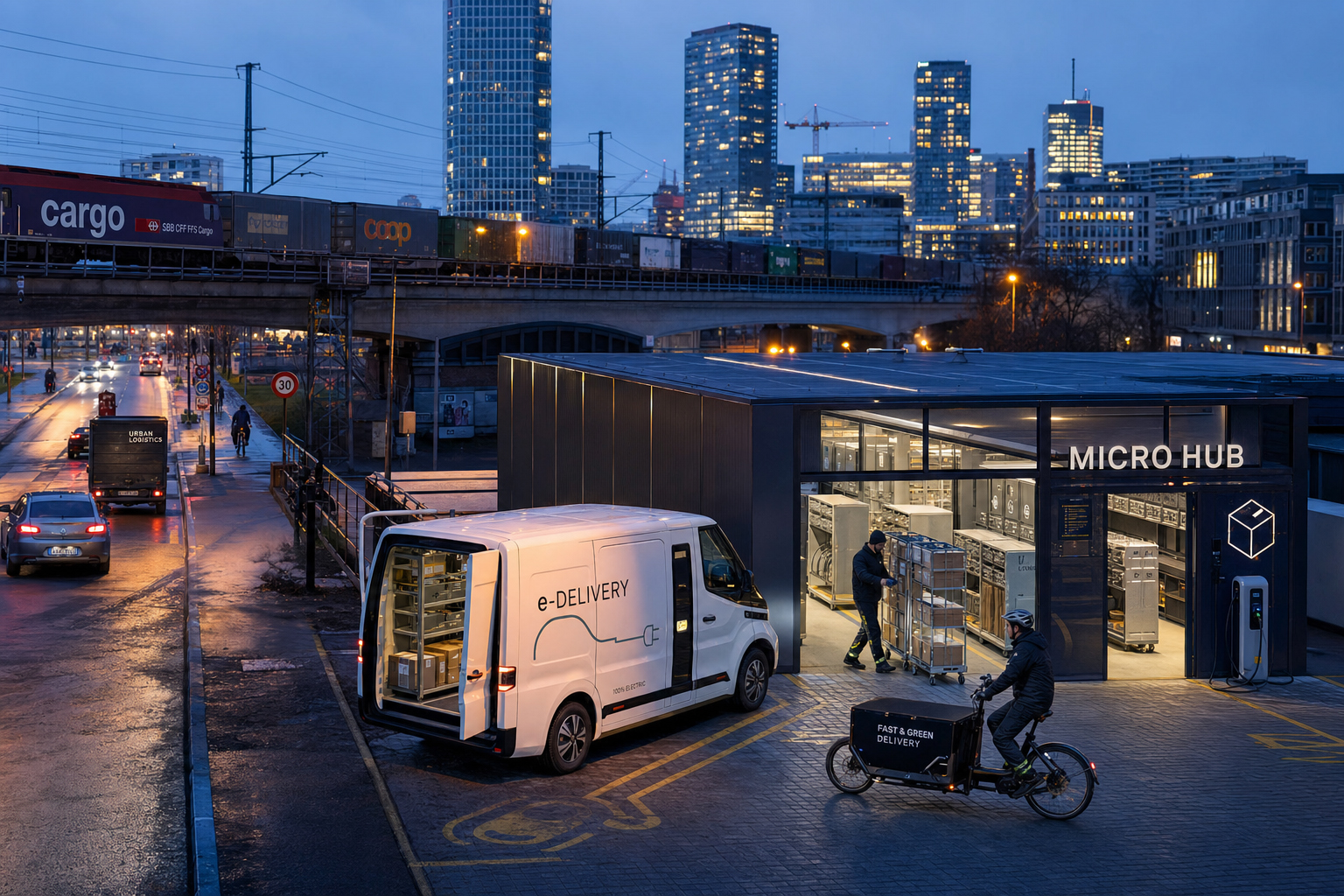
Expensive packages, empty streets? The paradoxical problem of the German logistics industry – a creative image on the topic, created with AI: Xpert.Digital
The end of diesel vans? How new laws and clever concepts are revolutionizing urban logistics
Last-mile collapse: Why our city centers are suffocating in delivery traffic
36 percent more delivery vans: Are our cities facing traffic collapse by 2030?
Few things are as commonplace for us today as quickly clicking "order" and the almost seamless arrival of the package at our doorstep. But behind this convenient facade of modern e-commerce lies a massive logistical effort that is increasingly pushing our cities and the transport industry to their limits. The so-called "last mile"—the final and most expensive leg of the delivery journey—has long since become the ultimate stress test. Congested roads, an acute shortage of parking spaces, drastically rising transport costs, and ever-stricter environmental regulations are forcing an entire industry to rethink its approach.
While demand for urban delivery services is exploding, freight companies are grappling with structural capacity reductions, rapidly rising costs, and an acute driver shortage. A paradoxical market has emerged, where scarce cargo space meets exorbitant prices. Yet, amidst this pressure, a quiet revolution is taking shape: micro-depots, intelligent route planning, and the often-underestimated cargo bike are proving to be promising levers for averting urban collapse. The following text delves deeply into why the last mile is far more than just an operational detail—it is the arena where the livability, efficiency, and sustainability of our cities of tomorrow will be determined.
The stress test on our doorstep: How the last mile will determine the future of cities
Few sectors illustrate the contradictions of modern consumer society as clearly as last-mile logistics. Millions of packages, food orders, and express deliveries must be navigated daily through congested city centers where parking is scarce, streets are jammed, and emissions regulations are becoming increasingly stringent. Market researchers expect the global urban logistics market to triple by 2033, while more than 320 active or planned low- and zero-emission zones in Europe already make it difficult for conventional delivery vehicles to operate. At the same time, a joint study by McKinsey and the World Economic Forum predicted that demand for last-mile services in the world's 100 largest cities could increase by 78 percent by 2030, leading to 36 percent more delivery vehicles on the road. This situation makes it clear that last-mile delivery is no longer just an operational detail of the logistics industry, but has become a central urban planning and economic challenge.
Between a slump in orders and a cost explosion: The paradox of the industry
The economic situation of the transport and logistics sector in Germany is ambivalent and, at first glance, contradictory. On the one hand, freight forwarders reported a noticeably gloomy mood at the beginning of 2026, with a significant increase in negative market assessments among the surveyed market participants. On the other hand, freight exchange data paints a picture of acute capacity shortages: In the first quarter of 2026, 41 percent more freight offers were posted on the freight exchange across Europe than in the previous year, while reported truck capacities fell by 7 percent during the same period. This trend intensified in the second quarter, as the number of freight listings rose by 23.8 percent across Europe, while the supply of available trucks decreased by 10.8 percent. In Germany, the freight share on the spot market temporarily reached up to 88 percent compared to only 12 percent of available cargo space – an imbalance that suggests a classic seller's market, in which transport service providers should actually have pricing power.
The real paradox lies in the fact that this tight supply is not the result of a booming economy, but rather of structural capacity reduction. Numerous bankruptcies and a progressive withdrawal of companies from the market have tightened the supply of transport space, even though overall economic stimulus has remained weak. The German Federal Association of Road Haulage, Logistics and Waste Disposal (BGL) anticipates that the German truck fleet could shrink by 10 to 20 percent, which is likely to further exacerbate the shortage. Two cost categories are particularly burdensome for freight forwarding companies: Personnel costs in the second quarter of 2026 were around 3.7 percent higher than the previous year, thus exceeding the general inflation rate, while diesel prices rose by 11.2 percent within a year. Added to this is the new CO₂ price of 55 euros per ton, which, together with rising energy prices, is creating continued cost pressure.
Rising prices as a symptom of a deeper structural problem
The resulting price trend is clear. In the second quarter of 2026, the average price offered by shippers on domestic German routes was €2.10 per kilometer, an increase of 13.4 percent compared to the same quarter of the previous year, while the average price demanded by contractors reached €2.18 per kilometer, an increase of 10.5 percent. In May of the same year, shippers even offered an average of €2.19 per kilometer, representing an increase of more than 17 percent compared to the same month of the previous year, while the highest average price demanded in a single week was €2.36 per kilometer. It is also noteworthy that the price gap between shippers and transport service providers has narrowed considerably in recent quarters, indicating increasing market transparency.
However, a closer look reveals a contrasting trend. In the FTL and LTL segments, i.e., full truckload and less-than-truckload (LTL) transport, a decoupling of volumes and prices has become established. While prices in the short-lived spot market occasionally decline slightly because demand reacts directly to supply, prices in the less volatile contract market continue to rise steadily because suppliers calculate their rates based more on risk and cost premiums than on actual volume growth. This picture confirms that the current price dynamics are less an expression of robust demand than a reaction to structurally shrinking capacities, coupled with a driver shortage that is permanently tightening the supply side of the market. For shippers, this means that planning certainty in transport procurement will in future be achieved less through short-term market observation and more through strategic partnerships and long-term capacity commitments.
The last mile as the most expensive part of the supply chain
Within the entire transport chain, the last mile is traditionally considered the most costly and inefficient segment. Estimates suggest that between 60 and 70 percent of total parcel delivery costs are attributable to this final leg, often only a few kilometers long, within the city. The European market for last-mile delivery is projected to grow at an annual rate of approximately 9.3 percent until the early 2030s, further increasing the economic pressure on cities and transport infrastructure. This inefficiency is primarily due to the low density of individual delivery trips, high stopping frequencies in confined spaces, and competition for scarce parking in densely populated areas.
This problem is particularly evident in certain product segments. Construction site deliveries, food and drugstore logistics, and traditional general cargo transport can together account for up to 50 percent of total urban delivery traffic, but are structurally more difficult to consolidate and automate than traditional parcel deliveries. Cities like Hamburg have therefore formulated concrete quantitative targets: By 2030, the share of alternative means of transport, such as cargo bikes, is to increase to 25 percent, while courier express parcel deliveries to private customers should be carried out by motor vehicle in no more than 45 percent of cases, of which at least 95 percent must be emission-free. Such targets illustrate that municipalities are increasingly intervening actively in the design of urban supply chains, instead of leaving optimization solely to the market.
Micro-depots and automated hubs as an operational response
One of the most effective structural solutions to last-mile inefficiency is the use of micro-depots. These are defined locations for the transshipment and temporary storage of goods in densely populated delivery areas with high shipment volumes, providing secure parking for cargo bikes and small vehicles. They act as a link between a logistics provider's regional distribution center and the actual recipient, significantly shortening the critical final delivery leg. This intermediate stage allows traditional last-mile delivery, carried out with a large delivery vehicle, to be distributed among several smaller, often electric, vehicles that are better equipped to navigate narrow city streets.
The benefits of such hubs extend beyond simply reducing traffic congestion. Municipal pilot projects, such as the one in Hamburg, link the expansion of micro-depots with concrete environmental policy goals, aiming to reduce emissions from courier, express, and parcel delivery services by 40 percent by 2030. At the same time, expert discussions show that staggering delivery traffic, for example through increased nighttime deliveries, can further reduce traffic peaks and bring not only ecological but also social benefits – such as easing the burden of the ongoing skilled labor shortage in the transport sector. These physical hubs are also increasingly being technologically upgraded: Intelligent, AI-supported route optimization allows for more precise bundling of stops, more efficient resource utilization, and a reduction in operating costs right at the final, most granular level of delivery.
LTW Intralogistics Solutions

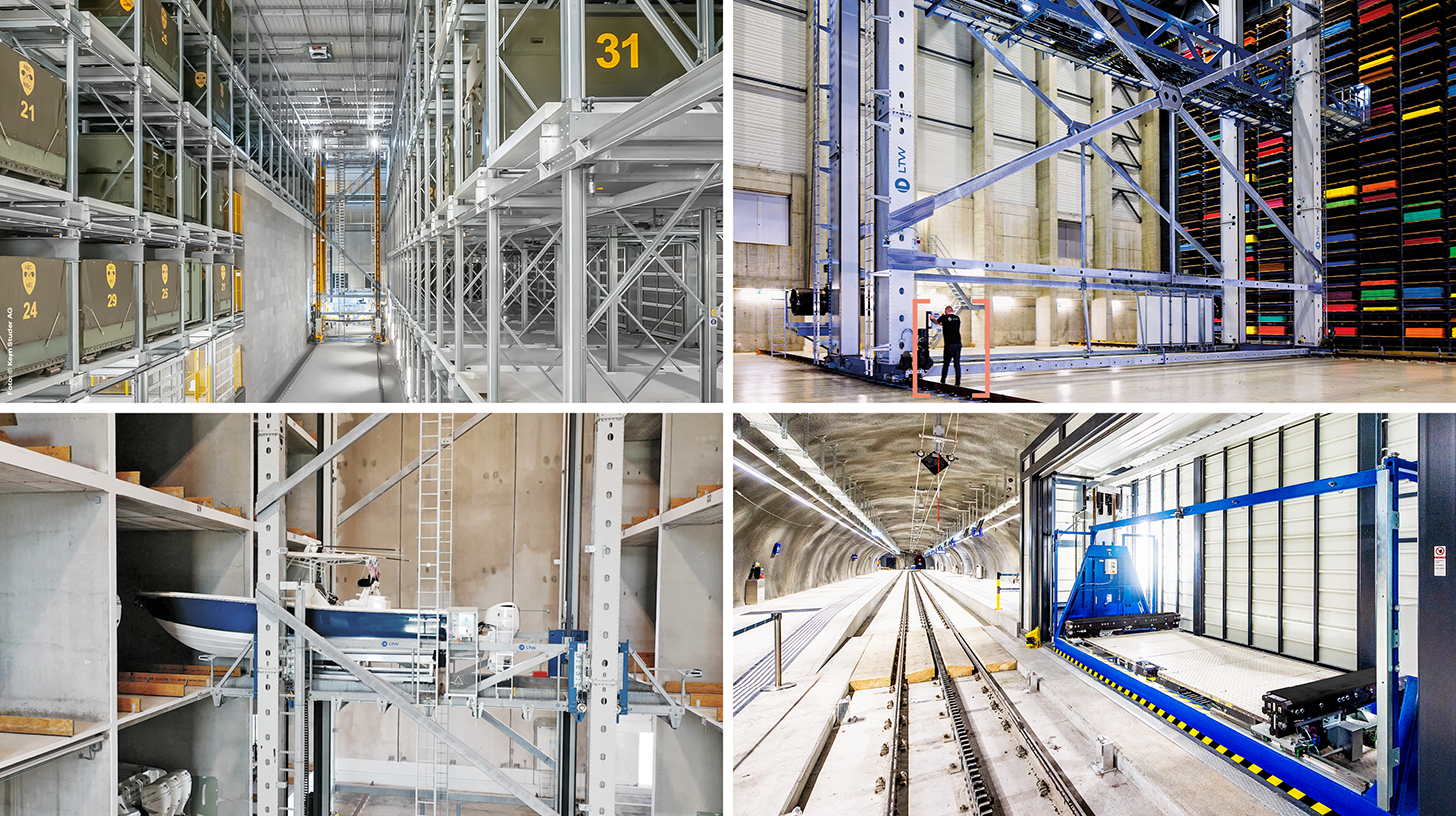
LTW Intralogistics – Engineers of Flow - Image: LTW Intralogistics GmbH
LTW offers its customers not individual components, but integrated complete solutions. Consulting, planning, mechanical and electrotechnical components, control and automation technology, as well as software and service – everything is networked and precisely coordinated.
In-house production of key components is particularly advantageous. This allows for optimal control of quality, supply chains, and interfaces.
LTW stands for reliability, transparency, and collaborative partnership. Loyalty and honesty are firmly anchored in the company's philosophy – a handshake still means something here.
Related to this:
Urban logistics reimagined: Between nighttime deliveries and digital networking
Rail transport as an underestimated lever for urban logistics
In addition to micro-depots, combined transport, i.e., the linking of rail and road, is regaining importance in the urban logistics debate. Exemplary concepts such as the City Cargo solution in Zurich or comparable approaches in Geneva demonstrate how more than seventy retail outlets in a city can be supplied via a central rail hub, with the subsequent local distribution within the city increasingly being handled by lower-emission vehicles. The decisive advantage lies in the fact that large quantities of goods can be efficiently transported by rail over long distances, while only the final, short distance within the city needs to be covered by road.
However, this combined transport system is very demanding. It requires high-performance rail lines, sufficient capacity, and inner-city transshipment terminals that enable cost-effective transfers between modes of transport. Standardized transport units play a central role in ensuring a smooth transition between rail and road. The swap body, also known as a swap body, is widely used in Europe and is specifically designed for continental European road and rail transport. It features fold-out support legs that allow it to stand independently without a chassis. Unlike the globally standardized ISO container, which relies on a chassis or freight wagon, the swap body offers the advantages of a lower tare weight and better compatibility with European pallet dimensions, thus increasing its payload capacity in intra-European transport. While the swap body remains limited to continental transport, and the ISO container is indispensable for intercontinental transport, this specialization proves to be a practical advantage, particularly for linking rail terminals with inner-city distribution centers.
Digital platforms to combat the problem of empty runs
Another key approach to increasing efficiency lies in avoiding empty runs through digital platforms and shared logistics resources. The underlying idea is to optimize mobility, transport, and logistics jointly in the future through cooperative resource and data use, instead of each company operating in isolation with its own, often only half-utilized vehicles. In practice, however, such shared logistics models still play a relatively minor role in urban areas, primarily due to technical and organizational hurdles. Currently, every driver has to manually re-enter incoming packages or pallets from other companies, as there is no automatic, cross-platform shipment recognition, resulting in a considerable additional workload.
In parallel, the concept of collaborative routing is gaining importance. Unlike traditional, individual route planning, such systems distribute traffic flows across company boundaries and in real time, thus enabling more targeted avoidance of congestion and empty runs. A prerequisite for this is that public authorities and private companies share their traffic data in real time to better manage road traffic overall. This is precisely where one of the biggest structural weaknesses of the German logistics landscape becomes apparent, as the willingness to share data across industries is currently low, even though this willingness to cooperate would be essential for significant efficiency gains.
Cargo bikes as the surprising winner of the expert discussion
Among the various technical solutions for last-mile delivery, cargo bikes surprisingly often emerge as the most positively assessed approach by experts. By a significant margin, transport experts have the most optimistic outlook for the future of cargo bikes, while autonomous vehicles in parcel logistics, despite widely expressed expectations, are viewed with caution and little enthusiasm. Experts particularly associate sharing cargo bikes and their direct use for last-mile deliveries with the greatest potential for reducing traffic congestion and conserving space and resources.
This positive assessment is no coincidence, but reflects tangible practical advantages. Cargo bikes require significantly less parking space, can operate in traffic-calmed zones and on cycle paths, and produce no local emissions. The Netherlands demonstrates how consistent political regulation can accelerate this trend. While the expansion of electromobility for commercial vehicles is stagnating in some countries, the Netherlands has already achieved an electric vehicle share of 78 percent for newly registered vans, as the introduction of zero-emission zones effectively forces companies to convert their fleets to electric drives for urban access. Germany has lagged significantly behind in this regulatory intervention, which is slowing down the overall fleet conversion.
Nighttime deliveries and time staggering as an underestimated tool
Besides vehicle selection, the timing of deliveries is also gaining strategic importance. Staggering delivery traffic, particularly through increased nighttime deliveries, can alleviate existing daytime traffic peaks and simultaneously increase the efficiency of the vehicles used, as they can travel significantly faster and without congestion outside of rush hour. This effect is economically relevant because it increases the number of stops that can be served per route, thereby reducing the cost per shipment, without requiring additional vehicles or infrastructure.
However, implementing nighttime deliveries in densely populated residential areas is politically and legally complex due to noise pollution concerns. A classic conflict of objectives arises between the logistics industry's interest in more efficient vehicle utilization and the legitimate need for peace and quiet among residents, a conflict that many municipalities have so far been hesitant to address. Progressive approaches therefore rely on particularly quiet vehicle technology, low-noise loading processes, and close coordination with affected residents to realize the economic advantages of nighttime deliveries without significant public acceptance issues.
Regulatory pressure as an innovation driver and cost factor
Urban freight transport is now subject to a complex set of regulations comprising European directives, national laws, and municipal access restrictions. From a technical perspective, several key messages are crucial for a successful realignment of urban freight transport: these include greater planning certainty and a significant reduction in bureaucracy, the establishment of dedicated municipal contact points for logistics issues, a consistent shift towards alternative drive systems, and a more systematic collection and dissemination of relevant traffic data. In addition, targeted site planning for logistics areas, continuous route optimization, and specific concepts for the particularly demanding logistics of construction sites are recommended, such as so-called Construction Consolidation Centers, which consolidate building materials before transporting them together to the respective construction site.
For companies in the sector, this regulatory framework represents a significant additional burden, as investments in new vehicle technology, digital data collection, and adapted logistics concepts must be made alongside existing cost pressures. At the same time, however, this very tightening of regulations also opens up new business opportunities, for example, for specialized providers of micro-depot infrastructure, cargo bike sharing platforms, or software solutions for collaborative routing. Those who invest early in these future-oriented areas can secure a strategic advantage over competitors who continue to rely on traditional, diesel-powered fleets as soon as more cities tighten their emissions regulations.
Automation, artificial intelligence and the limits of what is technically feasible
On the technological side, many companies are increasingly relying on artificial intelligence and predictive analytics models to proactively manage warehousing and transportation processes rather than reactively, thereby gaining greater real-time transparency across the entire delivery process. Semi-autonomous electric trucks and networked sensors are also among the technologies that promise significant efficiency gains and increased road safety in the medium term, while simultaneously reducing operating costs considerably. Additionally, autonomous delivery robots are being discussed as a potential solution for the final, very short leg of delivery to the end customer.
Nevertheless, expert discussions reveal that expectations for fully autonomous systems are considerably more subdued in practice than the public hype suggests. Particularly compared to cargo bikes, traffic experts consider autonomous delivery solutions to be less mature and more limited in their short-term impact. This assessment seems plausible when one considers that autonomous vehicles face far greater technical challenges in complex inner-city environments dominated by pedestrians, cyclists, and illegally parked vehicles than, for example, on clearly structured stretches of highway. The real short-term leverage, therefore, lies less in the complete automation of the vehicles themselves, but rather in the intelligent control and bundling of existing, predominantly human-operated modes of transport.
A market caught between structural scarcity and technological upheaval
The German transport market is thus at a remarkable crossroads. On the one hand, structural capacity reductions due to bankruptcies, driver shortages, and rising operating costs are resulting in persistently tight price levels, with little prospect of short-term relief. Forecasts for 2026 predict that transport prices will remain high given limited capacity and ongoing staff shortages. While increasing market transparency is narrowing the price gap between shippers and service providers, the fundamental imbalance between freight and available cargo space persists. On the other hand, this very pressure presents an opportunity for profound structural modernization – moving away from fragmented, inefficient individual journeys towards more integrated, intermodal, and increasingly automated logistics networks.
For companies operating in the B2B sector, this translates into a clear strategic recommendation. Those who continue to rely exclusively on traditional, road-based individual transport will face increasing pressure from rising costs and growing regulatory constraints. Conversely, those who invest early in intermodal concepts, automated micro-depots, digital collaboration platforms, and alternative delivery methods such as cargo bikes will position themselves as significantly more resilient, not only ecologically but also economically. The last mile will therefore remain one of the most exciting, yet also most challenging, innovation areas in the entire logistics industry in the coming years, determining how livable, efficient, and economically viable the cities of tomorrow truly will be.
Consulting - Planning - Implementation

Konrad Wolfenstein
I would be happy to serve as your personal advisor.
You can contact me at wolfenstein∂xpert.digital or
Just call me on +49 7348 4088 965 .
Your intralogistics experts

Consulting, planning and implementation of complete solutions for high-bay warehouses and automated storage systems - Image: Xpert.Digital
More information here: