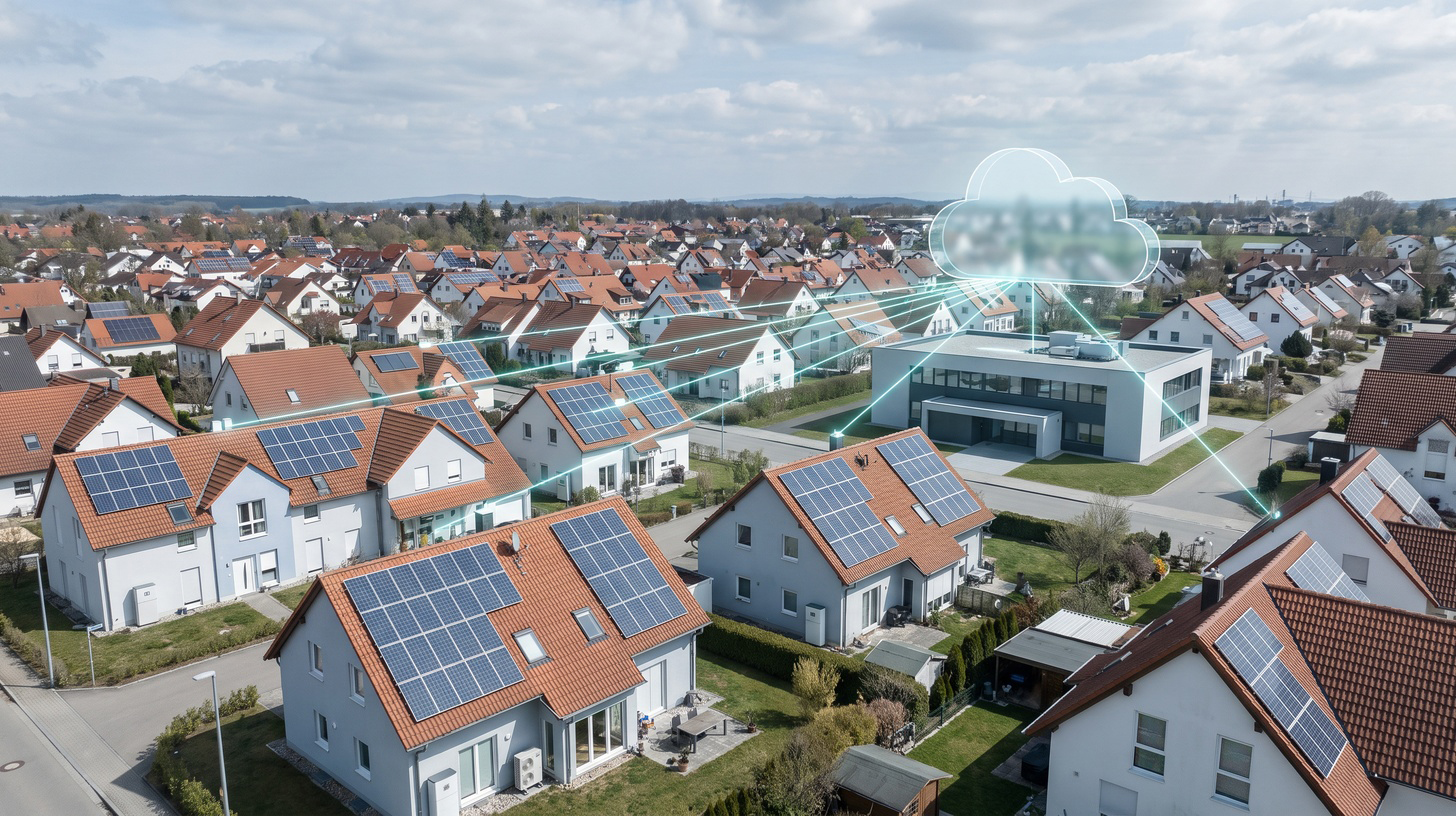
Renewable energies: The market continues to grow, but the old growth model is coming to an end – Creative image on the topic, with AI: Xpert.Digital
From AI to battery passports: How the business model of photovoltaics is changing
Grid connection as a luxury: Why cheap modules won't solve our electricity problem
Gigawatt boom in storage: The hidden second pillar of the energy transition and Europe's solar economy facing a stress test
The year 2026 marks a fundamental turning point for the European solar economy. For years, the industry's focus has been primarily on a simple metric: the fastest possible expansion of new megawatt capacity, driven largely by the rapid decline in solar module prices. But this convenient growth logic is outdated. Anyone who still believes that the success of the energy transition can be measured solely by affordable hardware and vast amounts of roof space covered is overlooking the significant structural shifts in the market.
The real bottleneck has long since shifted from pure generation to the entire system. The focus of the new energy economy has suddenly shifted to entirely different factors: highly available grid connections, the integration of gigantic battery storage systems, flexible demand management, and the seamless digitalization of bureaucratic processes. At the same time, new players are emerging – from AI-driven data centers that are becoming system-critical large-scale consumers to digital platforms that, as virtual power plants, are revolutionizing the market between rooftops and the stock exchange. In short: Europe doesn't lack cheap solar technology, but rather intelligently coordinated flexibility. The following comprehensive overview analyzes the most profound drivers of this structural transformation and shows why future economic success will be reserved for those who seamlessly link hardware, data, regulation, and financing.
Related to this:


Europe's solar economy faces a bottleneck test: Cheap modules do not solve an expensive system problem
The European photovoltaic industry will enter a phase in 2026 where installed megawatts alone will say less and less about economic success. For years, the central question was how quickly modules could be procured, land secured, roofs covered, and systems financed. Now, the bottleneck is shifting from the generation asset to the entire system. Grid connections, flexible demand, storage, marketing, data quality, and regulatory resilience are increasingly determining whether a technically complete system also has economic viability. Recent reports from pv magazine highlight this shift particularly clearly: Transmission system operators are massively increasing their storage assumptions, policymakers and businesses are grappling with new grid connection regulations, a digitalization alliance is calling for standardized processes, and providers like Cloover, SMA, and Flexpower are combining hardware with financing, control systems, and energy market products.
This development is not a sign of declining importance for photovoltaics. Rather, it is a consequence of its success. At the end of 2025, around 406 gigawatts of solar power capacity were installed in the European Union. Annual additions, at 65.1 gigawatts, were slightly below the previous year's figure of 65.6 gigawatts, marking the first decline since 2016. At the same time, solar power covered approximately 13 percent of European electricity consumption. SolarPower Europe's most likely expansion path leads to around 718 gigawatts by 2030, thus falling short of the political target of 750 gigawatts. This is not a collapse, but a normalization at a high level. The easy phase in which falling module prices almost automatically generated growing installations is over. Future growth will depend more heavily on grids, flexibility, permitting, capital costs, and the electrification of transport, heating, and industry.
Economically, this means a shift in value creation. The value of an additional solar module decreases relative to the value of a secure grid connection, an intelligent operating model, or reliable offtake. Hardware remains necessary but becomes more interchangeable. Differentiation arises in project development, system integration, financing, software, data, and contractual risk allocation. Those who continue to focus solely on euros per watt underestimate the system's costs and overestimate the asset's margins. The provocative conclusion is: Europe doesn't have too little cheap solar technology, but rather too little economically coordinated flexibility.
Storage facilities are evolving from an additional business to the second pillar of the electricity system
The structural change is particularly evident in large-scale batteries. German transmission system operators anticipate 84.1 to 102.4 gigawatts of large-scale battery storage capacity and 168.2 to 204.8 gigawatt-hours of capacity by 2040. Compared to today's levels of 2.7 gigawatts and 4.1 gigawatt-hours, this is not a gradual continuation, but a completely new system landscape. In addition, smaller storage systems with 47.4 to 79.5 gigawatts of power and 94.8 to 159 gigawatt-hours of capacity will be required. Even if the upper figures are not reached, a market is emerging that will require power electronics, grid connections, land, operations management, optimization, insurance, and financing on an industrial scale.
The high expansion figures are plausible because several revenue and system functions converge. Batteries shift solar power to the evening hours, provide balancing power, reduce peak loads, stabilize local grids, and can utilize connections more efficiently. They also serve as a countermeasure against negative prices, which occurred in Germany and several neighboring markets in approximately six percent of the hours in 2025. Negative prices are not a market malfunction, but rather a signal of a lack of temporal, spatial, or contractual flexibility. Their frequency reduces the revenues of inflexible producers but increases the value of storage, controllable consumers, and cross-border transmission capacities.
Profitability remains challenging. The Enervis index projects modeled revenues of approximately €16,950 per megawatt for July 2026. This was six percent less than in June, but around 40 percent more than in the same month of the previous year. The twelve-month average was approximately €155,000 per megawatt per year, while the forecast for 2026, at €151,500, was slightly lower. Even more important than the average is the variance: Monthly revenues during the period under review ranged from €5,700 to €18,900 per megawatt. A project financed on a single strong summer month is therefore structurally overly optimistic.
Market benchmarks for 2026 show a wide range of capital expenditures. For large European long-term storage (LFP) systems, depending on duration, location, grid connection, and capacity, turnkey costs are often quoted at around €175 to €260 per kilowatt-hour. German investment calculations, for example, differentiate between approximately €700,000 per megawatt for two-hour systems and around €935,000 per megawatt for four-hour systems. Longer storage durations increase the absolute capital requirement but can broaden trading options and, in model calculations, enable higher unleveraged returns. The decisive factor is not the lowest container price, but the total cost, including substation, construction, fire protection, grid studies, warranties, spare parts, degradation, and financing.
Returns on investment therefore become the result of an optimization architecture. A storage system must simultaneously balance technical availability, battery lifespan, and market revenues. The more frequently it reacts to short-term price signals, the greater the cycle count and thermal stress can increase. The more conservatively it is operated, the more revenue opportunities remain untapped. Good software can improve this conflict of objectives, but not eliminate it. For investors, it is therefore crucial whether optimizers offer comprehensible models, reliable data histories, and clear liability rules. Artificial intelligence creates value when it reduces forecasting errors, improves bids, or lowers degradation costs. A mere AI label without verifiable added value will carry little weight in financing discussions.
The grid connection is becoming the scarcest production factor
The political debate surrounding the "first-come, first-served" principle confirms that grid capacity now has an option value. Currently, an early application can block significant capacity, even if the underlying project is still in its early stages. At the same time, more advanced projects with greater system benefits are waiting in the wings. The Federal Council therefore proposes flexible grid connection agreements, three-year capacity reservations, and a prioritization of projects that combine generation, storage, and load management. The Federal Government is pursuing a similar approach with its grid connection package but considers a separate initiative by the states unnecessary.
Economically, it's about allocating a scarce resource. A purely first-come, first-served system is transparent, but not necessarily efficient. It rewards speed of application, not project maturity, economic benefit, or flexible operational readiness. A prioritized system can better utilize existing infrastructure, but it also introduces new risks. Criteria can become complex, inconsistent, or susceptible to manipulation. Network operators gain discretionary leeway, which complicates financing and project evaluation. The reform must therefore combine three objectives: clear rules, binding deadlines, and a mechanism for quickly releasing unused reservations.
Flexible grid connection agreements are particularly relevant because they highlight the difference between a physical and a guaranteed connection. A project can be technically connected without being able to feed in or draw its full rated capacity at all times. This can be acceptable for storage facilities, electrolyzers, data centers, charging parks, and industrial plants, provided that limitations are predictable, digitally transmitted, and economically priced. This creates a market for grid connection quality. Highly available, fixed capacity becomes more expensive, while interruptible or time-variable capacity can offer cheaper and faster access.
This development is strategic for industry and logistics. A depot with rooftop photovoltaics, battery storage, an electric truck fleet, and potentially heating or cooling requirements can plan its connection as a portfolio of controllable loads. The grid operator then sees not just an additional peak load, but a flexible system. This requires reliable load forecasts, remote controllability, and contracts that clearly regulate interventions and balancing. Site planning thus becomes an interdisciplinary task involving the energy market, data, operations, and real estate development.
Germany's 866 online worlds are slowing down scaling
The Energy Transition Digitalization Alliance identifies a structural problem—866 distribution network operators—that is often underestimated. Decentralization can foster local knowledge and proximity, but it generates high transaction costs when forms, technical requirements, data interfaces, and processing procedures differ. For an installer with a regional focus, this diversity is cumbersome. For a platform aiming for nationwide growth, it becomes a significant obstacle to scaling.
The 30 proposed measures relating to the Renewable Energy Sources Act (EEG), the Energy Industry Act (EnWG), and the Metering Point Operation Act therefore aim at standardized digital connection processes, smart meters, 15-minute data points, controllability, and dynamic grid fees. The proposal for a lump-sum compensation payment for non-compliance with prescribed standards is particularly stringent. This would, for the first time, give digitalization deadlines a direct economic price. A non-binding modernization task would become a liability-relevant process.
The economic logic is compelling. Network operators possess natural monopolies and therefore face limited competitive pressure to standardize their customer interfaces. Regulation must establish minimum standards and ensure their enforcement. However, standardization should not be confused with a single, rigid software architecture. Uniform data models, interfaces, status messages, and deadlines are beneficial, while the technical implementation and choice of service providers remain open. This allows competition to emerge at the application level.
A large B2B market is opening up for digital providers. What's needed are connection portals, document verification, API gateways, master data quality, network calculations, forecasting, billing, and auditing. Artificial intelligence can pre-screen applications, identify missing documents, compare technical variants, and predict processing times. However, its effectiveness depends on standardized input data. Without a clean data structure, AI primarily automates chaos. Therefore, the core value lies first and foremost in process design and data modeling, and only secondarily in advanced analytics.
Dynamic and flexible grid fees could also change storage operations. Currently, many systems react primarily to wholesale prices. If local grid utilization is also priced over time, a second signal is created. This can generate conflicts: a storage facility might want to charge when the wholesale price is negative, but the local grid is heavily congested. Effective tariffs must coordinate both levels without overburdening operators with unpredictable costs. This represents a key regulatory design challenge for the coming years.
The 50 percent cap confuses simplicity with efficiency
The planned limitation of the active power output of small and medium-sized photovoltaic systems to 50 percent is intended to protect the grid and reduce feed-in peaks. Its advantage lies in its administrative simplicity. Every system knows the limit, grid operators can plan more conservatively, and infrequent peaks place less strain on the system. However, the rule is economically crude because it does not differentiate between an inflexible system and an intelligently controlled site with storage, a heat pump, or an electric vehicle.
A rigid cap can create paradoxical incentives. It increases the value of self-consumption and battery storage, which may be desirable from a systemic perspective. At the same time, however, it also limits feed-in even when the local grid is free and the market demands electricity. This potentially discards climate-friendly generation without any situational necessity. A dynamic limit that takes grid signals and actual load into account would be more efficient, but requires communication, smart meters, and controllability. The regulatory debate is therefore directly linked to the digitalization report.
The automotive industry's criticism is justified. Bidirectional vehicles can absorb peak solar power and feed it back into the grid later. A blanket limit fails to adequately address this flexibility and can devalue investments in vehicle-to-grid (V2G) capabilities. The same applies to commercial enterprises with predictable loads. A bakery, a cold storage facility, or a logistics center can shift its consumption windows, provided price and grid signals are available. Regulation should reward such responses instead of classifying systems solely by their nominal power output.
Simulation is becoming increasingly important for project developers. Economic models must depict generation, load, storage, curtailment, dynamic tariffs, and potential grid interventions with 15-minute resolution. Average values are no longer sufficient. The difference between a good and a bad design often lies not in a few cents of module price, but in the question of how many kilowatt-hours can be used, stored, or sold at any given time
New: Patent from the USA – install solar parks up to 30% cheaper and 40% faster and easier – with explanatory videos!

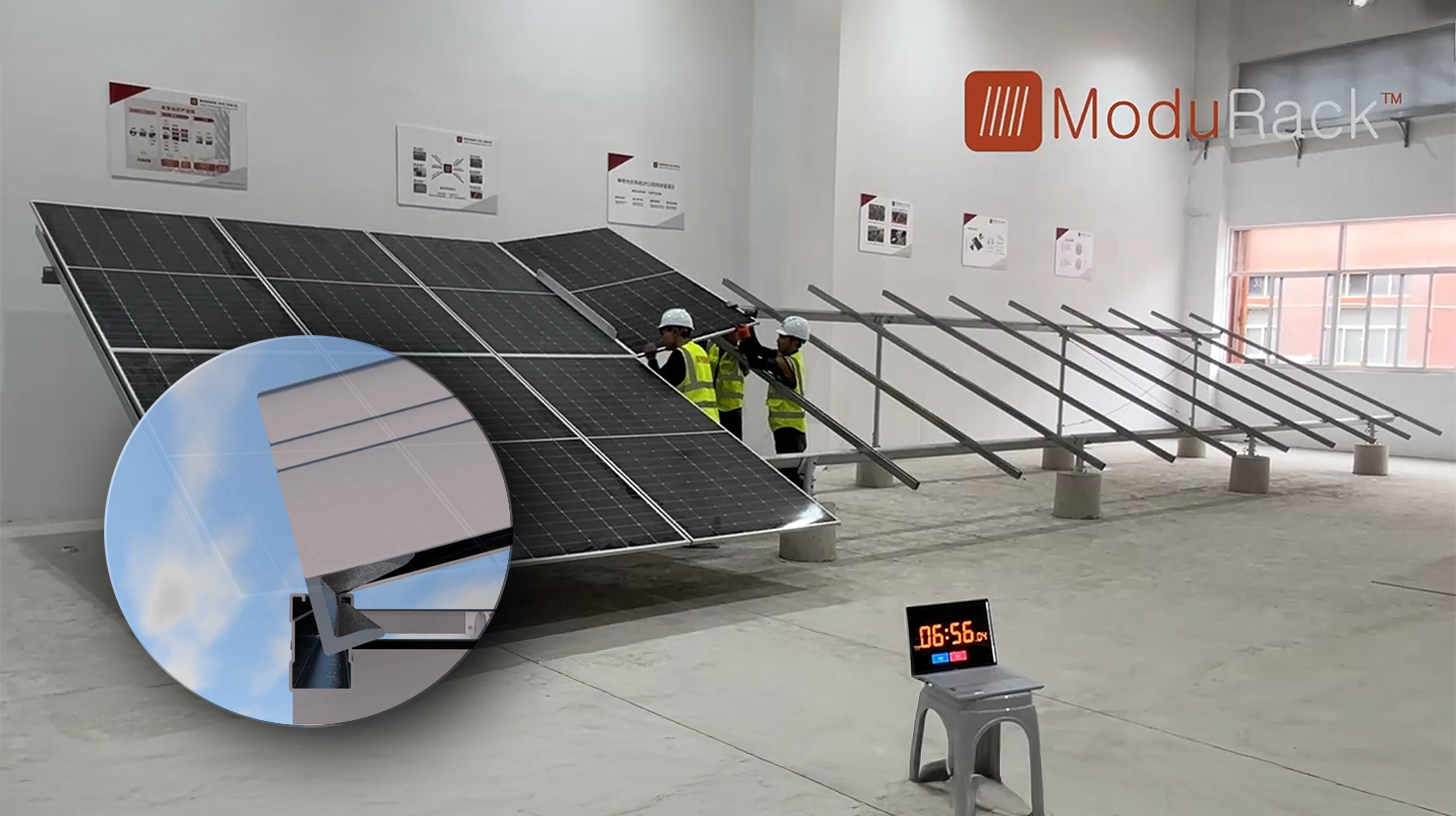
New: Patent from the USA – Install solar parks up to 30% cheaper and 40% faster and easier – with explanatory videos! - Image: Xpert.Digital
The core of this technological advancement is the deliberate departure from conventional clamp mounting, which has been the standard for decades. The new, more time- and cost-effective mounting system addresses this with a fundamentally different, more intelligent concept. Instead of clamping the modules at specific points, they are inserted into a continuous, specially shaped support rail and held securely in place. This design ensures that all forces – whether static loads from snow or dynamic loads from wind – are distributed evenly across the entire length of the module frame.
More information here:
Europe's electricity price dilemma: Why cheap solar energy alone is not enough for competitiveness
Platforms are taking over the market between the roof and the stock exchange
Cloover's development demonstrates how the decentralized energy sector is undergoing organizational change. The company combines financing, software, and energy products for more than 500 partner companies, which carry out approximately 20,000 installations annually. Annualized revenue of €350 million and a financing capacity exceeding US$1.3 billion provide the foundation not only to broker installations but also to manage and market customer systems over the long term.
This model addresses several bottlenecks simultaneously. Local installers possess customer proximity and technical implementation expertise, but often have limited access to affordable capital, software development, and energy markets. A platform centralizes credit checks, financing, tariff logic, data, and portfolio management. The installer remains visible, while complex functions are provided in the background as a white-label service. This enables small businesses to offer services that were previously reserved for large energy suppliers.
Building a virtual power plant is the logical next step. Each financed plant generates long-term access to data and control. When photovoltaics, storage, heat pumps, and wallboxes are combined, a flexible portfolio is created. This portfolio can optimize electricity costs, provide grid services, and react to spot market prices. The platform transforms from a transaction intermediary to the operator of a recurring energy business.
However, this model harbors potential conflicts of interest and concentration. Whoever controls financing, management, and pricing simultaneously can tie customer systems to a proprietary ecosystem. Transparency regarding margins, data rights, switching options, and optimization goals is therefore crucial. Credit quality is also cyclical: rapid growth can mask risks if default assumptions are based on good years. The European Investment Fund reduces financing risks but does not replace careful portfolio monitoring.
For B2B consultants, the key lesson is that value creation increasingly arises from bundling. Individual products become comparable; an integrated offering encompassing capital, installation, operation, and marketing generates higher switching costs and recurring revenues. Similar models are conceivable for commercial roofs, logistics portfolios, and industrial energy plants. While contracts are more complex in these areas, customer value and flexibility potential are significantly greater.
Related to this:

AI data centers are becoming the new anchor customers of the energy transition
The electricity demand of data centers is transforming the European energy economy. In the German scenario framework, it rises from approximately 4.2 terawatt-hours today to as much as 141.8 terawatt-hours in 2040. Even if this upper estimate is not met, the magnitude is considerable. Data centers are evolving from a specialized real estate class to systemically important large-scale consumers. Their locations influence grid planning, generation expansion, and storage investments.
SMA is responding to this with GridAssist and GridLink AC and DC. These products combine battery management, grid quality, medium-voltage UPS, and a future 800-volt DC architecture. This is more than just product diversification; it demonstrates that the boundary between power plant and digital infrastructure is blurring. A data center not only requires an uninterruptible power supply but must also increasingly manage limited grid capacity, demonstrate renewable energy procurement, and intelligently control loads.
The Schwarz Group's project in Dummerstorf illustrates the scale of the investment. Up to €5.6 billion is to be invested by 2033; proximity to a 380-kilovolt power line and large quantities of green electricity was a key location criterion. Regions with good grid connections and renewable energy generation gain a competitive advantage. Conversely, new data centers can exacerbate local bottlenecks and displace other industrial developments if connection capacities do not increase.
Flexpower's procurement model complements the technical aspects. Power Purchase Agreements (PPAs), fixed-price products, short-term procurement, and physical and virtual storage are combined into a portfolio. From 2027, data centers must cover their electricity consumption entirely with renewable energy sources. However, a certificate of origin alone does not eliminate price or grid risk. The crucial factor is the temporal correlation between consumption and generation. The more regulation and customers focus on hourly or quarter-hourly alignment, the more valuable storage and flexible compute loads become.
This presents a major use case for AI within the AI infrastructure. Non-time-critical computing tasks can be shifted to hours with low prices and high renewable energy generation. The concept sounds simple, but requires a close connection between workload orchestration, electricity market forecasting, service-level agreements, and grid signals. Economic value only materializes when computing power, latency, and energy consumption are optimized together. Providers that integrate IT and energy data can create a new category of industrial control software.
Europe's electricity price disadvantage persists despite cheap solar energy
The IEA estimated the average EU wholesale price for solar panels in 2025 at around US$95 per megawatt-hour, about ten percent higher than in 2024. Futures prices at the beginning of the year indicated a similar level for 2026 and around US$85 for 2027. Energy-intensive European companies paid, on average, roughly twice as much as their competitors in the United States and more than 50 percent more than companies in China and India. This difference is more significant for location decisions than the price of a solar module alone.
Photovoltaics can reduce the price disadvantage, but not eliminate it entirely. It delivers electricity cheaply and with increasing frequency, but not continuously. Industry requires reliable power, often around the clock. When grids, storage, backup, financing, and taxes are factored in, the system price exceeds the pure levelized cost of electricity. The economic advantage therefore arises from a coordinated portfolio of on-site generation, power purchase agreements (PPAs), storage, flexible load management, and residual electricity procurement.
Negative prices and high industrial prices can occur simultaneously. This is not a contradiction, but rather an expression of temporal and spatial differences. At midday, solar power may be worthless on the wholesale market, while a company pays high prices and grid fees in the evening. Without storage or flexible production, it benefits only to a limited extent from the surplus. Conversely, a well-managed site can utilize off-peak hours and avoid peaks. Energy costs thus become more of a management variable than a fixed tariff.
For European industrial policy, this means that subsidies for generation capacity alone are insufficient. Grids, storage facilities, and digital demand flexibility constitute productive infrastructure. They not only reduce emissions but also improve the utilization of capital stock and competitiveness. The investment requirement of more than €800 billion in European transmission grids over the next twenty years, as projected by ENTSO-E, is therefore not a side issue in the energy transition. It is a core component of industrial policy.
China is driving down prices, Europe is looking for a strategic premium
European buyers continue to benefit from China's enormous scaling of wafers, cells, and modules. High-quality TOPCon modules were frequently offered in Europe in 2026 for approximately €0.11 to €0.14 per watt. Such prices make solar projects attractive but put European manufacturers under extreme margin pressure. The key political question is how much Europe is willing to pay for supply chain resilience and how this premium will be distributed.
The Net Zero Industry Act sets the goal of covering at least 40 percent of the EU's annual demand for net-zero technologies with European manufacturing capacity by 2030. The target for 2040 is 15 percent of global production. Since 2026, sustainability, resilience, and other non-price-based requirements have applied to public procurement. A high degree of dependency exists, in particular, when more than 50 percent of the EU's supply comes from a single third country. For the technologies concerned, no more than 50 percent of the value of the final product or key components may, in principle, originate from the dominant source.
These rules function similarly to a resilience bonus, even if they are not always paid out as a fixed premium. European or diversified supply chains receive a non-price advantage. The approach is economically justifiable because the lowest purchase price does not reflect geopolitical concentration risks. At the same time, higher project costs, complicated proof of origin, and legal uncertainty are potential risks. Exceptions for certain requirements are possible in cases of disproportionate cost differences exceeding 20 percent. This threshold demonstrates that resilience is politically desirable but should not be enforced at any cost.
A new compliance market is emerging for companies. Invoices, serial numbers, certificates of origin, bills of materials, transport documents, and production data must be consolidated along the supply chain. Digital product passports and manufacturing execution systems are gaining importance. Companies that cannot prove origin risk having to pay a levy of at least ten percent of the value of the affected net-zero technology in public procurement contracts. Procurement is thus becoming more data-intensive, and suppliers with transparent documentation can justify a price premium.
The US Inflation Reduction Act intensified competition for business locations because long-term and easily understandable production incentives attracted capital. Europe is responding more strongly with regulation, subsidies, and award criteria. The US approach offers planning certainty but can generate significant unintended tax revenue. The European approach is more targeted but also more complex and slower. Ultimately, investors are not concerned with political intentions but with the predictability of cash flow. Europe must therefore translate resilience criteria into bankable demand instead of leaving manufacturers to fend for themselves with constantly changing programs and unclear tenders.
Bulgaria can transform from a peripheral market into a flexibility hub
Bulgaria is attractive to the European solar and energy storage industry for several reasons. In 2025, the country ranked among the top ten solar markets in the European Union for the first time. Good solar irradiance, available land, comparatively low labor and site costs, and EU funding create favorable conditions. At the same time, the electricity system is under strain due to high solar feed-in, limited grid capacity, and regional price differences. This very tension generates demand for storage, grid services, and digital control systems.
The RESTORE program sends a strong signal. With €603 million from the Development and Resilience Facility, a nationwide storage infrastructure with 3,000 megawatt-hours of usable capacity will be created. The facilities will be located near renewable energy generation plants and will improve the security, stability, and operational readiness of the Bulgarian electricity system. Regardless of its specific implementation, the program marks a transition from individual pilot projects to a national storage strategy.
Bulgaria is not only relevant for nearshoring as an installation market. It can handle technical planning, software development, remote monitoring, control cabinet construction, cable assembly, maintenance, and data operations for European projects. The combination of engineering expertise and lower costs is attractive, provided that quality management, cybersecurity, and contractual security are adequate. Modularized tasks with clear standards and digital handover are particularly well-suited.
Battery logistics and the circular economy also offer opportunities. The HHL study shows that transporting used vehicle batteries as hazardous materials can cost, on average, sixteen times more than normal freight. Shorter routes, automated dismantling, and specialized facilities could reduce recycling costs by around 34 percent. Bulgaria could serve as a regional hub for Southeast Europe if collection volumes, permits, and transport corridors are consolidated. However, a low-cost location alone is not enough. Proximity to return volumes, secure logistics, energy prices, and the ability to digitally document battery histories are crucial.
The risk lies in overheating and regulatory uncertainty. Rapid storage expansion can cannibalize revenues from arbitrage and balancing energy. Grid connections could become scarce, and funding deadlines could lead to concentrated investments followed by a market gap. Investors should therefore not focus solely on subsidies and current spreads. Crucial factors include long-term grid requirements, regional interconnection, balancing energy regulations, and the ability to combine multiple revenue streams.
Circular economy needs owners for two battery lifetimes
The unprofitability of battery recycling points to an institutional problem. According to HHL, after deducting all costs, a loss of around €1.90 per kilogram of battery pack currently arises. From August 2031, the EU Battery Regulation requires minimum proportions of recycled raw materials. If recycling losses are fully factored into an assumed mandatory quota of 20 percent, a pack could become around six percent more expensive. Regulation thus creates demand for recycled materials, but does not yet guarantee an efficient business model.
The distribution of residual value is particularly revealing. Stationary reuse can increase battery value by 64 percent, but this benefit doesn't automatically accrue to the stakeholders who ultimately bear the recycling costs. Vehicle owners, second-life operators, manufacturers, and recyclers have differing interests and timeframes. Without coordination, valuable batteries are recycled too early, or problematic packs are returned too late and at a high cost.
A viable model requires an actor to manage ownership, condition data, and material value across both life cycles. This could be a manufacturer, leasing company, battery passport platform operator, or specialized circular economy company. Digital condition data reduces information asymmetries: capacity, cycles, temperature history, accidents, and repairs determine whether a battery pack is suitable for second life. AI can improve diagnostics and residual value prediction, but again, its usefulness remains limited without standardized and accessible data.
For industry and logistics, a new business field is emerging that combines hardware, hazardous materials, data, and financing. Take-back agreements, residual value guarantees, regional consolidation, and automated dismantling can collectively drive profitability. The improvement modeled in the study, from a loss of €1.90 to a profit of €0.13 per kilogram, is small, but it demonstrates the crucial importance of process innovation. A circular economy will not become profitable through moral appeals, but through better coordination and scaling.
Capital will flow to integrated rather than isolated assets in the future
The sum of these developments is changing financing criteria. A solar power plant with an unsecured grid connection, high midday feed-in, and pure spot market risk can be difficult to finance despite low construction costs. A more expensive hybrid project with storage, flexible grid connection, a long-term power purchase agreement, and transparent documentation of energy origin, on the other hand, can offer a more stable cash flow. Banks and investors will therefore focus more on system integration than on individual technologies.
This also applies to contract design. Tolling agreements, minimum sales targets, profit-sharing models, and availability guarantees distribute battery revenues differently between the owner and the optimizer. Power purchase agreements (PPAs) must consider profile, volume, and balancing energy risks. Grid connection agreements define curtailment and priority. Supply contracts must cover NZIA compliance and potential sanctions. While each additional interface increases complexity, it can make a specific risk factor manageable.
For medium-sized companies, developing this expertise entirely in-house is often uneconomical. This creates demand for specialized B2B service providers that combine energy, data, financing, and regulation. Recurring services are particularly attractive: monitoring, optimization, procurement management, compliance, reporting, and asset condition assessment. One-off consulting projects remain important, but continuous data access fosters stronger customer loyalty and better scalability.
Investors should still be wary of narrative premiums. Virtual power plants, AI-native platforms, and resilience are valuable concepts, but they are no substitute for unit revenue, customer acquisition costs, failure rates, availability, and cash conversion. The market will become more professional in 2026 because capital is more expensive and revenues are more volatile. Winners will be companies that translate strategic stories into measurable operational metrics.
📈🚀 From visibility to trust 👀🤝 Your scalable path with Xpert.Digital


From visibility to trust: Your scalable path with Xpert.Digital - Image: Xpert.Digital
In industrial B2B, sustainable business relationships rarely emerge overnight. They develop step by step – through visibility, professional relevance, recurring touchpoints, and growing trust. Xpert.Digital's 4-stage model addresses precisely this: It offers a structured path that begins with a manageable entry point and can evolve into deeper collaboration in business development if needed.
Instead of relying on loud marketing promises, this model puts the relationship at the forefront. Companies start with clearly defined, easily calculable measures and then decide, based on their own experience, how far they want to expand the collaboration. A key factor for this undisturbed trust-building process: The platform completely avoids annoying advertising ads, so the editorial focus remains solely on the companies' expertise.
More information here:
Your partner for business development in the fields of photovoltaics and construction
From industrial rooftop PV to solar parks and larger solar parking lots
☑️ Our business language is English or German
☑️ NEW: Correspondence in your native language!

Konrad Wolfenstein
I and my team are happy to be available to you as your personal advisor.
You can contact me by filling out the contact form here wolfenstein@xpert.digital:or simply call me at +49 7348 4088 965. My email address is
I'm looking forward to our joint project.