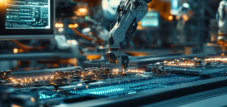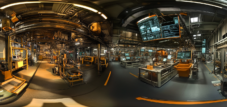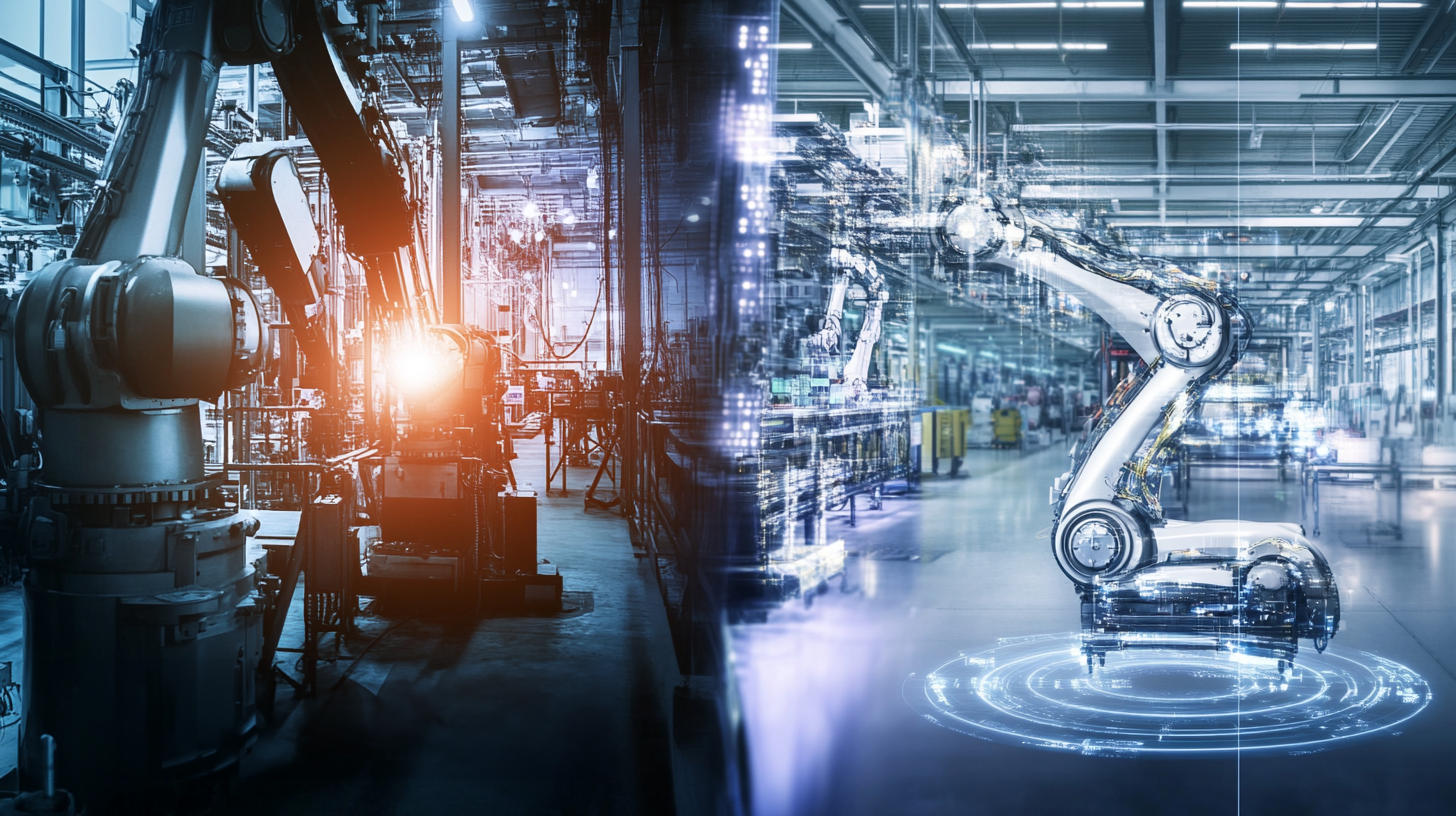
The mobile cobot and its advantages over traditional industrial robots – Image: Xpert.Digital
Robot Colleague: What mobile cobots can do for your manufacturing
Industry 4.0 at the cutting edge: Mobile cobots in use
Mobile cobots (collaborative robots) combine the autonomy of mobile platforms with the precision and versatility of robotic arms to handle demanding tasks in flexible production environments. These innovative systems are transforming industrial automation by enabling seamless human-machine interaction. Whether material handling, machine tending, or quality control – mobile cobots offer solutions for numerous challenges in modern manufacturing.
Key functions of modern mobile cobots
Modern mobile cobots feature a variety of innovative technologies that make them powerful tools in industry:
- Autonomous navigation using 2D/3D sensors (e.g. safety laser scanners, cameras) for obstacle detection and route planning.
- Collaborative robot arms with payloads up to 10 kg, equipped with modern gripping systems and sensors.
- Easy integration into existing IT systems such as ERP and MES systems via wireless interfaces.
- 24/7 operation through automatic charging stations and inductive charging.
Scope:
- Material logistics
- Production support
- Quality assurance
Examples:
- Transporting parts between stations, palletizing
- Machine loading, assembly
- Vehicle inspection, visual inspection
Industries:
- Automotive, Pharma
- Electronics, metal
- Automotive, Aviation
Market-leading models and manufacturers
Some of the leading mobile cobots and their respective features are:
- Omron Moma: A combination of the mobile LD platform and the TM robot arm, optimized for pick-and-place tasks in the electronics and pharmaceutical industries.
- KUKA's KMR iisy: A human-robot collaboration (HRC)-capable autonomous mobile robot (AMR) with 3D cameras and safety lasers for automated vehicle production.
- Rebel cobot series from Igus: A cost-effective solution (from €10,000) for small and medium-sized enterprises with SLAM-based navigation.
Related to this:
Advantages over stationary systems
- Reduced downtime: By quickly adapting to new production layouts, downtime can be reduced by up to 70%.
- Increased space efficiency: Shared workplace concepts optimize the use of available space by up to 30%.
- Safety and compliance: Compliant with ISO/TS 15066 for safe human-robot collaboration.
With AI-supported image processing, modern mobile cobots can now also handle visually complex tasks such as surface inspection or the handling of unsorted parts. This advancement makes them central elements of Industry 4.0 and smart factories.
Key advantages of mobile cobots
1. Safety and direct human-robot collaboration
- Working without a safety fence: Thanks to modern safety sensors such as force limiters and 3D cameras, mobile cobots stop automatically upon contact with people.
- Physical teamwork: Cobots can interact with humans, hold workpieces together, or hand over components.
2. Flexibility and mobility
- Autonomous navigation: SLAM technology enables precise orientation and movement between workstations.
- Easy implementation at new locations: Mobile cobots can be flexibly adapted to new tasks and production lines.
- Plug-and-play integration: Connection to existing IT systems without complex cabling.
3. Cost efficiency and fast ROI
- Lower purchase costs: Available from around €10,000.
- Rapid amortization: ROI usually within 5 to 18 months.
- Leasing models (Robots-as-a-Service): Reduce capital commitment and facilitate access to modern robotics.
4. Space optimization
- 30% less space required due to the elimination of security fences.
- It can be used in confined spaces where traditional industrial robots cannot be used.
Strategic advantages for production
- Reduced downtime through automatic charging during idle phases.
- Increased space utilization through flexible, mobile systems.
- Resilience against staff shortages: Relieving skilled workers by taking over monotonous tasks.
Limits of technology
Despite their advantages, mobile cobots also have limitations:
- High-speed applications such as welding at 10 m/s remain the domain of traditional industrial robots.
- Heavy loads over 100 kg are not feasible for cobots.
- Mass production with extremely high throughput still requires classic industrial robots.
The combination of mobility, safety, and rapid amortization makes mobile cobots a key component for digital transformation in industry. They offer significant advantages, particularly in sectors with high product variety, such as medical technology and electronics manufacturing. With the continued development of AI, sensors, and cloud-based control systems, mobile cobots will become even more powerful and versatile in the future.
Our recommendation: 🌍 Limitless reach 🔗 Connected 🌐 Multilingual 💪 Sales power: 💡 Authentic with strategy 🚀 Innovation meets 🧠 Intuition


From local to global: SMEs conquer the world market with a clever strategy - Image: Xpert.Digital
In an era where a company's digital presence determines its success, the challenge lies in creating an authentic, personalized, and far-reaching presence. Xpert.Digital offers an innovative solution that positions itself as the intersection of an industry hub, a blog, and a brand ambassador. It combines the advantages of communication and sales channels in a single platform and enables publication in 18 different languages. Cooperation with partner portals and the ability to publish articles on Google News and a press distribution list with approximately 8,000 journalists and readers maximize the reach and visibility of the content. This represents a crucial factor in external sales and marketing (SMarketing).
More information here:
Mobile Cobots: The Future of Human-Robot Collaboration in Industrial Automation - Background Analysis
Mobile cobots: A revolution in modern production
The world of industrial automation is currently undergoing a profound transformation, spearheaded by the development and integration of mobile collaborative robots, also known as mobile cobots. These sophisticated systems, which combine the flexibility of autonomous mobile platforms with the precision and versatility of robotic arms, are ushering in a new era of human-robot collaboration and opening up unprecedented opportunities for designing efficient and flexible production processes. Unlike traditional industrial robots, which often operate in rigid and isolated work environments, mobile cobots are designed to work dynamically and safely in close proximity to humans. This ability to adapt to changing tasks and environments makes them an indispensable tool for companies seeking to enhance their competitiveness in an increasingly fast-paced and demanding global economy.
The interplay of mobility and collaboration
The core innovation of mobile cobots lies in their ability to combine two key elements of modern automation: mobility and collaboration. While traditional robots are limited by their fixed installation and the need for safety barriers, mobile cobots offer entirely new levels of flexibility. They can move autonomously within the production environment, perform tasks at different workstations, and adapt to changing production requirements. This is made possible by sophisticated navigation systems capable of perceiving their surroundings and avoiding obstacles. At the same time, mobile cobots are equipped with sensors and safety mechanisms that allow them to work safely alongside human employees. By combining these two aspects, mobile cobots enable a more efficient and flexible production method that meets the needs of modern industry.
Technological foundations of mobile cobots
The performance of mobile cobots is based on a range of advanced technologies that seamlessly integrate:
Autonomous navigation
Mobile cobots use a combination of 2D and 3D sensors, such as laser scanners, cameras, and ultrasonic sensors, to map their environment and detect obstacles. Using SLAM (Simultaneous Localization and Mapping) technology, they are able to self-localize and plan efficient routes without requiring constant external control. The ability to adapt to changes in the environment in real time is crucial for the flexibility of these systems.
Collaborative robot arms
The robotic arms mounted on mobile platforms are specifically designed for collaboration with humans. They feature integrated force and torque sensors that allow them to react to unexpected contact with people and immediately stop their movements. The payload capacity of these arms can vary depending on the model and manufacturer, but typically ranges from 5 to 15 kg, making them ideal for a variety of tasks such as assembly, material handling, and quality control.
Integrated gripping systems
The gripping systems of cobots are also designed for the flexible handling of various objects. They can be equipped with different grippers, suction cups, or special tools to perform a variety of tasks. Many systems feature quick tool changes, which further increases their adaptability to different production processes.
Plug-and-play integration
Mobile cobots are generally designed to integrate seamlessly into existing IT systems, such as ERP (Enterprise Resource Planning) and MES (Manufacturing Execution System). This allows for easy integration into existing production infrastructure without complex cabling or programming. Wireless interfaces, such as WLAN or Bluetooth, enable simple communication and data transfer.
24/7 operational capability
Many mobile cobots are equipped with automatic charging stations or inductive charging systems that allow them to recharge their batteries independently, without human intervention. This enables continuous 24/7 operation and thus contributes to maximizing production efficiency.
Areas of application: Diversity and flexibility
Mobile cobots are used in a wide variety of industries and applications, including:
Material logistics
They can transport materials and components between different workstations, perform order picking tasks, and even load pallets. In the automotive industry, for example, they transport parts from a warehouse to the assembly line or from one machining center to the next. In the pharmaceutical sector, they are used to move sensitive materials and medications.
Production support
Mobile cobots can be used in assembly, processing, and quality control. In the electronics industry, they load components onto machines, perform assembly work, and check product quality. In metalworking, they assist with machining workpieces and handling heavy materials.
Quality assurance
Mobile cobots can be equipped with cameras and sensors to perform visual inspections and quality control. In the automotive industry, for example, they check body parts for defects or measurement errors. In aviation, they inspect the surfaces of aircraft parts for damage and perform precise measurements.
Leading models and manufacturers: A selection
The selection of mobile cobots on the market is diverse and constantly growing. Some of the best-known models and manufacturers are:
Omron Moma
Omron's model combines a mobile LD platform with a TM robot arm and is frequently used in the pharmaceutical and electronics industries for pick-and-place tasks. The integration of intelligent image processing enables the Moma to handle even complex tasks and achieve high accuracy.
KMR iisy from KUKA
KUKA offers the KMR iisy, a mobile, collaborative robot equipped with 3D cameras and scanners, used in automotive production for tasks such as automated assembly. The KMR iisy is characterized by its high flexibility and safety when working alongside humans.
Rebel Cobot Series from Igus
With its Rebel cobot series, Igus offers a cost-effective solution for small and medium-sized enterprises (SMEs). The cobots are based on SLAM technology and allow for easy integration into existing production environments. Igus focuses on the affordability and ease of use of its cobots.
Related to this:
Advantages over traditional systems: A paradigm shift
The advantages of mobile cobots over traditional industrial robots are numerous and have led to a paradigm shift in industrial automation:
Reduced downtime
The ability to make layout changes quickly and easily can reduce downtime during production changeovers by up to 70%. The flexibility of mobile cobots allows companies to react quickly to new market conditions or changing customer demands.
Higher space efficiency
Thanks to the ability to share workspaces, up to 30% of the floor space in production facilities can be saved. The elimination of safety fences and the compact design of cobots contribute to optimal use of the available space.
Improved workplace safety
Compliance with the ISO/TS 15066 standard for human-robot collaboration guarantees a safe working environment. Thanks to integrated safety features and the ability to react to contact, mobile cobots minimize the risk of injury and enable direct collaboration with human colleagues.
Key benefits in detail: A look at the most important aspects
Safety and direct human-robot collaboration
Mobile cobots can operate without the need for safety barriers because they are equipped with sophisticated safety sensors. These sensors, including force limiting systems and 3D cameras, enable the cobots to stop their movements immediately upon detecting a collision with a person. This ability to interact safely allows humans and machines to work closely together, for example, when handling workpieces or transferring components. This creates a harmonious symbiosis in which the strengths of both humans and robots can be optimally utilized.
Flexibility and mobility
Mobile cobots navigate autonomously between different workstations by using SLAM technology to map their environment and determine their position. This allows them to be deployed quickly and easily at different locations, which is particularly advantageous during seasonal production peaks or changing production requirements. Plug-and-play integration into existing IT systems simplifies commissioning and reduces setup effort.
Cost efficiency and ROI
The acquisition costs for mobile cobots are generally lower compared to traditional industrial robots, and the return on investment (ROI) can be achieved within 5 to 18 months. Furthermore, many manufacturers offer leasing models (Robots-as-a-Service) that allow companies to rent cobots instead of buying them, thus reducing capital commitment. Thanks to their flexible deployment and ability to perform diverse tasks, mobile cobots help to lower operating costs and increase productivity.
Space optimization
Mobile cobots require significantly less space than conventional robots because they don't need safety fences and have a compact design. This is particularly advantageous in confined production environments. They can be deployed in locations where the use of traditional robots would be impossible due to space constraints. This allows companies to optimize their existing production areas and create more efficient workflows.
Comparison with traditional industrial robots: A nuanced view
While mobile cobots offer clear advantages in terms of flexibility and safety, traditional industrial robots still have their place in areas requiring high speeds and heavy loads. For example, traditional robots are still used for welding at speeds of up to 10 m/s or for moving loads exceeding 100 kg. This means that the choice of the right robot depends on the specific requirements and circumstances of each application.
Strategic advantages for production: Shaping the future
The strategic advantages of using mobile cobots in production are manifold:
Reduced downtime
Automatic charging during idle periods enables continuous 24/7 operation and ensures maximum utilization of production capacities. Mobile cobots can thus be used in a variety of shifts without human breaks or working hours limiting productivity.
Higher space utilization
Creating shared workplace concepts with collaborative work cells can optimize the use of space in production facilities. Human employees and robots can share the same work areas and thus work together more efficiently.
Resilience against staff shortages
The takeover of monotonous and repetitive tasks by mobile cobots, such as material handling, relieves skilled workers and allows them to concentrate on more complex and demanding tasks. This helps companies meet the challenges of the skilled labor shortage while simultaneously ensuring the productivity and quality of their products.
Limits of technology: Realistic expectations
Although mobile cobots offer many advantages, it's important to consider their limitations. While they excel in flexibility and safety, they cannot match the speed and payload capacity of traditional industrial robots. This means they are unsuitable for certain applications, particularly those requiring high-throughput mass production. In these areas, traditional robots remain indispensable due to their performance and specialization in specific tasks.
Mobile cobots as a key technology for Industry 4.0
The combination of mobility, safety, flexibility, and rapid amortization makes mobile cobots a key technology for Industry 4.0. They are particularly attractive for industries with high product variety and dynamic production processes, such as medical technology or electronics manufacturing. Their ability to adapt to changing requirements enables companies to become more efficient, flexible, and competitive. Mobile cobots not only represent a technological innovation but also transform the way humans and robots collaborate in production. They are paving the way for a new era of intelligent automation and will have an increasingly significant impact on shaping global industry in the coming years. The factory of the future will thus be characterized by collaboration between humans and mobile robotics to ensure efficient, dynamic, and resilient production.
We are here for you - Consulting - Planning - Implementation - Project Management
☑️ SME support in strategy, consulting, planning and implementation
☑️ Creation or realignment of the digital strategy and digitization
☑️ Expansion and optimization of international sales processes
☑️ Global & Digital B2B trading platforms
☑️ Pioneer Business Development

Konrad Wolfenstein
I would be happy to serve as your personal advisor.
You can contact me by filling out the contact form below or simply call me on +49 7348 4088 965 .
I'm looking forward to our joint project.
Write to me


Xpert.Digital - Konrad Wolfenstein
Xpert.Digital is a hub for industry focusing on digitalization, mechanical engineering, logistics/intralogistics and photovoltaics.
With our 360° Business Development solution, we support renowned companies from new business to after-sales.
Market intelligence, smarketing, marketing automation, content development, PR, mail campaigns, personalized social media and lead nurturing are part of our digital tools.
You can find more information at: www.xpert.digital - www.xpert.solar - www.xpert.plus
Keep in touch