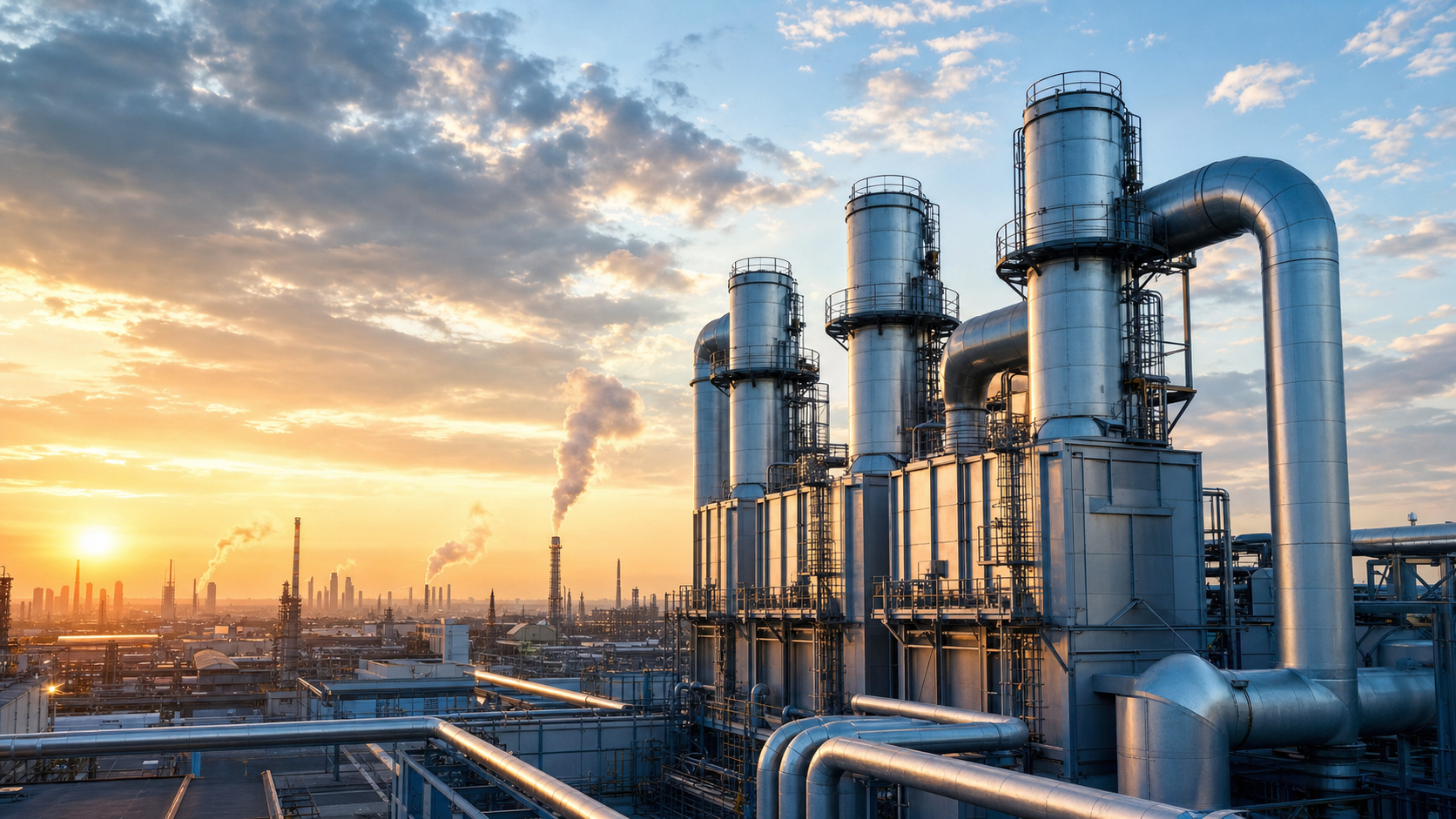
The market for exhaust air purification in Europe: New EU directive forces action – Europe's industry faces billions in investments in clean air – Creative image on the topic, with AI: Xpert.Digital
A divided Europe when it comes to air quality: Why Germany only ranks in the middle of the pack
From cost trap to competitive advantage: How companies can master the new emissions regulations
Clean air has long since transformed from a mere image issue into a critical economic survival question for European industry. Driven by alarming health data, far stricter WHO guidelines, and above all, the significantly tightened EU Industrial Emissions Directive (IED), the manufacturing sector is facing an unprecedented transformation. The market for industrial air purification is booming and is projected to grow to around US$8 billion by 2035. For plant operators, this sends a clear message: those still relying on outdated filter technology risk not only hefty fines in the near future, but in the worst-case scenario, the loss of their operating license. But which technological solutions are still future-proof and economically viable? Where do European countries stand in direct comparison regarding air quality? And how can companies navigate the fine line between strict legal requirements, high energy costs, and long-term competitiveness? The following article examines current market dynamics, compares established technologies, and shows why investing in modern exhaust air purification is one of the most important strategic decisions for the manufacturing industry today.
Invisible danger, visible coercion: Why Europe's factories must act now
Clean air is no longer a fringe environmental issue, but a tangible economic factor that determines permits, competitiveness, and even human lives. The European market for industrial air purification is estimated at around US$4.5 billion in 2025 and is projected to grow to approximately US$8 billion by 2035, representing an annual growth rate of around 6.2 percent. This growth is no accident, but rather the direct consequence of stricter European environmental legislation, an alarming health record regarding air pollutants, and increasing public pressure on manufacturing companies. Any industrial company still relying on outdated or inadequate filter technology today risks not only fines but also the loss of its operating license.
The debate surrounding exhaust air purification is often reduced to the automotive industry and road traffic, but the real leverage lies in stationary industry: In paint shops, chemical plants, food processing facilities, metal finishing plants, woodworking shops, and countless other sectors, volatile organic compounds, odors, particulate matter, and sometimes highly toxic substances are continuously generated, which would otherwise be released unfiltered into the atmosphere without technical treatment. This is precisely where industrial exhaust air purification comes into play, and this is precisely where the future viability of a company is determined.
When the air we breathe becomes a cause of illness: The health dimension of air pollution
The figures from the European Environment Agency paint a sobering picture. Despite a 57 percent decrease in premature deaths due to particulate matter between 2005 and 2023, 95 percent of Europe's urban population is still exposed to levels significantly exceeding the recommendations of the World Health Organization. In 2023, Italy recorded the highest absolute level of pollution in the EU, with 43,083 attributable deaths due to high PM2.5 concentrations, followed by Poland with 25,268 and Germany with 21,640 deaths. These mortality figures are not abstract statistical noise, but the direct result of inadequately filtered emissions from industry, transport, and heating.
The latest analyses also confirm this trend: Between 2024 and 2025, the highest annual average values for particulate matter were measured in southern Italy, where the cities of Ceglie Messapica and Torchiarolo exceeded the EU limits by more than four times, with 117 and 113 micrograms per cubic meter respectively. Besides Italy, Poland, Croatia, Romania, and even parts of Denmark regularly fail to meet the applicable EU standards, with limits being exceeded at up to 20 percent of all European monitoring stations. More than nine out of ten Europeans are exposed to concerning concentrations according to the stricter WHO guidelines, which set the PM2.5 limit at just 5 micrograms per cubic meter.
North versus South, West versus East: The divided Europe of air quality
The latest World Air Quality Report for 2025 reveals a clear geographical divide across the continent. Only three European countries – Estonia, Iceland, and Andorra – fell entirely within the WHO limits for particulate matter in 2025. At the other end of the scale, eight countries, including Bosnia and Herzegovina, North Macedonia, Serbia, Turkey, Moldova, Romania, Montenegro, and Poland, reported PM2.5 concentrations exceeding 15 micrograms per cubic meter, making them among the most polluted countries in Europe. Finland leads the ranking of the cleanest countries with 25 cities below the safe guideline value, followed by Sweden with 15 and Spain with 12.
This discrepancy is directly reflected in the health statistics. Bulgaria had the highest mortality rate within the EU, with 158 premature deaths per 100,000 inhabitants, followed by Poland with 125 and Hungary with 107. North Macedonia topped the grim list at the pan-European level with 255 premature deaths per 100,000 inhabitants, ahead of Serbia with 217 and Montenegro with 174. Iceland, on the other hand, recorded not a single death due to air pollution, while Finland reported only 34 cases. The following table compares the situation in selected countries.
| Country / Region | PM2.5 pollution or status | Classification |
|---|---|---|
| Estonia, Iceland, Andorra | Within the WHO limit | Pioneers |
| Finland, Sweden | Very low values, many cities below the guideline value | Pioneers |
| Germany | Approximately 11 µg/m³ annual average, above the WHO value | midfield |
| Poland | Above 15 µg/m³, frequent exceedances of the limit value | stragglers |
| Italy | Highest EU mortality rate due to particulate matter | stragglers |
| Bosnia and Herzegovina, North Macedonia, Serbia | Over 15 µg/m³, highest relative mortality in Europe | Last place |
It is striking that economically stronger and more industrialized countries like Germany remain in the middle of the pack in Europe despite extensive environmental protection regulations, while sparsely populated, less industrialized Nordic countries regularly occupy the top spots. This illustrates that industrial density and air quality are directly linked, and that technical air purification is most urgently needed where production, traffic, and population density converge.
Brussels' new rules of the game: How the revised Industrial Emissions Directive is revolutionizing the market
The primary driver of the European air purification market is regulatory in nature. With Directive 2024/1785, the European Union fundamentally modernized and significantly tightened the existing Industrial Emissions Directive (IED). This amending directive entered into force on August 4, 2024, and had to be transposed into national law by the member states by July 1, 2026. Germany is implementing this transposition through a comprehensive omnibus act that amends, among other things, the Federal Immission Control Act, the Circular Economy Act, and the Federal Mining Act, as well as through a new 45th Ordinance to the Federal Immission Control Act, which introduces mandatory environmental management systems.
The core of the new regulation lies in the binding requirement that, when setting emission limits, the lower, and therefore stricter, end of the emission range associated with the best available technologies must be considered. The concept of the environmental performance limit is also being introduced, which goes beyond mere air emissions and also regulates water and resource consumption. Operators of installations subject to the IED must implement and operate an environmental management system in accordance with the ISO 14001 standard or the European Eco-Management and Audit Scheme (EMAS). The implementation deadline was originally set for mid-2027 but was extended to July 2030 as part of a simplification package by the European Commission.
It is noteworthy that, in parallel with the tightening of regulations, the EU Commission is also pursuing relief for industry through the so-called "Environmental Omnibus." The package of measures presented in December 2025 aims to relieve companies of the obligation to draw up transformation plans and to maintain a separate chemicals inventory, without abandoning fundamental environmental objectives. This simultaneous tightening of technical limits and administrative relief demonstrates that Brussels is increasingly actively managing the political balancing act between competitiveness and climate protection.
From legal text to investment decision: Why companies must react now
For manufacturing companies, the new legal situation means concrete pressure to act. Authorities will generally be required to set the strictest possible emission limits, provided the technical reference documents allow for ranges. For existing plants, there is a four-year implementation period following the publication of new technical conclusions, which can be extended to up to eight years if robust transformation plans are in place. Anyone who has invested in outdated or borderline-performing exhaust air purification technology must therefore expect significant retrofitting pressure within this decade.
At the same time, industry is warning against excessive bureaucracy. In the parliamentary debate in the Bundestag, significant criticism was voiced regarding the implementation of the amended directive, particularly concerning the additional reporting and documentation requirements, which could disproportionately burden small and medium-sized enterprises (SMEs). Nevertheless, the fundamental regulatory trend remains clear: emission limits will tend to become stricter, not more lenient, in the coming years, and companies that invest early in future-proof technology will gain a strategic advantage over competitors who are forced to retrofit under time pressure.
🎯🎯🎯 Data-driven B2B industry hub as a quasi-in-house solution


The quasi-in-house solution: How Xpert.Digital closes operational gaps in B2B marketing and sales – Smart Content-Driven Business - Image: Xpert.Digital
Xpert.Digital is a data-driven B2B industry hub led by Konrad Wolfenstein . The company acts as an external, quasi-in-house solution for industrial partners, closing operational gaps in marketing, content, and sales – without requiring additional resources on the client side.
More information here:
Industrial exhaust air purification compared: Strategies for cost-effectiveness and efficiency
Five ways to save the same air: A comparison of the technical methods
Industrial exhaust air purification doesn't employ a single, standardized method, but rather a whole arsenal of different technologies, each suited to different pollutant types, concentrations, flow rates, and budgets. These methods can generally be categorized as oxidative, adsorptive, absorptive, and biological, with efficiencies exceeding 99 percent achievable when the appropriate method is selected. The following overview compares the most important technologies.
| Proceedings | Operating principle | Strengthen | Weaken |
|---|---|---|---|
| Thermal afterburning | Combustion of pollutants at high temperatures | Very robust, broad spectrum of pollutants | High energy costs, expensive even with small flow rates |
| Regenerative thermal oxidation (RTO) | Thermal oxidation with heat recovery of over 95 percent | Low operating costs, amortization in 2 to 5 years | High initial investment between 300,000 and over 3 million euros |
| Catalytic afterburning | Oxidation at lower temperatures using a catalyst | Lower energy consumption than TNV | Sensitive to catalyst poisons |
| Activated carbon adsorption | Adsorption of pollutant molecules to activated carbon | Low investment costs | High follow-up costs due to replacement and disposal |
| Biofilter / biological exhaust air purification | Microbiological degradation of organic substances | CO2-neutral, low operating costs, good for odor problems | Unsuitable for high pollutant concentrations |
Thermal afterburning has been considered a proven standard solution for decades because it functions reliably almost regardless of the chemical composition of the pollutants, as long as no halogenated hydrocarbons are present in the process. Its biggest disadvantage, however, lies in the high energy and investment costs, especially for small to medium exhaust air flows, where the process is hardly economically viable. This very weakness has made regenerative thermal oxidation (RTO) the most important growth segment in industrial plant engineering, as heat recovery rates of over 95 percent make it economically viable within a few years despite the higher initial investment. Concrete figures from practical experience show that an RTO plant for a volume flow of between 50,000 and 200,000 standard cubic meters per hour costs between 1.2 and 3 million euros, with annual energy costs of only 80,000 to 300,000 euros.
Activated carbon adsorption initially scores points with its comparatively low acquisition costs, as the simplest version consists merely of a container filled with activated carbon and through which air flows. However, the real cost risk arises during operation, when the loaded carbon must be regularly replaced, disposed of, or regenerated in a complex process. This often results in the adsorbent cost being many times higher than the original system costs over its service life. Therefore, this method is primarily suitable for sporadic or lightly loaded exhaust air streams, but not for continuous industrial processes with high pollutant loads.
Biological processes such as biofilters and bioscrubbers have become particularly established where odor nuisance is a primary concern or where pollutant concentrations are so low that energy-intensive combustion would be uneconomical. Since these processes do not use any additional fuel, they operate CO2-neutrally and incur comparatively low operating costs. A specific cost-benefit analysis from the wood processing industry shows that the specific cleaning costs per cubic meter of panel material for wet exhaust air purification with heat recovery are approximately €4.70, while thermal afterburning increases to €9.50 per cubic meter, representing 4.5 percent of the product price.
The high price of the last twenty percent: Cost truth and economic efficiency
In industrial exhaust air purification, a variation of the well-known Pareto principle applies: Approximately 20 percent of the technical and financial investment can remove 80 percent of the pollutants, while the remaining 20 percent incur disproportionately high additional costs. This insight is crucial for investment decisions, as it demonstrates that while achieving 100 percent pollutant-free conditions is technically feasible, it is often not economically viable. Companies must therefore carefully consider at which point on the emission limit curve legal requirements and economic considerations are optimally balanced.
A process comparison from the wood-based materials industry vividly illustrates the long-term financial dimensions. While the annual operating and investment costs of wet exhaust air purification amount to approximately €1.4 million, they rise to around €4.3 million for regenerative afterburning with heat recovery and even to €5.8 million without heat recovery. Over a ten-year period, the cost difference between wet exhaust air purification and thermal afterburning with heat recovery totals €15.4 million, and without heat recovery, it reaches €20.55 million. These figures demonstrate that, over decades, choosing the right technology represents an enormous competitive advantage and is by no means merely a technical decision, but above all a strategic corporate one.
Expectations and reality: What a modern exhaust air purification system must be able to do today
A high-performance exhaust air purification system today is characterized by far more than simply complying with legal limits. Firstly, it must guarantee the highest possible and most stable separation efficiency across fluctuating operating conditions, as real-world industrial processes rarely produce constant pollutant concentrations. Secondly, energy efficiency through heat recovery is becoming increasingly important, since energy costs have risen dramatically in recent years and systems with recovery rates exceeding 95 percent now define the technical standard for larger air volumes.
Thirdly, operational reliability plays a crucial role, as older technologies such as electrostatic filters or ozone generators pose significant safety risks due to high voltage or high ozone concentrations and are also susceptible to contamination. Plasma-generating filters also show little effectiveness against grease and oil aerosols in practice and are therefore considered technically obsolete. Fourthly, a modern system must be flexibly integrable into existing ventilation infrastructures without requiring extensive structural modifications, and fifthly, resource efficiency in line with the new environmental performance limits is becoming increasingly important, as the revised Industrial Emissions Directive explicitly includes water and energy consumption in its regulations.
The biggest practical problems with existing plants often lie in undersizing compared to fluctuating production loads, in the lack of or insufficient heat recovery, which unnecessarily drives up operating costs, and in the use of outdated processes that, while still formally complying with limits, are neither energy-efficient nor future-proof in the face of foreseeable further tightening of regulations. In the case of adsorptive processes, there is also the structural problem of steadily increasing disposal and regeneration costs, which many operators underestimated in their initial investment calculations.
Between combination and compromise: The best solutions for practical application
In practice, hybrid solutions are increasingly proving superior to individual technologies. For example, the combination of catalytic afterburning with adsorptive pre-enrichment eliminates the fundamental disadvantage of all combustion processes: they only operate economically at sufficiently high pollutant concentrations, otherwise requiring the addition of fuel such as natural gas. Pre-enrichment via adsorption concentrates large, lightly polluted exhaust air streams into a smaller volume with a higher pollutant concentration, which can then be thermally treated in an energy-efficient manner.
For industries with highly fluctuating or low pollutant concentrations, such as food processing, wastewater treatment, or soil vapor remediation, scrubbers and biofilters remain the most economically attractive solution because the autothermal operating point, i.e., the point at which the pollutants self-ignite, is not reached anyway, and energy-intensive combustion would be unnecessarily expensive. For highly fluctuating production loads and medium to high continuous volume flows, regenerative thermal oxidation has established itself as the technological gold standard, as it offers the highest combination of separation efficiency, energy efficiency, and long-term economic viability.
For companies with limited investment budgets but a desire for rapid implementation, modern, chemical-free processes based on physical separation without the use of chemicals can represent a viable interim solution, as they operate without fresh water, wastewater, or chemical consumption and can be integrated into existing ventilation systems. Crucially, however, any investment decision must consider not only current but also the foreseeable stricter future limits of the revised Industrial Emissions Directive to avoid costly retrofitting in the coming years.
Growth market with a safety net: Conclusion for investors and industry
The European market for air purification is in a rare situation where regulatory requirements, technological advancements, and societal pressures for improved health are all working in the same direction. With projected growth from US$4.5 billion to US$8 billion by 2035, representing an annual growth rate of 6.2 percent, the sector is among the most structurally stable and growing segments of European environmental technology. At the same time, the deeply fragmented air quality landscape of the continent illustrates that the actual need for improvement is by no means evenly distributed, but rather concentrated primarily in Southern and Eastern Europe, as well as in densely populated industrial regions of Central and Western Europe.
For companies, this means that choosing the right exhaust air purification technology is no longer just a matter of compliance, but a strategic decision with significant financial consequences for decades to come. Those who invest early in energy-efficient, future-proof, and heat-recovery systems not only secure operating permits under the stricter industrial emissions directive, but also a sustainable cost advantage over competitors who only react under regulatory pressure.
📈🚀 From visibility to trust 👀🤝 Your scalable path with Xpert.Digital


From visibility to trust: Your scalable path with Xpert.Digital - Image: Xpert.Digital
In industrial B2B, sustainable business relationships rarely emerge overnight. They develop step by step – through visibility, professional relevance, recurring touchpoints, and growing trust. Xpert.Digital's 4-stage model addresses precisely this: It offers a structured path that begins with a manageable entry point and can evolve into deeper collaboration in business development if needed.
Instead of relying on loud marketing promises, this model puts the relationship at the forefront. Companies start with clearly defined, easily calculable measures and then decide, based on their own experience, how far they want to expand the collaboration. A key factor for this undisturbed trust-building process: The platform completely avoids annoying advertising ads, so the editorial focus remains solely on the companies' expertise.
More information here:
Your global marketing and business development partner
☑️ Our business language is English or German
☑️ NEW: Correspondence in your native language!

Konrad Wolfenstein
I and my team are happy to be available to you as your personal advisor.
You can contact me by filling out the contact form here wolfenstein@xpert.digital:or simply call me at +49 7348 4088 965. My email address is
I'm looking forward to our joint project.