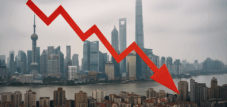
Is China's economy in decline? The illusion is crumbling: Why consumption is suddenly collapsing – Image: Xpert.Digital
Shocking figures from Beijing: China's most important economic engine is sputtering badly
Deflation and record unemployment: China's youth are losing faith in the future
The ticking economic bomb: Why Beijing's figures obscure the true crisis
China's economic engine is sputtering badly. Recent figures from spring 2026 reveal an alarming collapse in domestic consumption, ruthlessly exposing the vulnerabilities of the world's second-largest economy. While the government in Beijing attempts to mask this structural weakness with an aggressive export boom, citizens at home are grappling with the consequences of a persistent housing crisis, soaring youth unemployment, and the looming threat of deflation. The disastrous result: an unprecedented frenzy of austerity among the population is causing key industries like the automotive sector to collapse – sending palpable shockwaves through international trading partners and German automakers. This in-depth analysis reveals why the once-promised growth is built on shaky foundations, how China's overcapacity is weighing on the global market, and why short-term government stimulus programs can no longer buy back the lost confidence of an entire generation.
Related to this:


The April figures and the awakening of the markets
When the growth promise rests on shaky foundations: Why Beijing's figures conceal more than they reveal
The People's Republic of China suffered a significant economic setback in April 2026. The National Bureau of Statistics (NBS) released data that fell short of financial market expectations in several respects, further fueling existing skepticism about the resilience of China's growth model. Retail sales, considered the most reliable indicator of consumer demand, rose by a meager 0.2 percent year-on-year – following a 1.7 percent increase in March. This is the weakest growth since December 2022, the darkest days of the zero-infection COVID-19 policy.
At the same time, industrial production slowed to growth of 4.1 percent compared to the same month last year, following a 5.7 percent increase in March. Economists had expected a significantly higher figure of 5.9 percent – the shortfall marks the weakest industrial recovery since July 2023. Capital investment declined even more sharply: In the first four months of 2026, it fell by 1.6 percent compared to the same period last year, whereas it had recorded a slight increase of 1.7 percent in the first quarter. None of the analysts surveyed by Bloomberg had anticipated such a poor result across all three key indicators.
The short-term perspective makes the findings even more worrying. Compared to the previous month – April versus March – retail sales actually fell by 0.48 percent. This signals not only slower growth, but an actual decline in consumer spending over the course of the month. For an economy that programmatically promotes the shift towards a consumption-driven growth model, this is extremely bad news.
Between the start of the year and the crash: The illusion of strength
The contrast between the first quarter and April 2026 could hardly be greater. From January to March, gross domestic product grew by 5.0 percent, placing it at the upper end of the Chinese government's official annual target of 4.5 to 5.0 percent. China's economy appeared more resilient than expected at the time – despite the ongoing war with Iran, which began on February 28, 2026, destabilizing global energy markets, disrupting supply chains, and increasing transportation costs.
This seemingly robust performance, however, rested on a fragile foundation. Analysts had already pointed out in March that the first quarter had been driven by strong exports, while domestic demand continued to lag behind its potential. The export boom masked the structural weaknesses at home. When exports themselves then plummeted to a mere 2.5 percent growth in March – after a 21.8 percent increase in the first two months of the year – this external support also gradually disappeared. April thus ruthlessly revealed what had long been rotting beneath the glittering surface.
At the presentation of the April figures, Fu Linghui, spokesman for the National Bureau of Statistics, attempted to downplay the findings by pointing to geopolitical pressures. He emphasized the resilience of the Chinese economy in the face of the ongoing war with Iran, volatile energy markets, and disrupted global supply chains. However, he also acknowledged that the cost burden for businesses had increased and that many companies remained under pressure. This admission is unusually frank for a Chinese bureau – and demonstrates just how serious the situation truly is.
Related to this:

The consumer collapse and its deeper roots
Behind the sobering April figures lies a structural problem that has been building up for years. According to calculations by the International Monetary Fund, China's private consumption accounts for only about 36 percent of its gross domestic product – compared to a typical rate of around 54 percent for similar economies. This difference of 18 percentage points reveals a systematic disadvantage for private households resulting from an economic model that, for decades, has relied on investment, infrastructure, and exports, while domestic consumption has remained structurally underweight.
Closely linked to this is the Chinese population's unprecedented propensity to save, a level unparalleled in the developed world. The savings rate of private households is around 35 percent of disposable income – in developed economies, figures of around 6 percent are considered normal. This extreme propensity to save is not merely a cultural phenomenon, but the rational outcome of a weak welfare state. Those who know they will largely rely on their own resources in case of illness, old age, or unemployment are not inclined to spend their money recklessly. The already modest social safety nets encourage stockpiling rather than consumption.
Another key obstacle is the ongoing real estate crisis, which has severely shaken consumer confidence since at least 2021. For decades, real estate was the preferred savings vehicle of the Chinese middle class – and thus, in effect, the backbone of private wealth. As prices began to fall, household wealth shrank. In January 2026, prices for newly built apartments fell by 3.1 percent year-on-year – the sharpest decline in six months. In major cities, real estate sales plummeted by 23 percent at the beginning of the year. Rating agencies such as S&P Global expected a further decline in initial sales of up to 14 percent in 2026. UBS experts predicted two more years of downturn in the real estate market in November 2025. As long as Chinese citizens suffer losses in their most important asset class, they will not consume.
Related to this:

The automotive market as a diagnostic case
No sector illustrates the consumer crisis as vividly as the automotive market. Sales of passenger cars in the Chinese domestic market plummeted by 21.6 percent in April 2026 – marking the seventh consecutive monthly decline. This finding is remarkable in its persistence. Car purchases are considered a reliable leading indicator of consumer confidence: those who buy a car believe in their economic future. Seven consecutive monthly declines, however, signal profound and persistent uncertainty.
The reasons for the slump are manifold and mutually reinforcing. Since January 1, 2026, China has once again levied a 5 percent purchase tax on electric and hybrid vehicles, after years of tax exemption. This led to a significant surge in sales in December 2025, which then caused the January figures to plummet even more dramatically. Added to this is the reduction of purchase incentives for replacing old vehicles in many provinces. The Iran-Iraq War further exacerbated the situation: rising oil prices made combustion engine vehicles, which had been a mainstay of the automotive market in previous months, less attractive – according to the industry association, combustion engine sales fell by a third in April.
The negative impact on foreign manufacturers, particularly German ones, is considerable. VW, Mercedes, and BMW, which for years treated the Chinese market as the most profitable in the world, are now facing a shrinking market and a fierce price war raging between domestic brands. Chinese manufacturers are now offering car loans with terms of up to eight years to attract customers – a sign that even favorable financing conditions can no longer compensate for weak demand.
Related to this:

Deflation as a silent threat
Behind the weak demand lurks a macroeconomic risk that particularly worries economists: the danger of deflation. China's consumer prices rose by only 0.2 percent year-on-year in January 2026, while producer prices remained negative. This deflationary pressure is not new – Chinese manufacturers have been forced to continuously cut prices for over three years, indicating massive overcapacity and intense competition.
Deflation acts as an economic vicious cycle. Those anticipating price reductions postpone purchasing decisions until tomorrow, hoping to buy at a lower price. Companies with shrinking margins invest less and lay off employees. This, in turn, weakens consumers' income base and further increases their reluctance to spend. An analyst from eToro described China's economy as one that appears to be warming on the surface but is struggling with deep-seated deflationary pressures underneath. Indeed, manufacturers continue to lower prices to reduce excess inventory – a clear signal of persistently weak demand.
Spending on everyday goods – from groceries to household products – rose by only 1.3 percent in 2025, according to an analysis by the management consultancy Bain & Co., despite an average price decline of 2.4 percent. This means that while the quantity of goods demanded increased slightly, prices fell so sharply that revenue barely grew. For the companies affected, this translates into a slow erosion of their profitability.
Export dependency as a strategic weakness
That China's economy still managed to achieve 5 percent growth in the first quarter of 2026 is largely due to the export sector. However, this very dependence reveals a fundamental vulnerability in the Chinese growth model. China is effectively exporting its domestic deflation to the rest of the world: excess capacity that the domestic market cannot absorb is sold abroad at highly competitive prices. This provides short-term growth, but it does not solve the structural problem and generates increasing international protectionist pressure.
The Iran war has exposed this dependence in a particularly painful way. As the world's largest energy importer, China imports significant quantities of oil and gas through the Strait of Hormuz. The disruption of these trade routes not only made energy more expensive but also increased transportation costs and immediately dampened export growth. In March, export growth shrank to 2.5 percent – after a robust increase of 21.8 percent in January and February. Goldman Sachs economist Xinquan Chen warned that China's most important trading partners – emerging markets, which account for almost 40 percent of Chinese exports – are increasingly exposed to stagflation risks. If these markets weaken, China loses its most reliable buffer against economic slowdown.
VP Bank's chief economist, Thomas Gitzel, summed up the dilemma perfectly: the weaker domestic demand, the more important exports become. And to keep exports going, China has to fight tooth and nail – which in turn provokes international trade tensions and triggers countermeasures. A sustainable growth model looks very different.
Our China expertise in business development, sales and marketing


Our China expertise in business development, sales and marketing - Image: Xpert.Digital
Industry focus areas: B2B, digitalization (from AI to XR), mechanical engineering, logistics, renewable energies and industry
More information here:
A thematic hub offering insights and expertise:
- Knowledge platform covering global and regional economies, innovation and industry-specific trends
- A collection of analyses, insights, and background information from our key areas of focus
- A place for expertise and information on current developments in business and technology
- A hub for companies seeking information on markets, digitalization, and industry innovations
Overcapacities and export conflicts: China's economy in a dilemma – When trust becomes a scarce currency
Youth unemployment and the lost consumer confidence of a generation
Another often underestimated factor behind the slump in consumer spending is the situation on the labor market – especially for young adults. The youth unemployment rate among 16- to 24-year-olds in urban areas of China rose to 18.9 percent in August 2025, up from 17.8 percent in July – its highest level since the end of 2023. Millions of university graduates enter the labor market each year, and the struggling economy can no longer fully absorb them.
This development has particularly far-reaching consequences for consumption. Young adults aged 25 to 35 typically represent the most affluent and consumer-oriented demographic. Those who do not have or cannot find stable employment during this phase of life postpone major consumer decisions—buying a home, a car, starting a family—indefinitely. The phenomenon of the "lying generation" (Tangping) illustrates a societal reaction to the lack of promises of upward economic mobility, which is also reflected in consumer behavior.
The real estate crisis is exacerbating this effect: purchase prices in major Chinese cities are simply unaffordable for many young people, while falling prices offer no security. At the same time, many young Chinese are watching their parents' savings dwindle due to the decline in real estate prices – an experience that fuels intergenerational pessimism regarding future economic prospects.
Related to this:


Beijing's response: stimulus and structural commitments
The Chinese government is aware of the problem. At the National People's Congress in March 2026, Premier Li Qiang formulated an economic policy agenda explicitly aimed at strengthening domestic demand. At the same time, with its 15th Five-Year Plan (2026–2030), China set an official growth target of only 4.5 to 5 percent for the first time – the lowest in decades. A target of 4.5 percent was last set in 1991.
Concrete measures were also announced. Government subsidies for replacing household appliances are to be expanded; anyone buying an appliance will receive a 25 percent discount, financed by the state. In the automotive sector, Beijing has begun to selectively increase trade-in bonuses for older vehicles. The pro-government economist Xu Hongcai described the policy shift as correcting a structural error: In the past, government investment had often crowded out rather than boosted consumption.
But economists are reacting to these announcements with muted optimism. Nils Sonnenberg of the private bank Hauck Aufhäuser Lampe cautioned that neither interest rate cuts nor fiscal stimulus would change the structural problems of the Chinese domestic economy. Gary Ng, chief economist at Natixis, judged that government measures to support consumption and the housing market have so far remained insufficient. The fundamental problem—a social system too weak to reduce the propensity to save, a housing market unable to regain household confidence, and an economic structure that systematically disadvantages consumption—cannot be solved with short-term stimulus programs.
The global dimension: When China sneezes, the world catches a cold
China's economic slowdown is not merely a domestic issue. As the world's second-largest economy and a central hub of global supply chains, China's economic fluctuations have a direct impact on trading partners, commodity markets, and investment flows. The significant decline in fixed asset investment in China—down 1.6 percent in the first four months of 2026—and the ongoing slump in the real estate sector, where investments have fallen by well over ten percent so far this year, are affecting commodity suppliers worldwide, who in turn were prepared for China's demand for steel and infrastructure investment.
The situation is particularly precarious for Germany. China has been the country's most important trading partner for years, and German companies – especially in the automotive and mechanical engineering industries – are closely intertwined with the Chinese economy through deep production networks and supply chains. If VW, BMW, and Mercedes are simultaneously confronted with shrinking sales figures in China and a surge in exports of Chinese domestic brands to Europe, they find themselves in a sandwich position from which escape is virtually impossible in the short to medium term.
China's weakening industrial production is putting additional downward pressure on commodity markets. China's economic boom once acted as a reliable price anchor for copper, iron ore, coal, and rare earth elements. With declining investment, this effect on demand is also diminishing – even though China is simultaneously exerting strategic pressure on trading partners who depend on these resources through export restrictions on rare earth elements.
Overcapacity as a time bomb: China's industrial paradox
While domestic consumption stagnates, China's industrial machinery is running at full speed – producing more than the domestic market can absorb. These overcapacities in key industries such as steel, solar cells, electric vehicles, and chemicals are becoming an increasing problem. Companies are forced to offer products on the world market at prices that put massive pressure on competitors in other countries. The mechanism is structural: as long as Chinese companies can rely on government subsidies and cheap loans, the incentive to adjust capacity remains low.
The paradox lies in the fact that while overcapacity secures employment and export revenues in the short term, it undermines productivity in the long run, creates deflationary price pressure, and tempts international trading partners to take protectionist countermeasures. In response to China's cheap exports, including electric vehicles at competitive prices, the EU and other trading partners have introduced or announced protective tariffs. Beijing, in turn, is using export restrictions on rare earth elements as leverage – a geopolitical chess game that is increasingly poisoning trade relations.
The Chinese National Bureau of Statistics was right to emphasize the economy's resilience to external shocks. But the real threat to China's growth model comes from within: from the structural imbalances created by the simultaneous occurrence of overcapacity in industry and weak domestic demand. An economy that produces more than it consumes must constantly export – and has therefore become structurally dependent on an increasingly distant outside world.
What the numbers don't say: Trust as invisible capital
Economic indicators measure transactions, not expectations. But in China's current situation, consumer confidence is the crucial key metric – and it is measurably impaired. Consumers are comparing prices more closely, opting more frequently for cheaper products, and reducing discretionary spending. Since the pandemic, consumer behavior has changed noticeably: saving has become a precautionary strategy, and even small price differences influence purchasing decisions.
This shift in behavior stems from more than just short-term economic skepticism. It's the accumulated uncertainty stemming from several concurrent pressures: falling property values, high youth unemployment, a weak social safety net, memories of arbitrary Covid lockdowns, and the experience that government promises of economic opening and liberalization during the Xi era have been increasingly overshadowed by regulatory uncertainty. Pinpoint's chief economist, Zhiwei, succinctly summarized it: the ongoing housing crisis has eroded consumer confidence.
Trust is the invisible capital of an economy. It cannot be directly stimulated, but rather arises from consistent action, the reliability of institutions, and the credible prospect that tomorrow will be better than today. This is precisely where China is lacking in 2026. Beijing can enact subsidies, lower interest rates, and proclaim growth targets – but as long as structural distrust of its own economic future persists, households will hardly reduce their savings rate of 35 percent to a more consumption-friendly level.
Related to this:

Between the will to reform and the logic of the system: The limits of political control
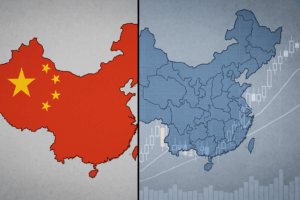
China has recognized the problem. The economic policy documents of the 15th Five-Year Plan (2026–2030) explicitly call for a development model that is more strongly driven by domestic demand and stimulated by consumption. Wang Changlin of the National Development and Reform Commission (NDRC) spoke of a paradigm shift toward endogenous growth. This ambition is correct—but it clashes with a systemic logic that has produced the opposite for decades.
The Chinese Communist Party is politically dependent on economic growth to secure its legitimacy. However, the shift to a consumption-driven model requires structural interventions that are politically sensitive: a significant expansion of social security and the healthcare system, increased transfer payments to private households, less state-directed investment, and greater market dynamism. These measures would cost growth in the short term before creating a more stable demand base in the medium to long term. A party that views control over growth figures as a guarantee of stability struggles structurally with this sequence.
Furthermore, the consumption rate of 36 percent of GDP is not the result of misplaced priorities, but rather the structural outcome of a system that has evolved over 40 years. Changing this system requires not subsidies for electric cars or household vouchers, but a fundamental redistribution of income flows between the state, businesses, and households. This is a major political undertaking that is not included in any five-year plan because it affects the power dynamics within the system itself.
Related to this:

Four to five percent as the new normal?
For the full year 2026, Beijing is targeting growth of 4.5 to 5.0 percent – and even this reduced target appears to be under pressure in light of the April figures. Economists like Nils Sonnenberg assume that the growth rate in the coming years will be closer to four than five percent if the structural problems of the domestic economy are not tackled decisively. UBS expects a continued downturn in the real estate market until at least 2027, with further price declines of ten percent (2026) and five percent (2027).
The question is not whether China will grow. The world's second-largest economy will almost certainly continue to grow – driven by technological innovation, government infrastructure investment, and still considerable urbanization potential. The real question is: What is the quality of this growth, and what risks does it entail? Growth based on overcapacity and export subsidies, while simultaneously generating deflationary tendencies domestically, angering international trading partners, and failing to deliver on its promise of prosperity to its own population, is not a sustainable growth model.
China's April figures are therefore more than a statistical anomaly. They signal that the decades-long Chinese growth miracle has entered its most complex phase – a phase in which the previous drivers are exhausted, the new ones are not yet sustainable, and in which political governance is encountering structural limits that cannot be overcome by stimulus programs alone. The crucial variable is trust – and that cannot be mandated.
Your global marketing and business development partner
☑️ Our business language is English or German
☑️ NEW: Correspondence in your native language!

Konrad Wolfenstein
I and my team are happy to be available to you as your personal advisor.
You can contact me by filling out the contact form here wolfenstein@xpert.digital:or simply call me at +49 7348 4088 965. My email address is
I'm looking forward to our joint project.
☑️ SME support in strategy, consulting, planning and implementation
☑️ Creation or realignment of the digital strategy and digitization
☑️ Expansion and optimization of international sales processes
☑️ Global & Digital B2B trading platforms
☑️ Pioneer Business Development / Marketing / PR / Trade Fairs
🎯🎯🎯 Data-driven B2B industry hub as a quasi-in-house solution


The quasi-in-house solution: How Xpert.Digital closes operational gaps in B2B marketing and sales – Smart Content-Driven Business - Image: Xpert.Digital
Xpert.Digital is a data-driven B2B industry hub led by Konrad Wolfenstein . The company acts as an external, quasi-in-house solution for industrial partners, closing operational gaps in marketing, content, and sales – without requiring additional resources on the client side.
More information here: