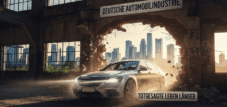
The great DAX crash: Why Daimler Truck, BMW, Mercedes-Benz, Bayer, BASF and others are suddenly struggling with profit slumps – Image: Xpert.Digital
Shocking financial results from cult brands: Profit slump of up to 91 percent in German industry!
US tariffs and the China crisis: A rude awakening for Germany's automotive industry
The year 2025 marks an unprecedented turning point for the German economy. Former global flagship companies and DAX giants like Volkswagen, Mercedes-Benz, Porsche, BASF, and Bayer are facing historic profit collapses that threaten the very foundations of Germany's economic standing. What initially appeared in previous years as a minor economic downturn is now revealing itself as a profound structural crisis: US tariffs, an increasingly aggressive Chinese market, exploding costs, and the expensive transition to electromobility are putting massive strain on the traditional German business model. When profits plummet by up to 90 percent, margins dwindle, and tens of thousands of jobs are at risk, a pressing question arises: Has the engine of the German economy begun to sputter and die? This comprehensive analysis sheds light on the dramatic balance sheets of our industrial icons, uncovers the multifaceted causes of their decline, and reveals the looming consequences for the future of the entire nation.
Related to this:


When Germany's industrial icons stumble, the entire business model of a nation is at risk
The year 2025 marks a turning point in the recent history of the German economy. What had already become apparent in previous years as a gradual decline has now developed into a widespread collapse in profits for Germany's most important listed companies. According to an analysis by the auditing firm EY, the total profit of the 100 largest listed German companies by revenue shrank by 15 percent to 102 billion euros, with well over half of the companies reporting lower results than in the previous year. The reasons are multifaceted: a persistent economic downturn, geopolitical turmoil, escalating trade conflicts with the USA, and increasingly aggressive Chinese competition are putting massive pressure on Germany's export-dependent industrial groups. The automotive industry, traditionally the backbone of German industrial output, and the chemical sector are being hit particularly hard. But commercial vehicle manufacturers and suppliers are also being caught in the maelstrom of shrinking margins and shrinking sales markets. The following sections analyze the main losers of this development, the structural causes and the economic consequences of this profound change.
Daimler Truck: The heavy transport of the crisis
On March 12, 2026, commercial vehicle manufacturer Daimler Truck presented its annual figures for 2025, confirming a picture of profound market weakness. The group's net income plummeted by 34 percent compared to the previous year, from around €3.1 billion to just €2 billion. This figure reflects a trend that had been evident in the quarterly results throughout the year. As early as the third quarter of 2025, adjusted operating profit had fallen by 40 percent to €716 million, while group-wide sales declined by 15 percent to 98,000 vehicles. In the full year 2025, Daimler Truck sold 422,510 trucks and buses worldwide, representing a decrease of eight percent compared to the previous year.
The epicenter of the slump was in North America, the group's most important and profitable single market. There, sales plummeted by 26 percent to 141,814 units. The North American division, which traditionally generates the highest margins, had to cope with a 64 percent decline in adjusted EBIT to €254 million in the third quarter alone. The reasons are both structural and cyclical. Freight forwarders and fleet operators in the US are holding back on investments in light of high interest rates, rising operating costs, and an uncertain economic outlook. The Freightliner brand, the core of the US business, recorded a nearly 40 percent drop in quarterly sales. Daimler Trucks CFO Eva Scherer attributed the situation to difficult market conditions in the US. At least the European business proved somewhat more stable, with Mercedes-Benz Trucks increasing its sales by eight percent and its profit before taxes by twelve percent. The adjusted return on sales in the industrial business fell to between seven and nine percent for the full year, after reaching 8.9 percent in 2024. The dividend is therefore likely to come under pressure, even though the company repeatedly confirmed its forecast range during the year.
Volkswagen: The struggling giant in Wolfsburg
Europe's largest automaker delivered its worst results for 2025 since the diesel scandal a decade ago. Net income after taxes plummeted by 44 percent from €12.4 billion to €6.9 billion, while revenue declined by 0.8 percent to just under €322 billion. The magnitude of this slump becomes clear when one considers that revenue remained almost stable, while profit nearly halved. This reveals a massive margin problem that goes far beyond mere cyclical fluctuations.
The first quarter of 2025 had already set the tone: Net profit fell by almost 41 percent to €2.19 billion, burdened by special charges of around €1.1 billion for CO2 provisions, the diesel scandal, and the software subsidiary Cariad. The situation worsened in the second quarter when profit plummeted by 36.3 percent to €2.29 billion, with US tariffs and restructuring measures adding further strain. VW CFO Arno Antlitz admitted that an operating margin of around four percent clearly demonstrated that the company still had a lot of work ahead of it. The US import tariffs, which were increased from 2.5 to 15 percent, mean potential revenue losses of up to €5 billion annually for Volkswagen alone. The company reacted with a radical cost-cutting program: 35,000 jobs are to be cut at the ten German locations by 2030, with €2.5 billion already spent on restructuring measures in 2024 and a further €900 million in 2025.
Mercedes-Benz: The star in free fall
The year 2025 was even more dramatic for Mercedes-Benz than for Volkswagen. On February 12, 2026, the Stuttgart-based company presented a balance sheet that made shareholders and analysts blush with shame. The group's net income plummeted by 49 percent from €10.4 billion to €5.3 billion, while operating profit before interest and taxes fell even further, by 57 to 58 percent, to €5.82 billion. This marked the third consecutive year of shrinking profits, with the downward spiral accelerating.
In the passenger car division, the core of the group, adjusted EBIT fell by 45 percent to €4.8 billion, while the return on sales plummeted from 8.1 percent to just 5.0 percent. Sales declined by 9.2 percent to 1,801,291 vehicles, with the 19 percent drop in China being particularly painful. Despite the weakness, China remains the most important sales market, accounting for almost a third of all passenger cars sold there. Mercedes CEO Ola Källenius expressed cautious optimism and announced a focus on efficiency, speed, and flexibility. The cost-cutting program, which generated savings of more than €3.5 billion in the passenger car division, was able to offset some of the losses but could not prevent the historic collapse in earnings. Restructuring costs alone amounted to €1.4 billion in 2025, the highest of any DAX-listed company.
BMW: Relative winner with scratches
Compared to its Stuttgart and Wolfsburg competitors, BMW has weathered the storm relatively well, but its financial situation is far from perfect. In fiscal year 2024, the group's profit had already plummeted by 37.7 percent to €11.5 billion, while revenue fell by 8.4 percent to €142.4 billion. The first quarter of 2025 then brought a further profit slump of 26.4 percent to €2.2 billion, with revenue declining by 7.8 percent to €33.8 billion. In the first half of the year, the profit decline totaled 29 percent, leaving a net profit of €4 billion after taxes.
The third quarter offered a glimmer of hope, as BMW nearly tripled its profit year-on-year to almost €1.7 billion. However, this was primarily due to a base effect, as a problem with a brake system supplied by Continental had severely impacted production in the prior-year quarter. BMW delivered a total of 2,463,715 vehicles in 2025, a slight increase of 0.5 percent. The growth in electrified vehicles, by 8.3 percent to 642,087 units, is particularly noteworthy. The EBIT margin in the automotive segment settled at 5.9 percent, within the target range of five to seven percent, but was reduced by approximately 1.5 percentage points due to tariffs and currency effects. Analysts estimate net profit for the full year 2025 at around €6.6 billion, which would represent a decline of approximately 9.5 percent compared to the previous year. This makes BMW the most stable among the German premium manufacturers, but the structural challenges are also hitting the Munich-based company with full force.
Our EU and German expertise in business development, sales and marketing


Our EU and German expertise in business development, sales and marketing - Image: Xpert.Digital
Industry focus areas: B2B, digitalization (from AI to XR), mechanical engineering, logistics, renewable energies and industry
More information here:
A thematic hub offering insights and expertise:
- Knowledge platform covering global and regional economies, innovation and industry-specific trends
- A collection of analyses, insights, and background information from our key areas of focus
- A place for expertise and information on current developments in business and technology
- A hub for companies seeking information on markets, digitalization, and industry innovations
The perfect storm: A toxic mix plunges Germany's industrial icons into crisis
Porsche: From sports car myth to balance sheet crater
The most dramatic case among the DAX-listed companies is undoubtedly Porsche. The sports car manufacturer reported a 91.4 percent drop in profits for 2025. Net income fell from almost €3.6 billion to just €310 million. Operating profit shrank to a mere €90 million, down from nearly €5.3 billion the previous year, representing a decline of more than 98 percent. The operating margin thus approached zero: from 14.5 percent in 2024, a mere 0.3 percent remained. Revenue fell by almost ten percent to €36.3 billion, and sales declined by 15 percent to 266,000 vehicles.
The causes of this disaster are threefold. First, business stagnated in China, the former engine of growth. Second, US tariffs further strained already slim export margins. Third, the strategic shift back to the combustion engine swallowed up special costs of around €3.1 billion after the ambitious electric vehicle targets, including planned battery production, were scrapped. Former Porsche CEO Oliver Blume had changed the strategy before his resignation to focus more heavily on combustion engines, which initially required massive investments. As early as the third quarter of 2025, Porsche was in the red, with an EBIT of minus €966 million.
Related to this:
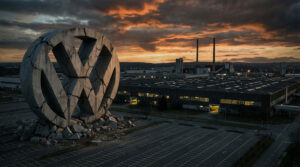
BASF and Bayer: The chemical and pharmaceutical crisis as a reflection of the location
The profit crisis is by no means limited to the automotive industry. BASF, the world's largest chemical company, disappointed even its own, already lowered expectations with its 2025 annual figures. Operating profit before special items was €6.6 billion, falling short of its own forecast range of €6.7 to €7.1 billion. Compared to the previous year's figure of €7.2 billion, this represents a significant decline, attributable to lower margins and negative currency effects. Sales shrank by almost three percent to €59.7 billion. In the third quarter of 2025, net income even plummeted by 40 percent to €172 million. BASF CEO Markus Kamieth sees no rapid recovery and expects 2026 to be a transitional year as well.
The picture is even bleaker for Bayer. The pharmaceutical and agrochemical company slipped further into the red in 2025, posting a loss of €3.62 billion, compared to a loss of €2.55 billion the previous year. The main reason was exceptional legal expenses amounting to over €6 billion, largely stemming from the glyphosate lawsuits. In February 2026, Bayer reached a class-action settlement with plaintiffs and subsequently increased its provisions by €4 billion. Adjusted operating profit fell by 4.5 percent to €9.67 billion, while group sales declined by 2.2 percent to €45.58 billion. Since the end of 2023, Bayer has already cut approximately 13,200 jobs, representing 13 percent of its workforce.
The domino effect: job cuts and a wave of restructuring
The profit slump is triggering a domino effect that extends far beyond the balance sheets. In the first nine months of 2025, DAX-listed companies spent around six billion euros on restructuring measures; since the beginning of 2024, these costs have totaled 16 billion euros. These funds are primarily being used for early retirement schemes and severance payments, some of which are in the six-figure range.
The employment figures already reflect this trend. By mid-2025, the 40 DAX-listed companies had reduced their workforce by a total of around 30,000 jobs, a decrease of 0.9 percent. According to a study, the entire German automotive industry lost more than 50,000 jobs within a single year. EY Germany CEO Henrik Ahlers warned that the decline in the number of employees would continue and even intensify, as many severance packages have a delayed effect.
However, there are also winners in this environment. The defense contractor Rheinmetall increased its workforce by almost 17 percent, driven by the global arms boom. MTU Aero Engines also saw a seven percent increase, and E.ON, Siemens Energy, Deutsche Börse, and Hannover Re also recorded staff growth. Siemens Energy closed its 2025 fiscal year with a profit after taxes of €1.685 billion and is paying a dividend for the first time in four years. This divide between struggling industrial conglomerates and booming defense and energy companies illustrates a fundamental structural shift within the DAX.
The automotive industry as a seismograph of national vulnerability
The combined profit of Volkswagen, Mercedes-Benz, and BMW plummeted by 46 percent in the first nine months of 2025 compared to the previous year. Together, the three manufacturers achieved an EBIT of just €17.8 billion. Experts describe the situation as a perfect storm for the German automotive industry. In the fourth quarter of 2025, the operating profit of the three companies had even fallen by almost 76 percent to approximately €1.7 billion, the lowest figure since the third quarter of 2009. According to EY, the entire automotive industry, ranked among the top 100 companies, experienced a profit slump of 46 percent, while chemical companies suffered an even steeper decline of 71 percent.
The causes lie in a toxic combination. US tariffs on European vehicles have risen from 2.5 to 15 percent since mid-2025. In China, over 100 domestic brands are rapidly gaining market share from German manufacturers. The enormous costs of the transition to electric mobility are straining balance sheets, without the investments yet translating into corresponding sales figures. At BMW, for example, tariffs and currency effects accounted for 1.25 percentage points of the margin, an amount in the billions. At the same time, energy prices rose, and bureaucratic hurdles in Germany further increased production costs.
Winners and losers: The divided DAX landscape
While industrial and automotive companies are incurring massive losses, a remarkable picture emerges on the other side. IT companies in the DAX nearly doubled their profits in 2025, and companies in the healthcare sector recorded profit growth of 40 percent. Deutsche Telekom led the profit rankings with an operating profit of €19.4 billion, followed by Siemens, BMW, and SAP. This divergence has profound implications for the composition and future viability of Germany's leading stock index.
While total revenue for DAX-listed companies (excluding banks) rose by 3.3 percent to €458.9 billion in the first quarter of 2025, ten companies recorded revenue declines, including heavyweights BMW, Mercedes-Benz, BASF, and Bayer. Operating profit before interest and taxes shrank by 8.1 percent overall to €44.8 billion. Sixteen DAX companies generated lower operating profit than in the previous year, including all automotive groups as well as reinsurers Hannover Re and Munich Re, which had to shoulder heavy burdens due to the wildfires around Los Angeles. According to Bloomberg data, the 40 DAX companies achieved a net profit of around €113 billion for the full year 2025, barely more than the €111 billion of the previous year, even though analysts had predicted profit growth of around 12 percent at the beginning of the year. The expected profit growth fell from an optimistic 11 percent in January to a disappointing minus one percent in December.
Outlook for 2026: Between cautious hope and structural crisis
Analysts are cautiously optimistic about 2026. They expect DAX corporate profits to grow by six to eight percent, following an improvement in earnings revision momentum. However, this forecast is fraught with uncertainty. If US tariffs are further tightened or the Chinese economy fails to stabilize, further disappointment looms. Mercedes, Volkswagen, and Porsche have set ambitious targets for 2026, but confidence in their performance remains low.
The real question arising from the crisis year of 2025 is more fundamental: whether the German export-oriented industrial model, in its current form, is still viable. Dependence on China as a sales market, vulnerability to US trade policy, the high transformation costs for electromobility and digitalization, and rising production costs in Germany combine to create a structural deficit that cannot be remedied with one or two better quarters. DAX-listed companies are facing not just a cyclical, but an existential test, the outcome of which will shape Germany's economic architecture for decades to come.
| Pursue | Profit change 2025 | Revenue change 2025 | Main stress factors |
|---|---|---|---|
| Porsche | -91.4% (310 million euros) | -10% (36.3 billion euros) | Internal combustion engine strategy shift, China, US tariffs |
| Mercedes Benz | -49% (5.3 billion euros) | -9% (132.2 billion euros) | China's weakness, tariffs, exchange rates |
| Volkswagen | -44% (6.9 billion euros) | -0.8% (322 billion euros) | CO2 provisions, Cariad, US tariffs |
| Bayer | Loss -3.62 billion euros | -2.2% (45.58 billion euros) | Glyphosate lawsuits, agricultural business |
| Daimler Truck | -34% (2 billion euros) | Decline (approx. 46 billion euros) | North American weakness, sales decline |
| BMW | approx. -9.5% (approx. 6.6 billion euros) | approx. -1.8% (approx. 140 billion euros) | Tariffs, China, currency effects |
| BASF | EBITDA -8.3% (6.6 billion euros) | -2.9% (59.7 billion euros) | Low prices, currency effects |
The DAX-listed companies are facing an existential test, as significant declines in profit and revenue are expected for 2025. Porsche is particularly hard hit, with a projected profit drop of 91.4% to €310 million and a revenue decline of 10% to €36.3 billion, due to its shift away from combustion engines, the situation in China, and US tariffs. Mercedes-Benz anticipates a profit slump of 49% to €5.3 billion with a 9% decrease in revenue (€132.2 billion), attributable to the weak Chinese market, tariffs, and exchange rates. The Volkswagen Group also expects a profit decline of 44% to €6.9 billion, impacted by CO2 provisions, the software subsidiary Cariad, and US tariffs, while revenue is projected to fall only slightly by 0.8% to €322 billion.
Bayer is expected to post a loss of €3.62 billion and a 2.2% decline in revenue to €45.58 billion, primarily due to glyphosate lawsuits and its agricultural business. Daimler Truck forecasts a 34% drop in profit to €2 billion and a decline in revenue to around €46 billion due to weakness in North America and lower sales volumes. BMW anticipates a more moderate profit decline of approximately 9.5% to around €6.6 billion and a revenue decrease of roughly 1.8% (approximately €140 billion), caused by tariffs, China, and currency effects. BASF expects an 8.3% decline in EBITDA to €6.6 billion and a 2.9% drop in revenue to €59.7 billion, attributed to low prices and currency effects.
Your global marketing and business development partner
☑️ Our business language is English or German
☑️ NEW: Correspondence in your native language!

Konrad Wolfenstein
I and my team are happy to be available to you as your personal advisor.
You can contact me by filling out the contact form here wolfenstein@xpert.digital:or simply call me at +49 7348 4088 965. My email address is
I'm looking forward to our joint project.