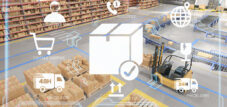
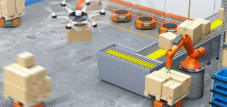
8 possible measures at a glance. For mechanical engineering, logistics and manufacturing

The Corona pandemic and its impact on key industries – @shutterstock | Dusan Petkovic
Competition is increasingly a question of managing time effectively. It's not the big fish that eat the little fish, but the fast fish that overtake the slow fish.
The SARS-CoV-2 virus and the associated respiratory disease Covid-19 are not temporary phenomena. The coronavirus pandemic has already significantly changed our lives. With the lockdown, the emergency management measures implemented by the Federal Republic of Germany, and the economic shutdown last March, we are threatened by a second wave – however severe it may be – regardless of all measures taken.
Despite the various relaxations of restrictions and the surge in holiday travel, many seem to have completely overlooked the fact that we are still in a crisis. Dealing with this invisible disease has become too commonplace and too routine. Curfews and mandatory mask-wearing in enclosed spaces are still in effect, and maintaining a minimum distance of 1.5 meters from other people is still recommended.
The summer holidays are coming to an end, and the rising number of coronavirus infections due to returning travelers from abroad, coupled with the approaching flu season in autumn, is exacerbating the already fragile situation, especially the economic one.


Now, experts are needed to prevent another outage or, in a worst-case scenario, at least to be optimally prepared.
One thing is certain: the coronavirus pandemic will inevitably accelerate the expansion of digital transformation, especially in key industries. These key industries are of paramount economic importance because, with their interconnections to other sectors, they form the backbone of our currently stable, but fragile, economic situation.
Also of interest to you?
- Contract logistics – service providers for logistics – 80% of all larger companies use them!
- Buffer storage: For e-commerce, retail and manufacturing industries
Changed work models, such as working from home and virtual meetings or video conferences, are already widely used. The supply chain is still struggling. There isn't enough time to adjust all capacities and inventories to the new challenges. In addition, many companies are primarily focused on securing sufficient liquidity to safeguard their future. Many manufacturing companies have scaled back production. At the same time, logistics must maintain supply chains and the flow of goods. Adding to the difficulties is the change in consumer behavior. Unforeseen extremes included the prolonged shortages of toilet paper, disposable gloves, disinfectant, flour, and rice. In these situations, the interplay between ordering, planning, production, and delivery broke down.
Cost pressures continue to increase, consequently requiring even more efficient internal processes and those along the supply chain. This highlights that the organizational design concept of "Industry 4.0" is still in its infancy. The danger, however, is that large companies, with their superior networks and advanced digitalization, will expand their market share. They are even the big winners of the Corona crisis, as the example of Amazon clearly demonstrates. Smaller companies become more dependent and inevitably relegate themselves to mere fulfillment agents. On the other hand, it cannot be in Amazon's interest if smaller retailers collapse due to the threat of mass bankruptcies, thus leaving the market increasingly to Chinese sellers.
“The big eat the little,” William Shakespeare once described the law of the stronger, which is all too often cited as a reproach and accusation for general social conditions as well as for capitalist concentration processes.
In reality, however, competition is increasingly a question of managing time effectively. It's not the big fish that eat the little fish, but rather the fast fish that overtake the slow fish, as Eberhard von Kuenheim, former CEO of BMW AG, put it.

Industry 4.0 – The fast overtake the slow – @shutterstock | alphaspirit
The controllability of time is an essential element of digital transformation and therefore also of Industry 4.0.
We must always keep this aspect in mind when we want to stabilize the key infrastructures, including digital transformation and intralogistics, for our key industries and make them fit for the future.
Of course, we can't wait until Industry 4.0 is fully established. We need to take action now and, ideally, organize things in such a way that we can easily integrate the methodology as a module into the further development of the Industry 4.0 concept.
Related to this:
The following measures should currently be the focus:
- Further expansion of warehouse optimization towards contactless order picking. Full automation would be a further step. An example of this can be found under: "Japan is already working on the future of tomorrow".
- Increase inventory levels. So far, just-in-time deliveries to production have kept storage costs low. However, this increases the risk of production disruptions during times of crisis.
- Reshoring or onshoring of production. The pandemic disrupted the global supply chain in ways no one could have foreseen. As the global supply chain begins to stabilize, manufacturers are re-evaluating their processes. Many are considering reshoring, i.e., relocating production tasks back to their headquarters.
- Scaling and coordination of warehouse capacities. While some parts of the logistics operation were operating at their limits and suffering from overload, others experienced a complete collapse in order demand.
- Smaller, decentralized warehouse locations (hubs) increase speed and flexibility in handling supply fluctuations. Proximity to the customer reduces transportation costs and mitigates the risk of supply chain disruption. While some manufacturers will seek to establish these decentralized warehouse facilities at key locations, others may look to leverage established third-party logistics (3PL) providers. Furthermore, as new satellite distribution centers are established, warehouses will seek to utilize high-density automation to minimize warehouse footprint and limit initial investment and ongoing labor costs.
- Expansion and focus on e-commerce. According to Forbes, the pandemic is accelerating growth in the e-commerce sector by four to six years. Warehouse and distribution centers need to be expanded accordingly. This includes increasing full automation and moving away from static warehouses. Split case order and single order management need to be improved, especially in terms of speed and flexibility.
-
- In a split-case picking system, individual items are picked from containers. This method is sometimes also referred to as single or piece picking.
-
- E-commerce is driving the development of automated single-item picking (Smart Piece Picking System).
-
- E-commerce and full automation: Goods-to-robot picking, the optimum in split-case picking.
- Expansion of digital intelligence, both in hardware and software. The current focus is on the next few months, which will then inform medium- to long-term planning. Actions solely focused on the next few months, without knowing what will happen afterward, would be disastrous.
- Don't postpone the expansion of energy efficiency. Include it in the implementation now to see initial successes in the coming months.
-
- Automation and autonomous energy supply are key components for Amazon to reduce costs while securing and expanding market share, especially for the future.
-
- Read more about it here: “CO2 neutrality – Learning from Amazon”
That's why Xpert.Plus is ideal for mechanical engineering, logistics, and manufacturing
Xpert.Plus is a project by Xpert.Digital. We have many years of experience in supporting and consulting on warehouse solutions and in warehouse optimization, which we combine under Xpert.Plus in a large network.

Konrad Wolfenstein
I would be happy to serve as your personal advisor.
You can contact me by filling out the contact form below or simply call me on +49 7348 4088 965 (Munich) .
I'm looking forward to our joint project.
Write to me



Xpert.Digital – Konrad Wolfenstein
Xpert.Digital is a hub for industry focusing on digitalization, mechanical engineering, logistics/intralogistics and photovoltaics.
With our 360° Business Development solution, we support renowned companies from new business to after-sales.
Market intelligence, smarketing, marketing automation, content development, PR, mail campaigns, personalized social media and lead nurturing are part of our digital tools.
You can find more information at: www.xpert.digital – www.xpert.solar – www.xpert.plus
Keep in touch