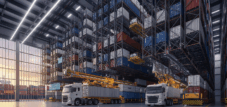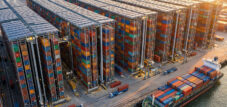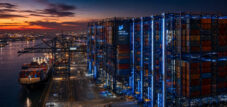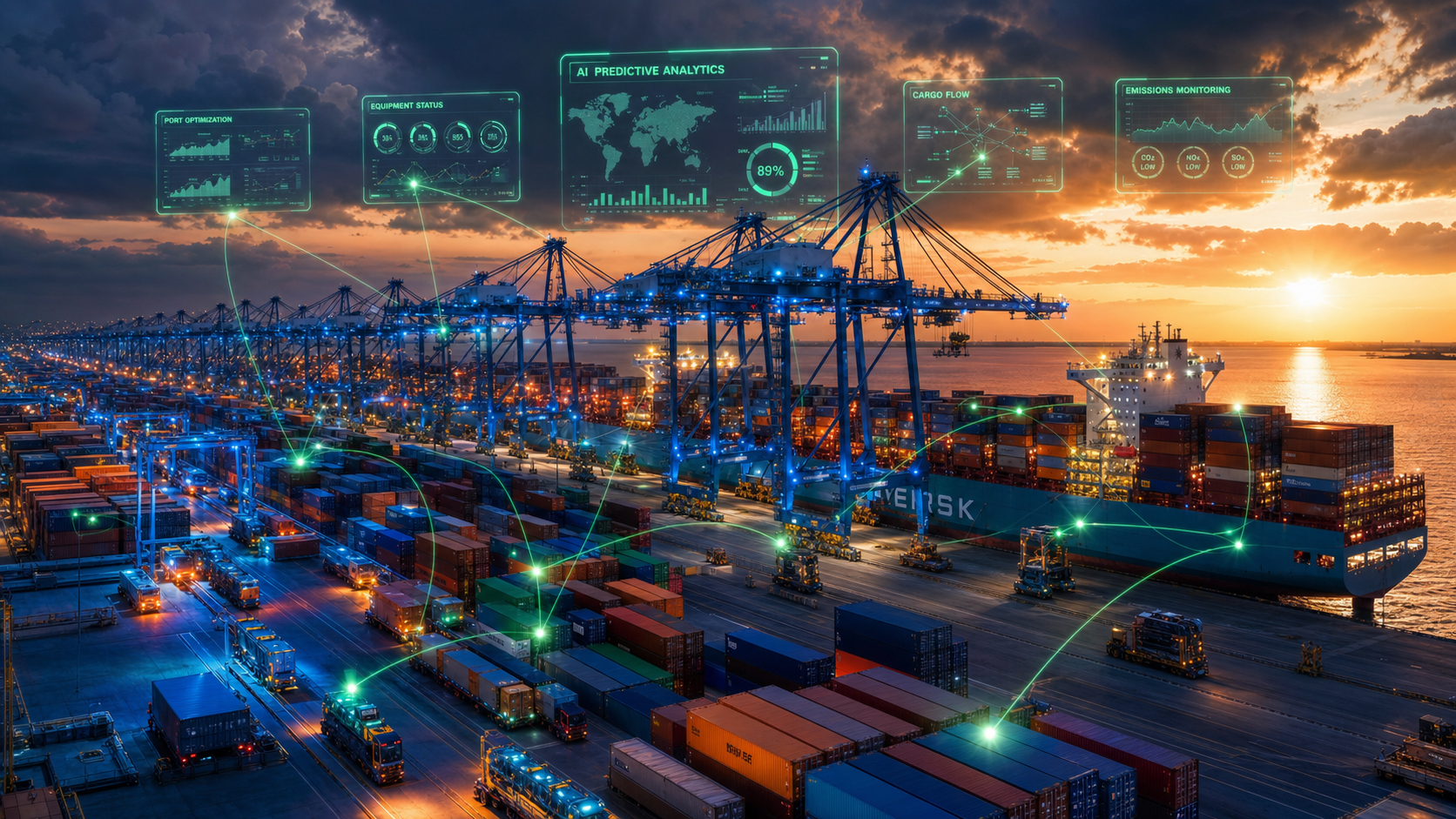
Red Sea, tariffs, port congestion: Supply chain collapse? Why the global container chaos is now reaching a new dimension – Image: Xpert.Digital
Record fleets stuck in constant traffic jams: The dangerous paradox of our global economy
Whoever controls the box controls world trade – and the Western world is currently losing track of it
Global container logistics is the invisible backbone of our world economy – but this backbone is beginning to crack alarmingly. Whether it's missile attacks in the Red Sea, historic droughts at the Panama Canal, Trump's renewed tariff earthquake, or chronically congested European ports: the crises in maritime supply chains are escalating rapidly. While shipping companies are sending more vessels than ever before onto the world's oceans, billions of dollars' worth of goods are stuck in perpetual traffic jams and geopolitical bottlenecks. A dangerous paradox is emerging: the industry is suffocating under overcapacity while simultaneously suffering from chronic shortages. The Western world risks falling behind in the battle for control of trade flows, while Asian megaports, with their hyper-automation, are setting the pace. But the solution could lie far from the high oceans: technological innovations for the hinterland – such as the clever high-bay racking systems of an Austrian niche specialist – demonstrate what the architecture of tomorrow's global resilience must look like. An in-depth economic analysis of our most vulnerable lifeline.
Fault lines in global logistics: An in-depth economic analysis of global container supply chains
Between abundance and scarcity: The structural paradox of the container economy
Global container logistics is in a state that appears contradictory at first glance: While the worldwide container fleet has reached record sizes and shipping companies have responded to the surge in demand during the pandemic years with massive new orders, there is simultaneously a chronic bottleneck at critical points around the world. Overburdened ports, blocked straits, waterways threatened by climate change, and a persistently volatile freight market characterize an industry that is structurally under pressure to adapt. Around 90 percent of all goods traded worldwide are transported by sea – making container logistics not only the backbone but the vital artery of the global economy.
It is no coincidence that the industry has been operating in a state of permanent emergency since 2020. Covid-19 suddenly exposed structural weaknesses that had previously been masked by routine operations: the insufficient resilience of geopolitically exposed routes, the lack of buffering capacity at major transshipment hubs, and the lack of digitalization in hinterland logistics. Today, in the mid-2020s, many of these weaknesses are known but still not resolved – and new vulnerabilities have emerged.
Fire at the bottleneck: The Red Sea, the Suez Canal and the geopolitical Achilles' heel
The most spectacular and currently most consequential bottleneck in container logistics lies in the Red Sea. Since the end of 2023, Houthi rebels from Yemen have been systematically shelling commercial merchant ships in this strategically vital waterway. The consequences for global trade have been and continue to be massive: Major shipping companies such as Maersk, Hapag-Lloyd, CMA CGM, and MSC have almost completely rerouted their vessels to circumvent the African continent via the Cape of Good Hope.
This diversion extends transit times between Asia and Europe by 10 to 15 days and ties up considerable capacity. According to calculations by Sea-Intelligence, the longer transit times permanently tie up around 2.1 million TEU (Twenty-Foot Equivalent Units) of nominal container capacity in the system – equivalent to 6.5 percent of the entire global container fleet. Currently, four additional ships are needed per round trip between Asia and Europe, ships that would normally be available for other routes. In January 2026, only 150 container ships transited the Suez Canal – a decrease of 16.7 percent compared to the previous year and the lowest January figure in a decade.
The crisis of 2026 reached a new qualitative dimension: When the Strait of Hormuz also came into focus in February 2026 due to the conflict with Iran, a simultaneous blockage of several key shipping corridors threatened for the first time in the history of modern container shipping. The Cape of Good Hope would then have been the only remaining alternative route for the majority of global trade – a scenario that calls into question the entire logistical resilience model of the industry. The strategic conclusion is clear: Global container logistics is not designed to withstand the simultaneous failure of several major corridors.
To make matters worse, a rapid return to the Suez route would by no means bring the hoped-for relief. Analysts at the digital freight forwarder Forto warn that an uncontrolled resurgence of Suez traffic could lead to a 39 percent increase in European terminal volumes compared to the record level of March 2025 – and thus trigger a new port crisis.
The silent climate shock: The Panama Canal and the freshwater question
While public attention is focused on the Red Sea, a second bottleneck has revealed a structural vulnerability that is at least as threatening: the Panama Canal. The El Niño climate phenomenon led to extreme drought in Panama's Isthmus region in 2023 and 2024. The water level of Gatun Lake, which serves as a freshwater reservoir for the canal's locks, fell to historic lows.
The consequences were dramatic: Daily shipping traffic was more than halved, from the usual 36 to 38 ships to as few as 18 per day at times. The maximum permissible draft was reduced from 15.24 to 13.41 meters – with direct repercussions for the loading capacity of large container ships. Container ships were hardest hit by the restrictions. The economic damage amounted to billions; shippers paid high premiums to jump the queue in the growing queue.
By 2025, the situation had normalized due to more abundant rainfall: the canal was once again operating near its maximum capacity, and waiting times had dropped from over two weeks to under two days. However, the crisis period had unmistakably demonstrated how climate-dependent a central hub of global trade is. The Panama Canal Authority is responding with a $1.6 billion project to build a new reservoir, which, once completed, should allow for 15 additional ship passages per day. This is a necessary but insufficient measure – because structural climate change will permanently increase rainfall uncertainty in the region.
Port congestion as a permanent condition: Rotterdam, Hamburg and the limits to growth
Even if the geopolitical disruptions were to subside one day, structural bottlenecks would persist in the major transshipment hubs. The Port of Rotterdam and the Port of Hamburg regularly suffer from significant congestion, which escalates particularly when demand surges unevenly across the terminals. The problem lies not solely in the physical capacity of the quays, but in the interplay between terminal space, hinterland connections, and digital coordination.
Ships arriving late due to detours or weather events often arrive in clusters – a phenomenon the industry knows as the "convoy effect." Major European ports are not structurally equipped to handle such peak demand. The Hamburg Port Authority is therefore consistently investing in modernization: a new quay wall over a kilometer long is being built at the Hamburg Container Terminal, and the areas for fully automated, electrified cargo handling are being expanded. Hamburg aims to reduce its CO₂ emissions from port operations by 40 percent by 2030 compared to 2017.
Rotterdam and Hamburg are also investing together with Singapore in the "Green and Digital Shipping Corridor," which aims to reduce greenhouse gas emissions from large container ships on this 15,000-kilometer route by 20 to 30 percent by 2030. Despite this progress, the fundamental weakness of European ports remains: Coordination between shipping companies, terminal operators, freight forwarders, and logistics companies still largely relies on outdated, bilateral communication channels. A unified digital platform for the entire maritime value chain is lacking.
The Trade Earthquake: Trump's Trade Policy and the Re-measuring of Supply Chains
In addition to the geopolitical and physical bottlenecks, a regulatory shock has been added since 2025: The renewed US import tariffs under President Donald Trump have shaken the fundamental structure of global supply chains. US imports from China plummeted by up to 64 percent after the tariffs were imposed. Shippers worldwide are reviewing sources of supply, routes, and the overall structure of their supply chains, leading to significant operational disruptions and uncertainty.
The consequences for the German economy are significant: According to the ifo Institute, the US tariffs could permanently dampen German economic growth by up to 0.6 percentage points. German exports to the US could fall by 15 percent in the medium term, with the automotive, machinery, and pharmaceutical industries being particularly affected. At the same time, these disruptions offer opportunities: New trade flows are emerging between Europe and Asia, and between Europe and the Global South, fundamentally altering container routing patterns and increasing the strategic importance of transshipment hubs in North Africa, the Middle East, and West Africa.
Trade policy instability is having a structural impact on freight markets. Spot rates for Asia-Europe connections fell by over 51 percent year-on-year in the second half of 2025. For shippers, this means lower transport costs in the short term, but increased planning uncertainty and fragile business relationships in the long term.
The medium- to long-term time bombs: Where will the fires burn tomorrow?
Beyond the current crises, several structural vulnerabilities are emerging, the solution to which is both plannable and necessary today.
Climatic fragility of waterways
The Panama Canal has demonstrated that freshwater scarcity can bring a global supply chain to a standstill. Climate change will increase the frequency and intensity of such extreme events. The same applies to low water levels on the Rhine, which is of central importance for Central European hinterland logistics. The growing vulnerability of water-based infrastructure to climatic extremes is one of the greatest, yet systematically underestimated, risks of the coming decades.
Digital backwardness in port coordination
The lack of an interoperable database between all actors in the maritime supply chain – from shipping companies and terminal operators to truck drivers in the hinterland – leads to enormous inefficiencies. The reliance on paper-based or bilaterally negotiated information flows costs billions. Projects like SMART SC are attempting to establish a comprehensive e-business standard, but its widespread implementation will take years.
Skills shortage and aging of the dockworkers
Automating port terminals doesn't completely solve the skilled worker shortage – it merely shifts the problem. Instead of traditional crane operators, highly specialized technicians are needed for the maintenance, programming, and monitoring of fully automated systems. The Hamburg-based DigiRemote2030 project, which trains dockworkers to remotely control automated container cranes, is a promising, but still tentative, step in the right direction.
Strategic port takeovers by state actors
In recent years, geopolitical actors – most notably China – have systematically secured stakes in strategically important port infrastructure worldwide. Between 2015 and 2023, two-thirds of the 184 global port infrastructure projects were concentrated in Asia and Oceania, with China investing heavily through its Belt and Road Initiative (BRI). Africa is increasingly emerging as a new target region for port investments, with considerable competition between China, the US, and the EU. Whoever owns the infrastructure also controls trade flows in the long term.
Excess capacity and consolidation pressure
The surge in orders during the pandemic years has inflated the global container fleet. At the beginning of 2026, capacity continues to exceed underlying demand. Approximately 1.8 million TEU of older tonnage are currently being held as operational reserves. This overcapacity is putting persistent downward pressure on freight rates and making investments in new technologies more economically challenging for many shipping companies.
LTW Intralogistics Solutions

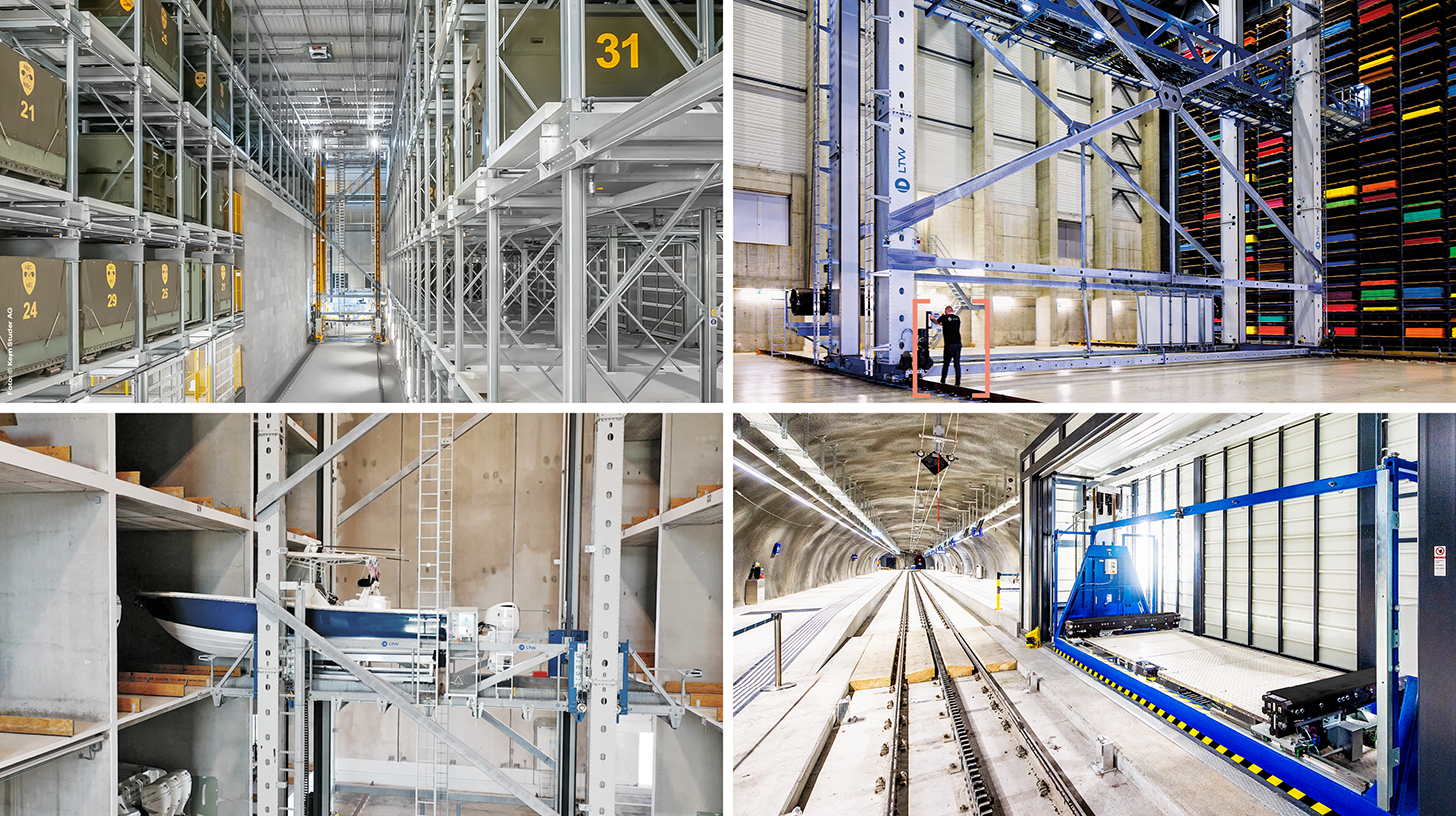
LTW Intralogistics – Engineers of Flow - Image: LTW Intralogistics GmbH
LTW offers its customers not individual components, but integrated complete solutions. Consulting, planning, mechanical and electrotechnical components, control and automation technology, as well as software and service – everything is networked and precisely coordinated.
In-house production of key components is particularly advantageous. This allows for optimal control of quality, supply chains, and interfaces.
LTW stands for reliability, transparency, and collaborative partnership. Loyalty and honesty are firmly anchored in the company's philosophy – a handshake still means something here.
Related to this:
Resilience instead of efficiency: Three strategies to save container chains
The global ranking: Who is prepared, who is lagging behind?
Singapore and Asia: Class through consistency
Singapore has established itself as a global benchmark for 21st-century port development with the Tuas Mega Port. Phase II of the project, completed in January 2026 with an investment of over five billion Singapore dollars, includes 21 new deep-water berths and increases capacity by 20 percent. The fully automated terminal operates with over a thousand electric Automated Guided Vehicles (AGVs) coordinated via a private 5G network, reducing turnaround times by 20 percent through just-in-time coordination. By 2040, Tuas is expected to reach a total capacity of 65 million TEU per year and consolidate all of Singapore's container terminals. The Port of Shanghai handled a new record of 55.06 million TEU in 2025 – marking its 16th consecutive year as the world's largest container port.
Asia dominates the global container ranking, with eight of the world's ten largest ports being Chinese or Southeast Asian. In 2024, China handled approximately 203 million TEUs. This concentration is economically efficient, but at the same time creates critical dependencies: disruptions in Chinese ports – such as the pandemic-related partial closures of Yantian and Ningbo – have far-reaching global consequences.
Europe: Technologically competent, structurally sluggish
Europe boasts three world-class ports – Rotterdam, Hamburg, and Antwerp – and pioneered port automation early on: Rotterdam operated the world's first fully automated terminal in 1993. The Container Terminal Altenwerder (CTA) in Hamburg remains one of the most modern in the world. Nevertheless, Europe suffers structurally from fragmented political responsibilities, sluggish regulatory adaptation, and chronically underinvested hinterland logistics.
The digital backwardness is particularly acute: only seven percent of globally used software and internet applications originate from European development. With investments in artificial intelligence, Europe lags far behind the US ($2.4 billion compared to $22.4 billion). This technological dependency directly impacts the ability of European ports and logistics companies to operate autonomous, data-driven systems. While the port infrastructure in Rotterdam and Hamburg can be modernized, the software, AI platforms, and automation technology used in this process predominantly come from the US or Asia.
USA: Resilience through size, weakened by political instability
The US possesses a vast and multifaceted port system, which, due to its geographical diversification—East Coast, West Coast, Gulf of Mexico—exhibits a fundamental resilience. However, the US trade policies of the Trump administration in 2025/2026 led to massive disruptions in global supply chains, which also affected American ports: US imports from China plummeted by 64 percent in the short term, resulting in significant capacity problems with warehousing and inland transportation. The structurally outdated port infrastructure of many US ports and the lack of comprehensive digitalization of port operations represent long-term vulnerabilities.
Emerging economies and Africa: Strategically contested, infrastructurally underdeveloped
The African continent has become the new battleground for geostrategic port investments. With the Belt and Road Initiative, China is systematically securing positions of control in West and East African ports. African countries have already received US$21.7 billion in BRI commitments by 2023. In return, these countries' dependence on Chinese infrastructure financing and technology is being cemented. The US and the EU are attempting to counteract this with initiatives such as the Lobito Corridor, but are acting reactively and with a significant time lag. African ports lag far behind their Asian and European counterparts in terms of handling technology, digitalization, and hinterland connections – a growing problem in a world of newly structured trade flows.
Who provides the solutions? Innovators, system integrators, and the contribution from Wolfurt
The digital platform designers
Solving the coordination problems in global container logistics requires one thing above all: end-to-end data transparency across all supply chain actors. Digital freight forwarders like Forto, Flexport, and Freightos are playing an increasingly important role in this. Platforms that combine real-time tracking, dynamic route planning, and AI-powered capacity optimization are no longer a luxury, but an operational necessity. Shipping companies and terminal operators are investing heavily in data infrastructure: Maersk has strategically transformed itself into an integrated logistics provider, and Hapag-Lloyd is expanding its digital platform.
Port technology and automation
Konecranes, Liebherr, and Gottwald are European manufacturers of port cranes and handling technology used worldwide. Systems with Automated Stacking Cranes (ASCs), Automated Guided Vehicles (AGVs), and fully integrated terminal management systems are crucial for automating terminal handling. Singapore's Tuas Port is the global benchmark – and actively promotes itself as setting standards for the entire industry.
LTW Intralogistics from Wolfurt: An underestimated niche specialist with global relevance
In the context of the major geopolitical and technological upheavals in container logistics, LTW Intralogistics from Wolfurt, Austria, is a company that one wouldn't immediately expect to find on the list of solution providers – and that's precisely what makes it so interesting. LTW is part of the Doppelmayr Group and has completed more than 1,600 intralogistics projects in over 35 countries in more than 45 years.
LTW's direct contribution to container logistics lies not in the maritime port operations themselves, but in an area that is systematically underestimated: the efficient storage, handling, and automation of containers and swap bodies in the intermodal hinterland. LTW, in collaboration with Gomultimodal from Hamburg, has developed an innovative high-bay warehouse system for intermodal terminals that can store loaded and unloaded semi-trailers, containers, and swap bodies in high-bay warehouses with up to ten levels. On a footprint of approximately 9,000 square meters, up to 500 loaded semi-trailers can be accommodated – equivalent to six times the capacity of conventional trailer parking areas.
LTW's first container storage facility was built for the Swiss Federal Office for Defence Procurement armasuisse: A 20-meter-high storage and retrieval machine with a payload of 18 tons stores containers, swap bodies, and roll-off containers in 206 storage locations. A special feature: A unique gate system allows maintenance work directly at the storage location, and a redundant drive system guarantees maximum availability.
For intermodal terminals, LTW's high-bay warehouse is a direct solution to one of the most pressing bottlenecks: the lack of space. Especially at urban intermodal terminals, where rail, trucks, and containers converge, space is the limiting factor. LTW makes it possible to accommodate many times the usual storage volume on a minimal footprint – with fully automated, always-available access to every single unit. The system integrates the loading track directly into the high-bay warehouse and enables the simultaneous, automated loading and unloading of trains and trucks.
This solution addresses one of the least visible, yet structurally significant bottlenecks: the inefficiency of intermodal interfaces between sea freight and hinterland transport. If a container takes weeks to get from the port terminal to the factory, the problem often lies not with the ship, but with the fragmented, space-inefficient, and poorly digitized hinterland logistics. This is where LTW comes in – offering a comprehensive system solution from a single source, encompassing mechanics, electronics, and software, and providing a level of completeness rarely seen in the market.
The company's offering is complemented by its membership in the Doppelmayr Group, with locations in over 50 countries worldwide – giving LTW a global project capacity that far exceeds what the Wolfurt-based company's size might initially suggest. Seventy percent of its revenue is generated in the DACH region (Germany, Austria, and Switzerland), but large-scale projects are increasingly originating from the USA, and internationalization is progressing rapidly.
LTW is not a supplier for large deep-sea ports – but for the logistics centers, combined transport terminals, and freight railway stations that form the hinterland of major ports, the company is a highly relevant, technologically advanced partner. In a world where the bottleneck problem of container logistics is increasingly shifting from the seas to land, this expertise is gaining strategic importance.
Systemic teachings and the architecture of resilience
The analysis of current bottlenecks and medium- to long-term risks leads to a key conclusion: Global container logistics does not primarily suffer from a lack of capacity, but rather from structural fragility. This fragility is the product of decades of optimization for efficiency while neglecting redundancy and resilience.
Three systemic areas for action are emerging. First, geopolitical risk diversification is needed in route planning: the extreme dependence on a few maritime bottlenecks is no longer economically sustainable. Investments in alternative corridors—rail-land connections, the North Sea route, new maritime trade routes—must be prioritized. Second, the complete digitalization of the supply chain, from the country of origin to the end customer, is not a question of if, but when. Every day without data transparency costs billions—through congestion, misplanning, and unnecessary capacity reserves. Third, intermodal efficiency on land must be optimized with the same intensity as maritime deep-sea transport. The major ports are becoming increasingly efficient—but if the hinterland doesn't keep pace, every improvement at the terminal is wasted.
Europe has a special responsibility and a special opportunity: As a region with highly developed industrial infrastructure, leading engineering expertise, and a long tradition in freight transport, the continent has the potential to set technological standards – provided that political fragmentation is overcome and the investment gap with Asia and America is consistently reduced. The window of opportunity for this step is limited.
Consulting - Planning - Implementation

Konrad Wolfenstein
I would be happy to serve as your personal advisor.
You can contact me at wolfenstein∂xpert.digital or
Just call me on +49 7348 4088 965 .
Your container high-bay warehouse and container terminal experts
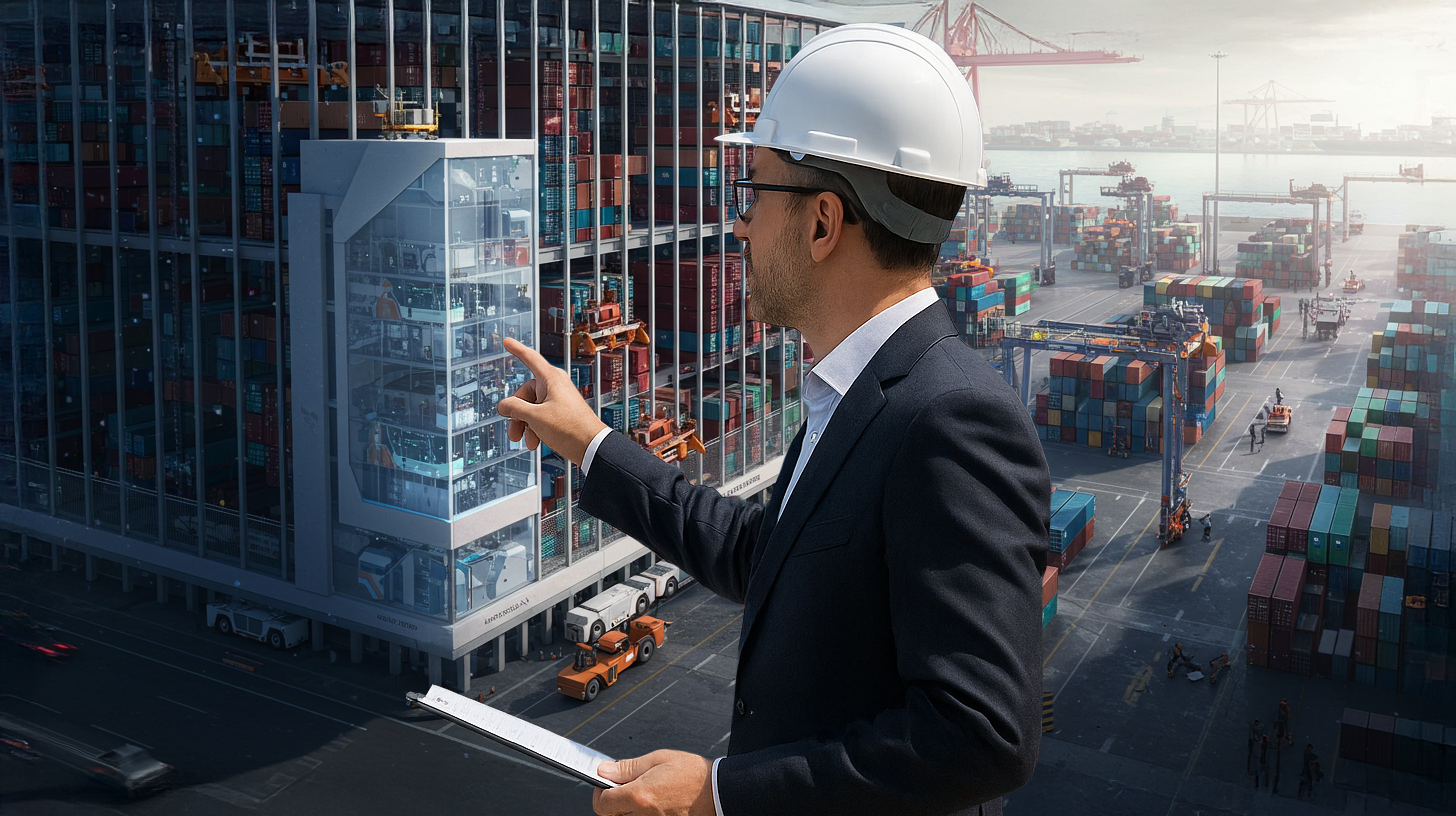
Container high-bay warehouses and container terminals: The logistical interplay – expert advice and solutions - Creative image: Xpert.Digital
This innovative technology promises to fundamentally change container logistics. Instead of stacking containers horizontally as before, they will be stored vertically in multi-story steel racking structures. This not only allows for a drastic increase in storage capacity within the same area, but also revolutionizes all processes at the container terminal.
More information here: