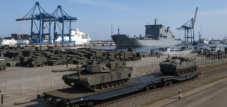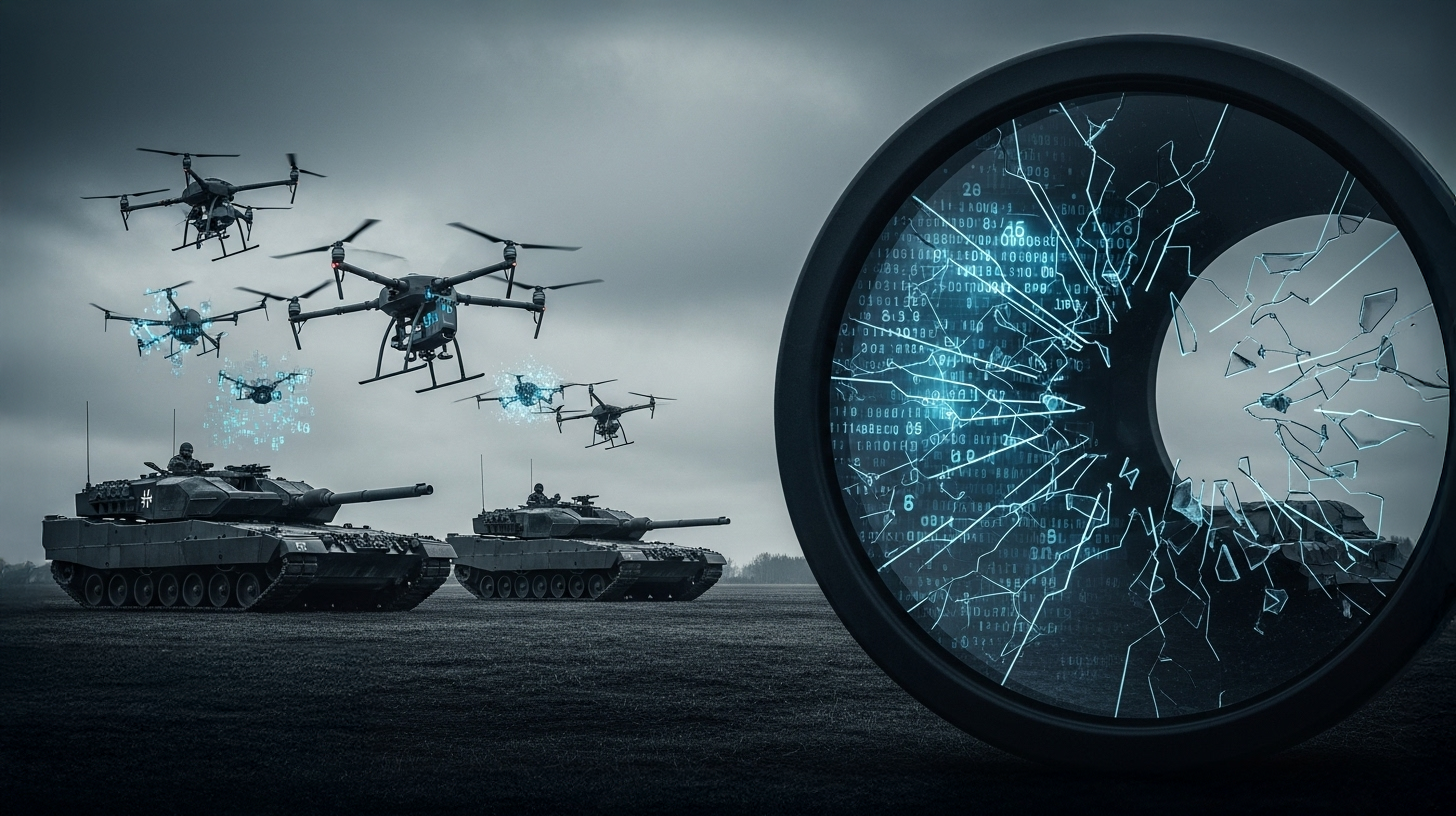
The German Armed Forces in transition: Structural problems and reform needs after the turning point – Image: Xpert.Digital
A turning point has failed? Why 100 billion euros won't make the German armed forces combat-ready
Is the German defense actually in a problematic state?
Three and a half years after Chancellor Olaf Scholz proclaimed a turning point, the fundamental question arises whether the German armed forces are truly ready for deployment despite historically high investments. The answer is sobering: military historians like Sönke Neitzel from the University of Potsdam continue to diagnose the Bundeswehr as a "dysfunctional organization" that has failed to successfully adapt to the demands of modern warfare.
The central problem lies not in a lack of financial resources – Germany already spends more on defense than France – but in structural deficiencies that have developed over decades of peacetime. The €100 billion special fund was intended to make the Bundeswehr combat-ready, but so far, successes have been limited. The armed forces still struggle with unmanned systems, drone shortages, and a cumbersome bureaucracy that hinders rapid adaptation to modern warfare.
Related to this:

What specific structural problems are plaguing the German Armed Forces?
The personnel structure of the German Armed Forces reveals a serious imbalance that fundamentally impairs its operational capability. Of the approximately 180,000 soldiers, less than half work in the core area of an army – combat. This imbalance manifests itself in a top-heavy hierarchy: almost one in four soldiers is an officer, a completely unusual ratio for a functioning armed force.
The relationship between officers and frontline personnel is particularly problematic. Currently, the German Armed Forces have almost as many lieutenant colonels as corporals – roughly 10,000 of each. During the Cold War, approximately 60 percent of the force consisted of enlisted personnel compared to only eight percent officers; today, this ratio has deteriorated dramatically. This massive imbalance results in an organization with too many superiors and too few combatants.
The bloated bureaucracy of desk officers results from a "disproportionately large number of older staff officers who have been performing administrative tasks for many years." Over 50 percent of soldiers are not deployed in the core mission execution but are employed in ministries, staff offices, and agencies. Many of these soldiers are hardly usable in a crisis because they have been out of the field for too long, are no longer physically or technically fit, or are simply too old for active duty.
Why is the German Armed Forces failing to procure modern weapons?
The failure to procure drones exemplifies the structural problems of the German armed forces. While Ukraine loses 40 to 45 reconnaissance drones daily, the entire Bundeswehr has only slightly more than 600 drones. German drone companies estimate that the Bundeswehr would need 18,000 reconnaissance drones to hold its own for a year against an adversary like Russia.
The armed forces leadership spends its time "exchanging information in working groups" instead of making quick decisions. Too many offices, departments, and agencies are blocking efficient procurement processes. Procurement is considered the Bundeswehr's Achilles' heel, even though defense spending has risen steadily – from €32.4 billion in 2014 to over €46.9 billion in 2021.
The bureaucratic mentality of the peacekeeping force means that the best military outcome isn't rewarded, but rather the "flawlessly completed process step." No one wants to make decisions – a fatal attitude for national defense. Even with small items of equipment like warm underwear or tents, the system regularly fails.
What role does bureaucracy play in inefficiency?
Seventy years of peace have transformed the Bundeswehr into a sluggish administrative apparatus, unsuited for modern warfare. While armies typically streamline their administrations during wartime, the German armed forces have become increasingly cumbersome over decades. The result is an organization bogged down in aimless procedures and lacking the necessary resolve to address these shortcomings.
The Federal Court of Auditors warns of waste and calls for reforms in personnel structure and administration. Tens of thousands of positions are assigned tasks that are not needed for national and alliance defense. As an example, the Court of Auditors cites the fact that around one-third of all secretarial tasks are performed by sergeants – a clear waste of military resources.
The combination of virtually unlimited resources and intense time pressure increases the risk of inefficient operations. Despite historically high budgets, the German Armed Forces are unable to use their resources effectively: in 2024, they spent €4.36 billion less than planned, while simultaneously suffering from fundamental equipment shortages.
How does the personnel structure affect operational readiness?
The current personnel allocation renders the German Armed Forces unsuitable for modern conflicts. At the end of 2024, nearly 20 percent of all positions in the career paths above the enlisted ranks were vacant, and among the enlisted ranks, the figure was even higher at around 28 percent. At the same time, 4,006 soldiers are waiting for promotions because the necessary positions are not included in the budget.
Of the nominally 180,000 soldiers, at least 20,000 would have to be withdrawn, as they are no longer fully operational. The target strength is already not being met, even though the armed forces are understaffed for their core tasks. This personnel shortage, coupled with an overstaffing in administration, illustrates the paradox of an army that is not focusing on its actual responsibilities.
Military historian Neitzel is therefore calling for drastic cuts: 30,000 of the current 90,000 non-commissioned officers and officers in management positions should be let go. The proportion of personnel in leadership, administration, and non-troop-related support roles should be limited to 30 percent. Anyone no longer fit for core missions should be relieved of duty.
Selected magazines: Problem identified, but what happens next?
- German Armed Forces Journal: "The problem lies in the bloated caste of generals"
- Merkur: According to military expert, the German Armed Forces are "not viable" – there is one main problem
- World: "Success rate inadequate" – Pistorius in the labyrinth of rearmament
- ZDF: Court of Auditors warns of waste in the armed forces
- Frankfurter Rundschau: Too many desk warriors: Military expert settles accounts with Pistorius – German Armed Forces “not viable”
What do foreign deployments teach us about the capabilities of the German Armed Forces?
The experiences in Afghanistan and Mali reveal the limitations of the German armed forces. The Mali mission, the largest and most dangerous foreign deployment after Afghanistan, exemplifies the problems of the Bundeswehr. After ten years of presence in the West African country, the security situation has not improved – on the contrary.
MINUSMA was considered one of the most dangerous UN missions worldwide, with approximately 280 peacekeepers killed. Despite the presence of over 1,000 German soldiers, chaos and violence continue to prevail in the country. Terrorist groups have even intensified their activities, inspired by the Taliban's success in Afghanistan.
The Afghanistan mission ended in de facto failure after 20 years. The German Armed Forces attempted to give this failure a positive spin by claiming that politics had failed, while the military had fulfilled its mission. This self-deception prevents an honest analysis of the structural weaknesses. The German Armed Forces were sent on a "Mission Impossible," which also raises questions about the responsibility of the military leadership.
Related to this:


What shortcomings exist in modern military technologies?
The German armed forces' technological backwardness is particularly evident in the areas of electronic warfare and drone defense. Since 2008, Russia has focused its military efforts on electronic warfare and is now capable of building a deeply layered electronic warfare front. Systems such as Shipovnik Aero and Pole-21 can suppress GPS signals from drones or falsify their target coordinates.
The majority of Germany's drone fleet dates back to the era of the wars on terror and is not designed for intensive electronic warfare. The Bundeswehr (German Armed Forces) lacks a joint drone strategy; instead, each branch develops its own concepts. While the focus is primarily on drone defense, offensive capabilities are almost entirely absent.
The German Armed Forces' electronic warfare capabilities focus on outdated systems like the Hummel and Hornets jamming vehicles. However, modern threats from satellite communications, artificial intelligence, and navigation warfare demand entirely new approaches. Adapting to these challenges is far too slow for the rapidly evolving threat landscape.
How effective has the 100 billion euro special fund been so far?
The special fund was intended to usher in a new era, but the results are mixed. By the end of 2024, all 100 billion euros were committed, a large portion of which had already been spent. The vast majority went into a limited number of particularly expensive pieces of equipment, weapons systems, and missiles.
However, inflation is significantly eroding the purchasing power of the special fund. Of a nominal 100 billion euros, only about 87 billion remain in real terms. Defense projects are becoming more expensive or are even in jeopardy, while supply bottlenecks are increasing. The originally planned investment volume will not be sufficient to fully close the funding gap of recent years.
Rheinmetall is profiting most from the arms buildup, receiving orders worth €42 billion – almost half of the entire special fund. Of the approximately 125 major projects evaluated as part of this era of change, 22 alone are attributable to Rheinmetall. This concentration on a single main supplier poses strategic risks to security of supply.
Related to this:

Hub for Security and Defense - Advice and Information

Hub for Security and Defense - Image: Xpert.Digital
The Security and Defence Hub offers expert advice and up-to-date information to effectively support companies and organizations in strengthening their role in European security and defence policy. Working closely with the SME Connect Defence Working Group, it particularly promotes small and medium-sized enterprises (SMEs) that wish to further develop their innovative capacity and competitiveness in the defence sector. As a central point of contact, the Hub thus creates a crucial bridge between SMEs and European defence strategy.
Related to this:
Between aspiration and reality: The structural crisis of the German Armed Forces
Why do reforms fail due to the leadership of the German Armed Forces?
The army leadership is blocking necessary structural reforms by clinging to outdated structures. Defense Minister Pistorius has undoubtedly achieved more than his predecessors, but the fundamental structural problems remain unresolved. There is a lack of political will for far-reaching reforms – across party lines.
The leadership of the armed forces spends too much time in working groups and inter-organizational approval processes. Instead of making quick decisions, everyday problems are turned into lists and endlessly discussed. This mentality is the opposite of what modern armed forces need for effective operations.
Neitzel is therefore calling for a "profound reform" of procedures, structures, and culture. Everyone must be measured by their contribution to the army's success. The minister himself is being asked not only to deliver rousing speeches about a new era, but also to implement concrete measures. Pistorius's previous reforms, such as the Osnabrück decree, are merely formal steps without fundamental structural changes.
Related to this:

What role do political obstacles play in the reform?
Politicians bear considerable responsibility for the deplorable state of the German armed forces. The SPD is labeled a "security risk for Germany," particularly because of its stance on conscription. Although the coalition agreement between the CDU/CSU and SPD stipulates the creation of a "new, attractive military service," the left wing of the SPD is blocking corresponding measures.
For years, the SPD blocked the introduction of armed drones, causing Germany to lose valuable years in training its soldiers. This ideological obstruction costs lives, as inadequately equipped soldiers would die in a real-world scenario. The consequences would be "a great many coffins" returning home.
Political decision-makers shy away from unpopular measures such as the reintroduction of conscription. Germany needs 30,000 to 40,000 men and women annually for defense, but politicians are pinning their hopes on volunteer models that have demonstrably failed. Without the political courage to make unpopular decisions, the Bundeswehr remains trapped in its dysfunctional structure.
What impact has the 70-year period of peace had on the armed forces?
The long period of peace since 1955 had a fundamentally negative impact on the Bundeswehr. While other armies continually adapted and optimized their structures through wartime experience, a sluggish bureaucratic mentality was able to establish itself in Germany over decades. The Bundeswehr evolved into an administrative organization rather than a powerful fighting force.
This focus on peace is reflected in the leadership's risk aversion. The reward is not the best military outcome, but rather the "flawlessly completed process step." Soldiers learn to play it safe, weigh the options, and delay instead of making quick decisions. This mentality is completely unsuitable for modern warfare.
The personnel structure reflects this peace-oriented approach: More and more soldiers were relegated to administrative tasks because there were no real military challenges. Older staff officers remained in their positions without ever gaining genuine combat experience. The result is an army structurally designed for peace, but intended to wage war.
What should a reform of the German Armed Forces look like in concrete terms?
Sönke Neitzel is calling for a radical overhaul of the Bundeswehr's structure. A clean slate of the organization: procedures, structures, and culture must be fundamentally reformed. The proportion of leadership, administration, and non-troop support should be limited to a maximum of 30 percent.
Specifically, this means that 30,000 of the current 90,000 non-commissioned and officer personnel in management would have to leave their positions. Superfluous posts are to be eliminated, and officers without a connection to the core mission are to be reduced. Those who are no longer capable of fulfilling the mission are to be given early retirement.
The active-duty forces need to adapt to modern warfare: "Fewer foot soldiers, more drone specialists." The Bundeswehr must focus on unmanned systems, electronic warfare, and digital warfare. Instead of investing in outdated tank concepts, resources should be channeled into future technologies.
A joint drone strategy across all armed forces is long overdue. The various branches of the armed forces can no longer operate in isolation, but must develop integrated concepts. Software development and technological innovation must take priority over traditional armament projects.
Which international comparisons reveal German shortcomings?
In international comparison, the dramatic weaknesses of the German armed forces become apparent. Israel manages with less than half the German budget, without anyone suggesting weakness in the Israeli armed forces. This shows that the problem is not a lack of funding, but rather inefficient structures.
Under the pressure of war, Ukraine is revolutionizing its armed forces in record time. It is replacing artillery with drones and developing close ties between the Ministry of Defense and the startup scene. Innovation happens much faster under wartime conditions than in Germany's peacetime bureaucracy.
Since 2008, Russia has systematically invested in electronic warfare and drone defense. While Germany is still debating procurement procedures, the Russians are building deeply layered electronic warfare fronts. This technological superiority would lead to dramatic German losses in a real conflict.
NATO partners also demonstrate greater efficiency in their use of resources. Germany already spends more than other allies, but achieves poorer results. This is due to its bloated administrative structure and entrenched procurement processes.
What risks arise from the current situation?
The structural problems of the German armed forces create significant security risks for Germany and its allies. In the event of a conflict with Russia, the German troops could only "die with dignity." The lack of equipment in drones, air defense systems, and electronic warfare capabilities would lead to extremely high losses.
NATO's deterrent effect is undermined by German weakness. If the economically strongest European partner is militarily incapable, it emboldens potential aggressors. Putin could feel encouraged by German inefficiency to pursue further adventures.
Domestically, there is a risk of a loss of confidence in Germany's defense capabilities. Despite historically high investments, the Bundeswehr remains weak, raising questions about the competence of the political leadership. The waste of billions of euros coupled with its weakness could undermine trust in state institutions.
Demographic trends are further exacerbating personnel problems. Without conscription and with a shrinking population of military age, recruiting enough soldiers is becoming increasingly difficult. Time is running out for fundamental reforms.
Why has the attempt at a turning point in history failed so far?
Chancellor Scholz's policy shift proved to be largely symbolic, lacking substantial change. While historic sums flowed into the Bundeswehr, the fundamental structural problems remained unresolved. Money alone cannot fix a dysfunctional organization.
The €100 billion special fund was largely invested in traditional arms projects rather than future technologies. Almost half went to a single corporation, Rheinmetall, for conventional weapons systems. Innovation and structural reforms were neglected.
The political leadership shied away from unpopular measures such as personnel reform or conscription. Minister Pistorius may give rousing speeches about military readiness, but fundamental structural changes fail to materialize. The Bundeswehr remains the same dysfunctional organization as before the Cold War.
The bureaucracy proved resistant to reform. Instead of streamlining structures, only new command structures were created. The Osnabrück decree on Bundeswehr reform is primarily a formal reorganization without fundamental changes to the personnel structure or procurement procedures.
Related to this:
What conclusions can be drawn for German security policy?
German security policy must honestly acknowledge that the transition to modern warfare has thus far failed. Despite historic investments, the Bundeswehr remains a dysfunctional organization, unsuited for modern warfare. Further expenditures without structural reforms will only exacerbate the problem.
Germany needs a fundamental realignment of its defense strategy. The personnel structure must be radically streamlined, with drastic cuts in administration and a focus on combat troops. Modern technologies such as drones and electronic warfare must take priority over traditional weapons systems.
Political courage is required for unpopular decisions. The reintroduction of conscription, the early retirement of redundant staff officers, and the reorganization of procurement procedures are painful, but unavoidable. Without these reforms, Germany will remain an unreliable alliance partner.
The time for half-hearted measures is over. The international threat situation is escalating, while Germany, with its peacekeeping army, faces a potentially warlike future. Only a radical reform can save the Bundeswehr – or Germany must accept remaining permanently militarily irrelevant.
Consulting - Planning - Implementation

Markus Becker
I would be happy to serve as your personal advisor.
Head of Business Development
Chairman SME Connect Defense Working Group
Consulting - Planning - Implementation
Konrad Wolfenstein
I would be happy to serve as your personal advisor.
You can contact me at wolfenstein∂xpert.digital or
Just call me on +49 7348 4088 965 .
Your dual-use logistics experts
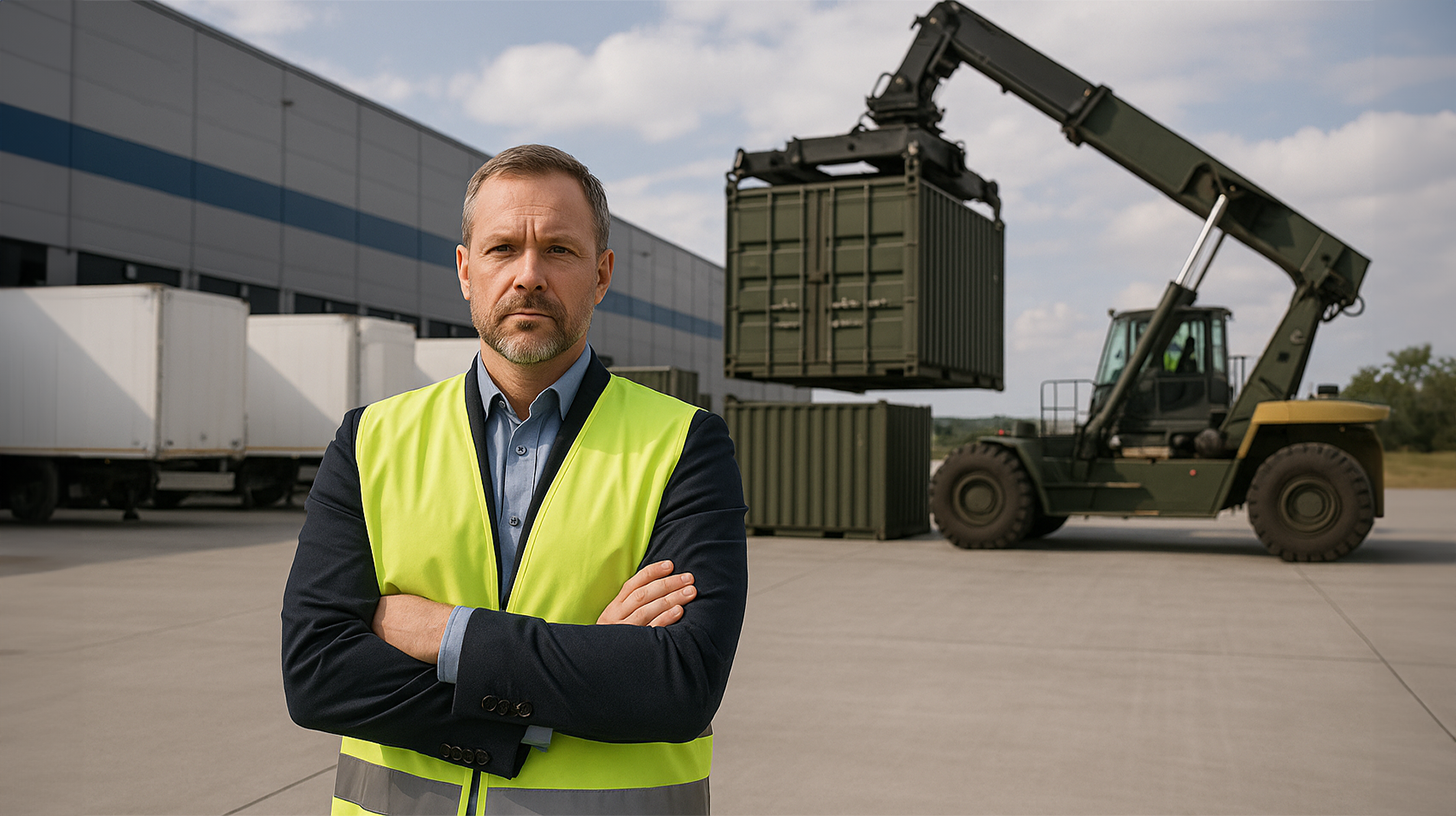
Dual-use logistics experts - Image: Xpert.Digital
The global economy is currently undergoing a fundamental transformation, a watershed moment that is shaking the foundations of global logistics. The era of hyper-globalization, characterized by the relentless pursuit of maximum efficiency and the "just-in-time" principle, is giving way to a new reality. This new reality is marked by profound structural breaks, geopolitical power shifts, and increasing fragmentation of economic policy. The once taken-for-granted predictability of international markets and supply chains is dissolving and being replaced by a period of growing uncertainty.
Related to this: