Sovereign cloud and adesso's cloud promise – and how much sales interest is behind it? – Creative image on the topic, with AI: Xpert.Digital
adesso between consulting, sales and good marketing: Who explains the limits of cloud sovereignty correctly?
Sovereign Cloud fact check: Who controls data, keys and operations?
AWS, Google and the CLOUD Act: How independent is Europe's cloud?
European data centers, external encryption keys, and local operations teams are meant to give companies more control over their data. But when global technology giants like AWS or Google are behind these offerings, a crucial question arises: How sovereign is the cloud, really? A server location in Germany doesn't automatically make data independent of foreign legal systems—and at the same time, European safeguards aren't just marketing hype. They can limit access and reduce risks, but they don't eliminate all legal and economic dependencies. The key questions are: Who controls the data and keys, which services continue to operate in a crisis, and how realistic switching to another provider would be? A closer look at the CLOUD Act, European data protection regulations, and the business interests of external cloud consultants reveals what companies should consider when making their decisions.
Those who sell the infrastructure should not simply certify its independence
Digital sovereignty has become a key selling point for the cloud economy. European data centers, independent key management, local operating companies, and European staff are intended to enable businesses to leverage the power of American technology platforms while retaining control over their own data. Behind this promise lies a genuine economic need: companies want innovation, scalability, and high availability without becoming legally, technically, or strategically vulnerable.
These goals are compatible, but not automatically and not completely. A European server location does not make a cloud independent of all non-European legal systems, nor does belonging to an American corporation necessarily mean that every use is illegal or unsafe. What matters are the actual possibilities for control: Who can access data? Who has the keys? Who operates the management platform? Who can modify software, discontinue services, or legally enforce disclosure?
The central problem arises where different questions are condensed into a seemingly simple answer. Data protection compliance is not the same as technical data security. Data residency is not the same as legal independence. And a European operating organization does not guarantee the economic interchangeability of the underlying platform.
This distinction is also important for American companies. They cannot evade legitimate government obligations simply by choosing a different storage location. However, this does not mean they are completely powerless when it comes to data security and sovereignty. Their legal and technical options are limited, but they do exist. Claiming utter helplessness would be just as inaccurate as promising absolute independence. The CLOUD Act specifically refers to US jurisdiction and to data in the possession, custody, or control of a covered provider, not merely to the location of a data center.
A German data center or European encryption keys are not the same as independence from US law. Anyone who sells such safeguards as proof of comprehensive digital sovereignty is comparing apples and oranges: technical improvements are being presented as the answer to a legal question they cannot resolve on their own. If the consultant also profits from the recommended cloud solution, this conflict of interest must be disclosed – instead of blurring the lines of the offer with language.
A multi-billion dollar market makes independence a highly competitive business model
The economic significance of the sovereignty debate becomes clear when considering the scale of the cloud market. The European market for cloud infrastructure services reached approximately €61 billion in 2024, roughly six times its 2017 size. While European providers more than tripled their revenues during this period, their relative market share declined: their combined market share fell from 29 percent in 2017 to around 15 percent in 2022 and subsequently remained at approximately that level. This figure primarily includes infrastructure and platform services, as well as hosted private cloud offerings, and not all software revenues.
This development is more economically revealing than simply stating American dominance. European providers have not necessarily shrunk. They have grown, but more slowly than the overall market. The problem, therefore, lies not only in a lack of demand for European solutions, but also in the fact that a particularly large portion of the additional demand is flowing into the ecosystems of international platform providers.
Globally, the market for cloud infrastructure services reached a volume of approximately US$419 billion in 2025. In the fourth quarter, according to the same market definition, Amazon accounted for 28 percent, Microsoft for 21 percent, and Google for 14 percent. Together, these figures represented 63 percent of the global market. This global concentration should not be equated with the European market share, but it does explain the considerable investment and development power of these three companies.
This creates an economically attractive intermediary role for European IT service providers. They connect the platforms with their customers' requirements, develop applications, handle migrations, integrate security mechanisms, and operate the resulting systems. The more companies use cloud infrastructure, the greater the demand for such services becomes.
Digital sovereignty opens up an additional business area within this market. Data protection requirements, geopolitical uncertainty, and complex operating models give rise to consulting, integration, and control services. This is initially legitimate: complexity must be managed. Problems arise, however, when economic participation in a solution is confused with a supposedly neutral assessment of its limitations.
The conflict of interest lies in the business model, not automatically in misconduct
An IT service provider that implements and subsequently operates a cloud platform earns revenue from its use. This can include project revenue, long-term operating contracts, further development, and additional security services. The same service provider may also possess the necessary expertise to accurately assess risks. Economic interest and technical competence are not mutually exclusive.
However, they create a structural conflict of interest. Those who profit from a particular architecture have an incentive to emphasize its advantages and portray the remaining risks as manageable. This does not prove deliberate deception. However, it does highlight the need to keep consulting, implementation, and independent review organizationally separate.
The basic situation can be illustrated using the example of adesso. The company describes services for getting started with the AWS European Sovereign Cloud and links these to the claim of secure and compliant implementation. At the same time, a corresponding technical article points out that a limited service catalog was available at launch. This demonstrates both the commercial interest in the introduction and a real technical limitation of the offering. Such publications alone do not prove either faulty legal advice or intentional downplaying of the risks.
The objectively sound criticism is therefore directed at the scope of statements, not at the unsubstantiated motives of individual companies. If a service provider describes an environment as sovereign, it must explain which dimension of sovereignty is meant. Does the statement refer to the storage location, administrator access, key management, continued operation in the event of a corporate split, or the legal defense against foreign disclosure requests?
Responsible corporate governance should not leave such statements solely to the provider of their implementation to assess. The technical architecture requires review, the contractual structure another, and the legal conflict situation potentially a specialized legal evaluation. The independence of these reviews is not a vote of distrust, but rather an economically sound response to differing interests.
Sovereignty arises from several rights of control
The term digital sovereignty seems unambiguous, but it encompasses different capabilities. A company can store its data in a location of its choosing and still be dependent on a foreign identity service. It can possess its own keys and yet not operate its applications without the platform provider's software. It can be legally independent but have no realistic economic alternative.
For a reliable assessment, five levels can be distinguished: spatial control, technical access control, operational capacity, legal position, and economic switchability. This classification is an analytical model, not a universally binding definition. Its value lies in translating vague promises into verifiable individual questions.
The spatial level concerns storage locations, backups, and processing. The technical level concerns access rights, encryption, logging, and software control. The operational level determines whether an environment can continue to function in the event of disrupted international connections or organizational conflicts. The legal level concerns responsibilities and disclosure obligations. The economic level determines whether a change is actually financially and organizationally feasible.
These dimensions can reinforce each other, but they can also conflict. Under certain conditions, external key management increases control over decryption processes. At the same time, it creates an additional technical dependency: If the key system fails, applications can lose access to their data. A real-world case study of external key management explicitly cites availability, reliable connectivity, and additional configuration requirements as challenges.
Sovereignty is therefore not a free add-on. It is a deliberately designed distribution of control, responsibility, and dependence. Its economic value must be measured by which relevant risks it actually reduces and which new costs or potential failures it creates.
Why German data centers are not repealing the CLOUD Act
The CLOUD Act was passed in 2018. Of particular importance to the cloud computing debate is the clarification in American law that covered providers must fulfill certain legal obligations to secure or disclose data even if it is stored outside the United States. A key requirement is that the data is in the possession, custody, or control of the provider.
This leads to a clear, but limited, conclusion: Relocating data to Germany does not, in itself, eliminate the potential scope of American data disclosure orders. A data center in Brandenburg or Frankfurt is not a legal shield if a competent authority can effectively compel a listed provider to disclose the data, and that provider possesses the relevant data.
Equally important is the reverse. The CLOUD Act does not grant US authorities general, unconditional direct access to all data held by US technology companies. It concerns legally mandated disclosure obligations in connection with specific legal proceedings. The specific data category, the relevant legal basis, the jurisdiction, and the actual ability to control the data remain crucial. The official US explanation also emphasizes valid legal orders and the authority to control data.
The company's nationality is an important, but not sufficient, criterion. According to American legal principles, US jurisdiction is not limited to companies with American headquarters or American owners. Therefore, a European provider may also have points of contact with American jurisdiction. Conversely, in the case of European subsidiaries of American corporations, it must be specifically examined what corporate and technical control rights exist.
For companies, the crucial question is not whether a product label says "Europe." They need to understand which legal entity controls which data, what corporate rights exist, and whether organizational separations are secured by technical barriers. The less a provider can actually decrypt, administer, or disclose data, the greater the protective effect of such a structure can be. However, the legal assessment remains case-specific.
The transatlantic data protection framework solves a different problem
The EU-US Data Privacy Framework and the CLOUD Act are often treated as two directly competing sets of rules. This is misleading. The transatlantic data protection framework concerns the data protection requirements for certain transfers of personal data from the European Union to participating organizations in the USA. The CLOUD Act, among other things, concerns the scope of US disclosure obligations. The two sets of rules overlap, but fulfill different functions.
The adequacy decision on the data protection framework was adopted on 10 July 2023. On 3 September 2025, the General Court of the European Union dismissed the action for annulment brought against it in case T-553/23. The Court thereby confirmed the assessment that the United States ensured an adequate level of protection for the transfers covered at the time the contested decision was adopted. This temporal and substantive limitation is essential.
The ruling does not imply the invulnerability of the entire American data protection system, nor does it grant blanket approval to every cloud application. It concerns a specific decision and its legal review. An appeal against the ruling was filed on October 31, 2025, under case number C-703/25 P. This alone demonstrates why the legal situation should not be presented as permanently exempt from all legal challenge.
Economically, an effective adequacy decision creates significant advantages. It can reduce the auditing and contractual effort for recorded data transfers and improve planning certainty. However, it does not replace a full application assessment. Purpose limitation, data minimization, authorizations, security measures, and the allocation of responsibilities remain separate tasks.
A company must therefore answer two distinct questions: Is there a sound legal basis for the respective data transfer? And is the entire processing operation appropriately organized for the specific purpose? Answering only the first question does not address the second. Similarly, a lawful transfer does not guarantee that no foreign authority could ever legitimately request data.
When European and American obligations collide
Article 48 of the GDPR contains a key provision governing the handling of decisions issued by courts and authorities from third countries. Such decisions are not automatically recognized or enforceable within the European legal system simply because they were issued by a foreign body. International agreements and the other requirements of the GDPR play a crucial role in this regard.
The European Data Protection Board finalized its relevant guidelines in June 2025. It emphasizes a two-step review process for disclosing personal data to authorities in third countries: First, there must be a legal basis for the processing. Second, the requirements for transferring the data to a third country must be met. A foreign order does not automatically replace this review.
This reveals the true legal conflict. A company may face an obligation under American law, while disclosure under European law may require additional conditions or even be inadmissible. A private contract cannot resolve this tension simply by providing a blanket guarantee of compliance with all laws.
Contracts remain important nonetheless. They can regulate notification obligations, the review of orders, legal remedies, data minimization, and the handling of disputes. Their value lies in defining behavior and responsibilities. However, they cannot abolish state law.
This results in economic costs that are often overlooked in simple cloud price comparisons. Companies need processes for handling regulatory requests, clearly defined escalations, documented responsibilities, and, if necessary, external legal counsel. Especially with sensitive data, the ability to technically prevent problematic disclosure or limit it to a smaller data volume can be more valuable than an additional general contractual clause.
AWS and Google are responding with real protective measures, not with legal impunity
The European sovereignty offerings from American hyperscalers are not simply new names for unchanged standard products. In some cases, they alter operational organization, technical separation, personnel responsibilities, and key management. Such changes warrant objective evaluation because they can reduce real risks.
AWS launched its European Sovereign Cloud in January 2026 with its first region in Brandenburg, Germany. The company describes it as a physically and logically separate environment from other AWS regions, operating within the European Union and with its own independent European organizational structure. This information describes the offered model and the promised safeguards; it is not equivalent to an independent judicial determination of complete legal protection.
Google Cloud also offers models with European partners. T-Systems' offering combines Google technology with external key management and additional control mechanisms. According to the product description, T-Systems manages keys outside of Google's infrastructure and monitors aspects of the platform with regard to the intended sovereignty requirements.
The real question, therefore, is not whether such solutions are fundamentally worthless or unassailable. What matters is their specific scope of protection. A model can limit administrator access without eliminating software dependency. It can strengthen European operations without definitively answering all corporate law questions. It can make data access more difficult but still rely on updates, licensing rights, or specialized development capabilities from the original manufacturer.
Furthermore, there is a practical limitation: A more isolated cloud environment does not necessarily have to offer all the features of the global platform from the outset. In connection with the launch of the AWS European Sovereign Cloud, adesso explicitly pointed out an initially limited service catalog. This may result in adjustments to applications, development processes, and operational procedures for customers.
Sovereignty proposals should therefore be assessed like differentiated technical products. They can represent significant progress. However, the conclusion that this eliminates all legal and strategic risks goes beyond what organizational and technical measures alone can achieve.
🎯🎯🎯 Data-driven B2B industry hub as a quasi-in-house solution


The quasi-in-house solution: How Xpert.Digital closes operational gaps in B2B marketing and sales – Smart Content-Driven Business - Image: Xpert.Digital
Xpert.Digital is a data-driven B2B industry hub led by Konrad Wolfenstein . The company acts as an external, quasi-in-house solution for industrial partners, closing operational gaps in marketing, content, and sales – without requiring additional resources on the client side.
More information here:
Trust models in the cloud: advantages and challenges
Trustees are only as strong as their actual powers
Trustee and partner models are designed to distribute control among multiple stakeholders. For example, a European partner can manage keys, grant access, provide operational staff, or assume certain administrative functions. The underlying economic rationale is understandable: companies should be able to leverage the functionality of a large ecosystem without concentrating all control rights with the platform provider.
The crucial factor, however, is not the title "trustee." It's the actual powers held. Managing keys doesn't necessarily mean controlling the identity platform. Monitoring administrator access might not allow you to prevent software changes. Operating an infrastructure doesn't automatically grant the rights and skills to develop it independently of the vendor.
A substantial separation therefore requires merging several levels. Technical safeguards should reinforce the contractually agreed boundaries. Organizational independence should be reflected in responsibilities, personnel, and decision-making authority. Furthermore, licenses, updates, spare parts, documentation, and handover procedures must be considered in the event of a crisis.
The T-Systems model for external key management for AWS demonstrates how such a task distribution can be implemented. Key management runs in T-Systems' European data centers and is connected via the AWS external key storage feature. This results in additional connections, configurations, and operational requirements. The solution shifts a key control point but does not eliminate all platform dependencies.
Trustee models are therefore not merely a smokescreen. They can limit relevant access and distribute responsibilities. However, their value must be assessed based on verifiable control chains. A trustworthy partner is helpful; a technically verifiable boundary is stronger.
Encryption only protects what the architecture actually shields
Encryption is a key component of data security. However, the mere fact that data is encrypted is insufficient to address the question of sovereignty. Crucially, it must be determined who can decrypt the data, under what conditions this occurs, and at what points the data must be available again for processing.
With conventional storage and processing, a platform can hold encrypted data while simultaneously enabling the necessary decryption processes. This protects against certain attacks, but does not automatically mean that the provider is technically excluded from all data access. A key management system operated outside the platform can improve this situation by providing independent control over the authorization of decryption operations. The T-Systems offerings described here address precisely this control point.
For a practical assessment, the entire data flow must be considered. Is content merely stored in encrypted form, or does a service actively process it? Which applications receive the data in plaintext? What information is logged, flagged as error messages, or cached? Can key permissions be circumvented through administrative changes? What types of data are actually covered by the security measure?
These questions are particularly important for analytics and AI applications. A process designed to analyze data requires access to its relevant information. Therefore, the level of protection depends on the specific processing technology and the trust levels involved. A general statement about encryption does not replace an examination of the specific application.
Furthermore, control comes at an operational cost. If an external key system is unavailable, an otherwise functional cloud application can lose access to its data. Therefore, additional safeguards must be combined with recovery strategies, redundancy, and tested disaster recovery procedures. The relevant technical case study explicitly identifies the availability of the key infrastructure as a critical requirement.
American companies are bound, but not unprotected
The sweeping claim that American companies have no choice regarding data security and sovereignty contains a kernel of truth and a false conclusion. It is true that a company cannot simply evade an existing legal obligation through an internal policy, a foreign subsidiary, or the choice of a European data storage location. It is false, however, that this renders technical safeguards, legal reviews, and organizational design ineffective.
First, a distinction must be made between an American cloud provider and an American company as a cloud customer. The CLOUD Act, in its relevant provisions, is specifically directed at certain communication and data processing providers. It is not a universal key for all data held by all American companies. Other disclosure obligations may exist alongside it, but these must be assessed according to their own legal basis.
American companies can also reduce data volumes, keep information segregated, restrict access rights, handle sensitive processing themselves, and organize technical control points outside of a single platform account. Such measures do not create immunity against lawful government investigations. However, they can reduce the amount of accessible data, the number of potential access points, and the consequences of technical or organizational failures.
A particularly challenging feature concerns certain legal remedies under the CLOUD Act. The special provision therein allowing for the review of an order due to a conflict with the law of a qualified foreign government is subject to certain conditions. These include, among other things, that the affected customer is not a U.S. person and does not reside in the United States. However, this does not mean that affected Americans have no other legal or constitutional remedies available to them.
The fundamental difference, therefore, does not lie between sovereign Europeans and unprotected Americans. It lies between differing legal positions, architectures, and mechanisms of control. A lawfully operating company cannot expect complete freedom from any national legal system, neither in the US nor in Europe. Rather, economically relevant sovereignty means understanding dependencies, maintaining influence, and limiting avoidable exposure.
The actual cloud costs are not fully reflected on the bill
Cloud decisions are often compared based on the cost of computing power, storage, databases, and support. While these factors are important, they only represent part of the overall financial burden. Other considerations include development, integration, staff training, operational security, testing, and the eventual migration to a different environment.
The appeal of large platforms lies in the fact that they already offer many functions as a service. A company needs to develop or operate fewer components itself. This allows an application to become productive more quickly. At the same time, with each deeply integrated proprietary function, the difficulty of rebuilding the same application elsewhere with reasonable effort increases.
This dependency can be economically sound. Standardizing on a single, high-performing provider avoids duplication of effort and simplifies operations. It only becomes problematic when its long-term costs are not considered. A service that initially appears inexpensive can become costly if a subsequent changeover affects large parts of the application logic, security rules, and workflows.
A comprehensive cost-benefit analysis should therefore not only consider normal operations. It should also consider the consequences of a price increase, a regulatory change, or the failure of a core service. This includes development hours, data transfer, parallel operation, testing, training, and potential disruptions.
The key strategic factor is the ability to switch between different options. A company doesn't need to be able to relocate its entire infrastructure at any time. However, it should know which components can be replaced quickly, which only with considerable effort, and which are practically impossible to replace. Only then can it be assessed whether a low current price represents a genuine saving or is partially offset by future commitments.
A sound business case needs scenarios, not security rhetoric
For many geopolitical and legal cloud risks, there are no reliable, company-specific probabilities of occurrence. A seemingly precise figure can therefore create a false sense of security. A scenario analysis with transparent assumptions is more appropriate.
For example, a company might examine what happens if its central identity service experiences a multi-day outage. A second study might consider the failure of a specific analytics service. A third might examine how to respond to changes in data transfer laws. The crucial point is not to predict such events, but to understand one's own capacity to react.
For each scenario, specific metrics can be determined: affected business processes, maximum tolerable interruption, available backups, restart time, personnel requirements, and alternative costs. This provides a transparent basis for investing in additional controls.
A more expensive architecture can be justified if it limits a potentially catastrophic failure. It is not automatically sensible if it only reduces minor risks while significantly complicating daily operations. Conversely, a cheaper solution can be uneconomical if the loss of a single critical function cripples business operations.
This approach also protects against a common consulting error: equating as many security measures as possible with a good decision. Economically, it's not the number of controls that counts, but their contribution to a reasonable balance of benefit, cost, and residual risk. The limits must be explicitly defined. An additional layer of protection is only beneficial if it can be understood, implemented, and used effectively in an emergency.
Not all information requires the same infrastructure
A differentiated cloud strategy doesn't begin with a preferred vendor list, but with the classification of data and business processes. A publicly accessible product brochure has different requirements than personal health data, unpublished research results, or security-critical production information.
The distinction between personal and non-personal data is insufficient. Design drawings, calculations, supplier terms, and production parameters can, without direct personal reference, require a high level of economic protection. Conversely, personal information may be easier to manage in a less critical context than a non-personal trade secret.
In addition to confidentiality, integrity and availability must be considered. For a manufacturing company, the unaltered and timely provision of process data may be more important than its strict confidentiality. For a research company, on the other hand, the undetected leakage of a small dataset can cause the greatest damage. Therefore, the same technical solution is not equally suitable for every process.
This approach can lead to a hybrid architecture. Less critical applications utilize standardized cloud offerings. Sensitive data is subject to additional access restrictions or processed in more tightly controlled environments. Particularly critical functions require a separately tested emergency operation.
Such a division is not an indecisive, intermediate model. It can be the most economically precise answer to diverse requirements. However, this requires that interfaces, responsibilities, and data flows are managed effectively. Anyone who combines multiple environments without a comprehensive identity, security, and operational concept can only exchange the original dependencies for new complexity.
Several providers still do not create a real alternative
A multicloud strategy is often presented as a remedy for dependency. However, two or three platforms only reduce a concrete risk if the relevant functions are actually available independently of each other. Different provider logos alone do not create operational redundancy.
If both environments rely on the same central identity service, its failure can affect both. Even if data resides in two locations, but only one application can meaningfully process it, complete failover capability is not yet achieved. Furthermore, if recovery can only be performed by a small number of external specialists, significant personnel dependency remains.
Furthermore, multicloud environments create additional work. Different security models, billing systems, network concepts, and operational tools must be understood and maintained. This added complexity can increase the likelihood of errors if personnel and processes don't scale accordingly. A security services provider also describes limited transparency, inconsistent identity management, and error-prone configurations as typical problems in hybrid and distributed cloud environments.
Therefore, targeted redundancy makes economic sense. Not every application needs to run on multiple platforms simultaneously. For critical data, an independently recoverable backup may suffice. For a central business process, however, a pre-configured backup application may be necessary. For other functions, a documented and tested recovery process is sufficient.
The quality of an exit strategy is not demonstrated by its length as a document, but by its testing. A successfully restored data set, an application launched without the original provider, or a tested emergency operation provide more reliable information than a blanket promise of portability.
Europe needs effective alternatives instead of mere origin labels
The relatively small market position of European cloud providers is an industrial policy problem, but not simply a matter of national loyalty. The fact that European providers more than tripled their revenues between 2017 and 2024, yet still lost significant market share, demonstrates the strength of their competitors' economies of scale and ecosystems. Domestic demand alone is insufficient when supply is growing more slowly in key areas.
Competitiveness arises from reliability, developer-friendliness, automation, security expertise, a robust partner network, and economically attractive services. A European provider doesn't need to replicate every service of a hyperscaler. However, it must create a compelling overall offering for relevant customer groups.
Specialized markets, in particular, can be well-suited for this. Highly regulated data processing, industrial applications, or clearly defined platform services allow for a different competitive position than attempting to offer all global functions simultaneously. The crucial factor remains whether customers receive a productive benefit and not just a different ownership structure.
For European users, greater vendor diversity is valuable even if they continue to use American platforms. Credible alternatives improve their negotiating position and limit the costs of excessive vendor lock-in. Competition is effective not only when a switch is actually made, but also when the possibility of switching is realistic.
Origin should not be confused with complete autonomy. Even European providers may require foreign hardware, software components, and suppliers. A completely national digital value chain would be unrealistic. A more sensible goal is to identify critical dependencies, distribute them where possible, and create robust alternatives for particularly important functions.
Advice must reveal its limits if trust is to be resilient
The credibility of cloud consulting increasingly depends on how openly it addresses unresolved issues. A professional assessment not only defines the desired outcome but also the conditions under which it can be achieved. It distinguishes between promised functionality, technically verified features, and legal assessments.
Customers should be able to see whether a service provider has preferred platform partnerships and what role these play in their recommendations. This doesn't have to be a disadvantage. Close partnerships can enable in-depth expertise, faster problem-solving, and better implementation. However, they shouldn't be presented as provider neutrality.
Equally important is precise language. In practice, "legally certain" cannot mean an unlimited guarantee against every future change in the law and every conceivable official decision. "Sovereign" should not be used without describing the underlying control rights. "GDPR-compliant" should refer to a specific use case with defined requirements, not merely to the name of a platform.
Statements that directly translate technical improvements into absolute legal certainty are particularly problematic. External key management can be a strong protective measure. A European operational organization can reduce relevant risks. However, both must be considered within the overall architecture and legal framework.
Better advice would therefore not promise to eliminate all dependencies. It would explain which dependencies remain, which risks the customer consciously assumes, and what additional effort would be required for more comprehensive monitoring. This transparency may be less conducive to sales in the short term. In the long term, however, it provides a more stable foundation for trust.
The crucial factor is a manageable dependency
The economically viable perspective lies neither in blanket distrust of American technology nor in the belief that additional European controls have already resolved all conflicts. Large cloud platforms offer real advantages. European operating models, external key management, and organizational separation can significantly improve these offerings for specific requirements. Nevertheless, the remaining scope of protection must be specifically reviewed.
The assumption that American companies are fundamentally incapable of achieving data security or digital sovereignty is equally unconvincing. While they remain subject to their legal system, they possess technical, organizational, and legal options for shaping their operations. Similarly, European companies cannot completely escape state power. The crucial question is how far avoidable access and strategic dependencies can be limited.
Corporate sovereignty therefore consists primarily of informed decision-making. A company must know what data it processes, which functions are business-critical, who has access to them, and what the consequences of a conflict or failure would be. It must be able to weigh the costs of additional control against its actual benefits.
The most reliable measure is not the most compelling advertising promise, but the demonstrable ability to act. Those who control their keys, understand data flows, can independently restore critical systems, and possess realistic alternatives have greater sovereignty than a company with comprehensive assurances but without proven fallback options.
A sovereign cloud is therefore not a final state or a single product feature. It is the result of a verifiable architecture, clear responsibilities, and an economically viable limitation of dependencies. Precisely because complete independence is rarely achievable, it is crucial not to conceal the remaining dependencies, but to manage them consciously.
📈🚀 From visibility to trust 👀🤝 Your scalable path with Xpert.Digital

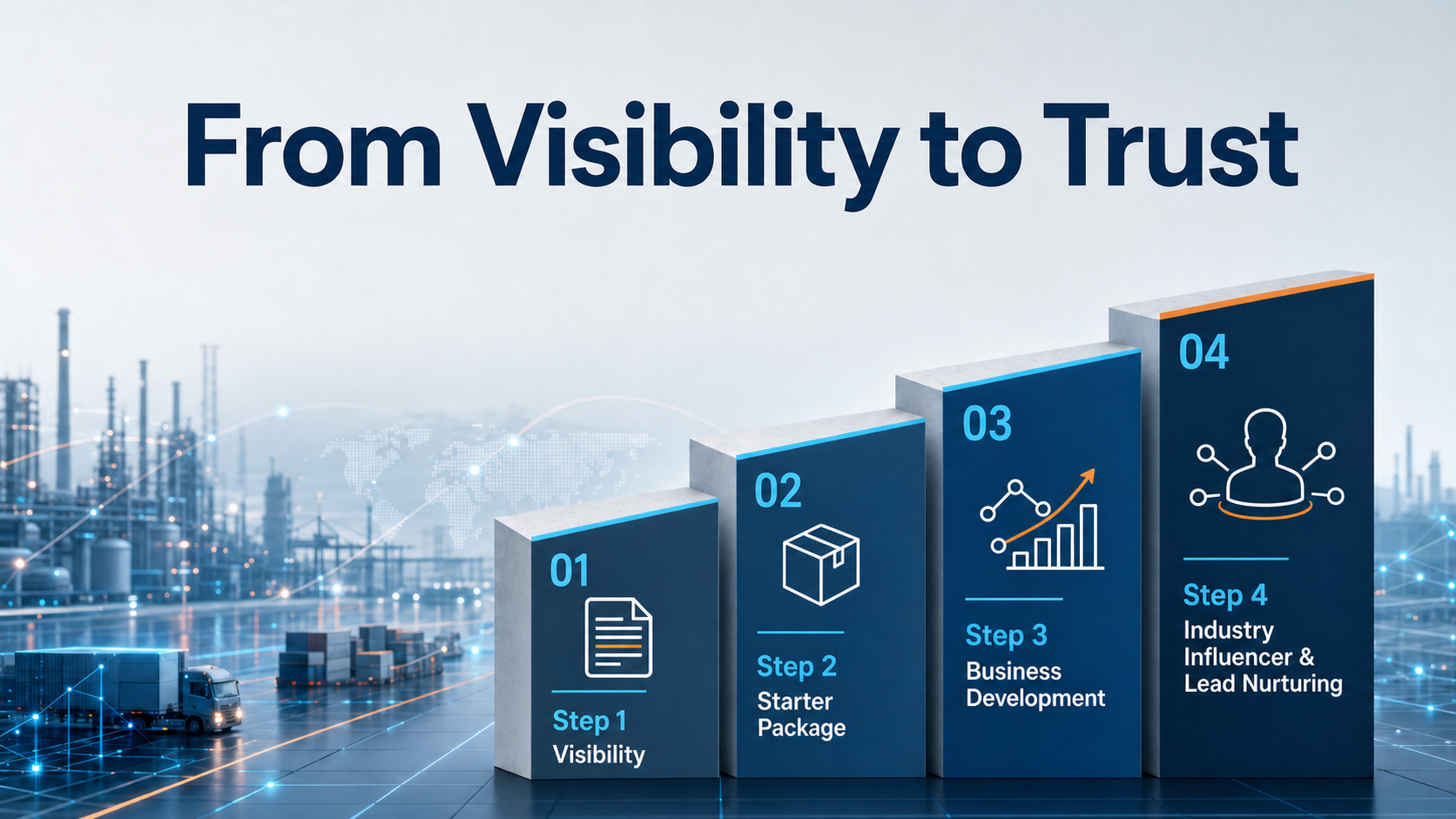
From visibility to trust: Your scalable path with Xpert.Digital - Image: Xpert.Digital
In industrial B2B, sustainable business relationships rarely emerge overnight. They develop step by step – through visibility, professional relevance, recurring touchpoints, and growing trust. Xpert.Digital's 4-stage model addresses precisely this: It offers a structured path that begins with a manageable entry point and can evolve into deeper collaboration in business development if needed.
Instead of relying on loud marketing promises, this model puts the relationship at the forefront. Companies start with clearly defined, easily calculable measures and then decide, based on their own experience, how far they want to expand the collaboration. A key factor for this undisturbed trust-building process: The platform completely avoids annoying advertising ads, so the editorial focus remains solely on the companies' expertise.
More information here:
Your global marketing and business development partner
☑️ Our business language is English or German
☑️ NEW: Correspondence in your native language!

Konrad Wolfenstein
I and my team are happy to be available to you as your personal advisor.
You can contact me by filling out the contact form here wolfenstein@xpert.digital:or simply call me at +49 7348 4088 965. My email address is
I'm looking forward to our joint project.