
Somalia relies on solar off-grid systems for remote clinics – The PV energy and healthcare strategy

Available in 27 languages 📢
Prefer Xpert.Digital on GoogleⓘPublished on: December 6th, 2024 / Update from: December 6th, 2024 - Author: Konrad Wolfenstein
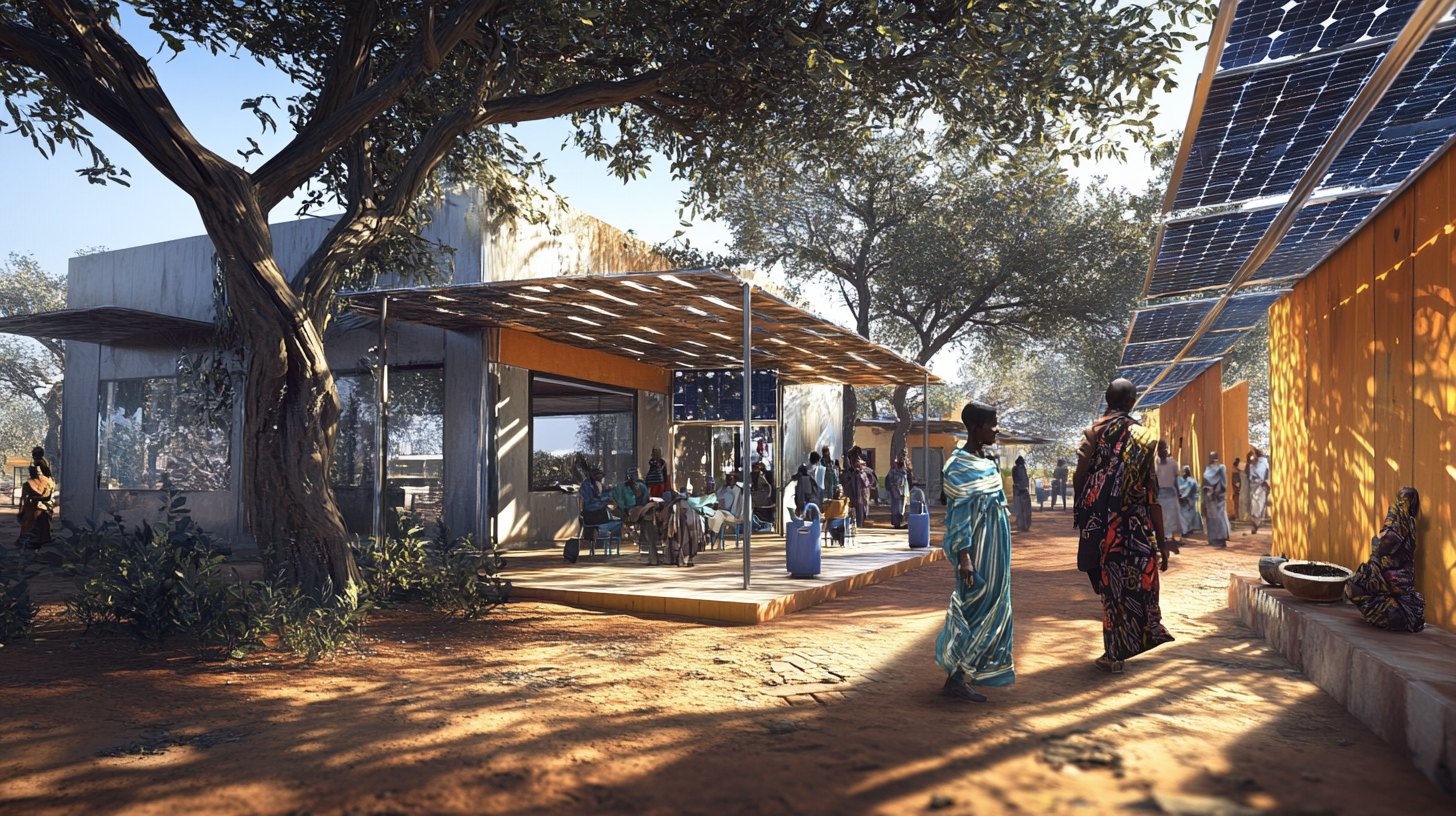
Somalia relies on solar off-grid systems for remote clinics – creative image: Xpert.Digital
🌞⚡ Somalia relies on solar off-grid systems for remote clinics: a step towards sustainable healthcare
🏥♻️🌟 Somalia has launched a pioneering initiative to improve energy supplies in remote health centers. As part of an ambitious project, solar off-grid systems with battery storage will be installed in 25 medical facilities in the Marodi-Jeeh and Awdal regions. This effort, led by the Somali Ministry of Energy and Minerals and funded by the World Bank under the Somali Electricity Sector Recovery Project (SESRP), aims to revolutionize healthcare in rural areas.
🔍 The details of the project
The project envisages that companies that take part in the tender will provide complete solar systems. This includes solar modules, inverters, battery storage, cabling and monitoring systems. The aim is to ensure a reliable power supply for important medical services such as vaccine refrigeration, the operation of diagnostic equipment and lighting.
The importance of this initiative lies primarily in the fact that it addresses the specific challenges of Somalia. In many rural areas of the country, access to electricity is either severely limited or non-existent. This has serious implications for the healthcare system as basic medical services cannot be provided without electricity. The installation of solar off-grid systems offers a sustainable solution here.
🌍 Background: Somalia's energy needs
Somalia is one of the countries with the lowest electrification rate in the world. Access to electricity is extremely limited, especially in rural areas. According to the International Renewable Energy Agency (IRENA), the country had an installed solar capacity of just 51 megawatts at the end of 2023 - a figure that is very low compared to other countries in the region. This situation reflects not only the lack of infrastructure, but also the challenges Somalia faces due to its political instability and economic difficulties.
Despite these obstacles, the country is showing growing interest in renewable energy as a solution to its energy problems. Projects like the Somali Electricity Sector Recovery Project are part of a broader strategy to diversify energy supplies while promoting environmentally friendly technologies.
💡 Why solar off-grid systems?
Solar off-grid systems offer numerous advantages, especially in remote regions without a connection to a central power grid:
- Reliability: By combining solar modules with battery storage, a continuous power supply can be guaranteed - even at night or in cloudy weather.
- Sustainability: In contrast to diesel generators, solar systems do not cause any greenhouse gas emissions and therefore contribute to climate protection.
- Cost-effectiveness: Although the initial investment can be high, the operating costs of solar systems are lower in the long term than fossil fuels.
- Independence: Off-grid systems make communities independent of centralized power grids and their potential failures.
These benefits make solar energy an ideal solution for countries like Somalia, where infrastructure is often unreliable and access to resources remains limited.
🌱 The role of renewable energies in healthcare
The connection between renewable energy and improved healthcare is becoming increasingly clear. There are already several successful examples of similar projects in sub-Saharan Africa:
- In Nigeria, solar mini-grids have been used to provide hospitals with reliable electricity. This not only resulted in better patient care, but also significant cost savings.
- Solar projects have been introduced in Togo to safely store vaccines and power life-saving medical equipment.
Somalia is following this trend and is relying on renewable energy as the key to improving its health system. “Energy is a fundamental requirement for functioning healthcare facilities,” experts emphasize again and again. Without electricity, even simple medical procedures cannot be carried out, let alone more complex treatments.
Despite the potential of solar off-grid systems, there are also challenges:
- Financing: The initial investment for such systems is high. Although the World Bank is funding this particular project, questions remain as to how similar initiatives can be funded in the future.
- Maintenance: Solar systems require regular maintenance and technical expertise – an area where Somalia still needs to build capacity.
- Security: In a country like Somalia that is still suffering from conflict, facility security could be an issue.
Nevertheless, the chances clearly outweigh the odds. This project could serve as a model for other countries and show how renewable energy can be used to strengthen critical infrastructure such as healthcare.
🌟 A step towards sustainable development
With this project, Somalia is setting an important example for sustainable development and the use of modern technologies to improve the living conditions of its population. It also shows the country's growing political will to find innovative solutions to pressing problems.
The installation of solar off-grid systems in health centers is more than just a technical measure – it is a symbol of hope and progress. It shows that positive changes are possible even under difficult conditions.
“This project could improve the lives of thousands of people,” said a representative from Somalia’s Ministry of Energy and Minerals. Not only does it provide immediate benefits for patients and healthcare workers, but it also has the potential to contribute to the country's economic development in the long term.
Somalia is still at the beginning of its journey towards a more sustainable energy future. But with projects like this, the country impressively shows that it is ready to take new paths - for the benefit of its population and in line with global climate goals.
📣 Similar topics
- 📣 Somalia relies on solar energy for remote clinics
- 🌍 Sustainable healthcare in Somalia through solar off-grid systems
- 💡 Solutions for electricity shortages: solar systems in rural health centers
- 🏥 Revolution in healthcare: solar energy for clinics in Somalia
- 🔋 Battery storage and solar technology: A step towards Somalia's energy future
- 🌞 Renewable energies strengthen Somalia's health system
- 📊 Progress through technology: How solar off-grids save lives
- 🌱 Sustainable development in Somalia: Health through clean energy
- 💪 Hope for rural regions: solar projects as life savers
- 🌟 Energy for life: Somalia is making progress with off-grid systems
#️⃣ Hashtags: #RenewableEnergy #HealthSystems #SustainableDevelopment #SolarEnergy #InnovativeTechnologies
🎯🎯🎯 Benefit from Xpert.Digital's extensive, fivefold expertise in a comprehensive service package | R&D, XR, PR & SEM

AI & XR 3D Rendering Machine: Fivefold expertise from Xpert.Digital in a comprehensive service package, R&D XR, PR & SEM - Image: Xpert.Digital
Xpert.Digital has in-depth knowledge of various industries. This allows us to develop tailor-made strategies that are tailored precisely to the requirements and challenges of your specific market segment. By continually analyzing market trends and following industry developments, we can act with foresight and offer innovative solutions. Through the combination of experience and knowledge, we generate added value and give our customers a decisive competitive advantage.
More about it here:
🌞➡️ A significant step for sustainable energy and better healthcare
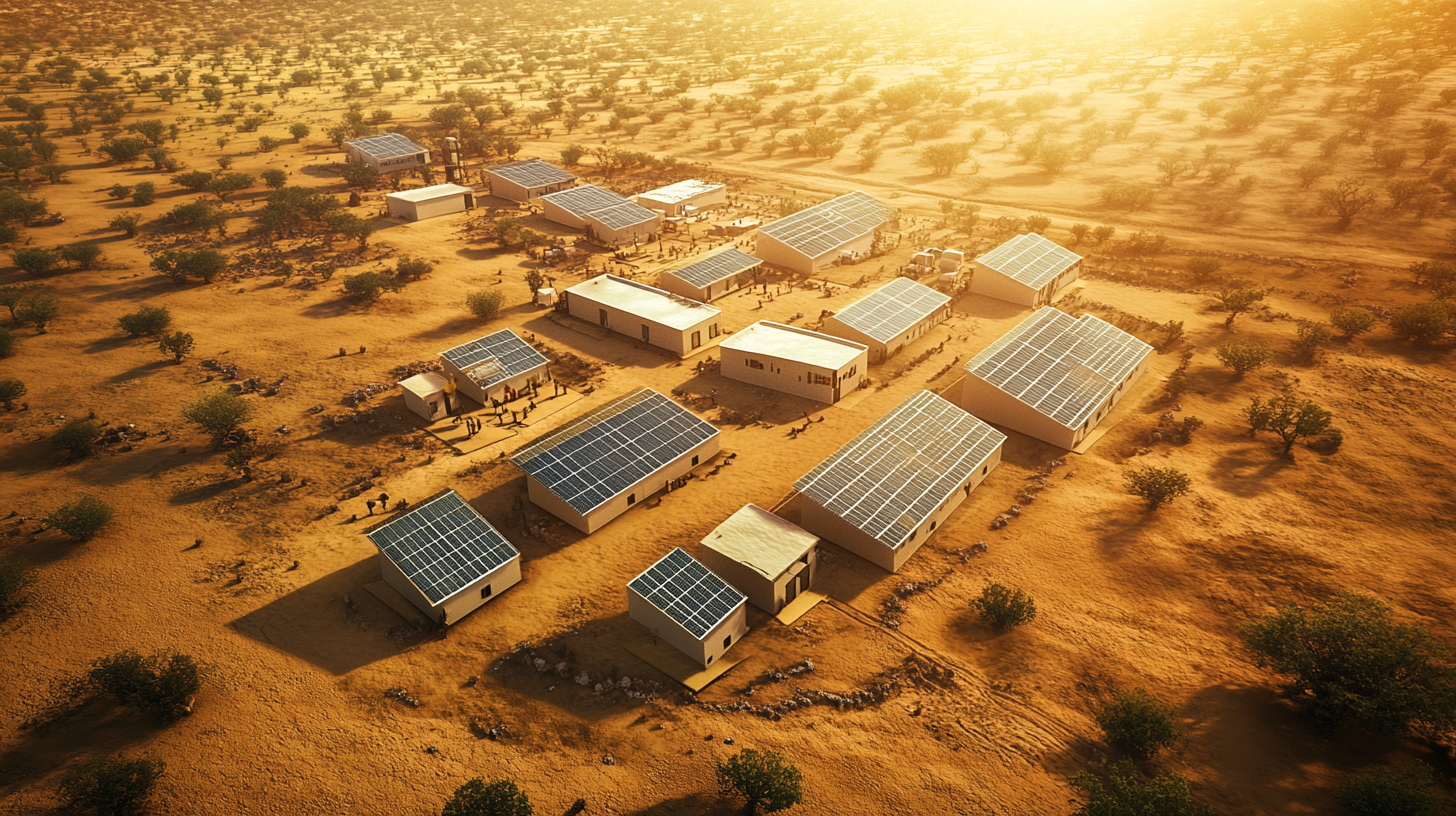
Somalia relies on solar off-grid systems for remote clinics – creative image: Xpert.Digital
🌻 Sustainable energy supply: solar off-grid systems in Marodi-Jeeh and Awdal
Somalia is about to take a significant step towards a more sustainable and reliable energy supply, particularly in remote regions where there has been a lack of stable electricity. In a new project initiated by Somali state authorities and supported by international development programs, a total of 25 remote health centers in the Marodi-Jeeh and Awdal regions are to be equipped with solar off-grid systems. This initiative aims to equip medical facilities, which previously often suffered from erratic or even missing power supplies, with sustainable, environmentally friendly and cost-efficient energy. In addition to directly improving local medical care, this project also serves as a model for similar projects in other countries that also want to strengthen their health systems with renewable energies.
“Somalia relies on solar off-grid systems for remote clinics” – this motto, which summarizes the core of the project, stands for much more than just a technical project. He points to a change in the country's development strategy: away from expensive and unsafe diesel generators towards long-term stable, decentralized energy solutions that comprehensively strengthen the medical sector. Given that reliable electricity is in short supply in many parts of Somalia, this step is extremely important. Where previously vaccines could spoil due to a lack of cooling options, medical examinations could not be carried out in the dark and sensitive devices repeatedly failed due to fluctuating voltages, a new perspective on reliable, high-quality healthcare is now opening up.
🌍 Call for tender: Call for developers for holistically sustainable energy solutions
The tender, initiated by the Somali Ministry of Energy and Minerals together with international partners, is aimed at experienced developers and companies capable of offering a full service in the field of solar off-grid technology. This means that companies not only have to provide solar modules, inverters and batteries, but also present a reliable monitoring and maintenance concept to ensure smooth operation for many years. The application deadline was set for mid-December to provide enough time for well-founded concepts. It is not just the hardware that determines success or failure: long-term support, training of local staff, setting up maintenance structures and close cooperation with the health centers themselves also play a key role in anchoring this initiative sustainably.
The installations are intended to ensure that not only basic medical services but also more sophisticated treatments can be secured. “Reliable power supply for important medical services such as vaccine cooling, diagnostic equipment and lighting” – this sentence underlines the practical importance of the project. Electricity is the backbone of a functioning medical infrastructure: vaccines must be kept refrigerated to maintain their effectiveness, diagnostic devices such as ultrasound or X-ray machines require stable power sources, and even simple procedures become significantly safer when operating rooms are well lit even after dark. Without a stable energy supply, medical care is limited. By setting up these decentralized solar power systems, a crucial step is taken to raise healthcare services in rural Somalia to a new level of quality.
🌿 Challenges and opportunities in Somalia's electricity supply
The significance of this project can only be fully appreciated in the context of Somalia's electricity challenges. Decades of conflict, inadequate infrastructure and a lack of capital for large-scale modernization measures have left a large part of Somalia's population without secure access to electricity. A similar picture emerges in many countries in sub-Saharan Africa: although there is high levels of solar radiation, this potential resource is often not yet sufficiently used. This is exactly where the key to the future lies. Renewable energy, particularly solar energy, has the potential to provide a reliable, clean and long-term economical source of energy for regions where connecting to a central power grid is costly and complicated.
In recent years, many African countries have moved to integrate renewable energies into their development strategies. Off-grid solutions are particularly suitable where expansion of the central power grid is not feasible in the foreseeable future. Somalia is not an isolated case in this regard: other countries in the region have already implemented similar projects to supply electricity to remote health facilities, schools or community centers. The positive experiences from these examples are now being incorporated into the new initiative in Marodi-Jeeh and Awdal to ensure a high level of quality right from the start.
💡 Focus on healthcare: More than just electricity
However, the project in Somalia stands out for its clear focus on healthcare. Instead of just providing electricity for general purposes, the focus is on medical facilities. This focus is intended to fundamentally improve health care in remote areas. The benefits are complex: A stable power supply not only enables better medical diagnosis and treatment, but can also help to significantly improve working conditions for healthcare workers. Doctors, nurses and medical professionals depend on a functioning infrastructure in order to be able to do their work effectively and safely. With reliable electricity, medical devices can be operated continuously, laboratory samples can be examined properly and operating areas can be optimally illuminated at all times.
🌟 Economic and social impact: Creating local opportunities
But the technical aspects are only part of the equation. The social and economic components of this project are just as important. The implementation of such projects creates a demand for local specialists who are entrusted with the maintenance, repair and monitoring of the systems. This results in the possibility of creating jobs locally and increasing technical know-how in the country. If local craftsmen, technicians and engineers are involved in the construction and maintenance of solar off-grid systems, an independent, local value chain can be created in the long term. This, in turn, helps strengthen the regional economy, reduces dependence on external support and creates a cycle in which investments in renewable energy and medical care go hand in hand.
🌈 Sustainability and environmental protection: A role model for the future
Another important aspect is the environmental compatibility of this measure. While diesel generators were previously often used to provide at least temporary energy for medical facilities, solar energy and battery storage are now being used. Diesel generators are not only expensive to operate, but also harmful to the environment and prone to breakdowns. The switch to renewable energies is therefore an important contribution to environmental and climate protection. Somalia, which is already struggling with the consequences of climate change, shows with this project that development progress and environmental protection do not have to be opposites. On the contrary: Sustainable energy supply can be a driver for positive changes from which the environment, economy and society benefit equally.
🌍 The prospect of a domino effect: learning and sharing
Ideally, this model project will trigger a domino effect in Marodi-Jeeh and Awdal. If the benefits of solar-powered health centers become clear, other regions of Somalia and other countries in the region could follow suit. It's not just about the pure technology, but also about the accumulated knowledge: Which solar and battery systems work particularly well in practice? How should maintenance intervals be set to ensure reliable operation? And what is the best way to train local staff so that they are able to manage the systems independently?
“Off-grid solar solutions are crucial for regions without a stable power supply” – this principle is now being implemented in an exemplary manner in Somalia. The initiative could serve as a blueprint for similar projects, whether in neighboring countries or more distant regions that face similar challenges. It shows that it is possible to combine technical, social and economic aspects in such a way that in the end there is a benefit for everyone involved: health care improves, environmental pollution decreases, fuel and maintenance costs are reduced, and local Competence in dealing with renewable energies is increasing.
This project marks a turning point in Somalia's energy and health strategy. The country is taking on a pioneering role that can reach far beyond its own borders. The message is clear: a sustainable, environmentally friendly and decentralized energy supply is not a luxury, but a basic requirement for maintaining and improving essential services such as healthcare. With the successful implementation of these solar off-grid systems, Somalia is proving that it is ready to explore new paths to meet the challenges of the future. And as the project takes shape over the coming years, it could gradually bring about tangible, positive change in the lives of many people - change fueled by reliable electricity and improved medical care.
📣 Similar topics
- 📣 Somalia relies on solar off-grid systems for sustainable energy supply
- 🌞 Solar energy as a driver for health reforms in Somalia
- ⚡ Revolution in power supply: Solar solutions for remote clinics
- 🌍 Somalia shows the future: renewable energies for health and the environment
- 🌱 Climate protection meets healthcare reform: Solar systems for a better future
- 🩺 Medical care in focus: Solar energy saves lives in Somalia
- 💡 Overcoming challenges: Off-grid solutions as the key to development
- 🔧 Sustainable and practical: training, maintenance and local jobs through solar technology
- 🌟 Hope on the horizon: How Somalia is strengthening its health system
- 🏥 Electricity for health centers: Somalia relies on solar innovations
#️⃣ Hashtags: #SolarEnergy #Sustainability #HealthInnovation #RenewableEnergy #OffGridSolutions
We are there for you - advice - planning - implementation - project management
☑️ Industry expert, here with his own Xpert.Digital industry hub with over 2,500 specialist articles

Konrad Wolfenstein
I would be happy to serve as your personal advisor.
You can contact me by filling out the contact form below or simply call me on +49 7348 4088 965 (Munich) .
I'm looking forward to our joint project.
Write to me

Xpert.Digital - Konrad Wolfenstein
Xpert.Digital is a hub for industry with a focus on digitalization, mechanical engineering, logistics/intralogistics and photovoltaics.
With our 360° business development solution, we support well-known companies from new business to after sales.
Market intelligence, smarketing, marketing automation, content development, PR, mail campaigns, personalized social media and lead nurturing are part of our digital tools.
You can find out more at: www.xpert.digital - www.xpert.solar - www.xpert.plus
Keep in touch








