140 megawatts of solar power: Solar park on Belvoir Ranch, Cheyenne – A solar project and model for community energy use – Creative image on the topic, with AI: Xpert.Digital
Strategic land use: Cheyenne's path to a sustainable energy future
Hanwha's solar and battery storage project: Opportunities for Cheyenne
Energy from the land: How Cheyenne transformed an unused ranch
Belvoir Ranch, west of Cheyenne, is not just a vast undeveloped area, but a strategic asset that connects numerous economic and public interests. With the planned construction of a 140-megawatt photovoltaic plant and an associated battery storage system, the City of Cheyenne aims to actively transform its unused land into a source of revenue. This project, being developed in partnership with Hanwha Renewables, could not only significantly increase local energy production but also generate new revenue for the municipality. While the project is in its early stages of development, it already demonstrates the potential to reshape land use in Cheyenne and position the city as a major player in the renewable energy sector. By intelligently utilizing municipal land and establishing long-term leases instead of a one-time sale, new economic opportunities could be created. The key question is how Cheyenne structures this economic use to ensure that, in the long run, it gains more flexibility and development potential than it sacrifices.
Cheyenne's solar bet on the Belvoir Ranch
140 megawatts against stagnation: How municipal land is to become an energy and revenue machine
Belvoir Ranch, west of Cheyenne, is far more than just a large, largely undeveloped tract of land owned by the city. It is a strategic asset where multiple economic and public interests converge: water supply, agriculture, energy production, nature and wildlife conservation, and recreation. Together with the adjacent Big Hole area, the city's holdings comprise approximately 18,800 acres, or about 7,600 hectares. This sheer size offers Cheyenne an opportunity many municipalities lack: the ability to spatially separate different uses while still deriving multiple forms of social and financial returns from the same asset.
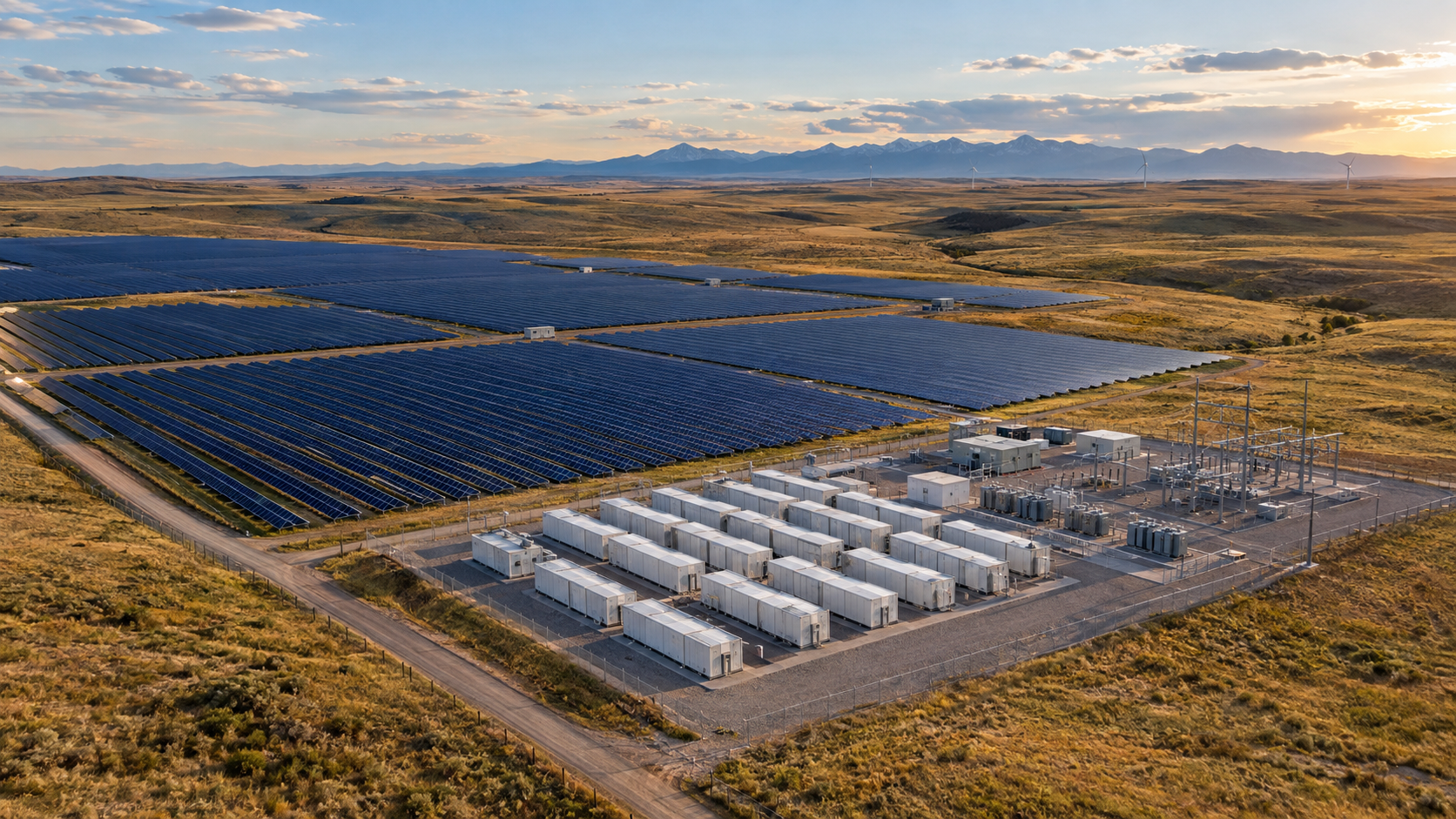
Hanwha Renewables' planned solar and battery storage project fits perfectly into this logic. The plan envisions a photovoltaic system with a generation capacity of approximately 140 megawatts, coupled with a battery storage system of similar capacity. The developer initially seeks access to a roughly 3,300-acre study area in the eastern part of the ranch. However, according to the current concept, only about 1,200 to 1,400 acres, or roughly 486 to 567 hectares, will actually be developed. This would represent only about six to seven percent of the entire ranch. The larger study area is necessary because the final layout of the solar panels, storage containers, roads, cables, and ancillary facilities can only be determined after environmental, soil, terrain, and grid studies.
From an economic perspective, the focus is therefore not on selling municipal land, but on its time-limited productive use. Cheyenne would remain the owner of the land and would receive recurring payments for the use of the area. This is a crucial difference. A sale would generate a one-time profit and deprive the city of future options. A long-term lease, on the other hand, can generate ongoing income while the land remains in public ownership. After the end of its use or in the event of dismantling, the city could again have access to the land, provided the contract includes clear obligations regarding dismantling, safety, and restoration.
This makes Belvoir Ranch an example of how municipalities can understand land policy as an active economic strategy. Undeveloped land is not automatically unproductive. Its value depends on the usage rights granted, how risks are distributed, and whether different functions can coexist. The central question, therefore, is not whether the ranch remains untouched or is used for economic purposes. The crucial question is whether Cheyenne structures the economic use in such a way that, in the long term, the public sector gains more than it sacrifices in terms of flexibility, landscape quality, and development opportunities.
A project between option and realization
Public perception can easily create the impression that construction has already been decided. In fact, the project is in an early stage of development. Initially, it involves an option of up to four years for a later long-term lease. This option would grant Hanwha Renewables the exclusive right to investigate the proposed site and develop the project. It is neither a building permit nor a guarantee that the plant will actually be built. Only after environmental impact assessments, geotechnical investigations, topographic surveys, network analyses, planning, financing, and further permitting steps can a sound investment decision be made.
This separation between the development option and the operating lease makes economic sense. A solar park of this size cannot be reliably planned based on rough assumptions. Terrain gradients, watercourses, soil bearing capacity, protected species, wildlife corridors, grid connection point, and construction costs all influence the final economic viability. The developer therefore needs sufficient time and space to determine the most technically and ecologically advantageous configuration. The city, in turn, should be compensated for the exclusivity, as it cannot readily offer the area to another developer during the option phase.
Based on the currently available details, a one-time payment of $50,000 is planned for the further development of the ranch. If the option period is fully exercised and the project subsequently falls through, the total option payments, including this amount, could amount to approximately $912,000. These payments serve an important economic function: they prevent the developer from blocking large areas of land free of charge for years. At the same time, Cheyenne receives revenue even if technical, environmental, or financial reasons ultimately prevent construction.
If the project is successful, an initial 30-year operating phase is planned. Four additional five-year extension options are also under consideration. This could extend the contractual usage period to a maximum of 50 years. Earlier statements of approximately 25 years described the general state of negotiations, while the model presented later envisions a longer and more detailed timeframe. This distinction is important because the contract duration significantly determines the present value of municipal revenues, the project's financing, and the commitment of the land.
A rough timeline of two to three years was mentioned for studies, planning, and permitting. Construction could therefore begin no earlier than late 2027 or early 2028, with commissioning around 2030. This sequence alone demonstrates why the current discussion should be conducted with a level head. Numerous hurdles lie between a fundamental political decision and electricity production. The project is an economic option with considerable potential, but not yet a guaranteed asset.
Leasing as a municipal business model
For Cheyenne, the most immediate benefit lies in predictable, long-term lease income. Early projections indicated annual revenues of around $500,000. Later project presentations projected revenues between $30 and $60 million over the potential lease term. These two figures are not necessarily contradictory. The lower annual figure may reflect a conservative initial estimate or a specific project phase, while the higher total could depend on a longer lease term, expansion options, indexation, or a larger final area.
A simple division illustrates the range. 30 million US dollars over 30 years would correspond to a nominal average of one million US dollars per year. 60 million US dollars over 50 years would yield a nominal average of 1.2 million US dollars per year. However, such averages are not guaranteed annual payments. A professionally drafted contract can include tiered lease rates, inflation adjustments, minimum payments, area-based payments, and different rates for the development, construction, and operating phases. Therefore, the decisive factor is not so much the most spectacular total sum, but rather the specific payment structure.
From a municipal perspective, the contract should safeguard several interests simultaneously. The lease must adequately compensate for the market value of the land and its long-term commitment. Automatic indexation is necessary to prevent the real purchasing power of the revenue from eroding over decades. Minimum payments protect the city if only part of the reserved area is used or if the plant temporarily produces less. Clear milestones prevent a developer from blocking the area without demonstrable progress. Furthermore, security deposits for dismantling and land restoration must be regularly adjusted to reflect actual costs.
The financial value of the project extends beyond the lease. An investment of approximately US$300 million would generate contracts during the planning and construction phases for civil engineering, electrical installations, transportation, surveying, security services, accommodation, and other services. A portion of this added value is likely to flow outside the region to specialized companies and component suppliers. Nevertheless, local businesses stand to benefit, particularly in earthworks, road construction, site logistics, maintenance, and support services. Potential tax revenues on fixed assets and economic activity are also anticipated.
The issue of territorial jurisdiction must be considered. Belvoir Ranch belongs to the city but lies outside its boundaries. Without annexation, property and facility taxes would primarily benefit Laramie County, while Cheyenne would mainly receive contractual lease payments. A future annexation could alter the municipal revenue structure but would also create new responsibilities and potentially infrastructure obligations. Therefore, higher gross revenue does not automatically translate into greater net benefits. The city must assess the additional costs associated with any territorial or administrative change.
Solar power alone is only half the strategy
The planned combination of photovoltaics and battery storage is crucial for the economic evaluation. A pure solar park generates most of its electricity around midday when the sun is high. The more solar plants feed into the grid simultaneously, the more the market value of additional midday production can decrease. A storage system shifts some of the energy to later hours, smooths out the feed-in, and can respond to short-term grid demands. While this doesn't create a completely guaranteed continuous power supply from weather-dependent generation, it does result in a more controllable power plant portfolio.
Project Wrangler was described as having a solar array with a capacity of 140 megawatts and a battery system with a capacity of 140 megawatts. However, the power output alone does not tell us anything about the amount of energy stored. For that, the capacity in megawatt-hours is also required. A 140-megawatt storage system operating for two hours could deliver 280 megawatt-hours; for four hours, it would be 560 megawatt-hours. As long as the storage duration is not definitively established, the contribution to peak evening demand, grid stability, and revenue from electricity trading can only be estimated approximately.
Nevertheless, the economic logic is clear. The storage system can absorb solar power when immediate feed-in is less valuable or limited by the grid, and release it later. Furthermore, system services are possible, such as rapid frequency support, power reserves, or the reduction of short-term fluctuations. Which revenue streams can actually be utilized depends on the power purchase agreement, the rules of the regional electricity system, the grid connection, and the operating strategy.
The project is expected to feed the generated electricity into the grid via Black Hills Energy. A long-term power purchase agreement (PPA) is conceivable, which would guarantee the owner reliable revenue and allow the utility company to procure electricity predictably. For financing purposes, a creditworthy buyer is often more crucial than high short-term market prices. Banks and investors primarily assess whether the expected cash flows are stable enough over many years to cover construction costs, interest, operation, and reserves.
However, storage also increases investment and operational risks. Battery cells age, lose usable capacity, and may need to be supplemented or replaced depending on operating conditions. Additional considerations include fire protection, temperature management, insurance, software control, and the question of who is responsible for replacement after years of use. While a high nominal storage capacity may seem technically impressive, economic viability depends on the number of charging cycles, efficiency, degradation, electricity price fluctuations, and contractual compensation. A good location alone is no substitute for a robust storage concept.
Why Cheyenne is becoming an energy hub
The project cannot be considered in isolation from Wyoming's energy system. Wyoming produces significantly more energy than it consumes and is one of the largest energy exporters in the United States. Coal continues to dominate electricity generation, while wind power has grown considerably in recent years. Solar energy currently plays a much smaller role. Precisely for this reason, another large solar park could change the regional energy production structure more noticeably than in states where photovoltaics already have a high share of the energy mix.
The 150-megawatt South Cheyenne Solar Facility, which went into operation in 2024 and was also developed by what is now the Hanwha Renewables organization, serves as an important reference point. It demonstrates that a project of comparable scale has already been realized in Laramie County. While this doesn't automatically eliminate all risk, it does improve understanding of local permitting processes, environmental requirements, construction partners, and grid connections. A developer with regional project experience can more realistically assess potential problems and determine reliable timelines.
Proximity to existing energy infrastructure is another advantage. Parts of the Belvoir Ranch are already used for wind energy, and existing roads could minimize the additional impact of new development. However, this should not lead to a hasty conclusion that a simple grid connection is possible. Lines, substations, and grid capacity must be suitable for the new feed-in. Even in an energy-exporting state, local bottlenecks, lengthy grid connection assessments, or necessary reinforcements can delay and increase the cost of a project.
Cheyenne is also developing into a significant location for data centers. According to municipal figures, as of May 2026, ten facilities of varying sizes were operational, five were under construction, and nine were in various planning stages. Cloud computing and artificial intelligence companies are increasing the demand for large, reliable amounts of electricity. This demand creates a market for new generation projects but also intensifies competition for grid connections and guaranteed capacity.
A 140-megawatt solar park is not a complete solution compared to individual planned data center loads. Particularly large projects in the region are being discussed with capacities in the gigawatt range. Furthermore, solar power is not available around the clock. Nevertheless, the combination of local generation, storage, and contractually secured offtake can be a building block in a diversified energy system. The strategic value lies less in fully supplying a single large-scale consumption project, but rather in providing additional energy, shifting peak loads, and reducing dependence on a single generation source.
New: Patent from the USA – install solar parks up to 30% cheaper and 40% faster and easier – with explanatory videos!

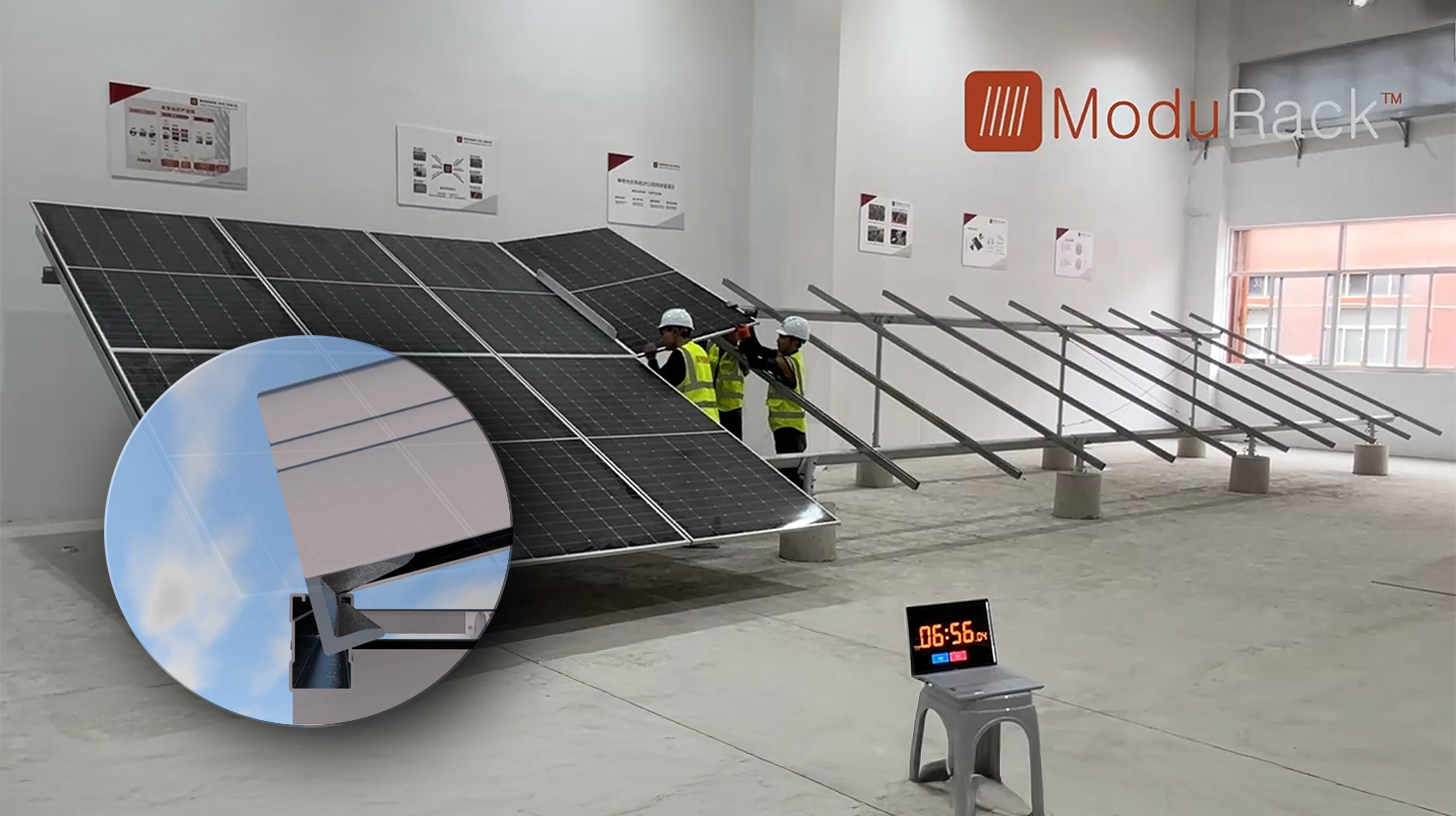
New: Patent from the USA – Install solar parks up to 30% cheaper and 40% faster and easier – with explanatory videos! - Image: Xpert.Digital
The core of this technological advancement is the deliberate departure from conventional clamp mounting, which has been the standard for decades. The new, more time- and cost-effective mounting system addresses this with a fundamentally different, more intelligent concept. Instead of clamping the modules at specific points, they are inserted into a continuous, specially shaped support rail and held securely in place. This design ensures that all forces – whether static loads from snow or dynamic loads from wind – are distributed evenly across the entire length of the module frame.
More information here:
Data centers change the value of the project
The unknown quantity behind 140 megawatts
The nominal power output of a solar power plant should not be confused with its average electricity production. A 140-megawatt plant only generates approximately its full capacity under suitable conditions. At night, production is zero, and even lower when it is cloudy or the sun is low. The annual electricity output depends on the local solar irradiance, orientation, tilt angle, tracking technology used, electrical losses, snow, soiling, and plant availability.
Assuming a capacity factor of between 22 and 27 percent for a rough estimate, the annual gross electricity generation could be approximately between 270,000 and 331,000 megawatt hours. This range is not a project forecast, but a plausible order of magnitude for economic assessment. It would correspond to an average power contribution of around 31 to 38 megawatts over the year. The storage system does not generate any additional energy; it shifts it and incurs certain losses through charging, conversion, and discharging.
This difference between rated output and annual average yields an important insight for energy policy. The plant can partially displace fossil fuel-based power generation and expensive peak load hours, but without additional resources, it cannot replace a 140-megawatt power plant that is available around the clock. For security of supply, grids, other power plants, flexible demand, additional storage, and electricity imports or exports remain crucial. Anyone who describes the plant either as a complete replacement for conventional power or as useless due to its weather dependency is missing the economic reality.
For investors, it's not just the amount of electricity generated that matters, but also its time-dependent value. A megawatt-hour in the early evening can be significantly more valuable than a megawatt-hour during a period of high simultaneous solar production. Battery storage is intended to unlock precisely this difference in value. At the same time, frequent charging and discharging can accelerate aging. The optimal operating strategy therefore involves a balance between short-term market returns and long-term preservation of battery capacity.
The economically decisive project data will only be available later: DC and AC system dimensions, storage duration, guaranteed residual capacity, expected degradation, grid connection costs, curtailment risk, and the pricing formula of the power purchase agreement. Without this information, any precise return-on-investment calculation is premature. The known investment volume of US$300 million provides a meaningful order of magnitude, but is not yet a final budget.
A $300 million project with multiple winners
The economic impact of a large solar project is unevenly distributed over time. The most significant employment impact occurs during the construction phase. This involves laying foundations or pile-driving systems, mounting rows of modules, laying cables, installing storage containers, constructing access roads, and erecting substations. These tasks can tie up a large number of skilled workers for a limited period. After commissioning, the need for personnel decreases considerably because solar parks operate largely automatically.
Permanent employment is primarily created in operations, maintenance, vegetation management, security, plant monitoring, and technical upkeep. The number of these jobs is typically manageable in relation to the investment sum. Therefore, Cheyenne should not primarily market the project as a job creator. Stronger arguments include lease payments, tax revenue, construction contracts, energy supply, and strategic site development. Realistic communication prevents later disappointment and improves the quality of the public debate.
For Hanwha Renewables, the value lies in developing a permittable and financeable project. The developer is not required to own the plant long-term. In the previous project in South Cheyenne, the developed project was transferred to a long-term owner before or near the construction phase. A similar model is possible with Project Wrangler. This is common practice in the industry: developers bundle land rights, permits, grid connection, and power purchase agreements into a buildable asset and sell it to an energy provider, infrastructure investor, or independent power producer.
This creates a particular counterparty risk for the city. The original developer could later be replaced by a different owner or operator. The lease agreement must therefore remain valid even in the event of a sale, restructuring, or insolvency. Transfer rights must not be so extensive that Cheyenne is obligated to accept any new contractual partner. At the same time, the city must not unnecessarily block standard bank financing. Minimum standards for creditworthiness, technical expertise, insurance, and the assumption of all liabilities are required.
Black Hills Energy or other electricity consumers can also benefit if the project provides predictable energy at competitive prices over the long term. For large customers, especially data centers, access to additional renewable electricity can be crucial both economically and in terms of reputation. For households and smaller businesses, however, it is essential that the project costs and necessary grid expansion are not unfairly passed on to them. The region already uses special tariffs for large consumers, designed to allocate additional infrastructure costs to those who generate them. A similarly clear cost distribution is also necessary for new generation and storage projects.
Competition for space without a false alternative
Large solar parks visibly alter landscapes and require land. This impact should neither be downplayed nor dramatized. The planned 1,200 to 1,400 acres are substantial, but represent less than a tenth of the entire Belvoir Ranch. According to current plans, the publicly accessible trail network and existing recreational opportunities will not be affected because the site is located in a different part of the ranch. Furthermore, the area is already designated as a multi-purpose zone with energy development potential.
The larger option area of 3,300 acres does not mean it will be completely covered with modules. It provides planning flexibility to avoid steep slopes, watercourses, sensitive soils, and important habitats. Especially in a hilly prairie with gullies, an area that is too narrowly defined can lead to more significant interventions because the facility would then be forced into ecologically or structurally unfavorable areas. Paradoxically, a larger area for investigation can therefore result in less actual impact.
The developer has announced plans to use contour-following assembly systems, avoid unnecessary leveling, utilize existing paths, and provide permeable fences for smaller animals. Biological experts will monitor sensitive areas during the construction phase. Such measures are sensible, but their effectiveness depends on binding standards, monitoring, and sanctions. Voluntary intentions are no substitute for verifiable contractual and permit requirements.
The migration of pronghorn antelope and other wildlife is of particular importance. Large-scale fencing can fragment their habitats, even if only a portion of the ground within the fence is sealed. Therefore, the spatial arrangement of the sub-areas, corridors, and fences is more important than the sheer number of hectares. Environmental quality cannot be assessed solely by percentages. A compact, poorly located enclosure can have a greater impact than a carefully structured management plan covering a slightly larger area.
Agricultural use also deserves consideration. The ranch remains a working farm, and solar panels can alter grazing patterns, access routes, and management practices. Limited dual uses are conceivable, such as controlled grazing for vegetation management, provided animal welfare, fire safety, and technical safety are guaranteed. However, such an agrivoltaic component should not be artificially promised before the site, panel spacing, and operating procedures are finalized.
The storage device requires its own security logic
Battery storage systems are not merely an accessory to solar parks. They constitute an independent industrial plant with specific risks. Lithium-ion systems can experience a loss of thermal control due to defects, mechanical damage, or overheating. Modern systems reduce this risk through cell monitoring, fire safety distances, automatic shutdown, temperature control, and segmented containers. However, it cannot be completely eliminated.
For Cheyenne and Laramie Counties, a robust emergency response plan, fire department training, access to extinguishing agents and coolants, hazardous gas detectors, and clearly defined responsibilities are therefore essential. The costs of these precautions must not be silently borne by the public. The operator should finance necessary equipment, training, and regular drills. Equally important are the obligation to provide information regarding technical modifications or changes to the cell chemistry.
The precise location of the storage facility within the project area influences the risk. Distances to public roads, vegetation, operational buildings, and sensitive environmental areas must be sufficient. Drainage and retention must be planned to prevent the uncontrolled discharge of contaminated firefighting or rainwater. Insurance coverage, liability limits, and emergency contact information must remain in place even after a change of ownership.
At the end of their service life, the question of recycling and disposal arises. Solar modules and batteries contain valuable materials, but their dismantling costs money and depends on future market prices. The municipality cannot rely on residual values covering all costs. Regularly updated dismantling security, for example in the form of a guarantee or a secured fund, is essential. It should be calculated conservatively and also cover transport, disposal, foundation removal, and site restoration.
Data centers change the value of the project
The rapid expansion of data centers in and around Cheyenne forms the economic backdrop against which Project Wrangler becomes particularly interesting. Artificial intelligence, cloud services, and digital platforms generate a demand for electricity that cannot be met solely by existing power plants. New large consumers require additional generation, grids, and flexible capacity. This increases the strategic value of well-located energy projects with realistic approval prospects.
At the same time, it would be wrong to portray the solar park as a direct extension of a specific data center. The currently planned land use explicitly excludes data centers on the leased site. The generated electricity is intended to be marketed through a utility company and not necessarily delivered via an exclusive direct line to a single campus. Nevertheless, the markets can be economically interconnected because additional large consumers increase regional demand and the willingness to enter into long-term electricity contracts.
Cheyenne must ensure that this dynamic does not lead to an uncoordinated series of individual decisions. A solar park, a storage facility, new substations, and several data centers may each seem justifiable on their own, but together they place considerable demands on grids, roads, housing, skilled workers, and public services. The city therefore needs an integrated approach to energy and site development. Municipal land should not only be monetized on a project-by-project basis, but also used as leverage for a long-term infrastructure strategy.
The project can play a positive role if its generation and flexibility actually meet additional demand without burdening existing customers with disproportionate costs. Transparent contracts and grid fees based on usage are crucial for this. Large consumers, project developers, and investors benefit from Cheyenne's locational advantages; in return, they must bear the infrastructure costs they generate and make reliable contributions to the community.
The integration of digital and energy infrastructure also opens up opportunities for broader economic positioning. Cheyenne could establish itself not only as a cost-effective location for individual data centers, but as a region where generation, storage, network management, and large, flexible loads are systematically integrated. However, this requires more than just available land and low taxes. It demands a skilled workforce, reliable permitting, transparent regulations, robust networks, and public acceptance.
The biggest economic risks
The first risk is non-realization. Many energy projects fail between securing land and starting construction. Reasons for this can include an excessively expensive grid connection, a lack of offtake agreements, higher interest rates, supply chain problems, environmental regulations, or changes in subsidy conditions. The option payments mitigate this risk for Cheyenne, but do not replace the long-term expected lease income. Municipal budget planning can therefore only rely on the operating revenues on a long-term basis once construction financing and project launch are secured.
The second risk lies in the investment costs. The stated figure of US$300 million corresponds to a capital-intensive infrastructure project. Prices for modules and battery cells may fall, while labor costs, transformers, construction services, customs duties, and financing costs may rise. Grid components, in particular, often have long delivery times. A delay of several months can significantly alter the planned commissioning date and the project's economic viability.
The third risk concerns political and fiscal frameworks. Large solar and storage projects in the United States often depend on tax credits and their transferability. Changes in federal policy, domestic value-added requirements, or trade measures regarding imports can shift costs and financing structures. It is crucial for the city that such changes do not automatically lead to a reduction in already agreed-upon minimum payments.
The fourth risk is grid connection. A plant can be technically fully planned and still wait years for connection capacity. Necessary line or substation upgrades can significantly increase costs. Subsequent curtailment is also relevant: if the grid cannot accommodate the full generation, electricity production and revenues decrease. The lease agreement should therefore avoid making municipal payments entirely dependent on fluctuating feed-in.
The fifth risk is the long-term quality of the contractual partner. With a contract term of up to 50 years, changes in ownership are almost certain. The city must prevent obligations from being undermined by complex corporate structures. Decommissioning, insurance, environmental regulations, and payments must remain enforceable against any legal successor. Regular reports and audit rights are more important for this than well-sounding declarations of intent at the outset.
What a good contract must achieve
A good contract first defines precisely which areas may be used in which phase. The option area, the final operating area, access roads, easements, and temporary construction site areas must be designated separately. Unneeded areas should be released early on. This allows the city maximum flexibility for agriculture, recreation, nature conservation, or future projects.
The payment terms must be transparent and inflation-proof. In addition to option fees and a one-time development payment, minimum rent, escalation clauses, and, where applicable, performance- or area-dependent components should be stipulated. For renewal options, the compensation should either increase significantly or be adjusted to current market values. Otherwise, the city could be bound to economically outdated conditions for decades to come.
Milestones are equally important. The developer should complete studies, submit permit applications, secure network rights, and demonstrate funding within specified timeframes. If these goals are missed without a justifiable reason, Cheyenne must be able to terminate the option or renegotiate. Exclusivity is valuable and should only be granted in exchange for demonstrable progress.
The contract must also specify environmental and decommissioning obligations. The initial condition, soil quality, vegetation, drainage, and access roads should be documented before construction begins. Decommissioning guarantees must be regularly reviewed and adjusted for inflation, the age of the plant, and disposal costs. Residual values of metals, modules, or batteries should only be conservatively factored in. In the event of insolvency, the guarantee must be available independently of the operator.
Finally, the city needs an effective right of approval for the transfer of the project. This right must not preclude normal project financing, but should include minimum requirements regarding the creditworthiness, experience, and insurance of the new operator. Access to information is also crucial: Cheyenne should be promptly informed about construction progress, disruptions, environmental incidents, and changes in operators. Only in this way can the public owner effectively monitor its long-term interests.
Sober assessment instead of energy culture war
Project Wrangler is neither a risk-free gift nor a symbol of the decline of traditional energy sources. It is a complex infrastructure project that combines municipal land, private capital, regional electricity demand, and long-term environmental responsibility. Its appeal lies in the combination of substantial investment, predictable lease income, additional power generation, and battery storage. Its weaknesses are its early stage of development, the still-unresolved technical details, and the long-term commitment of a public asset.
Cheyenne's advantages include the fact that the ranch is already designated as a multi-purpose area with energy development potential, that the actual construction is planned to occupy only a limited portion of the total area, and that existing recreational facilities can remain spatially separated. Furthermore, the developer has experience with a previously completed 150-megawatt project in Laramie County. These factors improve the starting position but do not eliminate permitting or financing risks.
The project will only be economically convincing if Cheyenne consistently leverages the negotiating power derived from its land ownership. The city is not simply providing empty land. It is granting a private developer access to a strategic location in a region with growing electricity demand, existing energy infrastructure, and increasing importance for data centers. This location value must be reflected in payments, security deposits, environmental standards, and public oversight.
The provocative truth is this: the biggest mistake wouldn't be the solar park itself, but a weak contract. Technical risks can be assessed, the impact on the area can be limited, and battery safety can be regulated. However, an excessively low, non-indexed lease, insufficient decommissioning guarantees, or far-reaching transfer rights would bind the city for decades. Therefore, the quality of the contract is a more decisive factor in determining the public benefit than the number of installed modules.
Under strict conditions, the project is economically viable and strategically sound. It diversifies the use of Belvoir Ranch, creates a long-term revenue stream, and adds a larger solar and storage component to Wyoming's electricity sector, which has thus far been dominated by coal and wind power. At the same time, Cheyenne should only conservatively book revenues until grid connection, power purchase, storage duration, the final project area, and financing are definitively established.
The Belvoir Ranch could thus become a model for municipal land policy: retaining ownership, pricing usage rights, assigning risks to the polluter, and spatially linking various public objectives. If successful, Cheyenne will transform part of its ranch into a productive infrastructure site without abandoning the overall character of the area. If unsuccessful, the city will retain the land, but potentially a site tied down for decades with insufficient return. The difference between these two outcomes lies not in an ideological dispute over solar energy, but in professional contract, location, and economic policy.
Your partner for business development in the fields of photovoltaics and construction
From industrial rooftop PV to solar parks and larger solar parking lots
☑️ Our business language is English or German
☑️ NEW: Correspondence in your native language!

Konrad Wolfenstein
I and my team are happy to be available to you as your personal advisor.
You can contact me by filling out the contact form here wolfenstein@xpert.digital:or simply call me at +49 7348 4088 965. My email address is
I'm looking forward to our joint project.