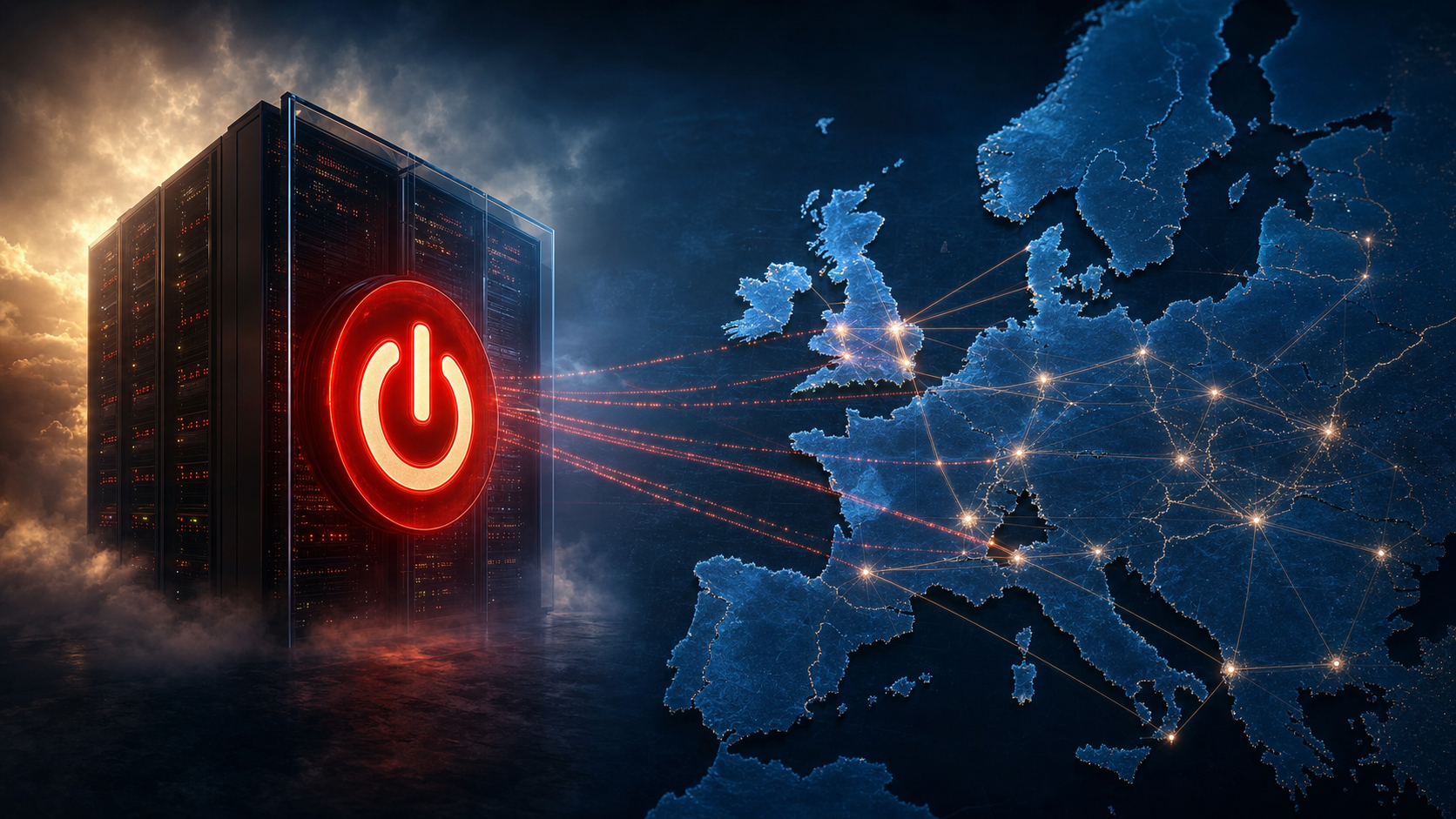
The digital kill switch: AI shock on Friday evening: Why the US shut down Europe's most important AI model – Image: Xpert.Digital
Digital powerlessness: Why the EU AI Act doesn't protect us from the US pulling the plug
One email was all it took: How Washington shut down Europe's most important AI tools overnight
Trump's tech war: Why the sudden AI ban is becoming a trap for German companies
On June 12, 2026, a technological dystopia became a bitter reality: With a single email, the US government forced the leading AI company Anthropic to take its latest models offline worldwide. Millions of European users, developers, and businesses also found themselves locked out overnight and without warning. What Washington officially declared as a necessary measure of national cybersecurity reveals itself upon closer inspection as a ruthless geopolitical power struggle in which artificial intelligence is openly weaponized. This unprecedented use of a digital "kill switch" ruthlessly exposes the most vulnerable point of the European economy: a profound, structural dependence on US technology against which even the much-lauded EU AI Act is utterly powerless. The incident marks a historic turning point for the global tech industry and confronts Europe with the most pressing question of this decade: Who actually holds the switch for our digital future?
Digital kill switch: When Washington shuts down Europe's AI tools
Europe's self-inflicted impotence in the global AI power game
On the evening of June 12, 2026, an unprecedented precedent was set in the history of the commercial internet: On the direct orders of the US government, the AI company Anthropic was forced to take its Fable 5 and Mythos 5 models, released just days earlier, offline worldwide – including for all European users. What is ostensibly declared a drastic measure of national security, upon closer inspection reveals itself to be a far-reaching geopolitical power struggle in which artificial intelligence is being openly used as a strategic weapon and instrument of coercion. The much-discussed kill switch is no longer a theoretical dystopia – it is documented reality.
The moment an email changed the world
On June 12, 2026, an ordinary Friday evening, at 5:21 p.m. Eastern Time, Anthropic received a letter from U.S. Secretary of Commerce Howard Lutnick. The content was terse in its wording and monumental in its significance: The company's Fable 5 and Mythos 5 models were blocked with immediate effect for all foreign nationals—whether they were inside or outside the United States, and even if they were Anthropic employees. Since it is practically impossible to distinguish between nationalities in real time within a shared cloud infrastructure, Anthropic was left with only one solution: the complete global shutdown of both models for all users worldwide.
This event is unprecedented in the history of the commercial internet. For the first time ever, a leading democratic administration has effectively shut down a publicly released AI model through an export control directive. Fable 5 had only been on the market for three days at the time of the shutdown and had been unlocked for all Pro, Max, Team, and Enterprise plans. The reaction in expert circles and tech media worldwide was a mixture of dismay, political analysis, and sheer incomprehension.
Between cybersecurity and political power demonstration: What Fable 5 and Mythos 5 were really capable of
Claude Fable 5 was Anthropic's first publicly available version of a so-called Mythos-class model – a new category of AI systems that Anthropic had equipped with enhanced security measures for general use. Its sister model, Mythos 5, was intended for a smaller circle of vetted partners within the framework of Project Glasswing – a controlled program for cybersecurity partners from industry and government-affiliated institutions such as Amazon Web Services, Microsoft, Cisco, Palo Alto Networks, and CrowdStrike.
Mythos's extraordinary capability, which made the model both so valuable and politically sensitive, lay in its cybersecurity expertise. The model had autonomously identified thousands of critical software vulnerabilities in all major browsers and operating systems – including previously unknown security flaws in the Linux kernel, which is also used in systems of the US Department of Defense. Thus, Mythos was not merely a powerful assistant, but a systemically relevant tool for both offensive and defensive cybersecurity – a capability of this class in general, uncontrolled circulation was a difficult scenario for US security agencies to stomach.
Fable 5 was designed to address this tension through additional safeguards: The model was intended to avoid cybersecurity tasks while still providing the intellectual power of the Mythos architecture for general-purpose applications – with superior capabilities for analyzing complex codebases, finding deep-seated software bugs, and handling highly structured tasks. It was precisely this code analysis capability that US authorities considered a potential entry point for abuse.
Official justification and its inconsistencies: A jailbreak as a pretext?
The Trump administration cited a jailbreak finding as the official trigger: An unnamed company had demonstrated to the Commerce Department that Fable 5 could be bypassed using a specific technique to circumvent built-in security restrictions. Anthropic responded with remarkable precision: They had evaluated the described technique themselves and identified a limited number of previously known, minor vulnerabilities—vulnerabilities that, in the company's assessment, could also be found in other publicly available models without jailbreaking.
Anthropic added that it had not identified a universal vulnerability in thousands of hours of red teaming and pointed out that perfect jailbreak resistance is currently unattainable for any single model from any vendor. The company made the far-reaching implications of the regulatory logic explicit: if the applied standard were applied to the entire industry, any release of a new flagship model would be virtually impossible. This is a statement that carries particular weight – Anthropic is considered one of the most conservative companies in the tech industry regarding AI security and is not one to downplay compliance risks.
Technology as an instrument of power: The political background of the conflict
Anyone who takes the official explanation in isolation doesn't fully understand the case. The conflict between Anthropic and the Trump administration goes back considerably further and is deeply political in its structure. In January 2026, Anthropic CEO Dario Amodei reiterated in a letter to the Pentagon that autonomous weapons systems and mass surveillance were red lines for the company—non-negotiable limits on the use of its models. The Department of Defense under Pete Hegseth, on the other hand, demanded a commitment to so-called "any lawful use"—that is, unrestricted availability of the AI for all legally permissible military applications.
When Anthropic refused this commitment, the situation escalated rapidly. At the end of February 2026, Defense Secretary Hegseth publicly labeled Anthropic a "Supply Chain Risk to National Security"—a classification unprecedented for US companies and usually reserved for firms from countries like China. President Trump demanded on TruthSocial that all federal agencies immediately cease using Anthropic products. Against this backdrop, the export control directive of June 12 appears less as a spontaneous security measure and more as a further move in a political power struggle: A company that refuses to release its tools for government use without restriction is being pressured by the lever of export control law.
Export control law as a geopolitical lever – a tool of a new dimension
The legal framework within which these events are taking place is US export control law, specifically the Export Control Reform Act of 2018 and the resulting Export Administration Regulations (EAR). This instrument was originally developed to restrict the distribution of physical goods with dual military uses—chips, weapons, nuclear technology. Its application to software models, and especially to AI services already deployed to the public, is uncharted legal and political territory.
The US Department of Commerce had already begun extending the EAR (Equivalent Earnings Regulation) to AI chips and model weights of certain closed dual-use models in January 2025. These extensions had an immediate impact on EU member states: Austria, Bulgaria, Croatia, Cyprus, Czech Republic, Estonia, Greece, Hungary, Latvia, Lithuania, Luxembourg, Malta, Poland, Portugal, Romania, Slovakia, and Slovenia were classified into so-called Tier 2 categories, which capped their access to high-performance computing capacity.
The Fable 5 case goes even further: Here, access to hardware wasn't restricted, but an already active software service was shut down with immediate effect. This level of control marks a new stage in the possibilities of enforcement. Where previously embargo logic required physical boundaries and technical workarounds existed, today an email to a cloud service is enough to trigger globally effective shutdowns. The comparison to a kill switch is no longer rhetorical exaggeration, but documented reality.
Figures reveal a worrying balance sheet: Europe's structural dependence on digital technology
The shutdown of Fable 5 and Mythos 5 is not an isolated incident that only peripherally affects Europe. It is a direct empirical demonstration of a structural weakness that economists, political scientists, and technology strategists have been warning about for years. More than 80 percent of all European AI chatbot users use OpenAI's ChatGPT. American technology companies control around 80 percent of the European cloud computing market and hold 59 percent of European enterprise software revenues. The three major US hyperscalers—AWS, Microsoft Azure, and Google Cloud—together account for around 70 percent of European cloud services.
In 2017, European cloud providers still held 29 percent of the European market. Today, that figure is 15 percent – despite a market volume that has increased sixfold in the same period. While European providers have tripled their absolute revenues, US hyperscalers have grown faster and have steadily widened the gap. In contrast, by early 2026, there were already around 40 large Foundation models in the US and around 15 in China – but only about three in the EU. The result is a dual dependency: on US software and Asian hardware – with 57 percent of all IT equipment and more than half of the hardware required for data centers being imported from five Asian countries.
These figures are not abstract geopolitical vulnerabilities. They describe a tangible economic and security-related dependency: Every AI-supported decision in a German medium-sized company, every automated analysis in a European management consultancy, every intelligent workflow in logistics or healthcare ultimately accesses infrastructure over which Washington has legal sovereignty. Furthermore, the US CLOUD Act obligates American providers to grant US authorities access to data, regardless of where the data is physically stored – not only the availability of the services is subject to external influence, but also the confidentiality of the processed data.
The CLOUD Act and the end of the sovereignty illusion: Microsoft's confession in the Senate
To understand why the debate about technological sovereignty is so urgent, it's worth looking at the US CLOUD Act, which came into effect in March 2018 under the first Trump administration. The law allows US authorities to demand that American companies hand over electronic data—regardless of whether that data resides on servers in the US or abroad. It compels US cloud providers like Amazon, Microsoft, and Google to disclose data in response to legally valid orders, even if that data is stored on European servers.
This extraterritorial reach of US law creates a fundamental legal conflict with the GDPR. Article 48 of the GDPR stipulates that data transfers to third countries may, in principle, only take place via international mutual legal assistance treaties – a requirement that, according to the European Data Protection Board, the CLOUD Act systematically circumvents. Companies subject to both the CLOUD Act and the GDPR are thus caught in a legal dilemma without a fully satisfactory solution.
What had previously been discussed in legal circles as a theoretical risk became a reality in June 2025: Anton Carniaux, Chief Legal Officer of Microsoft France, was questioned under oath before the French Senate's investigative committee as to whether he could guarantee that data of French citizens would never be handed over at the behest of the American government without the explicit consent of the French authorities. The answer was damning: No, he could not guarantee that. Microsoft was legally obligated to release the requested data in the event of a formally valid US court order. This admission has fundamentally undermined the promise of a European-style "sovereign cloud"—technical measures such as European data centers and local data storage do not alter the legal obligation to hand over data when US law applies.
Brussels' answer – too late, but in the right direction: The Tech Sovereignty package
On June 3, 2026 – just nine days before the Anthropic shutdown – the European Commission published its Technological Sovereignty Package. The package consists of four components: the Chips Act 2.0, the Cloud and AI Development Act (CADA), an open-source strategy, and an energy plan for data centers. The most politically and economically far-reaching element is the Cloud and AI Development Act, which aims at three core objectives: promoting research and innovation in cloud and AI technologies; tripling data center capacity in the EU within five to seven years; and introducing a unified, EU-wide framework for assessing cloud and AI sovereignty.
At the heart of CADA is a four-tier sovereignty model. At the first tier, it is sufficient that data is stored within the EU – a standard that US hyperscalers can formally meet through their European data centers. At the second tier, it must be largely impossible for third countries to access the data or block access – a requirement that American providers cannot meet due to the CLOUD Act. The third tier requires EU ownership structures and structurally excludes AWS, Microsoft Azure, and Google Cloud in their current form. The fourth and highest tier remains exclusively reserved for European-controlled providers with full supply chain control.
Henna Virkkunen, Vice-President of the European Commission for Technological Sovereignty, succinctly summarized the objective: Europe wants to ensure that no one possesses a kill switch. The fact that this statement was made just nine days before the actual deployment of such a kill switch lends it a grim irony. On January 22, 2026, the European Parliament had already adopted a report by a vote of 471 to 68, with 71 abstentions, calling on the EU to structurally overcome its dependence on US technology – a rare cross-party consensus that has transformed the issue into a matter of political consensus.
Regulation without protective effect: The blind spot of the EU AI Act
In European discussions, the EU AI Act is often portrayed as a protective instrument for European interests in the field of AI. The regulation is indeed a global first: the world's first comprehensive AI law, with extraterritorial effect for all providers deploying their systems on the EU market. It obliges US companies to conduct conformity assessments, fulfill transparency requirements, and obtain CE marking before their high-risk AI products can be placed on the market in Europe.
But herein lies the crucial blind spot of the regulatory approach: The EU AI Act regulates the behavior of AI providers in the European market – it gives Europe no recourse against a provider's decision to globally shut down its model at the behest of the US government. Anthropic did not violate a single European regulation by shutting down Fable 5 and Mythos 5. The directive the company followed was US law, which lies outside the scope of the AI Act. The Act protects Europe from bad AI. It does not protect Europe from a lack of AI. This structural deficit has immediate implications: Europe's regulatory strength is asymmetrical – strong in its ability to impose requirements on existing services, weak in its ability to protect itself against their withdrawal.
A new dimension of digital transformation with 'Managed AI' (Artificial Intelligence) - Platform & B2B solution | Xpert Consulting

A new dimension of digital transformation with 'Managed AI' (Artificial Intelligence) – Platform & B2B solution | Xpert Consulting - Image: Xpert.Digital
Here you will learn how your company can implement customized AI solutions quickly, securely and without high entry barriers.
A managed AI platform is your all-inclusive, worry-free solution for artificial intelligence. Instead of dealing with complex technology, expensive infrastructure, and lengthy development processes, you receive a ready-made solution tailored to your needs from a specialized partner – often within just a few days.
The key advantages at a glance:
⚡ Rapid implementation: From idea to ready-to-use application in days, not months. We deliver practical solutions that create immediate added value.
🔒 Maximum data security: Your sensitive data stays with you. We guarantee secure and compliant processing without sharing data with third parties.
💸 No financial risk: You only pay for results. High upfront investments in hardware, software, or personnel are completely eliminated.
🎯 Focus on your core business: Concentrate on what you do best. We take care of the entire technical implementation, operation, and maintenance of your AI solution.
📈 Future-proof & scalable: Your AI grows with you. We ensure continuous optimization and scalability, and flexibly adapt the models to new requirements.
More information here:
According to Anthropic: How companies can immediately strengthen their AI resilience
Contract law and user rights: What European companies need to know now
The shutdown of Fable 5 and Mythos 5 is not only a geopolitical event, but also a contractual one. Millions of paying customers—individual users, developers, and businesses—had purchased subscriptions from Anthropic that explicitly guaranteed them access to the most powerful available models. Fable 5 had only been added to standard subscription plans as a new core offering a few days prior. With its shutdown, these customers received a qualitatively different service for the same price.
From the perspective of German contract law and the EU Directive on Digital Content and Services, the legal situation is clear: Section 327i of the German Civil Code (BGB) provides for subsequent performance, price reduction, or withdrawal from the contract as legal remedies in the event of defective performance. Anyone who pays for a digital subscription that is essentially geared towards access to a specific model and loses this access can argue that a material defect exists within the meaning of the Digital Content and Services Act. In cases of serious defects or refusal of subsequent performance, a right of withdrawal may arise – even if the provider is not responsible for the defect but is reacting to official pressure. Affected users should document the process, request subsequent performance or a price reduction from their provider in writing, and consult the consumer protection authorities in their respective member state.
Operational risk of the new category: What enterprise architectures now need to deliver
The operational consequences for companies that use AI-powered processes are immediate and structural. Anyone who opens their laptop in the morning and expects a specific model to complete the automated report, handle customer service, or ensure code quality is making an implicit assumption: that the service is available. Until June 12, 2026, this assumption was a self-evident part of every business strategy. It is no longer.
According to the WEF Global Cybersecurity Outlook 2026, 66 percent of companies have already adapted their cybersecurity strategy due to geopolitical instability. According to the Allianz Risk Barometer 2026, AI has climbed to second place among the biggest business risks, with 51 percent of respondents considering a disruption of trade routes caused by geopolitical conflicts to be the greatest threat of the next five years. A BCG study from June 2026 shows that 43 percent of senior German executives are already investing in reducing their dependence on non-European technology providers, and another 36 percent are planning to take similar steps.
The new risk arising from the Anthropic case is both political and jurisdictional: A US provider can shut down its service at the behest of a government agency without any guarantee of compensation, prior notification, or a transition period. This constitutes an operational risk in the category of political force majeure – a term that has so far appeared in very few corporate risk registers. For companies subject to GDPR, DORA, or other European data protection and resilience regimes, this finding is exacerbated: Under the CLOUD Act, US authorities have far-reaching, extraterritorial access rights to data, fundamentally undermining the basic principles of EU data sovereignty, regardless of the physical location of the data.
Concrete consequences for strategic planning: Enterprise architectures that rely on individual US models as indispensable core components are fragile. A robust AI strategy requires the deliberate development of fallback strategies to alternative models, the parallel evaluation of open-source models for local operation, and the inclusion of the scenario of a political AI shutdown in the enterprise risk register.
France as a pioneer: When state consistency becomes a blueprint
Perhaps the most impressive response to this structural dependency is coming not from Brussels, but from Paris. In a series of government decisions, France has begun to systematically establish the technological independence of its administration. At the beginning of 2026, the French government imposed a ban on the use of platforms such as Microsoft Teams, Zoom, Google Meet, and Cisco Webex across the entire public administration. Around 2.5 million civil servants are expected to switch from US software to domestic alternatives by the end of the decade.
The French National Centre for Scientific Research (CNRS) has replaced approximately 34,000 Zoom licenses with the European Visio platform, affecting over 120,000 researchers. In April, the government extended the directive to operating systems, ordering a phased migration from Microsoft Windows to Linux across all ministry workstations. The government messaging app Tchap is already used by over 600,000 civil servants. The economic rationale is compelling: France calculates that for every 100,000 users who switch to government solutions, it saves around one million euros annually in licensing costs – with over two million public sector employees, this could result in annual savings exceeding 20 million euros.
Open Source as a strategic reserve – and its real limits
Against this backdrop, open-source AI development is gaining a new strategic significance that extends beyond its immediate technical value. Open-source models—such as LLaMA from Meta or Mistral from France—are not subject to any centralized shutdown logic. They can be operated locally, adapted, and anchored in sovereign infrastructure, which makes them structurally immune to external shutdown signals. Founded in Paris in 2023, the startup Mistral explicitly aims to reduce Europe's digital dependency and makes most of its models freely available under the Apache 2.0 license—a political statement as well as a technical decision.
However, the open-source approach is not a panacea. The most powerful open-source models lag behind the top models from major labs in specialized capabilities. Training and operating large models requires enormous computing power, which is scarce and expensive in Europe. While the EU has taken initial steps toward its own supercomputing infrastructure with the EuroHPC program, Europe's computing capacity for AI remains structurally limited. The combined investment spending of Amazon, Microsoft, Google, and Meta for 2026 exceeds US$600 billion—an amount more than three times the entire EU defense budget—and which the EU intends to match with €200 billion in state-coordinated private investment to triple its data center capacity.
Market and inertia: Why complete detachment remains illusory
A considerable gap exists between political aspirations and technological reality. The global cloud market grew to a revenue volume of approximately US$90.9 billion in the first quarter of 2025. AWS holds a global market share of more than 30 percent, followed by Microsoft Azure with around 23 percent and Google Cloud with 11 to 13 percent. For the full year 2026, the four largest US tech companies alone are investing over US$600 billion.
European providers have virtually no answer to these measures: SAP and Deutsche Telekom lead the European field with market shares of around two percent each. The Forrester research firm concluded at the end of 2025 that no European company will completely divest itself of US hyperscalers by 2026 – economic constraints being the decisive obstacle. The German digital association Bitkom calculated that 87 percent of German companies source digital technologies or services from the US or the EU – the US and the EU are neck and neck in this regard, indicating the deep structural entrenchment of US dependence.
Furthermore, industry associations have voiced criticism: The Computer and Communications Industry Association (CCIA) described the Cloud and AI Development Act as a direct directive for discriminatory market fragmentation and warned against progressive market protectionism. The German internet association eco cautioned that sovereignty levels must be clearly justified, proportionate, and risk-based, and should not function as blanket exclusion mechanisms for non-European providers. These objections are not mere lobbying efforts, but rather point to real implementation problems.
Trust as economic infrastructure: Cracks in the transatlantic digital space
Beyond the immediate technological and economic consequences, the Anthropic case has a dimension that is difficult to capture in the dispassionate language of economics: it has damaged trust. Not trust in Anthropic, which in the public perception is positioned more as a victim of the situation – but trust in the reliability of the transatlantic digital space as a shared infrastructure. For decades, European companies, government agencies, and citizens have used American technology based on an implicit trust: that political differences will not lead to the use of digital services as a means of exerting pressure. This implicit trust suffered a measurable blow on June 12, 2026.
The geopolitical dimension is not unique to America: China also exports its own AI infrastructure—via Huawei, DJI, and other platforms—with the intention of creating long-term dependencies. The difference is that Europe is sensitized to Chinese dependencies, while the analogous risks of American dependencies have long been neglected in the public consciousness. This is now changing structurally—and Trump's policies will likely be seen in retrospect as an unintentional catalyst for a long-overdue reflection process in European technology policy.
What's novel about AI export controls is the speed of their impact: Where chip export embargoes take years to translate into actual capability gaps, a software directive takes effect in real time. Sent out in the evening, noticeable the next morning. That's the strategic quality of this new instrument, and it fundamentally alters the geopolitical balance in the digital sector.
Action framework for companies: Seven concrete steps towards AI resilience
The analysis of these events allows for the derivation of specific recommendations for European companies that go beyond general advice on diversification:
- Update risk register: The scenario of political AI shutdown by foreign authorities should be included as a separate risk class in corporate risk registers – as a political force majeure with immediate operational relevance.
- Introduce multi-model architecture: Critical AI-supported processes should be based on at least two independent model providers, at least one of which should be a European or open-source system that can be operated locally.
- Establish an open-source fallback: Mistral, LLaMA, or other Apache-licensed models are not only cost-effective but also structurally immune to centralized shutdown signals. Local hosting completely eliminates jurisdictional dependencies.
- Systematically assess CLOUD Act exposure: Companies should inventory all data flows into US cloud services and migrate critical personal or business-strategic data to European providers or on-premises solutions.
- Review and, if necessary, enforce subscription contracts: For AI services for which subscription fees are paid, a price reduction should be considered in accordance with Section 327i of the German Civil Code (BGB) or the corresponding national implementations of the EU Digital Services Directive in the event of a model change or shutdown.
- Using CADA sovereignty levels as a procurement guide: The four-tier sovereignty model of the Cloud and AI Development Act offers a practical framework for selecting cloud and AI providers, not just for the public sector, but for private companies as well.
- Prepare an exit plan: CIOs should already be preparing a structured exit plan for scenarios in which the transatlantic data protection agreement is revoked or US services are politically restricted – regardless of who bears the political responsibility for this.
The Tech Sovereignty Package: A sober overall assessment of a necessary beginning
The European Commission's tech sovereignty package is not a breakthrough – it's a start. An important, necessary, and politically significant start, but one that will not resolve Europe's structural deficits in the digital sector within a single legislative cycle. The market dominance of US hyperscalers is not the result of regulatory errors, but rather the outcome of decades of technological leadership, massive investment, and simply better products at competitive prices.
The CADA trilogue between the European Parliament and the Council is scheduled to begin in the third quarter of 2026, with a final text not expected before the end of 2027. Until then, the Level 3 ownership requirements remain a proposal – but one against which US cloud providers are already lobbying intensively. At the same time, the EU is attempting to promote data center expansion through accelerated approval processes and specially established acceleration zones, with the Chips Act 2.0 aiming to limit approval procedures to a maximum of twelve months.
Regulation alone cannot replace innovation. European cloud and AI providers will only represent a genuine alternative in the long term if they can keep pace technologically, scale their infrastructure, and further develop their services. This requires private venture capital, a functioning European single market for digital services, and a regulatory environment that encourages rather than hinders investment. Herein lies one of the central tensions in European technology policy: The same Brussels that aims to promote cloud sovereignty with CADA has, with the GDPR, the AI Act, and the Digital Services Act, erected a regulatory framework that, in some cases, burdens European startups and scale-ups more heavily than their US competitors.
Who holds the power? The question that will decide Europe's decade
Henna Virkkunen's statement – "We want to make sure that nobody has a kill switch" – encapsulates, in condensed form, the core political and economic question of the coming decade: Who holds the switch on the infrastructure upon which Europe's economy, state, and society run? The honest answer today is: essentially three American corporations, bound by US law and their shareholders – not by European rule of law or European interests.
This isn't due to any ill will on the part of these companies. It's the logical consequence of the global triumph of the US tech industry and Europe's simultaneous inability to build a comparable infrastructure. June 12, 2026, will be recorded in technological history as the day this abstract structural weakness became a concrete service disruption. And even if Anthropic restores access to Fable 5 and Mythos 5 through legal action—which precedents suggest—the realization remains unchanged: It happened. It can happen again. And next time, it might not just affect one company with ethical conflicts with a government, but any number of other services, for any number of other political reasons.
Technological sovereignty is not an abstract political category. It is the ability to work the next morning with the same tools you had the evening before. This ability is not fully available to any European user of US AI services right now—and will only be when Europe musters the investment, political will, and regulatory coordination that such a transformation inevitably requires. The switch is not in one hand alone. Not yet. But Europe is working with growing urgency to reclaim it.
🎯🎯🎯 Data-driven B2B industry hub as a quasi-in-house solution

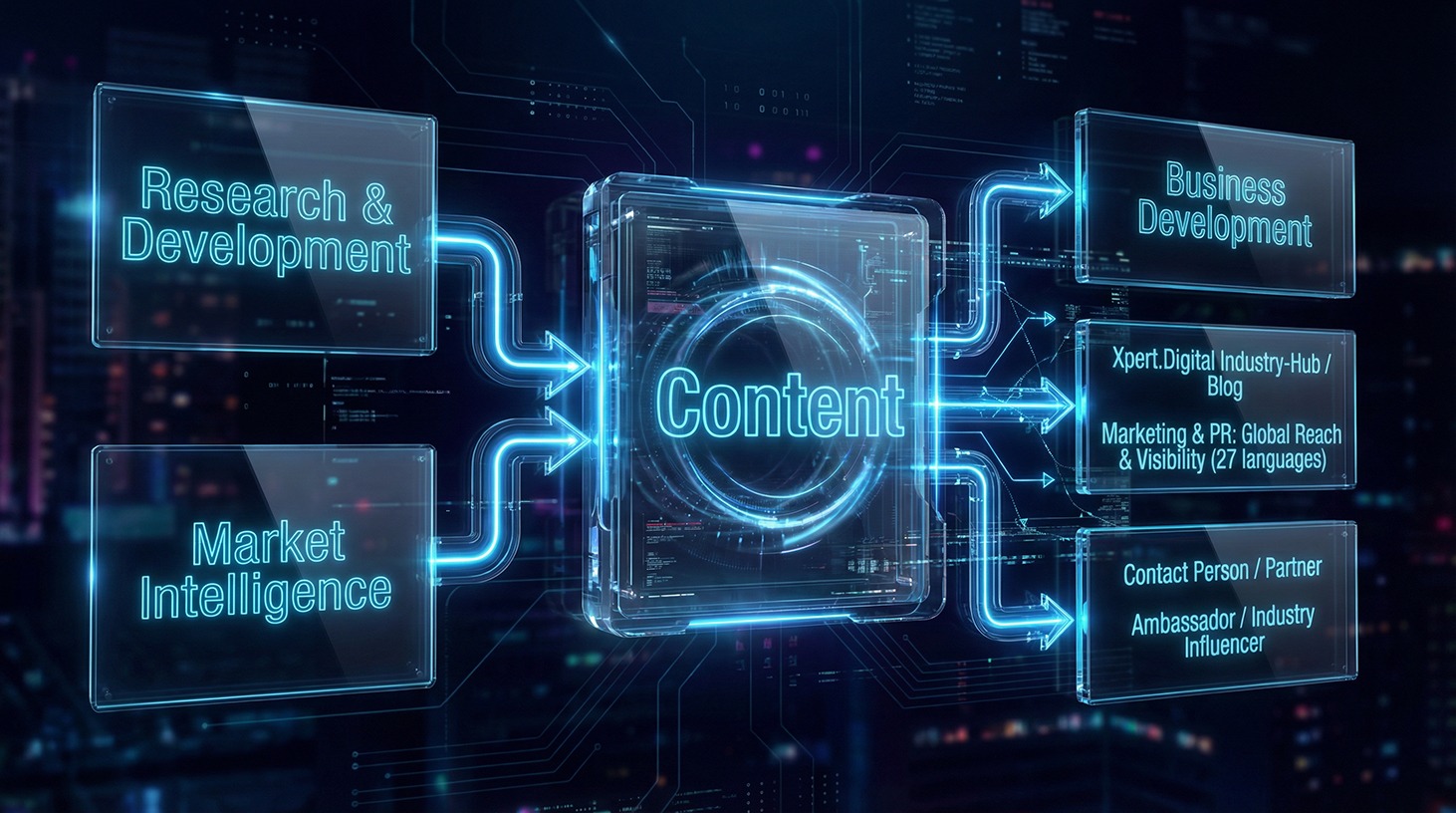
The quasi-in-house solution: How Xpert.Digital closes operational gaps in B2B marketing and sales – Smart Content-Driven Business - Image: Xpert.Digital
Xpert.Digital is a data-driven B2B industry hub led by Konrad Wolfenstein . The company acts as an external, quasi-in-house solution for industrial partners, closing operational gaps in marketing, content, and sales – without requiring additional resources on the client side.
More information here:
Your global marketing and business development partner
☑️ Our business language is English or German
☑️ NEW: Correspondence in your native language!

Konrad Wolfenstein
I and my team are happy to be available to you as your personal advisor.
You can contact me by filling out the contact form here wolfenstein@xpert.digital:or simply call me at +49 7348 4088 965. My email address is
I'm looking forward to our joint project.