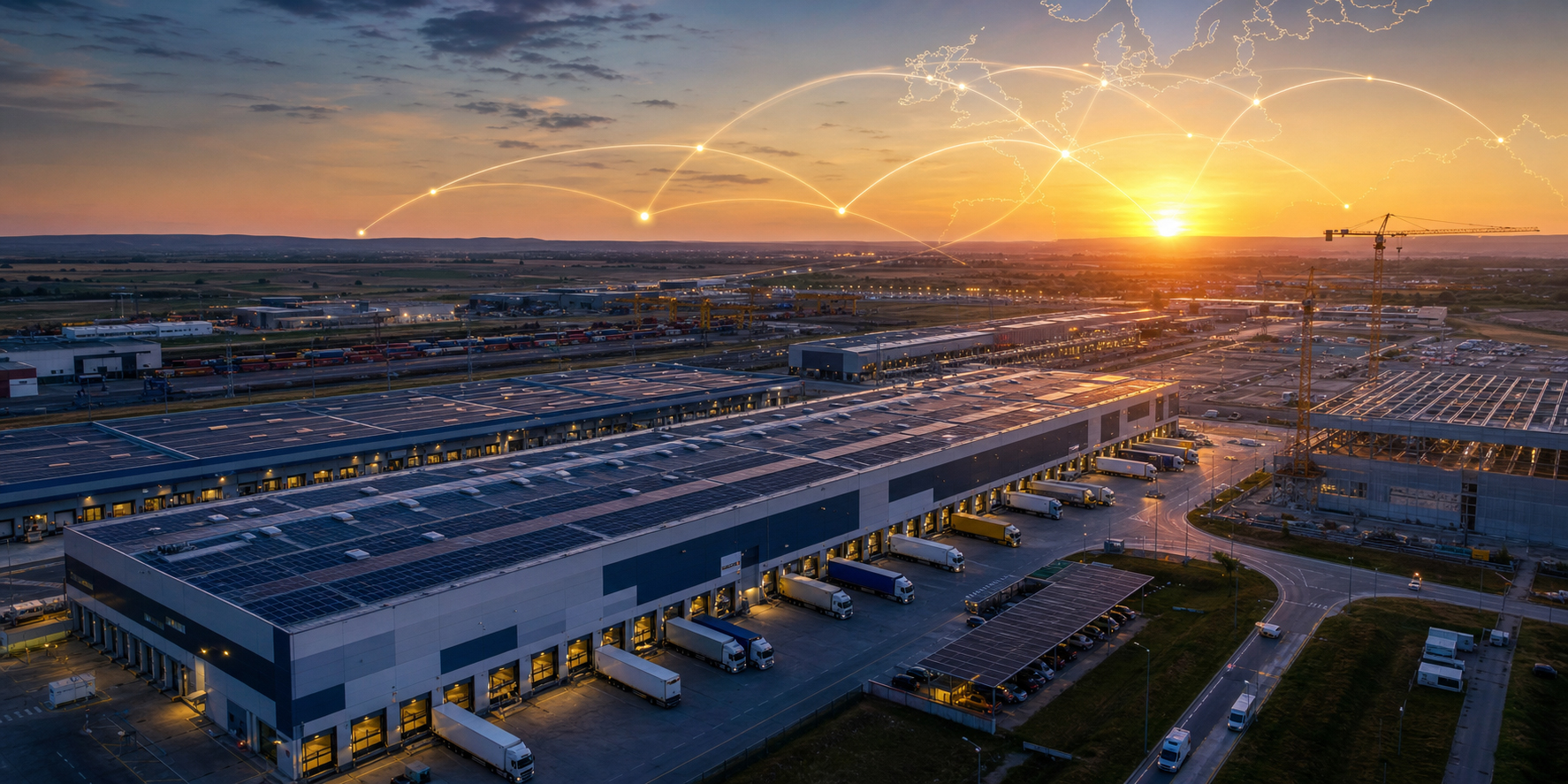
Nearshoring/reshoring and new flows of goods: Why Europe is expanding regional hubs and "industrial logistics centers" are growing – Creative image on the topic, with AI: Xpert.Digital
Goodbye Asia? How Europe is secretly bringing back its industry
Nearshoring trend: Why European companies are now radically restructuring their supply chains
The global economy is reshaping itself – and the face of Europe is changing with it. For decades, it was considered an immutable law of globalization to outsource production to where wages are lowest, primarily to Asia. But an unprecedented series of global crises, from the pandemic to blocked sea lanes and geopolitical conflicts, has ruthlessly exposed the vulnerability of endlessly long supply chains. Now the economy is reacting: Under the headings of nearshoring, reshoring, and friendshoring, European companies are gradually bringing their manufacturing and logistics closer to their domestic markets. Along new corridors – from the Polish industrial centers across the Balkans to the ports of Morocco – a gigantic, state-of-the-art infrastructure is currently being built, attracting billions in investment and redefining physical flows of goods. Read here why this much-discussed "reindustrialization" is unfolding very differently than often hoped by politicians – and who the real winners of this quiet revolution are.
The silent revolution of supply chains: How Europe is producing its way out of dependence on Asia
Anyone who has driven through Silesia, the area surrounding Bucharest, or the region around Debrecen in recent years has likely seen it, without immediately recognizing it: enormous new warehouse complexes, freshly paved access roads, construction cranes towering over half-finished logistics parks, and convoys of trucks rolling toward unfinished loading docks. What is being built there is far more than ordinary warehouse infrastructure. It is the physical manifestation of one of the most significant economic transformations of the last twenty years: the gradual reorganization of global production and supply chains, shifting them away from extremely long, cost-optimized routes through Asia toward shorter, more robust, and regionally anchored networks within and around Europe. This development is commonly summarized under the terms nearshoring and reshoring, although the two concepts are related but by no means identical and, in practice, follow different economic logics.
From globalization to regionalization: A paradigm shift that was coming
For decades, offshoring was considered the only viable business model. Companies relocated production steps to where labor was cheapest, usually China, Vietnam, or Bangladesh, accepting transport distances of tens of thousands of kilometers. This calculation worked as long as ports functioned reliably, freight rates remained low, and geopolitical disruptions were rare. The pandemic, the blockade of the Suez Canal, the attacks on merchant ships in the Red Sea, and the escalating trade conflicts between the US, China, and the EU have fundamentally shaken this calculation. Companies had to recognize that cost minimization and resilience are two distinct objectives that do not necessarily complement each other. Since then, the response of many European industrial companies has been to reassess their value chains and bring production capacities closer to their own sales markets.
Crucially, terminological clarification is essential, as it is often blurred in public debate. Reshoring refers to the complete relocation of production, supply bases, or services back to a company's home country. Nearshoring, on the other hand, involves relocating to a neighboring country within the same region or economic area, thereby shortening supply chains without sacrificing the full cost advantages of relocating. A third, increasingly important variant is friendshoring, in which production is relocated to countries considered politically reliable partners, regardless of geographical proximity. Current surveys show that European companies, at 64 percent, rely particularly heavily on friendshoring, significantly more than American or British firms, which points to the continent's specific geopolitical vulnerability between the US and China.
Figures that prove a trend reversal: Reshoring overtakes nearshoring
The latest data paints a nuanced, and in some cases surprising, picture. A recent study on the reindustrialization of Europe and the USA shows that 73 percent of large industrial companies on both sides of the Atlantic have already implemented, or are currently implementing, a corresponding strategy. Within Europe, the balance between the two strategies has shifted noticeably within a year. The proportion of companies actively engaged in reshoring rose from 34 percent to 42 percent, while the share of nearshoring activities fell from 55 percent to 39 percent. This may appear at first glance to be a retreat from the nearshoring approach, but on closer inspection, it is more accurately described as a maturation phase. Companies are acting more selectively, cost-consciously, and on a case-by-case basis, rather than indiscriminately relocating entire supply chains.
In parallel, forecasts for the next three years show a clear structural shift in production shares. The share of production that European companies have manufactured in their own domestic market is expected to rise from the current 41 percent to 48 percent. The nearshore share is projected to increase slightly from 22 percent to 24 percent, while the offshore share is expected to fall from 37 percent to 28 percent. This shift of around nine percentage points within just a few years is considerable for an economy the size of the EU, as it entails investments in the tens of billions of euros in new factories, supply chains, and the logistics properties that represent the most visible manifestation of this relocation.
At the same time, critical voices from the consulting industry warn against overstating the trend. For example, it is documented that planned reindustrialization expenditures at some large consulting firms were revised downwards from $4.7 trillion to $2.5 trillion within twelve months, while reshoring attractiveness indices declined significantly. This discrepancy between media narrative and actual investment reality is crucial for a sober understanding of the situation. Production is indeed relocating, but it is predominantly moving to Morocco, Hungary, or Portugal, and not back to Germany, France, or Great Britain to the extent hoped for.
The new geographical winners: From Silesia to Tangier
The geographical distribution of nearshoring activity follows a clear pattern with two main clusters. The first and by far most significant focus is in Central and Eastern Europe. Poland has become the undisputed anchor point of the region. With over 36 million square meters of modern warehouse space and around 2,000 service centers employing approximately half a million people, the country has effectively become the fifth-largest logistics market in Europe. The Czech Republic regularly scores highly in nearshoring attractiveness indices thanks to its established industrial base, particularly in the high-tech and automotive sectors. Romania and Hungary, in turn, are increasingly attracting investment from the automotive and battery industries, facilitated by lower labor costs and a growing transportation infrastructure.
For the logistics sector, this trend manifests itself in very specific geographical concentrations. New factory capacities are clustering around well-known hubs such as Silesia and central Poland, the industrial belt between Prague, Brno, and Ostrava, the western Romanian region around Timișoara and Arad, and the corridor between Budapest and Győr. These regions benefit from a combination of comparatively low labor costs, good connections to Western European markets, and a significantly improved road and rail infrastructure.
The second major cluster is located in the Mediterranean region. Spain and Portugal, as well as the neighboring North African locations of Morocco and Turkey, benefit from their geographical proximity to the major Western European consumer markets. The rapid rise of Morocco is particularly noteworthy, where, for example, the automotive group Stellantis, with its plant in Kenitra, is considered a much-cited prime example of successful nearshoring. Ports such as Tangier Med and Koper in Slovenia are experiencing noticeably increasing cargo volumes as a result, which in turn is driving additional investments in port logistics and hinterland connections. Tunisia and Egypt are also increasingly appearing as new production locations in corporate strategies, complementing traditional Southeast European textile and electronics hubs.
From container to truck: How physical flows of goods are being realigned
The logistical consequences of this shift in location are significant and affect not only the location of goods storage but the entire transport pattern. Where intercontinental container flows via a few major ports like Rotterdam, Hamburg, or Antwerp once dominated, today dense, high-frequency regional transport networks are emerging between production sites, suppliers, and distribution centers within Europe. In practical terms, this means for freight forwarders and carriers that the volume is shifting from long-distance sea voyages to medium-distance road and rail transport. The most visible expression of this is a noticeable increase in both full truckload (FTL) and less-than-truckload (LTL) shipments on the East-West corridors between Central and Eastern Europe and the core Western European markets.
This shift has repercussions for virtually every element of transport infrastructure. Border crossings between Poland and Germany, between Hungary and Austria, and between Romania and Hungary are experiencing significantly higher utilization, which in some cases is already leading to capacity bottlenecks in customs clearance and road infrastructure. At the same time, rail freight and multimodal transport solutions are gaining importance because they offer a cost-effective alternative to pure road transport and also align with the EU's decarbonization agenda. Investments in new terminals, transshipment stations, and inland ports along these corridors are therefore logical and are considered by many investors to be structurally undervalued.
The real estate market as a reflection of reindustrialization
Few sectors benefit more directly from the nearshoring trend than the European logistics real estate market. Investment volumes in European logistics properties are at a level of over €35 billion annually, with around €16 billion invested in the first half of a recent reporting year alone – an increase of approximately six percent compared to the same period of the previous year. Forecasts predict that the European warehouse real estate market could grow to a volume of around €661 billion by 2034, which would correspond to an average annual growth rate of over seven percent.
What is remarkable about this growth is the regional shift. While core Western European markets such as the greater Paris area, London, and the Randstad region continue to dominate the headlines, the real growth dynamic is increasingly taking place further east. Investments in logistics properties in Central and Eastern Europe rose by around 32 percent within a year, led by Poland, Romania, and Hungary. This development is further fueled by stricter ESG building regulations, which are making older, energy-inefficient warehouses in Western Europe increasingly unattractive or even unleasable, thereby diverting capital towards newly built, energy-efficient facilities in eastern and southern regions. Solar panels on warehouse roofs, which can offer significant operating cost advantages in regions with high electricity prices, are becoming an increasingly relevant differentiating factor when choosing a location for new logistics properties.
At the same time, a seemingly paradoxical development is emerging in some key Western European markets, such as Germany: Despite an overall weak economy and increasing unused inventory in older warehouses, new space is being secured through nearshoring and friendshoring strategies, but due to the lengthy relocation processes, it is not yet fully occupied. Furthermore, improved AI-supported forecasting tools are significantly reducing the necessary safety stocks in warehouses, creating additional free capacity in the short term, which should not be misinterpreted as a decline in demand.
LTW Intralogistics Solutions

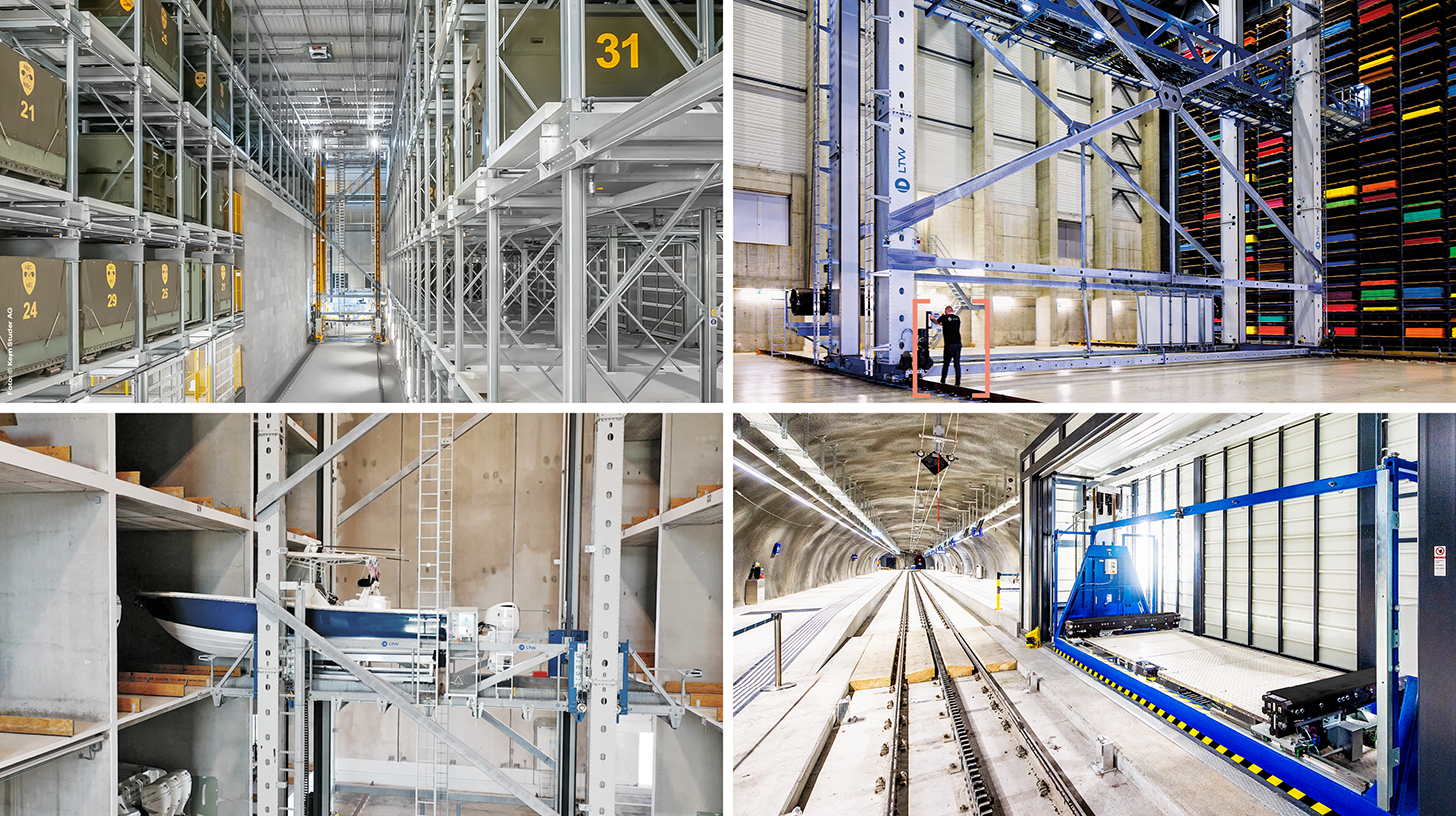
LTW Intralogistics – Engineers of Flow - Image: LTW Intralogistics GmbH
LTW offers its customers not individual components, but integrated complete solutions. Consulting, planning, mechanical and electrotechnical components, control and automation technology, as well as software and service – everything is networked and precisely coordinated.
In-house production of key components is particularly advantageous. This allows for optimal control of quality, supply chains, and interfaces.
LTW stands for reliability, transparency, and collaborative partnership. Loyalty and honesty are firmly anchored in the company's philosophy – a handshake still means something here.
Related to this:
The new normal: Why hybrid supply chains are securing the future of European companies
Motives beyond the question of cost: geopolitics, resilience and regulation
A key misconception in the public debate is to interpret nearshoring and reshoring primarily as a reaction to rising labor costs in Asia. In reality, the driving factors are far more complex. First and foremost is geopolitical uncertainty, exacerbated by trade conflicts, export controls on critical raw materials and technologies, and the real-world experience of multiple disruptions to global transport routes in recent years. Companies no longer want to be dependent on a single, distant source, but rather spread their risk across multiple suppliers and regions—an approach that is increasingly becoming standard practice under the terms dual- or multi-sourcing.
A second important driver is the desire for shorter delivery times and greater responsiveness to volatile demand. Particularly in industries with short product cycles or seasonal fluctuations, production that takes several weeks to ship is proving increasingly risky from a business perspective. Thirdly, European regulation is playing a growing role. Requirements for supply chain due diligence, carbon border adjustment mechanisms, and stricter environmental and social standards increase the administrative and financial burden on distant, difficult-to-monitor supply chains, while regional suppliers are easier to audit and legally accountable.
Interestingly, recent surveys also show that the narrative of a general withdrawal from Asia is too simplistic. Despite all diversification efforts, global supply chains remain remarkably resilient, and nearshoring and reshoring still only account for a comparatively small, albeit growing, share of total EU procurement, most recently around 14 percent – a record figure that, however, puts the continued dominance of Asian suppliers in numerous product groups into perspective. China remains a key sourcing partner for many product categories, such as toys or electronics, while at the same time Southeast Asian locations like Vietnam, Thailand, and Cambodia are experiencing significantly faster growth in inspection and testing contracts than the European nearshore market. This illustrates that nearshoring in Europe is more of a complementary than a replacement strategy for traditional offshore procurement.
Winners and losers: A differentiated location analysis
Not every region benefits equally from the reorganization of trade flows, and the distribution of gains follows clear structural lines. Countries with a combination of moderate labor costs, reliable rule of law, a sufficiently skilled workforce, and good transport links to Western European markets benefit disproportionately. Poland, the Czech Republic, Romania, and Hungary meet these criteria particularly well and have invested heavily in recent years, both in education and infrastructure. Slovakia also benefits from its close ties with the German and Czech automotive industries.
In contrast, traditional Western European industrial centers like Germany, France, and Great Britain are experiencing significantly lower reshoring gains than is often suggested by politicians. High energy prices, increased labor costs, moderate productivity growth, and a regulatory environment perceived as overly complex are explicitly cited as reasons why European companies tend to rely on friendshoring in neighboring regions rather than bringing production back entirely to their home countries. The much-discussed reindustrialization of Germany is therefore taking place, but to a considerable extent not within its own borders, but rather in geographical and cultural proximity: in Poland, the Czech Republic, or Hungary.
A similar dynamic is emerging in the Mediterranean. Morocco, through targeted industrial policy, favorable free trade agreements with the EU, and significant investments in ports like Tangier Med, has become one of the most attractive nearshoring locations, with inspection demand in the Mediterranean growing by around 25 percent within a year. Portugal benefits from its membership in the Eurozone, a comparatively stable political situation, and lower labor costs than in core Europe, while Turkey continues to expand its traditional role as a bridge between Europe and Asia, albeit with greater political uncertainty.
Opportunities for regional value creation and employment
This development presents significant economic opportunities for the benefiting regions, extending far beyond the logistics sector itself. New industrial and logistics centers typically attract an entire ecosystem of suppliers, service providers, and skilled jobs. In Poland, for example, several hundred thousand people already work in logistics-related service centers, a similar employment effect seen in Romania and Hungary. These jobs range from basic warehousing and order picking to technical maintenance and highly skilled positions in logistics management, IT, and engineering, contributing to the diversification and enhancement of local labor markets.
For municipalities and regions themselves, the influx of investment in the form of business tax revenue, improved infrastructure, and increased attractiveness to skilled workers also represents a noticeable economic boost. At the same time, however, challenges arise, such as rising land prices, localized shortages of skilled workers, and increasing strain on local transport infrastructure, which cannot always keep pace with rapid growth. The long-term viability of this model therefore depends significantly on whether the countries concerned continue their investments in education, transport infrastructure, and energy infrastructure at the same pace as the establishment of new industrial and logistics capacities.
Limits and risks of the trend: Why not everything that glitters is gold
Despite the overall positive growth narrative, there are good reasons to be cautious when assessing the nearshoring boom. First, several recent analyses show that actual investments often fall significantly short of the originally announced plans. The aforementioned drastic reduction in planned reindustrialization spending within a single year is a clear warning sign that while many companies are issuing strategic declarations of intent, their implementation is being considerably delayed or reduced in scope due to high capital costs, uncertain interest rate developments, and complex approval processes.
Secondly, it remains questionable whether the newly emerging locations are truly as resilient as the marketing language of many location brochures suggests. Morocco, for example, is geographically close to Europe, but is itself not free from political and climatic risks. The supposed diversification of supply chains can, in certain cases, prove to be merely a shift from one risk factor to another, without significantly reducing the underlying vulnerability. Furthermore, the reopening of important shipping routes and improved reliability ratings of major shipping alliances partially undermine the economic justification for nearshoring, as the cost advantages of reshoring diminish once traditional sea routes are functioning smoothly again.
Thirdly, it should be considered that a significant portion of the investments celebrated as European nearshoring are actually financed by non-European, particularly Chinese, capital, for example in the area of battery production. What at first glance appears to strengthen European sovereignty can, upon closer inspection, represent a shift in dependence from the raw material and commodity level to the capital and technology level. This nuance is often given insufficient consideration in the political and media debate surrounding reindustrialization.
Regionalization as the new normal, not as a state of emergency
Everything indicates that the realignment of European trade flows is not a temporary phenomenon, but rather a structural adaptation to a world with greater geopolitical uncertainty, stricter regulatory requirements, and more volatile energy prices. Companies are unlikely to completely abandon global sourcing, but instead will establish a hybrid model that intelligently combines local, regional, and global value chain stages. For Europe, this means, in the medium term, a further consolidation of the industrial and logistics landscape in Central and Eastern Europe and the Western Mediterranean, while traditional Western European core markets are likely to focus more on high-value, capital-intensive manufacturing, research and development, and last-mile distribution.
For investors, site developers, and policymakers, this results in a clear strategic imperative: those who invest today in modern, energy-efficient logistics properties at well-connected hubs are positioning themselves for a decade of structural demand driven less by short-term economic cycles than by a long-term geo-economic realignment. At the same time, it remains crucial to have realistic expectations regarding the pace of this transformation. Reindustrialization and regional diversification are not one-off events, but rather a multi-year, volatile process that will be repeatedly interrupted and readjusted by geopolitical setbacks, technological upheavals, and economic cycles.
Consulting - Planning - Implementation

Konrad Wolfenstein
I would be happy to serve as your personal advisor.
You can contact me at wolfenstein∂xpert.digital or
Just call me on +49 7348 4088 965 .
Your intralogistics experts

Consulting, planning and implementation of complete solutions for high-bay warehouses and automated storage systems - Image: Xpert.Digital
More information here: