
The end of the extended workbench: Why Poland's economic miracle is fading – and Germany is being hit – Image: Xpert.Digital
The prosperity trap is snapping shut: Is Poland's economic boom threatened with a gradual collapse?
Historic turning point: Why more Germans are now moving to Poland than vice versa
Skilled worker shock for German companies: Why the Polish labor market is suddenly empty
For three decades, Poland was considered the tireless growth engine of Eastern Europe and a lucrative "extended workbench" for German industry. But the much-vaunted economic miracle is reaching its structural limits. A rapidly aging society, dwindling wage advantages, and exploding military spending at the expense of education and innovation are massively slowing down the unprecedented catch-up process. While the Polish economy risks getting stuck in the so-called middle-income trap, German companies are also facing a historic turning point: The once reliable pool of skilled workers is dwindling, and the proven German-Polish business model must completely reinvent itself. An in-depth analysis of the creeping loss of growth potential – and why it affects us all.
Related to this:


Poland: The end of the economic miracle – When the growth engine starts to sputter
At the end of May 2025, 56 economists presented their consensus forecast at the European Finance Congress in the Baltic resort of Sopot, and the verdict was as sobering as it was unequivocal: Poland's years of strongest growth are behind it. For 2026, the experts expect real GDP growth of 3.5 percent, for 2027 only 3.0 percent, and by 2029 a mere 2.6 percent. Each year a little weaker – a slow-motion deceleration that no economic stimulus program can reverse. This assessment largely coincides with the forecasts of international institutions: In April 2026, the World Bank lowered its growth expectations for Poland to 3.1 percent for 2026 and to 2.6 percent for 2027. The OECD predicts similar figures, and Fitch Ratings warns of a persistently high budget deficit that will restrict fiscal policy options for years to come.
What these figures reveal is more than a cyclical slowdown. It is the end of a growth model that sustained Poland for over three decades. The Polish economy increased its per capita income (in purchasing power parities, measured against the EU-15 average) from 32 percent at the beginning of the 1990s to around 64 percent in 2016. This spectacular catch-up process was based on two fundamental pillars: an abundant, relatively inexpensive labor supply and a continuous inflow of capital from the West, particularly in the form of foreign direct investment and EU structural funds. Both pillars are now showing clear signs of strain.
Demographics as structural destiny
Of all the obstacles that will cap Poland's future growth potential, demographic change is the most inevitable because it cannot be addressed through short-term political intervention. The Polish Economic Institute (PIE) has calculated that by 2035, approximately 2.1 million workers will leave the Polish labor market – equivalent to 12.6 percent of current employment. At the same time, the projected influx of new, young workers will amount to only 1.7 million, resulting in a net shortfall of more than two million. The education sector will be particularly affected, with an expected decline of 29 percent in the workforce, followed by the healthcare sector with a 23 percent decrease and the manufacturing sector with an 11 percent decrease.
Behind this development lies a dual demographic trend: the birth rate has declined steadily since the political changes of 1989/90, while life expectancy has simultaneously increased. Poland is transforming from a relatively young to a rapidly aging society. In 2023, workers aged 50 to 64 already made up a quarter of the workforce – a total of 4.2 million people who will gradually retire in the coming years. Particularly problematic is the fact that in 2017 the Polish government lowered the statutory retirement age to 60 for women and 65 for men, after having raised it to a uniform 67 shortly before. This decision significantly accelerates the demographically driven withdrawal from the labor market and reduces the labor supply faster than biological aging alone would.
For years, Poland's migration policy relied primarily on Ukrainian workers to alleviate its growing labor shortage. The Russian war of aggression against Ukraine significantly complicated this strategy: many Ukrainians who had sought refuge in Poland either moved on to other EU countries or returned to Ukraine. At the same time, the traditional emigration of Polish citizens to Western countries is also beginning to decline – a sign that wage convergence is slowly taking place, but no substitute for the missing workforce. For the first time in more than 30 years, the Federal Statistical Office recorded a negative migration balance between Germany and Poland in 2024: more people moved from Germany to Poland than vice versa.
The borrowed investment boost and its imminent end
Investment in Poland is set to increase significantly in 2026 – forecasts predict growth of more than 8 percent. At first glance, this sounds encouraging. However, this boost is structurally borrowed: it is almost entirely financed by the National Recovery Plan (Krajowy Plan Odbudowy, KPO), the Polish equivalent of the European recovery fund NextGenerationEU. Poland is slated to receive a total of around €59.8 billion through this program, of which €25.3 billion will be in the form of non-repayable grants and €34.5 billion in low-interest loans. The problem is that the EU funds from the recovery fund must be spent by the end of 2026. Once the program expires, investment momentum will collapse abruptly. Economists expect investment growth to fall back to around 4.7 percent in 2027, and the private sector will not be able to fill the resulting gap.
In 2025, EU funding from various sources alone amounted to around 3.6 percent of GDP, strikingly illustrating the dependence of growth figures on these external stimuli. Particularly worrying is the structural question underlying this dependence: Has Poland used EU funds to develop an independent, innovation-driven growth model, or has it merely consumed cyclical stimulus without laying the foundations for sustainable growth? The sobering answer, formulated by Polish economists themselves, is largely the latter. Poland has failed to use European funding to build an effective innovation system that links public investment with private research and development. The economy continues to rely heavily on the assembly and production of mid-level technologies—rather than on the development of its own innovative products and services.
Public finances under pressure: Defense against budgetary discipline
At the congress in Sopot, public finances were considered the factor that will most strongly determine Poland's economic policy in the coming years. The overall government budget deficit amounted to around 6.9 percent of GDP in 2025 – significantly higher than the government's original target of 5.5 percent. Fitch Ratings forecasts a deficit of around 7 percent of GDP for 2026 and does not expect it to fall below 6 percent until 2028. The European Commission paints an even bleaker long-term scenario: without significant tax reforms and spending cuts, Poland's debt-to-GDP ratio could climb to around 107 percent by 2036. Poland's own debt management agency anticipates that the debt-to-GDP ratio will rise from 59.8 percent in 2025 to 65.4 percent in 2026 and climb to 75.3 percent by 2029.
Behind these figures lies a strategic decision that, in the face of Russia's war of aggression against Ukraine, could hardly have been made differently: Poland is massively increasing its military spending. Defense expenditures of 200 billion zlotys are planned for 2026, equivalent to 4.8 percent of GDP – up from 4.7 percent in 2025. This makes Poland the NATO member with the largest military budget relative to GDP, far ahead of the US and Germany. Prime Minister Donald Tusk succinctly summarized the situation: Poland cannot defend its border with a small deficit. This is politically understandable, but economically it represents a massive crowding-out effect: Every zloty spent on armaments is one less available for education, research, infrastructure, or innovation. The fiscal leeway for an active growth policy is thus shrinking from two sides simultaneously: from above, due to defense costs, and from below, due to increasing debt servicing.
To make matters worse, social spending has increased considerably in recent years. The flagship 500+ program, which provides Polish families with monthly child benefit payments and was increased to 500 złoty per child in 2021, does stimulate consumption, but places a permanent burden on the budget. High expenditures for defense, social benefits, and debt servicing leave the Polish treasury little room for the investments that a structural shift towards more knowledge-intensive growth would require.
Our EU and German expertise in business development, sales and marketing

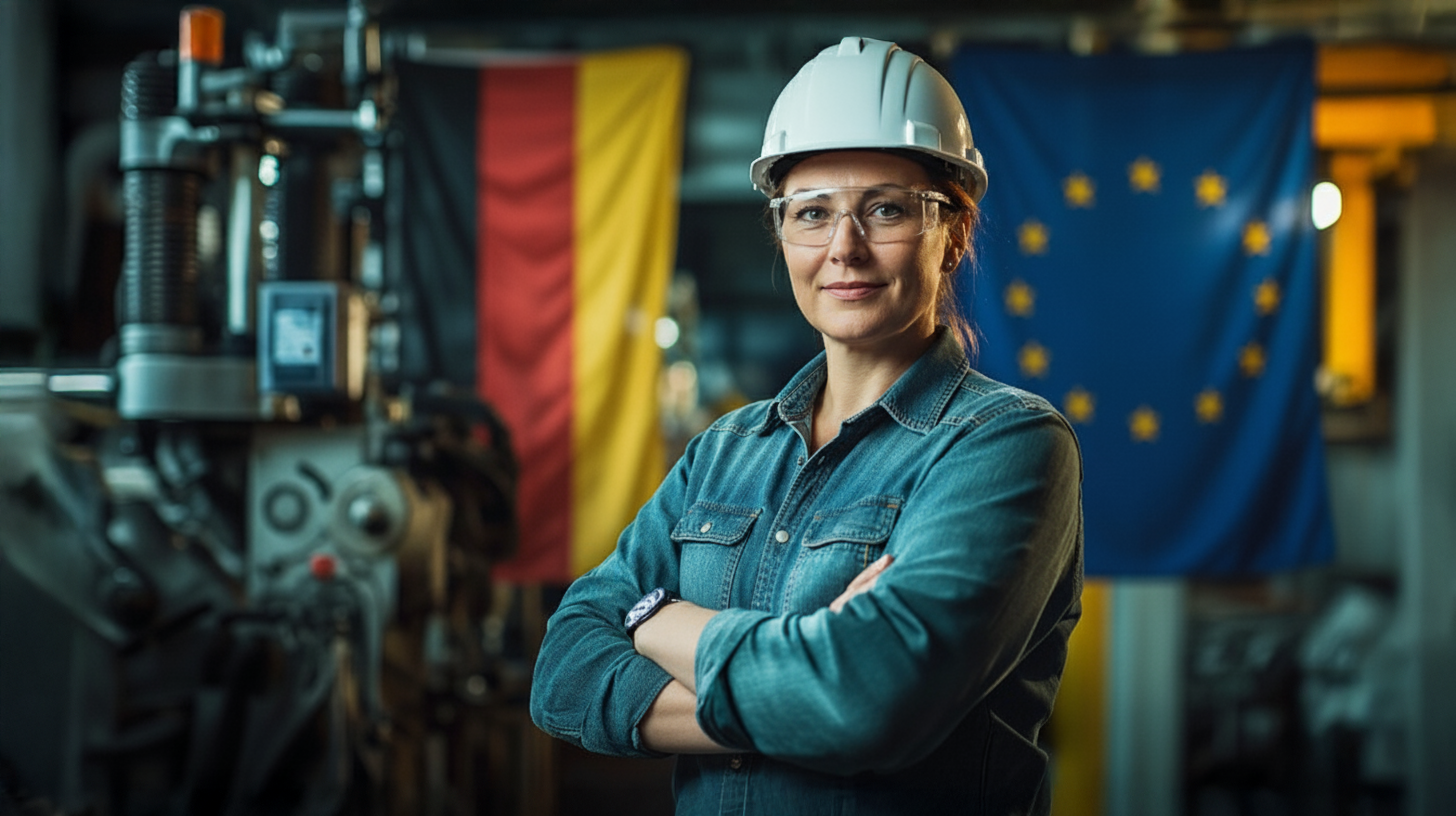
Our EU and German expertise in business development, sales and marketing - Image: Xpert.Digital
Industry focus areas: B2B, digitalization (from AI to XR), mechanical engineering, logistics, renewable energies and industry
More information here:
A thematic hub offering insights and expertise:
- Knowledge platform covering global and regional economies, innovation and industry-specific trends
- A collection of analyses, insights, and background information from our key areas of focus
- A place for expertise and information on current developments in business and technology
- A hub for companies seeking information on markets, digitalization, and industry innovations
Extended workbench in times of crisis: Why Poland risks missing out on the innovation revolution
The extended workbench model and its limitations
To fully understand Poland's structural dilemma, it is worth examining the fundamental logic of the Polish growth model of the past three decades. After the political changes of 1989, Poland built a competitive advantage based on cost: a comparatively well-educated workforce at significantly lower wages than in Western Europe, a favorable location in the heart of Europe, political stability, and a growing rule of law. This profile made Poland the preferred location for foreign direct investment, particularly from Germany. Around 9,500 German-owned companies are currently based in Poland, and for years German firms have been relocating production capacity to their eastern neighbor, most recently prominent names like Miele. Polish labor productivity per hour increased by more than 90 percent between 2000 and 2022 – a figure that far exceeded the EU-27 average of just under 30 percent during the same period.
But the extended workbench model is reaching its limits, precisely at the moment when labor cost advantages begin to erode. Average wages in Poland rose by well over 10 percent annually between 2021 and 2024. While the pace has slowed noticeably – wage growth was 6.4 percent in the first quarter of 2026 – the gap with Western Europe is shrinking. This is, in itself, a success story. The problem is that rising wages without parallel productivity gains through innovation undermine competitiveness. Poland's total research and development expenditure in 2022 was just 1.46 percent of GDP – far below the EU average of 2.22 percent. The private sector's share of this already low R&D spending is only around 60 percent, whereas in innovation-driven countries like Germany or Sweden it is between 70 and 75 percent. Central and Eastern European economists openly say that Poland and its neighboring countries are in danger of falling into the middle-income trap – that development trap in which countries grow out of poverty but do not rise to highly developed economies because they do not complete the transition from cost-based to knowledge-based competitiveness.
Related to this:


Robots instead of workers: Automation as a double-edged sword
Faced with a demographically driven labor shortage, Poland is increasingly relying on automation. The signals are mixed. Around 90 percent of large companies in Poland are already investing in automated production lines, industrial robots, and IoT solutions. Sectors such as automotive, electronics, and manufacturing are seeing measurable productivity improvements. At the same time, a deep divide is evident: approximately 46 percent of Polish companies – predominantly small and medium-sized enterprises – have no plans whatsoever to implement Industry 4.0 solutions. They cite high investment costs and uncertainties regarding returns. Robot density in Poland stands at 42 robots per 10,000 employees – a glaring deficit compared to Germany's 338. While Polish industry has significantly advanced robotization in recent years – robot sales have increased by around 40 percent – the starting point was so low that the gap to the leading group remains substantial.
The structural problem runs deeper than the mere number of robots deployed. Automation alone does not create a new growth model if the necessary key technologies – software, sensors, artificial intelligence – have to be imported due to a lack of domestic R&D capacity. Those who manufacture the machines and write the software reap the added value. Those who merely operate the machines simply replace one factor of production with another, without fundamentally improving their position in the global value chain. Polish industry finds itself in precisely this trap if it does not combine its automation drive with a determined expansion of research, development, and higher education.
The German-Polish axis under new auspices
For Germany, Poland's economic slowdown is not a distant statistic to be noted in Brussels Commission reports. It has concrete effects on companies, labor markets, and strategic considerations. Germany and Poland are more closely intertwined economically than any other pair of neighboring countries in Central Europe. German companies employ hundreds of thousands of workers in Poland, have established supply chains that run through Poland, and have been sourcing skilled workers from the neighboring country for years. This influx of Polish workers to Germany has helped to alleviate the German skilled labor shortage for decades, particularly in nursing, construction, and skilled trades.
This source is now drying up. Not only because Polish workers have less and less incentive to emigrate to Germany – the wage gap is closing, Poland is offering an increasingly attractive living environment, and bureaucratic hurdles in Germany are a deterrent. But also because Poland itself is becoming scarcer in terms of labor, and its own companies are fighting for every qualified individual. As early as 2024, for the first time in more than 30 years, more people moved from Germany to Poland than vice versa. German employers, who for many years have relied on Polish workers as a buffer against their own skilled labor shortage, must adapt to a new reality: The Polish labor market, from which they have drawn so far, is itself becoming a buyer and no longer a supplier.
For German companies that have relocated production capacity to Poland, a further challenge arises. The original locational advantage – inexpensive, highly qualified labor in geographical proximity – erodes with every percentage point of wage growth and with every employee who leaves the labor market due to retirement. Companies that moved to Poland to reduce production costs will sooner or later have to decide whether to shift further east or south, increase automation, or fundamentally change their value creation strategy. The days when companies could comfortably and permanently choose between cost advantages and customer proximity in Germany without having to compromise on either are drawing to a close.
Between catch-up process and development trap
The parallel to the German debate about the end of the post-war economic miracle is striking. After decades of reconstruction and convergence, Germany, too, had reached a point where the old model—in Germany's case, export orientation based on engineering expertise and industrial tradition—came under pressure. The difference: Germany had by then built a dense network of research institutions, universities, medium-sized enterprises, and industrial clusters that enabled a transition to more knowledge-intensive value creation, even if this transition remains painful and incomplete. Poland faces the same necessity of transition, but with a significantly thinner institutional foundation, weaker R&D infrastructure, and scarcer public resources because a considerable portion of the state budget is allocated to defense.
The so-called middle-income trap—the development trap from which many emerging economies cannot escape—is not merely an academic bogeyman for Poland, but a real economic policy challenge. As early as 2017, the Halle Institute for Economic Research (IWH Halle) diagnosed that Poland's catch-up process had stalled and recommended greater support for innovative and young companies, as well as further expansion of the education sector. Since then, the institutional framework for innovation in Poland has hardly changed fundamentally. The chronic underfunding of the science and education sector—public spending relative to GDP is among the lowest in the EU—makes the education system a bottleneck for innovation, rather than its driving force.
What remains, what comes
Poland's economy is not facing a collapse. Growth of 3.5 percent in 2026, even if it falls to 2.6 percent by 2029, is still a respectable achievement compared to the EU average – which is significantly lower. The IMF forecasts average growth of just 1.5 percent for the eurozone during the same period. Poland remains a relative growth champion among Europe's largest economies, even if the gap is narrowing. The economy is diversified, domestic consumption is robust, and real wages continue to rise, albeit at a slower pace.
The problem lies not in the absolute level of growth figures, but in the lack of qualitative change. An economy can grow at three percent for years and become relatively poorer in the process if it falls behind technologically and the productivity gap with innovation-driven countries widens. Poland's economists, those 56 sober voices from Sopot, are not warning of a recession. They are warning of the creeping loss of growth potential that permeates all sectors and cannot be stopped by short-term economic policies. This is a more serious message than a bad quarter. It is the announcement that Poland's second transformation task—from a low-wage economy to a knowledge economy—is still pending, and time is running out. Demographically, fiscally, and geopolitically, the clocks are ticking simultaneously.
Your global marketing and business development partner
☑️ Our business language is English or German
☑️ NEW: Correspondence in your native language!

Konrad Wolfenstein
I and my team are happy to be available to you as your personal advisor.
You can contact me by filling out the contact form here wolfenstein@xpert.digital:or simply call me at +49 7348 4088 965. My email address is
I'm looking forward to our joint project.