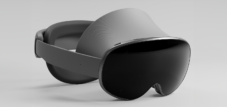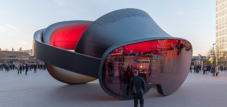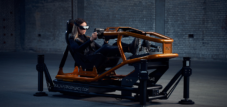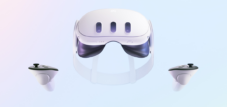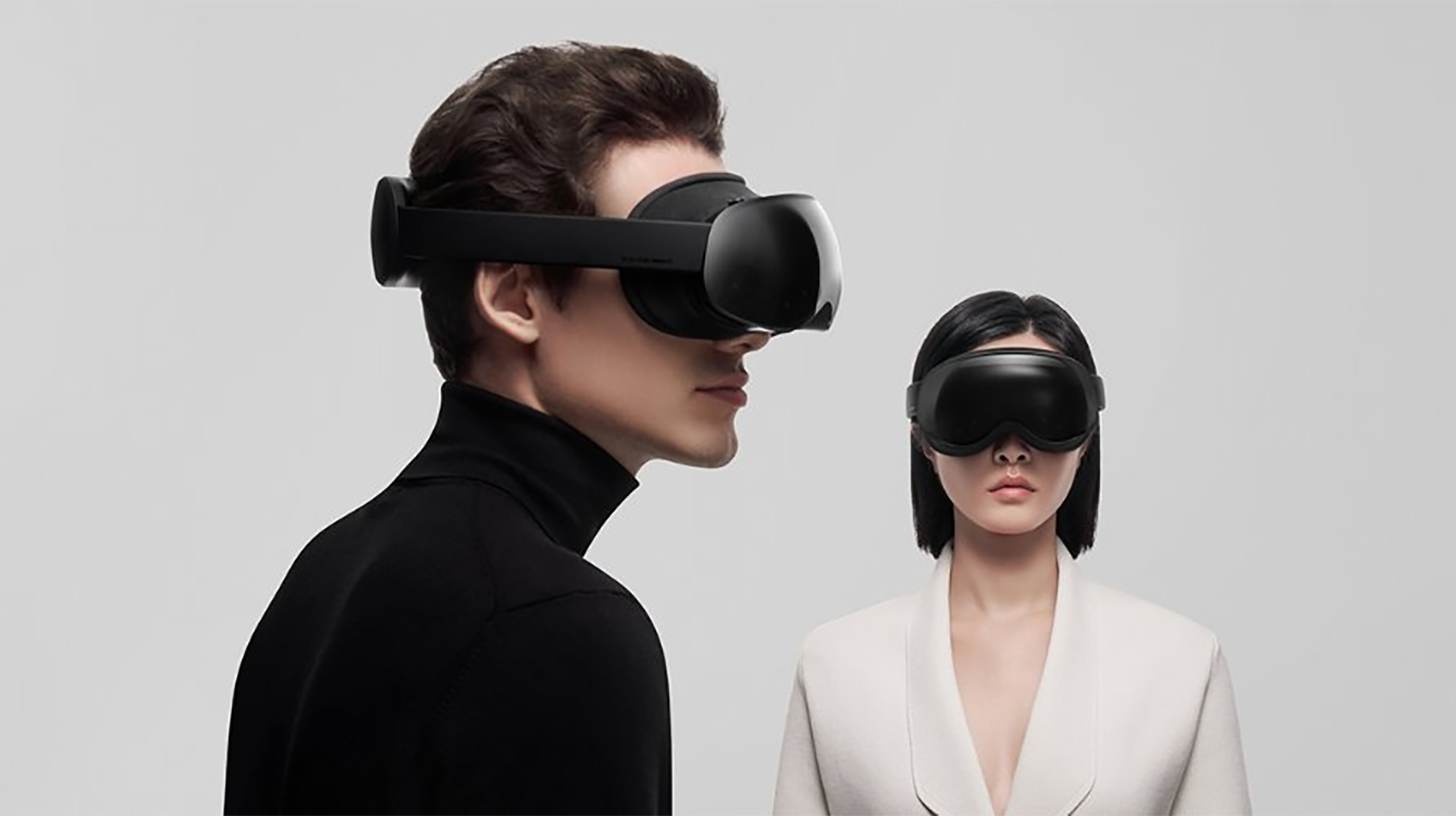
Play for Dream MR: An innovative mixed reality headset (XR/VR glasses) in the premium segment - Image: Play for Dream / pfdm.ai
Challenger in the mixed reality market: Play for Dream MR headset
Play for Dream MR: Competition for Apple's Vision Pro in the premium segment
The Play for Dream MR headset established itself at CES 2025 as one of the most surprising and impressive new additions to the mixed reality technology market. This Android-based standalone headset combines high-quality hardware with a user-friendly design, positioning itself as a serious competitor in the premium segment of the spatial computing market. With stunning 4K MicroOLED displays per eye, a powerful Snapdragon XR2+ Gen 2 processor, and a price under $2,000, the device offers an attractive alternative to established products like the Apple Vision Pro. Particularly noteworthy are its high image quality, improved comfort thanks to innovative weight distribution, and extensive compatibility with PC VR applications. While the design and user interface bear strong similarities to the Apple Vision Pro, the Play for Dream MR stands out with its own unique enhancements and additional features.
Related to this:

Hardware and technical specifications
Display and visual quality
The Play for Dream MR stands out for its stunning visuals. With 4K MicroOLED displays for each eye, the headset achieves a combined 8K resolution, delivering exceptional image sharpness and detail. These high-resolution panels provide deep blacks, vibrant colors, and HDR support, resulting in an impressive contrast ratio. During testing at CES 2025, users were impressed by the clarity and sharpness of the images, with some testers even reporting that the image quality surpassed any other VR headset they owned.
The built-in pancake lenses offer solid, if not perfect, performance. Tests revealed slight issues with glare – more pronounced than with the MeganeX, but less noticeable than with big-screen headsets. Additionally, significant chromatic aberration was observed at the edges of the field of view, which can lead to rainbow-like distortions when moving the eyes. The horizontal field of view is specified at approximately 102°, which is somewhat wider than comparable premium headsets like the Megane Superlight 8K and, in particular, offers a wider vertical field of view than the Apple Vision Pro.
Processor and performance
At the heart of the Play for Dream MR is the Qualcomm Snapdragon XR2+ Gen 2 chip, currently one of the most powerful processors for XR applications. This hardware platform enables both demanding standalone applications and the processing of complex sensor and camera data for mixed reality experiences. The chip's performance supports various interaction methods such as gaze and hand tracking, as well as the processing of high-resolution display content.
The technical equipment is complemented by 11 cameras, 22 LED lights, and seven different sensor types, which together enable precise recording of the environment and user interactions. This comprehensive sensor system forms the basis for the mixed reality functionality, in which the outdoor cameras capture the surroundings and transmit them as video images to the displays.
Tracking and control
The Play for Dream MR features integrated eye tracking that automatically scans and adjusts the user's individual interpupillary distance (IPD). The headset's inside-out tracking worked reliably in initial tests, although some minor tracking issues at CES were attributed to the high level of wireless interference on the exhibition floor.
A key difference from the Apple Vision Pro lies in the provision of dedicated controllers, which offer the user additional interaction options. These controllers feature standard buttons, feel comfortable in the hand according to testers, and offer reliable performance. While the headset also supports the gaze and pinch gestures typical of spatial computing, the controllers represent a particularly valuable addition for gaming applications.
Design and user comfort
Ergonomics and wearing comfort
Despite weighing around 650g, comparable to the Apple Vision Pro, the Play for Dream MR impresses with its superior weight distribution. With a 3:2 ratio between the front and back, the design significantly reduces pressure on the wearer's face. The battery is strategically positioned in the rear headband, contributing to balanced weight distribution and improving comfort, especially during extended use.
The use of a plastic outer shell instead of glass, as with the Apple Vision Pro, also contributes to the perceived lighter weight. The magnetically attached, interchangeable face cushions underscore the headset's premium feel and allow for a customized fit to different face shapes. Testers at CES 2025 reported that the headset was comfortable enough for several hours of use – an important factor for the target gaming audience.
Audio quality
Due to the noisy environment at CES, the headset's audio capabilities could not be fully tested. However, the integrated speakers appear to be inspired by the design of the Apple Vision Pro. If they offer similar quality, the audio component could also be a strength of the device, but this remains to be verified in quieter testing environments.
Software ecosystem and functionality
Operating system and user interface
The Play for Dream MR runs on a proprietary Android 14-based operating system. The user interface bears a strong resemblance to Apple's visionOS, which can be seen as both a strength and a potential problem. From circular icons to window manipulation via gaze and pinch gestures, the inspiration from Apple's solution is unmistakable.
The company hopes to replace its Android fork with Google's Android XR in the future, provided an agreement can be reached with Google. This transition could occur via an over-the-air update and potentially grant access to a broader application ecosystem.
Application compatibility and gaming
A particular focus of the Play for Dream MR is on gaming applications. The headset not only supports standalone VR applications but also offers extensive PCVR compatibility. During tests at CES, games like Half-Life: Alyx were streamed via SteamVR, with the visual quality described as impressive – sharp, vibrant, and with the typical OLED brilliance. However, noticeable latency was also observed, which impacted the gaming experience. Wireless streaming could not be tested at the show due to Wi-Fi interference but is considered an important feature for future evaluations.
In addition to SteamVR support, the company touts compatibility with over 6,000 Steam games. The system also allows the projection of up to five windows simultaneously, which is intended to increase productivity. Integration with Windows laptops, which enables the projection of screen content onto the headset, is another useful feature for productivity applications.
Related to this:
- Samsung Android XR headset Project Moohan premieres at Mobile World Congress (MWC) 2025 in Barcelona
Market launch and positioning
Pricing and availability
The Play for Dream MR is slated for release at a price of under $2,000, positioning it in the premium segment, but significantly below the price point of the Apple Vision Pro. The initial launch is planned for October, starting in China, Singapore, and Malaysia. A successful Kickstarter campaign with 215 backers has already raised $291,773 for the company. Delivery to Kickstarter backers is scheduled for March 2025, with the regular sales launch following shortly thereafter.
Challenges and market opportunities
The striking similarities to the Apple Vision Pro could lead to legal challenges, particularly when attempting to expand into Western markets. Without significant changes to the user interface, the company could face patent disputes. However, a simple redesign of the user interface or the adoption of Android XR could potentially resolve these issues.
Despite these challenges, Play for Dream is strategically positioning itself in the growing spatial computing market. With a price below that of the Apple Vision Pro, the inclusion of controllers, and native SteamVR support, the headset offers features that are either missing or only partially available in competing products.
Expert opinions and testimonials
The reactions from experts who were able to test the Play for Dream MR at CES 2025 were overwhelmingly positive. UploadVR called it "the most impressive XR hardware of any kind at CES 2025," while Sebastian from MRTV awarded it the title "MRTV XR Device of CES 2025." The image quality was particularly praised, with clear and sharp images from edge to edge.
More extensive testing also identified some weaknesses: In addition to the previously mentioned latency during PCVR streaming and chromatic aberration at the edges, the binocular overlap was described as good, but not as seamless as with the Megane Superlight 8K. Nevertheless, the positive impressions outweighed the negatives, especially regarding visual quality and wearing comfort.
Competition for Apple? The Play for Dream MR and its chances in the premium market
The Play for Dream MR presents itself as an ambitious newcomer in the premium segment of the spatial computing market. With its impressive hardware specifications, high-quality display, and thoughtful ergonomic design, it has the potential to challenge established providers. Its focus on gaming applications and PCVR compatibility could help the headset find its own niche, rather than directly competing with the Apple Vision Pro.
However, the obvious design and interface similarities to Apple's flagship product raise questions about originality and potential legal consequences. For long-term success, especially in Western markets, Play for Dream may need to make adjustments to differentiate itself more clearly.
Overall, the Play for Dream MR represents an interesting development in the rapidly growing XR market. With its price-performance ratio, gaming focus, and solid technical foundation, it could be an attractive option, especially for tech-savvy users and VR enthusiasts, provided the current weaknesses can be addressed before its market launch.
Related to this:
Your global marketing and business development partner
☑️ Our business language is English or German
☑️ NEW: Correspondence in your native language!

Konrad Wolfenstein
I and my team are happy to be available to you as your personal advisor.
You can contact me by filling out the contact form here wolfenstein@xpert.digital:or simply call me at +49 7348 4088 965. My email address is
I'm looking forward to our joint project.