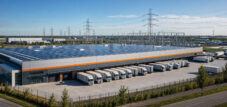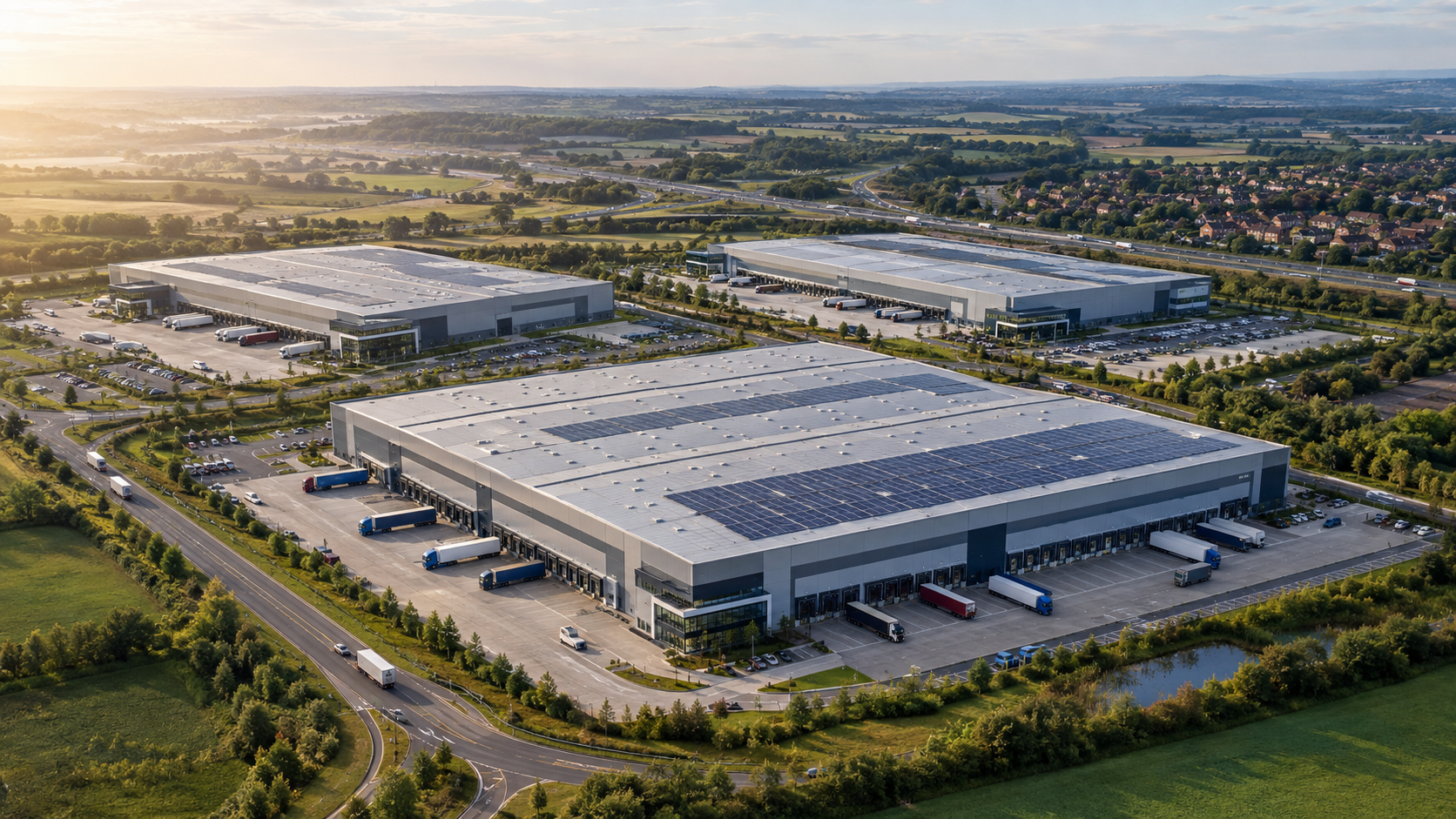
New logistics center in Rugby, Great Britain: Mega logistics park in the 'Golden Triangle' to create up to 2,000 jobs – Creative image on the topic, with AI: Xpert.Digital
Halls instead of houses: How a 140,000-square-meter giant is turning British urban planning upside down
Robots, heavy traffic and a lack of housing: Who really benefits from the new 1.5 million square foot project?
A 140,000-square-meter logistics center instead of 475 urgently needed apartments: In the British city of Rugby, a planned mega-project vividly illustrates how drastically priorities in modern land use are currently shifting. When strategically well-connected land for gigantic distribution centers promises greater economic returns and investment security than the creation of affordable housing, urban planning inevitably becomes a question of social distribution. While the new logistics park in Britain's so-called "Golden Logistics Triangle" could create up to 2,000 new jobs, attract millions in investment, and boost local government revenue, it comes at a high social cost. Increasing heavy goods traffic, extensive land sealing, and, above all, the painful loss of affordable housing raise a crucial question: How must such large-scale projects be designed so that their economic benefits outweigh the social costs and ultimately benefit not only investors but also the local population? An economic and social assessment.
Rugby relies on logistics: The economic balance sheet of a 140,000 square meter park
When warehouses promise higher returns than houses, land policy becomes a question of distribution
The planned development of a logistics park with up to 1.5 million square feet, or approximately 140,000 square meters of usable space, in Rugby is far more than just a single real estate project. It exemplifies a fundamental shift in British land use: Strategically well-connected land is increasingly being evaluated based on which use, under changing market conditions, promises the highest economic viability, the greatest investment security, and the strongest contribution to regional competitiveness. The site in Coton Park East was previously slated for up to 475 residential units. Now, large warehouses, transport infrastructure, and commercial workplaces will take their place.
Economically, this shift cannot be categorically classified as either progress or a mistake. A modern logistics park can mobilize significant private investment, create additional jobs, attract businesses, stabilize supply chains, and broaden the municipal revenue base. At the same time, it eliminates housing in a rapidly growing region where affordable housing is scarce and political pressure to expand the supply remains high. Furthermore, there are burdens such as increased heavy traffic, land sealing, impacts on the landscape and biodiversity, and a potentially more one-sided economic profile.
The crucial question, therefore, is not whether logistics or housing is fundamentally more important. The decisive factor is whether the economic benefits of the new use outweigh the social and spatial opportunity costs, and whether the resulting profits are structured in such a way that they benefit not only the owner and the project developer, but also the local population. This is precisely how the long-term quality of the project will be measured.
A major project with significant market impact
The planned scale is considerable for a single site. The approximately 91.3 acres, or nearly 37 hectares, area is slated to comprise nine units, according to the currently available details. The actual building footprint is approximately 1.24 million square feet; including potential mezzanine levels, the total usable area can increase to around 1.507 million square feet. The plan is therefore not for a single, monolithic distribution center, but rather a mixed-use commercial and logistics park with various warehouse sizes.
According to the current plan, five larger units will cover sizes ranging from approximately 92,200 to nearly 548,000 square feet. These will be complemented by a group of four smaller units, each ranging from about 12,000 to 18,400 square feet. This mix is economically significant. Very large halls appeal to national retailers, e-commerce providers, industrial companies, and contract logistics providers, while smaller units are better suited to regional service providers, suppliers, repair shops, light manufacturing, or rapidly growing medium-sized businesses. The project thus spreads its leasing risk across different user groups, but due to the high proportion of space in the large halls, it remains heavily dependent on a few, well-capitalized tenants.
The planned building heights, ranging from approximately eight to 24 meters, allow for varying degrees of automation. Higher halls increase the usable storage volume per square meter of floor space, thereby improving space efficiency. At the same time, they enhance the project's visual impact on its surroundings. Target metrics include achieving BREEAM "Excellent" status and an energy performance certificate of class A. This indicates a high technical building standard, but does not replace a comprehensive assessment of traffic, construction emissions, land use, and the energy needs of future users.
In relation to the regional market, the project is large enough to noticeably influence supply, rents, and location competition. The approximately 1.5 million square feet represent roughly 23 percent of the total logistics space take-up recorded in the West Midlands market in 2025. Such a comparison should not be misinterpreted as a prediction of immediate full occupancy, as development, construction, and occupancy typically occur in phases. However, it does demonstrate that the planned capacity will not be readily absorbed by the market. Therefore, leasing success, the timeline, and the quality of the tenants will be at least as important as the planning and construction aspects.
Rugby lies at the nerve center of British trade flows
Rugby's locational advantage stems not only from low land prices, but primarily from its position within the so-called Golden Triangle of Logistics. From this central part of the Midlands, approximately 90 percent of the British population can be reached within a four-hour drive. For companies that organize nationwide distribution networks with a few large sites, this is a structural advantage. A central facility can replace several regional warehouses, consolidate inventory, and reduce the average distance to major sales markets.
Coton Park East lies north of Rugby and has connections to the A426 and A5 motorways. Junction 1 of the M6 is approximately one mile away. The M6, M1, M69, and A14 provide links to Birmingham, London, northwest England, Scotland, and the east coast ports. The Daventry International Rail Freight Terminal, one of the country's major intermodal logistics hubs, is also within easy reach. However, the planned park itself is initially road-oriented. Therefore, the proximity to a freight terminal does not guarantee that a significant portion of the transport will actually be handled by rail.
For logistics companies, not only the distance to the motorway network is crucial, but also its reliability. Minutes lost multiply when dealing with hundreds of daily trips, tight time windows, and complex route chains. A location near a motorway junction reduces access times, fuel consumption, and vehicle occupancy. At the same time, this very proximity can attract additional traffic and exacerbate existing bottlenecks. The economic advantage for an individual company can thus lead to municipal infrastructure costs if junctions, access roads, bridges, or noise barriers need to be expanded later.
Rugby is already heavily influenced by logistics and manufacturing. Logistics accounts for approximately 14.7 percent and manufacturing for about 12.9 percent of the local business structure. Between 2011 and 2022, the number of employees in transport and warehousing increased by around 1,275. The new park would therefore not be starting from scratch, but would build upon an existing labor market, specialized service providers, an established transport network, and local administrative experience. These agglomeration advantages reduce the risks associated with attracting new businesses. However, they also increase the risk that Rugby will become even more economically dependent on an industry whose space requirements, employment intensity, and technological structure are rapidly changing.
The market supports the project, but not without risk
The UK logistics real estate market has normalized after overheating during the pandemic. In 2025, nationwide take-up, according to a widely used market definition, rose to approximately 25.6 million square feet, roughly 22 percent higher than the previous year. Other market reports arrive at higher absolute figures due to differing minimum sizes and data collection methods. Nevertheless, the common finding is that demand recovered but remained more selective than during the boom years. Modern buildings, good transport links, and energy-efficient spaces were clearly preferred.
In the West Midlands, warehouse space take-up exceeded 6.5 million square feet in 2025, according to a broader survey. Particularly noteworthy was the return of demand for warehouses larger than 400,000 square feet. Three major deals totaled approximately 1.6 million square feet. This is a positive sign for Rugby, as its largest planned unit falls precisely into this market segment. Contract logistics providers also contributed significantly to the demand. They require large, flexible sites to consolidate supply chains for retail, industry, and e-commerce.
At the same time, the nationwide vacancy rate rose to around 7.1 percent at the end of 2025, primarily because more existing space came onto the market. In the broader Midlands market, the rate was approximately 6.3 percent. These figures do not indicate either an acute shortage of space or a structural oversupply. They reveal a market in which new projects only offer clear advantages if they are functionally, energetically, and locationally superior to existing properties. In the first half of 2026, the supply of existing space continued to increase, while the vacancy rate for modern Class A spaces remained comparatively low. This very divide is crucial for the project.
Prime rents in the West Midlands at the end of 2025 ranged from approximately £9.65 to £12 per square foot per year, depending on the submarket and definition. Further rent increases were recorded throughout the year, while incentives offered expanded in parts of the market. For investors, this means that nominal rents may appear stable, while rent-free periods and other concessions dampen effective income. A park of this size should therefore not be calculated solely based on optimistic prime rents.
The project therefore meets real demand, but not a guaranteed success. Its greatest economic risk lies in the combination of its size, interest rates, construction costs, and lease terms. Even a delay with a single major tenant can tie up significant capital. Phased development reduces this risk. It would be particularly sensible to construct large units only after sufficient pre-leasing and to speculatively prioritize smaller halls, as they have a broader demand base. The quality of the tenants is more important than achieving full occupancy as quickly as possible: companies with long-term supply contracts, high technical value creation, and robust credit ratings generate more stable local effects than short-term tenants.
Your intralogistics experts

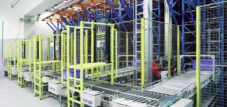
Consulting, planning and implementation of complete solutions for high-bay warehouses and automated storage systems - Image: Xpert.Digital
More information here:
Logistics park in Rugby: An opportunity for the region
Employment between mass production and automation
The most visible economic benefit of a new logistics park is employment. Older industry analyses for British logistics space cited a guideline of approximately 14 full-time positions per 1,000 square meters. Applied to 140,000 square meters, this would theoretically result in almost 2,000 direct jobs. However, modern, highly automated warehouses can require significantly fewer employees per unit of space. Depending on the user structure, shift patterns, and level of automation, a broad range of roughly 1,000 to 2,000 direct jobs therefore seems more plausible than a precise forecast. In addition, there are temporary jobs in construction, as well as indirect and induced jobs at transport service providers, maintenance companies, security services, cleaning companies, catering establishments, and local suppliers.
With an average gross value added of around £64,000 per job in the British industrial and logistics complex, the direct annual value added of a fully utilized park could roughly range between £64 million and £128 million. This range is explicitly not a project forecast, but a scenario calculation. A simple warehouse with a high throughput of standardized goods falls at the lower end, while automated facilities with value-added services, repair, packaging, data control, and industrial final assembly can achieve higher values.
The quality of jobs deserves more attention than their sheer number. Traditional warehouse work offers a relatively low barrier to entry and can create employment opportunities for people without a university degree. At the same time, many jobs are physically demanding, shift-dependent, and prone to increased workloads. Automation doesn't automatically eliminate jobs, but it does change their composition. Robots take over walking, lifting, sorting, and parts of order picking. Employees become more productive, while additional specialists are needed for plant control, data analysis, maintenance, safety, and process optimization.
This presents an economic opportunity for Rugby. The local strategy already focuses on skills in robotics, automation, sustainability, and information technology. The park could serve as a platform for dual vocational training, technical education, and collaborations with colleges. However, without mandatory qualification programs, there is a risk that higher-paid specialists will commute to the area while local workers remain predominantly in lower-skilled shift roles. Therefore, the local benefit depends not only on the number of jobs but also on career advancement opportunities, wages, contract quality, and the proportion of locally recruited employees.
Rugby recently boasted a high employment rate of around 85.6 percent and a low unemployment rate of approximately 3.1 percent. A large new employer would therefore not encounter a deep pool of unused labor. This could boost wages and skills development, but at the same time intensify competition for staff. New employees might have to commute from Coventry, Leicester, Northampton, or other parts of the Midlands. This would increase traffic and put pressure on the housing market. Ironically, the decision to forgo 475 housing units could thus make it more difficult to recruit staff for the new commercial development.
The price of the 475 apartments that will be eliminated
The opportunity costs of the project are unusually clear because the site was previously designated for up to 475 apartments. According to the original plans, this residential development would also have included space for a primary school, potential secondary schools, green spaces, and public open areas. Around 30 percent of the apartments were intended to be affordable housing. This potentially eliminates approximately 143 rent-controlled or otherwise affordable units. In an abstract land-use calculation, this is just a number; for middle- and low-income households, it represents a significant loss of access to housing.
Rugby's population grew from 100,075 to 114,363 between 2011 and 2021. This increase of 14.3 percent was among the highest growth rates in England and Wales. The local development plan envisioned a total of 12,400 additional homes between 2011 and 2031, with a target of 663 units per year in later years. The 475 homes that were eliminated represent almost three-quarters of the annual target at that time. Even if Rugby theoretically has sufficient other housing development land available, a site of this size cannot be removed from the housing balance without a replacement.
Housing construction also generates considerable economic effects. It creates construction contracts, municipal taxes, demand for local services, and, in the long term, a larger working-age population. New residents shop, use leisure facilities, and strengthen the capacity of schools, public transport, and local amenities. On the other hand, housing growth necessitates investment in education, healthcare, roads, and social infrastructure. Previous housing planning would not have completely avoided these burdens but would have created them in a different form.
The difference lies in the temporal structure of the returns. Apartments create relatively sustained demand and social value, but tie up capital, often with slow construction progress and limited margins in the affordable segment. Logistics facilities, on the other hand, can be built more quickly with guaranteed demand and generate high, contractually guaranteed rental income. From a private owner's perspective, commercial use can therefore be more attractive. From a macroeconomic perspective, however, it must be considered that the market value of apartments only partially reflects their social scarcity. Those who cannot find affordable housing may pay a price through longer commutes, higher rent burdens, or reduced professional mobility—a price not reflected in the developer's project calculations.
A balanced land-use policy would therefore require compensatory measures. This could be achieved through additional residential development elsewhere, higher densities at already designated sites, faster development of brownfield land, or financial contributions to the development of alternative housing projects. Without such compensation, the logistics park may be profitable from a business perspective, but it will start with a permanent social deficit.
More added value, but also greater dependence
Rugby's economic structure has already shifted towards transport, warehousing, and services. This new project reinforces that trend. Consolidation can be productive: many companies in one location share specialized workforces, maintenance providers, freight forwarders, digital infrastructure, and expertise. Suppliers locate nearby, empty runs are reduced through denser transport networks, and customers benefit from faster response times. For international investors, an established logistics hub becomes more attractive than an isolated industrial park.
The downside is increased sectoral concentration. Logistics reacts to consumption, foreign trade, inventory levels, energy prices, and economic conditions. Declining retail sales or altered trade routes can increase the demand for space. Technological change also plays a role: higher shelves, denser storage, robotics, and data-driven inventory management increase throughput per square meter. In the long term, this can mean that less space is required for the same quantity of goods, even if e-commerce, resilience strategies, and higher safety stocks produce the opposite effect.
A robust industrial park should therefore not be solely focused on traditional warehousing. Combining usage types B8 for storage and distribution, B2 for general industry, and E(g)(iii) for industrial processes opens up a broader economic base. Users who combine logistics with light manufacturing, repair, returns, remanufacturing, spare parts management, or customer-specific configuration would be particularly valuable. Such activities increase added value, create more diverse jobs, and are less easily relocated to a cheaper location.
A mix of building sizes can also increase resilience. Smaller units make it easier for young companies and regional suppliers to access the site, while large halls attract international investment. A park-like structure that allows for expansion, subdivision, and repurposing is crucial. Rigid, specialized buildings pose a risk when tenants change. In contrast, flexible grids, sufficient power capacity, durable floors, digital networks, and modularly usable office and social spaces increase the long-term value of the property.
Transportation determines the social balance
The greatest environmental impact of a large logistics park is likely to occur not within the building itself, but on the road. In 2020, trucks and vans together accounted for approximately 19 percent of the UK's domestic transport greenhouse gas emissions. This is compounded by noise, nitrogen oxides, tire and brake wear, the risk of traffic congestion, and safety hazards. A park of this size can generate several hundred truck movements daily, as well as numerous employee journeys. Without a detailed user profile, a reliable estimate of the exact number is impossible.
A central location can still offer ecological advantages. If a company can serve large parts of the country more efficiently from Rugby than from several peripheral locations, routes can be consolidated and vehicle kilometers reduced. High capacity utilization, return loads, and data-driven route planning further improve the overall picture. Conversely, a poorly managed depot can generate additional empty runs and concentrate traffic on already congested roads. Proximity alone, therefore, does not guarantee sustainable logistics.
A robust traffic solution requires several levels of implementation. Access roads must keep heavy goods vehicles away from residential areas. Shift changes should be staggered and coordinated with bus services. Safe cycling and pedestrian paths are particularly important for local employees. The site will require high-performance charging points for electric cars, vans, and, in the future, heavy goods vehicles. For this, not only the number of charging points is crucial, but also a secure grid connection with sufficient power.
The proximity to the intermodal terminal at Daventry should be put to practical use. Possible solutions include contracted rail services, short shuttle connections, or collaborations with local operators. Without such measures, the rail connection remains primarily a location selling point. From a regional economic perspective, it would be particularly valuable if the park not only generated additional road traffic but also strengthened existing intermodal infrastructure.
Sustainability certificates are not enough
A BREEAM "Excellent" rating and an energy performance certificate of class A are sensible minimum goals for a modern project. They promote efficient building envelopes, lighting, technical systems, water management, and a systematic sustainability concept. Large, flat roofs also offer considerable areas for photovoltaics. If consistently utilized, they could cover a significant portion of the company's electricity needs, particularly for lighting, automation, and charging infrastructure.
The overall environmental impact, however, extends beyond the building's operation. Steel, concrete, and earthworks cause significant upstream emissions. The loss of green spaces impairs soil functions, water absorption, the landscape, and habitats. Therefore, lower-carbon building materials, reusable components, optimized structural design, and a documented life cycle assessment are crucial. Even an energy-efficient building can still be ecologically problematic if its construction generates high emissions and its operation results in sustained additional traffic.
Rainwater should be retained, infiltrated, and channeled through open systems on the site as much as possible. Greened buffer zones, preserved hedges, new tree structures, and interconnected habitats can mitigate the impact of environmental interventions. Such measures should not be limited to small residual areas. With a total area of almost 37 hectares, the quality of the open space concept is a crucial factor in the site's overall appeal.
The future use of the building must also be verifiable. A certified building says little about whether a tenant uses renewable electricity, decarbonizes fleets, or reduces packaging waste. Therefore, so-called green leases with shared targets for energy, emissions, waste, water, and transportation would be more sensible. Only when the building and its operation are considered together can the park fulfill its claim as sustainable infrastructure.
Municipal profits need clear conditions
For the municipality, the park can generate additional revenue from commercial real estate, economic activity, and employment. Construction investments initially strengthen the regional construction industry. Operational expenses include regular costs for personnel, maintenance, energy, security, and services. The higher the proportion of local suppliers and employees, the greater the economic cycle that remains in Rugby and the wider region.
These advantages are offset by public costs. Roads may need to be reinforced, intersections adapted, bus services expanded, and environmental measures financed. Fire departments, rescue services, and technical infrastructure must also be designed to accommodate large halls and potential high-bay warehouses. If these consequential costs are not appropriately allocated to the project, the public ends up bearing a portion of the private development costs.
A good municipal agreement should therefore guarantee measurable benefits. These include contributions to transport infrastructure, binding apprenticeships, local recruitment programs, collaborations with educational institutions, high-quality green spaces, energy and charging infrastructure, and compensation for the loss of residential use. Equally important is regular monitoring of employment, wages, traffic, energy consumption, and environmental impact. Announcements are of little economic value if their implementation cannot be verified later.
The planned leisure and sports facilities deserve special attention. Such elements can increase local benefits, provided they are publicly accessible, sustainably funded, and easily reachable. They must not merely serve as a peripheral measure while the main burdens remain unresolved. Acceptance arises when the population recognizes concrete and long-term advantages.
The right perspective is neither romantic nor euphoric
The project is fundamentally sound from an economic perspective. Rugby boasts one of the strongest logistics locations in Great Britain, regional demand for modern, large-scale industrial space has recovered, and the concept addresses various warehouse sizes and industrial uses. The park could facilitate significant investment, potentially creating 1,000 to 2,000 direct jobs and generating annual added value in the high tens to low hundreds of millions. It could also solidify the West Midlands' role as a national distribution and production hub.
It is equally clear, however, that size alone does not guarantee prosperity. A highly automated warehouse with few jobs, high truck traffic, and little local integration would be economically disappointing despite its impressive building area. In contrast, a mixed-use park with production, repair, technological services, good wages, training, and lower-emission traffic flow could generate substantial regional benefits.
The loss of 475 homes remains the central counter-argument. Given the strong population growth and the UK's housing shortage, this is not insignificant. The potential loss of approximately 143 affordable homes is particularly serious. Therefore, the conversion should only be considered politically balanced if a credible and timely replacement is provided elsewhere. Jobs and housing are not interchangeable commodities; a growing local economy needs both.
The most convincing strategy would therefore be a clearly conditional "yes" to logistics development. The locational advantage is real, the market demand is evident, and the economic opportunities are significant. However, the public sector should not treat the relocation of land as a mere reaction to higher real estate returns. It must bindingly incorporate job quality, infrastructure, climate impact, and housing compensation into the overall assessment.
Rugby is thus faced with a decision that extends far beyond this specific location. In an economy with scarce land, the use with the highest social value doesn't automatically win out; instead, it's often the one with the strongest short-term purchasing power. Sound location policy corrects this imbalance. If successful, the new logistics park can become a productive extension of the regional economy. If not, what remains will be an economically successful warehouse complex whose hidden costs will be borne by commuters, those seeking housing, local residents, and the municipal infrastructure.
Your global marketing and business development partner
☑️ Our business language is English or German
☑️ NEW: Correspondence in your native language!

Konrad Wolfenstein
I and my team are happy to be available to you as your personal advisor.
You can contact me by filling out the contact form here wolfenstein@xpert.digital:or simply call me at +49 7348 4088 965. My email address is
I'm looking forward to our joint project.