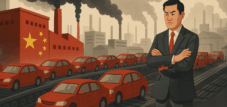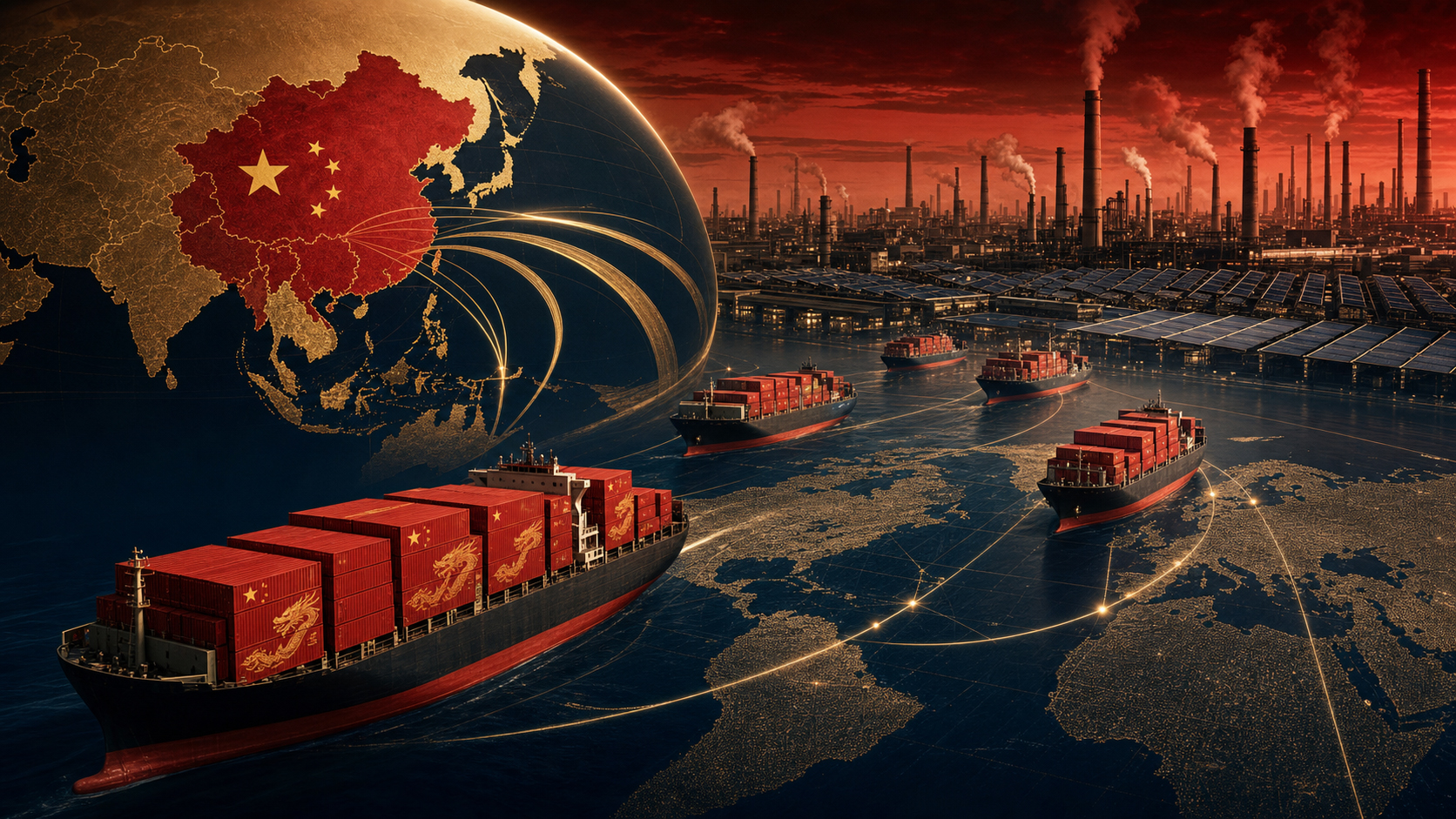
“Neijuan” and “Chuhai”: These two words reveal China’s new master plan for the global economy – Image: Xpert.Digital
China's gigantic overproduction problem is rolling towards world markets – with fatal consequences
Burnout, empty factories and oversupply: Why China's economic model is currently collapsing
The $40 billion crisis: Why even Beijing is now afraid of its own export miracle
China's economy is under unprecedented pressure: gigantic overproduction in future-oriented industries is colliding with a persistent slump in consumer spending and a real estate crisis at home. To escape the ruinous internal price war – known in Chinese society as "Neijuan" (internal tuck-up) – domestic companies are pushing into global markets with a massive expansion strategy ("Chuhai"). But what began as a business solution to domestic stagnation is rapidly developing into a stress test for the global trading system.
While Chinese corporations are no longer just exporting physical goods, but entire value chains, digital infrastructures, and high-tech platforms, trading partners like the EU and the US are reacting with great concern, sharp countermeasures, and retaliatory tariffs. The following article examines the deep structural causes of this global export pressure and explains why Beijing's half-hearted attempts to curb its own overproduction crisis are likely to keep the global economy on edge for years to come.
Bàotuán Chūhǎi (Chinese: 抱团出海) refers to the strategy, literally “joining together to cross the sea”, in which Chinese companies form alliances or entire supply chains instead of establishing a foothold abroad individually.
The aim of this cooperation is to share the costs of logistics, legal advice, and cultural adaptation, thereby reducing the risk of failure abroad. At the same time, the strategy is intended to prevent Chinese companies from undercutting each other through ruinous price competition in the same overseas markets.
This model has been practiced intensively since 2026, particularly in the automotive and e-mobility industries as well as in mechanical engineering, for example when manufacturers such as BYD or Changan build factories abroad and bring their domestic suppliers along as a complete package.
BYD and Changan are direct competitors in the Chinese automotive market, particularly the electric vehicle market. In the new energy vehicle (NEV) segment, BYD held first place in 2025 with a market share of approximately 27 percent, while Changan consistently ranked third with around 6 to 7 percent. This pattern continued into the first half of 2026: BYD led with a market share of around 21 percent, followed by Changan in third or fourth place behind Geely with approximately 6 to 8 percent.
Interestingly, both companies are partners in the Baotuán-Chūhǎi strategy, even though they remain competitors in the domestic market. This dual role is typical for the Chinese automotive industry: at home, BYD and Changan compete intensely for market share, while abroad they sometimes pursue common interests, such as building supplier networks or avoiding price dumping in third-party markets. Changan is also considered one of China's four major state-owned automotive companies and is now expanding into over 60 countries, including those in Southeast Asia and Europe.
China's Chuhai Strategy: Global Export Pressure from the Middle Kingdom
When a giant can no longer digest its own overproduction
China is at an economic turning point that extends far beyond its borders. What began domestically as an efficiency problem has evolved into a structural challenge for the entire global economy. At the heart of this development are two Chinese terms that now appear almost daily in economic policy debates: Neijuan, the internal retreat or societal self-destruction through pointless competition, and Chuhai, the deliberate move abroad, by which Chinese companies transfer their domestic problems to international markets. These two phenomena are inextricably linked and together form a feedback loop that puts considerable pressure on both Chinese society and the global trading order.
The term Neijuan originates in sociology and initially described the phenomenon of agricultural stagnation despite increasing labor input—a concept popularized by the American anthropologist Clifford Geertz in the 1960s during his studies of Javanese agriculture. In China, the term experienced a remarkable resurgence around 2020, when young people used it to express their frustration with the exhausting and often hopeless competition in school, university, and the workplace. It has since evolved from a description of societal sentiment to an official economic policy term, used even by the Chinese leadership in its government reports to identify the symptoms of rampant price wars, excess factory capacity, and ruinous competition.
Related to this:


How government incentives create a competitive spiral
The causes of the Neijuan dynamic are deeply rooted in the Chinese economic model and are by no means the result of a temporary market failure. For decades, local governments in China have been engaged in intense competition for economic growth, tax revenue, and employment, which leads them to promote virtually identical industries with cheap land, subsidized energy prices, and low-interest loans. This uncoordinated industrial policy practice systematically results in nationwide overcapacity, as multiple provinces invest simultaneously in the same emerging industries—such as photovoltaics, battery cells, or electric vehicles—without adequately considering actual global or domestic demand.
The consequences of this dynamic are clearly visible in hard figures. Industrial capacity utilization in China was only around 74 percent in the first quarter of 2025, indicating persistent structural overcapacity. In the photovoltaic sector, utilization even fell below 40 percent, forcing manufacturers to sell their solar modules below their variable costs at times. According to the chairman of the manufacturer Trina Solar, this resulted in losses of around US$40 billion for the solar value chain last year alone. The nationwide GDP deflator has now been negative for nine consecutive quarters, a clear sign of an economy-wide oversupply situation that is triggering classic deflationary dynamics.
When established companies can undercut their competitors on price thanks to government subsidies or favorable financing conditions, a pressure to imitate them arises. New entrants must adopt the same aggressive pricing strategies or even surpass them just to remain visible in the market. This mechanism significantly accelerates market saturation, artificially keeps companies that are actually on the verge of insolvency alive, and intensifies the battle for market share into an increasingly wasteful and resource-intensive zero-sum game. The feedback loop is clearly traceable: government industrial policy promotes production, production creates a surplus, the surplus drives prices down and simultaneously increases entrepreneurial costs. This escalating spiral ultimately fuels a societal sense of meaninglessness, exhaustion, and professional burnout that now characterizes large segments of China's younger, well-educated generation.
Related to this:


Why Chinese consumers are holding onto their money
The reflection of this enormous productive capacity is a remarkably weak domestic demand, which has persisted for years and even worsened in 2026. China's retail sales grew by only 1.3 percent year-on-year in the first half of 2026, a drastic decline from the 5.0 percent growth in the first half of the previous year. In the second quarter of 2026, growth slowed to just 0.2 percent, and in July 2026, it was a mere 0.6 percent, significantly below market expectations of 1.3 percent. In May 2026, retail sales even fell in absolute terms for the first time since December 2022 – a warning sign for the political leadership in Beijing.
This reluctance to buy has several deep-rooted causes. The ongoing downturn in the housing market, now in its fifth consecutive year, has severely shaken the wealth and confidence of Chinese households, as a large portion of private wealth is traditionally tied up in homeownership. The World Bank estimates that household savings exceed 30 percent of disposable income, a figure far above that of advanced economies. Many families prioritize early mortgage repayments over discretionary consumption, structurally dampening overall consumer demand. Furthermore, government stimulus programs, such as the so-called trade-in subsidies for household appliances and automobiles, were gradually phasing out during 2026, further dampening demand for durable goods. Despite a slight recovery, consumer confidence in China remains near historic lows, standing at around 89.9 points in May 2026, well below the long-term average of approximately 108 points.
This complex situation is virtually forcing Chinese companies to increasingly seek their economic survival in foreign markets. This trend is known as Chuhai, literally "the step out to sea," or, more broadly, "the leap into foreign markets." What began as a business necessity for individual companies has evolved into a national growth strategy actively supported and promoted by the Chinese government.
🎯🎯🎯 Data-driven B2B industry hub as a quasi-in-house solution


The quasi-in-house solution: How Xpert.Digital closes operational gaps in B2B marketing and sales – Smart Content-Driven Business - Image: Xpert.Digital
Xpert.Digital is a data-driven B2B industry hub led by Konrad Wolfenstein . The company acts as an external, quasi-in-house solution for industrial partners, closing operational gaps in marketing, content, and sales – without requiring additional resources on the client side.
More information here:
Baotuan Chuhai: How Chinese companies are globalizing entire value chains
From factory to platform: The new quality of overseas expansion
The current phase of the Chuhai movement differs significantly from previous waves of Chinese exports. While earlier export strategies focused primarily on the sale of physical goods, Chinese companies are now increasingly pursuing a strategy of so-called Baotuan Chuhai, which can be literally translated as joint exporting abroad. In this approach, Chinese corporations are not simply building individual factories abroad, but rather bringing complete value chains with them, consisting of components, logistics networks, and digital infrastructure solutions, which are then jointly established in target markets.
A striking example is the Chinese construction equipment manufacturer XCMG, which, in addition to selling excavators, exports its proprietary industrial internet platform, Hanyun, to countries like Kazakhstan and Brazil to offer remote maintenance and equipment management services, thereby generating continuous revenue streams beyond one-off product sales. This strategy allows Chinese companies to fundamentally transform their profit structure—especially as falling export prices and increasing tariffs imposed by Western trading partners erode margins in traditional product exports. Analysts describe this development as a deliberate strategy by China to establish itself as a global rule-setter in areas where the country already possesses technological advantages, by closely integrating its industrial internet platforms with legal standards and institutional frameworks.
This form of international expansion is also closely linked to the Belt and Road Initiative, as Chinese companies often offer their platform exports in conjunction with the development of essential infrastructure such as telecommunications networks, data centers, and fiber optic lines. Because Chinese companies, as the world's largest manufacturing nation, have already extensively tested their industrial internet solutions domestically across a wide range of industries—from automotive and steel production to electronics and textiles—they possess a significant advantage in the practical validation of such systems before exporting them to emerging markets.
At the same time, the quality of traditional brand expansion by Chinese consumer goods companies has also changed. Where sheer size and low prices were once paramount, the new generation of Chinese brands is increasingly focusing on localization, customer experience, and building trust in their respective target markets. Observers speak of a transition from mere market entry to genuine market experience, where success is no longer measured solely by capital volume but by sustainable competitiveness. A noteworthy aspect of this is a geographical shift in Chinese investment flows, which are increasingly turning away from traditional target markets in North America and Europe and toward Southeast Asia, the Middle East, and Latin America, indicating a more risk-aware and diversified approach to global expansion.
Related to this:


Trading partners strike back: Tariffs as a self-defense measure
However, the export of domestic Neijuan competitive pressure is by no means without consequences for the international trade order. The resulting massive increase in cheap Chinese exports increasingly threatens established industries in partner countries and has already triggered significant and swift retaliatory measures, particularly from the United States and the European Union.
In the electric vehicle sector, following a comprehensive anti-subsidy investigation, the European Union imposed definitive countervailing duties on battery-powered electric vehicles of Chinese origin in October 2024. These duties are in effect for a period of five years. The rates vary considerably depending on the manufacturer. BYD was subject to a rate of 17.0 percent, Geely 18.8 percent, and the SAIC Group, in which Volkswagen holds a stake, a staggering 35.3 percent. Other cooperating companies are subject to a rate of 20.7 percent, while Tesla, based on a justified request for individual review, was charged only 7.8 percent. All non-cooperating companies must pay the highest rate of 35.3 percent. These measures affect annual imports worth approximately €9 to €10 billion, making them the second-largest trade defense case for the European Union after the anti-dumping measures against Chinese photovoltaic modules, where the average tariffs were significantly higher at around 47 percent.
Interestingly, scientific analyses show that Chinese electric vehicles do not constitute classic dumping in the strict sense, as the vehicles in question are offered in Europe at significantly higher prices than on the domestic Chinese market. The European measures are therefore directed less against sales below production costs and more against the state subsidies for Chinese production, which are considered unfair and allow manufacturers to offer their vehicles competitively even after paying customs duties. To avoid the full tariff, Chinese manufacturers of battery-powered electric vehicles can also offer so-called price commitments. Under these commitments, they pledge to sell their vehicles above a predetermined minimum price, thus enabling them to enter the European market without having to pay the full countervailing duties.
On the Chinese side, the government has also begun to combat excessive price competition through export-side tax adjustments. Export tax refund rates on photovoltaic products and batteries have already been reduced from 13 percent to 9 percent. From April 2026, tax refunds for photovoltaic products are to be completely eliminated, while refund rates for battery products are to fall to 6 percent by the end of 2026 and be completely abolished from January 1, 2027. These measures indicate that even Beijing recognizes the need to curb the unbridled export boom for its own structural interests, although this alone will not resolve the underlying overcapacities.
Related to this:
Beijing's half-hearted fight against its own competitive logic
The Chinese leadership has long recognized the seriousness of the Neijuan problem and, since the Central Economic Work Conference in December 2024, has repeatedly made public commitments to combat excessive and self-destructive competition. Premier Li Qiang explicitly addressed the issue of over-competition in the 2025 annual government report, and Shenzhen, once celebrated as China's Silicon Valley, now bears the cynical nickname "Capital of Involution." The so-called anti-involution campaign aims to curb aggressive price cuts, which regulators consider detrimental to the overall economy because they could exacerbate the risk of deflation and destabilize the $19 trillion economy as a whole.
The measures taken so far have focused primarily on sector-specific consolidation incentives, where the state provides capital to facilitate the merger of surplus competitors within individual sectors, as well as on appeals to corporate self-discipline and the regulation of local government behavior. However, critical voices in academic analysis consider this approach insufficient because it fails to address the underlying problem. According to these voices, China's involution problem is not a temporary market failure, but a structural effect of the investment-driven supply-side model, which systematically suppresses household incomes in favor of production, thereby creating chronic overcapacity and destructive competition. A sustainable solution, therefore, requires a deeper transformation of the Chinese growth model, particularly a break with local protectionism, coupled with a strengthening of domestic demand and the acceptance of a slower, investment-driven growth rate. However, as long as these structural reforms are lacking, anti-involution policies remain essentially symptomatic, providing temporary relief without addressing the root causes.
Related to this:
The geopolitical stress test of an export model
China's Chuhai strategy and the underlying Neijuan dynamic exemplify the deeper tensions within the Chinese growth model, which for decades has focused more on investment and production expansion than on consumption. While this focus has made China the world's largest industrial nation, now accounting for roughly one-third of global manufacturing output, it has also created a structural imbalance that can increasingly no longer be resolved solely within its own borders.
This poses a continuing challenge for the global economy, as the pathways for absorbing China's surplus production are becoming increasingly narrow in the face of growing trade defense measures and the increasing rejection of dumping practices by trading partners. The European Union and the United States face a balancing act between protecting their own key industries, such as the automotive and solar sectors, and avoiding escalating trade conflicts that could ultimately harm their own consumers through higher prices and limited product choice. At the same time, China itself is increasingly shifting the focus of its export strategy toward Southeast Asia, the Middle East, and Latin America—regions that offer less political resistance to Chinese imports and where Chinese companies can more freely pursue their platform and infrastructure export strategies.
In the long term, it will likely become clear that the real solution to China's involutionary dilemma lies neither solely in stricter export tariffs imposed by its trading partners nor in cosmetic consolidation measures by Beijing, but rather in a fundamental realignment of the Chinese economic structure towards greater consumer orientation and a reduction in the structural dominance of investment-driven growth. Until such a transformation takes hold, the global economy is likely to continue to grapple with the waves of China's export offensive and the resulting trade policy frictions, which are likely to intensify rather than subside in the coming years.
📈🚀 From visibility to trust 👀🤝 Your scalable path with Xpert.Digital


From visibility to trust: Your scalable path with Xpert.Digital - Image: Xpert.Digital
In industrial B2B, sustainable business relationships rarely emerge overnight. They develop step by step – through visibility, professional relevance, recurring touchpoints, and growing trust. Xpert.Digital's 4-stage model addresses precisely this: It offers a structured path that begins with a manageable entry point and can evolve into deeper collaboration in business development if needed.
Instead of relying on loud marketing promises, this model puts the relationship at the forefront. Companies start with clearly defined, easily calculable measures and then decide, based on their own experience, how far they want to expand the collaboration. A key factor for this undisturbed trust-building process: The platform completely avoids annoying advertising ads, so the editorial focus remains solely on the companies' expertise.
More information here:
Your global marketing and business development partner
☑️ Our business language is English or German
☑️ NEW: Correspondence in your native language!

Konrad Wolfenstein
I and my team are happy to be available to you as your personal advisor.
You can contact me by filling out the contact form here wolfenstein@xpert.digital:or simply call me at +49 7348 4088 965. My email address is
I'm looking forward to our joint project.