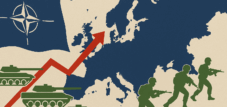
NATO Summit Ankara 2026 – Detailed Analysis: Winner Erdoğan, Loser Spain? The explosive background of the NATO Summit 2026 – Image: Xpert.Digital
The 5 percent target and the Iran scandal: Why Germany is now bearing the brunt of NATO's burden
140 billion for Kyiv: How Europe is restructuring NATO against Donald Trump
The 36th NATO summit in Ankara marked an unprecedented turning point in the history of the transatlantic alliance. Overshadowed by escalating conflicts in the Middle East, the near-complete halt of US military aid to Ukraine, and an unpredictable US President Donald Trump, the alliance teetered on the brink of collapse in July 2026. While Trump sent shockwaves around the world with sanctions against Spain, a highly dangerous stance on Iran, and bizarre demands regarding Greenland, a completely different picture emerged behind closed doors. Through demonstrative investment pledges, massive arms deals, and a historic €140 billion aid package for Kyiv, the European states, led by German Chancellor Friedrich Merz, managed to avert the feared rupture. But the price for this performance is high: European defense policy is undergoing a drastic paradigm shift from shared burden-sharing to a harsh burden-shifting approach. Germany and Europe will have to bear the brunt of their own security in the future. This comprehensive, detailed analysis sheds light on the hidden dynamics, the far-reaching economic consequences, and the still-open wounds of a summit that will shape the geopolitical world order for decades to come.
An alliance in transition: Between Trump's explosive potential and European sense of responsibility
From power play to mandate: Context and background of the summit
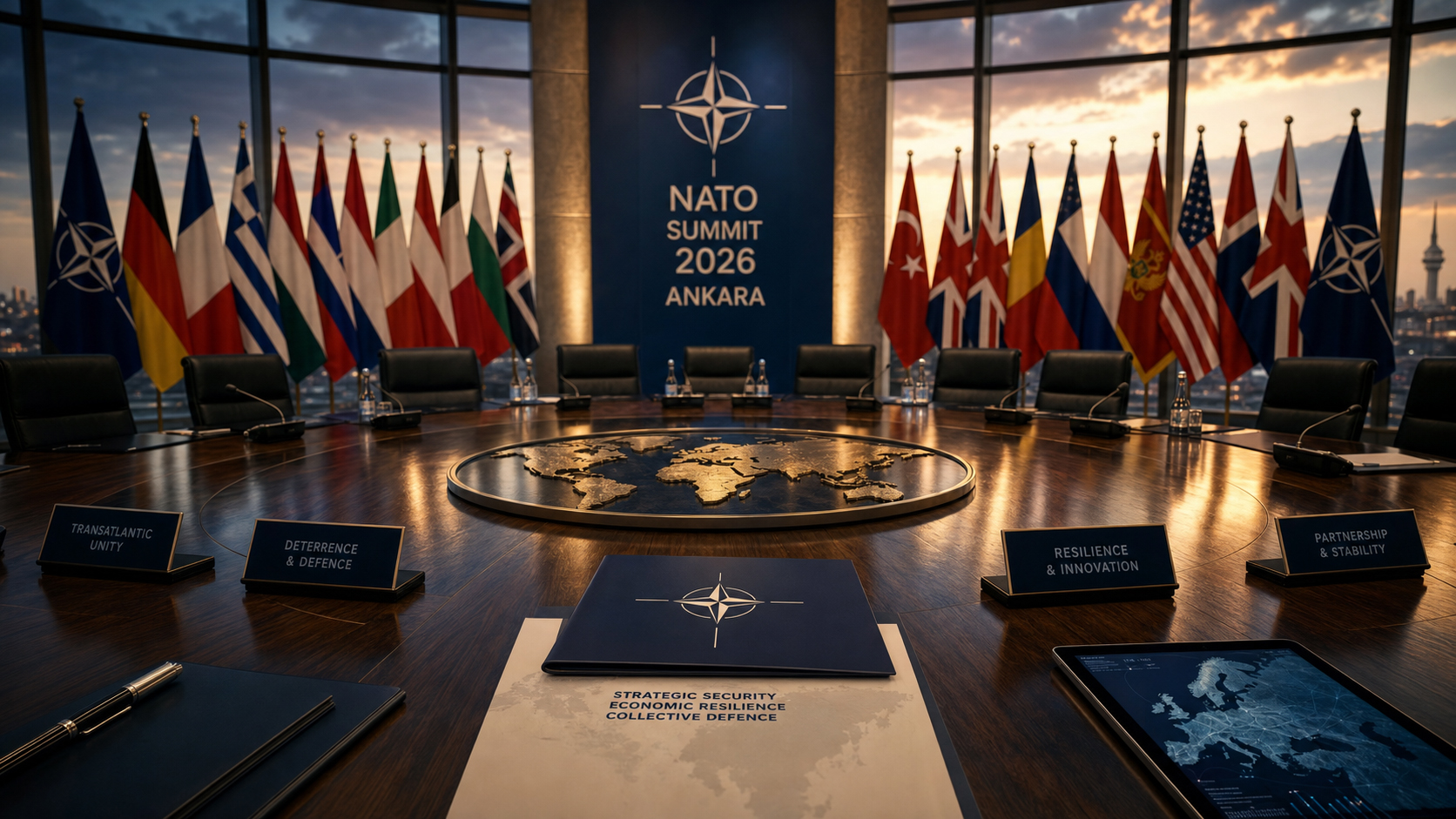
The 36th NATO Summit of Heads of State and Government took place on July 7 and 8, 2026, at the Beştepe Presidential Complex in Ankara – a location that symbolically underscores Turkey's ambition to position itself as an indispensable geopolitical player within the alliance. The choice of Ankara as the host city was no coincidence: at the previous year's summit in The Hague, the 32 NATO members had decided to increase defense spending to five percent of gross domestic product by 2035 and designated Turkey as the host for 2026.
The groundwork for this summit was laid at a meeting of NATO foreign ministers in Helsingborg, Sweden, on May 21 and 22, 2026. On June 18, 2026, NATO defense ministers met in Brussels to coordinate their defense policy positions for the summit, focusing primarily on improving the conventional capabilities of the European allies. A few days before the summit, the ambassadors of the 32 member states approved the draft final declaration in a written procedure.
The context was dramatic in several respects: Since 2025, the US under President Donald Trump had largely halted its funding of aid to Ukraine and exerted sustained pressure on Europe to massively increase its own defense spending. At the same time, the US-led war against Iran was simmering in the background, generating considerable tension within the alliance because several European partners had refused to allow the use of their military bases for American attacks. It is telling that the journal "Internationale Politik" had already dubbed the summit the "NATO Crisis Summit 2026" in advance, describing it as a meeting of an alliance in "survival mode"—characterized by a deep crisis of confidence, the US withdrawal under Trump, and Russia's unchecked aggression against Ukraine.
Scenery and choreography: Who sat at the table in Ankara?
The meeting was attended by the heads of state and government of all 32 NATO member states, including US President Donald Trump, German Chancellor Friedrich Merz, and Turkish host Recep Tayyip Erdoğan. Ukrainian President Volodymyr Zelenskyy, South Korean President Lee Jae-myung, EU Council President António Costa, and EU Commission President Ursula von der Leyen were also expected to attend the joint dinner on Tuesday evening.
Parallel to the main negotiations, a Defense Industry Forum took place on the first day of the summit, where arms deals worth tens of billions of US dollars were ceremoniously signed. This staged event had a clear target audience: to appease Trump by demonstrating European investment readiness. NATO foreign ministers also met with counterparts from Bahrain, Kuwait, Qatar, and the United Arab Emirates, while defense ministers held talks with their counterparts from Australia, Japan, New Zealand, and South Korea – a sign of the growing integration of the Euro-Atlantic and Indo-Pacific security architectures.
Zelenskyy used his appearance aggressively: He called for stronger decisions to support Ukrainian air defenses and made it unequivocally clear that Ukraine aspires to join NATO. On Tuesday evening, he met bilaterally with German Chancellor Merz, who promised to encourage European partners to provide more support and also signaled Germany's interest in participating in the country's reconstruction.
Trump's poltergeist appearance: Shocking moments before the consultations
Before the actual working talks began, US President Trump caused several diplomatic shockwaves that dominated global news. At a public meeting with NATO Secretary General Mark Rutte, he called Spain a "terrible NATO partner," accused the country of not paying its share and not participating, and immediately instructed US Treasury Secretary Scott Bessent to freeze all trade relations with the EU member. This was due, on the one hand, to Spain's refusal to meet the five percent spending target, and on the other hand, to Madrid's refusal to allow US forces to use Spanish military bases for attacks on Iran.
Even more serious was Trump's announcement that he would declare the existing ceasefire agreement with Iran null and void. "As far as I'm concerned, that's it," he said of the Iranian leadership, whom he condemned in harsh terms. That same night, US forces launched airstrikes on 80 targets in Iran, and Iran responded with missile attacks on Bahrain and Kuwait. European allies, who were already critical of the US-led war in Iran, found themselves confronted with a new level of escalation, the consequences of which would extend far beyond the summit.
Furthermore, Trump publicly reaffirmed his claim to Greenland, describing the island as "very important" to the US. Danish Prime Minister Mette Frederiksen sharply rejected this claim. While Rutte emphasized that he did not see the unity of the alliance as being in danger, he simultaneously had to publicly stress the "unconditional commitment of the United States to NATO." The dramatic discrepancy between Trump's public rhetoric and his behavior behind closed doors would prove to be the true theme of the summit in the hours that followed.
The diplomatic duality: Two faces of a president
The summit took a remarkable turn once the doors to the meeting room closed. According to consistent reports from participants, Trump was "in no way accusatory" internally. Greenland was not discussed, nor was Spain. Instead, he reportedly assured the allies: "We want to stay with you." He remained in the meeting room the entire time, listening attentively to representatives of smaller member states and, according to Chancellor Merz, responding to their statements with "great sympathy.".
During internal discussions, Trump explicitly acknowledged and agreed that the Europeans were making greater efforts in defense. At the end of the sessions, he spoke of "a lot of unity" within the alliance and called the summit a "very successful NATO summit." Merz found the much-quoted closing remark—"There is a feeling of love in the air"—surprising but extremely welcome. The strategy of the European allies to appease Trump's ego through demonstratively staged arms deals and public declarations of their willingness to invest appeared to have worked.
Political scientist Benjamin Weber of the Tagesschau news program aptly summarized the outcome: the major clash had been averted. Although Trump had dominated the second day of the summit with disparaging remarks, the participants had succeeded in sending a signal of unity. Merz, for his part, declared that NATO was "more European than ever as of today" and at the same time "firmly anchored transatlantically.".
140 billion for Kyiv: Aid to Ukraine as a cornerstone of the summit
The most financially significant outcome of the summit was the commitment by NATO allies to provide Ukraine with €70 billion annually for two years – a total of €140 billion – for military equipment, support, and training. This includes an EU aid package through which Ukraine is to receive approximately €60 billion for defense-related expenditures by the end of 2027. Ultimately, this leaves around €80 billion that NATO member states will have to shoulder from their national budgets.
Since the US largely halted funding for Ukraine aid under Trump, Germany is contributing the largest national share. For 2026, the German government has already earmarked €11.5 billion for artillery, drones, armored vehicles, and other equipment – according to the Ministry of Defense, the highest amount since the start of Russia's war of aggression. Before departing for Ankara, Merz stated: "The Kremlin is probably slowly realizing that Russia will not prevail in this war and will not achieve its war aims."
The final declaration states verbatim: “Ukraine contributes to transatlantic security, and the Allies stand united in our unwavering support for Ukraine in defending its freedom, sovereignty, and territorial integrity.” It is noteworthy that Trump co-signed the wording, thereby making a significantly stronger commitment to supporting Ukraine than at the summit in The Hague the previous year. Trump also displayed an unusually conciliatory attitude toward Zelenskyy, announcing his intention to grant Ukraine a license to build Patriot anti-missile systems.
However, a formal commitment to admit Ukraine to NATO is missing from the final declaration. While the Vilnius summit in 2023 included the statement "Ukraine's future lies in NATO," a similar passage is conspicuously absent from the Ankara document. Analysts believe this does not mean the goal of Ukrainian NATO membership has been abandoned – but the immediate prospects for accession remain uncertain as long as the war continues and the US under Trump fails to launch a corresponding political initiative.
Burden shifting instead of burden sharing: The new burden sharing
Perhaps the most significant conceptual aspect of this summit was the definitive departure from the principle of burden-sharing and the move towards genuine burden shifting – that is, the systematic transfer of primary responsibility for European defense to the European members. The final declaration puts it programmatically: "The European allies and Canada, in cooperation with the United States, are assuming greater responsibility for the defense of the Alliance." The motto is: "A stronger Europe in a stronger NATO."
This paradigm shift includes the concrete implementation of the spending targets agreed upon at the Hague Summit. By 2035, member states are to allocate 3.5 percent of their GDP to nuclear defense spending and an additional 1.5 percent to defense-related areas such as cybersecurity – a total of five percent. At the summit in Ankara, NATO published data revealing the significant disparities that still exist within the alliance. Lithuania leads with an estimated 5.33 percent, followed by Estonia with 5.1 percent, Latvia with 4.92 percent, Poland with 4.68 percent, and Greece with 3.65 percent. Germany is at 2.69 percent, well above the previous two percent target, but still far from the target levels. The US itself spends 3.17 percent of its GDP.
Germany occupied a particularly prominent position in Ankara. The German government announced record defense spending of €124.7 billion for 2026 and declared its intention to reach the 3.5 percent target as early as 2029, six years ahead of schedule. For Chancellor Merz, this was an important signal: "We are not undertaking this Herculean effort to do anyone a favor. We are undertaking it because it is necessary for our defense, for our security." Foreign Minister Wadephul added that the free-riding of European countries was now "over.".
Revolution in steel and code: The arms industry emerges as the winner of the summit
Among the most tangible results of the summit are a wealth of concrete arms cooperation agreements and procurement contracts, totaling more than 50 billion US dollars. Prior to the summit, NATO Secretary General Rutte had called for a "revolution" in the transatlantic defense industry, speaking of the need for faster innovation, long-term contracts, and a reduction in bureaucracy.
The most spectacular single deal was Canada's order for up to twelve Type 212 CD submarines from the German naval shipbuilder TKMS. TKMS CEO Oliver Burkhard called it "the largest order ever placed with a NATO partner in the world of conventional submarines." Including maintenance and operation for several decades, the deal, including ancillary services, could reach a volume of around €62 billion. For Germany, it means not only full capacity utilization of the shipyards in Kiel and Wismar for many years, but also the beginning of a strategic cooperation with Canada that extends far beyond defense – including planned collaborations in the areas of rare earths, battery production, and artificial intelligence.
In addition, several NATO states, including Germany, signed a contract for ten new Saab reconnaissance aircraft worth a total of €50 billion. Rutte announced that the alliance would invest more than US$40 billion in drone defense capabilities over the next five years under the "Drone Edge" initiative. The number of soldiers trained for drone operations is to be increased fivefold by the end of 2027. Furthermore, the allies committed to developing an interoperable transatlantic "Warfighting Cloud"—a shared cloud infrastructure for all of the alliance's armed forces. The AWACS reconnaissance fleet of 14 aircraft is to be modernized.
A McKinsey study from early 2026 calculated that annual defense spending by European NATO states could rise to around €800 billion by 2030 – roughly €300 billion more than in 2025. At the same time, the study identified an alarming gap between budget increases and operational impact: More than 50 percent of major European armaments programs are behind schedule or exceeding their budgets, and a significant proportion of key systems continue to be procured outside Europe. The decisions made in Ankara address this structural deficit, at least rhetorically.
Hub for Security and Defense - Advice and Information

Hub for Security and Defense - Image: Xpert.Digital
The Security and Defence Hub offers expert advice and up-to-date information to effectively support companies and organizations in strengthening their role in European security and defence policy. Working closely with the SME Connect Defence Working Group, it particularly promotes small and medium-sized enterprises (SMEs) that wish to further develop their innovative capacity and competitiveness in the defence sector. As a central point of contact, the Hub thus creates a crucial bridge between SMEs and European defence strategy.
Related to this:
NATO in transition: What Ankara's decisions mean for Europe's industry and households
Erdoğan's big game: Turkey as a geopolitical winner
No other country left Ankara with such a clear victory as Turkey itself. Erdoğan had used the lead-up to the summit to resolve outstanding issues with Washington and presented himself as a confident host. The most visible result of his diplomacy: Trump announced the lifting of sanctions against the Turkish arms industry, which had been in place since 2020 following Turkey's purchase of the Russian S-400 air defense system. Trump's message was clear: "We don't want to punish our friends."
Furthermore, Trump signaled his willingness to approve the sale of five F-35 fighter jets to Turkey. This could bring a years-long dispute to a close: Turkey was excluded from the F-35 program in 2019, in whose development it had been one of eight financial partners. However, significant legal hurdles remain: Both the lifting of sanctions and the F-35 sale require the approval of the US Congress, and under US law, Ankara would first have to divest itself of the S-400 air defense system before the sanctions could be lifted.
Erdoğan also used the summit for bilateral talks with Canadian Prime Minister Mark Carney and Finnish President Alexander Stubb to explore potential military cooperation – for example, in the development of drones. At the same time, he reaffirmed Turkey's role as mediator in the Ukraine-Russia conflict and his intention to revive the Istanbul Process for peace talks. Trump is reported to have stated in a bilateral conversation: "If Putin comes to Istanbul or Ankara to find a solution, then I will come too."
The Konrad Adenauer Foundation had already analyzed prior to the summit that Turkey insisted on being included on an equal footing in any strengthening of NATO's European pillar – and not being marginalized as a non-EU member. This concern was at least partially reflected in the summit's outcome.
Article 5 and Russia: The security architecture in focus
One of the most politically significant outcomes was the explicit reaffirmation of Article 5 of the NATO Treaty by all 32 member states – including the United States. The final declaration contains the “unbreakable commitment to our common defense under Article 5 of the Washington Treaty.” Given the doubts that had been simmering for months as to whether Europeans could truly rely on the US mutual assistance obligation in a crisis, this commitment carried more than just ceremonial weight.
Russia is explicitly described in the declaration as a “long-term threat to Euro-Atlantic security and stability.” While this wording is not new—it echoes the language of the 2025 Hague Summit—its inclusion in a Washington-backed document was by no means a given, considering Trump’s occasionally ambivalent statements about Russia and Ukraine. NATO Secretary General Rutte invested $37 billion in strengthening the defense industrial base last year alone and reported that ammunition production was on track to double to four million artillery shells per year by 2027.
Regarding the planned reorganization of US forces in Europe – specifically the withdrawal of American troop contingents – the NATO Force Model did provide some concrete information about which forces the US would "deregister" from Europe. However, a complete clarification of this issue remained outstanding, and the uncertainty surrounding the medium-term extent of the American military commitment in Europe is among the alliance's remaining strategic vulnerabilities.
Iran, Spain, Greenland: Trump's secondary war zones and their implications
The escalating side issues that Trump raised in Ankara deserve separate consideration because they highlight the structural tensions within the alliance more sharply than any official document. The trade embargo with Spain, which Trump imposed by order, is unlikely to be fully enforceable legally—not least because US trade with EU member states is subject to EU single market law. Politically, however, Trump signaled that he views bilateral trade policy and the NATO commitment of its members as one and the same instrument.
The Greenland question remains a persistent point of contention. Rutte attempted to defuse the situation by referring to an agreement reached in Davos that stipulates an increased US military presence on the island. This only temporarily reassured Trump, as he immediately seized the opportunity to reiterate his claim. For the Danish government, Greenland's belonging to the Kingdom of Denmark is non-negotiable – and therefore not a subject for compromise within NATO.
The Iran complex is likely to leave the deepest scars in the long run. The refusal of several European allies to provide logistical support for US military operations against Iran revealed a fundamental rift in their interests. The final declaration contains only a single, deliberately vague sentence on this point: that Iran must never possess a nuclear weapon and that freedom of navigation in the Strait of Hormuz must be respected. The brevity of this wording is not an oversight, but rather the result of intensive negotiations and reflects the silence that arises when disagreements are not bridged, but merely concealed.
Economic dimension: What Ankara's decisions mean for Europe's economies
From a macroeconomic perspective, the Ankara Summit marks a historic turning point in European fiscal and industrial policy. The combination of the 5 percent of GDP target for 2035, the concrete multi-billion-euro procurement packages, and the paradigm shift towards burden shifting is forcing European economies to redistribute their public investments in a way that is unprecedented since the end of the Cold War.
McKinsey's projection of €800 billion in annual European NATO defense spending by 2030 implies extensive displacement and transformation effects: countries that have previously fallen below the two percent target will either have to increase debt, cut other expenditures, or boost tax revenues. Countries like Belgium, Portugal, and Italy, which currently barely reach the old two percent mark, face massive budget adjustments. At the same time, this arms buildup offers immense industrial policy opportunities: venture capital investments in European defense tech startups have risen from under €250 million in 2021 to around €2.6 billion, and European defense stocks have increased by over 400 percent since 2022.
The risk, however, lies in a structural inefficiency weakness within the European defense industry: More than 50 percent of major European defense programs are delayed or over budget, supply chains are highly fragmented, and McKinsey sees annual efficiency potential of around €9 billion through consolidation in Tier 2 and Tier 3 segments. Ankara's arms deals—particularly the TKMS submarine contract with Canada—signal that at least some segments of European industry can manage the transformation. But the overall market is still far from an industrial revolution that would live up to the term Rutte used.
For Germany in particular, the Ankara decisions represent a multiple geopolitical dividend: a reputation as the most reliable European NATO member, access to a multi-generational arms contract via TKMS, and the strengthening of the strategic partnership with Canada, which extends beyond military technology to include raw materials, energy, and battery production. Chancellor Merz succinctly put it: "As of today, NATO is more European than ever."
Open wounds and structural risks: What Ankara failed to resolve
Despite the apparent signal of unity, the summit leaves behind a number of unresolved structural problems that will challenge the stability of the alliance in the medium term.
First, the reliability of the US commitment remains fundamentally uncertain. The fact that much of the European diplomacy at the summit aimed to appease Trump's ego and "keep him happy" reveals a dangerous asymmetry: the unity of the alliance depends significantly on the whims of a single man. This is not an institutionally stable situation.
Secondly, there is a significant gap between financial commitments and actual military readiness. The McKinsey analysis found that, despite rising budgets, the equipment stockpiles of many European countries remain below 2021 levels because support for Ukraine required massive withdrawals from their own reserves. More money, therefore, does not automatically translate into greater combat power – at least not in the short term.
Thirdly, the question of Ukraine's accession prospects was deliberately left open at the summit in Ankara. This protects the alliance from internal disputes, but also fails to send a clear signal to Russia that Ukraine's Western orientation is ultimately irreversible.
Fourth, the Spain affair deepens a political rift within the alliance that goes beyond individuals: states with lower defense spending and independent foreign policies – particularly with regard to Iran – see themselves as targets of US economic threats, which could damage their internal political willingness to join NATO in the long term.
Ankara as a symbol of transition
The NATO summit in Ankara in 2026 will go down in the alliance's history as a turning point, albeit in a different sense than originally hoped. It did not develop a new strategic vision, but rather marked the end of a transformation phase: Europe is irrevocably assuming greater responsibility for its own defense because there is no credible alternative. The final declaration – co-signed by all 32 member states, including the US – reaffirms the mutual defense commitment, names Russia as a threat, and pledges €140 billion to Ukraine over two years.
Chancellor Merz coined the term "Spirit of Ankara," thereby invoking a spirit he himself apparently cannot fully grasp. The real lesson of the summit is more sobering: An alliance that can only maintain its cohesion by appeasing its most vocal member state with ceremoniously staged arms deals is not in a phase of strength, but rather one of adaptation. Ankara demonstrates how far Europe has already progressed in its strategic autonomy. At the same time, it shows how far there is still to go before this autonomy is no longer dependent on Washington.
The next NATO summit is planned for Albania. By then, it will become clear whether Ankara's decisions are more than declarations of intent – or whether the alliance will have to switch back into survival mode in the next crisis year.
Consulting - Planning - Implementation

Markus Becker
I would be happy to serve as your personal advisor.
Head of Business Development
Chairman SME Connect Defense Working Group
Consulting - Planning - Implementation
Konrad Wolfenstein
I would be happy to serve as your personal advisor.
You can contact me at wolfenstein∂xpert.digital or
Just call me on +49 7348 4088 965 .