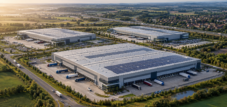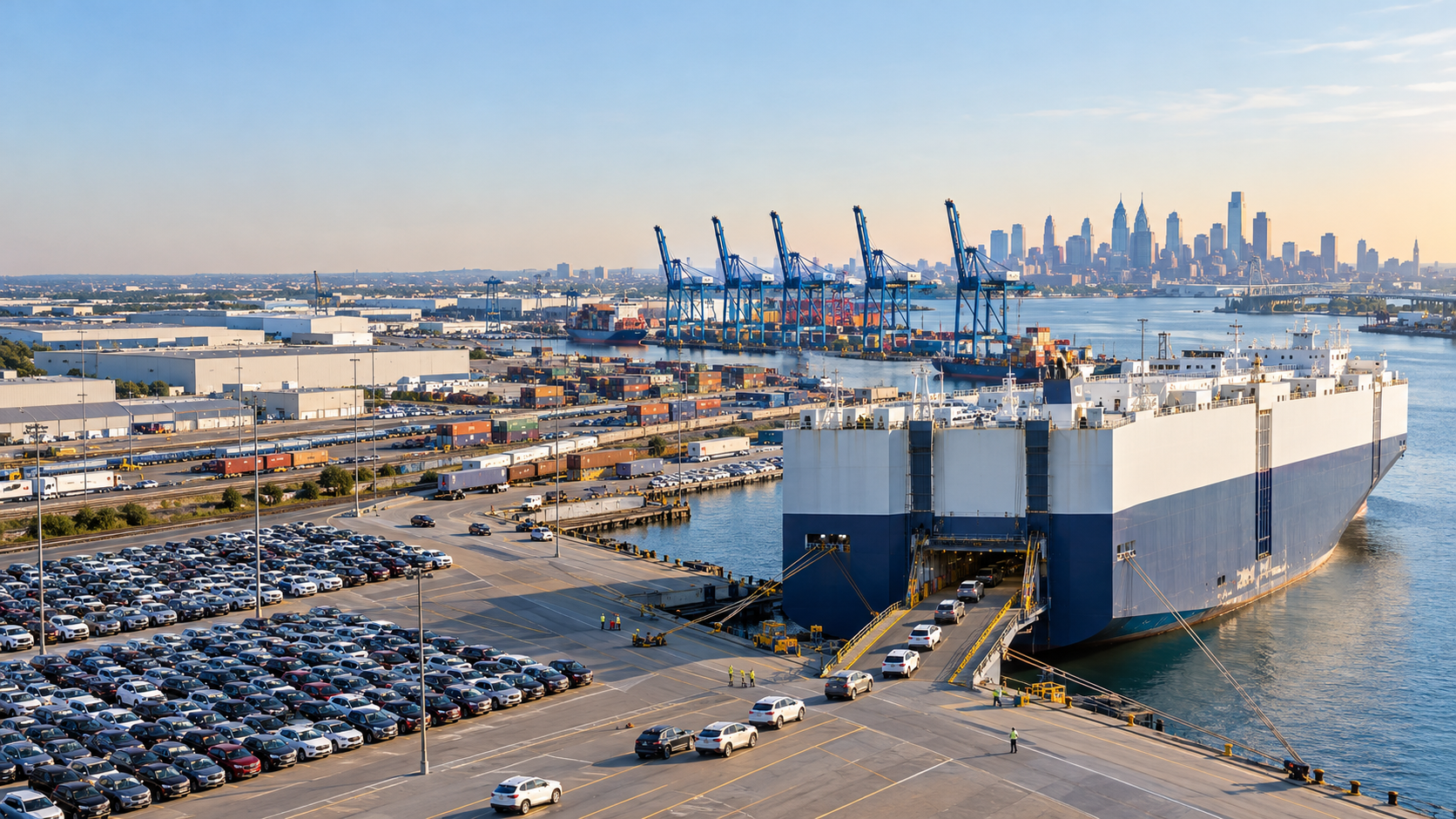
More than just a port project: How Philadelphia is set to become a logistics hub for vehicle logistics – a creative image on the topic, created with AI: Xpert.Digital
Hyundai Glovis is investing $837 million – and wants to control the entire vehicle logistics
A new berth, thousands of jobs: Philadelphia prepares for more car transport
Larger ships, more space, new customers: Hyundai Glovis expands its US strategy
Hyundai Glovis aims to significantly expand its position in global vehicle logistics – and is focusing on the Port of Philadelphia to achieve this. An expansion project costing approximately US$837 million will create new berth and storage capacity, increase vehicle throughput, and significantly expand container traffic. The project encompasses more than just the construction of additional port space: The South Korean logistics company intends to more closely integrate shipping, terminal operations, vehicle preparation, and onward transport. The goal is to transform Philadelphia into a key hub for imports, exports, and the transport of cars, commercial vehicles, and heavy RoRo cargo.
For Hyundai Glovis, the Philadelphia port has been a key location for years. Now, the infrastructure is to be expanded with public and private funding, while the company grows its fleet of large car carriers and aims to attract more customers outside its own group. This opens up opportunities for increased cargo volume, more efficient operations, and a stronger position on the US East Coast. At the same time, success and profitability depend on whether enough vehicles are transported through Philadelphia, whether road and rail transport can keep pace with growth, and whether the investment can hold its own against established ports like Baltimore and Brunswick. The crucial question, therefore, is not just how many cars the port will be able to handle in the future – but whether Hyundai Glovis will actually gain more control over the entire logistics chain.
Philadelphia is becoming the power center of vehicle logistics: Whoever controls the loading dock controls the market
Hyundai Glovis' investment in the Port of Philadelphia is far more than simply expanding storage space for imported vehicles. It represents a strategic move toward controlling the entire logistics value chain, from maritime transport to the final delivery of the vehicle to dealers, industrial customers, or other distribution channels. The South Korean logistics company is thus implementing a model that closely integrates ships, berths, terminal operations, vehicle preparation, warehousing, and onward transport by road and rail. This integration is crucial, particularly in automotive logistics, because competitiveness is not solely determined by sea transport capacity. Equally important are available port space, rapid unloading processes, short turnaround times, and reliable connections to inland markets.
The overall project has a volume of approximately US$837 million. Glovis America, the US subsidiary of Hyundai Glovis, and the local logistics partner Holt Logistics are each contributing US$100 million. The state of Pennsylvania is providing US$371.5 million, while US$266 million is coming from federal funds. This means that approximately 44 percent of the financing is coming from Pennsylvania, just under 32 percent from the federal government, and nearly 24 percent from the two private partners. This structure demonstrates that this is not an isolated corporate project, but rather a strategically driven upgrade of the port region, driven by industrial and trade policy. Public funds are creating the long-term infrastructure, while the private partners are contributing capital, operational expertise, and established cargo flows.
From an economic perspective, the real significance therefore lies not in the $100 million that Hyundai Glovis itself intends to invest. The crucial factor is the leverage: With a comparatively limited contribution of its own, the company gains access to a significantly larger, publicly and privately funded infrastructure platform. This allows Hyundai Glovis to handle its own shipping and vehicle volumes more efficiently, attract new customers, and strengthen its position against competing automotive logistics providers. At the same time, however, the company assumes long-term capacity utilization and market risks. Additional capacity only generates economic value if a sufficient number of vehicles, containers, and special cargo are consistently routed through Philadelphia.
An investment with exceptional leverage
The scale of the project becomes clearer when the individual components are considered together. A new berth of approximately 2,000 feet is planned at the Southport Marine Terminal, meaning a quayside of roughly 610 meters. This would be the port's first new berth in about 50 years. In addition, the project includes the development of the approximately 152-acre Mustin Yard area, which corresponds to roughly 615,000 square meters, the modernization of existing docks, the acquisition of additional handling equipment, infrastructure improvements, land acquisition, and dredging. The project thus not only expands the nominal capacity but also transforms the spatial and technical structure of the port.
An additional berth is particularly valuable for vehicle logistics because large car carriers can only operate at full efficiency if they can dock without long waiting times and be processed quickly. A ship carrying several thousand vehicles ties up considerable capital in the event of delays. Furthermore, schedules on subsequent route segments are disrupted. The economic costs of a bottleneck therefore arise not only at the port itself but propagate through the entire supply chain. Increased quay capacity reduces this risk, creates reserves during peak demand, and allows for more reliable scheduling of larger ships or multiple services.
The planned development of the adjacent area is at least as important. Vehicles require a great deal of space relative to their cargo value. Unlike containers, they cannot be stacked arbitrarily, and different models, equipment variants, and destination regions must be kept organized, monitored, and readily available. Additional storage and processing areas therefore not only allow for greater volume but also for better separation of imports, exports, interim storage, technical processing, and shipping. This creates a platform for Hyundai Glovis on which maritime, terminal-related, and land-based processes can be standardized to a greater extent.
From import port to integrated logistics platform
Philadelphia has served as Hyundai Glovis's central hub for Hyundai and Kia vehicles on the US East Coast since 2010. At that time, import flows previously distributed across multiple ports were consolidated at a single location. This consolidation brought economies of scale, simplified planning, and laid the foundation for a specialized vehicle facility. The infrastructure was significantly expanded with the opening of the Southport Auto Terminal in 2019. From the outset, the vehicle terminal, with its attached preparation center, was designed not only to store cars but also to inspect, clean, refurbish (technically or cosmetically), and prepare them for onward transport.
The volume growth confirms the economic logic of this specialization. In 2022, 221,022 vehicles were handled, a record at the time. In January 2023, the site surpassed the two million mark for cumulatively handled vehicles since operations began. In 2023, the volume rose to approximately 259,000 units, and in 2024, around 281,800 new vehicles were imported. This upward trend demonstrates that Philadelphia is far more than just a supplementary unloading point in the shadow of larger East Coast ports. The site has evolved into a specialized hub, deriving its market position from productivity, available space, and a close connection to a major automotive corporation.
The next stage of development involves transforming the group-affiliated import center into a more open logistics platform. Hyundai and Kia will remain the natural baseline, ensuring a substantial minimum volume upon which personnel, space, technology, and shipping services can be utilized. However, growth is expected to increasingly come from cargo from other manufacturers. This will change the business model: the port will no longer be solely part of an automotive group's supply chain, but will become a marketable infrastructure product for European, Asian, and North American vehicle manufacturers.
Increased capacity changes the competitive position
Once completed, the port's vehicle handling capacity is expected to increase by 18 percent. This equates to an additional throughput of more than 100,000 vehicles per year. Simultaneously, container capacity is projected to increase by 122 percent. This combination is strategically important because it avoids limiting the port to a single cargo segment. While vehicles and containers require different handling processes, they benefit in part from the same basic infrastructure, including access roads, rail connections, security systems, digital systems, energy supply, and land management.
For Hyundai Glovis, the additional vehicle capacity initially means greater operational flexibility. A terminal operating consistently near its capacity limit can hardly react to delayed ships, seasonal sales peaks, or cargo diverted at short notice. Reserve capacity, therefore, is not automatically downtime, but rather a form of logistical insurance. It improves the ability to accept new contracts without jeopardizing existing customer relationships. At the same time, a larger site allows for more precise segmentation of processes by vehicle type, destination region, or processing requirements, which can reduce lead times.
Container expansion indirectly strengthens the vehicle logistics business. A larger multi-purpose port attracts more shipping companies, rail connections, freight forwarders, and service providers. This can lead to denser transport networks and better return cargo options. However, this synergistic effect should not be overestimated. Vehicle logistics remains a highly specialized business with its own ships, ramps, storage areas, and quality requirements. Container growth improves the environment but does not replace dedicated RoRo infrastructure. Economic success therefore depends on intelligently coordinating both segments on shared space without them hindering each other.
The new berth as a scarce strategic resource
In maritime logistics, berth space is one of the scarcest resources. Additional vessels can be ordered or chartered, but without available quay facilities, their capacity cannot be used productively. Modern Pure Car and Truck Carriers (PCTCs) are becoming increasingly larger. In addition to passenger cars, they also transport commercial vehicles, construction equipment, and other rolling cargo. Their high fixed costs necessitate tight scheduling and rapid turnaround. Every unplanned day spent waiting in port reduces profitability and can lead to contractual penalties, connection problems, or additional fuel costs.
The new berth therefore not only creates more physical capacity but also strengthens the port's negotiating power. A manufacturer looking to import large quantities of vehicles to the US East Coast doesn't just consider port fees. They look at the entire process chain: the availability of a ship slot, the reliability of arrival times, unloading capacity, available storage space, the quality of vehicle preparation, and the cost and speed of onward transport. The better Philadelphia integrates these factors, the more likely the port is to attract cargo from competing gateways or win new import programs.
At the same time, the expansion presents a classic infrastructure challenge. A berth is used for decades, while vehicle markets, trade regulations, and production locations can change much more rapidly. The investment must therefore be designed to accommodate more than just current Hyundai and Kia traffic. It should be able to handle different ship types, heavy RoRo cargo, and potentially other project cargo. This is precisely the strategic logic behind the planned expansion to include commercial vehicles, construction and agricultural machinery, and large industrial components. The broader the range of usable cargo, the less dependent the company is on a single vehicle segment.
Hyundai Glovis is building a system instead of individual capacities
The port investment is closely linked to the expansion of Hyundai Glovis's own maritime transport capacity. Hyundai Glovis aims to increase its PCTC fleet to 128 vessels by 2030. The annual maritime transport volume of finished vehicles is projected to rise from approximately 3.4 million to five million units. This would allow the company to cover a significant share of global seaborne vehicle transport. However, such a fleet strategy can only succeed if sufficiently efficient terminals are available in the key target markets.
The Glovis Leader, commissioned in April 2026, illustrates the scale of these vessels. This car carrier can accommodate up to 10,800 vehicles, making it the largest ship of its kind. It is approximately 230 meters long, 40 meters wide, and has 14 vehicle decks. Its capacity significantly exceeds that of many older car carriers. Larger ships generally reduce transport costs per unit, provided they are well-utilized and can access suitable ports. At the same time, they increase the demands on berth space, water depth, ramp capacity, traffic management, and onshore storage areas.
Philadelphia thus closes a potential gap between maritime scaling and land-based processing. Without corresponding terminal reserves, the larger fleet could merely shift bottlenecks from the sea to the coast. With additional berth and storage capacities, this becomes a coordinated system. This is strategically valuable for Hyundai Glovis because the company not only sells cargo space but can offer a seamless service promise. A manufacturer hands over its vehicles in the country of origin and receives them back at the agreed destination after sea transport, unloading, processing, and inland transport. The fewer interfaces there are in between, the lower the coordination effort and the probability of errors.
The end of the pure corporate logistics provider
Historically, Hyundai Glovis has been closely linked to Hyundai Motor and Kia. This close relationship provides reliable volumes but can also hinder its perception as an independent service provider. For years, the group has therefore been trying to increase its share of external clients. By 2025, 53 percent of its revenue in seaborne vehicle transport already came from external clients. These include manufacturers from Europe, North America, and China. This development is particularly important for evaluating the Philadelphia investment.
Third-party business improves capacity utilization and reduces dependence on production or sales fluctuations of individual group brands. It can also enable higher margins when limited shipping space or specialized services are needed at short notice. Performance in the shipping segment shows that a higher proportion of cargo from outside the group and the replacement of expensive short-term charters with longer-term secured capacity can significantly improve profitability. Philadelphia offers credible market access for this strategy because new customers there find not only a shipping service but also an established terminal and distribution infrastructure.
However, expanding third-party business also changes the risk profile. Customers outside the group are less tied to specific carriers and constantly compare prices, service quality, and alternative ports. Furthermore, several large Chinese vehicle manufacturers are building their own shipping fleets. This could mean that cargo volumes currently available to independent or semi-independent carriers will migrate to closed systems in the future. Hyundai Glovis must therefore differentiate itself through network quality, reliability, and integrated services. This is precisely where Philadelphia can become a competitive advantage: controlling the entire supply chain allows for faster response to disruptions and the provision of services that a pure ocean carrier cannot offer.
Philadelphia challenges Baltimore and Brunswick
The expansion won't automatically make Philadelphia the largest vehicle port in the United States. The leading locations handle significantly higher volumes. Brunswick, Georgia, processed nearly 779,000 vehicles in 2025, while Baltimore handled around 728,000 cars and light commercial vehicles. Philadelphia's figures were considerably lower recently. The planned additional capacity of more than 100,000 vehicles would narrow the gap, but not close it. Therefore, the project's economic relevance lies less in a short-term leap to the national top spot than in a clearer regional specialization.
Baltimore has a long-established position in vehicle and agricultural/construction equipment RoRo cargo. Brunswick benefits from its large area, strong rail connections, and proximity to production sites in the southeastern US. Philadelphia, on the other hand, is well-positioned for the Northeast and parts of the Midwest, offers access to a large consumer market, and boasts a Hyundai and Kia infrastructure that has developed over many years. Therefore, competition is not solely determined by the lowest port price. The decisive factor is which location offers the lowest total cost of ownership (TCO) for a given route to the dealer or factory.
The experience of Baltimore's temporary disruption following the collapse of the Francis Scott Key Bridge has also demonstrated the importance of alternative gateways. Automakers and logistics companies are increasingly evaluating not only efficiency but also resilience. A more capable Philadelphia location can serve as a permanent addition and a backup option. This capability enhances its strategic value even if not all capacity is fully utilized during normal operations. For Hyundai Glovis, this creates the opportunity to manage traffic flows within its own network more flexibly.
LTW Intralogistics Solutions

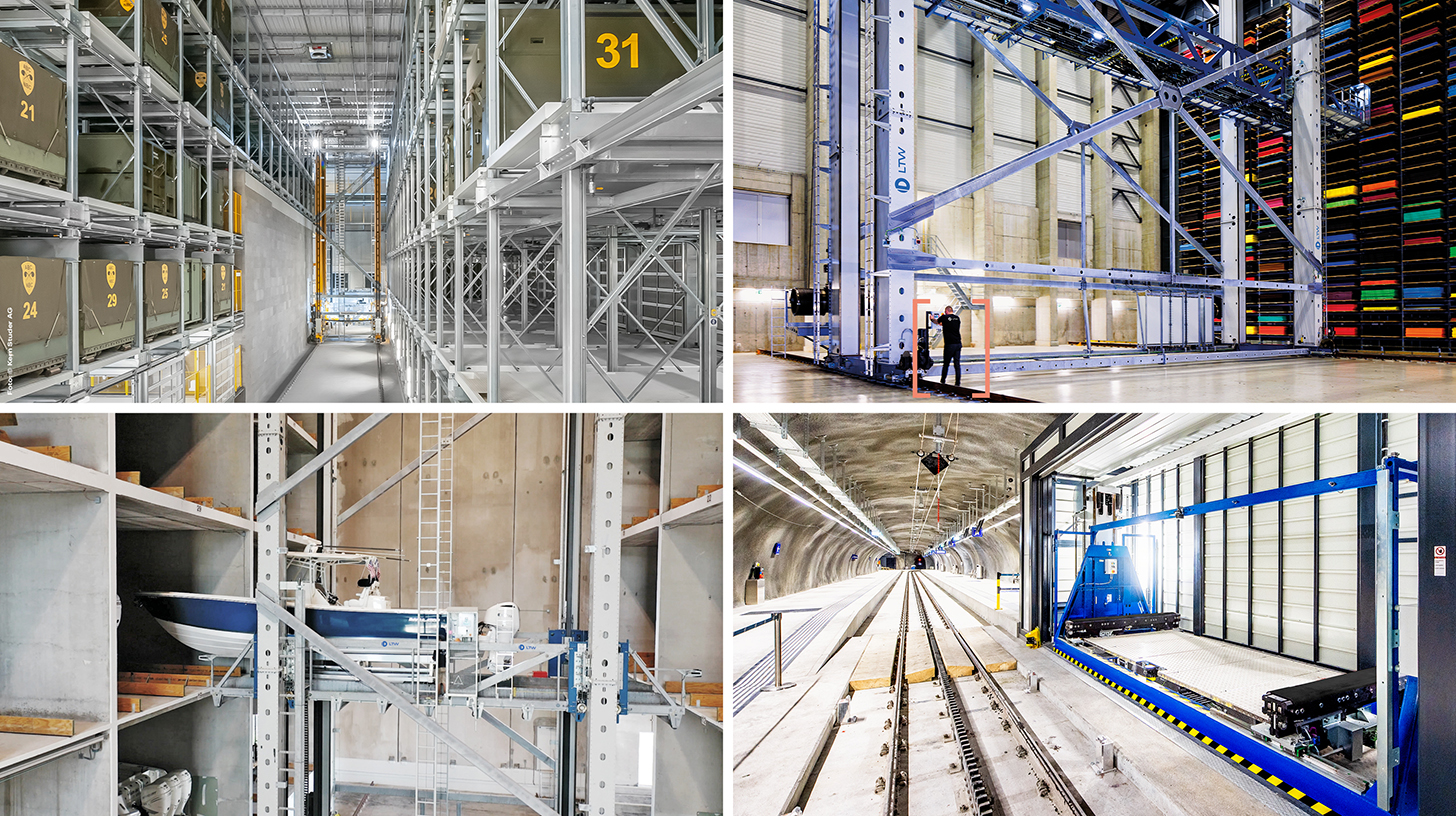
LTW Intralogistics – Engineers of Flow - Image: LTW Intralogistics GmbH
LTW offers its customers not individual components, but integrated complete solutions. Consulting, planning, mechanical and electrotechnical components, control and automation technology, as well as software and service – everything is networked and precisely coordinated.
In-house production of key components is particularly advantageous. This allows for optimal control of quality, supply chains, and interfaces.
LTW stands for reliability, transparency, and collaborative partnership. Loyalty and honesty are firmly anchored in the company's philosophy – a handshake still means something here.
Related to this:
Philadelphia is becoming a hub for vehicle logistics
Permanent jobs are not automatically created
The project is expected to create approximately 6,000 new jobs. Combined with existing employment effects, the number of jobs directly and indirectly linked to the port could increase significantly. In addition, roughly $45 million in annual state and local tax revenue is anticipated. While such projections are politically significant, they must be interpreted with nuance from an economic perspective. They often encompass direct port jobs, construction jobs, employment at suppliers, and indirect effects such as increased consumer spending.
During the construction phase, a significant but temporary boost to employment is generated. Permanent jobs are created primarily in terminal operations, warehousing, vehicle preparation, maintenance, dispatching, rail and road transport, and ancillary services. The number of these jobs that are actually new depends on the additional cargo volume. If traffic is merely shifted from another US port, national employment growth is less pronounced than regional growth. Nevertheless, the shift can be attractive for Pennsylvania because it attracts added value, income, and tax revenue to the state.
In addition, there is the productivity effect. Modern handling technology, digital control, and larger ships increase output per employee. This can mean that volume grows faster than the number of permanently required workers. The economic benefit should therefore not be measured solely by the number of new jobs. Higher productivity, more stable supply chains, additional investments in the surrounding area, and a stronger industrial base can be more important in the long run. Crucially, the region will develop skills, integrate local businesses, and translate the additional traffic flows into further economic activity.
The public share requires strict justification
More than three-quarters of the project financing comes from state and federal funds. This raises the question of why public budgets are co-financing an expansion that directly benefits private logistics companies. The economic justification lies in the nature of port infrastructure. Quays, access roads, dredging, and large development areas are durable goods with high initial costs. Their benefits extend beyond a single operator and can attract additional businesses, jobs, trade flows, and tax revenue. Private investors alone would often scale down such projects or not implement them at all because they cannot monetize all the regional benefits.
Public funding is not an end in itself. It is only justified if the societal benefits outweigh the long-term costs, including financing, maintenance, environmental impacts, and opportunity costs. Pennsylvania finances its share, at least in part, through borrowing. Future budgets will therefore bear the burden of interest and principal payments. If the expected volumes fail to materialize or trade flows shift, strategic infrastructure can become an expensive underutilization.
This is why the private contributions from Hyundai Glovis and Holt Logistics are important. They signal that operators are risking their own capital and believe in commercial demand. The incentive effect would be even stronger if usage fees, long-term volume commitments, and investment obligations were clearly linked. The public sector should not only provide capacity but also set measurable targets for utilization, employment, maintenance, and access by diverse customers. Only in this way can it be avoided that public infrastructure effectively benefits a small circle of private users without generating the promised regional added value.
Larger ships reduce costs but increase risks
The scaling of the PCTC fleet follows a logical cost logic. A vessel with 10,800 pallet spaces can transport more vehicles with fewer trips when operating at high capacity. Crew, insurance, and fuel costs do not increase proportionally to the cargo volume. This reduces the cost per vehicle. Modern propulsion technology can also reduce consumption and emissions per transported unit. The Glovis Leader uses an LNG-capable dual-fuel propulsion system and can be refueled via shore power in port, provided the necessary infrastructure is available.
However, economies of scale come with limitations. Very large ships require sufficient cargo at both ends of the route. If utilization is low, the theoretical cost efficiency translates into significant empty capacity. Furthermore, larger ships concentrate more cargo value and more delivery deadlines on a single arrival. If a ship is canceled or delayed, thousands of vehicles are immediately affected. Terminals also experience more pronounced peak periods: large quantities must be unloaded, sorted, and transported onward within a short timeframe.
Philadelphia must therefore plan the expansion as a complete system. A high-capacity berth alone is not enough. Sufficient ramp capacity, personnel, digital pre-registration, parking spaces, inspection capacities, and enough truck and rail departures are required. Otherwise, the bottleneck will simply be shifted from the quayside to the terminal or the access roads. The economic viability of the project is not measured by the maximum possible number of vehicles handled, but by stable throughput times under realistic peak conditions.
Road and rail determine success
A port is only as efficient as its hinterland. After unloading, vehicles must quickly reach regional distribution centers, dealerships, production plants, or other processing sites. Philadelphia has road and rail connections and already has experience with the consolidated distribution of imported and US-made Hyundai and Kia vehicles. Its proximity to Norfolk Southern facilities also makes it possible to transport larger quantities by rail to more distant markets.
For short and medium distances, trucks generally remain more flexible. They can deliver vehicles directly to the dealer and handle smaller batch sizes. For large quantities over longer distances, rail can offer cost advantages and relieve road congestion. A balanced system requires both modes of transport. If the port's vehicle capacity increases by more than 100,000 units, corresponding reserves of car carriers, railcars, sidings, and access roads must be expanded accordingly.
This is precisely where an often underestimated risk of large port projects lies. Maritime capacity can be politically demonstrated with a new berth, while inland bottlenecks are more fragmented and difficult to resolve. Congestion, driver shortages, limited rail slots, or a lack of intermediate space can diminish the benefits of the entire expansion. Hyundai Glovis, as an integrated logistics provider, has an advantage because the company's operations don't stop at the quayside. It can plan ship arrivals, terminal occupancy, and inland transport together. However, this advantage must be implemented operationally; organizational integration alone does not guarantee physical capacity.
Digitalization is becoming the invisible bottleneck solver
As the terminal grows in size, its complexity increases disproportionately. Tens of thousands of vehicles differ in make, model, drive system, equipment, destination, and processing status. Every error in identification or placement generates additional movements and extends dwell time. Digital yard management systems, automated vehicle tracking, and the precise integration of ship, warehouse, and transport data therefore become key productivity drivers.
A shared database is particularly valuable for an end-to-end network. Even before arrival, it can be determined which vehicles will be unloaded first, what processing they require, and when their onward transport is scheduled. Real-time updated information helps to dynamically allocate parking spaces and coordinate pickups. This allows the same space to be used more intensively without compromising safety or quality. Digitization thus acts like a virtual capacity expansion.
At the same time, dependence on IT systems is growing. A cyberattack, a failure of the communication infrastructure, or faulty interfaces can immediately halt physical operations. Port and vehicle data are also economically sensitive. Therefore, expansion should encompass not only cranes, ramps, and areas, but also redundant systems, cybersecurity, and clear data standards. Especially when additional third-party customers are acquired, it must be ensured that their information remains separate, protected, and yet usable across processes.
Electromobility is changing terminal operations
The growing number of battery-electric vehicles presents ports with new challenges. Electric cars are often heavier than comparable combustion engine vehicles and require special procedures in the event of damaged batteries, fires, or extended periods of inactivity. Terminals need suitable security zones, trained personnel, monitoring technology, and coordinated emergency plans. With thousands of vehicles stored simultaneously, risk management becomes a crucial aspect of economic efficiency.
The state of charge must also be monitored. Vehicles must neither be left stranded with an excessively low charge nor block charging points unnecessarily. Additional electrical connections may therefore be required for energy processing and distribution. At the same time, the port's energy demand is increasing due to shore power, electric handling equipment, and potentially electrified truck fleets. Grid connectivity is thus becoming a strategic infrastructure issue.
This development presents opportunities for Hyundai Glovis. Manufacturers need service providers who can safely transport and handle different drive technologies. The Glovis Leader is designed for conventional, electric, and hydrogen-powered vehicles, as well as heavy commercial vehicles. A suitably equipped terminal in Philadelphia can extend this service promise to land-based operations. While investments in safety and energy supply incur additional costs, they also create market entry barriers compared to less specialized locations.
Trade conflicts remain the biggest external risk
The project's economic viability depends heavily on international vehicle flows. Import tariffs, local production incentives, exchange rates, economic conditions, and changes in model policy can alter volumes faster than port infrastructure can be adapted. The United States has been promoting the development of its own manufacturing capacity for years. Hyundai and Kia have expanded their production in North America. This could, in the long term, replace some of the traditional import volumes.
Increased US production doesn't necessarily have to be a negative for Hyundai Glovis and Philadelphia. Vehicles, components, and machinery will continue to move between regions. Models produced in the US can be exported, distributed by rail, or shipped to other markets via the port. Furthermore, the model range will remain globally differentiated, meaning not every vehicle is manufactured locally. The crucial question is whether Philadelphia can evolve its role from a mere import gateway to a bidirectional logistics hub.
Dealing with Chinese manufacturers is particularly difficult to predict. Their exports increase global demand for PCTC capacity, while Chinese vehicles face significant political and trade barriers in the US. Hyundai Glovis can serve Chinese customers via alternative routes, but Philadelphia is likely to become more dependent on Korean, European, and potentially North American flows in the short term. A robust strategy should therefore not rely on a single region of origin but rather combine different manufacturers and cargo types.
The expansion opens the way to heavy RoRo cargo
In addition to passenger cars, Hyundai Glovis plans to increasingly transport so-called high- and heavy cargo. This includes commercial vehicles, construction equipment, agricultural machinery, and other large rolling units. Project cargo for plant engineering and infrastructure projects will also be included. These segments are attractive because they place higher demands on ships, ramps, space, and expertise. As a result, competition is more limited than in the standardized transport of bulk goods.
Philadelphia stands to benefit from this diversification. The region boasts industrial demand, strong connections to the Northeast, and access to transatlantic routes. A new berth and additional space facilitate the handling of cargo that doesn't fit into standard containers. Such goods often require extended preparation times, individual securing, and special permits for onward transport. This generates additional services and higher added value per shipment.
Diversification also reduces the risk of seasonal fluctuations in the passenger car business. However, it brings with it operational conflicts. Large vehicles require more space, can increase floor pressure, and need different access routes than passenger cars. Project cargo is less uniform and harder to standardize. The terminal design must therefore offer flexibility without compromising the efficiency of the core business. If this is achieved, Philadelphia will evolve from a vehicle depot into a comprehensive RoRo and project logistics center.
Area productivity is becoming the key performance indicator
The planned expansion of the area used by Hyundai Glovis from approximately one million to around 1.12 million square meters and the increase in storage capacity from 33,600 to 37,600 vehicles demonstrates that area growth and throughput growth are not identical. Stationary capacity will increase by about twelve percent, while the port's vehicle handling capacity is projected to grow by 18 percent. Consequently, part of this growth must be achieved through faster processes and higher area productivity.
The key metric is not the maximum number of vehicles that can be parked simultaneously, but rather how often a parking space is used productively per year. Shorter dwell times increase annual throughput without a proportional increase in floor space. This requires close coordination of ship arrivals, processing, and inland transport. Unplanned delays are particularly costly in this system because they block space and displace subsequent cargo.
However, an excessive focus on capacity utilization can weaken resilience. Terminals need buffers for weather events, delayed pickups, quality checks, or market fluctuations. Therefore, optimal space productivity is not achieved through constant full occupancy. A level that combines high utilization with sufficient reserve capacity is economically sound. Hyundai Glovis can improve this balance through better data, flexible workforce planning, and multiple customer flows.
The real value lies in controlling the interfaces
The most significant costs in complex supply chains often arise at interfaces. When a ship is unloaded, a terminal takes over vehicles, a processing plant performs work, and another service provider organizes onward transport, data, responsibility, and time slots must be transferred multiple times. Each interface can generate errors, delays, or disputes over liability. Hyundai Glovis' integrated model aims to reduce these inefficiencies.
Controlling maritime transport, terminals, warehousing, and inland logistics allows for the optimization of the entire system rather than individual components. For example, a ship can travel more slowly and fuel-efficiently if its berth is only available later. Conversely, terminal operations can prepare personnel and facilities if precise arrival data is available. Such coordination reduces costs without requiring each process to be accelerated to its maximum.
Customers benefit from a clear advantage: they gain a single point of contact for a larger part of the supply chain. Conversely, Hyundai Glovis's responsibility increases. Disruptions are less easily shifted to external partners. The company must therefore not only own or utilize infrastructure, but also deliver operational excellence across multiple modes of transport. Philadelphia thus becomes a test case for whether the ambition of a global end-to-end logistics provider can actually work on a large scale.
Growth requires ecological and urban acceptance
A larger port generates additional ship calls, truck traffic, noise, and land use. At the same time, modern infrastructure can reduce emissions per unit transported. Larger, more efficient ships, shore power, electric handling technology, and a higher proportion of rail transport improve the environmental balance when consistently implemented. The net effect depends on whether efficiency gains grow faster than the overall volume of traffic.
For Philadelphia, local acceptance is an economic factor. Conflicts over traffic, air quality, or noise can delay permits and increase operating costs. A viable plan should therefore integrate truck routes, time slots, rail services, energy supply, and emissions reduction from the outset. The question of whether the additional economic benefits also reach the surrounding neighborhoods is particularly relevant. Training, reliable employment, and local contracts can strengthen the legitimacy of the expansion.
Environmental performance is also becoming increasingly important for Hyundai Glovis. Automakers are increasingly tracking emissions along their supply chains. A port with shore power, modern equipment, and short turnaround times can therefore be a selling point. Ecological modernization is not just a regulatory requirement, but also a key element of competitiveness compared to other gateways on the East Coast.
Philadelphia is becoming a touchstone of a global growth strategy
The port investment fits logically into Hyundai Glovis' expansion strategy. Larger ships, five million vehicles transported annually, 128 PCTCs by 2030, and a growing share of non-corporate customers demand high-performance hubs in key sales regions. Philadelphia offers an established foundation, additional space, and public support for this. Extending the site's commitment to 2056 also provides the long-term perspective necessary for capital-intensive port and terminal facilities.
Nevertheless, the project is not a sure thing. Its profitability depends on high utilization, rapid hinterland distribution, reliable IT, a suitable energy supply, and sufficient customer diversification. Added to this are risks stemming from trade policy, economic conditions, local production, and the development of automakers' own fleets. Competition with Baltimore, Brunswick, and other East Coast ports also remains intense.
The most strategically compelling perspective, therefore, is not that Philadelphia will become the dominant US vehicle port simply through a new berth. A different development is more realistic: The location could evolve into one of the most highly integrated vehicle logistics centers on the US East Coast. Its strength would then lie not in the largest absolute volume, but in the combination of shipping capacity, terminal control, preparation, storage, and inland transport.
This is precisely the project's provocative economic message. In the next phase of competition, simply transporting vehicles from port to port is no longer enough. Market power arises where a company controls the scarce interfaces, connects data and infrastructure, and provides customers with reliable access to the entire market. Hyundai Glovis is therefore not merely investing in concrete, steel, and parking spaces in Philadelphia. The corporation is investing in control, scalability, and the ability to transform a port into a strategic component of its global business model.
Consulting - Planning - Implementation

Konrad Wolfenstein
I would be happy to serve as your personal advisor.
You can contact me at wolfenstein∂xpert.digital or
Just call me on +49 7348 4088 965 .
Your container high-bay warehouse and container terminal experts
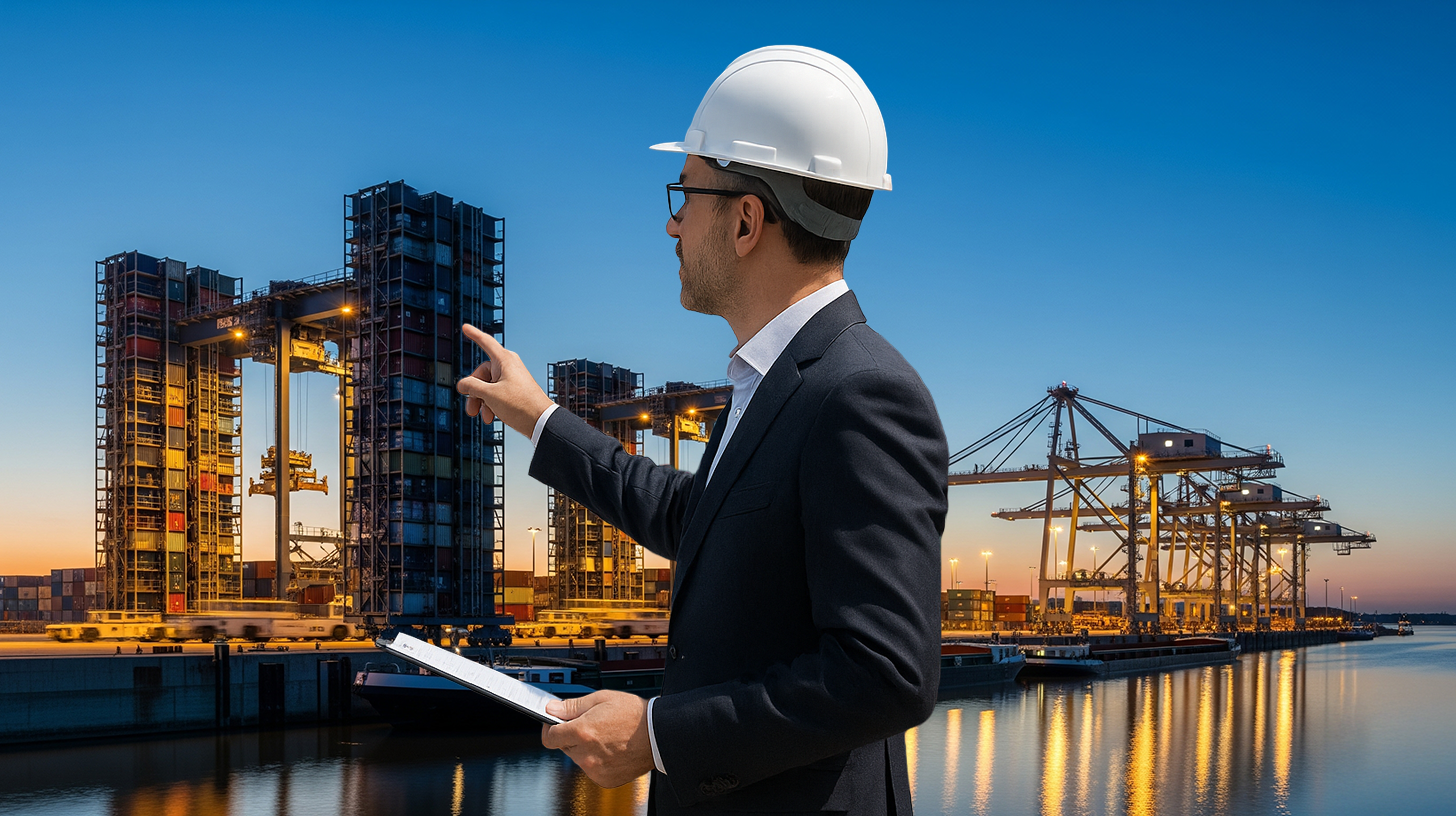
Container terminal systems for road, rail and sea transport in the dual-use logistics concept of heavy-lift logistics - Creative image: Xpert.Digital
In a world marked by geopolitical upheavals, fragile supply chains, and a new awareness of the vulnerability of critical infrastructure, the concept of national security is undergoing a fundamental reassessment. A state's ability to guarantee its economic prosperity, the provision of essential goods and services to its population, and its military capability increasingly depends on the resilience of its logistical networks. In this context, the concept of "dual-use" is evolving from a niche category of export control to a broader strategic doctrine. This shift is not merely a technical adjustment but a necessary response to the "paradigm shift" that demands a profound integration of civilian and military capabilities.
Related to this: