
Frankfurt Logistics Center: Kühne+Nagel invests in the future of healthcare logistics at Frankfurt Airport
Xpert Pre-Release

Available in 27 languages 📢
Prefer Xpert.Digital on GoogleⓘPublished on: October 7, 2026 / Updated on: October 7, 2026 – Author: Konrad Wolfenstein
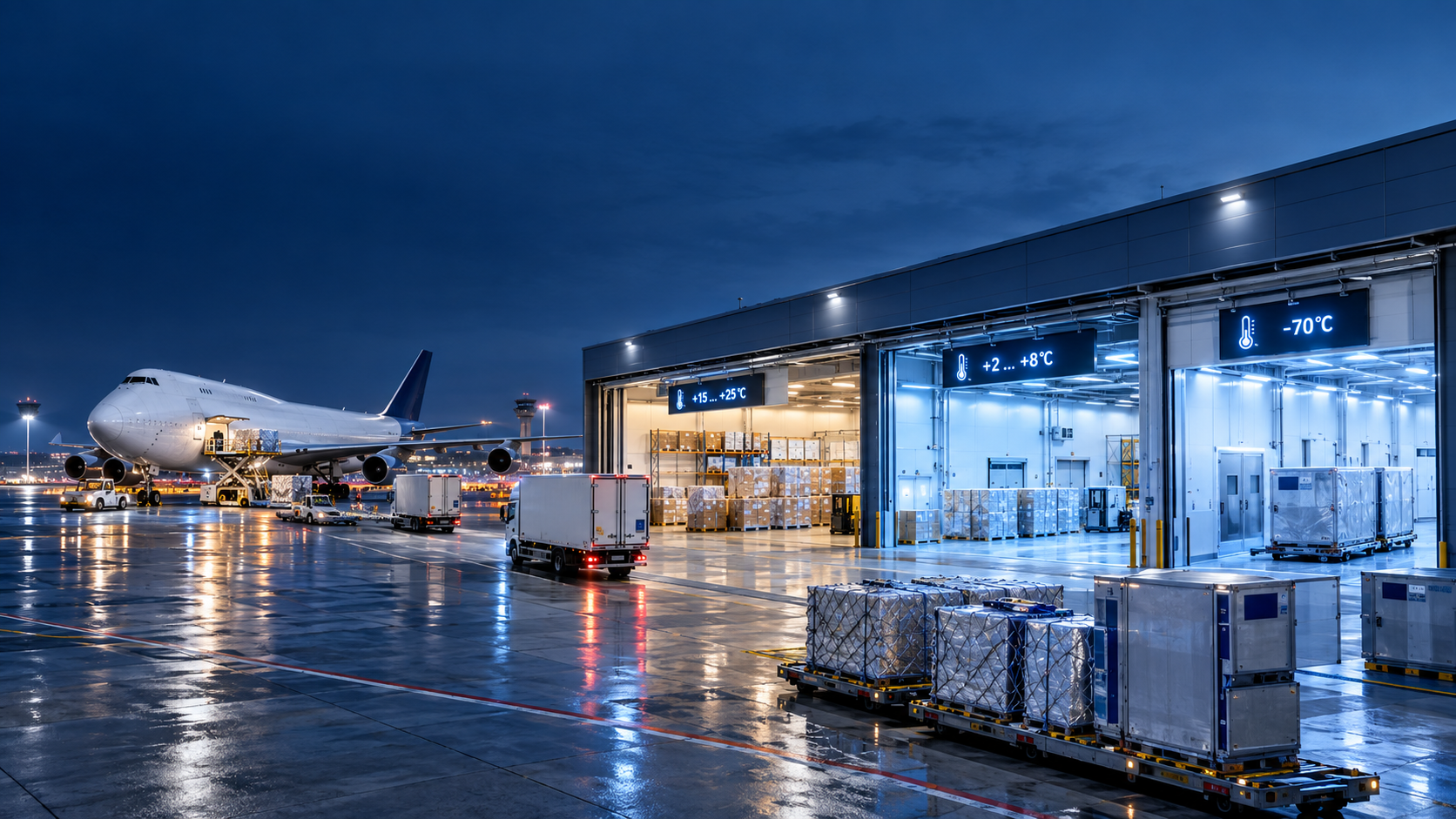
Frankfurt Logistics Center: Kühne+Nagel invests in the future of healthcare logistics at Frankfurt Airport – Creative image on the topic, with AI: Xpert.Digital
How controlled cold chains are transforming pharmaceutical transport
The key to pharmaceutical value creation
Pharmaceutical logistics in transition: Frankfurt strengthens its competitiveness through new infrastructure
The opening of a new healthcare logistics center by Kühne+Nagel at Frankfurt Airport is far more than just a real estate investment – it marks a decisive turning point in pharmaceutical logistics. With a total area of 3,500 square meters and highly specialized facilities for temperature-sensitive products such as pharmaceuticals and biopharmaceuticals, the center sets new standards in the industry. In an era where every hour, every temperature deviation, and every gap in documentation can determine the success or failure of a shipment, precise control of the cold chain is becoming a crucial competitive advantage. Kühne+Nagel is not only investing in storage capacity here, but also creating a strategic interface that streamlines the entire process from manufacturer to end consumer. With its focus on high-value, time-critical products and its connection to an international network, Frankfurt is positioning itself as a European hub for global healthcare. In this context, the new infrastructure becomes a valuable resource that not only optimizes logistics processes but also addresses the challenges facing the industry.
Whoever controls the temperature will in future control one of the world's most valuable flows of goods
Frankfurt's new cold chain powerhouse: How specialized pharmaceutical logistics is changing the air freight market
At first glance, the opening of a new healthcare logistics center by Kühne+Nagel at Frankfurt Airport appears to be a manageable real estate investment. With a total area of approximately 3,500 square meters, it is neither spectacular nor suitable for handling large quantities of standardized consumer or industrial goods compared to the dimensions of traditional distribution centers. However, the economic significance lies not in the size of the facility, but in the high value density of the goods, the regulatory complexity, and the strategic location. The center is geared towards pharmaceuticals, biopharmaceutical products, and other temperature-sensitive healthcare goods. In this sector, a few hours, incomplete documentation, or a slight deviation from the permissible temperature range can determine whether a shipment is released, inspected, or completely discarded.
Kühne+Nagel isn't simply investing in additional storage capacity. The company is developing a specialized interface between pharmaceutical production, road transport, airport handling, and intercontinental air freight. This interface becomes increasingly valuable as the pharmaceutical portfolio shifts towards biologics, vaccines, peptides, and cell and gene therapies. Such products are often time-critical, temperature-sensitive, and expensive. Their logistics require significantly more than a refrigerated building: they demand qualified processes, trained personnel, redundant technology, continuous monitoring, documented responsibilities, and coordinated collaboration among all participating companies.
The investment should therefore be understood as a bet on the structural upgrading of pharmaceutical logistics. While general air freight is heavily dependent on economic cycles, freight rates, and short-term capacity fluctuations, healthcare logistics offers a more attractive combination of growth, customer loyalty, and higher barriers to entry. The Frankfurt location also strengthens the airport's position as a European hub for the global healthcare market. Crucially, however, the new infrastructure will need to be utilized sustainably, transforming a single building into a reliable, internationally connected service provider.
Small area, high economic density
The new center is located in Cargo City South on a company-owned site of approximately 13,000 square meters. The specialized facility comprises exactly 3,500 square meters. Of this, roughly 2,500 square meters are dedicated to storage areas with controlled room temperatures between 15 and 25 degrees Celsius. More than 500 square meters are available for the standard cold chain, maintaining temperatures between 2 and 8 degrees Celsius. In addition, there are deep-freeze capacities down to minus 70 degrees Celsius, temperature-controlled staging areas, and facilities for the specialized handling of pharmaceutical trucks.
This distinction demonstrates that modern pharmaceutical logistics cannot be equated with cold storage logistics. A large proportion of pharmaceutical products are not stored at refrigerator temperatures, yet still require a tightly controlled environmental range. Even so-called room-temperature goods must not be exposed to ambient temperatures uncontrolled during summer heat, winter cold, or extended periods of storage. Therefore, the largest area of storage between 15 and 25 degrees Celsius is not a less demanding addition, but a core element of the regulated supply chain.
The more than 500 square meters of storage space, operating at temperatures between 2 and 8 degrees Celsius, handles a range of products, including vaccines, certain biologics, insulins, and other sensitive preparations. The capability to store products at temperatures as low as minus 70 degrees Celsius expands the range to include particularly demanding items. Depending on specific approvals and process qualifications, these can include certain vaccines, active pharmaceutical ingredients, clinical trial samples, and components of advanced therapies. The facility thus provides multiple temperature regimes within a single location, reducing the need to move shipments between geographically separated specialized storage areas.
From an economic perspective, what matters is not the productivity per square meter in the usual sense, but rather the secured value of goods per square meter and unit of time. Pharmaceutical shipments, despite their relatively low weight, can reach values in the six- or seven-figure range. The higher this value of goods and the more fragile the product, the greater the willingness to pay for reliable processes. The logistics provider then sells not primarily space and transport kilometers, but risk reduction, traceability, and predictable market access.
The location advantage begins on the apron
Direct access to the apron is particularly important. In air freight, many risks arise not during the actual flight, but during the transfers before and after. Shipments await processing, are unloaded from a truck, assigned to a loading unit, inspected, temporarily stored, and finally transported to the aircraft. Every additional handling step, every unnecessary route, and every unclear responsibility increases the likelihood of a delay or temperature deviation.
The location in Cargo City South shortens the connection to the freight handling areas. This reduces the time temperature-sensitive products spend outside a controlled environment. Shorter apron routes also reduce reliance on temperature-controlled transporters, mobile refrigerated containers, and time buffers. While this doesn't eliminate the risks entirely, it makes them more manageable. Especially during periods of extreme summer heat or freezing temperatures, even a shorter transfer time can significantly impact the thermal stress on a shipment.
Frankfurt possesses an exceptionally strong starting position. The airport is one of Europe's most important air freight hubs and is located in a region with a high concentration of pharmaceutical, chemical, and medical technology companies. Ten of the world's twenty largest pharmaceutical manufacturers are located in close proximity. In addition, there are road connections to key European production and sales regions, as well as a dense network of intercontinental flight connections. In the 2025 summer flight schedule, 275 destinations in 91 countries were served by 83 airlines. For pharmaceutical companies, this connectivity means more alternative routes, more frequent departures, and a better ability to adapt in the event of disruptions.
The airport already offers more than 22,000 square meters of temperature-controlled handling space, of which approximately 14,000 square meters are specifically dedicated to pharmaceutical products. Around 200,000 tons of pharmaceutical and healthcare cargo are handled annually. The new center is therefore not an addition to a completely new environment, but rather complements an existing cluster of handling agents, freight forwarders, airlines, specialized vehicles, packaging providers, customs expertise, and certified processes. This very concentration creates a network effect: every additional high-performing player increases the benefits of the location for all other participants.
The cold chain becomes a value chain
The global pharmaceutical logistics market is growing, although market studies report significantly different volumes depending on the definition used. These discrepancies arise primarily because some calculations only consider transport and storage, while others also include packaging, value-added services, clinical logistics, or parts of hospital supply. Beyond the order of magnitude, however, the trend is clear: Annual growth rates in the high single-digit percentage range are frequently expected for the coming years, with specialized cold chains projected to grow even faster in some cases.
The most important driver is the changing product portfolio. Traditional tablets are often relatively robust in terms of distribution. Biologics, on the other hand, consist of complex molecules or biological structures whose quality can be compromised by unsuitable temperatures, shocks, or delays. Cell and gene therapies further intensify these requirements. Some products are patient-specific, have a limited shelf life, and require extremely low temperatures or even cryogenic conditions. Therefore, the logistical value of such failures is not simply the lost value of the goods. Delays can jeopardize treatment plans, render production slots worthless, and, in extreme cases, endanger a patient's health.
This development is changing the logistics business model. A standardized carrier competes primarily on price, capacity, and transit time. A specialized healthcare service provider also competes on process quality, regulatory competence, data integrity, deviation management, and international consistency. The real challenge lies in maintaining product quality across multiple companies, modes of transport, and legal jurisdictions, and being able to demonstrate this at any time.
For Kühne+Nagel, this opens up higher margins and closer customer relationships, but also entails higher fixed costs and liability risks. Temperature-controlled areas require energy, maintenance, calibration, and emergency plans. Employees must be regularly trained, processes audited, and technical systems qualified. High utilization is important, but it must not come at the expense of redundancies and safety margins. Economic success therefore depends less on maximum space occupancy than on a balanced relationship between capacity utilization, product mix, service price, and risk management.
Quality is not a certificate on the wall
The facility is designed to meet the requirements of Good Distribution Practice (GDP) and is integrated into the company's HealthChain system. GDP outlines the principles for maintaining the quality and integrity of medicinal products during storage and transport. These include suitable premises, documented processes, qualified equipment, temperature monitoring, clear responsibilities, deviation management, and traceability.
In practice, simply writing target temperatures on building signs is insufficient. Storage areas must be measured under representative conditions to identify warm and cold zones. Sensors must be positioned appropriately, calibrated regularly, and protected against failure. Door openings, varying occupancy levels, seasonal outside temperatures, and refrigeration system malfunctions must be factored into the assessment. Packaging, vehicles, and transport containers also require appropriate classification based on the route, duration, and time of year.
The crucial point is the process chain. A technically perfect warehouse cannot compensate for an inadequately prepared handover to the ground handler. Likewise, a high-performance refrigerated container is of no use if documents are missing, the booking was incorrectly classified, or the product waits unnecessarily on the tarmac. Healthcare logistics therefore requires a common process language between the manufacturer, freight forwarder, cargo handler, airline, customs, recipient, and, where applicable, packaging service provider.
In this context, the global network of more than 270 HealthChain-certified sites is strategically more important than a single warehouse in Frankfurt. A pharmaceutical manufacturer needs reliable conditions not only at the point of origin. Transfer points, destination stations, and regional onward transport must also meet comparable standards. A network approach reduces the risk of the quality chain breaking down at a less developed location. It also enables standardized training, shared performance indicators, and uniform escalation procedures. While a private certification system does not replace applicable legal requirements or independent industry standards, it can standardize operational implementation within a global corporation.
The corridor is more valuable than the building
Particularly significant is the connection between the new infrastructure and the company's own controlled cargo aircraft network, Inspire. Frankfurt was added to the rotation of a long-term chartered Boeing 747-8F in 2026. The aircraft can carry approximately 140 tons of cargo and connects key locations in North America, Europe, the Middle East, and Asia. For customers in the pharmaceutical industry, this controlled capacity offers an advantage because the logistics provider is not solely reliant on short-term availability of cargo space on the market.
In parallel, a temperature-controlled corridor was established between Frankfurt and Atlanta. This route is part of a network of defined healthcare routes where freight forwarders, airlines, and handling agents use coordinated procedures. The economic benefit of such a corridor lies in its repeatability. While individual shipments can be secured with considerable effort, a regularly served corridor allows for standardized time windows, fixed handover points, trained teams, predefined emergency procedures, and systematic analysis of temperature and transit time data.
Atlanta was not chosen by chance. The southeastern United States boasts a growing life sciences and healthcare sector, while the airport serves as a major international hub. The route connects the European pharmaceutical cluster around Frankfurt with the North American market and can be extended via further land and air transport connections. The weekly controlled capacity creates a predictable product that goes beyond simply selling air freight space.
The corridor approach can also increase Kühne+Nagel's negotiating power vis-à-vis individual partners. By consolidating relevant healthcare volumes and controlling regular capacity, companies can enforce process requirements more precisely, standardize data standards, and demand targeted operational improvements. At the same time, this creates a dependency on their own network utilization. A large freighter is only economically attractive if it is sufficiently loaded on multiple routes and with various high-value product groups. Pharmaceuticals alone are unlikely to fill every rotation. Therefore, combining it with semiconductors, high-tech products, aerospace components, and other time-critical cargo is part of the economic logic.
Speed alone is no longer enough
Air freight is traditionally justified by speed. However, for temperature-sensitive pharmaceuticals, controlled transit time is more important than simply the shortest transit time. A nominally fast flight can be riskier than a slightly longer but reliably planned connection due to long ground times, rerouting, or delayed delivery. The crucial factor is the time spent outside the permissible temperature range, not just the time between takeoff and landing.
This is precisely where the Frankfurt center can demonstrate its strengths. Temperature-controlled storage areas allow shipments to be kept in a controlled environment until shortly before they are handed over. Direct access to the apron reduces transfer times. Specialized truck handling facilitates coordinated deliveries and pickups. Deep-freeze facilities provide a buffer when a flight is delayed or a shipment needs to be temporarily secured.
This buffer function has considerable economic value. In traditional just-in-time systems, inventory is often considered waste. In critical healthcare supply chains, however, controlled intermediate storage can act as insurance against network disruptions. The key is not to build up buffers indiscriminately, but to maintain them where they pose the greatest risk. An airport hub with high flight frequency and numerous connections is more suitable for this than an isolated location with few alternatives.
However, the infrastructure must not encourage longer waiting times. A high-quality cold storage facility can mitigate the symptoms of a disrupted supply chain, but it cannot compensate for poor planning. The goal must remain to move goods safely and quickly through the hub. Therefore, the most economically efficient facility is not the one that is the fullest, but rather the one that combines high throughput with short, predictable dwell times.
Pharmaceutical manufacturers buy risk reduction
For manufacturers, choosing a logistics provider is increasingly a decision about their own business risk. A lost standard container incurs replacement and delay costs. Conversely, an unusable batch of a biopharmaceutical product can block production capacity, jeopardize delivery commitments, and trigger extensive quality checks. For patient-specific therapies, the product may not be easily replaced from existing stock.
The new Frankfurt infrastructure improves three factors that are crucial for manufacturers. First, physical control is enhanced through suitable temperature zones and short transfer routes. Second, scheduling is improved by connecting to a controlled air network and defined corridors. Third, a standardized process and data foundation across numerous certified locations simplifies the verification process.
These advantages justify price premiums compared to standard air freight, provided the performance remains measurable. Pharmaceutical companies will not pay indefinitely for general quality promises. They need reliable key performance indicators (KPIs) regarding compliance with temperature limits, transit times, handover times, deviations, and response speed. Competition is therefore shifting from pure infrastructure to demonstrable process performance.
For Kühne+Nagel, this presents an opportunity for differentiation. Global freight forwarders generally have similar transport options and can purchase capacity from numerous airlines. More difficult to replicate are a dense network of qualified locations, long-standing customer relationships, integrated data, and established corridors. The more deeply a service provider is integrated into the manufacturer's quality processes and supply chain planning, the higher the switching costs become. This commitment is economically attractive but demands consistently high performance. A serious quality incident can quickly damage the trust built up over years.
Your intralogistics experts

Consulting, planning and implementation of complete solutions for high-bay warehouses and automated storage systems - Image: Xpert.Digital
More information here:
Frankfurt strengthens its role in pharmaceutical air freight
Frankfurt defends its European leadership role
The investment is also part of a competition for locations. Frankfurt competes in European air freight with airports such as Amsterdam, Paris, Brussels, Luxembourg, Liège, and increasingly specialized regional hubs. Each hub tries to distinguish itself through connectivity, handling quality, available space, night flight capabilities, customs processes, and industry-specific expertise. Pharmaceutical freight is particularly sought after because it is valuable, relatively recession-proof, and service-intensive.
Frankfurt's advantage lies in the combination of its central location, large catchment area, and international rail network. However, the location also has structural disadvantages. Land is scarce and expensive, roads in the Rhine-Main region are frequently congested, and operational restrictions limit flexibility. Competitors can score points with lower costs, faster permitting, or less utilized infrastructure. Therefore, maintaining a leading position is not a given.
Specialized investments like the new healthcare center act as a qualitative upgrade. They increase the efficiency of the entire cluster and can attract additional volume. If more pharmaceutical manufacturers use Frankfurt as their preferred gateway, the incentives for airlines to offer temperature-controlled products and expand relevant routes increase. Conversely, a denser air network makes the location more attractive for further logistics investments. This positive cycle can stabilize Frankfurt in the long term.
However, there is also the risk of parallel overcapacities. Several logistics and handling companies are expanding their pharmaceutical facilities. If actual volume growth falls short of expectations or trade flows shift, price pressure could increase. From a macroeconomic perspective, however, additional infrastructure is not automatically inefficient. Redundant capacity can increase resilience, provided it is technically and organizationally feasible. For individual operators, however, utilization remains crucial.
A robust network needs more than cooling technology
The past few years have demonstrated how vulnerable global supply chains can be. Pandemics, geopolitical conflicts, airspace closures, strikes, extreme weather events, and freight capacity shortages can all disrupt established routes at short notice. Healthcare supply chains are particularly affected because many products have limited transit times and cannot be transshipped at will.
The Frankfurt hub increases resilience by enabling controlled interim storage and alternative onward routing. The large number of accessible destinations provides options if a connection is disrupted. Its own cargo aircraft network reduces some of the dependence on passenger flight schedules. The international network of qualified locations facilitates rerouting to other hubs, provided suitable capacity is available there.
Resilience, however, should not be confused with complete independence. Even a global freight forwarder relies on airlines, ground handlers, energy suppliers, IT systems, packaging, and regulatory approvals. A Boeing 747-8F provides controlled capacity, but not a comprehensive, proprietary flight network. A cold storage facility has emergency power, but remains dependent on maintenance, refrigerants, and spare parts. True resilience, therefore, arises from redundancy, transparent dependencies, tested contingency plans, and clearly defined escalation procedures in contracts.
Energy supply deserves special attention. Temperature-controlled storage facilities require a constant supply of electricity, with deep freezing down to minus 70 degrees Celsius being significantly more energy-intensive than controlled room temperature. Rising energy prices can increase operating costs. At the same time, a power outage must not lead to product loss. Emergency power systems, redundant refrigeration technology, alarm systems, and backup storage areas are therefore not merely technical details, but integral components of the economic risk model.
Data becomes the second coolant
Modern pharmaceutical logistics requires not only physical refrigeration but also a seamless information chain. Sensors record temperatures, and sometimes humidity, vibrations, light, and location data. The crucial factor is not the maximum number of measurement points, but the ability to interpret data meaningfully and act promptly. An alarm that is only evaluated after arrival may document damage, but it won't prevent it.
The next step in development therefore lies in predictive control systems. By combining real-time data with flight schedules, weather information, handling status, and known processing times, risks can be identified earlier. A shipment with an expected delay could remain in temperature-controlled storage longer, be rebooked on another flight, or be equipped with additional refrigeration capacity. Data thus transforms from a purely fact-finding tool into an operational control instrument.
This creates an additional competitive advantage for the logistics provider. Collecting data across numerous shipments and corridors allows them to identify vulnerabilities, assess seasonal risks, and design packaging solutions more precisely. At the same time, the demands on data quality, interfaces, and cybersecurity are increasing. Pharmaceutical supply chains contain sensitive information about products, quantities, production sites, and market launches. A data leak or manipulated temperature data set can have significant economic and regulatory consequences.
Kühne+Nagel must therefore combine physical and digital quality. A HealthChain network is only as strong as its weakest data connections. Different systems from manufacturers, airlines, and ground handling companies can cause media breaks. Uniform event definitions, timestamps, and responsibilities are necessary to create a reliable end-to-end view from the data. The Frankfurt location can serve as a hub where operational processes and digital records are closely linked.
The calculation depends on capacity utilization and error costs
Since no investment amount has been disclosed, the direct return on investment of the project cannot be reliably calculated. However, the economic rationale can be clearly described. On the cost side, there are construction and technical equipment, temperature zones, deep-freeze systems, security and monitoring technology, training, personnel, energy, maintenance, and insurance. In addition, there are ongoing audit, training, and documentation costs.
On the revenue side, services include warehousing, transshipment, temperature-controlled staging, special handling, packaging and value-added services, as well as integration into international air freight solutions. The more customers book entire corridors rather than individual services, the greater the revenue potential per shipment. The combination of facilities, apron access, its own controlled cargo capacity, and a global network enables a bundled offering that is less easily reduced to individual price items.
A significant portion of customer value stems from avoided error costs. If a high-quality batch doesn't have to be discarded due to improved temperature control, even a single instance of avoided damage can generate substantial economic value. However, this benefit doesn't automatically flow entirely to the logistics provider. It must be monetized through contract models, service classes, and demonstrable performance quality.
Utilization remains the critical factor. Temperature-controlled areas have high fixed costs, even if they are not fully utilized. At the same time, certain product groups cannot be stored arbitrarily next to each other, and safety margins must be maintained. A purely area-based utilization metric would therefore be insufficient. More important are the throughput per temperature zone, dwell time, the proportion of higher-value services, punctuality, the rate of temperature-related deviations, and the profitability of entire sales routes.
Competition intensifies specialization
Kühne+Nagel faces strong global competition in healthcare logistics. DHL, UPS, FedEx, DSV, and other specialized providers are investing in temperature-controlled warehouses, clinical supply chains, packaging solutions, direct flights, and digital monitoring. Therefore, competition will not be decided by a single new center. The key is the ability to integrate local infrastructure into a globally consistent system.
Size alone does not guarantee success. Large networks offer reach and economies of scale, but increase organizational complexity. Specialized medium-sized providers can be more flexible and have deeper expertise in specific niches, such as clinical trials or cell and gene therapies. Global corporations must therefore combine both: standardized processes for scaling and sufficiently flexible solutions for exceptional products.
The Frankfurt center strengthens Kühne+Nagel in three key areas. It improves control at a core European hub, enhances the credibility of its global healthcare offering, and supports its own air freight corridors. However, this will only translate into a lasting advantage if operational results surpass those of competitors. Buildings and refrigeration technology can be replicated with capital. Experience, established teams, reliable data, and trust are harder to replicate.
In the long term, the market is likely to segment further. Standardized pharmaceutical products will be transported in cost-efficient, qualified networks. High-value biologics and advanced therapies require more individualized solutions with close monitoring and emergency intervention. The challenge for the operator lies in serving both worlds on the same platform without weakening highly specialized services through excessive standardization or increasing the cost of the mass market through excessive complexity.
Sustainability meets medical necessity
Air freight and deep-freeze transport result in high energy consumption and emissions. This creates a conflict of objectives: pharmaceutical products must be transported quickly and safely, while at the same time expectations for more climate-friendly supply chains are rising. A blanket shift to slower modes of transport is often not feasible for time-critical or extremely valuable products. Nevertheless, significant potential for optimization exists.
Better planning can avoid unnecessary express shipments. Higher capacity utilization and consolidated corridors reduce emissions per transported unit. Shorter apron routes reduce vehicle movements. Reusable packaging can replace single-use materials, provided that return and cleaning are organized economically. Energy-efficient refrigeration systems, heat recovery, and renewable electricity reduce site emissions. More precise packaging design also saves material and weight.
The connection between quality and sustainability is particularly interesting. Oversized refrigerated packaging increases safety but adds weight and material. Undersized solutions save resources but increase the risk of damage. Data from recurring transport corridors allows for a better balance. When ambient temperatures, transit times, and transfer processes are reliably known, the packaging can be more precisely tailored to the actual risk.
The greatest environmental loss may not arise from the transport itself, but from destroyed products. The production of complex biopharmaceuticals is energy- and resource-intensive. A stable cold chain prevents this effort from being completely lost due to a logistical error. Sustainability in pharmaceutical logistics must therefore consider the entire product life cycle and should not be reduced solely to the emissions of a single flight.
The bottleneck remains human beings
Despite automation and sensors, the quality of healthcare logistics depends heavily on qualified employees. They must correctly identify shipments, understand temperature requirements, check packaging, verify documents, and make quick decisions in case of discrepancies. Many errors arise not from defective refrigeration systems, but from misunderstandings during handovers, incorrect priorities, or incomplete information.
Like other logistics hubs, Frankfurt is competing for skilled workers. Shift work, security requirements, and access to the airport grounds make recruitment difficult. At the same time, onboarding is more complex than in a typical warehouse. Employees need knowledge of GDP requirements, internal quality processes, and the specific procedures for different product groups. Regular training is necessary because procedures, systems, and regulatory expectations are constantly evolving.
From a company perspective, personnel quality is therefore not a soft factor, but a productive investment. Lower employee turnover preserves experience and reduces training costs. Clear work instructions lower the error rate, but must not be so complicated that they are circumvented in daily practice. Digital assistance systems can support decision-making, but they do not replace the ability to recognize unusual situations and escalate them appropriately.
A high-performing center also requires a strong quality culture. Employees must be able to report deviations without short-term performance targets or fear of personal criticism hindering open communication. Only when errors and near misses are systematically analyzed can the overall system improve. In an environment where small deviations can cause significant damage, organizational learning is just as important as technical perfection.
The new infrastructure is changing the balance of power
This investment not only strengthens operational efficiency but also Kühne+Nagel's strategic position with customers and partners. Controlling its own specialized facilities at a central hub reduces dependence on readily available third-party services. This facilitates the development of reliable products and gives the company greater control over timelines, process design, and quality standards.
Kühne+Nagel's negotiating power with airlines increases when large volumes are consolidated and supplemented with its own controlled freighter capacity. With pharmaceutical manufacturers, Kühne+Nagel can act as an integrating player, connecting various service providers and modes of transport into an end-to-end solution. This role is valuable because manufacturers often don't want to manage every operational interface themselves. However, they do expect transparency and clear overall responsibility.
The stronger position also brings with it responsibilities. The more comprehensively the service provider assumes control, the less convincing it is to point to a subcontractor's error in the event of a disruption. Customers evaluate the result of the entire chain. Kühne+Nagel must therefore not only control its own system, but also effectively monitor the performance of the participating airlines, ground handlers, transport companies, and destination stations.
The investment can also make it more difficult for smaller competitors to enter the market. A single cold storage facility is relatively easy to rent. In contrast, the combination of owned property, apron access, a global certified network, controlled freighter capacity, and defined corridors requires significant capital and years of coordination. This shifts the focus of competition from individual transport prices to integrated system capabilities.
Growth is likely, but not guaranteed
The outlook for temperature-controlled pharmaceutical logistics is generally positive. Aging populations, rising healthcare costs, the spread of biologics, and new therapies are increasing the need for sophisticated supply chains. Furthermore, pharmaceutical companies are diversifying their production and procurement networks to reduce geopolitical and operational dependencies. More production sites and alternative delivery routes can generate additional cross-border transport.
Nevertheless, it would be wrong to automatically assume a guaranteed return for every location based solely on high market forecasts. Pharmaceutical companies are also optimizing their networks. Certain products can be manufactured closer to their sales markets, thus eliminating long air freight routes. Improved stability data and new formulations can relax temperature requirements. At the same time, packaging technologies can enable longer sea transports, provided that time constraints and product value allow it.
Regulatory changes can also shift costs and demand in different directions. Stricter documentation requirements increase the need for specialized services but also raise operating costs. More uniform international standards facilitate global networks, while specific national requirements create additional complexity. Economic attractiveness therefore depends not only on freight volume but also on the ability to efficiently integrate new requirements into existing processes.
Another risk is the concentration on a few large customers. Large pharmaceutical companies can deliver substantial volumes, but they possess significant purchasing power and expect continuous productivity increases. A balanced customer mix of established manufacturers, biotechnology companies, clinical research partners, and medical technology providers can reduce this dependency. At the same time, a diverse product mix increases operational complexity. The operator must therefore weigh economies of scale against risk diversification.
What makes success truly measurable
Whether the new center is economically and qualitatively successful will not be determined by its opening or the installed refrigerated area. Crucial are operational key performance indicators over several years. These include throughput in the individual temperature zones, average dwell time, on-time delivery to airlines and recipients, the percentage of error-free shipments, and the number and duration of temperature deviations.
Equally important is the quality of the response. Not every disruption can be prevented. A robust system detects deviations early, limits their impact, informs the appropriate departments, and documents the decision. Therefore, alarm response times, successfully rerouted shipments, recovery times, and the results of emergency drills should also be measured. A low number of reported incidents is not automatically positive if it stems from inadequate detection or a weak reporting culture.
For economic evaluation, revenue per shipment, contribution margin per temperature zone, energy consumption, personnel costs, and capacity utilization are relevant. However, these factors should not be optimized in isolation. A short-term reduction in personnel or energy costs can increase the probability of errors and ultimately prove more expensive in the long run. Similarly, maximizing space utilization can eliminate necessary safety margins.
Strategic success will ultimately be demonstrated by whether Frankfurt attracts additional international healthcare flows and whether customers transfer further parts of their supply chains to Kühne+Nagel. If the center becomes the starting point for new corridors, additional flight capacity, and data-driven value-added services, its benefits will outweigh the direct contribution of the warehouse space to the bottom line. Conversely, if it remains a largely isolated property, its potential will only be partially realized.
Frankfurt is becoming the control tower of pharmaceutical logistics
The new facility is not a gigantic logistics center, nor does it need to be. Its significance lies in its precise specialization, its direct location on the apron, and its integration into a global network of qualified locations. It combines multiple temperature zones with controlled air freight capacity and defined healthcare corridors. This creates a hub designed not for handling as many tons as possible, but rather for reliably moving particularly valuable and sensitive goods.
Economically, the investment follows a compelling logic. The pharmaceutical logistics market is growing, sophisticated biologics and advanced therapies are increasing value density, and manufacturers are willing to pay for demonstrable risk reduction. Frankfurt offers a strong cluster of production, infrastructure, air connections, and expertise. Kühne+Nagel can combine these locational advantages with its global network and its own controlled freighter capacity.
The outlook should remain realistic. High technical standards do not guarantee capacity utilization or operational excellence. Energy-intensive cooling, a shortage of skilled workers, complex partner structures, fierce competition, and high liability risks can all negatively impact returns. Furthermore, the quality of a global pharmaceutical supply chain is always determined at its weakest point. A perfect location in Frankfurt cannot undo mistakes made at a destination site or by a subcontractor.
This is precisely why the investment is strategically significant. It shifts the competition from available freight space to controlled networks. The winners will not be those providers who merely own a refrigerated warehouse, but those who control temperature, time, data, and responsibilities throughout the entire journey. In this competitive landscape, Frankfurt can become a European control center for pharmaceutical logistics.
The provocative truth is this: In the next stage of air freight development, it's not the largest warehouse that matters, but the smallest avoidable deviation. Whoever masters this will secure not only pharmaceuticals, but a growing share of the global healthcare economy. Kühne+Nagel has laid an important foundation for this in Frankfurt. Whether this translates into lasting market power will be decided in daily operations – with every handover, every sensor reading, and every minute outside the controlled chain.
Your global marketing and business development partner
☑️ Our business language is English or German
☑️ NEW: Correspondence in your native language!

Konrad Wolfenstein
I and my team are happy to be available to you as your personal advisor.
You can contact me by filling out the contact form here [email protected]:or simply call me at +49 7348 4088 965. My email address is
I'm looking forward to our joint project.










