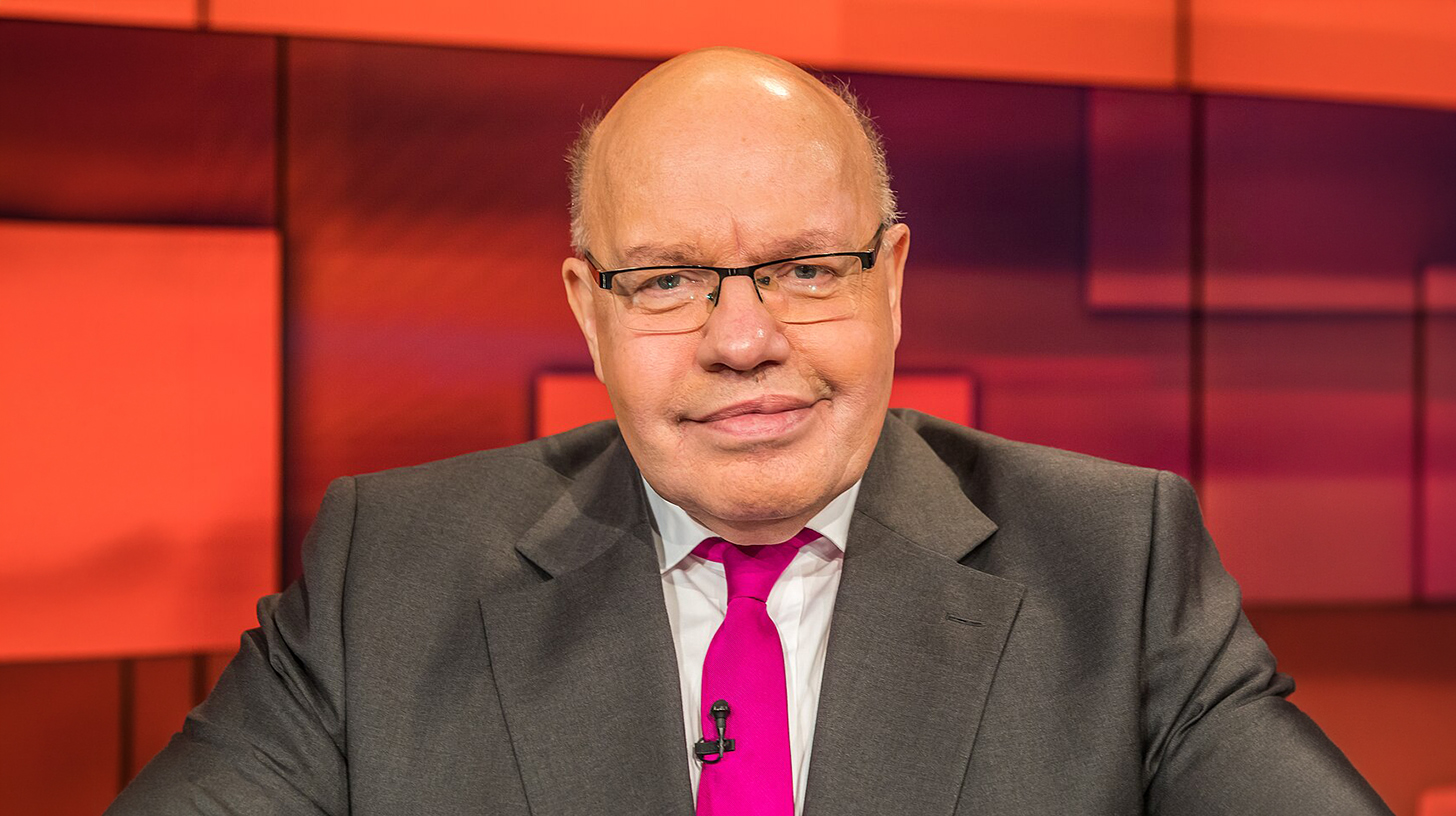
The man who warns Germany | Peter Altmaier as Minister of Economic Affairs: Failures and shared responsibility for the predicament – Image: Raimond Spekking / CC BY-SA 4.0 (via Wikimedia Commons), CC BY-SA 4.0, Link
“A genuine national crisis”: Altmaier sounds the alarm – and conceals his own fatal legacy
The hypocrisy of power: Why Altmaier's warning about the crash comes too late
Solar crash and digital disaster: How Peter Altmaier jeopardized Germany's economy
In the spring of 2026, Peter Altmaier sounded the alarm: Germany was facing an unprecedented economic and political crisis. But how credible was the dramatic warning from the former head of the Federal Chancellery and Federal Minister for Economic Affairs? A sober look at the Merkel era reveals an uncomfortable paradox: Many of the profound structural problems that Altmaier now laments with visible dismay bear his own political signature. Whether it was the historic collapse of the domestic solar industry (the so-called "Altmaier slump"), the devastating digitalization disaster, the growing dependence on Russian gas, or the bureaucratic chaos surrounding COVID-19 aid – the minister who should once have been setting the course for the future all too often opted for stagnation. This is a critical analysis of the fatal legacy of a politician who preferred to manage the German economy rather than shape it, and the pressing question of his own complicity in today's decline.
The man who warns Germany – and once co-governed
At the end of April 2026, a statement that at first glance appeared to be an honest cry for help from a concerned statesman shook the German public. Peter Altmaier, former Minister of Economic Affairs, Head of the Federal Chancellery, and long-time political confidant of Angela Merkel, warned in a podcast interview with Bild deputy editor-in-chief Paul Ronzheimer that he feared, for the first time in his political career—perhaps even in the history of the Federal Republic since 1949—that Germany could slide into a genuine constitutional crisis. He painted a bleak scenario: Should new elections be held, not only would there be a risk of political paralysis of the state institutions, but also an economic recession that would surpass what Germany had experienced during the banking and stock market crisis and the COVID-19 pandemic. He added that his warning was not a call for the removal of the incumbent Chancellor Friedrich Merz, but rather an appeal for sustained political judgment.
These words carry weight. But they also raise an uncomfortable question: With what moral authority does a politician who himself sat at the nerve center of power for many years now warn of the failure of the German state? Peter Altmaier was no marginal figure. He was one of the most powerful men in the Berlin government – head of the Chancellery, Environment Minister, Economics Minister, and Merkel's confidant during all the crucial years between 2012 and 2021. An honest economic analysis must therefore go beyond simply recording his current concerns. It must ask: What did Altmaier actually leave behind during his time in office? What course did he set, and which did he consciously choose not to set? And how much responsibility does he bear for the structural decline he now laments with visible dismay?
The illusion of economic growth – what the Merkel years were really about
To understand Altmaier's role, a sober look at the overall economic record of the Merkel era is necessary. At first glance, the figures look excellent: Gross domestic product per capita rose by around 43 percent between 2005 and 2020, more than six million additional jobs were created, unemployment fell from eleven percent to below four percent, and Germany achieved budget surpluses for several years. In an assessment of the Merkel era, the ifo Institute spoke of a seemingly spectacular success compared to the "sick man of Europe" of 2005.
But this glossy macroeconomic surface masks fundamental weaknesses. Average economic growth during the Merkel years was a mere 1.1 percent per year – a figure significantly below the growth rates of previous decades. Despite the employment boom, real disposable incomes of private households rose by a meager one percent per year over 15 years. At the same time, the tax and social security burden as a percentage of economic output increased from around 38.8 to 41.5 percent. Thus, what was gained on the employment side was offset by higher burdens on the consumption side. And, more seriously, the substance of the economy – its technological modernization, its digital infrastructure, its energy independence – was systematically neglected. By mid-2024, inflation-adjusted gross domestic product was at the same level as at the end of 2019 – a decade of lost growth.
There was hardly any proactive economic policy. The global financial crisis was not used as an opportunity to reform Germany's financial system. The European economic crisis went unanswered. Banking union and capital markets union remained incomplete. What economists such as those at the ifo Institute and the business newspaper Die Zeit diagnosed early on can be summarized as follows: The economic success of the 2010s was not the result of good policy, but primarily the harvest of the Agenda 2010 reforms of the previous red-green coalition government under Gerhard Schröder.
From Environment Minister to Economics Minister – A political craft without substance
Peter Altmaier took over the Federal Ministry for Economic Affairs and Energy in March 2018, marking the first time in many years that the CDU had assumed the strategically most important portfolio for industrialized societies. Expectations were high among business associations and the public. After all, Germany was already facing widespread pressure in international competition at that time: Digitalization was accelerating, China was emerging as a technological challenger, the USA was pursuing its own industrial renaissance, and Germany's leading industries – especially the automotive sector – were facing profound structural change.
Altmaier's only discernible concept was his long-established habitus as an administrator, not a visionary. Expertise in core economic policy issues was barely evident; his reputation as Merkel's "all-purpose weapon" was his most important asset. What followed was mercilessly commented on by business representatives: Reinhold von Eben-Worlée, president of the Association of Family Businesses, called him a "complete failure" and a proponent of "anti-SME policies." Rainer Dulger, president of the employers' association, called him the "worst choice" in Merkel's cabinet. The Federation of German Industries (BDI) accused him of fundamental failures. And political commentator Albrecht von Lucke, who soberly assessed Altmaier's overall record, concluded: The Ministry of Economic Affairs was certainly the position Altmaier filled the worst.
These judgments are not polemics. They reflect a pattern of structural passivity that runs through all important economic policy areas of his term in office.
National Industrial Strategy – A concept without heart and without effect
In February 2019, Altmaier presented his "National Industrial Strategy 2030" with great fanfare, a plan intended to be nothing less than a reinvention of the German economic model for the digital age. The concept centered on the idea of promoting large European corporations as so-called champions, which would compete on equal footing with Amazon, Google, and Microsoft for the markets of the future. To achieve this, government intervention in the market and even mergers could be encouraged. The strategy named specific corporations—Siemens, Thyssenkrupp, Deutsche Bank, and the automotive manufacturers—whose continued success was declared a matter of national interest.
The reaction from industry was devastating. The Federation of German Industries (BDI) dismantled the concept in 136 points. EU Competition Commissioner Margrethe Vestager objected because Altmaier also wanted to weaken EU competition law. The Greens and Liberals criticized the centrally planned tendencies of the document. The scientific advisory board of the Ministry of Economic Affairs considered the approach of increasing the industrial share by two percentage points to be "completely misguided." And most fundamentally: the real strength of the German economy—the broad middle class, the so-called hidden champions, the small and medium-sized enterprises that account for half of all jobs and a third of all euros generated—played virtually no role in Altmaier's industrial vision.
It was a strategy stuck in the thinking of past decades: the belief that national industrial policy primarily meant protecting the largest corporations. The fact that these very corporations – Deutsche Bank, Thyssenkrupp, Siemens – were themselves mired in severe structural crises rendered the concept utterly absurd. Instead of setting the course for the economy of tomorrow, Altmaier attempted to preserve the economy of yesterday. The document was revised, then revised again, ultimately leaving behind nothing implementable.
Energy transition managed, but not shaped – The historical damage of Altmaier's about-face
Peter Altmaier's most devastating and historically most serious blunder lies in energy policy – a field for which he was responsible in two ministerial roles: first as Federal Environment Minister from 2012 to 2013 and then again as Economics Minister from 2018 to 2021. During his first term as Environment Minister, he initiated a drastic reduction in subsidies for photovoltaics, which effectively destroyed the previously booming German solar market. The annual installation of solar power plummeted from over 8,000 megawatts to under 2,000 megawatts. Experts calculated that with continuous expansion, Germany could have installed over 20,000 megawatts of solar and 30,000 megawatts of wind power. This politically engineered slowdown in the expansion of renewable energy has since gone down in the history of German energy policy as the "Altmaier slump.".
The consequences were dramatic: around 75,000 jobs in the German solar industry were lost. Companies like Q-Cells and Solon, which had been among the world's technology leaders, filed for bankruptcy. While China strategically expanded its photovoltaic industry and became the undisputed global market leader within just a few years, Germany effectively liquidated its own solar industry through political decisions. What was lost in economic substance, technological know-how, and industrial capacity could not be recovered through subsequent subsidy programs.
As Minister for Economic Affairs between 2018 and 2021, Altmaier consistently continued this policy. Onshore wind energy, which could have become the most important driver of the energy transition after the weakened solar industry, suffered from a permitting backlog that worsened dramatically under his supervision. In the first half of 2019, only 35 new onshore wind turbines were built – net – in the entire country. Around 1,500 per year would have been needed. Tens of thousands of jobs were lost in this sector as well. The Ministry for Economic Affairs waited out the permitting backlog while other countries massively expanded their renewable energy capacities.
What makes this finding particularly serious from a historical perspective is that, parallel to the neglect of renewable energies, Germany's dependence on Russian natural gas was not reduced under the Merkel government, but rather increased. The Nord Stream 2 project was pushed forward despite intense warnings from Poland, the Baltic states, and the USA. Altmaier, as Minister of Economic Affairs, was directly involved during this phase and refrained from any critical intervention. The belief that economic interdependence with Russia would create stability proved to be a fatal miscalculation in 2022. The foreign policy naiveté of this energy strategy continues to affect Germany today, and the costs – for the expensive LNG infrastructure development, for increased energy prices, for lost competitiveness – are being borne by citizens and businesses.
Our EU and German expertise in business development, sales and marketing

Our EU and German expertise in business development, sales and marketing - Image: Xpert.Digital
Industry focus areas: B2B, digitalization (from AI to XR), mechanical engineering, logistics, renewable energies and industry
More information here:
A thematic hub offering insights and expertise:
- Knowledge platform covering global and regional economies, innovation and industry-specific trends
- A collection of analyses, insights, and background information from our key areas of focus
- A place for expertise and information on current developments in business and technology
- A hub for companies seeking information on markets, digitalization, and industry innovations
How Altmaier slowed down Germany's digital development – the four legacies of the Merkel era
Digitalization as a never-ending construction site – Failure on the technological future frontier
Nowhere is the structural failure of the Merkel government, and thus also of Altmaier's economic policy, as obvious as in digitalization. Angela Merkel herself had already extolled the importance of digitalization for the German economy back in 2005. She was followed by dozens of initiatives, advisory boards, digital agendas, and most recently, a digital cabinet. The result was a complete mess.
As recently as 2013, Merkel personally promised to provide every household with 50 Mbps by the end of 2018 – a goal that was already unambitious at the time and which nevertheless remained unfulfilled until the end of the Merkel era. Large parts of Germany's telecommunications infrastructure remained at the level of the previous decades. In international comparisons, Germany regularly achieved dismal rankings in broadband expansion and the digitalization of public services.
The scientific advisory board of the Federal Ministry for Economic Affairs and Energy, Altmaier's own advisory body, issued a blunt assessment in 2021 entitled "Digitalization in Germany – Lessons from the Corona Crisis," stating that Germany's public administration maintains structures, processes, and ways of thinking that "appear archaic in some respects." The report criticized the lack of a clear allocation of responsibilities and accountabilities. The problem, the report asserted, was not money, but political will. Regarding the Digital Pact for Schools, only a fraction of the federal funds allocated had reached the schools by that point. Norbert Röttgen, a CDU politician like Altmaier, also delivered a damning assessment, stating that Germany was 20 years behind in its digital transformation.
What makes the situation particularly bitter is that the CDU-led wing of the party responsible for economic and digital issues had structurally aligned itself with the interests of the telecommunications industry instead of regulating it and forcing it into strategic expansion commitments. For years, broadband expansion was left to private companies that, out of self-interest, relied on copper technology and refused to adopt fiber optics. Only when the backlog could no longer be denied did the federal government finally backtrack – but without being able to regain the lost time.
The coronavirus crisis as a declaration of bankruptcy – When bureaucracy becomes the enemy of the economy
The coronavirus pandemic could have been an opportunity for Altmaier to demonstrate his ability to act. Instead, the crisis exposed all the structural weaknesses of his administration in concentrated form. Federal Finance Minister Olaf Scholz and Altmaier had jointly promised a state-led "bazooka": rapid, unbureaucratic, and comprehensive aid for struggling companies. What followed was the exact opposite: a bureaucratic monster of constantly changing regulations, overloaded hotlines, poorly prepared IT infrastructure, and weeks-long delays in payments.
For months, the Federal Ministry for Economic Affairs and Energy failed to disburse the promised coronavirus aid. Advance payments arrived late, the software hadn't been prepared in time, and tax advisors and chambers of commerce, crucial intermediaries, were not involved. Altmaier publicly apologized for the delays—an unusual political gesture, but one that did nothing to change the fact that thousands of businesses and self-employed individuals lost their livelihoods or suffered severe damage during this period. SPD Member of Parliament Sören Bartol summed up the failure unequivocally: The fact that it took the Federal Ministry for Economic Affairs and Energy almost three months to get the chaos somewhat under control was a case of administrative failure of the highest order.
Furthermore, in the chaos of poor preparation, government aid funds also flowed to criminal organizations, Islamist extremists, and fraudsters – because the system for verification and disbursement was so flawed. Honest applicants waited while fraudsters exploited the loopholes. It was a bitter irony: the very Minister of Economic Affairs who failed in the extreme economic situation for which his entire term in office was, in a sense, meant to prepare.
Administrative ministers instead of economic leaders – The fundamental systemic problem
To fairly assess Altmaier, an analytical framework is needed that goes beyond simply listing his mistakes. What was the fundamental structural problem with his tenure? Political observers who experienced him closely described a central pattern: Altmaier was less an economics minister than a political generalist who used the Ministry of Economic Affairs as an instrument for managing the status quo, not as a strategic tool for shaping policy.
He seemed uninterested in substantive economic policy issues. At times, the impression arose that his own ministry was operating independently of the minister. Simultaneously, he faced a second, structural problem: the CDU/CSU parliamentary group in the Bundestag, which systematically delayed or blocked important energy transition projects, so that even the political will that Altmaier may have possessed ultimately foundered on internal resistance. However, this explanation only partially exonerates him: a decisive minister would have actively combated this resistance or at least publicly addressed it. Altmaier did neither.
Added to this was a characteristic feature of his political style, which the commentator Albrecht von Lucke described as the "pacifier of the republic": Altmaier was a master at dampening conflicts, appeasing interest groups, and avoiding polarizing decisions. In calm times, this may be a useful skill. In an era when Germany had to make fundamental transformation decisions—in energy policy, digitalization, and industrial policy—this very passivity was the problem. Transformation requires decisions that hurt. Altmaier consistently avoided such decisions.
The result: three years wasted at the Ministry of Economic Affairs, during which Germany's structural weaknesses were not addressed but merely managed. He left the subsequent coalition government with a long list of unfinished business.
The paradox of the admonishing co-responsible party – Altmaier's warning from 2026
Against this backdrop, Altmaier's warning of a constitutional crisis in the spring of 2026 takes on a different dimension. It would be unfair and analytically flawed to dismiss it simply as hypocrisy. Altmaier is undoubtedly an experienced politician with genuine knowledge of state institutions, and his assessment of the current government crisis under Friedrich Merz—lack of governing experience, political infighting, loss of credibility, economic pessimism, and reluctance to invest—reflects real problems. His description of an economic pessimism unlike anything he has ever witnessed, and his reliance on the economist Karl Schiller's image of horses refusing to drink, is not mere rhetoric—it aligns with sober observations from the economic sphere.
Yet the analytical paradox remains: The structural problems he lamented in 2026 – inability to act, lack of willingness to reform, lack of planning certainty for companies, economic pessimism – did not originate under the Merz government. They were planted in the years between 2012 and 2021, during which Altmaier himself held top office. Those who failed to modernize the energy infrastructure back then, who neglected digitalization, who alienated small and medium-sized enterprises with an unrealistic industrial strategy, who did not combat dependence on Russian gas, and who were responsible for the bureaucratic chaos of economic aid during the crucial crisis year of the pandemic – all bear partial responsibility for what is going wrong today.
It is a deeply human reaction to make past mistakes seem smaller in retrospect than they actually were. But precisely because Altmaier is an astute observer who understands the structural mechanisms of the German state like few others, his silence about his own shared responsibility is particularly damning. His warnings from 2026 would be more credible if they were accompanied by an open self-criticism of his own time in office.
Structural failure as a legacy – What Germany has inherited from the Merkel-Altmaier era
The sum of the failures for which Peter Altmaier is responsible in his various offices can be summarized in four structural legacies that continue to have an impact today.
First: the misguided energy policy. During the Merkel era – and largely due to Altmaier's decisions as Environment and Economics Minister – Germany missed the most opportune moment for a genuine transformation of its energy system. Altmaier's policy shift delayed the development of domestic renewable energy production by at least a decade, increased rather than reduced dependence on Russian gas, and left a structural gap in energy security – without adequate replacement capacity – which is only now being gradually closed.
Secondly: digital backwardness. Germany has fallen far behind in international comparisons – in broadband infrastructure, in the digitization of public services, and in the competitiveness of the technology sector. What other countries have built up during this period is lacking in Germany: a digitally transformed public administration, competitive platform companies, and a widely available digital infrastructure across the country. The necessary decisions have been announced, but never pursued with the required political will.
Thirdly: the neglect of small and medium-sized enterprises (SMEs). For decades, Germany's economic strength has been based on its broad SME sector, on the hidden champions and family businesses that are world leaders in their respective niche markets. Altmaier's industrial and economic policy has structurally neglected this backbone of the German economy – in favor of a fixation on large corporations that neither benefited SMEs nor restructured the corporations themselves.
Fourth: the backlog of reforms in public administration. The coronavirus crisis has shown what years of neglecting the modernization of state structures mean: a state that can quickly collect revenue but not quickly provide aid. Altmaier failed to initiate any serious administrative reform during his entire term in office. The bureaucratic network remained untouched, and federalism was instrumentalized as an excuse for his own inaction.
Between admonition and complicity – A final assessment
Peter Altmaier is not a malevolent actor who could be accused of malicious intent. He is a good-natured, eloquent, and politically astute man who was adept at navigating the intricacies of Berlin's political system. But perhaps that was precisely his biggest problem: he was too much of a politician and not enough of a statesman. A statesman asks uncomfortable questions, makes painful decisions, and accepts the political price. A politician manages compromises, avoids conflict, and optimizes for the next election.
When Germany needed profound structural transformations – in energy, digital, and industrial policy – the Ministry of Economic Affairs under Altmaier primarily offered: security, continuity, and no unpleasant surprises. That might be an acceptable description for the head of the Chancellor's Office. But for the man who held the fate of the German economy in his hands, it wasn't enough. The result is a damaged industrial base, lagging digital capabilities, shattered energy sovereignty, and a structural pessimism within German businesses that didn't develop overnight.
When Altmaier warns of a national crisis today, he is also warning of the legacy he helped to create. Political fairness demands that this be acknowledged—not to condemn him, but to understand how Germany got into the predicament he now views with such evident horror. Structural failure has no single cause and no single culprit. But it does have those responsible. Peter Altmaier undoubtedly belongs among them.