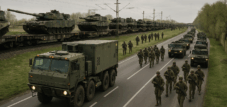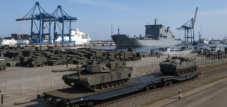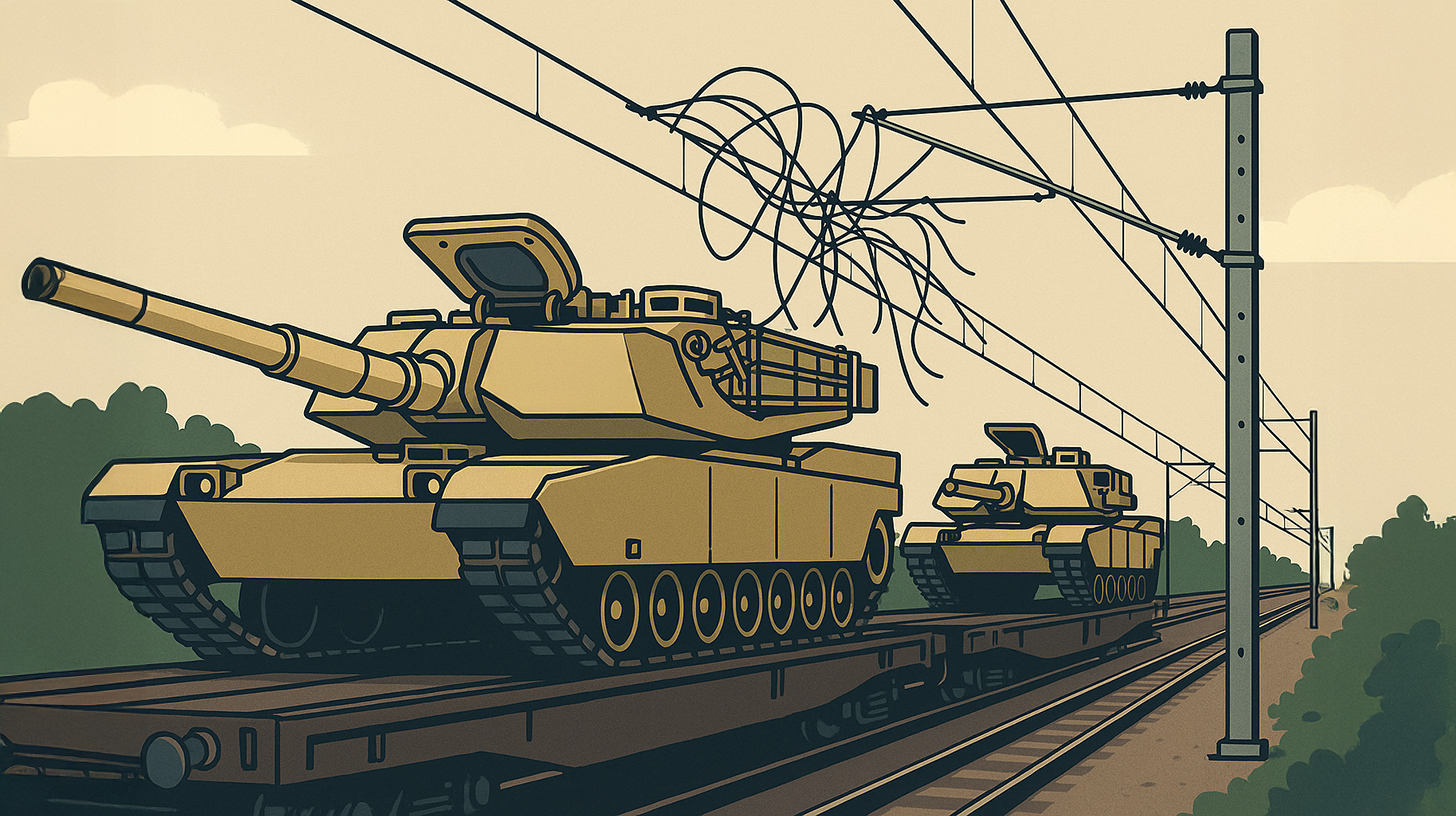
Massive disruptions to rail traffic caused by military logistics: Rail chaos in northern Germany due to American tanks – Image: Xpert.Digital
Military train paralyzes entire rail network in Schleswig-Holstein - tank hatch damages overhead line
American tank transport causes hours-long train cancellations in Schleswig-Holstein
On Sunday morning, July 6, 2025, rail traffic in Schleswig-Holstein experienced an extraordinary disruption that paralyzed the entire rail network of the region. An American military train transporting tanks caused serious damage to the overhead power lines through an open tank hatch, resulting in train cancellations lasting for hours.
Related to this:

The incident in detail
The damage occurred on Sunday morning around 7:45 a.m. in the Owschlag area of the Rendsburg-Eckernförde district. The regional express train RE7 between Neumünster and Flensburg was affected. The military train, carrying US tanks, had stopped on track 1 at Rendsburg station when the open hatch of one of the tanks touched and damaged the overhead power line.
The overhead line, carrying a high current of 15,000 volts, is one of the most critical components of the railway system. This voltage is approximately 65 times the normal household voltage. Even at a distance of just 1.5 meters, the current can dangerously arc. In this case, contact with the overhead line by the armored hatch caused a short circuit and thus damaged the line.
Impact on rail traffic
The consequences for rail traffic were severe. Train services were completely suspended between Flensburg and Neumünster, as well as between Kiel and Husum. The line between Neumünster and Hamburg was reopened to single-track service at 10:00 AM. Passengers had to expect delays of up to 90 minutes.
Deutsche Bahn immediately set up a rail replacement bus service. Commuters and travelers between the major centers of Hamburg and Schleswig-Holstein were particularly affected. The replacement service could only partially compensate for the regular train service, as buses have significantly longer travel times and can carry fewer passengers.
Technical background of the overhead line
The overhead line is the heart of electric railway operations. It supplies the trains with the necessary energy and operates at a voltage of 15,000 volts and a frequency of 16.7 hertz. The German railway power network comprises approximately 39,200 kilometers of track, the majority of which is electrified.
The high voltage is necessary to power the heavy trains. A modern electric locomotive can develop up to 7,000 kilowatts of power. However, this enormous amount of energy also makes the system extremely dangerous. Contact with the overhead line can be fatal, which is why strict safety regulations exist.
Overhead line damage can be caused by various factors: weather conditions, technical defects, or, as in this case, external influences. In the event of damage, the affected section of track must be immediately disconnected from the power grid to prevent further damage and allow for repairs.
Military transports by rail
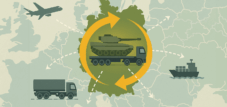
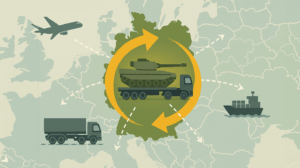
Germany acts as a hub for NATO military transports. Especially since the heightened security situation in Europe, military trains have become a more frequent sight on German tracks. The German Armed Forces have a framework agreement with DB Cargo AG worth €100 million annually for military transports.
The German Armed Forces have 400 special flatcars available for such transports. These are designed to safely transport heavy tracked vehicles such as tanks. Loading usually takes place at night to avoid disrupting regular rail traffic.
Transporting tanks by rail is advantageous for several reasons: it protects the equipment, as tanks have a limited lifespan. Furthermore, it reduces the strain on roads and infrastructure, and allows tank crews to remain fit for their actual mission.
Related to this:
Safety precautions and risks
Military transports are subject to special safety regulations. All hatches and moving parts must be properly secured before transport. The vehicles are lashed to special flatcars, and the load must remain within the loading dimensions specified by the railway.
The incident in Rendsburg shows that even routine military transports can encounter unforeseen problems. A single improperly secured tank hatch can be enough to paralyze the entire regional rail network.
Repair work and recommissioning
Repairing damage to overhead power lines is a complex task requiring specially trained technicians. First, the affected section of track must be de-energized. Then, the damaged lines and supports can be repaired or replaced.
The work in Rendsburg continued until Sunday evening. During this time, technicians not only had to repair the damaged overhead line, but also ensure that no further damage had occurred to the electrical system.
Impact on national defense
The incident highlights the vulnerability of Germany's transport infrastructure when it comes to military transport. Experts have been warning for years about the weaknesses in the German rail network. A former US general has already criticized the fact that Germany only has the capacity to transport one and a half tank brigades, while NATO plans require the simultaneous transport of eight to ten brigades.
Deutsche Bahn and its freight division DB Cargo are key players in national defense. In a crisis, tens of thousands of NATO soldiers and heavy equipment would need to be transported via German rail. The dilapidated infrastructure and frequent disruptions jeopardize this strategic capability.
Responses from the authorities
Deutsche Bahn remained silent regarding the military transport, citing its policy of not commenting on military transports. The Federal Police merely confirmed that it could not be ruled out that the open tank hatch had caused the damage.
This reticence is understandable, as details about military transports are usually treated confidentially for security reasons. Nevertheless, the silence led to speculation and criticism on social media.
Historical context
Military transport by rail has a long tradition in Germany. Tanks and heavy equipment have been transported by rail since the First World War. This practice continued after the Second World War, first by the Allies, and later by the Bundeswehr (German Federal Armed Forces).
During the Cold War, military trains were a common sight on German railways. With reunification and the changed security situation, their frequency initially decreased. Since the escalation of the situation in Eastern Europe and the war in Ukraine, they have become a more frequent sight again.
Related to this:
Preventive measures
To prevent similar incidents, stricter controls are needed when loading military trains. All moving parts must be properly secured, and additional safety checks should be carried out before departure.
The German Armed Forces are already planning to procure special air defense wagons for military transport. These are intended not only to protect the transport itself, but also to have a low-profile design to avoid conflicts with overhead power lines.
Economic consequences
The disruption to rail services not only affected passengers but also the regional economy. Commuters were unable to get to work on time, business appointments had to be postponed, and freight traffic was also impacted.
The costs for replacement transport, lost fare revenue, and repairs quickly add up to several million euros. Ultimately, these costs are borne by the general public through taxes and fares.
International perspective
Germany is not the only country facing challenges with military transport. Other NATO countries have similar problems with their transport infrastructure. Coordinating military transport within the alliance requires close cooperation between national rail systems.
The different track gauges in Europe further complicate cross-border military transport. Modern military vehicles therefore often have to be transshipped at borders, which costs time and resources.
The future of military transport
Given the changed security situation in Europe, the importance of military transport will continue to increase. The German Armed Forces and Deutsche Bahn must intensify their cooperation and expand the infrastructure accordingly.
New technologies such as automated loading systems and improved safety technology can help prevent similar incidents in the future. At the same time, the robustness of the rail network must be increased to ensure a certain degree of redundancy even in the event of disruptions.
Rendsburg incident reveals critical shortcomings in military transport: Rail infrastructure becomes a weak point in NATO logistics
The incident in Rendsburg exemplifies the challenges of transporting military equipment by rail. A seemingly minor oversight – an improperly secured tank hatch – can have far-reaching consequences and paralyze an entire regional rail network.
For the future, improved security measures, regular training, and close cooperation between the military and railway operators are essential. Only in this way can Germany fulfill its role as a logistical hub for NATO without jeopardizing its own transport infrastructure and the safety of passengers.
This incident makes it clear that national defense is not just a matter of soldiers and weapons, but also requires a functioning logistical infrastructure. Investments in modernizing the rail network are therefore crucial not only for civilian transport, but also for the country's security.
Related to this:
- The innovative project of the German Armed Forces Logistics Command: Future-oriented cooperation in logistics
- Criticism of the German Armed Forces: Unplanned logistics investments – How the private sector can solve the logistics problem with DU-Logistik²
Consulting - Planning - Implementation

Markus Becker
I would be happy to serve as your personal advisor.
Head of Business Development
Chairman SME Connect Defense Working Group
Your dual-use logistics experts
Dual-use logistics experts - Image: Xpert.Digital
The global economy is currently undergoing a fundamental transformation, a watershed moment that is shaking the foundations of global logistics. The era of hyper-globalization, characterized by the relentless pursuit of maximum efficiency and the "just-in-time" principle, is giving way to a new reality. This new reality is marked by profound structural breaks, geopolitical power shifts, and increasing fragmentation of economic policy. The once taken-for-granted predictability of international markets and supply chains is dissolving and being replaced by a period of growing uncertainty.
Related to this:
Hub for Security and Defense - Advice and Information

Hub for Security and Defense - Image: Xpert.Digital
The Security and Defence Hub offers expert advice and up-to-date information to effectively support companies and organizations in strengthening their role in European security and defence policy. Working closely with the SME Connect Defence Working Group, it particularly promotes small and medium-sized enterprises (SMEs) that wish to further develop their innovative capacity and competitiveness in the defence sector. As a central point of contact, the Hub thus creates a crucial bridge between SMEs and European defence strategy.
Related to this: