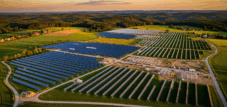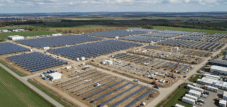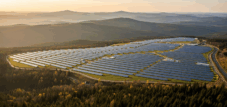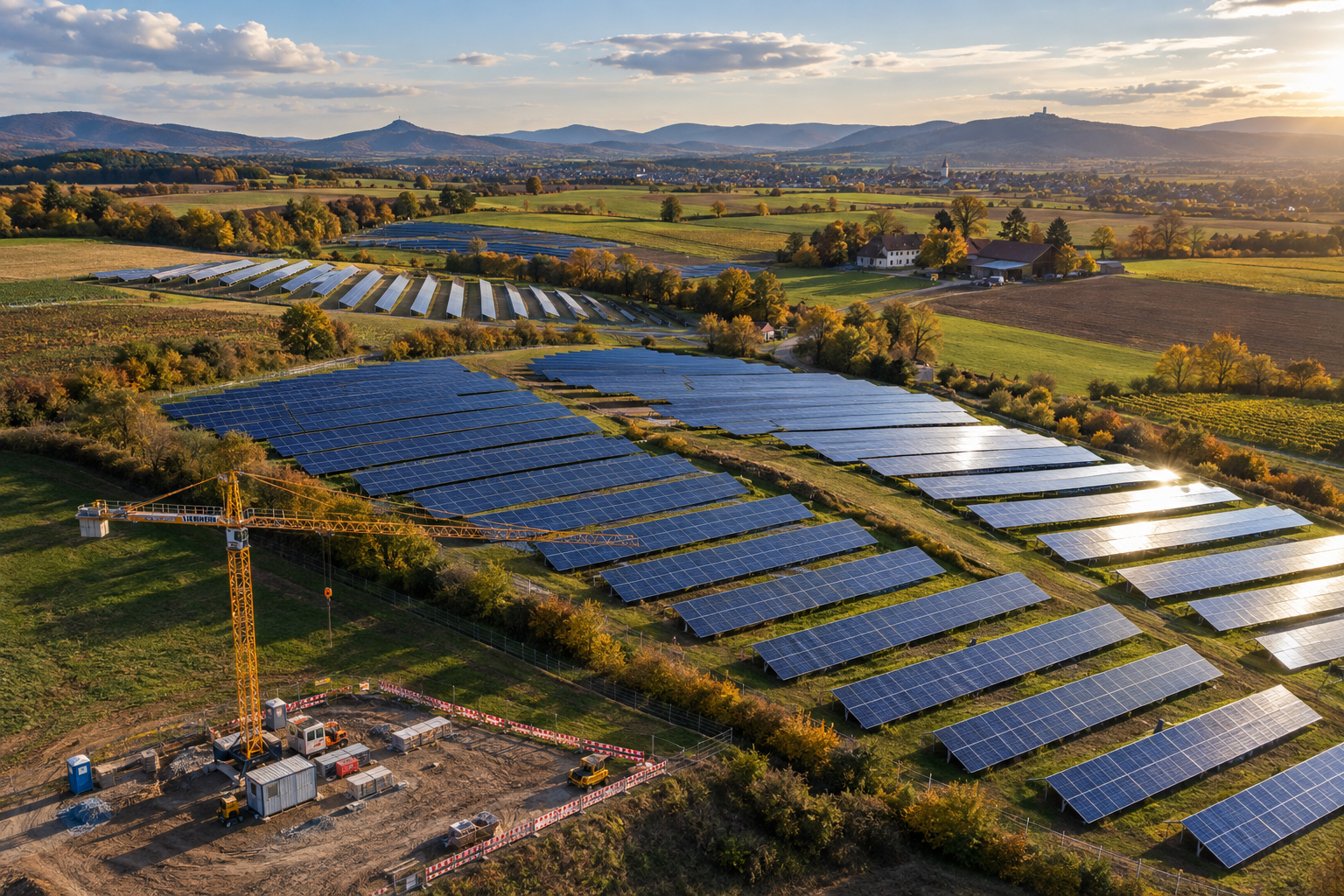
Mega solar park planned in Dietrichingen: 77 football fields for climate protection: How a small Palatinate village is mastering the energy transition – creative image on the topic, with AI: Xpert.Digital
Lucrative leases and cumbersome bureaucracy: Solar park instead of farmland – How a Palatinate village won the fight against bureaucracy
Mega solar project on the verge of a breakthrough: What other communities can now learn from Dietrichingen
From field to power plant: The rocky road to the 55-hectare solar park in Dietrichingen
Germany's energy transition isn't being decided in the conference halls of the capital, but in rural areas – often through a protracted struggle with complex bureaucracy. A prime example is the small village of Dietrichingen in the Southwest Palatinate. Here, far from the major metropolitan areas, a 55-hectare solar park developed by Prokon is about to begin construction. But the road to this point has been long and exemplifies the enormous administrative hurdles rural communities face when transforming from traditional farmland into modern energy producers. Between lucrative lease agreements for farmers, a patchwork of federal building regulations, and the immense workload of local building authorities, the project at Kirschbacherhof reveals why the expansion of renewable energies in Germany often stalls – and how, through effective cooperation, it can ultimately succeed.
Dietrichingen Solar Park: Between bureaucracy and the energy transition: When rural communities become energy players
In the municipality of Zweibrücken-Land, specifically in the village of Dietrichingen in the Südwestpfalz district, a project is approaching its decisive phase, exemplifying the current dynamism of Germany's energy transition at the local level. Construction of a large, open-field solar park is slated to begin in the foreseeable future near Kirschbacherhof, a district of Dietrichingen. According to the responsible building authority, represented by its head, Annika Bartmann, the necessary procedural steps for establishing a new development plan and amending the land-use plan are nearing completion. Construction is targeted to begin next year. The project developer is Prokon, a company that made its name in the wind energy sector and has increasingly expanded its portfolio to include photovoltaic projects in recent years.
At first glance, this news item appears to be one of hundreds of similar reports currently appearing in German official gazettes and local newspapers. However, upon closer inspection, the Dietrichingen case reveals a distillation of the structural challenges, opportunities, and contradictions that currently characterize the expansion of ground-mounted photovoltaics in Germany. It is worthwhile to consider this seemingly minor local event as a window into a much larger economic and energy policy context.
The long road from field to power plant
Anyone who believes a solar park can be built in just a few months significantly underestimates the complexity of German planning law. Between the initial site assessment and the actual commissioning of a ground-mounted solar park, it typically takes between two and three years, unless a building permit exemption applies, and even under favorable conditions, it rarely takes less than ten months. The Dietrichingen case illustrates a typical progression: As early as spring of last year, it became known that solar projects were under review at twelve locations within the Zweibrücken-Land municipality, with three projects, including the one near Kirschbacherhof covering approximately 55 hectares, already at an advanced stage of the approval process. This makes the Dietrichingen plant one of the larger projects in the region in terms of area, significantly exceeding comparable projects such as the one near Althornbach and Hornbach (28 hectares) or the project near Klein- and Großsteinhausen (25 hectares).
The real bottleneck almost always lies in the same procedural stage: municipal land-use planning. If an area does not qualify for legal privileges, for example, because it is located outside the 200-meter corridor along highways or double-track railway lines, the municipality has no option but to create the necessary building rights through its own development plan. This process follows a strictly codified procedure from the Federal Building Code: First, the municipal council passes a resolution to initiate the planning process, which marks the political course and is usually the moment when a project developer first presents their project to the public. This is followed by early public participation, including neighboring municipalities and specialist authorities such as nature conservation, water management, agriculture, and network operators. Next comes the preparation of the draft plan, including an environmental impact assessment with expert opinions on species protection, glare, and landscape impact. This is followed by a one-month formal public consultation period, during which every citizen can raise objections. Finally, the municipal council weighs all comments and adopts the final bylaw. These steps alone typically take between twelve and eighteen months, as each round of participation adheres to legal deadlines and the municipal council can only make decisions at its regular meeting times.
The fact that the Dietrichingen project is now in its final stage, a good year after the first public mentions, fits exactly into this timeframe and confirms how predictable, but also how sluggish, this system is structurally designed.
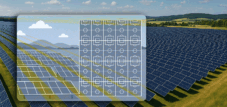
New: Patent from the USA – install solar parks up to 30% cheaper and 40% faster and easier – with explanatory videos!

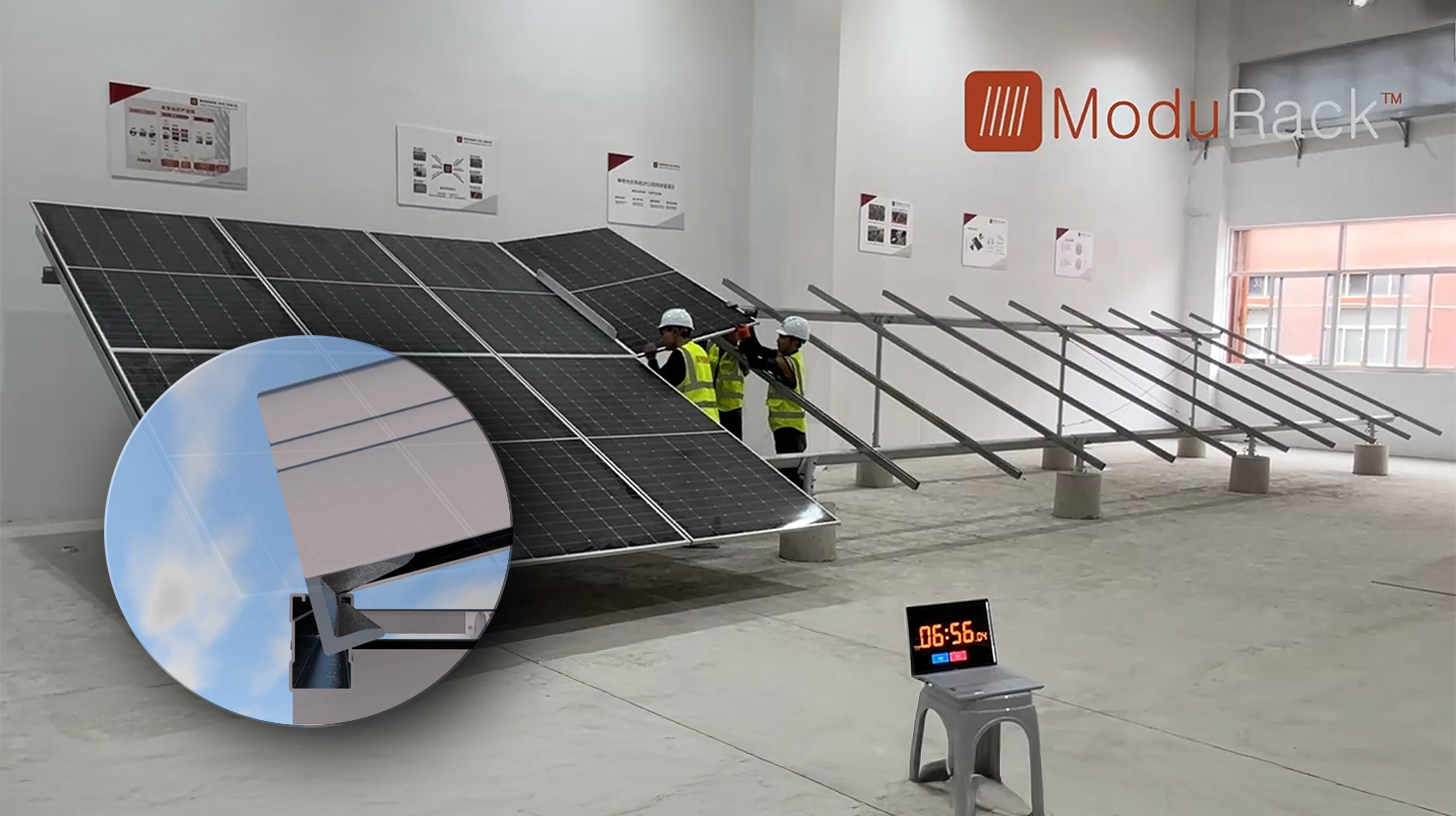
New: Patent from the USA – Install solar parks up to 30% cheaper and 40% faster and easier – with explanatory videos! - Image: Xpert.Digital
The core of this technological advancement is the deliberate departure from conventional clamp mounting, which has been the standard for decades. The new, more time- and cost-effective mounting system addresses this with a fundamentally different, more intelligent concept. Instead of clamping the modules at specific points, they are inserted into a continuous, specially shaped support rail and held securely in place. This design ensures that all forces – whether static loads from snow or dynamic loads from wind – are distributed evenly across the entire length of the module frame.
More information here:
Solar parks on hold: Why approval processes are slowing down the energy transition
Between deregulation and municipal reality
The Dietrichingen case becomes particularly interesting when compared to recent legislative developments in other German states. In Baden-Württemberg, the construction of ground-mounted photovoltaic systems was generally exempt from permitting requirements as part of the "Fast Construction" amendment to the state building code in the summer of 2025. Since the beginning of 2026, this exemption has even applied to associated ancillary facilities such as transformer and battery stations. Bavaria introduced a similar exemption for privileged solar parks at the beginning of 2025, and Lower Saxony followed suit in mid-2025. Rhineland-Palatinate, where Dietrichingen is located, is one of the states where ground-mounted systems generally still require permits and where municipal land-use planning remains the primary, albeit lengthy, means of obtaining building rights. This federal asynchronicity means that identical project types go through completely different time horizons and cost structures depending on the federal state, which, from an investment economics perspective, creates a significant distortion of competition for capital and land between the regions.
At the federal level, the reform of the Federal Building Code in January 2023 provided at least a partial solution. Since then, the newly introduced preferential provision allows the construction of photovoltaic systems in a 200-meter strip along highways and double-track railway lines without a separate development plan, which can shorten the approval process in such cases by six to twelve months. This approach was clearly not feasible for the area near the Kirschbacherhof farm in Dietrichingen, as it is located away from such infrastructure corridors and instead had to be developed as traditional agricultural land via the regular, considerably more complex municipal planning process. It is also noteworthy that the Dietrichingen project was originally considered as an agrivoltaic system, combining agricultural use and electricity generation on the same land – a model that is gaining increasing importance in Germany because it at least partially mitigates the land-use conflict between food production and energy generation.
Prokon and the structural change of project developers
The role of the company Prokon deserves special attention because it reflects a remarkable transformation within the German renewable energy sector. Originally known as a wind energy company, Prokon made headlines about a decade ago due to insolvency, which led to a fundamentally new corporate structure as a cooperative. In recent years, the company has increasingly focused on photovoltaics and now operates nationwide as a developer of ground-mounted solar parks, often in close cooperation with rural municipalities that rarely possess the personnel and expertise to manage complex planning procedures on their own.
This pattern, whereby established project developers support small, often volunteer-run communities in implementing large-scale energy infrastructure projects, has become characteristic of the industry. This creates asymmetrical negotiating situations: The project developer contributes capital, technical knowledge, and legal experience, while the community formally retains planning authority but in practice often relies on the developer's expertise to conduct a viable process. From an economic perspective, this is quite efficient because it combines economies of scale and specialized expertise, but it also carries the risk that local interests, such as those concerning the landscape, lease terms, or citizen participation models, may be given less weight than the interests of the developer, who ultimately depends on returns and the scalability of their portfolio.
Why approval risk becomes capital risk
From a financial perspective, the lengthy and uncertain permitting process represents one of the key investment risks for solar park projects. Direct investments in ground-mounted photovoltaics achieve returns of approximately five to eight percent internal rate of return, depending on the structure and location, while lease prices for suitable land now range between €2,500 and €5,000 per hectare per year. However, these calculations assume that a project can actually be realized within a predictable timeframe. Any delay in the zoning process, whether due to additional expert opinions, objections from public authorities, or delays in local politics, increases pre-financing costs and postpones the point at which revenues actually start flowing. For a project developer like Prokon, this means that a significant portion of the entrepreneurial risk lies not in the technical implementation, but in the administrative lead time.
In addition, the grid connection ordinance introduced in 2025 operates on a "first ready, first served" principle, prioritizing projects that first fully meet their planning and technical requirements. This further intensifies competitive pressure between rival projects, as access to the limited grid connection quota is now determined not solely by the order of registration, but by the actual readiness for implementation. For a project like the one in Dietrichingen, which is now nearing final approval, this is a particularly advantageous time, as it allows it to gain an early advantage in the regional competition for grid capacity.
The economic benefits for a structurally weak region
The district of Südwestpfalz is one of the structurally weaker regions in Rhineland-Palatinate, characterized by demographic change, a comparatively low industrial density, and traditionally agricultural land use. For such regions, the establishment of large-scale solar parks can fulfill a significant economic stabilizing function. Municipalities receive annual payments through the voluntary participation of operators stipulated in the Renewable Energy Sources Act (EEG), the so-called municipal participation according to Section 6. These payments are based on the amount of electricity generated and represent a reliable, albeit usually moderate, source of income for the municipal budget over decades. Agricultural landowners who lease their land long-term also secure stable incomes independent of crop yields and weather risks, which, especially given the increasing climate uncertainties in agriculture, represents an economically attractive diversification model.
At the same time, it must be acknowledged that the land use for ground-mounted photovoltaics in rural areas is increasingly being discussed critically. An area of 55 hectares, as planned for the Dietrichingen project, is roughly equivalent to 77 football fields and is generally permanently lost to conventional agricultural use, even if agrivoltaic concepts allow for certain forms of continued use. At a time when the debate surrounding food sovereignty and regional agriculture is also gaining importance, a latent conflict of objectives arises between climate protection and land conservation, which is regularly reflected in the public perception of such projects and frequently leads to controversial discussions in local council meetings.
A model with nationwide implications
The Dietrichingen case is ultimately less remarkable for its specific details than for its symptomatic nature of a nationwide pattern. To achieve its climate goals, Germany needs a massive expansion of photovoltaic capacity, with ground-mounted systems now accounting for the largest share of new installations compared to rooftop systems. At the same time, despite some accelerations such as preferential treatment along transport routes or complete exemption from permitting requirements in certain federal states, the permitting system remains a bottleneck in large parts of Germany, tying up projects for years before even the first sod can be turned.
This structural inertia has a paradoxical consequence: While politically ambitious expansion targets are formulated, their actual achievement depends significantly on the administrative capacity of small, often understaffed building authorities in rural municipalities, which, in addition to their regular duties, must manage complex, multi-year planning procedures for highly specialized energy infrastructure projects. The fact that the Zweibrücken-Land municipal administration was apparently able to complete the Dietrichingen project within a relatively quick timeframe of about one and a half to two years by German standards is therefore less self-evident than it might initially seem and speaks to effective cooperation between the administration, project developers, and the municipal council.
For the energy transition across the country, this means that technological and financial progress alone is insufficient. The real bottleneck is increasingly administrative capacity and political will at the local level. As long as this bottleneck is not addressed uniformly nationwide, for example, through the consistent transfer of the Baden-Württemberg or Bavarian exemption models to other federal states, projects like the one in Dietrichingen will remain the norm: economically sound, necessary from an energy policy perspective, but bureaucratically burdensome and difficult to accelerate in terms of time as long as the legal framework is not fundamentally standardized. The planned start of construction in Dietrichingen next year can therefore certainly be considered a small but symbolically significant success within an overall sluggish system.
📈🚀 From visibility to trust 👀🤝 Your scalable path with Xpert.Digital

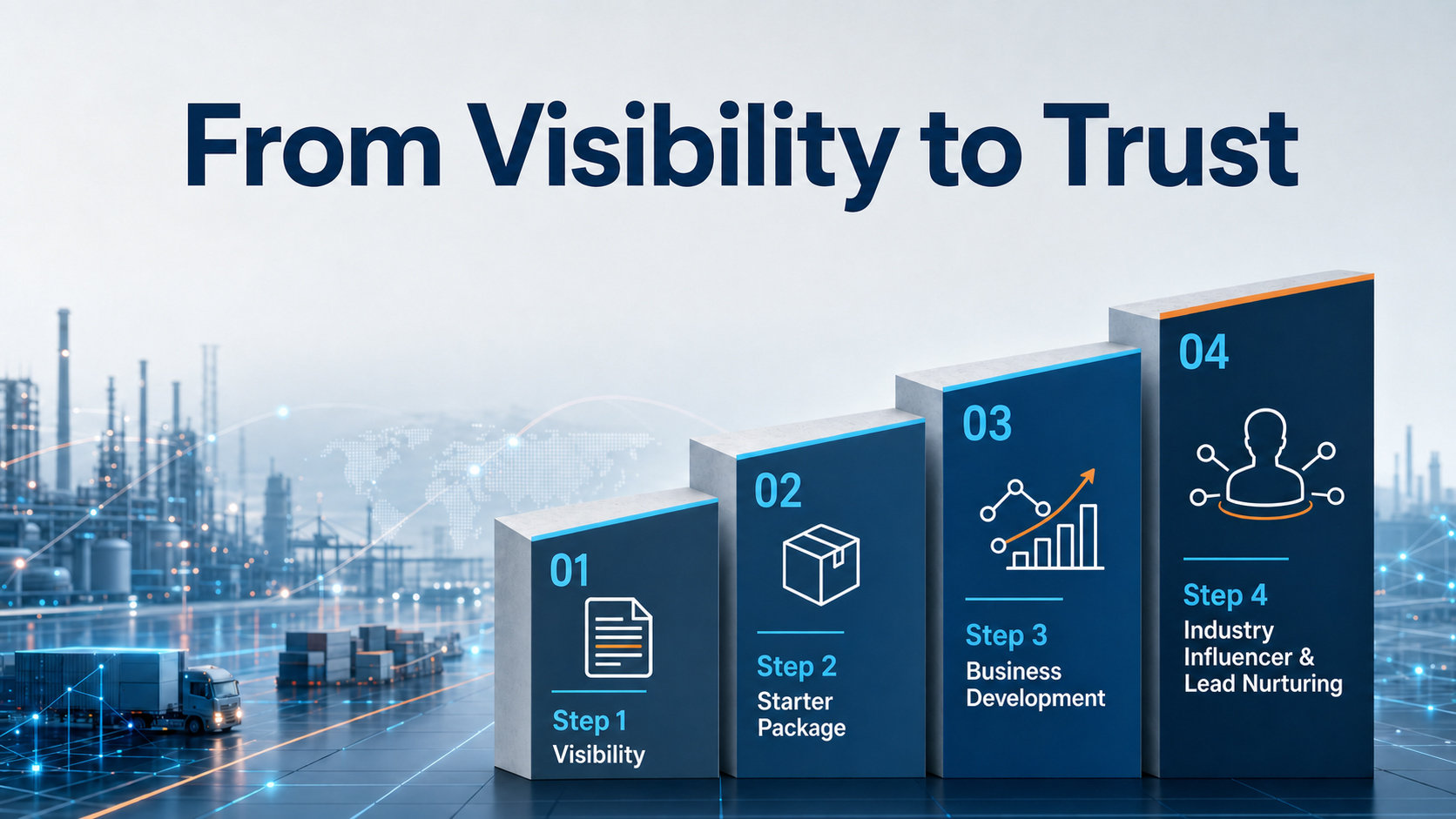
From visibility to trust: Your scalable path with Xpert.Digital - Image: Xpert.Digital
In industrial B2B, sustainable business relationships rarely emerge overnight. They develop step by step – through visibility, professional relevance, recurring touchpoints, and growing trust. Xpert.Digital's 4-stage model addresses precisely this: It offers a structured path that begins with a manageable entry point and can evolve into deeper collaboration in business development if needed.
Instead of relying on loud marketing promises, this model puts the relationship at the forefront. Companies start with clearly defined, easily calculable measures and then decide, based on their own experience, how far they want to expand the collaboration. A key factor for this undisturbed trust-building process: The platform completely avoids annoying advertising ads, so the editorial focus remains solely on the companies' expertise.
More information here:
Your partner for business development in the fields of photovoltaics and construction
From industrial rooftop PV to solar parks and larger solar parking lots
☑️ Our business language is English or German
☑️ NEW: Correspondence in your native language!

Konrad Wolfenstein
I and my team are happy to be available to you as your personal advisor.
You can contact me by filling out the contact form here wolfenstein@xpert.digital:or simply call me at +49 7348 4088 965. My email address is
I'm looking forward to our joint project.